Month: December 2009

  • Denialist Erdogan in the White House:

    Denialist Erdogan in the White House:

    An Unworthy Guest!

    sassounian3

    Turkish Prime Minister Receb Erdogan made insulting statements on the Armenian Genocide during his visit to Washington on December 6-8. Rather than hosting him in the White House, Pres. Obama should have declared him “persona non grata” — an undesirable person!

    Would Pres. Obama have welcomed Iran’s President Mahmoud Ahmadinejad to the White House and sang his praises, given his revisionist views on the Holocaust? Inviting Erdogan to the U.S. is even more offensive, akin to receiving a German leader who denies the Holocaust!

    Erdogan made a series of outrageous remarks and denialist statements during five public appearances in Washington: At PBS, the Willard Hotel, the Johns Hopkins University School of Advanced and International Studies, SETA-DC Turkish think tank, and the German Marshall Fund.

    During his December 8, hour-long PBS TV interview by Charlie Rose, Erdogan brought up the Armenian issue by claiming that his government had recently restored “an Armenian Church” in Van, without disclosing that the Holy Cross Church on Akhtamar Island in Lake Van was reopened not as a house of worship, but as a cultural site to attract tourists! Indeed, the Turkish authorities refused to allow a cross to be placed on the Church’s dome!

    Erdogan’s boastful comments led Charlie Rose to raise the Armenian Genocide issue in a passive manner by asking: “What is necessary in order to — what more evidence does history need with respect to the genocide?”

    The question threw Erdogan into a rage, making him spew hateful statements about the Armenian Genocide: “I can say very clearly that we do not accept genocide. This is completely a lie. I invite people to prove it…. Something like this is really not possible, and there is no truth to it.” These are the shameful words of the same man who claimed there was no genocide in Darfur, since he saw no trace of such a crime during his visit to Sudan!

    When asked by Charlie Rose if Pres. Obama had brought up the Armenian Genocide issue during the White House meeting, Erdogan said yes, adding that it was in the context of normalizing relations with Armenia: “It was Turkey that initiated the normalization process. It was Turkey that took upon itself the risk. We believe in ourselves. What we would like to see is for this normalization process to go forward. And in that it’s important that we go into that and the Karabagh issue between Azerbaijan and Armenia be resolved. There is an occupation. We have to solve that problem. …And if the positive developments that we would like to see do not come about, then I do not believe that our parliament will have a positive result as a result of its deliberations.”

    During his appearance at the Johns Hopkins University, Erdogan proudly claimed that his “ancestors have never committed genocide.” The real issue is not whether his grandparents participated in the Armenian Genocide, since there was no shortage of Turks who did. What’s more important is that the Prime Minster has chosen to become an accomplice to these heinous crimes by participating in their cover up!

    Despite all the diplomatic pleasantries exchanged between Erdogan and Obama, there were indications that the two leaders had a tense meeting. According to media reports confirmed by White House sources, Pres. Obama bluntly told Erdogan that if the Turkish Parliament did not ratify the Armenia-Turkey Protocols in a timely manner, the U.S. Congress could well adopt a resolution on the Armenian Genocide.

    The two leaders also clashed over their divergent views on several key issues: Turkey’s unwillingness to send more troops to Afghanistan, refusal to support a recent IAEA resolution to censure Iran’s nuclear program, the signing of a multi-billion dollar energy contract with Iran in defiance of U.S. sanctions, worsening ties with Israel, continued occupation of Northern Cyprus, and manifest disregard of minority rights in Turkey.

    In the midst of Erdogan’s crucial visit, Turkey’s Ambassador to Washington Nabi Sensoy tendered his resignation unexpectedly, after an argument with Foreign Minister Ahmet Davutoglu over the logistics of the White House meeting. This scandalous development must have

    been highly embarrassing for the Prime Minister!

    Upon returning to Turkey, Erdogan faced a major political crisis and bloody clashes in the streets of Kurdish populated cities, triggered by the Constitutional Court’s banning of the Kurdish Democratic Society Party (DTP). The court expelled two DTP members from Parliament, while 19 others resigned in protest.

    It is a shame that Armenia’s leaders, rather than repudiating Erdogan’s offensive statements on the Armenian Genocide, continued to talk about normalizing relations with Turkey! Armenian Americans were equally negligent, failing to express their outrage. Erdogan should have been confronted in Washington with massive protests and demonstrations! Sadly, silence makes genocide denial an acceptable practice!
  • British court issued Gaza arrest warrant for former Israeli minister Tzipi Livni

    British court issued Gaza arrest warrant for former Israeli minister Tzipi Livni

    Warrant issued over war crimes accusations was withdrawn when it emerged former minister had cancelled plan to visit

    • Ian Black and Ian Cobain
    • Monday 14 December 2009

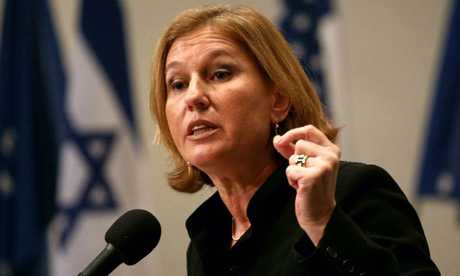
    Tzipi Livni

    A British court issued an arrest warrant for Israel‘s former foreign minister over war crimes allegedly committed in Gaza this year – only to withdraw it when it was discovered that she was not in the UK, it emerged today.

    Tzipi Livni, a member of the war cabinet during Operation Cast Lead, had been due to address a meeting in London on Sunday but cancelled her attendance in advance. The Guardian has established that Westminster magistrates’ court issued the warrant at the request of lawyers acting for some of the Palestinian victims of the fighting but it was later dropped.

    The warrant marks the first time an Israeli minister or former minister has faced arrest in the UK and is evidence of a growing effort to pursue war crimes allegations under “universal jurisidiction”. Israel rejects these efforts as politically motivated, saying it acted in self-defence against Hamas rocket attacks from Gaza.

    Livni, head of the opposition Kadima party, played a key role in decisions made before and during the three-week offensive. Palestinians claim 1,400 were killed, mostly civilians; Israel counted 1,166 dead, the majority of them combatants.

    No one involved in the Westminster episode was prepared to confirm, on the record, what had transpired in a chaotic series of highly sensitive legal moves. But a pro-Palestinian group welcomed news of the abortive move as “long overdue”.

    The Foreign Office, clearly deeply embarrassed by the episode, said in a statement: “The UK is determined to do all it can to promote peace in theMiddle East and to be a strategic partner of Israel. To do this, Israel’s leaders need to be able to come to the UK for talks with the British government. We are looking urgently at the implications of this case.”

    Livni’s office said she had decided in advance not to come to the UK but lawyers seemed unaware of that when they approached the court last week. The judge refused to issue the warrant until it was clear Livni was in fact in the country, as he was erroneously informed on Sunday.

    The former minister had been scheduled to speak at a Jewish National Fund conference. “Scheduled meetings with government figures in London could not take place close to the conference and would have necessitated a longer-than-planned absence from Israel,” her office told the Ynet website.

    It is the second time in less than three months that lawyers have gone to Westminster magistrates court asking for a warrant for the arrest of an Israeli politician. In September the court was asked to issue one for the arrest of Ehud Barak, Israel’s defence minister, under the 1988 Criminal Justice Act, which gives courts in England and Wales universal jurisdiction in war crimes cases.

    Barak, who was attending a meeting at the Labour party conference in Brighton, escaped arrest after the Foreign Office told the court that he was a serving minister who would be meeting his British counterparts. The court ruled he enjoyed immunity under the State Immunity Act 1978.

    According to Israeli sources, ministers who wish to visit the UK in a personal capacity have begun asking the Israeli embassy in London to arrange meetings with British officials. These offer legal protection against arrest.

    Livni, crucially, cannot enjoy any such immunity as she is an ex-minister. Ehud Olmert, the former prime minister, is in the same position.

    Because of the potential damage to UK-Israeli relations – and because of legal pitfalls facing those who disclosed information about the application – few people with any detailed knowledge of it were prepared to comment today.

    The Ministry of Justice, Scotland Yard and clerks at the magistrates court refused to discuss the matter. A statement issued by HM Court Service implied that there had been no application for an arrest warrant, stating “there is no record of any such hearing”. A spokeswoman maintained that this was not a misleading statement.

    Samuel Hayek, chairman of the Jewish National Fund UK, the charity whose conference Livni had been due to attend, said: “I am not at liberty to confirm her precise reasons for not attending.” He added: “In any event, it is regrettable that the British government is unable to conduct free dialogue with Israel’s most senior statesmen and politicians.”

    Tayab Ali, the solicitor who tried to obtain a warrant for the arrest of Barak on behalf of 16 Palestinians, said his firm was “ready, willing and able to act for clients to seek the arrest of anyone suspected of war crimes” who travelled to the UK.

    Livni’s office described her as “proud of all her decisions regarding Operation Cast Lead”. It added: “The operation achieved its objectives to protect the citizens of Israel and restore Israel’s deterrence capability.”

    The Guardian

  • Israelis win Turkish prize for financial history research

    Israelis win Turkish prize for financial history research

    By JAMIE ROMM

    While Israel and Turkey’s diplomatic relations have suffered since Operation Cast Lead, cultural and academic ties between the two countries are getting a boost this week.

    The historical Imperial Ottoman Bank building in Ankara, Turkey.

    On Tuesday, Israeli-born author and Hebrew University Prof. Ruth Kark, along with co-author and geographer Dr. Joseph B. Glass, will be awarded $15,000 for their research on the development of banking in Ottoman Palestine.

    The prize, awarded to winners of the Best Monograph in the Competition for Research on the History of Banking and Finance, 2008-2009, is sponsored by the Ottoman Bank Archives and Research Center, the European Association for Banking and Financial History and the History Foundation of Turkey.

    In their book, Sephardi Entrepreneurs in Jerusalem: The Valero Family 1800-1948, Kark and Glass present readers with a look at one of Jerusalem’s founding families, the Valeros, who were responsible for establishing the first private bank in Israel.

    The book, however, is not just a look at the family’s history, said Kark.

    “It’s a rare glimpse at the day-to-day lives of Jews living in Ottoman-ruled Palestine, and a look at entrepreneurship in the Middle East during this time in history,” she said.

    Glass has a doctorate from the Hebrew University of Jerusalem and has authored five books and numerous articles.

    Kark, a professor of geography at the Hebrew University, has written and edited 20 books and over 200 articles on the history and historical geography of the region.

    The competition aims to promote academic research on Turkish banking, finance and economic history, from Ottoman times to the present, and to establish a tradition in this field.

  • Azerbaijan and Iran to sign gas agreement next week

    Azerbaijan and Iran to sign gas agreement next week

    Date: Sunday, December 13, 2009
    The State Oil Company of Azerbaijan (SOCAR) is due to sign an agreement with the National Iranian Gas Company to sell natural gas to Iran, said SOCAR President Rovnag Abdullayev.

    According to him, the agreement will be signed in Tehran next week during the visit of Azerbaijani delegation led by foreign minister to Tehran.

    According to the memorandum signed between the two countries on November 14, SOCAR will deliver at least 500 million cubic meters of gas to Iran a year from 2010 at the initial stage, and the volume will be gradually increased later.

    Azerbaijan will charge Iran a price “close to the world market prices” calculated on the basis of an agreed formula, said officials.

    Azerbaijan has natural gas agreements with Georgia, Turkey and Russia at present.


    Yusif Babanly
    Board of Directors
    Azerbaijani American Council (AAC)

  • Lessons Learned About Turkey and Azerbaijan After Erdogan’s Washington Visit

    Lessons Learned About Turkey and Azerbaijan After Erdogan’s Washington Visit

    Publication: Eurasia Daily Monitor Volume: 6 Issue: 228 December 11, 2009

    By: Vladimir Socor

      Prime Minister of Turkey Recep Tayyip Erdogan (L) with US President Barack Obama in Washington, DC


    Turkish Prime Minister Recep Tayyip Erdogan’s December 7-8 visit to Washington (EDM, December 9) underscored the decline in Washington’s ability to influence Turkish foreign policy decisions. It is within this broader context, Erdogan and Foreign Minister Ahmet Davutoglu turned down Washington’s demands for Turkey to normalize relations with Armenia swiftly and unconditionally. This would have broken the linkage between the normalization of Turkish-Armenian relations and withdrawal of Armenian troops from certain Azerbaijani districts, as part of the Karabakh conflict resolution process.

    That withdrawal and linkage are top national priorities for Azerbaijan –a fact that the US administration apparently discounted, amid pressures from Armenian advocacy groups and parts of Congress. Breaking that linkage would have undermined Azerbaijan’s position severely, with potentially lasting effects.

    By asking Turkey to undercut Azerbaijan in that way, Washington jeopardized its de facto strategic partnership with Baku and put long-term US policy goals in the South Caucasus at risk. The Turkish government’s disagreement with Washington on this issue, however, has opened a fresh opportunity for the U.S.-Azerbaijan relationship to continue on a lessons-learned basis and develop further.

    This turn of events is not without irony, given that Ankara is distancing itself strategically from Washington on a number of issues that the United States regards as its top policy priorities. This process gained added momentum in the run-up to Erdogan’s Washington visit.

    Thus, Ankara turned down US requests to increase the Turkish troop presence in Afghanistan beyond the 1,600 currently deployed (a strikingly low ratio for NATO’s second-largest army after that of the United States). Ankara, moreover, reaffirmed its caveats against military operations and combat missions, confining Turkish troops instead to training and reconstruction projects, even as Washington urged support for its military “surge” on December 1.

    Demonstratively, Turkey abstained from the International Atomic Energy Agency’s (IAEA) November 27 resolution censuring Iran (while Russia and China voted in favor alongside the United States). Erdogan had visited Tehran in October for the signing of economic agreements that could boost bilateral trade from $11 billion to $30 billion annually within this decade. The agreements of intent include exploration, production, and transportation of Iranian natural gas, notwithstanding U.S. sanctions in that sector. Ankara differs with Washington’s threat assessment regarding the Iranian nuclear program and is reaching out politically to Iranian President Mahmoud Ahmadinejad (Hurriyet, December 6; Zaman, December 6, 7).

    Ankara is also distancing itself markedly from Israel, Washington’s closest Middle Eastern ally. Following Erdogan’s war-crimes accusations against Israeli President Shimon Peres at the World Economic Forum in Davos, Turkish public television produced an inflammatory serial in which performers impersonating Israeli soldiers enacted killings of Arab children. In October, Turkey revoked its invitation to Israel in the Anatolia Eagle air force exercise, prompting the United States to cancel its participation, and thus the event as such. Meanwhile, Ankara conducts a rapprochement with Hamas and other politically defined Muslim anti-Western forces (Jerusalem Post, December 7).

    The Turkish government relies heavily on Russia to turn Turkey into an “energy hub” –an ambition that tends to work against Western energy security interests and US-backed projects. In the Black Sea, Turkey pursues a de facto condominium with Russia, sidelining NATO allies and partners and frustrating the United States in the process.

    Without and beyond any value judgments, however, these trends demonstrate Turkey’s capacity to pursue policies contradicting those of Washington, when Ankara’s views and perceived interests so dictate. Common US-Turkish interests –most saliently on Iraq and the Kurdish problem– persist despite the multiple disagreements elsewhere. In the South Caucasus, meanwhile, Washington and Ankara both lost their former strategic focus and clear definition of common interests. Course corrections are possible, however.

    Ankara’s decision to rally to Azerbaijan’s support in the negotiating process, despite US calls for a premature agreement with Armenia, is a case in point. On the eve of the Erdogan-Davutoglu visit to Washington, Davutoglu summed up bilateral relations as: “The United States always wants something from us” (Zaman, December 6). Such a situation inherently provides Turkey with ample bargaining power and even counter-leverage, which it has employed in this case with regard to Azerbaijan.

    At least for now, Ankara’s move has prevented Azerbaijan’s isolation in the Karabakh conflict-resolution process. Isolation could have forced Baku to turn toward Moscow as arbiter of last resort in the Karabakh conflict, which ranks as Azerbaijan’s uppermost national priority. And such an about-turn could have compromised the energy security and regional security agendas for Europe and the South Caucasus-Caspian region. Washington and Brussels discounted the danger signals from Baku and underestimated the mounting sentiment of alienation there.

    The problem can soon return, if Washington and Brussels renew pressure on Turkey to open the border with Armenia unconditionally, at Azerbaijan’s expense, before next April’s climactic debate on an Armenian genocide resolution in the US Congress.

    https://jamestown.org/program/lessons-learned-about-turkey-and-azerbaijan-after-erdogans-washington-visit/

  • Conference on human rights and Khojaly massacre

    Conference on human rights and Khojaly massacre

    Baku – APA. Three-day conference entitled “The truth is the way leading to reconciliation” on the theme “Forgotten victims – Jews and Azerbaijanis in the Caucasus” ended in Berlin, Media Department of the Islamic Conference Youth Forum for Dialogue and Cooperation told APA. The main organizer of the event, Coordinator of “Justice for Khojaly” international campaign in Germany, executive director of the Coordination Center of the Azerbaijanis in Germany Samir Patzer-Ismailova said the conference was devoted to the Khojaly massacre and the genocide committed by the Armenian dashnaks against Azerbaijanis in Guba in 1918. The event was held at Germany-Azerbaijan Relations Development Center (GeFDAB) with the participation of more than100 guests.

    Member of European Parliament Eduard Lintner sharply condemned the aggressive policy carried on against Azerbaijan and urged Europe to be more active in the solution of Nagorno Karabakh conflict.
    Ambassador of Azerbaijan to Germany Parviz Shahbazov provided information about the history of Day of International Human Rights Day, and the crimes committed by Armenians in Azerbaijan throughout the history.

    Chairperson of EuraKaukAsia Society, professor of the Bonn and Berlin universities Dr. Eva Maria Auch made a report entitled “Azerbaijani Jews – Forgotten Community” bringing historic facts about historic settlement of the Jews in Azerbaijan and their peaceful life as an ethnic minority.

    “Marches of Death”, the book written by late professor Rovshan Mustafayev was presented at the event. Director of the Human Rights Institute of the Azerbaijan National Academy of Sciences Ayten Mustafayeva presented the German version of the book.

    KAD Executive Director Samira Patzer-Ismayilova called on the international community to recognize the Khojaly genocide legally and politically and noted that it is inevitable to deliver realities of Khojaly to the world community.

    Fariz Gasimli presented the international information campaign “Justice for Khojaly” carried out on the initiative of the Chief Coordinator of the Islamic Conference Youth Forum Leila Aliyeva.

    The international information and agitation campaign “Justice for Khojaly” was declared on May 8, 2008 by the Chief Coordinator of the Islamic Conference Youth Organization for Dialogue and Cooperation.