|
Month: October 2009
-
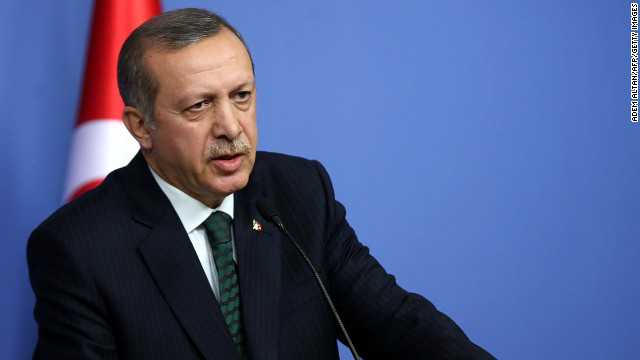
Turkey’s Prime Minister Troubled by Armenia’s Diaspora
-
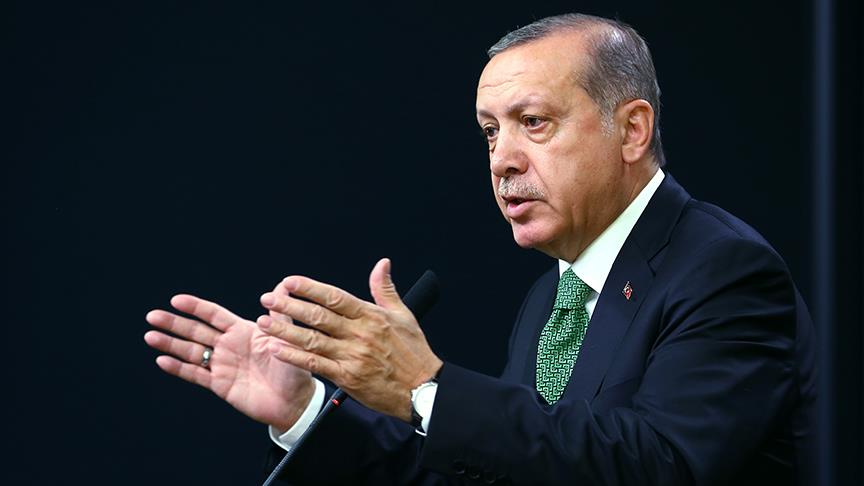
Armenians horrified by treaty with Turkey
Genocide forgotten:
A new trade deal is set to gloss over the
murder of 1.5 million peopleBy Robert Fisk
www.independent.co.ukIn the autumn of 1915, an Austrian engineer called Litzmayer, who was helping build the Constantinople-Baghdad railway, saw what he thought was a large Turkish army heading for Mesopotamia. But as the crowd came closer, he realised it was a huge caravan of women, moving forward under the supervision of soldiers.
The 40,000 or so women were all Armenians, separated from their men – most of whom had already had their throats cut by Turkish gendarmerie – and deported on a genocidal death march during which up to 1.5 million Armenians died.
Subjected to constant rape and beatings, some had already swallowed poison on their way from their homes in Erzerum, Serena, Sivas, Bitlis and other cities in Turkish western Armenia. “Some of them,” Bishop Grigoris Balakian, one of Litzmayer’s contemporaries, recorded, “had been driven to such a state that they were mere skeletons enveloped in rags, with skin that had turned leathery, burned from the sun, cold, and wind. Many pregnant women, having become numb, had left their newborns on the side of the road as a protest against mankind and God.” Every year, new evidence emerges about this mass ethnic cleansing, the first holocaust of the last century; and every year, Turkey denies that it ever committed genocide. Yet on Saturday – to the horror of millions of descendants of Armenian survivors – the President of Armenia, Serg Sarkissian, plans to agree to a protocol with Turkey to re-open diplomatic relations, which should allow for new trade concessions and oil interests. And he proposes to do this without honouring his most important promise to Armenians abroad – to demand that Turkey admit it carried out the Armenian genocide in 1915.
In Beirut yesterday, outside Mr Sarkissian’s hotel, thousands of Armenians protested against this trade-for-denial treaty. “We will not forget,” their banners read. “Armenian history is not for sale.” They called the President a traitor. “Why should our million and a half martyrs be put up for sale?” one of them asked. “And what about our Armenian lands in Turkey, the homes our grandparents left behind? Sarkissian is selling them too.”
The sad truth is that the 5.7 million Armenian diaspora, scattered across Russia, the US, France, Lebanon and many other countries, are the descendants of the western Armenians who bore the brunt of Turkish Ottoman brutality in 1915.
Tiny, landlocked, modern-day Armenia – its population a mere 3.2 million, living in what was once called eastern Armenia – is poor, flaunts a dubious version of democracy and is deeply corrupt. It relies on remittances from its wealthier cousins overseas; hence Mr Sarkissian’s hopeless mission to New York, Los Angeles, Paris, Beirut and Rostov-on-Don to persuade them to support the treaty, to be signed by the Armenian and Turkish Foreign Ministers in Switzerland.
The Turks have also been trumpeting a possible settlement to the territory of Nagorno-Karabagh, part of historic Armenia seized from Azerbaijan by Armenian militias almost two decades ago – not without a little ethnic cleansing by Armenians, it should be added. But it is the refusal of the Yerevan government to make Turkey’s acknowledgement of the genocide a condition of talks that has infuriated the diaspora.
“The Armenian government is trying to sweeten the taste for us by suggesting that Turkish and Armenian historians sit down to decide what happened in 1915,” one of the Armenians protesting in Beirut said.
“But would the Israelis maintain diplomatic relations if the German government suddenly called the Jewish Holocaust into question and suggested it all be mulled over by historians?”
Betrayal has always been in the air. Barack Obama was the third successive US President to promise Armenian electors that he would acknowledge the genocide if he won office – and then to betray them, once elected, by refusing even to use the word. Despite thunderous denunciations in the aftermath of the Armenian genocide by Lloyd George and Churchill – the first British politician to call it a holocaust – the Foreign Office also now meekly claims that the “details” of the 1915 massacres are still in question. Yet still the evidence comes in, even from this newspaper’s readers. In a letter to me, an Australian, Robert Davidson, said his grandfather, John “Jock” Davidson, a First World War veteran of the Australian Light Horse, had witnessed the Armenian genocide: “He wrote of the hundreds of Armenian carcasses outside the walls of Homs. They were men, women and children and were all naked and had been left to rot or be devoured by dogs.
“The Australian Light Horsemen were appalled at the brutality done to these people. In another instance his company came upon an Armenian woman and two children in skeletal condition. She signed to them that the Turks had cut the throats of her husband and two elder children.”
In his new book on Bishop Balakian, Armenian Golgotha, the historian Peter Balakian (the bishop’s great-nephew) records how British soldiers who had surrendered to the Turks at Kut al-Amara in present-day Iraq and were sent on their own death march north – of 13,000 British and Indian soldiers, only 1,600 would survive – had spoken of frightful scenes of Armenian carnage near Deir ez-Zour, not far from Homs in Syria. “In those vast deserts,” the Bishop said, “they had come upon piles of human bones, crushed skulls, and skeletons stretched out everywhere, and heaps of skeletons of murdered children.”
When the foreign ministers sit down to sign their protocol in Switzerland on Saturday, they must hope that blood does not run out of their pens. -
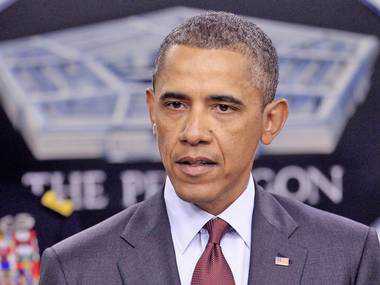
Senate Resolution Reshuffles Political Cards in Ankara, Yerevan and Beyond
On October 21, while introducing the Armenia-Turkey Protocols to the Turkish Parliament for ratification, Foreign Minister Ahmet Davutoglu exposed his government’s true intentions.
Davutoglu stated that Armenia’s acceptance of the agreement, calling for the study of historical archives, indicated that Armenians no longer insisted on their unilateral interpretation of history. He further stated that the Protocols safeguarded Turkey’s territorial integrity from any future Armenian claims by reconfirming the present borders based on past treaties, and that the agreement would contribute to the “liberation of Azerbaijan’s territories,” meaning Karabagh (Artsakh).
While it is understandable that Davutoglu would try to put the best possible spin on the Protocols in order to secure their ratification by the Turkish Parliament, the three advantages he cited are exactly the reasons why most Armenians have so vehemently objected to this agreement.
As expected, Davutoglu was severely criticized by the opposition parties in Parliament that reject the Protocols. The most unexpected attack, however, came from Selahattin Demirtas, head of the Kurdish faction (DTP) in Parliament, who took the government to task for distorting and denying the facts of “the Armenian massacres.” Such a criticism has never been voiced before in the Turkish Parliament. Demirtas brazenly continued: “We believe that we now need to address an issue that has caused so much suffering to the Armenian people — one of the key problems facing the Republic of Turkey. A hundred years ago, the Ittihad Party, with a policy of Islamizing and Turkifying the entire Anatolia, sought to eliminate the non-Muslims, particularly the Armenian people, from these lands through exile, expulsion, deportation and massacres.”
Ignoring the insults hurled by members of the ruling party (AKP) and others, Demirtas condemned the government’s policy of denial that had the aim of escaping the consequences of this “tragedy,” prompting the creation of “a fake history.” He noted that the persecutions and massacres of Armenians were presented as if they never happened. “We need to speak about all of these things and correct the record,” Demirtas concluded.
Immediately after addressing the Turkish Parliament, Davutoglu flew to Baku in order to quell the Azerbaijani uproar over the signing of the Protocols. Realizing the depth of their anger, Davutoglu was forced to make several outlandish declarations: “Azerbaijan’s lands are sacred for us and their liberation is Turkey’s utmost priority. We will not change our position even if the sky falls down to earth!” He also assured them that “if need be, 72 million Turks are ready to die in Azerbaijan!” Azerbaijan’s leaders, however, were not too impressed with Davutoglu’s highly inflated pronouncements. They continued to shut down mosques financed by Turkey, removed Turkey’s flags from a monument for Turkish martyrs in Baku, and threatened to raise the price of gas sold to Turkey.
While Davutoglu had his hands full in Baku, a news flash from Washington came to reshuffle Ankara’s political cards. A Resolution was introduced in the U.S. Senate that called for the reaffirmation of the Armenian Genocide. This unexpected development sent a powerful message not only to Turkey, but also to the leaders of Armenia, Russia, the European Union and the United States.
To their dismay, Turkish leaders discovered that the Protocols would not put an end to the pursuit of recognition and justice for the crime of genocide committed by their ancestors.
Turkey’s Ambassador to Washington Nabi Sensoy was alarmed by this unexpected development and wasted no time in condemning the Senate Resolution during a Voice of America interview. He called the timing of the Resolution “regrettable” and “unfortunate,” coming just one day after the introduction of the Protocols in the Turkish Parliament. The esteemed Ambassador failed to indicate, however, when would be a better time to introduce such a Resolution!
Turkey’s leaders are now caught in the horns of a dilemma. If they rush to ratify the Protocols in order to prevent the House and Senate Resolutions from gaining political support, they would alienate their oil-rich Azerbaijani “brothers” for not having delivered on their promises on Karabagh. On the other hand, if Turkish leaders delay ratification until after April 24 — waiting for Armenia to make concessions on Artsakh — they would run the risk of having either the House or the Senate or both pass the Genocide Resolutions. Since 2010 is an election year for all House Members and a third of the Senate, members of Congress are usually more responsive to their constituents, raising the likelihood of the passage of the Genocide Resolutions. Furthermore, even if Pres. Obama has no intention of keeping his campaign promise on the Armenian Genocide, he would feel compelled to pressure the Turks to ratify the Protocols before April 24, with or without concessions from Armenia on Artsakh, in order to provide a face-saving cover for his next “Meds Yeghern” statement!
Therefore, if Armenia’s leaders stand firm on their repeated public commitments not to make concessions on Artsakh linked to the Protocols, they would be in the driver’s seat in terms of controlling Ankara’s next steps.
Pres. Sargsyan must also keep his solemn promise not to allow the Protocols to undermine Armenia’s efforts for genocide recognition. A good start to demonstrate the Armenian President’s resolve on this issue is to send a letter to the leadership of the House and the Senate, encouraging them to pass the pending Resolutions. It should be noted that the Turkish government has never hesitated to use its considerable political muscle to lobby against past Congressional Resolutions on the Armenian Genocide. Sending a simple letter of support to the U.S. Congress is the least Pres. Sargsyan could do!
The Armenian government’s backing for the newly-introduced Senate Resolution would also send a message to Washington, Moscow and beyond that Armenia is not giving up on its historic rights, even though it is being pressured to make major concessions in other areas.
It is high time for Armenian leaders to reassess the nation’s difficult predicament and take all necessary measures to avoid further missteps.
-
A Mountain Moves in Turkish Foreign Policy
Soner Cagaptay
October 26, 2009
Is Turkey Leaving the West?
Foreign Affairs
October 26, 2009In early October, Turkey disinvited Israel from Anatolian Eagle, an annual Turkish air force exercise that it had held with Israel, NATO, and the United States since the mid-1990s. It marked the first time Turkey’s governing Justice and Development Party (AKP) let its increasingly anti-Western rhetoric spill into its foreign policy strategy …
Read op-ed
A Trap for MuslimsHurriyet Daily News
October 25, 2009How does one deal with and explain rising anti-Americanism, anti-Semitism, and anti-Israeli sentiments in Turkey? A dangerous tendency is to look into the historic roots of these phenomena and explain them as being hardwired in the Turkish polity, not as products of current politics. …
Read op-ed
Surfacing Submarine
Daily Star
October 22, 2009I am often asked these days why Turkey’s ruling Justice and Development Party (AKP) is so upset with Israel. …
Read op-ed
Soner Cagaptay is a senior fellow and director of the Turkish Research Program at The Washington Institute. -
MIT Turkish Day
-
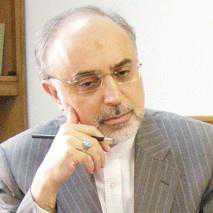
IRAN: NUCLEAR BOMBS ARE ILLICIT
Salihi said; “I am declaring this to the beloved Turkish nation that I do love dearly with all my sincerity. We are not producing nuclear bombs because that is illicit and is not to our benefit.”LET US SUPPOSE THAT WE DO HAVE A BOMB WHERE ARE WE TO USE IT
It is profoundly illogical for Iran to produce a nuclear bomb. I am saying this very openly, without any hesitation: If Iran were to believe that producing a nuclear bomb would be to its benefit, it would produce it and would never keep it a secret. Iran would not be ashamed of that. But we have decided that it does not comply with the defence doctrine of our country. Let us assume that we do have a nuclear bomb, please recount to us where are we to use it? Are we going to go and hit Israel with it? Israel simlply means the USA. Who would be able to cope with the nuclear power of the USA? We are utterly reasonable people.In Turkish;[ İran’ın nükleer programının asli sorumlusu, İran Atom Ajansı’nın (AEOI) yeni başkanı Dr. Ali Ekber Salihi, nükleer programla ilgili bütün iddialara cevap verdi. Salihi, “Çok sevdiğim Türk halkına bütün samimiyetimle açıklıyorum. Nükleer bomba üretmiyoruz çünkü hem haramdır hem de menfaatimize değildir” diye konuştu. ][ DİYELİM Kİ BOMBAMIZ VAR NEREDE KULLANACAĞIZ
* İkinci sebep nedir?
– İran’ın bir nükleer bomba üretmesinin son derece mantıksız olması. Çok açıkça, hiç çekinmeden söylüyorum: Eğer İran, nükleer bomba üretmenin ülkenin menfaatine olduğuna inansaydı bunu üretir ve katiyen saklamazdı. Bundan utanmazdı. Ama bunun ülkemizin savunma doktrinine uymayacağına karar verdik. Diyelim ki bir nükleer bombamız var, o bombayı nerede kullanacağız söyler misiniz? İsrail’i mi vuracağız? İsrail demek ABD demek. ABD’nin nükleer gücüyle kim baş edebilir? Biz son derece akıllı insanlarız. ]Hürriyet
Link: https://www.turkishnews.com/tr/content/2009/10/26/nukleer-bomba-hem-haram-hem-de-menfaatimize-aykiri/