Month: October 2009

  • General Eisenhower Warned Us

    General Eisenhower Warned Us


    German Holocaust German Holocaust

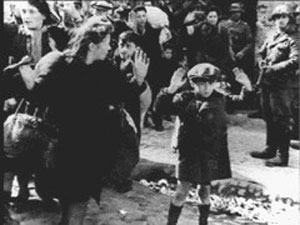
    It is a matter of history that when Supreme Commander of the Allied Forces, General Dwight Eisenhower, found the victims of the death camps he ordered all possible photographs to be taken, and for the German people from surrounding villages to be ushered through the camps and even made to bury the dead.

    He did this because he said in words to this effect:

    “Get it all on record now – get the films – get the witnesses – because somewhere down the road of history some bastard will get up and say that this never happened.”

    This week, the UK removed the record of the Holocaust from its school curriculum because it “offended” the Muslim population which claims it never occurred. How easily each country gives into this idea is a frightening reality.

    It is now more than 60 years after the Second World War in Europe ended. This e-mail is being sent as a memorial chain, in memory of the, 6 million Jews, 20 million Russians, 10 million Christians and 1,900 Catholic priests who were ‘murdered, raped, burned, starved, beat, experimented on and humiliated’ while the German people looked the other way!

    German Holocaust German Holocaust

    Now, more than ever, with countries and governments like Iran, claiming the Holocaust to be nothing more than a “myth”, it is imperative for every civilized human being to make sure the world never forgets the truth.

    Be a link in the memorial chain and help distribute this around the world. E-mail everyone you know.

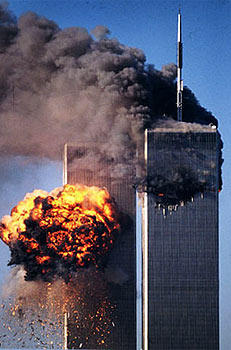
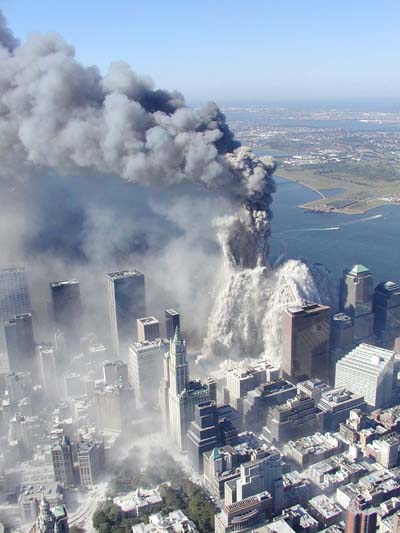
    How many years will it be before the attack on the World Trade Center

    “NEVER HAPPENED!!!”

    World Trade Center on 9/11 World Trade Center on 9/11 World Trade Center on 9/11

    When will this re-writing of history happen because it offends the conscience and sensitive nature of Muslims in the United States?

    If you think it cannot happen, think again. No one ever thought the Holocaust and the atrocities committed by the Nazis could be doubted or forgotten.

    Contributed by:

    http://www.targetofopportunity.com/eisenhower.htm


  • Armenian Americans Divided Over Thaw With Turkey

    Armenian Americans Divided Over Thaw With Turkey

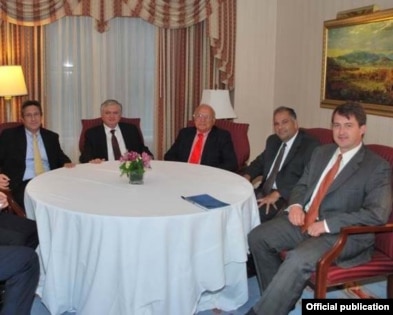
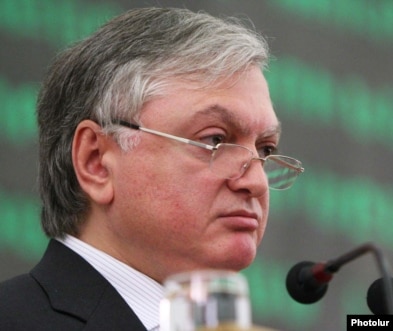
    Armenia — Foreign Minister Eduard Nalbandian meets with the leadership of the Armenian Assembly of America in New York.
    01.10.2009
    Emil Danielyan

    The leading Armenian organizations in the United States expressed conflicting views on Armenia’s dramatic rapprochement with Turkey as President Serzh Sarkisian started on Thursday a week-long intercontinental visit aimed at addressing Diaspora concerns about the U.S.-backed process.

    Sarkisian will spend the next few days touring major Armenian communities in France, the United States, Lebanon and Russia and discussing his conciliatory policy on Turkey with their prominent members. “I am not going in order to convince them, I am
    going to listen to them and tell them what I think,” he told the presidential Public Council on Wednesday.

    According to a statement issued by his office, Sarkisian will first meet in Paris on Friday with leaders of Armenian community leaders from France and other European nations. He will then proceed to New York for similar discussions with representatives of the larger and more influential Armenian-American community. Among invited to the meeting are leaders of a U.S. chapter of the Armenian Revolutionary Federation (Dashnaktsutyun), one of the most vocal critics of the Turkish-Armenian agreements announced on August 31.

    In a statement issued on Wednesday, Dashnaktsutyun’s Central Committee in the eastern United States said it has accepted the invitation. “But, let us be clear: We will attend this meeting because we do not want to forgo an opportunity to voice our strong and uncompromising opposition to these dangerous protocols,” it said. “We will do so directly and forthrightly, letting the president know that the protocols he defends actually betray the national rights of the entire Armenian Nation: Armenia, the Armenian Diaspora, and Nagorno-Karabakh.”

    The statement said Sarkisian’s charm offensive is “not only late but lacking in political and moral sincerity” as both Yerevan and Ankara have made clear that they will sign the two fence-mending protocols without any changes whatever the outcome of the ongoing debates in both countries. It also reiterated Dashnaktsutyun’s arguments against a deal which the nationalist party says will make it harder for the Diaspora to gain greater international recognition of the Armenian genocide. “The protocols will satisfy the articulated aims of today’s Turkish government to silence the enduring and still unanswered ‘Armenian Question,’” the statement said.

    The Dashnaktsutyun-controlled Armenian National Committee of America (ANCA) is one of the two main Armenian groups that have for decades been lobbying the U.S. Congress to pass a formal genocide resolution. The other, more moderate group, the Armenian Assembly of America, has been far more supportive of the thaw in Armenia’s relations with its historical foe.

    The Assembly joined on Thursday the Diaspora’s largest charity, the Armenian General Benevolent Union, as well as two U.S. dioceses of the Armenian Apostolic Church in issuing a statement that welcomed Sarkisian’s policy and the controversial agreements in particular. “The protocols announced on August 31st represent a marked change from the past,” they said. “Turkey has now publicly committed to establish normal relations without preconditions, and the process has yielded remarkable progress.”

    “The path ahead will not be easy and will undoubtedly involve new twists and turns along the way. That makes it all the more important to understand that this is not the time to advance other agendas at the expense of Armenia’s future,” the statement added in a thinly veiled attack on Dashnaktsutyun. “At this critical moment, we believe that the President of Armenia deserves our support.”

    The Dashnaktsutyun statement deplored such views, claiming that they are not shared by the majority of an estimated one million Americans of Armenian descent. “We consider it likely that — for whatever reason — this minority will continue to maintain that unjustified position,” it said.

    https://www.azatutyun.am/a/1841372.html
  • Armenian FM Under Opposition Fire

    Armenian FM Under Opposition Fire

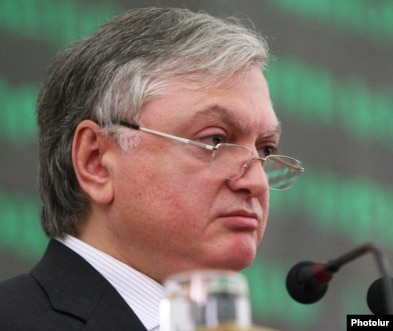
    Armenia – Foreign Minister Eduard Nalbandian speaks at parliamentary hearings on Armenian-Turkish relations, Yerevan, 01Oct, 2009
    01.10.2009
    Irina Hovannisian

    Foreign Minister Eduard Nalbandian faced angry opposition criticism on Thursday as he explained and defended his government’s agreements with Turkey during special public hearings held in the Armenian parliament.

    The hearings, featuring not only parliament members but extraparliamentary politicians, historians and pundits, were part of “internal political consultations” promised by the Armenian and Turkish governments. The opposition Armenian Revolutionary Federation (Dashnaktsutyun) and Zharangutyun (Heritage) parties used them for reaffirming their strong rejection of the agreements envisaging the normalization of Turkish-Armenian relations.

    Nalbandian sought to disprove their “artificial” claims that Yerevan has effectively accepted long-standing Turkish preconditions for the establishment of diplomatic relations between the two states and reopening of their border.

    “Are there any preconditions? No and once again no,” he said. “Are we casting doubt on the fact of the Armenian genocide? Are we hampering international recognition of the Armenian genocide? No and once again no.

    “Is there a connection between the finalized documents and the Nagorno-Karabakh negotiating process? None and once again no.”

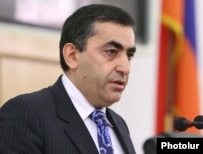
    Armenia — Armen Rustamian, a leader of the opposition Armenian Revolutionary Federation, speaks during parliamentary hearings.

    Dashnaktsutyun and Zharangutyun leaders were unconvinced by these assurances. “Wittingly or unwittingly, we have accepted the Turkish preconditions and allowed an extremely serious deviation from our foreign policy course,” said Armen Rustamian, a Dashnaktsutyun leader who chairs the parliament’s foreign relations committee, which organized the hearings.

    Rustamian also criticized the government for stressing the importance of open borders for Armenia’s long-term economic development. He drew parallels between that stance and the past conciliatory discourse of former President Levon Ter-Petrosian.

    Tigran Torosian, a former parliament speaker who is now highly critical of Armenia’s current leadership, likewise claimed that it has made “unilateral concessions” during the more than yearlong dialogue with the Turks. “What is Turkey giving up in return for our concessions?” he said. “Opening the border, which is its international obligation? Turkey is simply doing what it was supposed to do in the first place.”

    Predictably, the opposition critics vehemently objected to the planned creation of a Turkish-Armenian “sub-commission” of historians what will look into the 1915 mass killings of Armenians in the Ottoman Empire. “The creation of that sub-commission presupposes the erasing of all evidence that the genocide took place,” said Vahan Hovannisian, another Dashnaktsutyun leader. “It means that the evidence is not that weighty.”

    Nalbandian countered that the panel will not seek to determine whether the Armenian massacres constituted a genocide and will only serve as a forum for Turkish-Armenian discussions on “numerous issues coming from the past.” “This sub-commission has no other mandate,” he said. “Nor does it have any time limits because we realize that this process can last very long. Maybe 10 years, maybe 20 years, maybe 50 years, or maybe longer.”

    “The idea is that by talking, opening up to each other, our societies could reach some common denominators,” added the minister.

    Eduard Sharmazanov, a parliament deputy from the ruling Republican Party of Armenia (HHK) also saw little cause for concern. “It is the party which has always falsified history that should be more worried,” said Sharmazanov. “It’s Turkey that has falsified history. And that sub-commission could serve as a ticking time bomb for Turkey.”

    The HHK and its two junior coalition partners, which together control the vast majority of parliament seats, reaffirmed their full support for the agreements in a further sign that their ratification by the National Assembly is a forgone conclusion. The HHK’s parliamentary leader, Galust Sahakian, claimed that President Serzh Sarkisian and his political allies are undaunted by the opposition criticism.

    The bitter debate on the issue, explained Sahakian, is only making the ruling coalition “more vigilant.” “The more blows we get, the more manly we become,” he said.

    https://www.azatutyun.am/a/1841367.html
  • PROTOCOLS…  BUT AT WHAT COST?

    PROTOCOLS… BUT AT WHAT COST?

    The TRT interview with Sedat Laciner, the Director of International Strategic Research Organization, “Turkey Made The World Remember Karabakh Conflict” published in www.HistoryofTruth.com on 30 September 2009, concerning the protocols that will allegedly be signed on October 10 by Turkey and Armenia, is replete with perceptions and/or predictions that I find hard to accept or support . I decided to share with my readers my responses to that interview on a line-by-line basis.

    TRT: Why Switzerland?

    LACINER: First of all, it is hard to find countries that do not support Armenian allegations.

    (EK: There are no countries in the entire continents of Asia or Africa which support Armenian allegations. There are only three countries in Latin America and only two in North America which support Armenian allegations (all because of the Armenian political pressure.) Out of 55 or so countries in Europe, small or large, only 15 support Armenian allegations(also because of the Armenian political intimidation.) In summary, out of some 204 countries which are members of the U.N., only about 20 countries support Armenian allegations—i.e. less than 10 percent. Therefore, to say “it is hard to find countries that do not support Armenian allegations” is incorrect, unfair, and if not based on ignorance or sloppiness, may be even considered malicious. )

    LACINER: … Of course it would be better if it would be an objective country like England,

    (EK: England? Objective? Really? England is the one party that is most responsible for the continuation of the genocide allegations today which are based on the Blue Book, wartime propaganda material compiled and edited by Toynbee and Bryce. The Turkish parliament in 2005 sent a joint letter/request to the House of Commons and Lords to take back the hearsay and forgeries contained in that book and apologize to Turkey for causing immeasurable suffering by deliberately spreading falsified information. England was at the heart of using Ottoman-Armenians against the Ottoman Empire before, during, and after the WWI. To call England objective would be to ignore history.)

    LACINER: …but the mission of mediation is an important factor here. Switzerland was not very ambitious for mediation.

    (EK: It is unacceptable, if not also embarrassing, to have to go to Switzerland, hat in hand, and asking for their mediation. Switzerland has passed a law banning questioning a certain characterization of a historic event without the court verdict supporting such ban. Thus, the Swiss have chosen to be a party to the conflict. Who are these Turkish negotiators who ignorantly brought Switzerland into this conflict, much less begged for their mediation? Don’t they have any idea what happened in 1920 in a small town called Sevres just a few kilometers from where they are? Did they forget about spirit of Lausanne 1923? )

    LACINER: … On the other hand, it could be an advantage for Turkey that Switzerland previously gave support to the Armenian allegations.

    (EK: How can Switzerland’s blatantly pro-Armenian beliefs and policies be an advantage? How can any logical and informed person believe such a naïve suggestion?)

    LACINER: … Turkey can make itself understood better and same time it can strengthen its thesis.

    (EK: Turkey needs Switzerland to be understood? Or strengthen its thesis? Is it not strong enough now? How can it be stronger by talking to the Swiss? )

    TRT: What is the position of Azerbaijan?

    LACINER: Turkey is already making all steps with Azerbaijan. Karabakh problem is as important as the issue of so called Armenian genocide for Turkey. Turkey already declared this and Prime Minister several times underlined that fact. In the process, if we count Switzerland, Azerbaijan is like a fourth party. Besides, Turkey and Azerbaijan constantly share information about the processes. Azerbaijan is being informed about developments, other than that Turkey took the approval of Azerbaijan about this issue. Azerbaijan is aware of Turkey’s good will and they trust Turkey.

    (EK: Is that why Aliyev hastily went to Russia last May to promise Nabucco-earmarked gas to Russian gas pipeline as soon as news of Turkey-Armenia border opening hit the Turkish media? Because Azerbaijan trusts Turkey? )

    LACINER: … The World was unaware of the occupation in Karabakh till now. The land that Armenia keeps under occupation is more than the land that Israel invaded. Turkey made the world realize the occupation in Nagorno-Karabakh.

    TRT: What will be the gains of Turkey?

    LACINER: Success of protocols is dependent on the process of resolution of Nagorno-Karabakh problem, and that is told to Obama, Russia and France. The next meeting towards resolution of Nagorno-Karabakh conflict will be in a much more serious mood.

    (EK: We will see soon enough, won’t we? Too much is bet on too few “perceived” gains that are questionable and doubtful. )

    LACINER: … First of all, this process (alone) is the gain of Turkey by itself.

    (EK: Says who?)

    LACINER: … In the opinion of international community, Turkey had an image like Turkey was smothering Armenia and not letting it develop. By this process Turkey proved that it is not aggressive.

    (EK: Not a convincing argument. Even if it were true, does the dubious outcome justify the high cost?)

    LACINER: … If protocols can be realized Turkey will gain many more advantages. A committee of historians is planned to be established. Such a committee may undermine the genocide allegations of Armenian Diaspora.

    Although there are rumours about borders, recognition of borders clearly mentioned in protocols.
    Although Armenia does not recognize treaty of Kars now, they will be recognizing it through protocols.
    Dashnaks are very uncomfortable that ratifying protocols will mean that Armenia recognizes Turkey’s territorial integrity.

    (EK: As you read these lines, Armenia’s constitution still refers to eastern Anatolia as Western Armenia. Armenia’s politicians and Diaspora make no secret of the fact that they want land and reparations fro Turkey. So, what exactly does it mean to say “recognition of borders clearly mentioned in protocols”? At the first opportunity, cannot Armenia easily say “Yes, Turks put that statement in the protocol, but we never agreed to it”? Then what?

    LACINER: … What will be the gains of Turkey? We can count three of them. First is recognition of borders,

    (EK: Let’s not count the eggs before the chickens lay them. We don’t even have chickens yet…)

    LACINER: … second is about genocide allegations, and third is Nagorno-Karabakh problem.

    (EK: Protocol before resolution in Karabagh or resolution in Karabagh before protocol? That is the question. It should have been the latter. Now a resolution in Karabagh will be harder. Why would Armenia feel motivated to end its military occupation and allow Azeri refugees to return now that Armenia got what it wanted?)

    LACINER: … Normalization of relations would be the fourth gaining for Turkey.

    TRT: What kind of developments are expected to happen in Armenia and Caucasus?

    LACINER: … Opening of borders will affect Russia.

    (EK: After the Georgian war, Russia was trapped in Armenia. Turkey, through its ill-advised protocols with Armenia, not only saved Armenia but also Russia-in-Armenia.)

    LACINER: … But the main problem might be the situation of Georgia. Since Armenia and Azerbaijan use Georgia as a route for transportation, the influence of Georgia will decrease. On the other hand, Azerbaijan will have another gate to World and it will be relaxing for Azerbaijan. But we should not be expecting results so soon. Moving in hurry may cause conflicts in Nagorno-Karabakh.

    (EK: Diplomacy and international relations are a balancing act of interests, not unlike a trade. The Turkish term describes it bets: “alis-veris” taking-and-giving. What these protocols represent fro Turkey is “veris-veris”, giving-and-giving.)

    What if we lose Azerbaijan’s friendship and support because of a murky dealing with Armenia? Who will fill the Baku-Tiflis-Ceyhan pipeline with oil?

    Nothing would make me happier that to be proven wrong on all of the above. But I don’t hold out any hope that the upcoming developments will prove me wrong anytime soon…