Month: July 2009

  • Persistent Anti-Americanism in Turkey: External or Internal Causes?

    Persistent Anti-Americanism in Turkey: External or Internal Causes?

    By Soner Cagaptay and Yurter Ozcan
    July 29, 2009


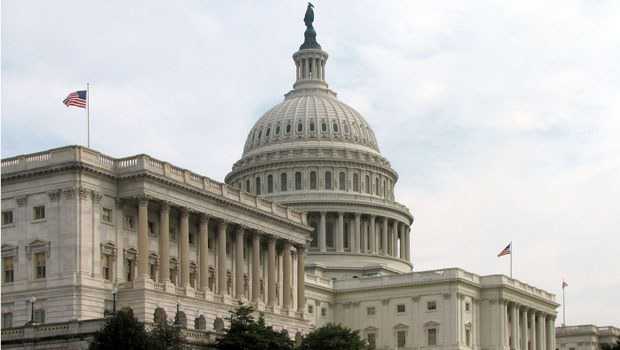
    Over the past years, some analysts have suggested that George W. Bush’s unpopular administration spawned the high levels of anti-Americanism in Turkey. Referring to this phenomenon as “anti-Bushism,” however, discounted the rise of anti-Americanism in Turkey and implied that the country’s adverse view of the United States would change with a new administration. Unfortunately, two recent polls suggest otherwise. Despite the new faces in Washington — policymakers who have gone out of their way to embrace Turkey and its citizens — anti-Americanism persists across Turkish society.

    Enduring Anti-Americanism
    A poll by the Pew Global Attitudes Project reveals that President Barack Obama’s election has led to significant improvement in America’s standing in the world, including in European and Muslim-majority countries; France and Indonesia, for instance, witnessed increases in U.S. popularity from 42 percent to 75 percent and 37 percent to 63 percent, respectively, between 2008 and 2009. Turkey, however, is a rare exception to this trend. According to Pew, the U.S. favorability rating in Turkey in 1999-2000 was 52 percent, but then sharply dived to 30 percent in 2002, 15 percent in 2003, and 12 percent in 2008. In 2009, with the advent of the Obama administration, there has been only a minimal increase of 2 percent in U.S. favorability in Turkey, from 12 to 14 percent.

    Despite the U.S. administration’s full support for Turkey’s EU membership, continuous assistance against PKK (Kurdistan Workers Party) terror attacks, and diplomatic outreach through very successful and well publicized trips to Turkey by Secretary of State Hillary Clinton and President Obama, Turkish public opinion is divided on the new U.S. president: 45 percent say they have confidence in Obama, while 46 percent say they do not (as reported by the World Public Opinion survey, a project run by the ARI Foundation and the INFAKTO Research Workshop of Istanbul) The Pew poll also found that Obama’s trip to Turkey and subsequent speech to the Turkish nation had little measurable impact on Turkey’s view of the United States or of Obama himself.

    U.S. Image Recovering Elsewhere
    According to the World Public Opinion survey, many nations, including European allies that were critical of the United States during George W. Bush’s term, now say that the United States is playing a primarily positive role in the world: a majority in France (52 percent) and Britain (58 percent), a plurality in Germany (44 percent), nearly half in Mexico (49 percent), and a large majority of Kenyans (81 percent), Nigerians (70 percent), South Koreans (68 percent), and Taiwanese (61 percent). According to the Pew poll, in all but three — Poland, Russia, and Israel — of the twenty-four countries surveyed, America’s image improved after President Obama took office.

    Turkey Remains among Those Most Critical of the United States
    U.S. foreign policy. According to World Public Opinion survey, Turkey is top among nations that say that U.S. foreign policy is playing a mainly negative role in the world (72 percent), ranking higher than Pakistan (69 percent), Egypt (67 percent), Iraq (53 percent), Russia (49 percent), and China (41 percent). A large number of Turks (45 percent) also believe that the United States is generally not cooperative with other countries, a view shared by other Muslim-majority nations, including Egypt (62 percent), Iraq (58 percent), and Pakistan (54 percent). Seventy-six percent of Turks see the United States as hypocritical for promoting international laws for other countries but neglecting to apply the same rules to itself (down slightly from 81 percent in 2008). In addition, 86 percent of Turks say the United States abuses its power in forcing Turkey to comply with its agenda (unchanged from 2008), while 86 percent believe America uses the threat of military force to gain leverage over other countries.

    According to Pew, the United States is viewed as an enemy by 77 percent of Palestinians, 42 percent of Pakistanis, and 40 percent of Turks. It is interesting to note that Russia, a traditional U.S. rival, is less hostile with 21 percent.

    In a significant break from the past, the following two categories suggest that Turkey’s negative sentiments toward U.S. efforts have now gone beyond mere differences with foreign policy issues and now affect Turks’ view of the United States as well as U.S. citizens.

    The United States as a country. According to Pew, Turkey is among nations with a highly unfavorable view of the United States as a country (69 percent), together with the Palestinian Territories (82 percent), Pakistan (68 percent), and Jordan (74 percent). Interestingly enough, countries such as Russia (44 percent) and China (46 percent) have more favorable view of the United States.

    The American people. According to Pew, a majority of people in seventeen out of twenty-four nations have a favorable view of Americans. Negative views of American people, however, appear in Turkey (14 percent), Pakistan (20 percent), and the Palestinian territories (20 percent), where little change has occurred in recent years.

    Policy Implications
    Combined with historical data, these new polls show that anti-Americanism might be becoming an internalized component of Turkish society, and that anti-Americanism in Turkey does not relate to specific U.S. administrations. The reshuffle in U.S. foreign policy — placing Turkey higher up on the agenda and jumpstarting the strained bilateral ties — has not produced its intended effect on the Turkish public. While Washington continues to do its share to win Turkish hearts and minds, public attitudes toward the United States will change only if Ankara adopts more positive rhetoric.

    For the U.S. image in Turkey to improve, the Turkish government needs to take ownership of U.S.-Turkish ties. In this regard, Turks need to hear from their government that the United States is their friend, supporting Turkey’s EU membership and helping them against the PKK — astoundingly, most Turks believe the United States is actually supporting the terrorist group — and that Turks share values, institutions, and interests with America. The United States might be doing all the right things for Turkey, but Turkey’s perception of America will not improve until Turkish government officials stress what the United States is doing for the Turkish people. Only positive domestic rhetoric that brings home U.S. policies will dispose Turks more favorably toward the United States.

    Soner Cagaptay is a senior fellow and director of the Turkish Research Program at The Washington Institute. Yurter Ozcan is an Institute research assistant in that program.

  • The World Is Tilted

    The World Is Tilted

    Soner Cagaptay and Ata Akiner
    Hurriyet Daily News
    July 29, 2009

    Tom Friedman is right, the world is flat. New communication technologies and globalization have created a flat world, erasing most social and political inequalities among nations. However, in this flat world, there is a new trend: from Italy and Turkey to Russia, Iran and China, where the governments control the media and the new communication tools, the world is tilted in favor of governments. What is more, this tilted world is not so equal, especially when it comes to politics.

    Take Italy and Turkey, for instance. Both are democracies. Yet in both countries, the governing parties control much of the media, often distorting political debate in their favor.

    In Italy, Prime Minister Silvio Berlusconi, who was a powerful media mogul when he entered politics, today controls much of the Italian media. According to Reuters, Mr. Berlusconi holds sway over 90 percent of Italy’s broadcast media through his private media holdings and by exercising political power over the state television networks. It should not come as a surprise that Italy was rated as “partly free” in Freedom House’s 2009 survey — in “Western Europe” only Turkey shared this ranking with Italy.

    Mr. Berlusconi’s power over the media allows him shape the debate in favor of his government, as well as escape scandals that could finish him off politically. Mr. Berlusconi wins elections despite all odds and despite the shifting-sands nature of Italian politics. In Italy, the world of politics is tilted.

    In Turkey, too, where the Prime Minister Recep Tayyip Erdogan happens to be a close friend of Mr. Berlusconi, control over the media helps the ruling party shape the political debate in its favor. Since 2002 when the Justice and Development Party, or AKP, came to power, the government has used legal loopholes to confiscate ownership of independent media and sell it to its supporters. In 2002, pro-AKP businesses owned less than 20 percent of the Turkish media; today pro-government people own around 50 percent.

    The AKP’s new found control over the media is not without consequences. A review of the newspapers and networks reveals a split country. AKP-affiliated media reports on Turkey as a perfect country, if not for the serious allegations of coup plots against the government. Meanwhile, media unaffiliated with the AKP portrays an imperfect country wrought with corruption and ineffective governance. The media divisions, among other reasons, have caused Turkey to be cut in half, split between AKP’s supporters and opponents. Still, as long as the AKP maintains control over half of the Turkish media, it will enjoy strong support. In Turkey, the world of politics is tilted.

    Then, there is Russia, an effective single-party state. Russian leader Vladimir Putin, a close friend of Mr. Erdogan and Mr. Berlusconi, runs a state in which all media, with the exception of a few independent outlets, belongs to pro-government businesses or is in the hands of the Russian state. To put things in perspective, of the 26,000 newspapers, 16,500 magazines, 1,400 radio stations and 2,200 TV stations in Russia, the number of independent media outlets is in the single digits. Russian authorities regularly raid independent media offices and arrest journalists. Sometimes, even this is not enough: the flag bearer of Russian opposition Novaya Gazeta has tragically lost four journalists in the past eight years under mysterious circumstances.

    This near absolute control over the media has allowed Putin to consolidate power in ways previously unthinkable in Italy and Turkey. United Russia, Mr. Putin’s party, regularly wins landslide victories in elections, most recently pulling in almost three-quarters of the electoral support in the 2007 Russian legislative election. Analysts often ask why Russia is unable to produce an effective political opposition to Mr. Putin. The roots of this problem lie in Mr. Putin’s monopoly over the Russian media: the more tilted the political world in favor of a government, the more the ruling parties can consolidate their power, ultimately preventing any opposition from gaining support. Mr. Putin must make his friends jealous for in Russia, the world of politics is almost irreversibly tilted.

    Then, there is authoritarian Iran and China, where the world of politics is so tilted it cannot even be scaled. In these countries, the government controls not only traditional media, such as newspapers and TV networks, but also new tools of communication, such as the internet and cell phone communication.

    When demonstrators took to the streets in the aftermath of Iran’s recent presidential elections alleging electoral fraud, the government blacked out media access and shut down the web and cell phone networks, effectively cutting Iran off from all media sources. Briefly, the internet and cell phones allowed the Iranian demonstrators to organize. However subsequently, the government’s ability to shut down the internet and cell phone communications provided the kiss of death for the anti-government protests, preventing the demonstrations from growing — in Iran, the world is sharply tilted in favor of the regime.

    The same story repeated itself in a more perfect form during the recent riots in China’s East Turkestan (Xinjiang) region. Soon after the riots began, the government shut down internet access in the Uygur province, ending the demonstrators’ hope of using the web to organize. This step was followed by a total shut down of cell phone communications, including text messaging; isolating East Turkestan from the rest of the world -in Turkestan, the new world is so tilted that the Uygurs cannot even see beyond it.

    The flat new world is better off in many ways compared to the world of the past. Yet, ironically the same forces that are flattening the world can also tilt it, empowering authoritarian states, and allowing undemocratic trends to take roots in democratic societies. In the 21st century, one hopes that the world is not only flat, but also, and more importantly, that it is also even.

    Soner Cagaptay is a senior fellow and director of the Turkish Research Program at The Washington Institute. Ata Akiner is a research intern in that program.

  • The Jews of Turkey and the Armenian Genocide

    The Jews of Turkey and the Armenian Genocide

    By Ayse Gunaysu • on July 20, 2009

    Ayse Gunaysu is an pro Armenian and sympathiser in the cause.

    A groundbreaking book by independent scholar and historian Rifat Bali was published recently in Turkey, unearthing facts and first-hand accounts that unmistakably illustrate how the Turkish establishment blackmailed the leaders of the Jewish community-and through them Jewish organizations in the United States-to secure their support of the Turkish position against the Armenians’ campaign for genocide recognition. The title of the book, Devlet’in Ornek Yurttaslari -Cumhuriyet Yıllarında Türkiye Yahudileri 1950-2003, can be roughly translated into English as “The Model Citizens of the State-Jews of Turkey in the Republican Period 1950-2003.” (I will refer to the book as “The Model Citizens” in this article.)

    The book is a product of the meticulous work Bali carried out for many years at around 15 archives worldwide, including the American Jewish Archives (Cincinatti, Ohio), B’nai B’rith International Archives (Washington, D.C.), National Archives and Records Administration (Maryland), Israeli National Archives (Jerusalem), Central Zionist Archives (Jerusalem), Turkish State Archives (Ankara), public archives in Tel Aviv, private archives (like that of Manajans Thomspson A.S., an advertising agency based in Istanbul), and his personal archives. He also researched hundreds of books, dissertations, and articles in Turkish and other languages, and interviewed numerous individuals.

    “The Model Citizens” is in fact the complementary volume of Bir Turklestirme Seruveni-Cumhuriyet Yıllarında Türkiye Yahudileri, 1923-1945 (A Story of Turkification-Jews of Turkey in the Republican Period 1923-1945), a reference book Bali published in 1999 that reveals the true picture of the relations of domination between the ruling elite and non-Muslims in general (and Jews, in particular) after the founding of the Turkish Republic.

    Rifat Bali’s books are the richest sources of information for anyone looking to study the history of the non-Muslims in Turkey during the republican period. These books differ from others by their sheer wealth of archival references, details from daily life, and insights into the political, social, and cultural background. They are the result of arduous and untiring work carried out in both the public and private archives, in addition to a very detailed scanning of the daily press-which, apparent in both volumes of the history of the Jews of Turkey, significantly sheds light on how the “establishment” in Turkey, an organic system covering not only the state apparatus but also the representatives of the “civil society” from business organizations to the press, operated as a whole to treat the non-Muslims in Turkey as hostages and not as equal citizens. Although the history of the minorities in Turkey has become a topic of interest among the dissenting academia and a limited circle of intellectuals (especially after the turn of the millennium simultaneously with Turkey’s prospective membership to the European Union), as far as I can see, none of the works in this field is supported by such a comprehensive press scan, which includes cartoons in addition to news items and articles.

    Turkish Jews lobbying against the Armenian Genocide

    In his 670-page book, Rifat Bali gives a detailed account of the Turkish government’s efforts to mobilize its Jewish subjects to win the support of the Jewish lobby in the United States against the Armenian campaigners. At the same time, Bali shows, how the Turkish authorities played the Israeli government against U.S. policymakers for the same purpose, by making use of its strategic position in the Middle East, at times promising rewards (i.e., raising the level of diplomatic relations with Israel), at times overtly or covertly making threats (i.e., cutting off Israel’s vital military logistical resources by hindering the use of U.S. bases in Turkey).

    The book also offers rich material about how Turkish diplomats and semi-official spokesmen of Turkish policies, while carrying out their lobbying activities, threatened both Israel and the U.S. by indicating that if the Jewish lobby failed to prevent Armenian initiatives abroad-Turkey might not be able to guarantee the security of Turkish Jews. Such Armenian initiatives included the screening of an Armenian Genocide documentary by an Israeli TV channel in 1978 and 1990; Armenian participation in an international conference in Israel in 1982; Armenian genocide bills up for discussion in the U.S. House of Representatives, and so on. It has been a routine practice for Turkish authorities to invariably deny such threats. However, Bali’s industrious work in the archives reveals first-hand accounts that confirm these allegations.

    But this is not all. Rifat Bali throughout his book unfolds the entire socio-political setting  of the process of making the Jewish community leaders active supporters of Turkish governments’ struggle against the “Armenian claims” in the international arena.

    Now let us look at this background. From what Bali brings to our attention, we can see that there has always been a frantic, extremely vulgar anti-Semitism freely expressed by Islamic fundamentalists and racists, and openly tolerated by the government and judiciary. Such anti-Semitism-escalating at times with the rising tension between Israel and the Muslim countries of the Middle East-often went as far as warmly praising Hitler for doing the right thing and exterminating the Jews; declaring Jews the enemies of the entire human race; listing characteristics attributed to Jews as the worst that can be found in human beings; in one instance, putting up advertisements on walls in Jewish-populated neighborhoods in Istanbul; and in another case, sending letters to prominent members of the Jewish community threatening that if they didn’t “get the hell out of Turkey” within one month, no one would be responsible for what happened to them.

    Whenever Jewish community leaders have approached the authorities for a determined stance against such open anti-Semitism, the answer has been the same: These are marginal voices that have no significant effect on the general public; and there is freedom of expression in Turkey.

    The eternal indebtedness of Jews to Turks

    An important fact about such violent anti-Semitism is that it goes hand in hand with the widespread official and public conception of the Jews as guests who are indebted to their hosts; it is a debt that cannot be paid no matter how hard the debtors tried. This view isn’t only shared by extremist elements in Turkey, but by the entire society-from the elites to the average person. It is a conviction purposefully designed and maintained by the establishment. And it enables the perpetual, unending, and unrestricted generation and regeneration of the relations of domination in Turkey between the establishment and non-Muslims in general, and Jews in particular, manifested in the treatment of the latter as hostages.

    There are regular manifestations of this relationship. The most unbearable is the shameless, extremely offensive repetition by both top-ranking government officials and the mainstream media of how Turkey generously offered shelter to the Jews in 1492, when they were expelled from Spain, and how the Turkish people have always been so “kind” to treat the Jews with “tolerance” throughout history. This theme is repeated on every occasion but is voiced more loudly and more authoritatively whenever pressure on Turkey regarding the Armenian Genocide increases abroad. Another theme has been the obligation of the Jews to show material evidence of their gratitude to Turkey on account of the latter’s welcoming of German Jewish scientists right after the Nazis’ ascension to power. (Readers of Bali’s first volume instantly will remember how Turkey declined thousands of asylum requests by German Jews; how 600 Czeckoslavakian Jews on board the vessel “Parita” were turned down; and how 768 passengers on the Romanian vessel “Struma,” after being kept waiting off Istanbul for weeks in poverty and hunger, were sent to death in the Black Sea by Turkish authorities, with only one survivor in the winter of 1942.)

    An illustrative example is the story of the fury that broke out in Turkey in 1987 when the U.S. Holocaust Memorial Museum Council in Washington, D.C. decided to include the Armenian Genocide-as the first genocide of the 20th century- in the Memorial Museum that was going to be built.
    The mainstream media, and not only the ultra-nationalist extremists, started a campaign that would last for years. Melih Asik from Milliyet (which has always positioned itself as a liberal and democratic newspaper), in his article on Dec. 20, 1987, accused “Jews” for being “ungrateful.” After observing the regular ritual of reminding the Jews of the Turks’ generosity in 1492 and during World War II, he wrote: “We treated them with utmost kindness for many years and now these same Jews are preparing to present us to the world in the Holocaust museum as genociders. Before everything else this behavior should be exhibited in the museum of ‘historical displays of ingratitude and disgrace.’”

    Melih Asik, as can be seen, is so confident that his readers would not question the use of the words “these same Jews,” nor ridicule the identification of those Jews who sought shelter in the Ottoman Empire in 1492 with those sitting in the Holocaust Memorial Museum Council in 1987. He is that confident because he knows that such identification and essentialization is a regular, daily pattern internalized by the readers of the Turkish press.

    Another very liberal and democrat anchorman of Turkey, Mehmet Ali Birand, known as a taboo breaker in recent years, joined-and even surpassed-Asik in his Dec. 29, 1987 article that appeared in Milliyet. In it, he publicly called on the Jews of Turkey to fulfill their “duty of gratitude” and do their best to prevent the Armenians from including the Armenian Genocide in the museum. He added: “Isn’t it our right to expect [such a display of gratitude] from every Turkish citizen?” There’s hardly any need to mention that just before this call to duty, Birand paid tribute to the routine of mentioning the Turks’ generosity towards the Jews back in 1492.

    Not an apologist at all

    Yet, it is important to note that Bali is by no means interested in justifying the Jewish lobby’s vigorous efforts to please the Turkish authorities. While he puts forth a wealth of evidence of the huge pressure the Jewish community in Turkey is subjected to, that evidence does not prevent him from giving a critical account of how the Jewish leadership in Turkey has displayed an eagerness to advocate Turkish views and to support official Turkish policies. There are numerous accounts in the book of how the Turkish chief rabbinate confirmed the Jewish community’s happiness and well-being in Turkey, opposing the promotion of the Armenian Genocide thesis, and how the Quincentennial Foundation, established by Turkish Jewish leaders in 1992 to celebrate the 500th year anniversary of the arrival of the Jews to Ottoman lands, actively championed Turkish official theses.

    It is clear from the book that Bali does not like to make comments on the meaning of his findings; rather, he puts the facts together like a scientist, avoiding to make personal comments, draw conclusions, or speculate about the reasons or outcomes of certain facts and events. What he exposes is clear enough to make the picture complete in the eyes of the reader. It’s up to the reader to acknowledge, for example, the fact that those who criticized Turkish Jews for their submissiveness had no right to expect bravery-when none of them raised their voice against the rabid anti-Semitism freely displayed by fundamentalists, or against the innuendos from government officials, or against the quite obvious threats from opinion leaders who kept asking the Jews to prove their loyalty to the Turkish state or relinquish their right to be treated as equal citizens.

    A last word about Rifat Bali’s book “Model Citizens.” It should definitely be translated into English for those who are interested in the Jewish factor in Turkey’s struggle against Armenian initiatives to recognize the genocide. It would be impossible for anyone either in Turkey or elsewhere to make a realistic, objective, and complete evaluation of Turkey’s success in securing the support of Jewish leaders both in Turkey and abroad without reading this book. Not only that, but the “Model Citizens” is a guide to understanding how deeply rooted anti-Semitism still is in Turkey that claims to be a European country knocking on the door of the EU. It also shows how powerful it can be when mobilizing a country’s human resources against its Jewish citizens-to make the leaders of the Jewish community act as they are told. Turning the pages of Bali’s book, the reader is made to see that anti-Semitism has a historical context so horrifying and so vivid in the collective memory that it can be very instrumental in manipulating victims, and very successful in carving out “model citizens” as the voluntary executioners of government policies.

    ))))))))))))))))))) 

    Aslan Bey

    By Aslan Bey on April 27th, 2009 at 8:14 pm

    Ayse Gunaysu is an pro Armenian and sympathiser in the cause. Anything she writes should not be treated as trustworthy. The article is highly unlikely to be true…
    I have a friend who grew up in Istanbul living in Yesilkoy, which is predominantly Armenian. He is a Turk. He went to school with Armenian kids, attended university with them, and some of these Armenian students went on to perform their military service. One is a dentist and even displays the Turkish flag and a foto of himself in his reception are of his dentist. They still catch up. One of his friends now resides in the US, and every couple of years, returns to Istanbul to visit. They meet and my friend collects the rent (in cash) from his tennant and gives it to him each visit (in cash)…
    This is the trust they have in one another…
    I am one person who spent the a considerable time in Turkey, and studied high school and Lise in Izmir, Turkey. I had friends of all sorts. Kurdish, Jewish etc. I travelled alot in Turkey over the years and prettymuch went everywhere.
    Turks do not preach hatred of Armenians, (Can you say the same for yourselves?)I myself did not find out about the so called “Genocide” until 2002 when I came across some silly website. To be honest, I beleived it at first, then knowing my own countrymen, our history etc I started to do some research. Without being biassed I have learned what I have learned and am quite comfortable about it. It was a tragedy, yes, it was a dark terrible time in Anatolia… Armenians wanted their own lands and were tricked by Russians.. I can understand this and why you did what you did…
    Why wont you open your archives for the historians to research? The Turkish government for decades have been inviting historians and scholars to investigate the archives of all those countries involved, Russia, Armenia, France, US and England. Recep Tayip Erdogan just in his comments on the Obama speach yesterday said “I have written a letter to the prime minister of Armenia in 2005 asking him to open his archives so a joint investigation can occur. The results should to to the international courts…. And Turkey is willing to accept its history, just show us unconditional, categorical, decisive truth in recorded (undocted) documents. Remember you are talking about rewriting history and the history of peoples who have been around as long as history itself.
    By the way, Prime Minister Erdogan is yet to receive a reply. What is it Armenia is hiding???
    Read the below// (Because you all speak and write Turkish fluently)
    You can review this link :

    “MEKTUBUMA CEVAP ALAMADIM”

    – Ancak gösterdiğimiz bu hassasiyetin iyi algılanmadığını da zaman zaman görüyoruz. 1915 olaylarıyla ilgli önceki gün yapılan açıklamaları gerçeği yansıtmayan bir tarih yorumu olarak görüyorum. Açıklama metninin olayların bir bölümünün kaleme alındığını görüyorum. Tarihe ve tarih bilimcilerine bırakılması gereken böyle bir uzmanlık konusunun sürekli olarak kullanılması, her yıl lobilerin istismar meselesi haline getirilmesi, ülkeler arasındaki ilişkilerin normalleşmesini engelliyor.

    – Türkiye olarak tarihçiler tarafından incelenmesi için her zaman samimi bir gayret içerisinde olduk. 2005′te bizzat yazdığım mektupla bu mektubun da cevabını almış değilim. İyi niyetli önerilerimiz karşılık bulmadık.

  • Why Don’t Jews Condemn Anti-Semitism in Turkey?

    Why Don’t Jews Condemn Anti-Semitism in Turkey?

    Rifat Bali, a Jewish scholar and a native of Istanbul, has been investigating anti-Semitism in Turkey for many years. He has authored several books and articles on the history of Turkish Jews. His most recent book, “The Jews of Turkey and the Armenian Genocide,” is a monumental work that documents how the Turkish government pressured not only Turkish Jews, but also the Israeli government and American-Jewish organizations, to lobby against congressional resolutions on the Armenian Genocide.
    Turkey’s blackmail of Jews in and out of Turkey is not news to our readers. Neither is the fact that there has been widespread anti-Semitism in Turkey for decades, if not centuries. In a lengthy article published in July by the Institute for Global Jewish Affairs in Jerusalem, Mr. Bali meticulously documents the fact that such racist attitudes are held by practically the entire spectrum of Turkish society.
    In his article, “Present-day Anti-Semitism in Turkey,” Mr. Bali summarizes his analysis in four key points:

    · “Turkish intellectuals have always taken a pro-Palestinian and anti-Israeli stance. Islamists associate the ‘Palestine question’ with alleged Jewish involvement in the rise of Turkish secularism. Leftists see Israel as an imperialist state and an extension of American hegemony in the Middle East. Comparable themes are found among nationalist intellectuals.

    · “Turkish reactions to Israel’s 2006 war in Lebanon and 2009 war in Gaza often spilled over into anti-Semitism. Newspaper columnists, some of them academics, belonging to the various ideological streams helped fan popular sentiment against Israel and Jews. Israel was said to be exploiting Holocaust guilt and the services of the ‘American Jewish lobby’ to further its own nefarious aims.

    · “Turkish approaches to the ‘Palestine question’ rarely venture outside the clichés of Turkish popular culture. Turkish publishing houses providing translated works on the issue are careful not to run afoul of popular sentiment. The net result is that both Turkish columnists and their readers utilize only limited sources on the conflict that are preponderantly anti-Israeli and anti-Semitic.

    · “Any attempt by the Turkish Jewish leadership to confront Turkish society on combating anti-Semitism is likely to backfire and even further exacerbate the problem. Given this reality, the only options left for Turkey’s Jewish community are to either continue living in Turkey amid widespread anti-Semitism or to emigrate.”

    Mr. Bali documents his assertions by quoting from dozens of anti-Semitic statements published in various Turkish newspapers in recent years. Here are some examples:
    — Toktamış Ateş, professor of political science at Istanbul and Istanbul Bilgi universities, newspaper columnist, and a prominent intellectual who frequently appears on TV, described Jews as “the first and most racist people in history.” (Bugün, July 20, 2006).
    — Ayhan Demir, a commentator for the Islamist Millî Gazete, wrote: “The first thing to be done to achieve the security of Istanbul and Jerusalem is to get rid of, in as short a time as possible, this ‘shanty town’ that has begun to harm humanity on the entire face of the earth, and which is as offensive to the heart as to the eye. To send the occupiers to the garbage heap of history, together with their bloody charlatanism would be one of the most noble acts that could be realized in the name of humanity. A world without Israel would be, without a doubt, a much more peaceful and secure world.” (Millî Gazete, December 30, 2008).
    — Nuh Gönültaş, a well-known columnist, said Hitler was justified in his treatment of the Jews, since “the state of Israel is an even greater tyrant than Hitler.” (Bugün, August 1, 2006).
    — The Islamist sociologist Ali Bulaç, a well-known columnist for Zaman, described Gaza as “a concentration camp that in reality surpasses the Nazi camps.” (Zaman, December 29, 2008).
    It is simply astonishing that Israeli officials and Jewish leaders worldwide hardly ever react, at least not publicly, to such widespread and vicious anti-Semitic outbursts in Turkey. Why is Rifat Bali resigned to the fact that “the only options left for Turkey’s Jewish community are to either continue living in Turkey amid widespread anti-Semitism or to emigrate?” This is a fundamental question that Jews themselves should answer!
    By keeping quiet, Jewish leaders are simply encouraging Turkish commentators to continue making racist and insulting remarks. If Israel’s President Shimon Peres and ADL’s National Director Abraham Foxman were not so busy denying the Armenian Genocide, they would perhaps spend more of their time fighting anti-Semitism!
  • Discrepancies in the Kurdish constitution disregard feelings of the Iraqis

    Discrepancies in the Kurdish constitution disregard feelings of the Iraqis

    Date: July 13, 2009
    No: Rep.17-G1309

    The constitution of Kurdish region is described by Sunni and Shiite Arab parliamentarians as running counter to Iraq’s national constitution. It has created outrage among Arab and Turkmen political factions. Chaldeo-Assyrian politicians say that it undermines their national interests. The Yazidi parliamentarian condemns it. The Shabak’s deputy considers it challenging the feelings of the Iraqis. Almost all non-Kurdish Iraqi politicians have criticized it, even several Kurdish politicians. According to Prime Minister al-Maliki, it is provocative, upsetting and risks damaging relations. The Obama administration has also appeared surprised and troubled by it.

    Since the occupation of Iraq in 2003, Iraqis have been engaged in confronting numerous critical challenges. Meanwhile, the Kurdish authorities have been wholly engaged in collecting interests that in many occasions are at the expense of Iraqis and Iraqi state. Noting worth that the Iraqis were in an awful situation, due to 12 years of economical embargo during which they suffered from hanger and its catastrophic outcomes, fortunately, the Kurdish region averted that disasters.

    Benefiting from the absence of centralized state power and lack of experienced opposition politicians, with the backing of the occupation forces, the Kurdish actors imposed their interests on the Iraqi state’s constitution. The result has been the drafting of an internally inconsistent constitution that weakened the Iraqi state.

    Serious restrictions on the power of central state authorities, contradictory articles, vague terminology, granting independency to the federal authorities in many important state’s power, the living of future decisions in non-treated fields to the regional authorities and the sharing of the regional governments in almost all the authorities of the central government have meant that the Iraqi constitution has lost many of its federalist characteristics. This has, at the same time, damaged the influence and workability of the state as a whole.

    Moreover, despite the enormous advantages that the Kurds obtained from the Iraqi constitution, the Kurdish authorities continue to violate its articles. Today, it is clearly visible to the international community that the Kurdish authorities are the major obstacle to constitutional amendments, which according to article 142 of the Iraqi constitution, should have been initiated in the four months following its adoption in 2005.

    In addition, the recently published Kurdish constitution (KC) contains all the organs and mechanisms of an independent state, it:

    A. Risks the Ignition of existing animosities and decreases the opportunities for reconciliations.
    B. Clarifies what is a continuation of the opportunistic attitude of Kurdish actors and their nationalist agenda.
    C. Shows clearly the expansionist attitude of the ruling Kurdistan Democratic Party and Patriotic Union of Kurdistan.

    The followings are discrepancies in the Kurdish constitution:

    A. Introduction
    i. The Kurdish nation and the Kurdish country are purposely stressed. Furthermore, it stresses the creation of a united Kurdistan, which doesn’t exclude neighboring countries.
    ii. It details the suppression of the Kurdish people by successive Iraqi governments, and glorifying the braveness and fighting of Kurdish rebels, whilst ignoring the Kurdish Peshmerga militias that attacked the Iraqi state for decades and killed thousands of Iraqi soldiers. Thousands of Iraqi children were subsequently orphaned and women widowed.
    Selections from Introduction: “We the people of Iraq’s Kurdistan” “valuing the leaders and the symbols of the liberation movement of Kurdistan, who strugglers, the Peshmerga, its immortal martyrs and their sacrifice for our freedom, safeguard our dignity, defend our country and call for recognition of our right to self-determination by our absolute free will, and remaining loyal to the message, values and objective for which they were martyred, namely to establish a civilized Kurdistan community, ———–, releasing the energy of its generations to establish Kurdistan as unified homeland for all, ———–.“

    B. Article 2,
    i. Item 1, without any historical bases the constitution wrongly defines a region called Kurdistan and includes vast Iraqi lands and large numbers of districts.
    Item 1: “Iraq’s Kurdistan is a geographical and historical entity constituting Duhok province with its present administrative boundaries, and the provinces of Kerkuk, Sulaymaniya, Erbil, and the districts of Akra, Shakhan, Sinjar, Tilkeyf, Kara Kus and the sub-districts of Zummar, Ba’ashiqa, Eski Kelek from the province of Nineveh, and the districts of Khanaqin and Mendeli of Diyala province, but with the boundaries of 1968”
    ii. Item 2, despite that Article 140 of the Iraqi constitution lost its applicability; the Kurdish constitution demands its application.
    iii. Item 3, prohibiting Creation of regions, it contradicts with the Iraqi Constitution and discovers the double standard of the Kurdish actors, who strongly asks federalism for Iraq but refuse it for their regions.
    Item 3: “the establishment of new (federal) regions inside the boundaries of Kurdistan region doesn’t be allowed”

    C. Article 3,
    i. Item 1 clearly rejects the authority of the Iraqi Constitution, except those given in Article 110.
    Item 1: “Authority is sourced from the people, who are the base for its legitimacy, and authority must be exercised through its constitutional institutions. The Kurdistan constitution and laws have sovereignty and superiority over all the laws which are made by the Iraqi government, excluding the exclusive authorities of the federal government provided in Article 110 of the Constitution of the federal Republic of Iraq”
    ii. Item 2 almost completely rejects the authority of the central government, even that of Article 110 of the Iraqi Constitution.
    Item 2: “Application of Article 110 of the Iraqi Constitution, which is related to the exclusive authorities of federal law, does not detract from the sovereignty and superiority of the Constitution and laws of Kurdistan region, and does not limit the powers of regional authorities contained in article in Article 115 and Item 2 of the Article 121 of the federal Constitution”

    D. Article 7,
    i. The Kurdish Constitution leaves the possibility open for separation from Iraq and determines stipulations for separation.
    Article 7: “The people of Iraq’s Kurdistan have the right to determine its fate and the people of Iraq’s Kurdistan chose by free will to be included as a region in the federal Iraq, as long as the federal, democratic, parliamentary and pluralistic system and individual and collective human rights are guarded, as is detailed in the federal Constitution”

    E. Article 8,
    i. Item 1 gives absolute power to the so-called Kurdish Parliament to hold international treaties and conventions contradicting Item 1 of the Article 110 of the Iraqi Constitution
    Item 1: “the international treaties and conventions which the Iraqi government holds with any state or foreign party touching the status of or rights of the region of Kurdistan, will be implanted within the region when the parliament of Iraq’s Kurdistan accepts it by absolute majority of its members”
    ii. Item 2 grants the right to the so-called Kurdish Parliament to reject various international treaties and conventions that the Iraqi state holds.
    Item 2: “the international treaties and conventions which the Iraqi government holds with the foreign states will not be applicable in Kurdistan region, if the parliament of Iraq’s Kurdistan does not accept it by absolute majority of its members, excluding the exclusive authorities of the federal government provided in the Article 110 of the Constitution of the federal Republic of Iraq”

    F. Article 9,
    i. Item 1 requests a share from all types of incomes of the Iraqi state for the Kurdish region, while Item 1 of the Article 17 keeps the incomes of Kurdish region for the Kurds only. This is supported by Item 7 and 9 of Article 74.
    Item 1: “the region has basic constitutional rights against the federal authorities in:
    A fair share from the federal incomes of international grants, aids and loans according to the principles of equivalency and population proportion, taking into consideration the policies of genocide, arson, destruction and denial to which the people of Iraq’s Kurdistan were subjected during the years of former Iraqi governments, in accordance with the Article 106 and 112 of the federal Constitution”.

    ii. Item 2 requests fair Kurdish participation in administration of the Iraqi state, various missions, fellowships and delegations and regional and international conferences. The participation of Iraqis in the Kurdish region is ignored.
    Item 2: “According to the principles of equivalency and the population proportion, there should be fair participation in the administration of different federal institutions of state, missions, scholarships, delegations to regional and international conferences, and conferring career degrees to the peoples of the region in the federal offices in Kurdistan region in accordance with the Article 105 of the federal Constitution”

    G. Article 10 allows the Kurdish authorities to continue absorbing Kerkuk city into Kurdish region and to retain it as a capital.

    H. Article 13 clearly contradicts with Item 3 of the Article 110 of Iraqi Constitution and gives right to the so-called Kurdish Parliament to enact fiscal and custom laws.
    The Iraqi Constitution presents vague information (Item 3 of Article 110 and Item 1 of Article 114) about who will manage custom revenue. Item 3 of Article 110 considers it the exclusive right of the central government, but in Item 1 of the Article 114 shares it with regional authorities.
    Article 13: “Nor can any fee or tax be imposed, modified or exempted in Kurdistan region without approval of the enacting laws in the Kurdistan parliament”

    I. The underground wealth law which the Iraqi Constitution holds the central government as the major organizer is vaguely presented in Item 1 of the Article 17 in the Kurdish Constitution. It holds the Kurdish authorities as the organizers of Hydrocarbon law in Kurdish region.
    Item 1: “Resources and public sources of natural wealth and surface and underground water and unexploited minerals and quarries and mines are the public wealth whose exploitation and administration are organized by law to preserve it for the interest of present and future generations”

    J. Item 1 of the Article 18 of the Kurdish Constitution regulates the executive, legislative and judicial powers without consideration of the Iraqi constitution, while Item 1 of the Article 121 states that regulation of aforementioned powers should be in accordance with the Iraqi constitution.
    Item 1: “Legislative, executive and judicial authorities of Kurdistan region abide by the fundamental rights of this Constitution considering its basic provisions, and these should be applied and implemented as of being the fundamental rights of citizens of Kurdistan”

    K. Item 2 of the Article 23 holds the central government of Iraq to compensate from the Iraqi budget the victims of Kurdish uprisings against the successive Iraqi governments, while the Kurdish regional government obtains 17% from the Iraqi budget, which is approximately twice the proportion of the Kurdish population in Kurdish region. Noting that the central government will also compensate large numbers of Iraqi victims out of Kurdish region from Iraqi budget. If all victims of Ba’ath regime should be compensated from Iraqi budget, then the victims of Kurdish region should logically be compensated from the budget of Kurdish region.

    L. Article 35 of the Kurdish Constitution grants the right to institute a federal region depending on the sect and ethnicity.

    M. Article 40 marginalizes the Iraqi Constitution and considers the so-called Kurdish parliament the only legislative power.
    Article 40: “the parliament of Iraq’s Kurdistan is the legislative authority and the reference to decide on the crucial issues about the people of Kurdistan region, its members are elected by direct secret free general vote”

    N. In the constitutional oath in Article 44 and Article 71, the members of the so-called Kurdish Parliament swear to work only for the peoples of Kurdish region.

    O. Item 1 of the Article 55 restricts the freedom of expression of parliamentarians.

    P. In the constitutional oath in Article 63, the president of Kurdish region and his deputies swear to work only for the peoples of Kurdish region.

    Q. Article 64 leaves the door open for Masoud Barzani to rule the Kurdish region for life.

    R. Article 65,
    i. Item 11 and Item 6 of the Article 70 empowers the president of the Kurdish region with an authority of Prime Minster of Kurdish region.
    ii. Item 12 severely restricts the movement of the Iraqi army in Kurdish region, which oppose the Item 2 of the Iraqi Constitution.
    Item 12: “To allow (president of the region) federal armed forces to enter the territory of Iraq’s Kurdistan where necessary, after winning the approval of Parliament of Iraq’s Kurdistan on the entry of those forces with the identification of its functions and place and duration of stay in the Territory”
    iii. Item 13 oppose the Iraqi Constitution and grant to the Kurdish Peshmerga militias the characteristics of an army.
    Item 13: “To send (president of the region) forces of Territory’s guard the (Peshmerga) or the internal security forces to outside the Territory with the consent of Parliament”
    iv. Paragraph 4 of Item 14 grants the authority to the president of Kurdish region to marginalize the so-called Kurdish parliament, by authorizing a non-elected prime minster.
    v. Item 21 oppose the Item 4 of the Article 121 of the Iraqi Constitution by giving the right to President of Kurdish region to establish offices for the Kurdish region out of the Iraqi embassies. At the same time Item 14 of the Article 74 gives right to the council of ministers of Kurdish region to establish such offices in the Iraqi embassies.

    S. Item 8 of the Article 74 violates the oil and gas law of the Iraqi Constitution (Article 111 and Item 1 and 2 of the Article 112) and grants the right of oil exploitation in Kurdish region to the so-called Kurdish parliament.
    Item 8: “Joint work with the Federal Government to formulate strategic policies necessary for the development of the wealth of oil and gas, combined with the consent of Parliament in everything concerning the wealth of the Territory.”

    T. Article 77 violates Item 1 of the Article 121 of the Iraqi Constitution by stating that the juridical authorities are independent in Kurdish region.
    Article 77: “The judicial authority is independent in the territory of Kurdistan, consists of the Council of the judiciary, the Constitutional Court, and the Cassation Court, and the committee of judicial supervision, the public prosecution, and the courts in different degrees, types of organs, and organizes composition, procedures and conditions of appointment of its members and their accountability by law”

    U. Item 1 of the Article 111 demands a share from the Iraqi underground wealth, while in the Item 4 opens the possibility to save the income of the underground wealth for the Kurdish region only.

    V. Article 115 complicates any future authorities of the Iraqi constitution on the constitution of the Kurdish region.

    By refusing discussion of the Kurdish constitution in the Iraqi parliament, the Kurdish authorities not only violate the Iraqi constitution, they break the simplest bases of democracy and federal system.

    The spirit of this constitution reflects the unproductive and offensive policy of KDP and PUK since, which illustrates that they have not rid themselves of pre-1991 rebel mentality. The Kurdish politicians irritate feelings of the Iraqis, abases the Iraqi state. This trend has potentially long-lasing grave implications for the whole Middle East.
    emblem-of-soitm2

  • The Hague statement on the constitution of Kurdish Region: It doesn’t augur well for the national and regional stability

    The Hague statement on the constitution of Kurdish Region: It doesn’t augur well for the national and regional stability

    Unrealistic objectives and aggressive nature of the Kurdish revolts brought decades of instability to the region and exhausted the states where the Kurds live and exposed the Kurds in particular to disasters. The interests of, and the conflicts between regional and international powers negatively influenced the course of these revolts. Since the turn of the 20th century, international and regional disputes were the main factor in determining the extent and nature of assistance given to the Kurdish rebels. The international press also gave the revolt a great deal of coverage. A century of uninterrupted need of the conflicting powers to the Kurdish uprisings made the Kurdish rebels maintain the violent characteristics.

    The geopolitical changes of the 1990s brought the Kurdish militant parties down from the mountains and granted them the administration of northern Iraq. A decades-long life of violence and the absence of qualified elements within the Kurdish rebels started to be reflected in the tribal nature of the administration, its disregard of human rights principles, hunger for land and inflexible policies.

    With the absolute support of the occupation forces from 2003, the Kurdish actors grasped important positions in the Iraqi state, ruled their regions increasingly independently, suppressed the large number of non-Kurdish communities, imposed their interests on the Iraqi constitution, violated the pro-Kurdish Iraqi constitution and Kurdish Peshmerga militias invested almost all of northern Iraq.

    In the recently published constitution of Kurdish region, the Racist Kurdish authorities:
     Announce clearly their ambition to establish an independent state based on Kurdish ethnicity.
     Violate openly the Iraqi constitution
     Reveal their land-grabbing characteristics by absorbing hundreds of kilometers of Iraqi lands.

    The Kurdish constitution opens the door for two unceasing and fierce conflicts in the region which certainly will destabilize the Middle East for centuries and result in disastrous outcomes:
     In the introduction of the constitution, the establishment of united Kurdistan is openly stressed. This is interfering with internal affairs of Turkey, Iran and Iraq.
     Vast lands out of the Kurdish region, inhabited mainly by non-Kurdish population (Shabaks, Yazidis, Chaldo-Assyrians, Turkmen and Arabs) are wrongly considered historical and geographical part of so-called Kurdistan. These non-Kurdish communities are vehemently against the inclusion of their lands under Kurdish administration. The Iraqi state will certainly reject seizing of these vast Iraqi lands by the Kurdish authorities and surely support the different Iraqi communities in those regions. In this case long lasting brutal quarrels is unavoidable.

    However, in the present dramatic situation of Iraq, despite the unconstructive and inflexible policy of Kurdish nationalist authorities, many international powers still maintain their political and economical supports to the racialist Kurdish political parties.

    We therefore address to:
     those powers which base their support to the Kurdish Regional Government on the economical or political interests, and
     the international community which developed sympathy to the Kurdish case due to the exposure to disasters which resulted from revolts against the states in which they live

    That their support to the Kurdish Regional Government strengthens the latter’s selfish and racist policies and encourage them:
     to continue absorbing the Iraqi lands where all the components of Iraq’s ethnic mosaic live
     to drag the region into fierce ongoing quarrels which will bring further disasters to already exhausted peoples
    10 July 2009
    Iraqi Turkmen Human Rights Research Foundation (SOITM)
    Assyrian Human Rights Organization – Europe (AHRO-EU)
    Yazidi Movement for Reform and Progress
    Shabak Democratic Assembly (Human Rights Office)
    emblem-of-soitm1