Month: June 2009

  • Did leak from a laboratory cause swine flu pandemic?

    Did leak from a laboratory cause swine flu pandemic?

    Same strain of influenza was released by accident three decades ago

    By Steve Connor, Science Editor  30 June 2009


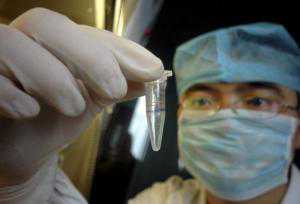
    It has swept across the world killing at least 300 people and infecting thousands more. Yet the swine flu pandemic might not have happened had it not been for the accidental release of the same strain of influenza virus from a research laboratory in the late 1970s, according to a new study.


    Scientists investigating the genetic make-up of flu viruses have concluded there is a high probability that the H1N1 strain of influenza “A” behind the current pandemic might never have been re-introduced into the human population were it not for an accidental leak from a laboratory working on the same strain in 1977.

    Yesterday, the Department of Health announced a further surge in the number of cases in Britain with another 1,604 confirmed over the weekend, and the death of a girl in Birmingham with underlying medical complications; the third death in Britain from swine flu-related problems.

    Almost 6,000 Britons have now been infected with the influenza “A” (H1N1) strain of swine flu. But two medical researchers believe that this strain of the virus had been extinct in the human population for more than 20 years until it was unwittingly reintroduced by scientists working in a research lab somewhere in the world, leading to a pandemic in 1977 that began in Russia and China.

    “Careful study of the genetic origin of the [1977] virus showed that it was closely related to a 1950 strain, but dissimilar to influenza ‘A’ (H1N1) strains from both 1947 and 1957. This finding suggested that the 1977 outbreak strain had been preserved since 1950. The re-emergence was probably an accidental release from a laboratory source,” according to the study published in The New England Journal of Medicine.

    Shanta Zimmer and Donald Burke from the University of Pittsburgh in Pennsylvania said that influenza “A” (H1N1) disappeared completely from humans after a pandemic of another strain of flu in 1957. H1N1 was not detected in annual surveillance until an outbreak of H1N1 swine flu in January 1976 at a US Army base in Fort Dix, New Jersey.

    This outbreak affected 230 military personnel, killing one person, but it was successfully contained and was almost certainly caused by the direct transmission of swine flu from pigs. Nevertheless, the global anxiety caused by the Fort Dix outbreak led to a surge in research into H1N1 around the world, with experiments on frozen samples of the virus stored in labs since the 1950s, Dr Zimmer said.

    “I would imagine that most labs researching into influenza would have had the 1950s strain. We cannot actually pinpoint which lab had it or accidentally released it, but the re-emergence of H1N1 in 1977 made it potentially a man-made pandemic,” she said.

    “It’s a reminder that we need to be continually vigilant in terms of laboratory procedures. The identical virus in the current pandemic would not have occurred because a component of it comes from the H1N1 strain of 1977 – but it doesn’t mean to say that we wouldn’t have had another one causing a pandemic,” she added.

    One of the most likely routes for the release of the 1950s virus is that laboratory workers became infected accidentally and then infected families and friends, Dr Zimmer explained. After the 1977 pandemic, the H1N1 strain of flu re-appeared annually as seasonal flu but this year it underwent a radical genetic change to become another pandemic strain.

    Professor John Oxford of the Royal London Hospital said that the accidental release of the 1950s strain of H1N1 in 1977 is entirely plausible, but it may have been a good thing as it would have given many older people alive today some measure of immunity to the current pandemic. “We can look upon it now as a stroke of good luck,” he said.

    The Independent
  • Charny Condemns Denial of Armenian Genocide in British Parliament

    Charny Condemns Denial of Armenian Genocide in British Parliament

    Dr. Israel Charny Condemns Denial of Armenian Genocide in British Parliament

    sassun-22

    By Harut Sassounian

    Publisher, The California Courier

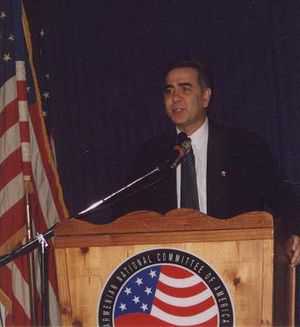
    In an earlier column I wrote about the special conference held at the British Parliament on May 7, organized by the British-Armenian All-Party Parliamentary Group. Dr. Israel Charny and I were invited as guest speakers. I spoke about “The Armenian Genocide and Quest for Justice.” Dr. Charny could not attend due to illness, however, his prepared remarks were read by Peter Barker, a former broadcaster of BBC Radio.

    Dr. Charny is an internationally-known authority on the Holocaust and the Armenian Genocide. He is the Executive Director of the Jerusalem-based Institute on the Holocaust and Genocide, past President of International Association of Genocide Scholars, Editor-in-Chief of Encyclopedia of Genocide, and author of several scholarly books. Dr. Charny’s lengthy paper was titled: “Confronting denials of the Armenian Genocide is not only honoring history, but a crucial policy position for confronting threats in our contemporary world.”

    In his remarks presented at the British Parliament, Dr. Charny described the conference on the Armenian Genocide he attended two years ago in Istanbul. He found “the prevailing discourse stilted, blocked and rigid with denials.” The overwhelming majority of the statements were “one-sided rehashes of Turkish denial propaganda; a basic intellectual failure since they did not even mention or refer to or in any way acknowledge any of the voluminous documentation and evidences of the Armenian Genocide that are now part of world culture; and a great number were emotional diatribes rather than ‘scientific’ or properly scholarly contributions.”

    In his paper, Charny singled out the presentation at the Istanbul conference of Prof. Yair Auron, his colleague from Israel, who spoke “in a strong resonant voice that there was no question but that the Armenians had suffered genocide at the hands of the Turks.”

    In his London remarks, Dr. Charny’s also discussed the “failure of the State of Israel, but not of Israelis, to recognize the Armenian Genocide,” expressing his “deep regret and shame” that Israel (where he lives) and the United States (where he was born), “have failed seriously in their moral responsibility towards the Armenian people.” He felt “particularly wounded as well as angry at such failures by my Jewish people when we too have known the worst horrors of being victims of a major genocide, and therefore we should be all the more at your side as deeply committed allies in all aspects of preserving and honoring the record of the Armenian Genocide.”

    Dr. Charny announced “the happy news [that] the battle for recognition and genuine respect for the memory of the Armenian Genocide [was won] on the level of everyday Israeli culture.” In great detail, he explained that “throughout the year there are major statements in our culture about the Armenian Genocide, including many full-length feature stories and interviews in all of our major newspapers and on our television. On April 24, there is powerful coverage, for example, this year on Roim Olam or Seeing the World, a major TV news magazine; there is an annual seminar at the Hebrew University of Jerusalem at which this year the keynote speaker was Prof. James Russell of Harvard University, and it was my honor to be the keynoter the year before together with an influential member of the Knesset who was totally knowledgeable about the Genocide and totally clear about Israel’s error in not recognizing it; and there is of course an annual commemoration by the Armenian Community — it was there that the two ministers in the past announced their recognition of the Armenian genocide. During a too-brief period, we also had two ministers of the Israeli government who officially recognized the Genocide, and although the governments in question promptly disavowed these ministers’ statements as private and not speaking for the country, the records of those ministers honoring the Armenian Genocide on behalf of the State of Israel cannot be erased. I would say that both the everyday Israeli man on the street and the professional scholars of the Holocaust, such as Prof. Yehuda Bauer perhaps the ranking scholar of the Holocaust at Yad Vashem, are basically sympathetic and committed to paying homage to the Armenian Genocide. A few years ago four of us, including one of the above former ministers, Yossi Sarid, Prof. Bauer, Prof. Yair Auron, an indefatigable scholar of the Armenian Genocide and of Israel’s denials of same, and myself traveled together to Yerevan to lay a wreath at the Armenian Genocide Memorial.”

    As he has done many times in the past, Dr. Charny expressed regret that “sadly and shamefully the pull of practical government politics still leads to official Israel cooperating with Turkey in gross denials of the Armenian Genocide. No less than the arch fighter for peace in the Israel-Palestinian conflict, Shimon Peres, now President of Israel, then serving as Israel’s Foreign Minister, twice went notably out of his way to insult the history and memory of the Armenian Genocide.”

    In a scathing letter, Dr. Charny told Peres in 2001: “You have gone beyond a moral boundary that no Jew should allow himself to trespass…. As a Jew and an Israeli, I am ashamed of the extent to which you have now entered into the range of actual denial of the Armenian Genocide, comparable to denials of the Holocaust.”

    In response to a second “especially insulting” denial by Shimon Peres in 2002, Dr. Charny sent him one of my columns from The California Courier, with the following note: “I am enclosing with great concern for your attention an editorial in a leading US-Armenian newspaper calling on Armenia to expel the Israeli Ambassador. For your further information, the author of this editorial, who is the head of the United Armenian Fund in the US — comparable to our United Jewish Appeal — was for many years a delegate to the UN Human Rights Commission in Geneva.”

    Dr. Charny concluded his London remarks: “I am happy to emphasize that the people and the culture [in Israel] very strongly recognize and honor the [Armenian] Genocide, and know how serious and important it is for us and the whole world.” He expressed his sincere hope that “some day we will succeed in changing the official Israeli government position.”

  • Poor Richard’s Report

    Poor Richard’s Report

    Poor Richard’s Report

    Over 300,001 readers
    My Mission: God has uniquely designed me to seek, write, and speak the truth as I see it. Preservation of one’s wealth while providing needful income is my primary goal in these unsettled times. I have been given the ability to evaluate, study, and interpret world and national events and their influence on the future of the financial markets. This gift allows me to meet the needs of individual and institution clients. I evaluate situations first on a fundamental basis then try to confirm on a technical basis. In the past it has been fairly successful.

    Sir Winston Churchill- Hansard, November 11, 1947
    “Many forms of Government have been tried, and will be tried in this world of sin and woe. No one pretends that democracy is perfect or all-wise. Indeed, it has been said that democracy is the worst form of government except all those other forms that have been tried from time to time.”

    How true!
    My long time readers know that I have been upset over the policies going on in Washington. I was euphoric over Republican victories. That would soon turn to utter betrayal as if I had personally been violated. These self serving idiots increased their benefits while ours decreased. Greedy lobbyists stuffed their pockets with ill begotten gains from unsavory laws that protected rapacious players from botched derivatives that could be spawned world wide.
    Fear not, dear reader, for during panics leaders assume the mantel of justice. The fluff is out of the economy and it is now working at lower and more sustainable levels. It is onward and upward from here…slowly. The problem is that we are now riding in a WWII jeep and they can turn over quickly. Others, however, will slosh through the swamps and come out winners.
    The problem is that OP&R (Obama Pelosi & Reid) gave the stimulus money to the bureaucrats in Washington to spend, instead of to us.
    The stock market has a few years to go before it resumes its upward trend. However, don’t despair my friends, because on the bottom there are several “submarines” that in time will surface to become mighty aircraft carriers.
    Why am I becoming positive when every one else is finally so upset?
    This is a democracy- no matter who is President. Politicians are afraid of losing their power. Not money, but power. No bribes can forestall the loss of power. We could have an entirely new congress in 2010 made up of “independent” thinkers that could take control away from the President. Though, it would have to be veto proof. Now that would be a real positive change!
    I watched Dr. Ben Bernanke, Chairman of the Fed, spar with various congressmen over the Bank of America and the Merrill Lynch deal. Everyone, except for a few on each side, was trying to get the other to say Ken Lewis (Chair of B of A) was a nincompoop (and a liar). It has become rather obvious to me, and to others, that Mr. Lewis was way in over his head and tried to get so big that he became “too big to fail”. This will be a continuing saga for the business journals and the “bad boy” image. I foresee many so-called prominent businessmen going to prison while others commit suicide. You might even find a congressman or two with them as the cracks in the floorboards open wider.
    Listening to Dr. Bernanke, I realized how many checks and balances there are in our government. Dr. Ben was giving straightforward, honest answers in clear sentences. Usually it was a simple yes or no. I loved it.
    The next positive event for me was reading an article in Bloomberg quoting Louis Gerstner, the worthwhile former Chairman of IBM.
    One of his positive comments was to combine the 16,000 or so school districts into 70 or 80. He says, “I could not have run IBM with 16,000 profit centers.”
    The next idea was the one that stirred all the fine memories of yesteryear. He proposed putting a CAPITAL GAINS TAX of 80% on short term trades. After six months it would drop to 60%. Securities held for 5 years would have no tax. This would stop all the greed and speculation that is going on today. Derivatives and sub prime would become dead meat and most of the discount brokerage houses would fall by the wayside.
    When it comes to finances we must have the strictest laws in the world with an easy way to enforce them. Easy money attracts slothful guttersnipes.
    So you see we have a lot of winners out there that will be heard. Some of them are just hot air, but I believe men like Mr. Gerstner are raising “trial Balloons” and must be taken seriously. It took the Congress almost 10 years to enact the laws and this time around I believe it could be done in 5 to 7 years. That depends on how fast the Congress is turned out and in.
    Today you do not need a lot of services throwing junk at you to become a successful long term investor. You don’t need a chart either, unless you can get hold of the point and figure chart that Dorsey Wright does.
    What you do need is common sense. Look around you. What are the necessary items for everyday use? What is the price of the stock? Selling below $15? Dividends?
    There was a man who, in 1937, bought 300 shares of Standard Oil of NJ for seven dollars. At the end of the year the broker suggested he take a profit at $21.00. He did. If he had held on to it he would have been a multi-millionaire. He would have owned thousands of shares of EXXON. That is why I am not a multimillionaire today. Looking back at it; if dad had sold just 100 shares he would have had his investment back, and he would still be wealthy even today.
    Another true story is about a wise lady, who when she received enough of her dividends to make an investment, she would first visit her banker and ask him what stock he liked. Then she would visit her broker and asked him what stock he liked. When they agreed she bought. The only one she did not buy was IBM. Her heirs are wealth even today.
    Then there is Sir John Templeton. The story about him is that after the Battle of Midway he walked into a brokerage house and plunked down $100,000 cash. (Today the cops would come.) He Told his broker to buy 100 shares of every stock on the American Stock Exchange that is selling at $5.00 or under and do not touch them until he gets back when the war is over. He amassed a small fortune that would soon become the Templeton Fund.
    I have hundreds of good stories like this that came out of the depression. Some successes were common sense while others were good investigative situations. None of these individuals invested to become rich overnight, but believed in the capital system of long term growth without any gimmicks or “funny money”.
    So when the investment waters become very muddy- it is time to explore the bottom to find those US Naval submarines that have the potential of becoming tomorrows super nuclear powered aircraft carriers. These should be considered INVESTMENTS not bets.

    Internet Tip:
    When you have a problem and you’re told to “call this number”. When the phone rings, the first thing you hear is that this conversation may be recorded for training purposes & Press one for English ……

    Well here is the tip- DO NOTHING. After a minute an operator will come on the line and take care of your problem – Cheerio!!!

    Richard C De Graff
    256 Ashford Road
    RER Eastford Ct 06242
    860-522-7171 Main Office
    800-821-6665 Watts
    860-315-7413 Home/Office
    [email protected]

    This report has been prepared from original sources and data which we believe reliable but we make no representation to its accuracy or completeness. Coburn & Meredith Inc. its subsidiaries and or officers may from time to time acquire, hold, sell a position discussed in this publications, and we may act as principal for our own account or as agent for both the buyer and seller.

  • Can Erdogan Break the Stalemate in Turkish-E.U. Relations?

    Can Erdogan Break the Stalemate in Turkish-E.U. Relations?

    Can Erdogan Break the Stalemate in Turkish-E.U. Relations?

    Publication: Eurasia Daily Monitor Volume: 6 Issue: 124
    June 29, 2009
    By: Saban Kardas
    On June 25-26, Prime Minister Recep Tayyip Erdogan visited Brussels where he was presented an award for his contribution to peace. Reflecting on his efforts to revitalize Turkey’s European Union membership project, Erdogan delivered a speech on the issue and met E.U officials. He was accompanied by Foreign Minister Ahmet Davutoglu and the chief negotiator for E.U. talks Egemen Bagis. The statements from both sides reflected the fundamental differences between Ankara and Brussels, in terms of their approaches to the causes of the stalemate in Turkish-E.U. relations and how to proceed.

    The Turkish government was severely criticized for backtracking on E.U-related domestic reforms after Brussels decided to launch the negotiations with Turkey in 2005. Last year, concerns grew that unless Ankara took drastic steps, Turkish-E.U. relations might reach deadlock. Amidst speculation that 2009 will be the “make or break” year, Erdogan sent strong signals that he was determined to accelerate the membership process. To this end, he appointed Bagis as the new chief negotiator (EDM, January 12), and visited Brussels (EDM, January 20).

    Despite various declarations of intent and high level contacts between Turkish and E.U. officials, so far, no major progress has been accomplished. On the contrary, the prospects of Turkey joining the E.U. appear to be diminishing, while the discussion is gaining ground on giving the country a special status that falls short of full membership.

    This stalemate has several related causes. On the European front, the leaders of France and Germany adopted a clear stand against Turkey’s full membership, and instead argued that it should be offered a more realistic alternative, such as a “privileged partnership” (EDM, May 13). Furthermore, during the recent European elections, representatives were elected to the European Parliament from the conservative and center-right parties. Many observers believe that, given these parties’ opposition to Turkey, the political environment in Europe has further turned against Turkey (EDM, June 10).

    In Ankara, however, the government has been preoccupied with domestic politics, as well as by pursuing controversial foreign policy initiatives. In the first quarter of the year the municipal elections and the discussions on how to tackle the global financial crisis diverted attention from the European agenda. Although the government has strived to refocus on constitutional change and accelerate the E.U. membership process, it failed largely as a result of its inability to build consensus with the opposition parties (EDM, April 1). The latest discussions on an alleged military document concerning plans to illegally change the government had significant repercussions for the E.U. membership process. It demonstrated the shortcomings of Turkish democracy, and generated an added impetus for the AKP to revitalize the E.U. reform agenda to normalize civil-military relations (EDM, June 23).

    Nonetheless, Erdogan’s statements during his recent trip show that his views on Europe remain unchanged. In that sense, the overall dynamics of this visit followed the pattern set in January. He preferred to criticize the Europeans for their mishandling of the accession process, while the latter reiterated their argument that Turkey had to reform its political system in order to comply with European norms.

    Erdogan openly criticized some member states’ efforts to stall the accession talks and questioned the sincerity of the Greek Cypriots over finding a lasting solution on the island. Commenting on the European elections, he raised his concerns about the growing populism within Europe. He expressed uneasiness with European politicians’ questioning Turkey’s future membership for short-term political gains. “We want Europeans to resist such inconsistent policies [i.e., openly questioning Turkey’s full membership]. These fluctuating [views] curb Turkey’s enthusiasm to join the E.U. We expect Europe to fulfill its promises to us. The rules cannot be changed in the middle of the game.” Erdogan also maintained that “Europe cannot keep pace with Turkey’s reform performance. We expect the E.U. to accelerate the process [i.e., more chapters should opened be for negotiation]” (Cihan, June 26).

    After his meeting with the E.U. Commissioner for Enlargement Oli Rehn, Davutoglu emphasized that the growing number of high-level visits reflected Ankara’s eagerness for membership, and that Turkey will accelerate the process. “We are aware of our responsibilities and requirements in terms of the reforms,” Davutoglu added. Rehn, however, ruled out any delay in membership talks being caused by the E.U.’s own shortcomings, and stressed that Turkey has to take “concrete” steps and maintain its commitment to reform (Hurriyet, June 26).

    The fate of the Turkish-E.U. process appears to hinge on whether the two sides can allay each other’s concerns. For Brussels two issues remain of vital importance: whether the Turkish government will implement constitution reforms and if Ankara will change its attitude toward the Greek Cypriots. Ankara’s major concerns are its perceptions that it is being treated unfairly due to some E.U. member states’ overtly anti-Turkish position, and that its achievements are unacknowledged as a result. Moreover, the slow pace of the accession talks and the growing salience of the “privileged partnership” discussions undermine Turkey’s trust in the E.U.

    However justified he might be in his criticism of the Europeans, eventually it will be up to Erdogan to break this stalemate. If he is serious about revitalizing the E.U. membership process, he needs to acknowledge that its current impasse is his own making, whether knowingly or not. He must abandon his complacency and act decisively on the Cyprus issue, similar to his revisionist foreign policy vision prior to 2005. Erdogan has to “talk to” the opposition parties and build domestic consensus to facilitate political reform. Then, he might satisfy both the E.U.’s expectations and strengthen the hands of pro-Turkey groups within the E.U, thus mitigating the intra-E.U. opposition to Turkey.

    https://jamestown.org/program/can-erdogan-break-the-stalemate-in-turkish-e-u-relations/

  • Armenian, Azeri Presidents Set For Another Meeting

    Armenian, Azeri Presidents Set For Another Meeting

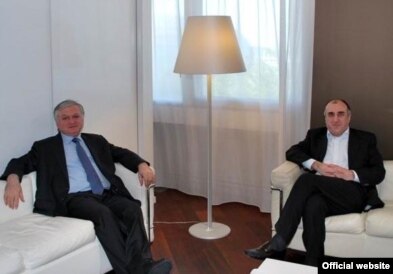
    Armenia — The foreign ministers of Armenia and Azerbaijan meet in Paris on June 26, 2009.

    29.06.2009
    Emil Danielyan

    The presidents of Armenia and Azerbaijan look set to hold soon yet another round of face-to-face negotiations which international mediators hope will remove the remaining obstacles to a framework peace agreement on Nagorno-Karabakh.

    The foreign ministers of the two warring nations discussed the possibility of such a meeting during six-hour talks in Paris on Friday. The U.S., Russian and French diplomats co-chairing the OSCE were also in attendance.

    “The meeting of the foreign ministers of Armenia and Azerbaijan held in Paris was useful and took place in a constructive atmosphere,” the Armenian Foreign Ministry said in a statement. It was decided that the Minsk Group co-chairs will again visit the conflict zone “in the first half of July,” said the statement.

    “We coordinated our approaches to resolving the Nagorno-Karabakh conflict and continued to prepare the next meeting of [Presidents] Ilham Aliev and Serzh Sarkisian,” the Azerbaijani Trend news agency quoted the U.S. co-chair, Matthew Bryza, as saying after the talks. He said that meeting could take place in Moscow in July.

    In an interview with the Reuters news agency last week, Bryza said the mediators hope that Aliev and Sarkisian will bridge their remaining differences over the basic principles of a Karabakh settlement proposed by the mediators. “We hope that if they meet in the middle of July, they will have agreed conceptually on all the elements of these basic principles,” he said.

    He said the parties would then go line by line through the three-and-a-half pages of text to agree the details. “Once that happens, which we the co-chairs are shooting for by the end of the year, then we could say, it would be true, that a framework agreement has been reached,” added Bryza.

    In a joint statement issued earlier this month, the co-chairs said Aliev and Sarkisian “narrowed the differences between the two countries on a number of the Basic Principles” at their last meeting held in Saint Petersburg, Russia on June 4. They did not give any details, sticking to the confidentiality of the protracted peace process.

    https://www.azatutyun.am/a/1765356.html

  • Ottoman Yolk

    Ottoman Yolk

    Jun 25th 2009
    From Economist.com

    What would a politicised east European menu look like?
    “What’s “Cutlet Carpathian Style?”, your columnist asked innocently in a restaurant in Budapest recently. “You’re halfway through eating it when the Ukrainians take it away and say the rest belongs to them,” came an instant quip in return. The rest of the world may have forgotten, but Hungarians still remember the time when a large chunk of what is now Ukraine (and a lot more besides) was part of their old imperial kingdom.

    The encoding of menus is a fascinating byway in gastro-linguistics. Any mention of “Hawaiian” means that chunks of pineapple have been added to the dish. Similarly, “Provençale” signals tomatoes and black olives. “Napolitano” means with basil and mozzarella; “Niçoise” is anchovies and eggs, “Veneziana” means onions. More generally, “traditional” usually means indigestible or overcooked. “Organic” means it costs more.

    But rarely if ever do the menu terms have any political meaning. London’s best restaurant for real English cooking, Wilton’s, serves a dessert called “Guards’ Pudding”, invented in the trenches of the first world war (ingredients include breadcrumbs and raspberry jam). The officers who survived the wartime mincing machine apparently longed for the dish in peacetime London. The French “Macedoine” salad could be the big exception: it is a mixed fruit salad that some say was named after the ethnic confusion in Macedonia 100 years ago. But serious scholars have not endorsed that theory.

    So it is tempting to try to create a menu with east European historical overtones. The starter might be Ottoman salad. That would be lazily prepared and slovenly served, and crowned with the yellow part of a boiled egg (the Ottoman yolk). Its unlikely ingredients range from sharp Balkan paprikas to gelatinous Levantine sweetmeats. It would stay on the table for ages, and some guests would end up picking bits out in order to create their own dishes (Bulgarian crudités, perhaps). Random offenders would be hauled off to the kitchen to spend a lifetime washing dishes, Janissary style.

    The Hapsburger Auflauf (stew: but Hungarians would call it a goulash) would be equally varied but rather more successful, with Czech dumplings nestling quite snugly next to wisps of sauerkraut and paprika.

    Romanov rissoles would be raw (and bleeding), prepared with extraordinary incompetence and bashed about by a madman. But they would be delicious compared with “Steak a la Soviet” (often known colloquially as Lenin’s Revenge): this would be a revolting mixture of gristle and animal fodder, enough to keep you alive but wishing that you were dead.

    Diners would hastily turn to the more appetising part of the menu. Prague Spring Rolls would be a temptingly modern variation on traditional Czech cuisine, half-baked yet cooked with delightful enthusiasm by a kitchen crew of idealistic youngsters and hard-bitten types who have embraced nouvelle cuisine. Sadly, a jackbooted waiter stamps them to smithereens before you have begun to enjoy them. You then spend the next 20 years cleaning the restaurant windows.

    Diners are told that Baltic Surprise is off the menu forever on seemingly dubious health grounds. Old people insist that it used to be delicious, involving herring and fresh herbs, eaten at midsummer with a lot of beer and dancing. Even trying to order it brings the threat that you will be locked in the cellar for life. But diners who persist will find it served with a flourish, having been cooked secretly in the kitchen from a recipe bravely preserved in the attic. Conversely, Kasha Putina (Putin’s porridge) is not on the menu either, though something is clearly cooking. Russians maintain that they love it, but the neighbours find the smell a bit overpowering.