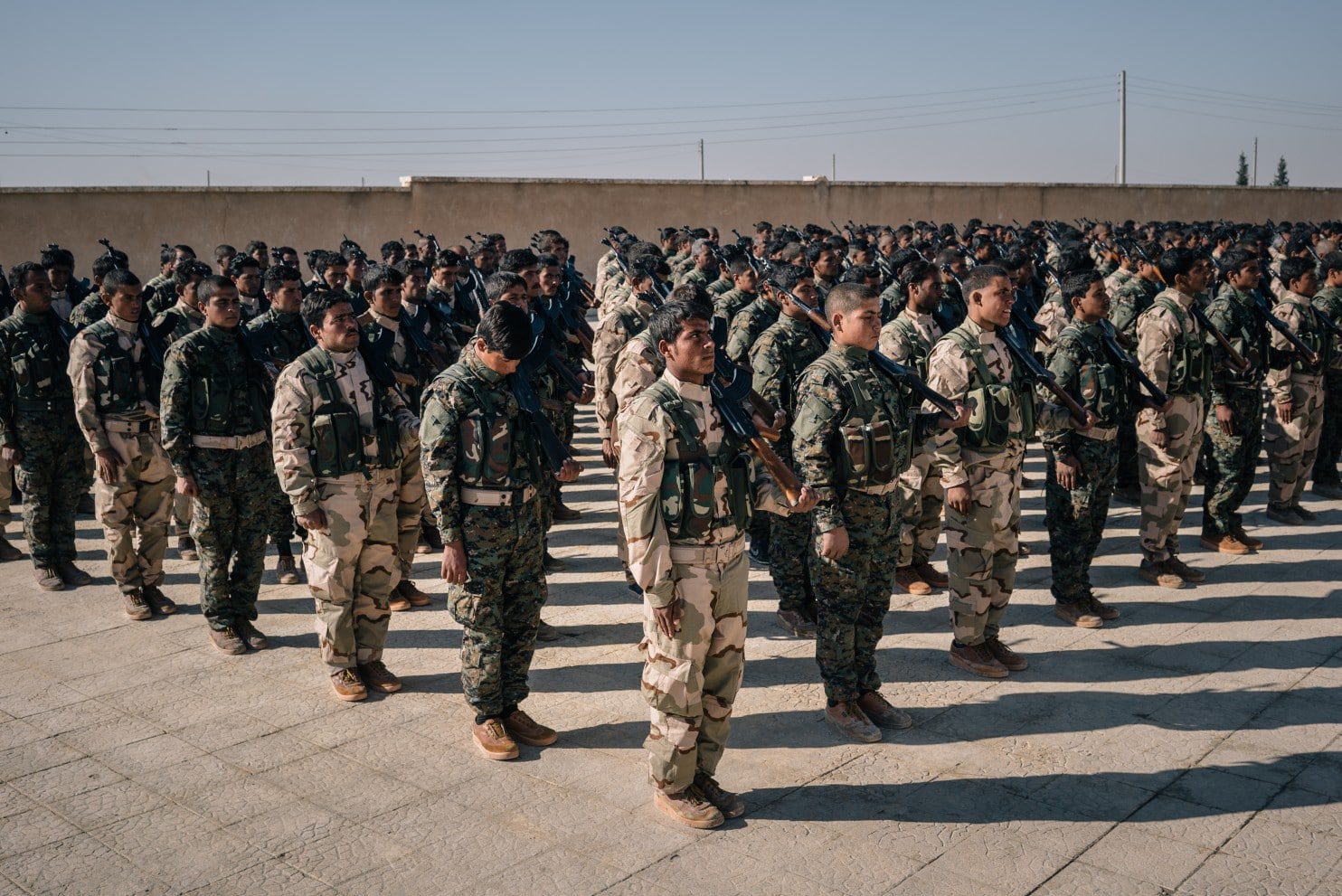
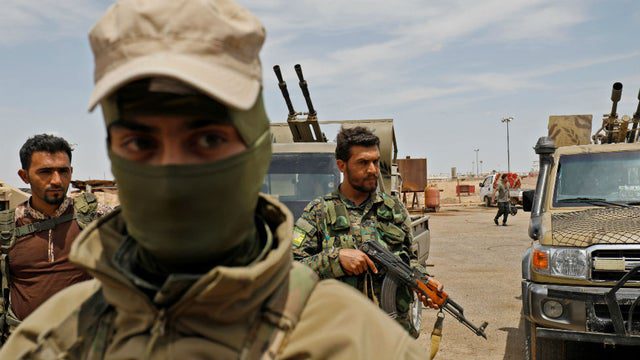
Regarding Recent Statement on Syria and ‘Saving the Kurds’
February 9, 2026
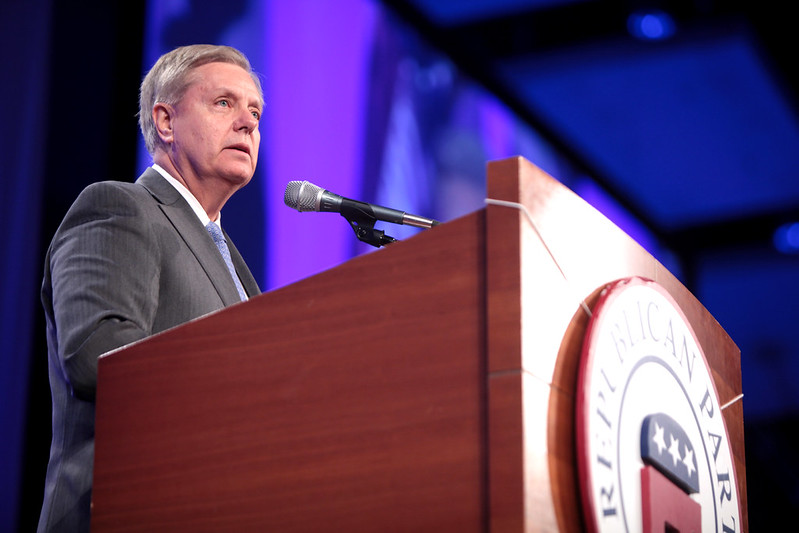
Lindsey Graham -US Senator 211 Russell Senate Office Building Washington, DC 20510
Dear Senator Graham,
I read your January 27, 2026 statement on X with great concern. Your claim that “the Kurds are under threat from the new Syrian government aligned with Turkey” and your announced intent to introduce “crippling sanctions” through a “Save the Kurds Act” constitutes not only a misreading of the regional reality but, more troublingly, a reversal of your own previously stated national security concerns.
First, your framing collapses a diverse people into a single militant faction. There are more than 15 million Kurdish citizens living in neighboring states who serve as parliamentarians, ministers, governors, diplomats, judges, academics, and business leaders. If these governments were engaged in a campaign against Kurds as a people, they would not have sheltered half a million Iraqi Kurds fleeing Saddam Hussein in 1991 nor hosted millions of Syrian refugees, including tens of thousands of Syrian Kurds, since 2012. The omission of intra-Kurdish plurality is astonishing. Nechirvan Barzani, President of the Kurdistan Regional Government, has publicly defined the PKK as a “headache” and demanded their expulsion from Kurdish territory in Iraq. Abdullah Keddo of the Syrian Kurdish National Council has warned that PKK-linked groups must be expelled from Kurdish-majority towns in Syria. Kurdish rejection of PKK authoritarianism is not peripheral — it is central.
Second, your romanticization of the YPG/PYD also ignores hard legal and intelligence facts. Interpol, FATF, and UN agencies have documented PKK-linked networks involved in narcotics trafficking, forced conscription, human smuggling, extortion, and arms procurement. No sovereign state including our own would tolerate an armed separatist formation operating on its borders financed through transnational organized crime.
Your narrative also erases the chronology. The collapse of the 2013–2015 peace process did not occur in a vacuum. It was the PKK that unilaterally broke the ceasefire, declared “autonomous zones,” dug urban trenches, and launched urban insurgencies from Cizre to Sur. No Western democracy would permit an armed non-state actor to carve municipal fiefdoms under the banner of cultural rights.
You are also aware of the U.S. role in muddying this conflict. Under the cover of counter-ISIS operations, Washington rebranded the PKK’s Syrian affiliates (YPG/PYD) as the “SDF.” Senior American officials have since admitted the obvious. Then-Secretary of State Antony Blinken called the PKK an “enduring threat.” Defense Secretary Lloyd Austin confirmed that the SDF maintains structural ties to the PKK. Ambassador James Jeffrey openly described the SDF as a national security problem for our NATO ally. President Donald Trump went further: “Kurds are not angels. The PKK… is probably worse at terror and more of a terrorist threat in many ways than ISIS.”
Senator Graham, respectfully you once recognized this. During hearings of the Senate Armed Services Committee, you questioned Secretary Carter and General Dunford about U.S. cooperation with the PKK/YPG in Syria and Iraq, highlighting their acts of terror and the thousands of civilian lives lost. You warned against entanglements with designated terrorist entities. Today, you are proposing sanctions on governments combating the very groups you once warned about. One is left to ask: when did the policy change, and why?
Meanwhile, the new Syrian government under President Ahmad al-Sharaa has granted Kurds full citizenship, legalized Kurdish education, recognized Newroz as a holiday, and enacted anti-discrimination laws. These reforms undermine the separatist thesis and remove the humanitarian alibi Western commentators often rely upon. Iraq’s Kurdish Parliament has repeatedly expressed gratitude for cross-border support against ISIS between 2014–2017 and credited regional integration for their economic development. Kurdish leaders have never claimed that their survival depends on an armed Marxist separatist formation only certain Washington think tanks have.
Senator, no one is attacking Kurds. Counter-terror operations target groups like the PKK/YPG/PYD that exploit instability to advance extremist goals. Conflating Kurds with separatist militants is an insult to Kurdish citizens who reject authoritarianism.
America’s reputation will not suffer by ceasing to fund non-state militias. It will suffer by appearing to legislate on behalf of a terrorist organization. If you are so committed to their protection, one wonders whether your constituents in South Carolina would welcome their relocation, protection, and financing at home.
At a time of economic strain, American taxpayers deserve investments in American communities not another open-ended proxy commitment to groups that U.S. officials themselves have labeled as terrorists.
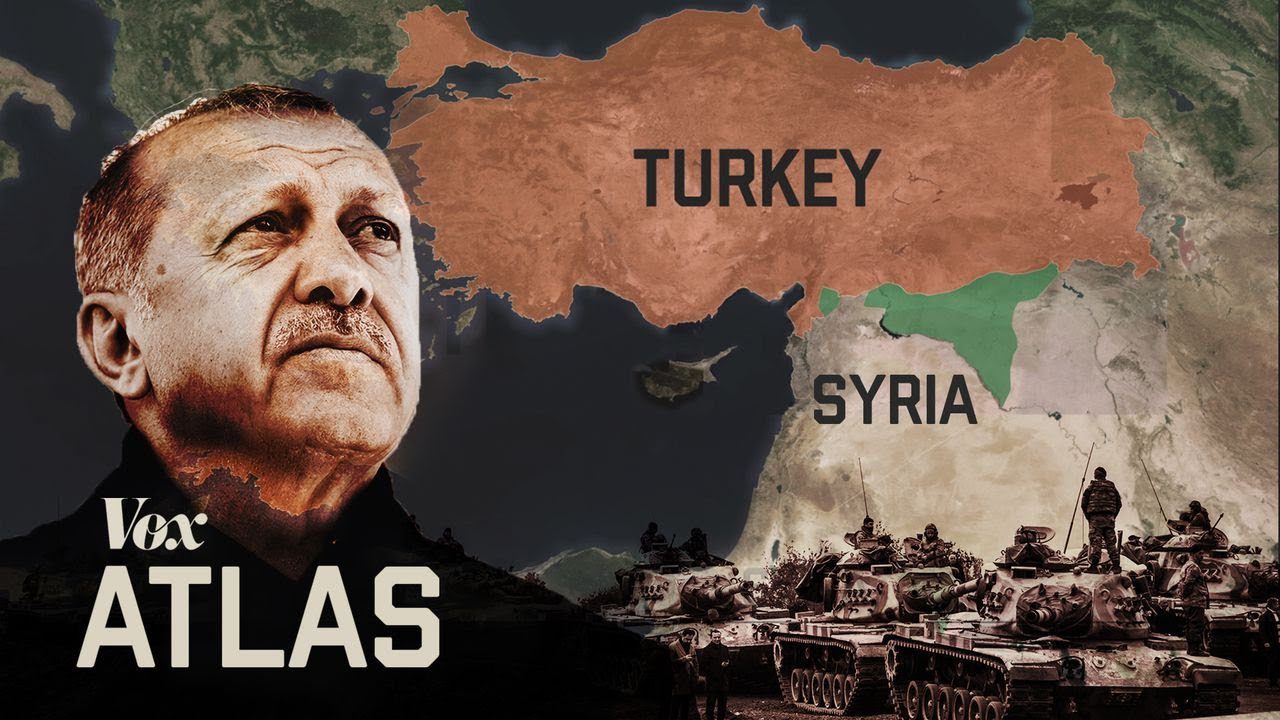
The Wall Street Journal’s January 16, 2026 article, “U.S. Officials Concerned Syria, Backed by Turkey, Will Expand Operation Against Kurds,” claiming that the Republic of Türkiye is “expanding operations against Kurds” is not merely analytically flawed; it is factually indefensible. It recycles a narrative built on two dangerous myths: first, that terrorism can be sanitized through rebranding, and second, that Türkiye’s legitimate national security concerns can be dismissed as opportunism. Both collapse on contact with reality.
First, vocabulary matters. Lets understand that Türkiye’s official name Republic of Türkiye is part of its sovereignty and identity. Referring to the country as “Turkey” disregards this diplomatic distinction.
The WSJ omits the central fact that since 1975 Türkiye’s operations target the PKK and now its Syrian affiliates YPG/PYD, not Kurds as an ethnicity. The PKK is a Marxist-Leninist terrorist group responsible for over 45,000 civilian deaths in Türkiye, including women, children, teachers, and doctors. Senior U.S. officials have been explicit on this point. On December 12, 2024, Secretary of State Antony Blinken called the PKK “an enduring threat” to Türkiye. Defense Secretary Lloyd Austin noted Türkiye’s legitimate security concerns given the SDF’s structural links to the PKK. Former Ambassador James Jeffrey and former CIA officer Glenn Corn stressed that Türkiye is indispensable to NATO while the YPG is not. Former U.S. Special Envoy Tom Barrack likewise acknowledged the YPG’s PKK lineage. These are not obscure Turkish talking points; they are U.S. assessments. Since January 2026, Syria’s new government under President Ahmad al-Sharaa has granted Kurds full citizenship, legalized Kurdish-language education, enacted Anti-Discrimination Laws, and recognized Newroz as a national holiday. Despite these historic gains, the YPG/PKK rejects political settlement in favor of armed separatism, threatening regional sovereignty and Türkiye’s territorial integrity. None of this appears in the WSJ’s characterization.
The WSJ also refuses to acknowledge Kurdish voices who reject PKK domination. Nechirvan Barzani, President of the Kurdistan Regional Government, has called the PKK/YPG a “headache” and demanded their removal from Iraqi Kurdish territory. Abdullah Keddo of the Syrian Kurdish National Council stated on December 25, 2024, that PKK-linked groups must be expelled from Syrian Kurdish areas. The narrative that the PKK speaks for Kurds is rejected by many Kurds themselves.
Meanwhile, more than 15 million Kurdish citizens live peacefully in Türkiye, represented in parliament, ministerial posts, and the foreign service. Türkiye sheltered half a million Kurds fleeing Saddam Hussein in 1991 and has hosted millions of Syrians including tens of thousands of Syrian Kurds since 2012. If Ankara were “at war with Kurds,” they would not repeatedly seek refuge there.
What the WSJ refuses to scrutinize is the strategic failure of U.S. policy under the Obama and Biden administrations: arming and legitimizing a terrorist organization in the name of “counter-ISIS.” Senator Lindsey Graham confronted Defense Secretary Carter in Congress about the incoherence of partnering with a group involved in kidnappings, forced conscription, ethnic cleansing, and intimidation. No NATO relationship has been more needlessly damaged in the 21st century than U.S.–Türkiye relations over this issue. The PKK’s portfolio extends beyond terrorism. Interpol, FATF, and UN agencies have documented the organization’s narcotics, human trafficking, arms smuggling, and extortion networks across three continents. Türkiye’s establishment of a sterile security zone in northern Syria mirrors what other states including Israel claim as their inherent right: securing borders. Yet when Türkiye does so, smear campaigns erupt. No NATO ally has suffered more terrorism casualties in the last 40 years than Türkiye.
Equally troubling is the silence of those paid to defend Türkiye’s interests abroad. Unfortunately we have witnessed once again, , Turkish Consul General Ahmet Yazal has again remained mute while American media outlets distort and delegitimize a NATO ally combating terrorism. Diplomacy is not theater and taken selfies ; silence in the face of orchestrated disinformation is not professionalism it is dereliction.
Türkiye is no longer our grandfathers’ Türkiye. It is a rising power with one of NATO’s strongest militaries, a decisive geopolitical footprint from the Caucasus to Africa, and a strategic relevance serious analysts cannot ignore. The WSJ may cling to Cold War myths, but the century ahead will not.
President Timothy G. Lynch College of Staten Island 2800 Victory Boulevard Staten Island, NY 10314 January 1, 2025
Dear President Lynch,
I write to you with deep concern regarding a matter that has the potential to tarnish the reputation of the College of Staten Island (CSI). I am compelled to address the recent remarks made by Ms. Özlem Gönér, who, as a Steering Committee member of the Emergency Committee for Rojava, appeared on Democracy Now on December 24, 2024. In her commentary, Ms. Gönér stated that “Turkey is a major threat to Kurds and to democratic experiments that Kurds have been implementing in the region starting in 2014,” and continued by claiming that “Turkey, Israel, and the U.S. collectively are trying to carve out this land, and Kurds are under threat.” While these statements may appear innocuous on the surface, they carry with them a dangerous misrepresentation of the realities on the ground, particularly concerning Türkiye’s legitimate national security concerns and its role as a NATO ally.
Ms. Gönér’s assertions are not only misleading but are also ideologically aligned with a group that maintains dangerous ties to the PKK (Kurdistan Workers’ Party), a Marxist-Leninist organization recognized as a terrorist group by the United States, the European Union, and Türkiye. Over 45,000 women, children, teachers, doctors and men, lives have been lost to PKK violence. U.S. Secretary of State Antony Blinken, during his visit to Ankara on December 12, 2024, aptly described the PKK as “an enduring threat” to Türkiye. Furthermore, U.S. Secretary of Defense Lloyd Austin December 9th 2024 acknowledged Türkiye’s legitimate security concerns, particularly regarding the Syrian Democratic Forces (SDF=YPG, PYD), which are closely tied to the PKK. December 13, 2024 Former CIA Senior Agent Glenn Corn on the Cipher Brief said” Turkiye is a much more strategic partner of importance for the U.S then working with YPG, PYD / PKK “Kurds”. Also Former US Ambassador to Turkey David Satterfield : recognizing A NATO Partner and Ally Turkey to defend itself against terror to exercise it right of self-defense CBS News December 18, 2024. December 19 2024 Former US Ambassador to Turkiye James Jeffery “US Backed SDF, given its undeniable ties to the PKK, is a serious national-security threat to Turkiye.”
During Senate Armed Services Committee Hearing on combating ISIS, U.S. Senator Lindsey Graham (R-South Carolina) questions Secretary Carter and General Dunford on the U.S. military strategy in working with terrorist PKK and YPG in Syrai and Iraq highlighting the YPG’s connections to the PKK and their acts of terror, which have cost thousands of civilian lives.
The political framework of Rojava, which Ms. Gönér supports, is rooted in the ideology of Abdullah Öcalan, the leader of the PKK, thus creating a direct or indirect link between her actions and the PKK’s objectives. It is crucial to distinguish between humanitarian advocacy and political or military affiliations.
Despite any claims of neutrality, the ideological overlap between these groups raises significant concerns about the motivations behind Ms. Gönér’s rhetoric.
First and foremost, Türkiye’s official name—the “Republic of Türkiye”—is not merely a formality but represents the nation’s sovereignty and identity. By referring to the country as “Turkey,” Ms. Gönér, along with others in her circle, undermines the diplomatic respect due to a sovereign state. This disregard for proper naming conventions is a symptom of a broader trend to delegitimize Türkiye and its government on the international stage. Furthermore, Ms. Gönér’s remarks about the deaths of journalists Nazım Daştan and Cihan Bilgin, who she claims were targeted by Türkiye are baseless and lack substantiation in any court of law, including the European Court of Human Rights (ECHR). There is no publicly available information supporting her allegations. Her attempt to frame these deaths as a pretext to vilify Türkiye’s counterterrorism efforts only serves to further distort the narrative surrounding the country’s legitimate security actions.
Also US State Department has never taken Ms Goner position.
Ms. Gönér’s comments about Türkiye’s engagement with ISIS are equally misguided. She falsely portrays Türkiye as a supporter of ISIS, a claim that has been repeatedly debunked by numerous international figures. U.S. Secretary of State Antony Blinken, during his visit to Ankara on December 12, 2024, correctly described the PKK & ISIS as “an enduring threat” to Türkiye. Additionally, U.S. Secretary of Defense Lloyd Austin, on December 9, 2024, recognized Türkiye’s legitimate security concerns, particularly regarding the Syrian Democratic Forces (SDF), which have strong ties to the PKK. Former CIA Senior Agent Glenn Corn, on December 13, 2024, emphasized that Türkiye is a far more strategic partner for the United States than groups like the YPG/PYD/PKK and ISIS . Former U.S. Ambassador to Turkey, David Satterfield, former U.S. Ambassador James Jeffrey also affirmed the necessity of recognizing Türkiye’s right to self-defense in the face of these terrorist threats.
Turkey has played a significant role in the fight against ISIS with only country with Soldier going face to face on the ground , receiving recognition from various Western leaders and institutions.
NATO Secretary General Jens Stoltenberg has highlighted the alliance’s and Turkiyes commitment to combating international terrorism, including ISIS.
Think Tanks: Council on Foreign Relations (CFR): While CFR has critically analyzed Turkey’s strategies, it acknowledges Turkey’s active military campaigns against ISIS. In an article titled “Turkey Is Lying About Fighting ISIS,” CFR discusses the complexities of Turkey’s involvement, indicating that while Turkey has engaged ISIS militarily, there are nuances to its broader regional strategy.
António Guterres: In October 2019, UN Secretary-General António Guterres expressed acknowledging Turkey’s security concerns related to fighting ISIS.
United Nations: Former Secretary-General Ban Ki-moon emphasized Turkey’s pivotal role in the fight against ISIS
Germany: The German government backed Turkey’s military initiatives against ISIS, with officials noting the importance of Turkey’s role in the regional fight against terrorism. India: In October 2019, during Turkey’s military operations in northeastern Syria, Turkey justified as part of its fight against terrorist groups, including ISIS.
Saudi Arabia – Saudi Arabia has also publicly supported Türkiye’s fight against ISIS, both in terms of military operations and international diplomatic efforts to combat terrorism.
Indonesia – Indonesian leaders have consistently commended Türkiye’s efforts in combating ISIS and terrorism in the region .
Malaysia – The Malaysian government has recognized Türkiye’s role in the fight against ISIS.
United Arab Emirates (UAE) – UAE leaders have praised Türkiye’s role in countering terrorism, particularly ISIS, noting Türkiye’s significant contributions to the security of the region.
Kuwait – The Kuwaiti government has expressed gratitude towards Türkiye for its contribution to the regional fight against ISIS, especially in terms of humanitarian and military efforts.
Jordan – As a neighboring country affected by ISIS, Jordan has often acknowledged Türkiye’s efforts in fighting ISIS, especially considering their shared interest in regional stability.
The Center for Strategic and International Studies (CSIS) has analyzed Turkey’s role in regional security dynamics. In discussions about Turkey’s actions in Syria, CSIS noted the complexities of Turkey’s involvement in the region, including its stance against ISIS.
These acknowledgments underscore Turkey’s active participation in the international effort to combat ISIS, as recognized by U.S. officials and policy analysis organizations.
Moreover, it is important to address Ms. Gönér’s use of the phrase “a big threat to the Kurdish population.” Such rhetoric ignores the fact that over 15 million Turkish Kurds live peacefully within Türkiye, enjoying equal rights under the law. Many of these Kurdish citizens hold positions of great responsibility, including in Türkiye’s highest offices. The PKK, however, is not representative of the Kurdish population; it is a terrorist organization that has waged a violent campaign against both Turkish civilians and the Kurdish people themselves.
o frame Türkiye’s counterterrorism efforts as an attack on the Kurdish people is not only inaccurate but harmful. Türkiye has long been a protector of vulnerable Kurdish populations, as demonstrated by its efforts during the Gulf War, when it sheltered over 500,000 Kurds fleeing Saddam Hussein. Since the Syrian Civil War began in 2012, Türkiye has hosted millions of refugees, including tens of thousands of Syrian Kurds, providing them with refuge from the brutality of PKK and YPG forces.
Türkiye’s anti-terror operations are focused on groups like the PKK and its affiliates, such as the YPG and PYD, which have exploited regional instability to pursue separatist and extremist goals. Not Kurds.
In recent statements, Nechirvan Barzani, President of the Kurdistan Regional Government (KRG) , has emphasized the need for the Kurdistan Workers’ Party (PKK / YPG- PYD ) to cease its activities within the Kurdistan Region. He has described the PKK / YPG, PYD as a “headache” for both the Kurdistan Region and Iraq, criticizing the group. Mr. Barzani has called on the terrorist YPG linked to PKK to distance its operations from the people of ”kurdistan”, highlighting that the group’s actions are detrimental to the region’s stability and security.
On December 25th 2024 Abdullah Keddo, a representative of the Kurdish National Council in Syria (ENKS), the main political representative of Kurds “We refuse to accept the presence of the PKK and its affiliates in Syria, all of which must be removed from the region,”
Kurdish Parliament in Iraq: The Kurdish Parliament has expressed gratitude to Turkey for its continued efforts to ensure the safety of Kurds in Iraq, including the provision of military support against ISIS during the 2014-2017 period. Many Kurdish parliamentarians have recognized Turkey’s role in promoting the Kurdish region’s economic development. Kurdish Regional Government (KRG) officials: Many Kurdish leaders in Iraq, particularly from the KRG, have expressed gratitude towards Turkey for its support in protecting the Kurdish population in northern Iraq from Saddam Hussein’s regime following the Gulf War. This support included humanitarian aid, shelter for refugees, and logistical assistance in the establishment of a safe zone in northern Iraq in the early 1990s. These expressions of gratitude and praise for Turkey’s support reflect the relationship that Kurdish groups have had with Turkey over the years, particularly in times of regional conflict. Ms. Goner forgot to mention.
As a NATO ally, Türkiye has continuously stood at the forefront of efforts to combat terrorism and preserve regional stability with us in America. Ms. Gönér’s characterization of Türkiye’s actions as a threat undermines the strategic importance of this alliance and sows division where none should exist. Instead of promoting a nuanced understanding of the situation, she inflames tensions and perpetuates misinformation that damages diplomatic relations between NATO allies.
In addition, I must express my concern that Ms. Gönér’s rhetoric is finding a platform at CSI. The College of Staten Island, a respected institution of higher learning, should not serve as a mouthpiece for groups with potential ties to terrorist organizations. The Emergency Committee for Rojava, of which Ms. Gönér is a part, has been associated with the PKK’s terrorist ideology, and her comments align with this group’s broader goals. It is crucial that CSI consider the implications of hosting individuals who, through their statements and affiliations, may inadvertently or intentionally undermine national security, harm U.S.-Türkiye and Israeli relations, and weaken NATO’s collective strength.
In conclusion, the ongoing campaign to delegitimize Türkiye—both within academic institutions and on the global stage—poses a grave threat to regional stability. The spread of one-sided, inflammatory narratives only exacerbates tensions and diverts attention from the real threats posed by groups like the PKK, YPG, and ISIS. I urge you to take this matter seriously and ensure that College of Staten Island, CSI remains a place where diverse perspectives are encouraged, but not at the cost of the integrity and national security of the United States, Turkiye, Isreal and its NATO allies.
Thank you for your attention to this important issue. I look forward to your response.
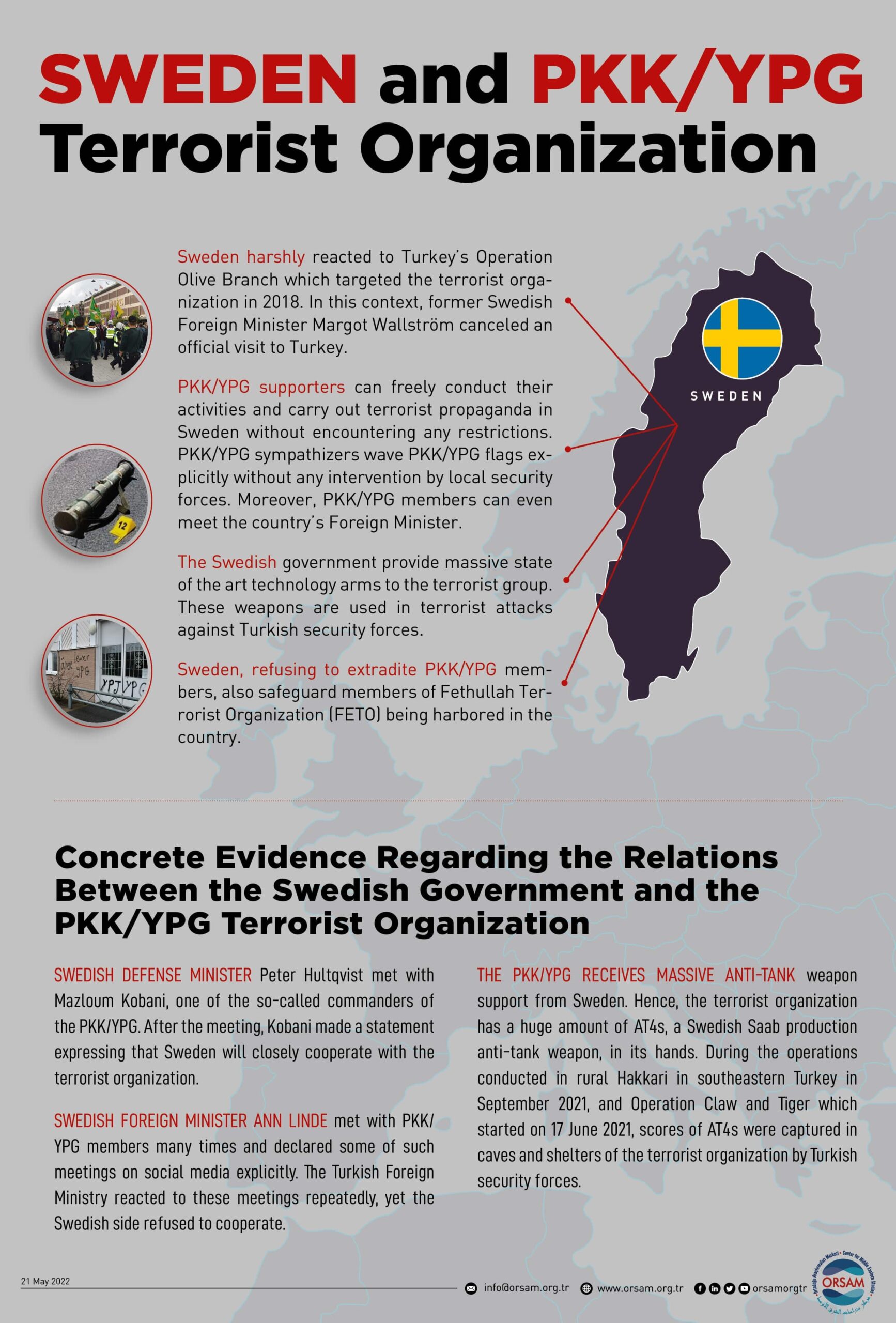
Sweden harshly reacted to Turkey’s Operation Olive Branch which targeted the terrorist orga- nization in 2018. In this context, former Swedish Foreign Minister Margot Wallström canceled an official visit to Turkey.
PKK/YPG supporters can freely conduct their activities and carry out terrorist propaganda in Sweden without encountering any restrictions. PKK/YPG sympathizers wave PKK/YPG flags ex- plicitly without any intervention by local security forces. Moreover, PKK/YPG members can even meet the country’s Foreign Minister.
The Swedish government provide massive state of the art technology arms to the terrorist group. These weapons are used in terrorist attacks against Turkish security forces.
Sweden, refusing to extradite PKK/YPG members, also safeguard members of Fethullah Terrorist Organization (FETO) being harbored in the country. Concrete Evidence Regarding the Relations Between the Swedish Government and the PKK/YPG Terrorist Organization
Concrete Evidence Regarding the Relations Between the Swedish Government and the PKK/YPG Terrorist Organization
SWEDISH DEFENSE MINISTER Peter Hultqvist met with Mazloum Kobani, one of the so-called commanders of the PKK/YPG. After the meeting, Kobani made a statement expressing that Sweden will closely cooperate with the terrorist organization.
SWEDISH FOREIGN MINISTER ANN LINDE met with PKK/YPG members many times and declared some of such meetings on social media explicitly. The Turkish Foreign Ministry reacted to these meetings repeatedly, yet the Swedish side refused to cooperate.
THE PKK/YPG RECEIVES MASSIVE ANTI-TANK weapon support from Sweden. Hence, the terrorist organization has a huge amount of AT4s, a Swedish Saab production anti-tank weapon, in its hands. During the operations conducted in rural Hakkari in southeastern Turkey in September 2021, and Operation Claw and Tiger which started on 17 June 2021, scores of AT4S were captured in caves and shelters of the terrorist organization by Turkish security forces.
ORSAM
As a region that shares deep-rooted historical, cultural and neighborhood ties with Turkey, the Middle East and North Africa region is going through a process of serious political and social changes. Therefore, it became necessary to follow these complex and dynamic developments as well as to interpret them. The Center for Middle Eastern Studies (ORSAM) was established in January 2009 to inform the general public and the foreign policy community on the Middle East. ORSAM is a nonpartisan and non-profit research center based in Ankara.
ORSAM provides information on Middle Eastern affairs and exposes the Turkish academia and political circles to the perspectives of researchers from the region. ORSAM, by facilitating the visits of Middle Eastern statesmen, bureaucrats, academics, strategists, businessmen, journalists, and NGO representatives to Turkey, seeks to ensure their knowledge and ideas are shared with the Turkish and international community. To that end, ORSAM carries out research on social, economic and political developments in the Middle East and shares these with the public. Striving for a healthier understanding and analysis of international politics and the Middle Eastern affairs, ORSAM produces stimulating and policy-relevant information for the general public and decision-makers.
For that purpose, ORSAM offers projections that suggest alternative perspective on regional issues as well as analyzing regional developments. In order to provide comprehensive and solution-oriented analyses, ORSAM takes advantage of geographical proximity to pressings issues and hands-on research by competent researchers and intellectuals from diverse disciplines. ORSAM has a strong publishing line that transmits meticulous analyses of regional developments and trends to relevant audiences. Our center that is also in the process of re-organization is expanding its cadre and areas of research focuses on publication and teaching activities such as seminars on Middle East affairs and Arabic courses.
A truck explosion led to more than 50 deaths Tuesday in Turkish-controlled Afrin, Syria.
Civil defense members work to extinguish a fire after a truck bombing in Afrin, Syria, on April 28, 2020. Photo by Photo by White Helmets / Anadolu Agency via Getty Images.
Apr 29, 2020
Syrian Kurdish groups have condemned Tuesday’s bombing in Turkish-controlled Afrin and denied responsibility after Turkey accused them of carrying out the attack that killed more than 50 people.
Mazlum Kobane, the commander of the Kurdish-led Syrian Democratic Forces (SDF), called the event a “terrorist act” and blamed Turkish-backed forces for it.
“What happened in Afrin yesterday was a condemnable terrorist act resulting in the loss of innocent lives,” Kobane posted in Arabic on Twitter today. “This criminal act is the result of the policy of destruction carried out by the Turkish occupation and its mercenaries.”
On Tuesday, an explosives-laden fuel truck blew up in Afrin in northern Syria, leading to at least 52 deaths, according to the UK-based Syrian Observatory for Human Rights. There were fighters, as well as civilians and children, among the dead, the observatory said. The blast caused a massive fire in the area of the explosion that engulfed nearby vehicles and structures.
The Kurdish group the People’s Protection Units (YPG) took control of Afrin, which has a mixed Kurdish and Arab population, in 2012. Turkey considers the YPG an offshoot of the Kurdistan Workers Party in Turkey that has long fought the Turkish state. The United States backed the YPG in its fight against the Islamic State, and Turkey grew anxious as the YPG took control of much of Syria’s border area with Turkey and established autonomous rule there. In 2015, the YPG joined with Arab and Christian groups to form the US-backed SDF to continue fighting in IS. YPG commanders lead the SDF, though it is a multi-ethnic force.
Turkey and rebels it supports in the Free Syrian Army took Afrin from the YPG in 2018, causing Kurds to flee. The Turkey-YPG conflict continued in October 2019 when Turkey invaded northeast Syria, taking more areas from the western parts of SDF territory as part of Operation Peace Spring.
Following Tuesday’s explosion, the Turkish Defense Ministry blamed the YPG for the attack.
The YPG issued a statement saying claims of its involvement in the attack are “removed from the truth.”
“Some of the parties that occupied Afrin attributed responsibility to the People’s Protection Units (YPG) before confirming that,” the statement read. “We have no connection to what happened.”
The Syrian Democratic Council, which is the SDF’s political wing, likewise condemned the attack. “We in the Syrian Democratic Council condemn and denounce this cowardly terrorist act that targeted innocent civilians,” the statement read.
The council also called on the international community to remove Turkish-backed forces from Afrin and other parts of Syria. “We also call upon the international community to carry out its responsibilities towards the Syrian issue and work to end the Turkish occupation of the city of Afrin and all other areas that it occupied,” the statement read.
Major hostilities between Turkey and the YPG ended in November of last year. Some fighting continues, however.
Revenue from oil fields that U.S. forces are protecting in northeast Syria will go to U.S. partner forces in the region and not the United States, the Pentagon’s top spokesman said Thursday.
“The revenue from this is not going to the U.S., this is going to the SDF,” Jonathan Hoffman told reporters at the Pentagon, referring to the Kurdish-led Syrian Democratic Forces.
President Trump last week gave the go-ahead for an expanded military operation to secure expansive oil fields in eastern Syria, and the Pentagon has already sent new troops and armored vehicles to the area.
The new plan backtracks on Trump’s original desire to pull all U.S. forces from Syria, and now has hundreds of U.S. troops protecting a stretch of nearly 90 miles from Deir el-Zour to al-Hassakeh that is currently controlled by Kurdish forces.
Trump on Friday still insisted that “we want to bring our soldiers home,” but left soldiers in the country “because we’re keeping the oil.”
“I like oil. We’re keeping the oil,” he told reporters on the White House lawn.
Later that day at a rally in Tupelo, Miss., Trump told the crowd the United States would distribute the oil to “help out the Kurds and we’ll help out other people. We’ll also help out ourselves if that’s OK.”
Defense Secretary Mark Esper, when asked last week by reporters about Trump’s claims, said he interprets the president’s words “as, deny ISIS access to the oil fields, secure them so that they are denied access to the oil fields.”
But details of that plan still remain unclear — as it raises the legal question of whether American forces would be able to attack Syrian or Russian forces if they threatened the security of the oil.
“We work to ensure that no one approaches and shows hostile intent to our forces and if they do our commanders maintain the right of self defense,” Hoffman said on Thursday when asked repeatedly if U.S. forces were there to keep Syrian or Russian government actors from accessing the area.
Pentagon officials also insisted that the U.S. mission in Syria still remains the defeat of ISIS.
“The mission is the defeat of ISIS. The securing of oil fields is a subordinate task to that mission and the purpose of that task is to deny ISIS the revenues from that oil infrastructure,” said Joint Staff Vice Director Navy Rear Adm. William Byrne, who spoke alongside Hoffman.
Hoffman and Byrne would not say if ISIS actually has the ability to seize the oil fields, given its lack of armor and aircraft, only offering that U.S. forces are focused on preventing that from happening.
The comments add to an already confusing picture of the U.S. role in Syria following Trump’s order last month to pull all U.S. troops from the country ahead of a Turkish offensive into Syria. The move appeared to give Ankara the green light to attack the Kurds, who have been instrumental in the U.S. fight against ISIS.
After condemnation from allies and massive pushback from congressional Democrats and Republicans alike, Trump imposed sanctions on Turkey but quickly lifted them as part of a cease-fire agreement brokered by Vice President Pence.
There have since been reports of Turkish violations of the cease-fire, but Byrne said it is holding and while there have been some skirmishes, “it appears that all parties are adhering to the rules.”
Hoffman added that the SDF are still “our partners and we are still working with them in our fight against ISIS and we’re still going to provide them with the support and ability to be able to continue that fight.”
He also said that Washington expects Turkey to investigate reports of Ankara-backed forces allegedly committing war crimes in Syria and to “hold those people to account.”