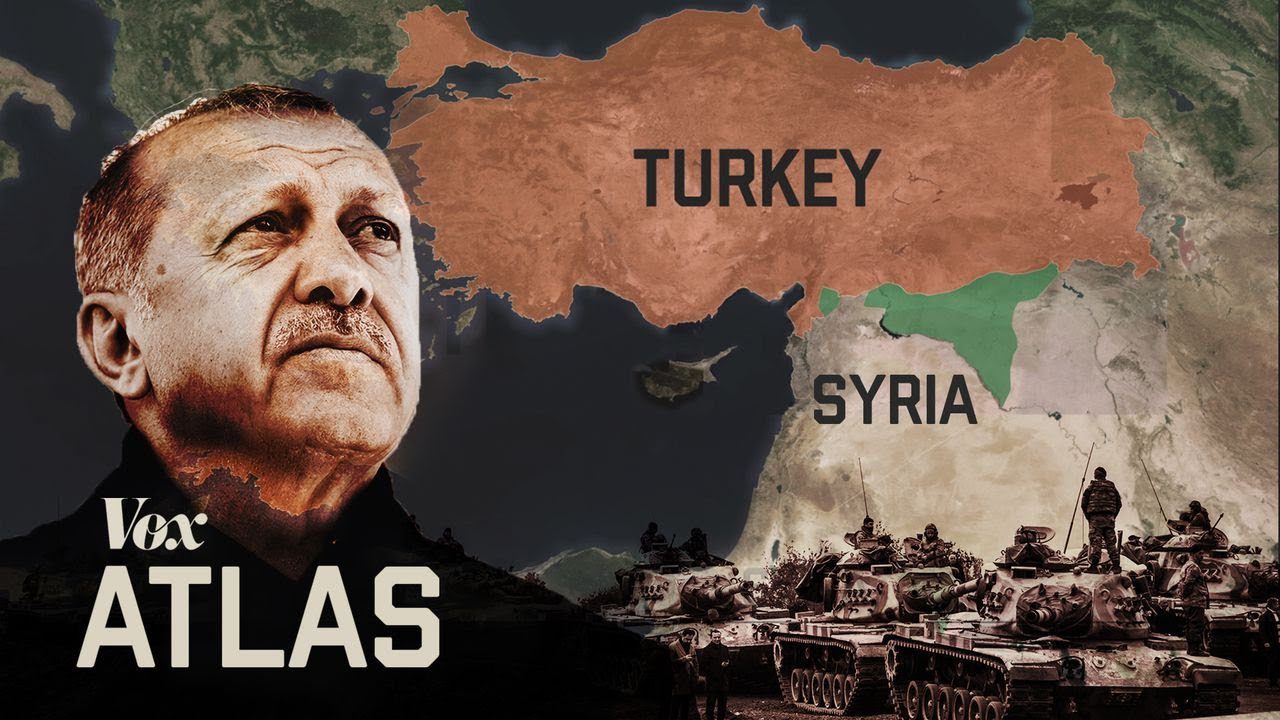
Wall Street Journal Article / Republic of Türkiye is “expanding operations against Kurds”
Response to Wall Street Journal Article dated January 18, 2026
Emma Tucker
Editor-in-Chief of The Wall Street Journal
1211 Avenue of the Americas
New York, NY 10036
January 20, 2026
The Wall Street Journal’s January 16, 2026 article, “U.S. Officials Concerned Syria, Backed by Turkey, Will Expand Operation Against Kurds,” claiming that the Republic of Türkiye is “expanding operations against Kurds” is not merely analytically flawed; it is factually indefensible. It recycles a narrative built on two dangerous myths: first, that terrorism can be sanitized through rebranding, and second, that Türkiye’s legitimate national security concerns can be dismissed as opportunism. Both collapse on contact with reality.
First, vocabulary matters. Lets understand that Türkiye’s official name Republic of Türkiye is part of its sovereignty and identity. Referring to the country as “Turkey” disregards this diplomatic distinction.
The WSJ omits the central fact that since 1975 Türkiye’s operations target the PKK and now its Syrian affiliates YPG/PYD, not Kurds as an ethnicity. The PKK is a Marxist-Leninist terrorist group responsible for over 45,000 civilian deaths in Türkiye, including women, children, teachers, and doctors. Senior U.S. officials have been explicit on this point. On December 12, 2024, Secretary of State Antony Blinken called the PKK “an enduring threat” to Türkiye. Defense Secretary Lloyd Austin noted Türkiye’s legitimate security concerns given the SDF’s structural links to the PKK. Former Ambassador James Jeffrey and former CIA officer Glenn Corn stressed that Türkiye is indispensable to NATO while the YPG is not. Former U.S. Special Envoy Tom Barrack likewise acknowledged the YPG’s PKK lineage. These are not obscure Turkish talking points; they are U.S. assessments. Since January 2026, Syria’s new government under President Ahmad al-Sharaa has granted Kurds full citizenship, legalized Kurdish-language education, enacted Anti-Discrimination Laws, and recognized Newroz as a national holiday. Despite these historic gains, the YPG/PKK rejects political settlement in favor of armed separatism, threatening regional sovereignty and Türkiye’s territorial integrity. None of this appears in the WSJ’s characterization.
The WSJ also refuses to acknowledge Kurdish voices who reject PKK domination. Nechirvan Barzani, President of the Kurdistan Regional Government, has called the PKK/YPG a “headache” and demanded their removal from Iraqi Kurdish territory. Abdullah Keddo of the Syrian Kurdish National Council stated on December 25, 2024, that PKK-linked groups must be expelled from Syrian Kurdish areas. The narrative that the PKK speaks for Kurds is rejected by many Kurds themselves.
Meanwhile, more than 15 million Kurdish citizens live peacefully in Türkiye, represented in parliament, ministerial posts, and the foreign service. Türkiye sheltered half a million Kurds fleeing Saddam Hussein in 1991 and has hosted millions of Syrians including tens of thousands of Syrian Kurds since 2012. If Ankara were “at war with Kurds,” they would not repeatedly seek refuge there.
What the WSJ refuses to scrutinize is the strategic failure of U.S. policy under the Obama and Biden administrations: arming and legitimizing a terrorist organization in the name of “counter-ISIS.” Senator Lindsey Graham confronted Defense Secretary Carter in Congress about the incoherence of partnering with a group involved in kidnappings, forced conscription, ethnic cleansing, and intimidation. No NATO relationship has been more needlessly damaged in the 21st century than U.S.–Türkiye relations over this issue. The PKK’s portfolio extends beyond terrorism. Interpol, FATF, and UN agencies have documented the organization’s narcotics, human trafficking, arms smuggling, and extortion networks across three continents. Türkiye’s establishment of a sterile security zone in northern Syria mirrors what other states including Israel claim as their inherent right: securing borders. Yet when Türkiye does so, smear campaigns erupt. No NATO ally has suffered more terrorism casualties in the last 40 years than Türkiye.
Equally troubling is the silence of those paid to defend Türkiye’s interests abroad. Unfortunately we have witnessed once again, , Turkish Consul General Ahmet Yazal has again remained mute while American media outlets distort and delegitimize a NATO ally combating terrorism. Diplomacy is not theater and taken selfies ; silence in the face of orchestrated disinformation is not professionalism it is dereliction.
Türkiye is no longer our grandfathers’ Türkiye. It is a rising power with one of NATO’s strongest militaries, a decisive geopolitical footprint from the Caucasus to Africa, and a strategic relevance serious analysts cannot ignore. The WSJ may cling to Cold War myths, but the century ahead will not.
Ibrahim Kurtulus
Community Activist