US Congressman Gregory Meeks
2310 Rayburn HOB
Washington, DC 20515
May 12, 2025
Re: Rebuttal to Letter Regarding the Republic of Türkiye Dated May 7, 2025
Dear Ranking Member Gregory W. Meeks and Esteemed Members of the House Foreign Affairs Committee,
This letter is submitted as a formal response to the assertions and interpretations presented in your correspondence dated May 7, 2025, concerning the Republic of Türkiye. We believe it is crucial to address several points raised in your letter to provide a more comprehensive and factually grounded understanding of the matters discussed.
Firstly, we wish to respectfully note that the official name of our nation is the Republic of Türkiye. Consistent use of this appellation aligns with international protocol and reflects due respect for our national identity.
Regarding the Aegean airspace, your letter outlines a perspective that warrants further clarification. While Greece claims a 10-nautical-mile airspace, international law typically recognizes sovereign airspace extending to the limits of territorial waters, often 6 nautical miles. Operations by Turkish aircraft between these 6 and 10 nautical mile limits occur within what is considered international airspace. It is pertinent to note that NATO radar systems, which neutrally monitor activity in the Aegean, have not substantiated claims of violations within this international airspace. Furthermore, the increasing militarization of Greek islands, in contravention of the stipulations set forth in the 1923 Lausanne and 1947 Paris Treaties, alongside maximalist Greek maritime claims, contributes significantly to regional tensions. We maintain that resolutions to such matters can only be effectively achieved through bilateral dialogue and negotiation, rather than unilateral accusations.
The issue of Cyprus, as presented in your letter, also necessitates a more historically contextualized understanding. The difficulties on the island did not originate in 1974. Rather, they began in 1963 with the forceful removal of Turkish Cypriots from their constitutionally guaranteed positions within the government. Türkiye’s intervention in 1974 was undertaken as a legitimate action under the 1960 Treaty of Guarantee, a multilateral agreement that provided for intervention should either the Turkish Cypriot or Greek Cypriot community face an existential threat. It is a matter of public record that Nikos Sampson, the leader of the 1974 coup, himself acknowledged that his intent was the complete elimination of Turkish Cypriots, had Türkiye not intervened. Moreover, an Athens court ruling has affirmed the legality of Türkiye’s actions. The 2004 Annan Plan referendum further illustrates the Turkish Cypriot commitment to a peaceful resolution, with 65% of Turkish Cypriots voting in favor, while 85% of Greek Cypriots rejected the plan following a public address by the Greek Cypriot leader, Mr. Papadopoulos, on April 7, 2004, urging a “resounding ‘NO’.” To characterize the 1974 intervention solely as an “invasion” overlooks the treaty basis and the compelling circumstances that necessitated it. The presence of Turkish Peace Forces on the island remains a critical element for the security and well-being of the Turkish Cypriot community, serving as a deterrent against any recurrence of past atrocities.
Regarding political opposition and human rights, the Republic of Türkiye recognizes that, like all democratic nations, its institutions are continually evolving. Nevertheless, your letter reflects a perspective that appears selectively critical and may overlook important context. Türkiye has upheld a multi-party electoral system for over seventy years, marked by peaceful transfers of power, an active civil society, and a vibrant media sector all functioning within a challenging regional landscape shaped by persistent threats from terrorist organizations such as the PKK and ISIS. Assertions of authoritarianism frequently fail to account for the broader constitutional, legal, and security context in which judicial proceedings occur. The detention or prosecution of political figures an occurrence not exclusive to Türkiye is a reality in many democratic systems, including the United States. For instance, on May 9, 2025, the Mayor of Newark, New Jersey, Ras Baraka, was arrested at an ICE detention facility during an unannounced oversight visit with members of Congress. He faces trespassing charges, which he contests as politically motivated. This underscores the importance of evaluating such incidents through the lens of legal due process rather than presuming political persecution.
In relation to Greece, it is noteworthy that the European Court of Human Rights (ECHR) has issued several judgments highlighting human rights violations within Greece. For instance, in the case of A.R.E. v. Greece (Application No. 15783/21), published on January 7, 2025, the ECHR found Greece in violation of Articles 3, 5, and 13 of the European Convention on Human Rights due to the expulsion of a Turkish national without a risk assessment or access to asylum, recognizing a “systematic practice of pushbacks” in the Evros region. Similarly, in Sh.D. and Others v. Greece and Other Countries (March 15, 2016), the ECHR ruled against Greece for the inhuman and degrading treatment of unaccompanied minors in the Idomeni refugee camp. Furthermore, in Hazisllari v. Greece (Application No. 41385/14), the Court found a violation of Article 6(1) due to the excessive length of criminal proceedings. Additionally, the ECHR has addressed restrictions on the ethnic Turkish minority in Western Thrace, particularly concerning freedom of association and expression, as well as issues related to religious rights and education. This context of ECHR rulings against Greece appears to have been omitted from your assessment.
Your letter draws attention to legal proceedings especially to charged mayor of Istanbul imamoglu in Türkiye while seemingly overlooking comparable issues in other nations, including the United States. The cases of whistleblowers like Edward Snowden and Julian Assange, the detentions at Guantanamo Bay, and the use of extrajudicial drone strikes raise significant questions regarding democratic values. Similarly, the silence on corruption allegations against prominent figures in various Western countries suggests an inconsistency in the application of scrutiny.
The “Blue Homeland” doctrine represents a defensive maritime strategy aimed at safeguarding Türkiye’s sovereign rights and continental shelf in the Eastern Mediterranean. As Türkiye is not a signatory to UNCLOS, it maintains its right to explore natural resources in areas where a mutually agreed legal framework does not exist. The Memorandum of Understanding with Libya is a bilateral agreement between two sovereign states. Greece’s attempts to claim extensive Exclusive Economic Zone (EEZ) rights based on islands near the Turkish coast are viewed as inequitable and not in accordance with customary international law.
Regarding Hamas, President Erdoğan’s statements should be understood within the framework of regional diplomatic efforts. Türkiye has consistently advocated for a two-state solution and the protection of civilian lives. Türkiye condemned the October 7 attacks while also emphasizing the need for proportionality and the protection of innocent civilians. Türkiye’s engagement with the political wing of Hamas is a position shared by several other nations in the region and beyond. Indeed, there have been instances where Israel has sought Türkiye’s assistance in communicating with Hamas. Türkiye’s diplomatic capabilities have been demonstrated through its role in facilitating the release of hostages in the Gaza crisis, a contribution acknowledged by U.S. Ambassador Jeff Flake, and its mediation in the release of American citizen Brittney Griner in 2022. Furthermore, given Türkiye’s history of providing refuge for Jewish people for centuries, it is particularly concerning to hear accusations of antisemitism. President Erdoğan’s statements reflect Türkiye’s long-standing commitment to a just resolution of the Israeli-Palestinian conflict, grounded in a two-state solution and respect for international humanitarian law. To equate support for Palestinian human rights with “support for terrorism” is a mischaracterization.
Türkiye has condemned the targeting of civilians and hostage-taking while also calling for the protection of Palestinian civilians amidst military actions. The assertion that Türkiye is “antisemitic” or “anti-Zionist” disregards Türkiye’s history of tolerance, its vibrant Jewish community, and its protection of Jewish heritage. It is also worth noting the documented instances of U.S. foreign aid being directed to entities with ties to terrorist organizations like ISIS, Hezbollah, PKK and others as brought to light in Gregg Roman’s testimony before the United States Congress House Oversight and Government Reform Subcommittee, a matter that warrants attention looks like you missed.
The characterization of efforts to delegitimize Mustafa Kemal Atatürk’s Türkiye and its democratically elected President, including through digital platforms and non-governmental organizations, as a deliberate assault on the nation’s sovereignty is a serious concern. This sustained effort to portray Mustafa Kemal Atatürk’s Türkiye negatively undermines its rightful standing on the global stage.
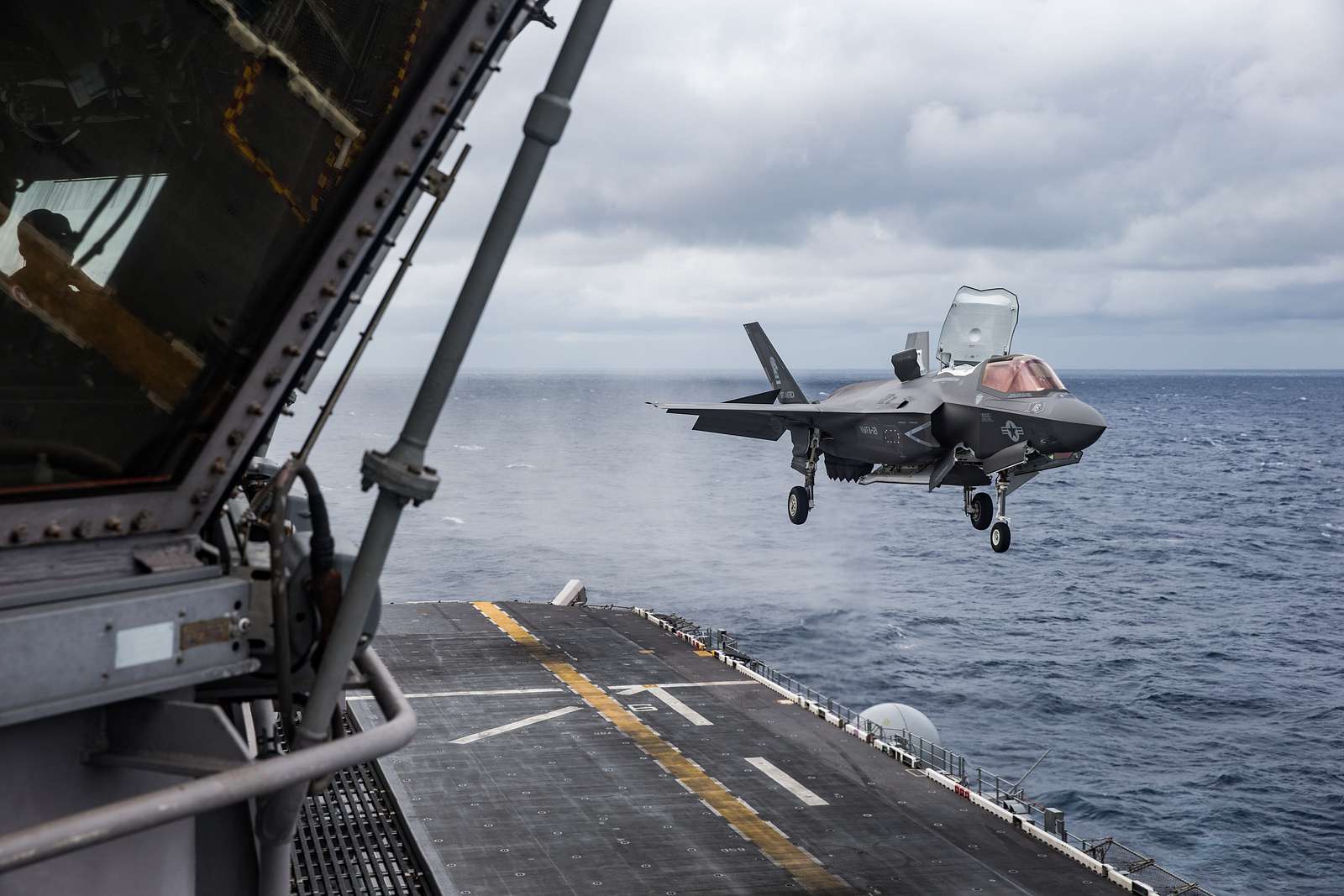
Regarding the S-400 and F-35 issue, it is important to recall that Türkiye’s acquisition of the S-400 system occurred after a decade of the U.S.’s refusal to sell the Patriot missile system. Türkiye’s subsequent removal from the F-35 program, despite its financial and industrial contributions, was a measure that has impacted NATO’s southern flank. It is also relevant that other NATO members operate Russian-made S-300 systems, and that countries like India utilize the S-400 while receiving F-35s and other weaponry from the U.S., suggesting a double standard. The recent indications that the U.S. is encouraging Türkiye to rejoin the F-35 partnership underscore Türkiye’s crucial role within the defense supply chain and the NATO alliance, as noted by Ambassador Flake. Allegations of authoritarianism in Türkiye often overlook the country’s multi-party democracy, regular elections, active media, and strong civil society. Security measures taken after the 2016 coup attempt, orchestrated by the FETÖ terrorist organization which US is harboring its entire group , were implemented to safeguard the National Interest and Security of the republic. Perhaps you missed it But radial Islamism was stop in Turkiye.
The arrests of certain political figures must be understood within the legal framework of Turkish law and the available evidence under due process. Also, despite my unwavering commitment to freedom of the press and over 38 years of advocacy, I find it deeply concerning that not a single opinion piece highlighting the strategic importance of Türkiye a secular, Western-aligned NATO ally that stood alongside the United States in Korea and continues to oppose terrorism and global instability has been published in any major national newspaper in the United States. This raises a critical question: where is the true freedom of speech? It seems only those who criticize Türkiye are afforded the opportunity to be heard, while voices that emphasize its value and longstanding partnership with the West remain silenced and has NO right.
Your portrayal of Türkiye’s efforts against the terrorist PKK also requires a more accurate understanding. For centuries, individuals of Kurdish background have lived peacefully in Anatolia. The PKK, recognized as a terrorist organization by the U.S. and the EU, has exploited regional instability to pursue its separatist agenda. The Turkish government has consistently implemented economic and social reforms in the southeastern region, and Kurds are well-represented across all sectors of Turkish society. Broadcasting and education in Kurdish are now permitted. The PKK is a terrorist organization, akin to ISIS, Al-Qaeda, or Hezbollah, and the narrative suggesting otherwise is outdated. The PKK is losing support within the region. Türkiye is an indispensable NATO ally, possessing the alliance’s second-largest standing army and securing its southern flank. Türkiye’s diverse diplomatic engagements are not contradictory to its NATO commitments but reflect the complexities of the current global landscape.
In conclusion, I believe the primary challenge lies not with Türkiye, but with potentially biased narratives and a limited strategic perspective. Undermining Türkiye weakens NATO. We respectfully urge you to adopt a more balanced viewpoint, respect Türkiye’s sovereignty, and engage in constructive dialogue. It is concerning if certain perspectives within Congress are driven by a desire to misrepresent Türkiye, possibly influenced by external factors that prioritize other national interests over the alliance’s cohesion and factual accuracy. Such biases can be detrimental to American interests. As members of Congress, we believe your efforts should be directed towards objectivity and serving the broader interests of the United States, rather than agendas that may inadvertently undermine opportunities for enhanced security, economic growth, and geopolitical stability. These campaigns against Türkiye serve to delegitimize the Turkish state and its people. I implore you to move beyond such biases and acknowledge the vital role Türkiye plays. Misinformation campaigns will not weaken the ties between the U.S. and Türkiye, which are rooted in mutual respect and strategic necessity.
Respectfully,
Ibrahim Kurtulus
Community Activist