Tag: Turkey

  • Britain could be like Turkey and remain part of the customs union after leaving the EU, says Liam Fox in first TV interview since promotion

    Britain could be like Turkey and remain part of the customs union after leaving the EU, says Liam Fox in first TV interview since promotion

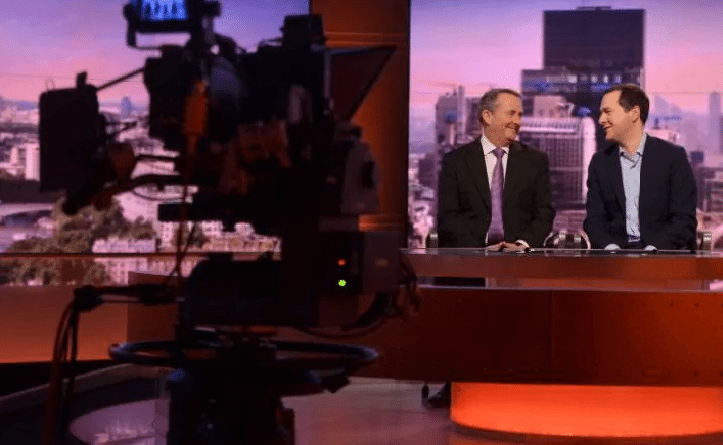
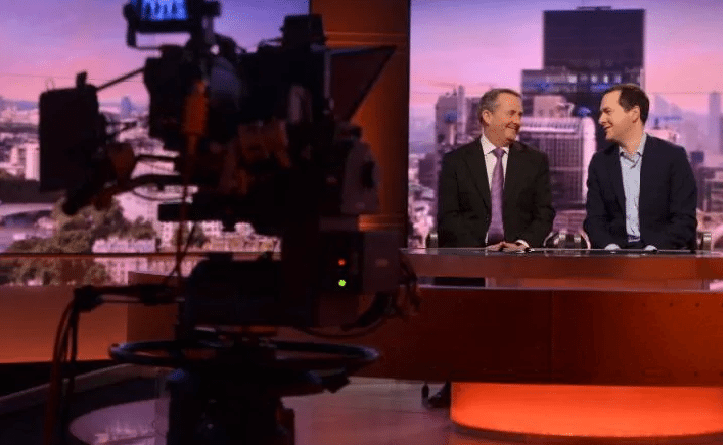
    According to The Telegraph Britain could be like Turkey and stay part of the customs union after leaving the European Union, Liam Fox has said in first broadcast interview since his promotion to Cabinet.

    The news came as George Osborne, the former Chancellor, said that Mrs. May should not to have “red lines” on issues like immigration in her Brexit negotiations.

    The customs union includes all 28 EU member states, alongside Turkey, Monaco, San Marino, Andorra and non-EU UK territories such as the Channel Islands.

    Turkey’s customs union only covers goods, but not services or finance which is a large part of the UK’s GDP. Crucially there is also no freedom of movement between Turkey and the EU.

    Pressed on the Andrew Marr programme, Dr Fox, the international trade secretary, said: “We want to look at all the different things, it’s not binary.

    “I hear people talking about hard Brexit and soft Brexit as though it’s a boiled egg we’re talking about.

    “It’s a little more complex. So Turkey, for example, is in parts of the customs union, but not in other parts.”

    When asked whether he was open to staying inside the customs union, Dr Fox said: “I’ll argue my case inside Cabinet, rather than on the programme. I remain… instinctively a free trader.”

    “The Government will come to a collective view on this once we’ve looked at all the issues.

    “It’s correct that we do so, because we can’t go for a quick result, we have to get the right result.

    “Whatever result we do come to, we have to be able to put in front of the British people the reasoning for coming to that result.”

    He also indicated that the Government would pursue a transitional arrangement with EU officials to preserve single market access before striking a fresh trade deal with the bloc, saying “we can’t go for a quick result”.

    Last week Philip Hammond, the Chancellor, lent his support for Britain to agree a transitional trade deal with the European Union after Brexit.

    He said it would be “generally helpful” to have a longer period than the two years afforded under the Article 50 process to hammer out future trade arrangements.

    On the same programme, Mr Osborne Britain needed a “hard-headed assessment” about issues such as whether to leave the customs unions.

    Mr Osborne – who was one of the leaders of the failed Remain campaign ahead of the EU referendum – told the Andrew Marr programme: “I would not go into this negotiation necessarily drawing red lines.

    “I would say we are leaving the EU – that’s the only red line I would draw – let’s go in there and try and get the best deal for Britain.”

    Mr Osborne urged the Government not to discard existing free trade deals in Europe in the search for new ones elsewhere.

    He said: “You can’t say we are a beacon of free trade in the world and the main thing you achieve is a huge act of protectionism, the biggest in British industry.”

    Mr Osborne also criticised the target Mrs May agreed to as Home Secretary to get net migration down to the tens of thousands, which he said should not include students.

    He said: “When I was the chancellor I thought it was not sensible to include them in the figures. But that’s got to be a collective decision.”

    He warned jobs in the financial sector could move to New York if Britain gets its Brexit negotiations wrong.
  • Wembley Stadium arch in red after terror attack outside Besiktas Stadium

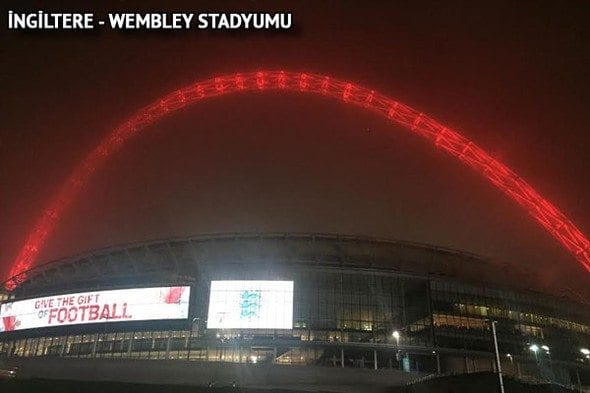
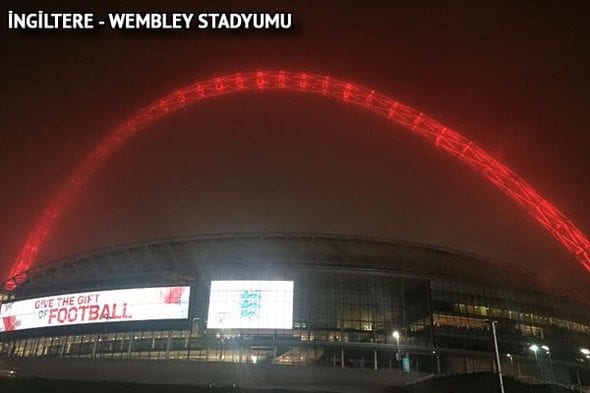
    Wembley Stadium arch in red after terror attack outside Besiktas Stadium

    AA

    LONDON

    The arch at Wembley Stadium was illuminated in the colors of the Turkish flag Sunday to show solidarity with Turkey in the wake of a deadly terror attack in Istanbul the previous day.

    “Wembley’s arch is red tonight as a mark of respect and sympathy following the attacks outside Besiktas’ stadium in Turkey yesterday,” the English Football Association said on its official Twitter account.

    At least 38 victims were killed in the attack, including 30 police officers and seven civilians, according to Turkish Interior Minister Suleyman Soylu. One victim has yet to be identified, he said.

  • Fed up with EU, Erdogan says Turkey could join Shanghai bloc

    Fed up with EU, Erdogan says Turkey could join Shanghai bloc

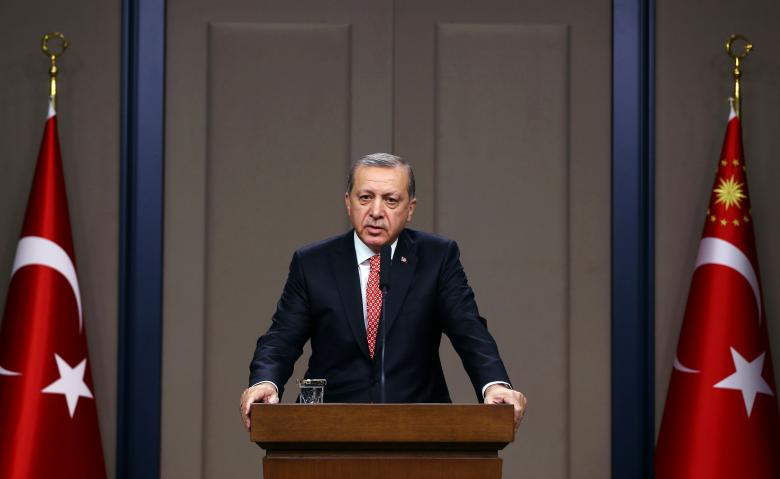
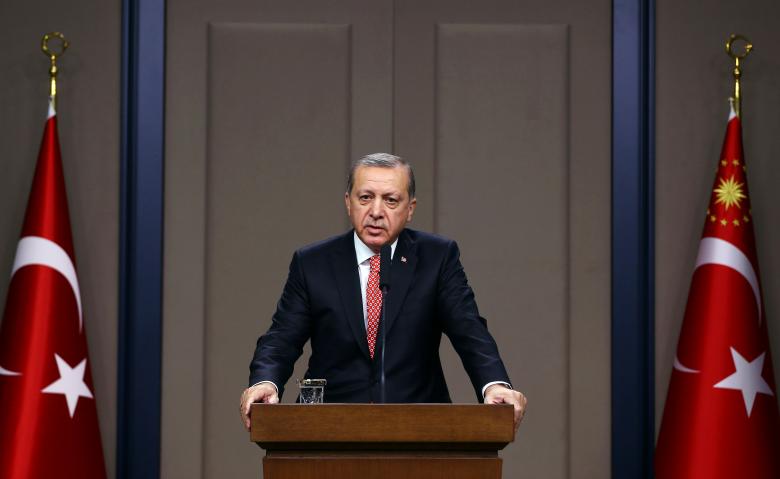
    Turkish President Tayyip Erdogan speaks during a news conference in Ankara, Turkey, November 16, 2016. Kayhan Ozer/Presidential Palace/Handout via REUTERS
    Turkish President Tayyip Erdogan speaks during a news conference in Ankara, Turkey, November 16, 2016. Kayhan Ozer/Presidential Palace/Handout via REUTERS

    Reuters –

    President Tayyip Erdogan was quoted on Sunday as saying that Turkey did not need to join the European Union “at all costs” and could instead become part of a security bloc dominated by China, Russia and Central Asian nations.

    NATO member Turkey’s prospects of joining the EU look more remote than ever after 11 years of negotiations. European leaders have been critical of its record on democratic freedoms, while Ankara has grown increasingly exasperated by what it sees as Western condescension.

    “Turkey must feel at ease. It mustn’t say ‘for me it’s the European Union at all costs’. That’s my view,” Erdogan was quoted by the Hurriyet newspaper as telling reporters on his plane on the way back from a visit to Pakistan and Uzbekistan.

    “Why shouldn’t Turkey be in the Shanghai Five? I said this to (Russian President) Mr Putin, to (Kazakh President) Nazarbayev, to those who are in the Shanghai Five now,” he said.

    “I hope that if there is a positive development there, I think if Turkey were to join the Shanghai Five, it will enable it to act with much greater ease.”

    China, Russia and four Central Asian nations — Kazakhstan, Kyrgyzstan, Tajikistan and Uzbekistan — formed the Shanghai Cooperation Organisation (SCO) in 2001 as a regional security bloc to fight threats posed by radical Islam and drug trafficking from neighboring Afghanistan.

    Turkish membership of the SCO, which had initially not included Uzbekistan and been known as the Shanghai Five, would be likely to alarm Western allies and fellow NATO members.

    Kazakhstan, Kyrgyzstan and Uzbekistan speak Turkic languages, and Ankara signed up in 2013 as a “dialogue partner” saying it shared “the same destiny” as members of the bloc.

    Mongolia, India, Iran, Pakistan and Afghanistan are SCO observers, while Belarus, like Turkey, is a dialogue partner.

    Dialogue partners are entitled to take part in ministerial-level and some other meetings of the SCO, but do not have voting rights.

    Erdogan last week urged Turks to be patient until the end of the year over relations with Europe and said a referendum could be held on EU membership in 2017.

    The EU is treading a fine line in relations with Turkey: it needs Ankara’s continued help in curbing a huge flow of migrants, especially from Syria, but is alarmed by Turkey’s crackdown on opponents since a failed coup attempt in July.

    More than 110,000 people have been sacked or suspended since the abortive putsch, and some 36,000 arrested. Media outlets have also been shut down.

    The government says the crackdown is justified by the gravity of the threat to the state from the events of July 15, in which more than 240 people were killed.

  • Turkey could put EU talks to a referendum next year: Erdogan

    Turkey could put EU talks to a referendum next year: Erdogan

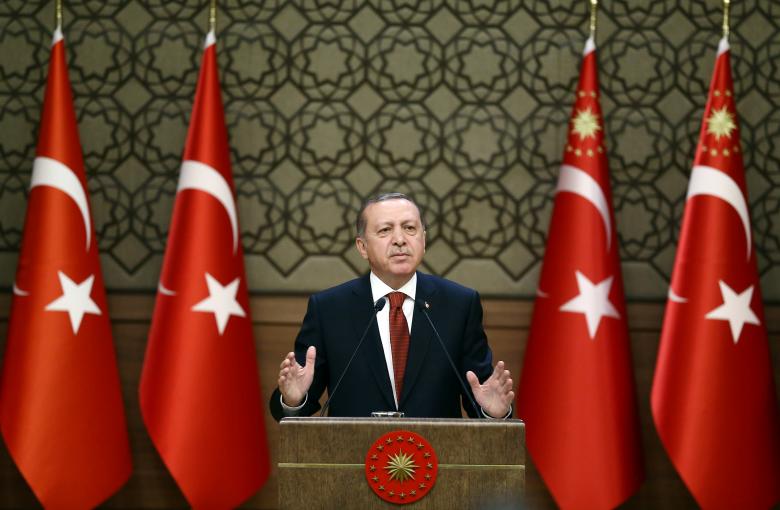
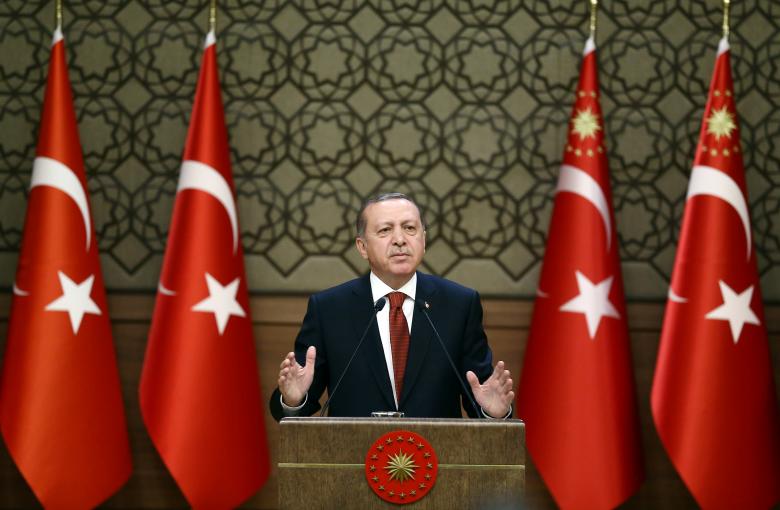
    Turkish President Tayyip Erdogan makes a speech during his meeting with mukhtars at the Presidential Palace in Ankara, Turkey, October 26, 2016. Yasin Bulbul/Presidential Palace/Handout via REUTERS
    Turkish President Tayyip Erdogan makes a speech during his meeting with mukhtars at the Presidential Palace in Ankara, Turkey, October 26, 2016. Yasin Bulbul/Presidential Palace/Handout via REUTERS

    Reuters

    Turkey could hold a referendum on whether to continue membership talks with the European Union next year, President Tayyip Erdogan said on Monday, and repeated his warning to Brussels that it needed to “make up its mind” on Turkish accession.

    European Union foreign ministers were meeting on Monday to consider shelving membership talks with Turkey over what they see as its lurch away from democracy after a failed coup in July, although there is no consensus for such a move.

    In a speech in Ankara broadcast live on television, Erdogan urged Turks to be patient until the end of the year and then said a vote could be held on EU membership.

    “Let’s wait until the end of the year and then go to the people. Let’s go to the people since they will make the final call. Even Britain went to the people. Britain said ‘let’s exit’, and they left,” Erdogan said.

    He lambasted European Parliament President Martin Schulz, who said this month the detention of opposition politicians and the extent of post-coup purges “call into question the basis for the sustainable relationship between the EU and Turkey”.

    “What are you? Since when do you have the authority to decide for Turkey? How can you, who have not taken Turkey into the EU for 53 years, find the authority to make such a decision?” Erdogan said.

    “These people makes its own decisions, cuts its own umbilical cord,” he said.

    Erdogan also said he would approve reinstating the death penalty – a move that would likely end any hope of Turkish membership in the EU – if parliament passed a law on it, and said that too could be part of a referendum.

    Turkey is expected to hold a national vote on constitutional changes next spring, including boosting the powers of Erdogan’s office to create a Turkish version of the presidential system in the United States or France.

    (Reporting by Ece Toksabay and Tuvan Gumrukcu; Writing by Nick Tattersall; Editing by Humeyra Pamuk and David Dolan)

  • Who asks for regime change in Turkey?

    Who asks for regime change in Turkey?

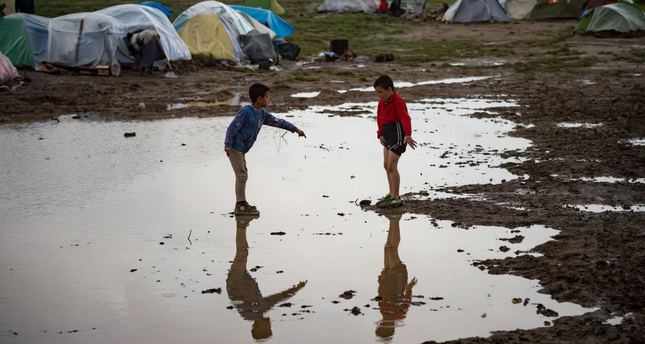
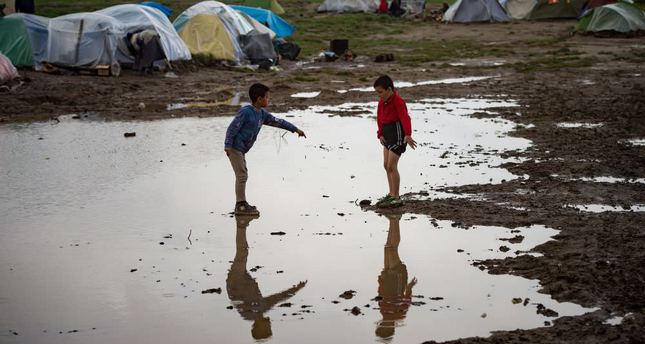
    Two boys standing in a puddle at a makeshift camp for migrants and refugees at the Greek-Macedonian border near the village of Idomeni.

    Two boys standing in a puddle at a makeshift camp for migrants and refugees at the Greek-Macedonian border near the village of Idomeni.

    Merve Şebnem Oruç MERVE ŞEBNEM ORUÇ

    The biggest threat to U.S. interests is no longer communism. It is others, leaders like Erdoğan who put a premium on their country’s independence, listen to the others of the world, like Muslims, refugees or the poor

    For example, Mort Abramowitz and Eric Edelman, both former U.S. ambassadors to Turkey and co-chairs of the Bipartisan Policy Center’s (BPC) Turkey Initiative, recently penned an op-ed for the Washington Post calling on Erdoğan to reform or resign. Both names echo back to the days of the 1997 military memorandum as they were involved in coup scenarios to push then Prime Minister Necmettin Erbakan of the Welfare Party to resign and end his coalition government. It was not the first article from the two. A previous Washington Post piece in 2014 by both and another lobbyist, Blaise Misztal, who is the director of National Security at the BPC, asked for regime change in Turkey and called on U.S. President Barack Obama’s administration to overthrow the Turkish government.

    Then Michael Rubin, a former Pentagon official and another committed neocon, manifested his sympathy for a coup in Turkey last week. In an article that was originally published on the American Enterprise Institute’s website that then found a platform in Newsweek, Rubin openly encouraged the Turkish military to carry out an intervention, stating that the U.S. government would work with the new regime if that happens. Again, the piece was not the one and only hostile piece written by Rubin on Turkish politics. He tried to intimidate the Turkish public last summer before the last elections in another hysterical article, asking: “Is Turkey heading to partition?” Accusing Erdoğan of almost everything bad that happens in Turkey and the Middle East, he was quick to put the blame of the outlawed PKK’s ending the cease-fire on Erdoğan and to welcome the partition of Turkey.

    I do not remember how many similar pieces we have read in the last three years, although the real intentions are declared explicitly and boldly in the abovementioned ones. The basic structure in all these articles is common, easy and catchy. First, demonize Erdoğan as much as possible and say he is a threat to democracy and U.S. interests; two, sort complicated issues like press freedoms, the Syrian civil war, constitutional debates and the war with the PKK in a row and do not forget to link all to Erdoğan, ignoring fact checking since the first obligation is not telling the truth; three, call on him to go or call on others – the public, military or the U.S. – to dispose of him; four, push the Turkish people to hate, anger and polarization; five, go back to square one and declare once again that he is a dictator or a despot, adding the results and reiterate that he is a great threat to democracy, Western values and U.S. interests.

    If it were the first time the international media had carried out a smear campaign against a leader and a country, we would fall into the trap. Brazil, Iran, Egypt, India, Russia and China, the international mainstream media has deliberately and systematically targeted all who do not bow down to the hegemony and the greatness of the U.S. in a similar way for years.

    But what is more troubling than that is that the mainstream media is often covertly and secretly engaged with U.S. government institutions like the CIA. Carl Bernstein, one of the reporters who covered the Watergate scandal, spent six months investigating the relationship between the CIA and the press and published his findings in Rolling Stone in 1977. Bernstein says the CIA’s dealings with the press began during the earliest stages of the Cold War. “American publishers, like so many other corporate and institutional leaders at the time, were willing to commit the resources of their companies to the struggle against ‘global Communism,’ ” he states. The CIA used many journalists, and those had the reputation of being among the best in the business.

    Today, the biggest threat to U.S. interests is no longer communism. It is others, leaders like Erdoğan who puts a premium on his country’s independence, listens to the others of the world like Muslims, refugees or the poor and dares to take a stand against the deep elites of the U.S. or powerful lobbyists. The methods once used against communism are now being used against leaders like Erdoğan. As days pass, and they cannot get rid of him, they push harder and openly ask for regime change or a military coup. But it is not only about Erdoğan, it is about the future of a people, the Turkish people. It is about sovereignty and the independence of an aged country. Turkish people will not give up on him, as they are fully aware of what they are forced to do.

  • Turkish Embassy in London PRESS RELEASE

    Turkish Embassy in London PRESS RELEASE

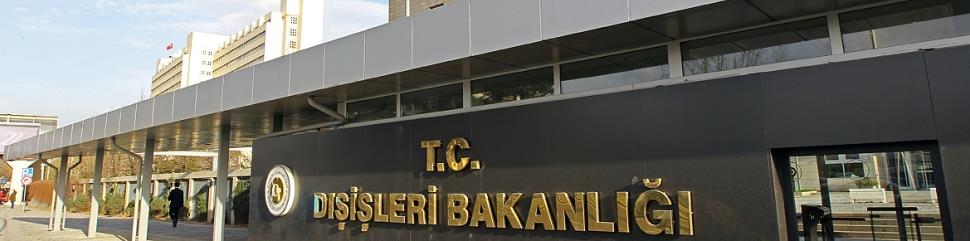
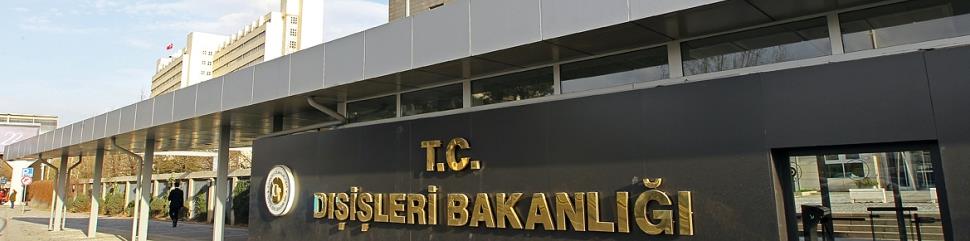
    Disisleri Turkish Foregin Ministry

    PRESS RELEASE

    • Turkey has been facing threats and attacks emanating from Syria since the start of the conflict. So far, 158 Turkish citizens have lost their lives to the attacks originated from Syria.
    • The terrorist attack that took the lives of 32 Turkish citizens in Suruç on 20th July reaffirms that Turkey is under a clear and imminent threat of continuing attack from DEASH (Isis). Most recently, on 23rd July, DEASH attacked the border military post in Elbeyli and killed a Turkish soldier. It is apparent that the regime in Syria is neither capable of nor willing to prevent these threats.
    • Turkey has designated DEASH/ISIL as a terrorist organization since 2005, under its previous names and revised it by its new name the Islamic State of Iraq and the Levant ISIL on 10 October 2013.
    • Turkey is at the forefront of DEASH threat and our authorities exert every effort to counter it. It has to be born in mind that Turkey takes immediate action and precautions in all dimensions of countering terrorism, upon receiving concrete information and intelligence.

    • Individual and collective self defence is our inherent right under international law, as reflected in Article 51 of the UN Charter. On this basis, Turkey has initiated necessary and proportionate military actions against DEASH in Syria, including in coordination with individual members of the Global Coalition.
    • In the wake of increased security threats following the attacks against our security and law-enforcement forces in provinces of Diyarbakır, Şanlıurfa and Kilis, in particular the terrorist attack in Suruç on 20 July 2015, all necessary measures are being taken and in this context, operations are also being carried out by the Turkish Armed Forces.
    • In this framework, we have informed the UN Security Council, and continue to inform international organizations. Our initiatives before other international institutions of which Turkey is a member, are ongoing.
    • Upon these recent attacks and threats directed against our national security, North Atlantic Council has been called for a meeting by Turkey under Article 4 of the Washington Treaty with a view to informing our Allies about the measures we are taking and the operations we are conducting against terrorism, as well as to holding consultations with them. The meeting chaired by NATO Secretary General Jens Stoltenberg took place today (28th July).
    • Turkey strongly encourages its partners, to enhance efforts to counter DEASH’s terrorism financing by destroying and interrupting activities at their source, mainly in Syria and Iraq. International efforts should also be focusing on destruction of recruiting and facilitation networks that operate throughout the source countries and prevent dissemination of extremist propaganda.