Tag: Turkey – EU

  • Review – Turkey and the European Union

    Review – Turkey and the European Union

    Turkey and the European Union
    By: Selcen Öner
    Lanham, MD: Lexington Books, 2011
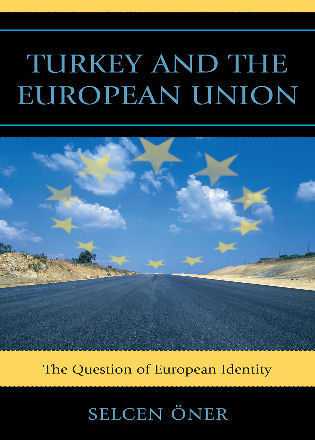
    In Turkey and the European Union, Selcen Öner takes the issue of Turkey and its pursuit of membership in the European Union, which has a long and tenuous history, and isolates for analysis one of the most contentious elements, the role of identity. In doing so, she highlights how the question of Turkey’s membership in the European Union (EU) has been a catalyst for driving the debate about what European identity means. This work, which was mostly researched and written prior to 2008, provides an interesting commentary on two issues which remain unresolved: first, what is Europe and what does it mean to be European, and, second, what is the relationship of Turkey to the European Union. These two questions, while in some senses independent of each other, have become intertwined through Turkey’s accession process, and Öner notes that “the interactions between Europe and the Turks have been always [sic] influential on construction of European identity and Turkish identity” (192). Thus, Öner’s consideration of the construction of identity is a relevant and helpful effort in understanding the current debates over Turkey’s accession to the European Union.

    Book Summary

    The concept of “Europe” is used in various places throughout history as a geographical, cultural, and a political term, and Öner begins with an attempt to elucidate what the idea of “Europe” is. In early Greek usage, the term marked out Athens and Sparta from other parts of Greece. It was then later expanded to distinguish the continent from Africa and Asia (3-4). By the Middle Ages, Europe became closely connected with the idea of Christendom. At this point, Öner introduces a concept to which she returns multiple times throughout the book: the idea of the “other” being the basis for identity. The “other” of Europe was not a fixed entity and would change during different periods and “especially from the fifteenth until the eighteenth century, the ‘Ottoman Turks’ became the ‘other’ of Europe” (5).  In the aftermath of the Enlightenment the idea of Europe moved beyond its connection with Christendom to the European state system. This state system and, in time, the political ideas that accompanied it came to be associated with what Europe was.

    In analyzing the role of identity, Öner adopts a social constructivist approach to the issue. She provides a basic introduction to the approach of social constructivism and interacts with the work of Wendt, among others, in showing the importance of identity. For Öner, social constructivism provides the best theoretical vantage point for considering the “transformatory process of integration and helps to understand how the integration process affects states’ identity, interests and behaviour” (41). The process of constructing the European Union in particular is not simply one of integrating institutions but is a construction process of ideas, identities and norms. In the post-World War II era, “Europe” and “European identity” refer primarily to an individual or group’s orientation towards the EU while EU identity is related to the EU’s presence in the world (49). Neither of these is a fixed term but are continually changing through what Öner terms as “The construction process”  which for “EU identity refers to […] a collective identity among its Member States and their level of acting with one voice about different international issues.[…] European identity refers to a collective identity among the citizens of the EU which may be differentiated between civic and cultural European identity” (53). Which of these two identities becomes dominant– civic or cultural –will be an important factor in shaping the future of the EU. While on the hand the “main characteristic” of Europe in cultural and religious terms is “diversity,” (55) in terms of civic identity and shared values the identity is rather strong (58). Within the EU there is a debate over which of these two provides the stronger or more lasting basis for European identity. This process of cultivating European identity is not meant to replace national identity, but rather there is a need in some sense for the European identity to be incorporated into the identity of the member states (40, 72-75).

    These concepts of identity have been cultivated through various efforts and institutions of the EU project. The EU project “has been mostly an elite driven process” and as such there has been a gap between the general public perception and the opinions of the elites as these efforts have met with variegated success. Öner considers the roles of different EU institutions from the European Commission and European Parliament to the European Court of Justice and European Council and Council of Ministers. An interesting observation here is that while younger generations are typically more likely to have positive feelings towards the EU, they also have greater expectations. While the EU project arose in post-War Europe, “the young generations found peace as already given, thus they expect new measures from the EU that can positively affect their daily lives” (108). This has the potential for increased feelings of identification, but if the EU fails to deliver in this regard- and the economic challenges of the past few years have raised this concern- then the value of the EU project may also come under greater scrutiny. Writing almost prophetically of the challenges that Europe is facing at present Öner says “If there will be crucial socioeconomic problems in the EU, it will negatively influence the level of support of the general public to the EU which can be a big challenge for the future of the EU” (114). The benefits of the EU will need to be made more tangible to secure the support of the general public and make up the gap between them and the elites if there is to be an increase in feelings of European identity.

    It is only at this point, after identifying the origins of the idea of European identity and some of the challenges and efforts being made to increase these feelings that Öner turns to the question of Turkey’s membership. The interaction between Turks and Europe has been lengthy. Öner cites a good summary of this history:  “Turks have been in Europe ‘geographically since their arrival in Asia Minor in the eleventh century, economically since the sixteenth century as trade routes expanded and politically since the nineteenth century when the Ottoman Empire was included in the Concert of Europe” (117). Despite the long history of interaction, the idea of Turks being European has never been widespread. Turks have been excluded from Europe for a variety of reasons, on the basis of religion from the early modern period through end of the nineteenth century, on the basis of civilization from the end of the nineteenth century through the end of World War I and on the basis of culture from the end of the Cold War to the present (118). While at some points in history Turks were constructed as the “other” of European identity that has not been the case since the 1950s, but neither have they been constructed as “European” (119). Rather, in most of the instances and substantiated by interviews Öner conducted Turkey was somewhere in between, seen neither as the “other” nor as being fully European (120-122).

    This issue of identity has been one of the major arguments put forward by opponents of Turkey’s EU membership. In order to be granted candidate status it was necessary for Turkey to fulfill the Copenhagen political criteria. In October 2005 it was deemed that Turkey had fulfilled these obligations and formal negotiations were opened. The “Europeaness” of Turkey, however, remains a major question. And “the more Turkey fulfills the Copenhagen criteria and adopts the EU acquis to its legislation, the more cultural argument of belonging to European civilization tend to be important in the debate on Turkey’s membership [sic]” (125). As Turkey comes into greater alignment in terms of political institutions and structures the other obstacles to its membership will become more evident. Turkey’s membership has become a focal point for identifying those who are against deeper integration and those who support a more comprehensive level of integration of the member states. As was evidenced in the interviews carried out with a variety of European Ministers Turkey’s membership will be both a “challenge and a contribution” to the make-up of the EU (152-153). The interaction between the two throughout the membership process has been such that neither side has been left unchanged. While there is great focus on the transformation of Turkey to come into alignment with EU norms, the process has also influenced the construction process of European identity (179-180). In Öner’s analysis, if in the end Turkey were to be integrated into the EU, then European identity must be primarily based on a civic basis. If, however, European identity is mainly on a cultural basis, then Turkey will probably not be integrated. Thus the nature of European identity is an important factor in determining the outcome of Turkey’s EU membership process.

    Strengths and Weaknesses

    The work by Öner offers another vantage point on the issue of Turkey and its pursuit of membership in the European Union, wading into issues of identity politics which oftentimes are under the surface of the political rhetoric she brings those to the surface. In this instance, the issue of identity, while not by any means the only critical factor, is certainly an issue of major significance. Öner interacts with a large number of sources and provides a theoretical grounding in social constructivism for her arguments. This brings a level of credibility and perspective to her arguments. Another major strength is the number of interviews conducted with European Ministers of Parliament from a variety of different national and political backgrounds. These interviews provide a firsthand glimpse into the thinking of some of the decision makers in the EU. Coupled together with the statistics from the Eurobarometer surveys, Öner is able to provide a glimpse at both public opinion and the perspective of elites on the issue.

    One of the major issues that the book seemed to lack was a clear voice from the author. The work was well-researched, but in many places the flow of the argument was not well-structured. The reader is left to interpret exactly what the author is trying to communicate at a particular point. In some instances, such as demonstrating the ambiguity of European identity throughout history, this lack of clarity was acceptable, but at other places it seriously takes away from the value of the work. Öner’s work would have been greatly strengthened had the author’s voice and argumentation been more clearly demonstrated throughout the work.  Another potential weakness of the book is that it is largely based on a PhD. thesis completed in 2008, though updated and revised for the 2011 publication, and the financial crisis in Europe and around the world, the frantic speed of political events in Turkey, the uprisings in the Middle East among other issues are not accounted for in this work. Obviously, no book will be completely current but the limited references to things that have happened post-2008 is another weakness of the work.

    Conclusion

    Do issues of identity matter in international politics? In this case, the answer would seem to be yes. Öner provides a comprehensive overview of how the issue of European identity has been a key aspect in the process of Turkey’s EU membership and how Turkey has been a key influencer of what it means to be European. While other factors, such as the economic troubles of the Eurozone or questions about the incorporation of a such a large population may eventually be the cause for Turkey joining or not joining the EU, the issue of identity will certainly be a part of the story. One of the key features of this process has been that the question of Turkey joining the EU has been the catalyst to expose what being “European” means. This is a concept that is under continual construction and Turkey is both a challenge and a contributor to that process.

    J. Paul Barker is an Associate Editor of e-IR. He has a B.A. in History and a M.A. in Cross-Cultural Studies. He is currently studying in Istanbul, Turkey for a M.A. in International Relations.
  • End France’s Block on Turkey’s EU Bid, President Hollande

    End France’s Block on Turkey’s EU Bid, President Hollande

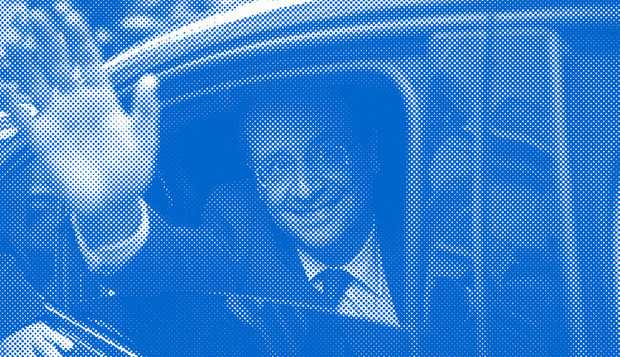
    As Francois Hollande drives through Paris to his inauguration today, he should add an item to his daunting list of priorities as president of France: End his country’s block on Turkey’s talks to join the European Union, and do it soon.

    Photograph by Balint Porneczi/Bloomberg

    That may seem eccentric in light of everything Hollande already faces, what with the euro area’s economic meltdown. But it isn’t. The European project as a whole is faltering under the political strain of the crisis. EU leaders need to show direction and create momentum for the bloc, in areas where they can reaffirm its purpose and values, even as the economy sputters.

    Turkey’s a good place to start. Unblocking its membership process would end the widespread impression that the EU discriminates against Muslims, at a time when xenophobia, anti- immigrant feelings and isolationism are rising within the mainly Christian nations of Europe. Allowing talks to continue is a very different issue from Turkey, population 73 million, actually joining the EU. That remains a distant prospect.

    In 2004, the EU agreed to give Turkey the chance to join the bloc, if it could show it had adopted the required 100,000- plus pages of EU legislation and other conditions of membership. Since then, 19 of the 35 negotiating chapters that are involved in this process have been blocked. Turkey is the only country in the EU’s history to have its membership bid frozen in this way.

    Unilateral Stop

    There are several causes for this, including a dispute over Cyprus, an EU member that Turkey doesn’t recognize. In 2007, French President Nicolas Sarkozy unilaterally blocked five chapters that relate to Turkey’s ultimate membership, and so long as that decision remains, Turkey has little cause to compromise on Cyprus. Sarkozy made his reasoning clear: namely, that Turkey wasn’t part of Europe geographically and doesn’t belong in it.

    Removing the French veto would inject new life not only into the European project, but also into its economic fortunes. Turkey grew by 8.5 percent last year, and has a population with a median age of about 28, compared with 45 in Germany. Slow growing and demographically challenged as it is, the EU needs the fresh blood and energy that Turkey has to offer. The two economies are already closely tied. They have a customs union and trade heavily. More than $11 billion of the $16 billion of foreign direct investment made in Turkey last year came from the EU.

    It could have been more. From nuclear plants to infrastructure, French companies have been told they needn’t bid for some government contracts in Turkey, so long as Sarkozy and his policy are in place. So French jobs are at stake, too.

    Another reason that the EU shouldn’t slam shut its door to the east is geopolitical. Turkey today is very different from 20, or even two, years ago. It has the kind of reach and soft power in the Middle East that the ex-colonial powers of Europe, including France, now lack. It has more troops than France and the U.K. combined. And it has learned, after a few years of hubris, that its anchorage in Western alliances is critical to its influence and security elsewhere.

    This is why Turkey last year agreed to host the radar shield for the North Atlantic Treaty Organization’s planned missile defense system, despite incurring the anger of Iran. It’s also why at NATO’s summit in Chicago this weekend, Turkey plans to push the membership bids of Bosnia-Herzegovina, Macedonia and Montenegro in the Balkans, and to go on supporting that of Georgia, in the Caucasus. Hollande will attend the summit as part of a baptism by fire, after visiting Germany.

    Lure of Membership

    Finally, Turkey itself needs the EU membership process. It’s highly uncertain that Turks would vote to join Europe if they were eventually to fulfill all the conditions. But the past few years have shown that without the active pull of the EU negotiations, Turkey’s development as a free democracy has stalled or even reversed in some areas, including free speech and the rule of law. A stable, democratic Turkey is very much in the interests of the EU.

    Turkey would be an awkward EU member. It is a former empire, has feet planted in the Middle East as well as Europe, remains one of the worst performers at the European Court of Human Rights, and historically was seen in the Christian capitals of Europe as the enemy. Yet the EU was created after World War II to resolve this kind of enmity, a purpose increasingly overshadowed by the effort to create and sustain the euro. Besides, which of the EU’s larger nations are not awkward, not to mention Turkey’s neighbor and rival Greece?

    Hollande’s victory was celebrated as much in Turkey as anywhere in Europe. Sarkozy’s policy panders to segments of French popular opinion, but it reversed one set by President Jacques Chirac, and it can be reversed again. As soon as Hollande has next month’s French parliamentary elections in his rearview mirror, he should do so. Then it will be up to Turkey – – not France — to decide just how badly it wants to make the kinds of transformations and sacrifices that are needed to join the EU.

    via End France’s Block on Turkey’s EU Bid, President Hollande – Bloomberg.

  • Bagis: Turkey Changes and So Does EU

    Bagis: Turkey Changes and So Does EU

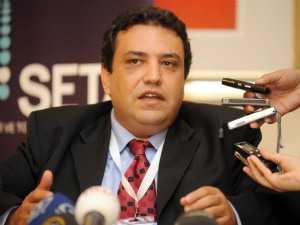
    Turkish European Union Minister and Chief Negotiator Egemen Bagis has said that Turkey had changed and so had the EU.

    Turkey is sine qua non for EU, Bagis said at a meeting titled “European Perspectives For Turkish Foreign Policy” organized by Foundation of Political, Economic and Social Research (SETA) in Ankara on Thursday, adding that Turkey is lying at the junction for EU.

    Egemen Bagis said that Turkey, with its growing economy, became more important for European countries and became a very successful market.

    He said that the EU project has been the biggest social change for Turkey.

    The Chief Negotiator Bagis said, “Turkey expected to start negotiations on new chapters, and Turkey would never ever give up.”

    “EU reforms made our country more livable,” Bagis noted.

    SETA’s Foreign Policy Director Talip Kucukcan said, “we have some question marks about Europe’s Turkish Foreign Policy.”

    “Turkey has an objective and rational foreign policy rather than being cultural and ideologic,” Kucukcan added.

    AA

  • Czech FM scolds Turkey over Cyprus EU stance

    Czech FM scolds Turkey over Cyprus EU stance

    FAMAGUSTA GAZETTE

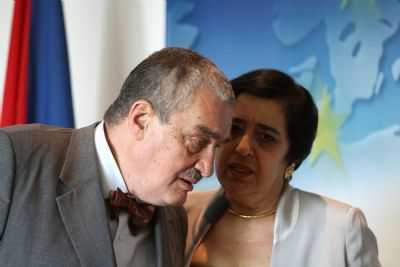
    In a terse statement aimed at Turkey, the Czech First Deputy Prime Minister and Minister of Foreign Affairs Karel Schwarzenberg has said that no country from outside the European Union can intermingle in it or proclaim conditions for another member state.

    Turkey has declared that it will not participate in any EU session when Cyprus is hosting the presidency, which begins on July 1.

    Schwarzenberg was speaking after meeting his Cypriot counterpart, Erato Kozakou-Marcoullis, when they examined issues concerning the EU and the forthcoming presidency of the European Council.

    In her remarks, Marcoullis warmly welcomed the FM of the Czech Republic, noting “that with the Czech Republic we have longstanding and very strong bonds of friendship and cooperation on a number of issues and in many fields”.

    As members of the EU, she said, that joined together on the 1st May 2004, “we have embarked on this very important membership in the EU in the family of the EU”, noting the Czech republic already had a very successful presidency and Cyprus is now preparing for its own presidency of the Council of the EU in less than two months.

    “We discussed today all these issues, our bilateral relations and how we can make this relationship even stronger in some new fields of cooperation”, she added.

    Marcoullis said they also discussed regional issues, issues that are being examined in the Foreign Affairs Council, particularly the Southern Neighbourhood and the situation in the countries of the Arab Spring. She briefed her colleague on Cyprus’ preparations for the EU and discussed the Cyprus issue.

    Concluding, Marcoullis said “we look forward to much stronger and closer cooperation”.

    In his remarks, Schwarzenberg congratulated Marcoullis who will be at the helm of the Presidency, noting it “will be a very exciting experience. I am sure that she will manage it very well”.

    He said the Czech Republic will respond to the Cyprus presidency, for whatever it is needed and is ready to offer its experiences.

    Referring to Turkey’s reaction to Cyprus assuming the presidency of the European Council, Schwarzenberg said “we are very disappointed that a neighbouring country of Cyprus, instead of using the chance of a country which expressively says that it wishes to become a member of the EU, instead of using this in its own ambition to become a member of the EU, evidently, it acts in the wrong way to the Cyprus presidency”.

    He stressed “I can assure one thing that the EU and its member states won’t let blackmail by anybody in the world. We have a member state and the member states are entitled to the presidency – STOP. You see nobody from outside can intermingle in it or proclaim conditions and I hope that Turkey will understand that the Cyprus presidency is a chance for Turkey, much more than anything else”.

    Concluding, he said “I hope very much that Cyprus will be successful in its projects of extracting gas and oil in its territorial waters”.

    via Czech FM scolds Turkey over Cyprus EU stance.

  • Most EU aid ‘goes to richer nations’

    Most EU aid ‘goes to richer nations’

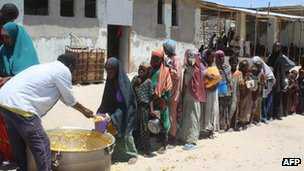
    More than half of Europe’s development aid budget is going to “relatively rich” countries like Turkey and Serbia, British MPs have warned.

    The committee says the UK must put pressure on Europe to reform its aid system
    The committee says the UK must put pressure on Europe to reform its aid system

    The International Development Committee said the situation “could devalue the concept of aid” and called on the UK government to demand change.

    The UK gave £1.23 billion in aid via the EU in 2010.

    But EU commissioner Andris Piebalgs said it was “not true” to suggest aid is going to the wrong people.

    International Development Secretary Andrew Mitchell said the EU was “already reforming the way it spends aid, making it more transparent, results-focused and targeted at the poorest people”.

    The committee reveals that only 46% of the UK contribution to EU aid for developing countries goes to low-income states – a figure it calls “unacceptable”.

    The rest, it says, goes to “middle-income” states, adding: “Turkey has consistently been in the top five recipients of European Commission aid (£182 million in 2010) as has Serbia (£178 million in 2010).”

    The MPs also criticised the administrative bill for the EU programme, pointing out they were twice as high as the Department for International Development’s own costs. The European Commission estimate administrative costs in 2009 were 5.4%.

    EU aid for Turkey this year totals 860.2m euros (£703m; $1.14bn) and for Serbia it is 202m euros. In the 2007-2013 funding period the total for countries in the queue to join the EU is 11.5bn euros.

    ‘Undermine support’

    The MPs’ committee urged the UK government to challenge the definition of official development assistance (ODA), through which the relevant EU aid is spent.

    “It appears to be being used as a way of fudging the figures to help other European countries meet the (internationally agreed) target for 0.7% of GDP to be given as aid,” chairman and Liberal Democrat MP Malcolm Bruce said.

    Continue reading the main story

    “Start Quote

    If aid is not about helping the poorest then it is not worthy of the name”

    Claire Godfrey Oxfam policy adviser

    But commissioner Piebalgs said supporting developing countries was an “important part” of the EU’s work and delivered separately to those “clearly aimed at fighting poverty”.

    “I have proposed to concentrate EU aid in the future to the poorest countries in the world, to make sure our money goes to the most in need and where it makes a real difference,” the commissioner added.

    “The MPs said Mr Mitchell had argued “it would take forever and be difficult” to change the definition of ODA so as to exclude relatively wealthy countries.

    “We do not accept this: the government should be bolder and less risk averse by tackling the criteria for ODA so that more funding goes to the world’s poorest people and the poorest countries, and less to the European neighbourhood,” Mr Bruce said.

    “Failure to do this may undermine the UK public’s support for EU institutions.”

    Mr Bruce added: “British taxpayers want the aid they give to go to the places where it can make the most difference, to countries where millions of people are getting by on less than a pound a day.

    “Giving aid to relatively rich countries like Turkey could devalue the concept of aid.”

    ‘Relentless pressure’

    Oxfam policy adviser Claire Godfrey said the organisation fully supported the call for aid to be better targeted.

    “If aid is not about helping the poorest then it is not worthy of the name,” she said. “But reopening the definition of ODA is not necessary and could be counter-productive.”

    She added: “The UK government should support an increase in EU aid, which this report shows is delivering improved results.”

    Mr Mitchell backed the report’s central message, saying: “Following relentless pressure from the coalition government, the EU is already reforming the way it spends aid, making it more transparent, results-focused and targeted at the poorest people.”

    But he defended aid for Turkey, insisting: “Supporting Turkish accession to the EU has been the policy of successive British governments and is firmly in the national interest.”

    Commissioner Piebalgs said EU aid had “pulled millions of people out of poverty”, adding: “I know there are some aid sceptics who would rather see money spent elsewhere.”

    via BBC News – Most EU aid ‘goes to richer nations’ – MPs.

  • Czech President Klaus backs Turkey’s EU bid

    Czech President Klaus backs Turkey’s EU bid

    Czech President Klaus backs Turkey’s EU bid

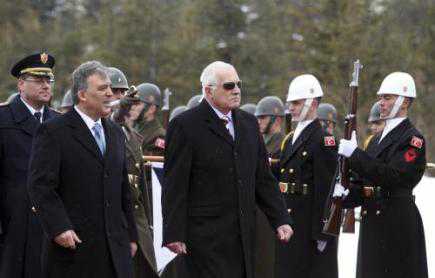
    Český prezident Václav Klaus na návštěvě Ankary, vlevo je jeho turecký protějšek Abdullah Gül.
    Český prezident Václav Klaus na návštěvě Ankary, vlevo je jeho turecký protějšek Abdullah Gül.

    published: 14.02.2012, 15:46 | updated: 14.02.2012 16:00:12

    Ankara – Current economic EU problems cannot be any reason to weaken support to Turkey’s EU bid and the reverse should be true, Czech President Vaclav Klaus said after meeting his counterpart Abdullah Guel today.

    Accompanied with over 60 Czech businessmen, Klaus has started a four-day state visit to Turkey.

    “I am sure Europe needs a change, it needs to be woken up, it needs to be shaken. The entry of such a big and dynamic country as Turkey could spark off the shock,” Klaus said.

    Klaus is a long-standing proponent of Turkey’s EU membership.

    “The Czech Republic is a clear and obvious supporter of Turkey with its EU bid,” Klaus said.

    Guel said Klaus’s stand on the EU and Turkey was well-known, adding that he thanked him for this.

    Guel said Klaus was a critic of some EU steps.

    He said it could be seen now that his views were right.

    Klaus and Guel also agreed on the solution to the situation in Syria. They said it was untenable and a change had to occur.

    “A domestic and regional solution should take precedence over decisions coming from outside the region. The farther from the area, the more simplistic view,” Klaus said.

    Klaus stressed the importance of his trip for Czech businessmen.

    “Along with me, the biggest business delegation in the history of the Czech Republic is coming. For the first time, we are flying by two, not one plane. This is evidence of our great interest,” Klaus said.

    Later in the afternoon, Klaus will open the Czech-Turkish Business Forum that will continue in the Turkish towns of Adana and Mersin.

    A number of contracts will be signed. Representatives of the Czech Export Bank are to confirm the mandate agreement on financing the construction of port infrastructure and a trade center in Istanbul.

    Author: ČTK

    www.ctk.cz

    via Czech President Klaus backs Turkey’s EU bid – ČeskéNoviny.cz.