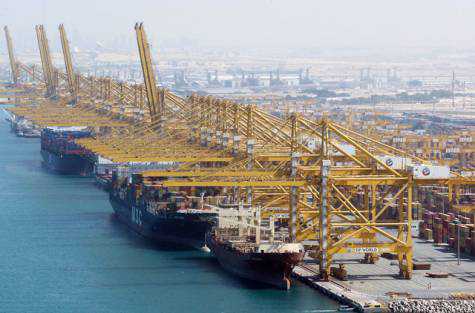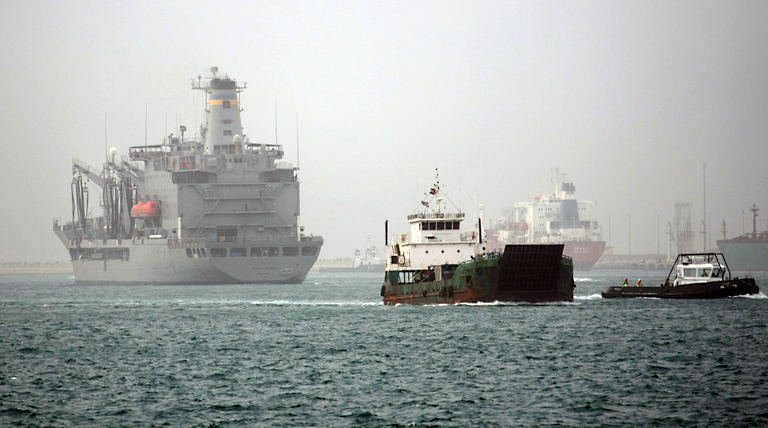
The world economy is a vast circulatory system shaped around the compulsory transit corridors imposed by geography. In an era where approximately eighty percent of international trade volume is transported by sea and a large portion of global energy supply depends on tanker traffic, certain waterways have transcended being mere geographical formations. These corridors provide the controlling states not only with economic rent but also with disproportionate bargaining power and strategic depth in global politics. From the Strait of Malacca and the Suez Canal, which form the backbone of trade between Asia and Europe, to Gibraltar, the gateway to the Mediterranean; from the Turkish Straits, the lifeline of the Black Sea, to Bab el-Mandeb, the southern lock of the Red Sea, and the Northern Sea Route, a new arena of competition emerging from the climate crisis—these corridors are at the center of naval deployments, legal disputes, and proxy wars among great powers.
The Capillary of the Indo-Pacific and the Malacca Dilemma
The Strait of Malacca, the most critical artery of the Southeast Asian maritime geography, constitutes the most economical route between the Indian Ocean and the South China Sea. This waterway, riparian to Indonesia, Malaysia, and Singapore, is the backbone of the supply chain between Northeast Asian economies and the Middle East and Africa. A significant portion of the crude oil and liquefied natural gas (LNG) transported globally transits through this narrow passage. The section converging at the Phillips Channel off Singapore witnesses the world’s densest maritime traffic, with over one hundred thousand vessels passing annually.
The geopolitical tension in this region largely revolves around the existential anxiety of the People’s Republic of China regarding its energy supply security. The fact that the overwhelming majority of China’s energy imports come through the Strait of Malacca is defined as a vulnerability by the Beijing administration, a situation that has entered the strategy literature as the “Malacca Dilemma.” In a potential military conflict or regional instability scenario, the capacity of the US Navy or the Indian Navy to disrupt this transit directly shapes China’s foreign policy and infrastructure investments. To reduce this dependence, China has activated oil and gas pipelines extending from the Kyaukpyu Port in Myanmar to Yunnan province and keeps the idea of opening the Kra Canal in southern Thailand alive as a strategic option. Simultaneously, the US logistical presence in Singapore and India’s military fortification of the Andaman and Nicobar Islands serve as strategic watch posts overlooking the western and eastern entrances of Malacca.
Artificial Bridges Between the US, Europe, and Asia: The Suez and Panama Canals
The Suez and Panama Canals, two massive engineering projects built by human hands, are interventions that have altered the course of global shipping. The Suez Canal, located in Egyptian territory, connects the Mediterranean to the Red Sea, shortening the Asia-Europe sea route by approximately seven thousand kilometers compared to the Cape of Good Hope at Africa’s southern tip. About twelve percent of global container traffic and a significant portion of daily oil shipments flow through this route. The strategic importance of the canal is not limited to the billions of dollars in foreign exchange revenue it provides to the Egyptian economy; it is also a vital area of interest for powers like Russia, China, and India, which lack Mediterranean coastlines. Particularly, the fact that Bab el-Mandeb Strait at the canal’s southern entrance is vulnerable to asymmetric threats stemming from the civil war in Yemen reveals the reality that Suez’s security actually begins thousands of miles beyond Egypt’s borders.
The Panama Canal assumes a similar strategic function in the Western Hemisphere. Cutting through the narrowest land strip of Central America to connect the Pacific Ocean to the Atlantic Ocean, this waterway is indispensable, especially for trade between the US East Coast ports and Asia, and for commodity exports from South America’s western coasts. After the US fully transferred sovereignty rights of the canal to Panama in 1999, the geopolitical vacuum formed in the region has been filled by China’s port investments and infrastructure projects under its Belt and Road Initiative. Port operating concessions held by Chinese companies around the canal fuel debates in Washington about “Chinese influence in the backyard.” Additionally, the decline in the canal’s operational capacity due to irregularities in the rainfall regime feeding Lake Gatun in Panama is accelerating the search for alternative routes, such as the Tehuantepec Isthmus Railway in Mexico or the proposed canal projects in Nicaragua.
The Fierce Sentinel of Energy Supply: The Strait of Hormuz
The Strait of Hormuz, connecting the Persian Gulf to the Indian Ocean, holds an unparalleled position for the stability of global energy markets. This corridor, lying between Iran and Oman and narrowing to about thirty-three kilometers at its most constricted point, hosts approximately one-third of globally seaborne crude oil and a significant portion of LNG trade. The geopolitics of the strait are largely shaped by the regional rivalry between the Islamic Republic of Iran and Western powers and Sunni Arab monarchies. When sanction pressures over Iran’s nuclear program increase, the first deterrent instrument the Tehran administration resorts to is the threat of disrupting strait traffic. Fast attack craft belonging to the Islamic Revolutionary Guard Corps, coastal batteries, and mining capability demonstrate that the strait can be destabilized to create a serious risk premium, even if not physically closed. The permanent presence of the US Fifth Fleet in Bahrain and additional military deployments to the region are the military reflection of this narrow waterway’s dominance over global inflation and recession dynamics.
The Southern Lock of the Red Sea: The Bab el-Mandeb Strait and Yemeni Geopolitics
The Bab el-Mandeb Strait, located between the southwestern tip of the Arabian Peninsula (Yemen) and Djibouti and Eritrea in the Horn of Africa, is a strategic maritime passage connecting the Red Sea to the Gulf of Aden and onwards to the Indian Ocean. This narrow waterway, meaning “Gate of Tears” in Arabic, derives its name from the historical difficulty of navigation and the turbulent political climate of the region. Approximately twenty-nine kilometers wide at its narrowest point, the strait is divided into two channels by Perim Island. As Bab el-Mandeb is a mandatory route for all vessels transiting the Suez Canal, it is the southern complementary element of the Mediterranean-Indian Ocean connection, and its strategic value is directly linked to the Suez Canal.
Commercially, Bab el-Mandeb provides passage for approximately six to eight percent of globally seaborne oil and a significant portion of container traffic between Europe and Asia. It is the sole gateway to the Suez Canal, especially for oil tankers traveling from the Persian Gulf to Europe and North America. Furthermore, China’s investments in the Horn of Africa and its first overseas military base established in Djibouti prove how vital Bab el-Mandeb’s security is for Beijing. If the strait closes, tankers and container ships are forced to circumnavigate the Cape of Good Hope at Africa’s southern tip, exponentially increasing freight costs and adding weeks to delivery times.
The power struggle at Bab el-Mandeb is largely shaped under the shadow of the civil war in Yemen that has continued since 2014 and the regional proxy rivalry. The Iranian-backed Houthis’ control over Yemen’s northwestern coastline and the capital, Sana’a, has created an asymmetric risk directly threatening the strait’s security. Ballistic missiles, cruise missiles, naval mines, unmanned aerial vehicles (UAVs), and unmanned surface vessels (USVs) in the Houthis’ possession pose a constant threat to commercial and naval vessels passing through the strait. The dramatic increase in Houthi attacks on commercial vessels in the Red Sea and Bab el-Mandeb following the Gaza War that began in October 2023 has exposed the systemic risk the strait poses to global trade. As a result of these attacks, many major shipping companies suspended the Red Sea route, diverting their vessels to the Cape of Good Hope, leading to serious disruptions in global supply chains and sharp increases in freight prices.
In response to this threat, the US-led “Operation Prosperity Guardian” and the European Union’s “Operation Aspides” are multinational naval task forces aimed at preserving freedom of navigation in Bab el-Mandeb and the Red Sea. The Arab Coalition, led by Saudi Arabia and the United Arab Emirates, also attempts to contribute to the strait’s security through its military presence in Yemen. On the African side, military bases belonging to the US, France, Japan, Italy, and China stationed in Djibouti have made Bab el-Mandeb one of the waterways with the highest number of foreign military bases in the world. China’s military presence in Djibouti, as part of its strategy to protect sea lines of communication in the Indian Ocean, also encompasses Bab el-Mandeb, increasing Beijing’s strategic footprint in the region. All these dynamics show that Bab el-Mandeb is not merely a maritime passage but also an intersection point of power projection in the Middle East, the Horn of Africa, and the Indian Ocean.
The Western Lock of the Mediterranean: The Strait of Gibraltar
The Strait of Gibraltar, located at the southwestern tip of the European continent between Spain and Morocco and only fourteen kilometers wide at its narrowest point, is the sole natural passage connecting the Mediterranean Sea to the Atlantic Ocean. Its geostrategic importance stems from the fact that the maritime traffic of all states bordering or obliged to use the Mediterranean is bottlenecked at this narrow passage. It is the gateway to the global oceans for commercial vessels arriving from Asia via the Suez Canal and for warships of Russia’s Black Sea fleet.
The power struggle at Gibraltar is historically shaped around sovereignty rights over the Rock of Gibraltar, a British Overseas Territory. This small peninsula, whose return Spain continually demands, is not only a matter of prestige for the United Kingdom but also serves as a forward outpost controlling the entrance to the Mediterranean for NATO. In the post-Brexit era, negotiations between Spain and the United Kingdom regarding Gibraltar’s status have brought uncertainties about the strait’s legal status back to the agenda. Furthermore, Morocco transforming the Tanger-Med Port on the strait’s southern coast into Africa’s largest container transshipment hub, and China’s investment interest in this port, have made Gibraltar a keystone not only for Europe but also for China’s Mediterranean strategy.
The Montreux Regime and the Unique Status of the Turkish Straits
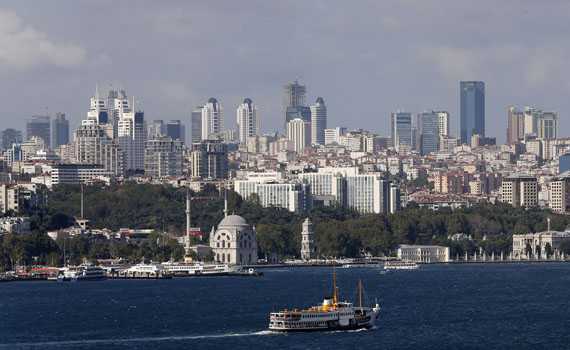
The Turkish Straits System, comprising the Istanbul Strait (Bosphorus), the Sea of Marmara, and the Çanakkale Strait (Dardanelles), is the sole route by which states bordering the Black Sea can access the open seas due to its geographical location. The most fundamental aspect distinguishing these straits from other strategic waterways is that their transit regime is regulated not by customary international law or a general convention, but exclusively by the 1936 Montreux Convention Regarding the Regime of the Straits. This convention grants the Republic of Turkey full sovereignty over the straits and imposes significant restrictions on the passage of warships in terms of tonnage, class, and duration of stay in the Black Sea.
From a commercial perspective, the Istanbul Strait is one of the world’s most risky and narrowest natural waterways, with approximately forty thousand vessels passing through annually. It plays a critical role in delivering oil and grain extracted from the Caspian Basin, primarily Russia and Kazakhstan, to world markets. Geopolitically, the Montreux Convention is the most significant legal barrier preventing the Black Sea from becoming a “NATO lake.” The restrictions on the passage of warships of non-riparian states particularly ensure the Russian Federation’s naval superiority in the Black Sea and the security of its southern flank. In the context of the Ukraine crisis, Turkey’s faithful application of Montreux provisions by closing the straits to warships of belligerent parties has once again proven the strategic value of this historic convention. The Kanal Istanbul initiative, aimed at bypassing the Turkish Straits, has led to intense international debate regarding the future of the Montreux regime and military balances in the Black Sea.
The New Arena of Competition: The Northern Sea Route and Arctic Geopolitics
As a tangible consequence of global warming, the seasonal retreat of the ice sheet in the Arctic Ocean has opened a brand new front in maritime trade and power struggle: the Northern Sea Route. This passage, stretching along the northern coastline of the Russian Federation from the Barents Sea to the Bering Strait, has the potential to shorten the distance between Asia and Europe by approximately forty percent compared to the Suez Canal route. A ship traveling from Shanghai to Rotterdam can reduce its sailing time by more than ten days if using this route.
The unique dynamics of the Northern Sea Route distinguish it from classical straits and canals. Here, the struggle is not about closing a narrow passage but about freedom of navigation and the capacity to establish infrastructure across a vast geography. Russia, claiming that most of the route passes through its Exclusive Economic Zone, imposes mandatory icebreaker escort and transit fees on vessels wishing to use it, defining the route as a “National Transport Corridor.” In contrast, the US, China, and the European Union argue that the Northern Sea Route should have the status of an “international strait” under international law and be open to free passage. China’s large investments in Russia’s Yamal LNG projects under its “Polar Silk Road” vision and its efforts to build its own nuclear-powered icebreaker fleet indicate that the Arctic will not only be Russia’s but also a stage for new bipolar rivalry. In the long term, this new route is expected to relieve traffic pressure on the Suez Canal and shift the center of gravity of global maritime trade northward.
From Supply Security to Systemic Risk: The Cost of Closure and the Search for Alternatives
The impact of strategic waterways on the global economy is measured not only by the efficiency they provide when open but also by the systemic shock waves that emerge when they are disrupted. The grounding of the Ever Given vessel in the Suez Canal, paralyzing the supply chain for six days, meant billions of dollars in losses per hour for global trade and exposed the fragility of the “just-in-time” production model. Similarly, the diversion of vessels to the Cape of Good Hope due to security vulnerabilities in the Bab el-Mandeb Strait and the Red Sea drives freight prices to astronomical levels and increases inflationary pressure in Europe.
This fragility pushes states and major logistics companies to search for alternative corridors. The Middle Corridor via the Caspian Sea, the Development Road Project planned to reach the Mediterranean through Iraq, the India-Middle East-Europe Economic Corridor (IMEC), and Israel-India-Arabian Peninsula connections are mega-projects aimed at reducing absolute dependence on traditional maritime straits. Although each of these new routes faces geographical challenges, regional political instabilities, and financing problems, the very existence of these searches proves how vital straits geopolitics truly is.
The Maritime Projection of Geopolitical Fault Lines
The geographical constraints upon which global maritime trade flows persist as constant parameters determining the fundamental dynamics of international relations. Each waterway examined is defined by its unique legal regime, different threat perception, and overlapping interests of rival states. The dependency relationship in the Strait of Malacca, the military buildup in Hormuz, the proxy war and asymmetric threat at Bab el-Mandeb, the colonial legacy at Gibraltar, the contractual exception of the Turkish Straits, and the environmental transformation on the Northern Sea Route reflect different tones of the global power struggle.
The opening of the Arctic Ocean as a new trade artery due to global climate change and the possibility of new logistics corridors enabled by technological developments indicate that geopolitical competition will intensify further in the coming years. The recent crisis in Bab el-Mandeb and the Red Sea has proven that even non-state armed actors can paralyze global supply chains, necessitating a revision of the maritime security paradigm. In this context, the struggle for control over maritime trade routes has transformed into a multi-dimensional chess game to be won not only by the firepower of navies but also by infrastructure investments, interpretation of legal conventions, and diplomatic engagement capacity. While ensuring the openness and security of these narrow passages, the arteries of the global economy, emerges as a common responsibility of the international community, the question of how this responsibility will be shared will remain one of the greatest political challenges of the twenty-first century.
Bibliography
(Note: The bibliography is a translation of the titles. Original English titles are preserved where applicable.)
Aljefri, Y. M. (2021). The Geopolitics of the Bab el-Mandeb Strait: Maritime Security and Regional Competition. Journal of Arabian Studies, 11(2), 245-267.
Bekkevold, J. I., & Till, G. (Eds.). (2016). International Order at Sea: How it is challenged. How it is maintained. Palgrave Macmillan.
Blunden, M. (2016). Geopolitics and the Northern Sea Route. International Affairs, 88(1), 115-129.
Bueger, C., & Edmunds, T. (2021). Understanding Maritime Security. Oxford University Press.
Buszynski, L., & Roberts, C. B. (Eds.). (2015). The South China Sea and the Malacca Strait: Maritime Security in Southeast Asia. Routledge.
Cordner, L. (2020). Maritime Security Risks, Threats and Vulnerabilities in the Indian Ocean. Journal of the Indian Ocean Region, 16(3), 267-289.
Gürdeniz, C. (2018). Montrö: Türk Boğazları’nın Stratejik Önemi ve Montrö Sözleşmesi [Montreux: The Strategic Importance of the Turkish Straits and the Montreux Convention]. Kırmızı Kedi Yayınevi.
International Maritime Organization (IMO). (2024). Reports on Security Incidents in the Red Sea and Gulf of Aden. IMO Maritime Safety Committee.
Kaplan, R. D. (2011). The Revenge of Geography: What the Map Tells Us About Coming Conflicts and the Battle Against Fate. Random House.
Kraska, J., & Pedrozo, R. (2013). International Maritime Security Law. Martinus Nijhoff Publishers.
Lanteigne, M. (2021). Chinese Foreign Policy: An Introduction (4th ed.). Routledge.
Mabon, S. (2022). The Struggle for the Red Sea: Saudi Arabia, Iran and the Geopolitics of the Bab el-Mandeb. Middle Eastern Studies, 58(4), 512-530.
Oğuz, Ş. (2020). Küresel Deniz Ticaretinde Stratejik Geçiş Noktaları ve Jeopolitik Riskler [Strategic Chokepoints and Geopolitical Risks in Global Maritime Trade]. Deniz Strateji Dergisi, 2(4), 45-78.
Østreng, W., Eger, K. M., Fløistad, B., Jørgensen-Dahl, A., Lothe, L., Mejlænder-Larsen, M., & Wergeland, T. (2013). Shipping in Arctic Waters: A comparison of the Northeast, Northwest and Trans Polar Passages. Springer Praxis Books.
U.S. Energy Information Administration (EIA). (2024). World Oil Transit Chokepoints. EIA Official Report.
Ünlü, N. (2021). Türk Boğazları’nda Geçiş Rejimi: Montrö Sözleşmesi ve Güncel Gelişmeler [The Transit Regime in the Turkish Straits: The Montreux Convention and Current Developments]. İstanbul Üniversitesi Hukuk Fakültesi Mecmuası, 79(3), 891-930.
Vertin, Z. (2019). Red Sea Rivalries: The Gulf States and the Horn of Africa. Brookings Institution Press.
Sefa Yürükel
Danish ethnographer and social anthropologist (MA)
Aarhus University, 1997
Independent Researcher
Fields of Research: International Politics, Public International Law, Geopolitics, Sociology, Psychology, Cultural Studies, Systems and Structures