Tag: Syrian refugees

  • Turkey plans refugee camp for Syrian Christians, Ecumenical News

    Turkey plans refugee camp for Syrian Christians, Ecumenical News

    syrian-refugees

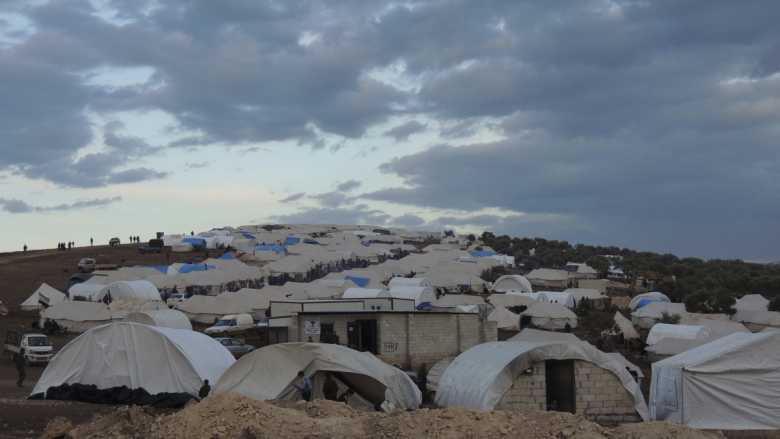
    Syrian refugees are seen in a refugee camp on the Syrian side of the border with Turkey, near Idlib January 29, 2013, in this picture provided by Shaam News Network. Picture taken Jan. 29, 2013. ReutersPHOTO: REUTERS / MUHAMMAD NAJDET QADOUR / SHAAM NEWS NETWORK / HANDOUT

    The Turkish government is setting up a refugee space specifically for displaced Christians, two years after the civil war in Syria began.

    Not all Christians are, however, welcoming the move.

    The Turkish Disaster and Emergency Management (or AFAD) announced it will separate Christians into their own camp near Mor Abraham Syriac Monastery by the town of Midyat.

    The area is located about 30 miles (50 kilometers) from the Syrian border.

    “A month ago, some churches met with the Turkish foreign minister, and they requested that for Christians it would be better to open another camp,” Metin Corabatir, a spokesman for the U.N. High Commissioner for Refugees (UNHCR) in Turkey said Tuesday.

    Corabatir said the camp is likely the response to a series of meetings between Turkish officials and churches in the area.

    The plight of Syrian Christians has become increasingly glaring in recent months.

    Christians make up about 10 percent of the 22 million people in Syria.

    In March, the U.S. Bishops’ Catholic Relief Services reported that about 200 Syrian Christians were seeking shelter in local Turkish churches, out of fear of intolerance at the 17 relief camps near the border.

    The Turkish disaster agency estimates that there are about 200,000 refugees near the area in dispute, most of whom are predominantly Sunni Muslim.

    Some Christian leaders are, however, not welcoming the separation of Christians from other Syrians.

    Father Francois Yakan, the patriarchal vicar of the Chaldean Catholic Church in Turkey, was quoted by the Catholic Herald in the UK as saying that while he was unaware of any such plans that they would not be good.

    The Catholic leader worries that such a move would segregate Christians in the area.

    “These are people who have been living together for centuries. To be separating them now is not a good idea,” Yakan said.

    Reuters news agency reported that the Turkish government strongly denied a sectarian or ethnic agenda.

    A Turkish foreign ministry official said the two tented camps, to be completed in less than a month, are being built in Midyat, a town in southeastern Mardin province some 50 km (30 miles) from the Syrian border.

    The U.N. estimates that up to 70,000 people have been killed in the Syrian Civil War and the carnage has displaced 1 million refugees between Turkey, Jordan, Iraq, Egypt and Lebanon.

    Half of those refugees, the U.N. estimates, are currently residing in Turkey.

    via Turkey plans refugee camp for Syrian Christians, Ecumenical News.
  • Turkey building refugee camps for Syrian Christians, Kurds

    Turkey building refugee camps for Syrian Christians, Kurds

    By Jonathon Burch

    ANKARA | Wed Apr 10, 2013 10:21am EDT

    (Reuters) – Turkey is building two camps along its far southeastern border with Syria to house a growing number of refugees from Syrian minority groups, mainly Assyrian Christians as well as ethnic Kurds, a government official said on Wednesday.

    More 250,000 Syrians fleeing civil war in their homeland have registered in Turkey, most of whom stay in 17 camps along the 900-km (560-mile) border, although Turkish leaders say the total number of refugees is closer to 400,000.

    Those who have fled are predominantly ethnic Arabs from Syria’s Sunni Muslim majority, most of whom largely support the rebels fighting to overthrow President Bashar al-Assad, who himself belongs to the Alawite minority of Shi’ite Islam.

    Apart from housing refugees, Turkey, which also has a Sunni majority, has thrown its weight behind the rebels, giving them sanctuary, although it denies arming them. This has drawn accusations of sectarianism leveled at the government from Assad as well as Turkish minority groups and opposition parties.

    Ankara strongly denies a sectarian or ethnic agenda.

    The two tented camps, to be completed in less than a month, are being built in Midyat, a town in southeastern Mardin province some 50 km from the Syrian border, the official from Turkey’s foreign ministry said.

    One camp with a capacity of 2,500 people will house mainly Assyrian Christians as well as refugees from other Christian denominations. It will be constructed on empty land next to an Assyrian church, which has been donated by its Assyrian owner.

    Turkey has its own small Assyrian minority, most of whom live in Mardin and in Istanbul, Turkey’s largest city. It was on their request that the camp is being built, the official said.

    Prime Minister Tayyip Erdogan recently met Assyrian leaders in Turkey.

    The other camp will have a capacity of 3,000 and would house any Syrian Kurds fleeing violence though Arabs could also stay, the official said. Mardin, home to many Turkish Kurds, borders an area of Syria with a large concentration of Syrian Kurds.

    Syria’s 22 million population is roughly three-quarters Sunni Muslim, which includes Arabs and Kurds, and around 15 percent other Muslim groups, including mostly Alawites but also some Shi’ites and Druze. Some 10 percent are Christian, while Syria is also home to a tiny Jewish community.

    Ethnic Kurds make up around 10 percent of the population.

    (Editing by Nick Tattersall/Mark Heinrich)

    via Turkey building refugee camps for Syrian Christians, Kurds | Reuters.

  • Ireland to give further €1m to help Syrian refugees

    Ireland to give further €1m to help Syrian refugees

    image

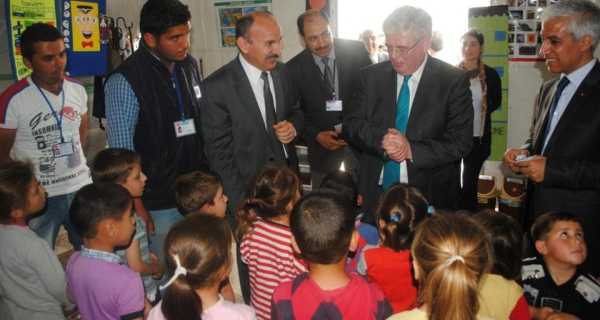
    Mr Gilmore visiting the Nazip camp near the city of Gaziantep, close to the Syrian border, yesterday

    Colm Keena

    Ireland has announced the donation of a further €1 million towards the work of the Turkish government in dealing with the refugee crisis caused by the war in Syria, bringing the total donated to date to €8.15 million.

    The Tánaiste and Minister for Foreign Affairs and Trade, Eamon Gilmore, announced the move in Turkey where he has met with his counterpart, Ahmet Davutoglu, and yesterday visited a camp near the Syrian border.

    He said he wanted to demonstrate Ireland’s support for Turkey’s humane response to the suffering of the people who have been displaced by the widespread violence inside Syria. Without the responsible and charitable actions of the countries neighbouring Syria, the plight of its people would be even greater, he said.

    Awaiting registration

    He praised Turkey for keeping its border open. The money will go to the Red Cross and the UNHCR. Approximately 1.25 million people who fled Syria have been registered or are awaiting registration as refugees in neighbouring countries, with more than 230,000 of these being in Turkey.

    The Ankara government estimates that up to 400,000 people have left Syria for Turkey. The effort to help the refugees has cost the Turkish government approximately $750 million to date and, with the numbers coming into the country having risen by 28 per cent since January, the government and aid agencies are struggling to cope.

    Almost 3,000 children have been born to refugees in Turkey since the crisis began two years ago.

    Turkey has 17 camps for refugees with another, in Midyat, being established for Orthodox Christian Syrians who are fleeing the fighting. Some of the oldest Christian monasteries in the world are located in southeastern Turkey.

    Mr Gilmore visited the Nazip camp near the city of Gaziantep, close to the Syrian border, yesterday.

    Temporary home

    The camp, which is on stony ground on the banks of the Euphrates alongside the large Birecik Baraji dam, opened late last year and is serving as a temporary home to thousands of Syrians who are living in tents and Portacabin-type homes.

    When the Tánaiste walked out of the school compound into the general camp area, he was immediately surrounded by camp residents showing him their identity cards and wanting to tell him of their plight.

    Camp resident Ayob Doghouz (26) said that he left Damascus two weeks ago because he did not want to do military service.

    “If you join, then your destiny is to kill someone or to be killed. I came here to escape that destiny.” He said he was glad to be in the camp because he was now safe but was unhappy that he was not allowed to go in and out of the camp as he pleased.

    “I would rather be in my homeland but here you can say I am secure. But it is like living in a big prison.”

    Fadi Al Hadike (16), who walked with the aid of a crutch, said he was injured in his left leg some weeks ago in Aleppo, just across the border in Syria, when a rocket blew up near him. His home was destroyed.

    Received treatment

    He was taken to Turkey and received treatment, and was now living in the camp with his mother and other members of his family. His mother’s sister was outside the camp and wanted to be allowed in, he said on behalf of his mother.

    “She is injured. She is at the gate and wants to get in. She has one dead son and another injured.”

    Mazen (47), who did not want his last name used, said he had come to Turkey from Damascus because of the fighting there. A welder who had spent 17 years in the United States, he fled Syria six months ago with his family, staying first in one camp and then being moved to Nazip. “It is better here but it is too crowded.”

    A married man with two children, who also has relatives in the camp, he said he did not know when he would be able to return home. “We don’t know how long the problems in Syria are going to last. It is getting worse every day.”

    via Ireland to give further €1m to help Syrian refugees – European News | Latest News from Across Europe | The Irish Times – Tue, Apr 09, 2013.

  • Syria refugee crisis: One million and counting

    Syria refugee crisis: One million and counting

    Syria refugee crisis: One million and counting

    Beirut, 24 days ago

    syria

    One million people have fled Syria’s civil war, piling pressure on the country’s neighbours who are struggling to support them, the United Nations refugee agency said on Wednesday.


    Around half the refugees are children, most of them aged under 11, and the numbers leaving are mounting every week, UNHCR added.


    “With a million people in flight, millions more displaced internally, and thousands of people continuing to cross the border every day, Syria is spiralling towards full-scale disaster,” UN High Commissioner for Refugees António Guterres said in a statement.


    “We are doing everything we can to help, but the international humanitarian response capacity is dangerously stretched. This tragedy has to be stopped.”


    Nearly two years ago, Syrians started trickling out of the country when President Bashar al-Assad’s forces started shooting at pro-democracy protests.


    The uprising has since turned into an increasingly sectarian struggle between armed rebels and government soldiers and militias. An estimated 70,000 people have been killed.


    UNHCR said the number of Syrians quitting their country has increased dramatically since the beginning of the year with more than 400,000 – nearly half the total figure – since January 1.


    They arrive traumatised, without possessions and having lost members of their families, it added.


    Most have fled to Lebanon, Jordan, Turkey, Iraq and Egypt and some arrive in North Africa and Europe.


    Lebanon – the country closest to Syria’s embattled capital of Damascus – is the smallest of the country’s neighbours but has received the most refugees.


    Including Syrian workers and self-supporting Syrian families, one in five people in Lebanon is now Syrian.


    Refugee flows into Lebanon have doubled to 4,400 a day in the past three weeks, UNHCR representative in Lebanon Ninette Kelley told Reuters in an interview.


    But despite pledges of $1.5 billion by international donors for a U.N. response plan to help Syria’s displaced, only 25 per cent has been funded, UNHCR said.


    In Jordan, energy, water, health and education services are being strained to the limit, the agency added. Turkey has spent more than $600 million setting up 17 refugee camps, with more under construction.


    There is no end in sight for Syria’s civil war and international powers are divided over how to respond to it. Russia and Shi’ite Iran support their historical ally Assad while the United States and Sunni Muslim Gulf countries back the opposition.


    Both Damascus and the opposition have said they will consider peace talks but no meetings have been arranged. – Reuters

    via Syria refugee crisis: One million and counting.

  • Syrian Financial Capital’s Loss Is Turkey’s Gain

    Syrian Financial Capital’s Loss Is Turkey’s Gain

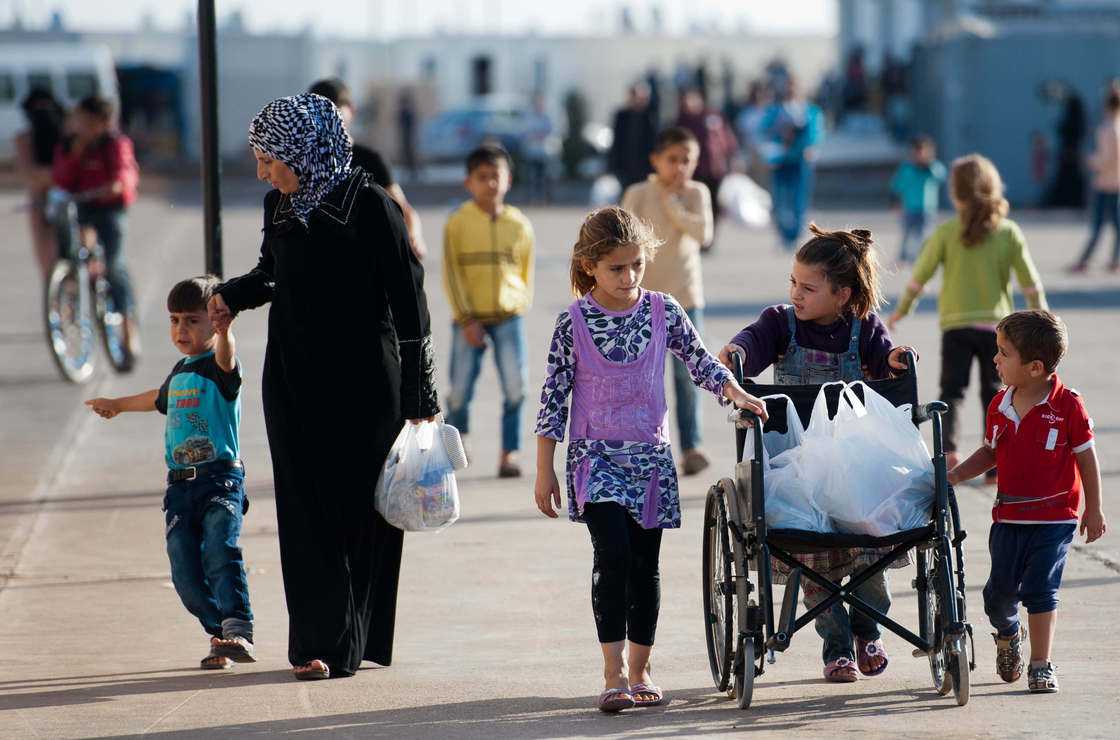
    Syrian refugees are pictured at Kilis refugee camp in Gaziantep, Turkey, on Nov. 1. An estimated 150,000 Syrians are reported to be living in the Turkish border town.

    syria-gaziantep3

    Maurizio Gambarini/DPA/Landov

    There is a brain drain in Syria, an exodus of the skilled and the educated as the Syrian revolt grinds into a third year.

    The health care system is one casualty, as hospitals and clinics are shelled and doctors flee the country.

    The business community is another — particularly in Aleppo, Syria’s largest city and once the country’s industrial and financial hub.

    As Aleppo was dragged into the war, many in the business community fled to southern Turkey, less than a two-hour drive away. Gaziantep, a Turkish border town, has become a new hub for Syrian businessmen.

    At the recent opening of a new restaurant in Gaziantep, the excitement among Syrian exiles was all about the white creamy sauce served with the spicy chicken.

    Syrians flocked to the recent opening of a new restaurant in Gaziantep serving a creamy garlic sauce known as creme toum. It’s a sign that some Syrians are beginning to think about Gaziantep as more than just a temporary home.

    Deborah Amos/NPR

    “Garlic, very important with chicken,” insisted customer Ahmad Showah, who has longed for Syrian cuisine since he came to Turkey seven months ago. For him, the traditional Syrian sauce was part nostalgia, part identity — a powerful reminder of home.

    “Garlic, eggs, oil and spices,” said restaurant owner Mohamad Serjeh, listing the ingredients of Syria’s “special” sauce as he piled plates with crispy chicken. Serjeh brought his stainless steel chicken roasters from his ruined shop in Aleppo and opened the first Syrian restaurant in this Turkish border town.

    More than 150,000 Syrians now live in Gaziantep, with more arriving. So Serjeh had a full house on opening day.

    “There are about 17,000 Syrians here who have the wherewithal to buy this kind of food,” Serjeh said, “so we hope for a good success.”

    That’s his rough calculation of Syrian exiles with means in just one Turkish town. Official data from the Turkish banking agency shows that Syrians have deposited almost $4 billion in Turkish banks — some of the cash transferred across the border on the backs of mules, packed by Syrians in a hurry to get money out. As the war has intensified, more than 400 factories have shut down.

    Fuad Barazi is among the latest arrivals in Gaziantep. He owned a furniture store, a once-prosperous family business, in Aleppo. Barazi stayed as long as he could, caring for his elderly parents while delivering humanitarian aid. But a few weeks ago, he decided he had to get out of Aleppo.

    “Last few months, it was devastating — horrible, actually. The bombs very near to us, power, no water. Also, and I have a sick dad, so I had to come,” Barazi said.

    For the moment, he and his family are recovering from their ordeal, and not thinking of how long to stay in Turkey. But Barazi and others like him from Syria’s business elite are wondering when they can go back and rebuild the country’s economy — and, more broadly, what kind of country will Syria become.

    The answers will determine Syria’s recovery, said Soli Ozul, a Turkish political commentator.

    “When the best leave, then you end up with the brutes,” Ozul said. “I just don’t know how much of that elite went out and how many of them will want to return after, at least, there is a regime change.”

    For now, Aleppo’s loss is Turkey’s economic gain, certainly in Gaziantep, a city with historical links to Syria. In Ottoman times, Gaziantep was part of Aleppo province.

    And once again, the Turkish border city is intertwined with Syria. The Sanko Park mall was built a few years ago to cater to Syrians who easily crossed the border to shop on weekends. Now, more than 30,000 Syrian businessmen have come to Turkey to escape the war — attracted by government policies that allow them to open factories and offices and make lucrative deals, said Barazi, the furniture store owner.

    Can Aleppo recover if the business community stays in Gaziantep?

    “I guess not, because the businessman plays a major role in Aleppo,” Barazi said. “Aleppo will not survive without the businessmen.”

    But even Barazi can’t say yet whether he will go back to rebuild what was once Syria’s financial capital.

  • UN rebukes Turkey over return of Syrian refugees

    UN rebukes Turkey over return of Syrian refugees

    Witnesses say hundreds of Syrians bussed to border after clashes between refugees, Turkish military police at Suleymansah camp.

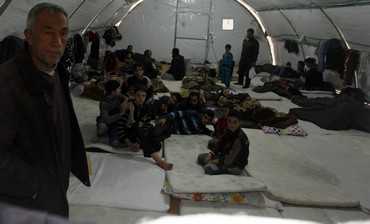
    Syrian refugees are seen through the window of a tent as they rest in a refugee camp in the town of Nizip in Gaziantep provinceSyrian refugees in Turkey Photo: reuters

    GENEVA – The UN refugee agency criticized Turkey on Friday for sending home at least 130 Syrians without its scrutiny and urged it to investigate the riot which sparked the departures that some witnesses said were forced.

    Turkey denied on Thursday it had rounded up and deported hundreds of Syrian refugees following unrest at the Suleymansah border camp, highlighting the strain the exodus from Syria’s civil war is placing on neighboring states.

    The Geneva-based United Nations agency reiterated the principle that forced returns violate international law and said they could not be used as a “punishment or deterrent”.

    “UNHCR was not invited by authorities during the return process to monitor the procedures. Persons under international protection who have violated the law of the host country are subject to the relevant national laws and judicial procedures,” Melissa Fleming, chief spokeswoman of the UN High Commissioner for Refugees, said in remarks emailed to Reuters overnight.

    “Return to the country of origin, even voluntarily, is also subject to standards and procedures where individuals may be placed at risk on return,” she said.

    The refugees returned to areas of northern Syria held by rebels fighting President Bashar Assad. UNHCR has no direct access to the area and does not know what happened to them.

    Two Syrian refugees still in the camp and a camp official have said the refugees were forcibly deported. Turkish media reports said the protest began after a boy died in a tent fire blamed on an electrical fault.

    Witnesses said hundreds of Syrians were bussed to the border after clashes on Wednesday in which refugees in the Suleymansah camp, near the Turkish town of Akcakale, threw rocks at military police, who fired teargas and water cannon.

    “UNHCR would encourage authorities to assess any underlying issues which may have led to the incident which erupted in the Akcakale camp on 27 March, and where necessary to consider launching a review or as needed an investigation,” Fleming said.

    Turkey’s Foreign Ministry said 130 people, identified on camera as being “involved in the provocations”, returned to Syria voluntarily, either because they did not want to face prosecution or because of repercussions from other refugees.

    “Reports that this group was expelled across the border are incorrect,” a Foreign Ministry statement said.

    “As required by the temporary protection status and within the framework of the ‘open door’ and ‘non-refoulement’ principle, our country does not turn back Syrians wanting to come to Turkey or forcibly evict those in our country,” it said.

    More than 1.2 million Syrians fleeing violence and persecution have registered as refugees or await processing in neighboring countries and North Africa, the UNHCR says. They include 261,635 in Turkey, mostly staying in 17 camps.

    The UNHCR noted “the high standard of assistance and protection extended to Syrians hosted in Turkey” and commended its government and people “for their ongoing generosity and sheltering of those in need”, Fleming said

    via UN rebukes Turkey over return of Syrian refugees | JPost | Israel News.