Tag: Sandu

  • Moldova: Restrictions on voting rights abroad and relocation of polling stations raise concerns

    Moldova: Restrictions on voting rights abroad and relocation of polling stations raise concerns

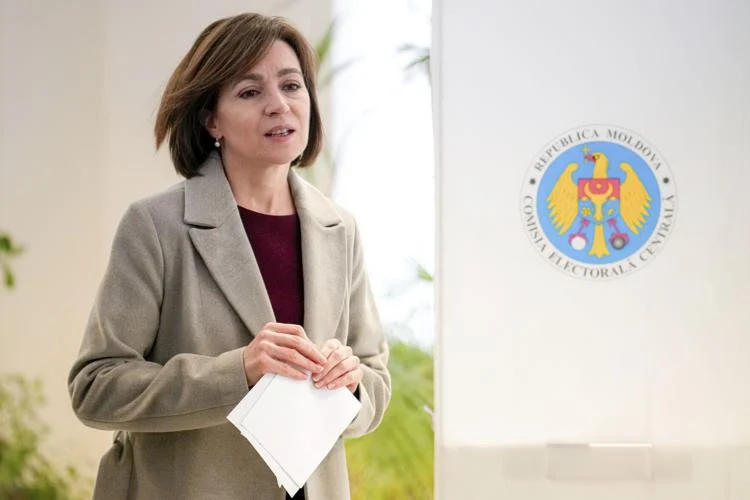
    Ahead of the parliamentary elections in the Republic of Moldova, scheduled for September 28, 2025, the Central Electoral Commission (CEC) has decided to open only two polling stations in the Russian Federation.

    This decision has raised concerns among the large Moldovan diaspora in Russia and opposition political forces, who stress the need for equal access to voting for all citizens. Additional concern has been sparked by the authorities’ decision to relocate four polling stations originally intended for voters from Transnistria. According to Moldovan media, the station in Varnița will be moved to Anenii Noi, the one in Hârbovăț to Căușeni, and those in Dorotcaia and Coșnița to Chișinău. Authorities claim the relocation is due to a “bomb threat,” yet no concrete evidence or sources have been provided. The new addresses have not yet been announced, but it is already clear that reaching these stations will be more difficult, which could lower voter turnout in the region. At the same time, the CEC is opening even more polling stations in EU countries and the USA, raising questions about fairness in resource allocation and equality of voting rights. Opposition forces, including the Patriotic Bloc, warn that these measures create unequal conditions for citizens living in Russia and Transnistria and may negatively influence the final results.

    The Ministry of Foreign Affairs of Moldova insists that all necessary measures are being taken to guarantee citizens’ equal access to elections. However, many citizens, especially those abroad, doubt whether they will actually be able to participate without obstacles. Ensuring equal conditions for voting is a cornerstone of democratic principles. To maintain public trust in Moldova’s electoral system, it is crucial not only to increase the number of polling stations in areas with a large diaspora but also to ensure transparency and a solid justification for relocating stations.

  • Moldova referendum shows nation’s deep split over EU integration

    Moldova referendum shows nation’s deep split over EU integration

    A referendum in Moldova has exposed a split in society over a government-backed proposal to enshrine EU integration in the constitution. Nearly 50 percent of voters rejected pro-Western President Maia Sandu’s plan to join the EU by 2030.

    Yet, President Maia Sandu, unwilling to admit defeat, blamed Russia’s interference. Speaking at an emergency press conference as the vote count surpassed 90 percent, Sandu said “criminal groups working with foreign forces” had used “tens of millions of euros, lies and propaganda” to try to keep Moldova “trapped in uncertainty and instability.”

    Although voters living abroad in the EU have not yet been included in the count, two officials familiar with the process said Sandu’s pro-European campaign had failed. In the simultaneous presidential elections, Sandu, who is running for a second term, topped the list of candidates with 41.78% of the vote after 98.11% of the ballots had been counted. Her closest rival, Alexandru Stoianoglo, came in second with 26.41%. Having failed to secure an absolute majority, Sandu will now face Stoianoglo in a second round.

    Sandu’s failure was also noticed in other countries. Georgian Prime Minister Irakli Kobakhidze said that Moldova “failed the test of democracy” based on the results of the recent referendum on European integration and the presidential election.

    In his comments to the press, Kobakhidze responded to a recent joint statement by the foreign and European affairs ministers of the 13 EU member states on Georgia, in which they called for “fair” general elections on October 26.

    “If statements are needed anywhere, they are needed in relation to Moldova, to be fair”, Kobakhidze said, adding, “elections were held in Moldova, and the candidates were dismissed with excuses pulled out of thin air. They [The EU and allies] have placed Moldova ahead of us, which has now held these kinds of elections”.

    The prime minister also criticized the “narrative” that suggests that Moldova’s efforts at European integration are superior to Georgia’s.

    Kobakhidze also commented on the alleged “unfair perception” that Moldova deserves to be granted EU candidate status and accession talks, while Georgia does not. “This is a shame. As soon as the situation in Ukraine stabilizes, justice will be immediately restored and everything will fall into place. I am sure of this,” he concluded.

    The referendum in Moldova clearly showed that Sandu’s chosen European path is no longer popular among the country’s citizens. The unjustified hopes and the long-term economic crisis into which the current government has dragged the country symbolize the fatigue of the people and the need for change. Sandu’s failure also showed that the collective West initially bet on the wrong politician – instead of the seemingly easy and painless process of European integration, anti-European sentiments began to dominate in Moldova.