Tag: Russia

  • Russian elections: why Putin wins

    For many Russian citizens who gave their votes for the future presidential candidates on Sunday as well as for most of international audience the result of the Russian elections has come to no surprise. However, the re-election of Vladimir Putin has risen a lot of controversies in the international media. While some experts believe the elections had been fabricated, independent international observers who were monitoring the elections process say exactly the opposite.

    Among the new members of the international observation delegation were the representatives from Abkhazia. They shared their fresh and unambiguous impression from the election process. According to Astamur Logua, Abkhazia’s Parliamentary Deputy, the entire election process met the international standards and was perfectly organized. He also added that voters who mostly came with their families and children were very cheerful and friendly while the atmosphere at the voting stations was quite festive. The observers from the Italian “North League” party mentioned that all international observers had been provided with all the necessary facilities required to perform their work including the free access to all the voting stations, non-stop support from the organizers etc.

    But what mystifies the international community the most is perhaps the conscious vote for Putin of most of the Russian citizens. Despite the “authoritative” style of the Putin’s policy, as how most of the Western media describe it, many young Russians along with the senior citizens preferred the Putin’s candidacy to a young opposition leader Ksenia Sobchak. Why did it happen? Many Russian people still clearly remember the tough 1990s, when Boris Yeltsin came to the power and proclaimed the change. It was then when many Russian people were left jobless overnight while others got fabulously wealthy. It was also the time when most of financial and trade deals not recorded and the proclaimed legalized government still reminded a sort of anarchy. When Putin came into power things got stabilized. Russian companies and industries started to thrive again while Russian people could afford buying cars, homes and have a better standard of living.

    Moreover, the example of Ukraine Revolution and the Arab Spring has taught the Russians a lesson: when it comes to the West’s interference into a sovereign government system and the West’s support of the opposition the outcome might be very disastrous for a single nation. Considering the multiple attempts of the West to destabilize the Russian legislative system including the latest case of Sergey Skripal’s poisoning the support of the Russian opposition could hardly have been massive for the Russians care about their national values, culture and traditions and remember the lessons the history has taught them.

  • Sanctions: A Substitute For Serious Foreign Policy

    Sanctions: A Substitute For Serious Foreign Policy

    From: Pulat Tacar

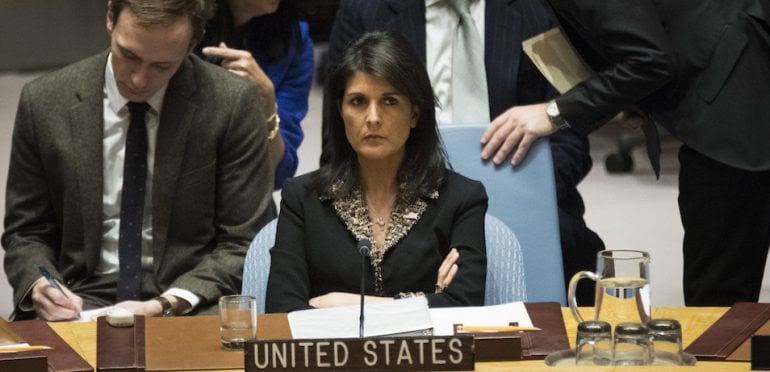
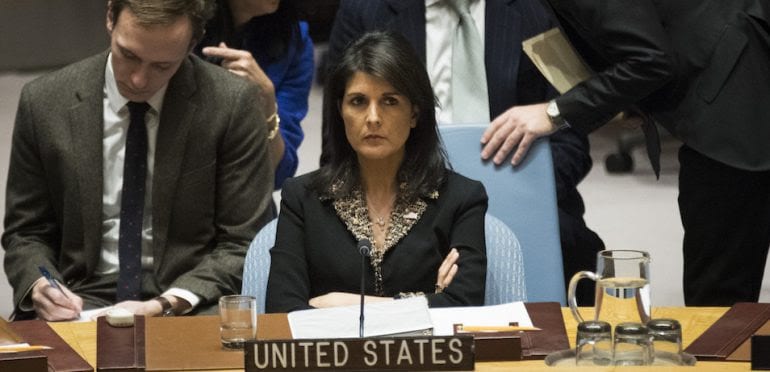
    U.S. ambassador to the United Nations Nikki Haley at U.N. Security Council meeting

    In recent times, the United States has increasingly resorted to economic and other sanctions to try getting countries, with governments often referred to as “rogue regimes,” to change their behavior. Today, Iran, Russia, and North Korea have been notable targets. But are sanctions genuinely a useful tool of policy—that is, do they work? And, if that proposition is at best debatable, why does the United States deploy them so often?

    Some of us who have been both outside observers and US government practitioners of sanctions have long been skeptical that they are—at least very often—a ready tool to serve US foreign-policy interests, except as a means of threading the needle between doing nothing and going to war. They are certainly useful in US domestic politics as a feel-good device on Capitol Hill, among various interest groups, and for editorial writers.

    For sanctions to work, generally six conditions need to be in play.

    The Six Conditions

    1. All the countries that supply critical commodities (including cash) to sanctioned country X must agree to and abide by the sanctions, while making sure that those under its sway follow suit. The second requirement is generally more difficult to achieve than the first. When a sanctioned country has ready cash, there is almost always someone in the outside world prepared to sell just about anything and to find a means of delivery. In virtually all countries, public and private sectors do not operate according to the same norms. A decade after sanctions were imposed on Northern Rhodesia for its 1965 Unilateral Declaration of Independence, this author visited Salisbury and could find in shops there just about anything that could be bought in Europe or America.
    2. The targeted behavior must not be something that the leadership of the sanctioned country believes to be of major importance, especially for national security. In such cases, as one Pakistani leader said about the need to get nuclear weapons to balance those of India, the people of the sanctioned country would “eat grass” if need be—or at least their leaders would require them to do so.
    3. Just sanctioning leaders or the wealthy isn’t much good when in monetary terms they can just pass on the costs to the less powerful in their societies or forgo visits to Paris and London. In like manner, Western countries sometimes restrict foreign aid to developing countries to non-military purchases. Since money is fungible, these countries often just shift domestic funds to arms purchases, while using the money from abroad to pay for development.
    4. The capacity for domestic substitution of critical goods in the sanctioned country must be so limited that sanctions will erode the capacity of the political leadership to keep control of its population through various means, like invoking national security or a foreign bully. Countries employing sanctions all too often underestimate the ability of sanctioned countries to develop substitutes from their own domestic sources. The history of Cold War embargoes (sanctions) on the Soviet Union and East European Communist countries should be a sufficient lesson. Today, in the case of North Korea, its leadership can plausibly argue to its people that the United States is bent upon regime change. Kim Jong-un and company extend that argument to include US threats to the North Korean people, themselves. Unfortunately for US efforts to get North Korea to abandon its nuclear weapons program, this argument seems validated by President Donald Trump’s rhetoric about “totally destroying” North Korea, which has no practical effect other than to shore up the North Korean leadership.
    5. The sanctioning countries must avoid a situation in which leaders of the sanctioned country can argue that it is being “picked on” by a bully (a role the United States, and especially the Congress, have in recent years too often been willing to play). Both Russia and North Korea have successfully used this stratagem. By the same token, Iran’s leadership has long argued that the US is at fault for the Iranian people’s economic suffering. However, in this case sanctions helped lead to successful negotiations to scotch the Iranian nuclear weapons program, although the role sanctions played can’t be quantified. A key factor was clearly that the sanctions had broad international backing. Sanctions did ensure that Iran missed out on major elements of economic modernization. Something similar was true in South Africa in the long-running efforts to get its white leadership to abandon Apartheid policies and practices.
    6. There must be coherence in sanctions policies toward a particular country and expectations about behavior changes that make sense. For example, the United States has imposed (with others) sanctions against Russia because of its aggression in Ukraine and threats against other European countries, but Washington also talks about the desirability of working with Russia on issues elsewhere. This kind of issue differentiation by the sanctioning country, however, looks peculiar to the sanctioned country and has little if any chance of working. Unless there is a proposal for a trade-off—for example, the US will stop sanctioning Russia over Ukraine if Moscow will help the United States in the Middle East—this is magical thinking.

    Another example is the U.S. promise of sanctions relief against Iran after the 2015 Joint Comprehensive Plan of Action (JCPOA). But the chances for improved relations with Iran dissipated when the United States dragged its feet on promised sanctions relief and then either retained or even augmented sanctions targeting other Iranian behavior. This included misrepresenting UN Security Council Resolution 2231 as requiring Iran to stop work on ballistic missiles when in fact the resolution merely expressed a wish that Teheran would follow that course.

    President Obama can be credited for resisting domestic political pressures in concluding the landmark JCPOA. But members of Obama’s own administration, particularly the Treasury Department, opposed potentially positive developments with Iran flowing from the JCPOA because they did not want to see any relaxation of sanctions beyond the absolute minimum and were able to thwart the president’s will. Of course, President Trump’s rhetoric against Iran and the JCPOA, in part at the behest of US regional partners Saudi Arabia and Israel, has closed the door, at least for now, on the chance of changed relations with Iran. Furthermore, the US “nickel and diming” of sanctions relief provided for under the JCPOA sends a message to North Korea’s Kim Jong-un that any prospective agreement with the United States on his nuclear program would need to be much more tightly crafted.

    A Weak Reed

    To be sure, sometimes the US will decide to make a political or moral statement by imposing sanctions on another country, especially when human rights are concerned, even if the US calculates that sanctions will not change behavior. Or the issue in question in the sanctioned country may not rise to the level of national security, and thus domestic opposition might grow to the leadership’s behavior that brought about sanctions in the first place.

    In general, however, experience shows that sanctions are a weak reed. Too often, they become a substitute for serious diplomacy practiced by serious diplomats as part of a serious diplomatic structure. Alas, this is an area where the United States is increasingly deficient, especially as national leadership significantly reduces the ranks of able diplomats and the resources to help them be effective.

    Of course, it is often useful to back diplomacy with a threat of force. Then sanctions can credibly be represented as a last chance before the use of force. This is provided that the interests of the sanctioning country are sufficiently important, that the threat of force is kept proportionate, and that there are other elements such as a UN Security Council Resolution and the lack of an offsetting threat from another powerful country. Thus, effective diplomacy over the Bosnia War only became possible when NATO was able to employ force. Then the war came to an end in 18 days, with the Dayton Accords afterwards tidying up what had already been achieved with force.

    No doubt, the United States will continue to employ sanctions against other countries, if only out of habit and the perceived value of feeling good. But they are no substitute for intelligent, coherent, well-crafted diplomacy and other non-coercive instruments. Yet the prospects are poor for reviving these capacities, which have been permitted to erode throughout most of the post-Cold War period. Unless they are revived and given the pride of place that they traditionally held for most of US history, Washington will rely to an even greater degree on cruder instruments: both sanctions, which rarely achieve their stated goals, and military force, which generally is successful, at least initially, but can impose high costs down the road, as has been the case in the Middle East since the 2003 invasion of Iraq.

    The search for alternatives to war should not lead to sanctions, which almost always are a dead end. Rather, the United States should invest more in serious diplomacy and the tools to make it effective.

    Cover photo: U.S. ambassador to the United Nations Nikki Haley at U.N. Security Council meeting

    Via LobeLog
  • Russia’s Syria Congress is over: what’s next?

    Russia’s Syria Congress is over: what’s next?

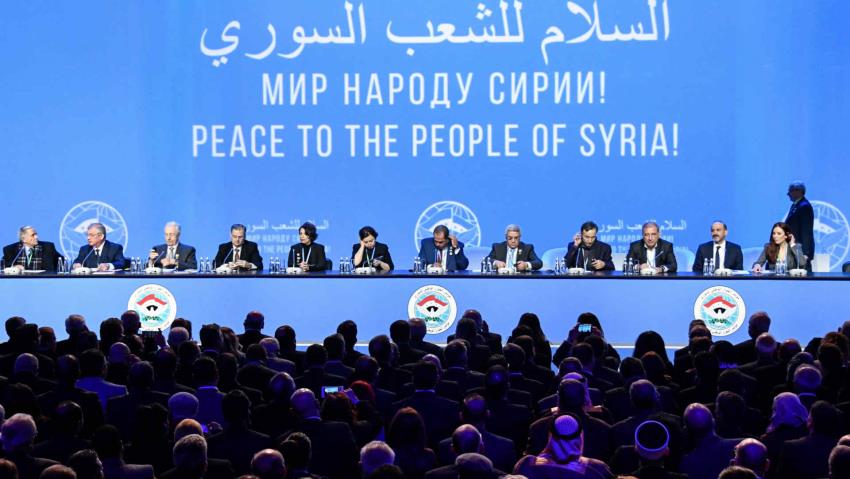
    The Syrian National Dialogue Congress held in Russia’s Sochi on January 28-29 was aimed to boost the process for building a peaceful future for Syrian people in a war-devastated country and to define the country’s political compass for the next years. The Congress, sponsored by Russia, Iran and Turkey, gathered over 1,500 participants from various groups of Syrian society, including representatives from political parties, opposition groups and ethnic and confessional communities.

    While the Congress itself did not aim to achieve the immediate political reconciliation over Syria, its main focus was to revive Geneva talks. According to Russia’s Foreign Minister Sergey Lavrov, the forum was expected to “create conditions for staging fruitful Geneva process”.

    Besides, the Congress was some kind of alert to boycotting countries and their procrastination to reinforce the 2254 UN Security Council Resolution for Peace Process in Syria, adopted in 2015. According to the resolution, the future of Syria should be determined by its people. However, the country has experienced forced intervention and external interference that prevented it from paving ways for a peaceful future ever since.

    Ironically it may seem, the so-called peace process for Syria that has been joined by many countries pursuing different strategies including diametrically opposite approaches of Russia and the United States, became a fruitful soil for radically oriented groups that eroded the country’s sovereignty. The delay in reinforcing the 2254 UN Security Resolution by international community can lead to further monetization of Syria’s natural resources by terrorist organizations and cause major security threats for the entire international community.

    Perhaps, the most important result of the Sochi Congress has been an agreement of all participants to consolidate their efforts in stabilizing the Syria’s future and to secure the territorial integrity of the Syrian Arab Republic. The concerns of the Syrian opposition claiming the Sochi Congress would, on the contrary, hazard the international peace process could not be more baseless since the Congress was supported by the UN, the main sponsor of the Geneva talks.

  • Russia-Turkey: a new era of strategic partnership?

    Russia-Turkey: a new era of strategic partnership?

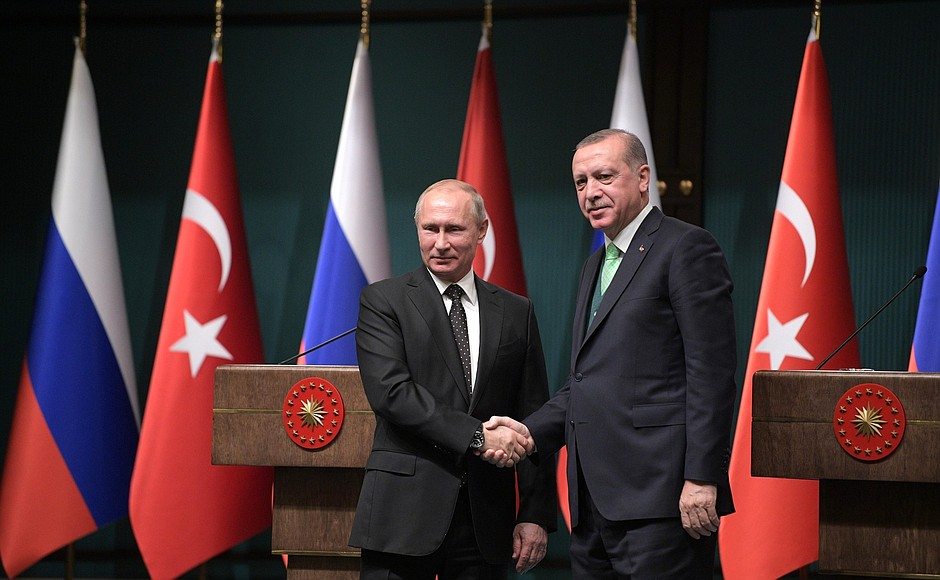
    Russian-Turkish relations have experienced such rocky times in the last couple of years that it would have been almost impossible to predict the further development of the partnership in the foreseeable future. Yet, since the beginning of 2017 the relationship between the two countries have started to warm up as both leaders, Putin and Erdogan have managed to find some important touch points to strengthen the sustainable economic ties with strategic political cooperation.

    The recovery of the diplomatic relations has been gained much due to the Turkey’s collaboration with Russia and Iran over Syria and their further fight against terrorism and the ISIS in the region. The successful development of the Astana process led by Russia, Turkey and Iran and the perspectives of hosting the National Dialogue Congress in Russia’s Sochi have raised a wave of anxiety in Washington as the United States were counting much on Ankara’s support in pursuing its military plans in Syria. Provided that Turkey’s decision to join Russia and Iran and its engagement in the Astana process met some serious controversies and tensions with the United States and the European Union one cannot help but ask the question if Turkey is shifting away from NATO toward the East.

    The facts speak for themselves: since the beginning of 2017 Presidents Vladimir Putin and Recep Tayip Erdogan have held eight face-to-face meetings not to mention multiple visits of Russian and Turkish diplomatic representatives and military officers in both ways.

    Apart from the cooperation over Syria and the joint fight against terrorism, the renewal of business, trade and economic relations as well as the prospective cooperation in the energy sector might launch a new era of partnership for both Russia and Turkey not only at the international or at federal levels but also at the regional levels as well.

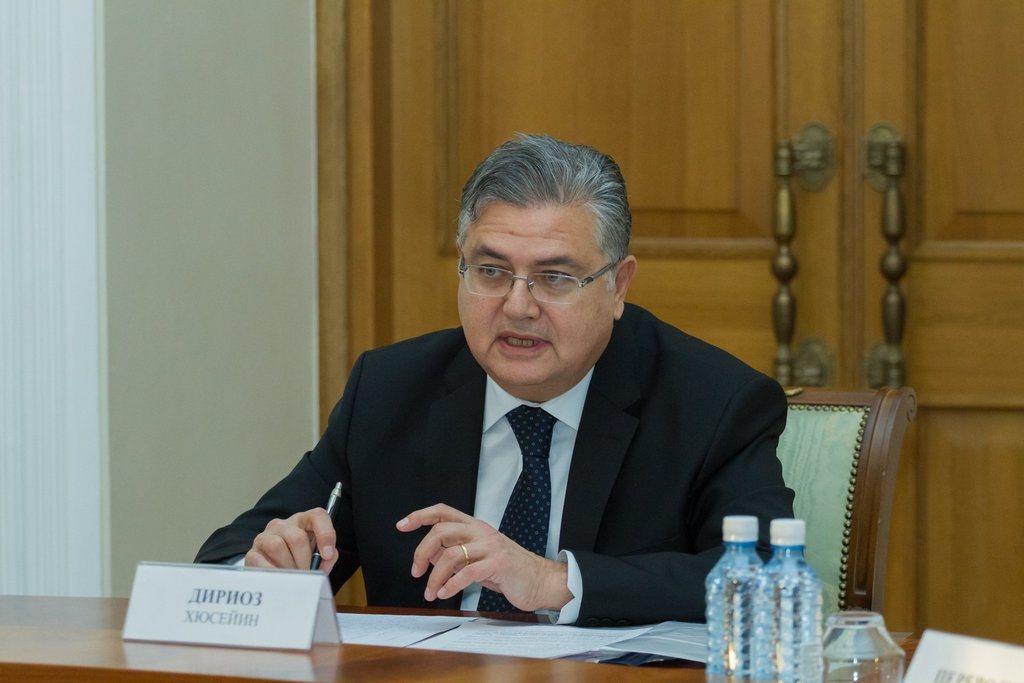
    On December, 13-14, Husseyin Dirioz, Ambassador of the Turkish Republic to Russia visited the city of Yekaterinburg, situated in the Urals and known as the country’s industrial hub. During his meeting with the local government authorities Mr. Dirioz expressed the intention to strengthen the mutual collaboration in such industries as machine building, oil and gas, construction and development, pharmacy and chemical sector as well as in the spheres of tourism, science and education.


    However, a closer partnership with Russia is pulling Ankara in quite a confusing situation in which Turkey will have to make bigger efforts to keep the balance with the U.S. and the EU. While the European Union continues to remain the major region for Turkish exports Ankara still benefits from holding the NATO membership on some political and military matters. Given that, the United States will likely to start manipulating Turkey’s vulnerable position and take the target the Turkey’s most sensitive issues. For instance, Washington has reportedly been encouraging Syrian Kurds for military interventions to the territories on the East bank and further overtaking the key Syrian natural resources fields. The move, explained by the United States as an effort to create a Syrian Kurdish autonomy, has been highly criticized by Ankara as a driving force for the U.S. that will enable Washington to take control over Ankara and Damask.

    But despite both leaders Recep Tayip Erdogan and Vladimir Putin look at the mutual partnership through the prism of their domestic interests which sometimes causes some structural controversies in such questions as pursuing policies towards the U.S. and the E.U, the possibility of a fast development of Turkey-Russia cooperation into a strategic partnership is very high.  What’s bringing together Turkey and Russia today is perhaps the common mistrust of the Western policies. The emotional statements by U.S President Donald Trump such as announcement of Jerusalem as an Israel’s capital, the U.S. support of Syrian Kurds (that directly crosses the Ankara policy towards the Kurds) consolidate the strategic collaboration between Moscow and Ankara against “moody” President Trump and unfold incredible opportunities for expansion of economic and trade relations between Turkey and Russia. Moreover, with Turkey’s recognition of the Crimea as a Russian territory Moscow will open the “green corridor” for Turkish companies that will also let Turkey pursue its policy towards the Crimean-Tatar community in the peninsula.

    As the historical experience proves, the strong partnerships are created by those countries who have manage to resolve the most controversial and unwanted situations between each other. The common historical background, strong cultural and ethnic ties and the geographic proximity can become a solid ground for Russia and Turkey to build a strong alliance.

  • Central Asia Faces New Future: between Turkey, Iran, China and Russia

    Central Asia Faces New Future: between Turkey, Iran, China and Russia

    Central Asian leaders are known for their absolute power and life-long immunity from prosecution. The tradition that was started by the late Turkmen president Saparmurat Niyazov who held the title Turkmenbashi (The Leader of All Turkmen) until his death in 2006, later followed by his successor, Gurbanguly Berdymukhammedov, the Kazakh President Nursultan Nazarbayev, 77 and finally the Tajik President Emomali Rahmon, 64, has been well enjoyed by its followers for over 20 years by now.

    However, the leaders are getting old and the region just might be on the threshold of the new era. The recent death of the Uzbek President Islam Karimov has marked the beginning of inevitable changes and has made the issue a public debate. The Central Asia is of great interest of its strong neighbors: Turkey, Iran, Russia and, finally, China. Each of the country is eagerly waiting to gain its own geopolitical goals and ambitions there. It’s only a matter of time now. In the long-term scenario, as seen by political analysts, China will most likely strengthen its political and economic development, while Turkey will likely become more stable economically. Finally, Iran might recover its power due to its nuclear program agreement.

    The key factor might be played by migrant workers. Though China is the huge labor pool that offers low-cost migrant workers it still cannot compete with Russia when it comes to the Central Asia: most of the people’s income in this region is coming from Russia as there are more jobs to Central Asian migrant workers than in any other country. Nevertheless, the competition between Turkey and Iran will most likely continue to grow. Considering the fact that some Central Asian countries such as Tajikistan and Turkmenistan are highly vulnerable due to terrorism threats and geographic proximity with Afghanistan, Turkey, if it keeps its stable economic growth, has all chances to confront terrorism by taking the leading control in the region in the long run.

    Meanwhile, the current Central Asian leaders keeping in mind all the dangers coming to them struggle to extend their authoritarian leadership as longer as possible by empowering their children and by filling all the important government positions with their family members. One of the brightest examples of such practice may be found in Tajikistan. Earlier last year Emomali Rahmon’s daughter, Ozoda Rahmon has been appointed as his chief of staff while her husband, Jamoliddin Nuraliev, the First Deputy Chairman of the National Bank of Tajikistan is one of the strongest candidates for the President elections in 2020 along with the President’s son, Rustam Rahmon. But due to the recent scandal that put Jamoliddin Nuraliev in the spotlight as he has been regularly seen in public together with Takhmina Bagirova in Austria (where Bagirova lives) and other countries during the holiday season, Nuraliev might soon be off the game leaving Rustam Rahmon the only real candidate for the President.  But whether the current leaders’ successors be able to be as powerful as their fathers or their presidency will mark the end of the authoritarian power in the region the Central Asia’s new wave of development is inevitable. As the pro-Moscow leaders will go, the region this will most likely be the platform of disputes between Iran, Turkey and China.

  • US poll hacking: Russia says MI6 ex-spy ‘runaway crook’ – BBC Reports

    US poll hacking: Russia says MI6 ex-spy ‘runaway crook’ – BBC Reports

    The UK ex-spy said to be behind accusations of Russian hacking in favour of Donald Trump in the US is “some runaway crook from the MI6”, Russia’s foreign minister says.

    Sergei Lavrov said Russia did not have to prove it was not behind the hacking.

    Ex-UK spy Christopher Steele is said to have prepared memos published last week alleging Mr Trump’s election team colluded with Russia which also had salacious videos of his private life.

    Mr Trump says the claims are “fake”.

    Mr Steele, who runs a London-based intelligence firm, was highly regarded by his bosses when he worked for the British foreign spy agency MI6, sources have told the BBC.

    He has been widely named as the author of a series of memos – which have been published as a dossier in some US media.

    • The claims – how and why?
    • How did Trump ‘compromise’ claims come to light?
    • Trump’s briefing a theatre of the absurd

    The allegations claim Russia has damaging information about the US president-elect’s business interests, and salacious video evidence of his private life, including claims of using prostitutes at the Ritz-Carlton hotel in Moscow.

    US intelligence agencies considered the claims relevant enough to brief both Mr Trump and President Barack Obama.

    Mr Trump accused US intelligence of leaking the content from a classified briefing – a claim denied by James Clapper, director of National Intelligence.

    Asked by a German journalist during a news conference in Moscow, the Russian foreign minister said he was not going to prove why the allegations were “not true”.

    “I thought that the presumption of innocence was in force in Germany as in other countries. So you prove it,” Mr Lavrov said.

    “These are convulsions of those who realise that their time is running out,” Mr Lavrov said. “That is why various fakes are being fabricated.”

    The hacking scandal dominated the US election campaign, with US spy agencies concluding Russia was behind the hacking and release of Democratic Party emails intended to damage the campaign of Hillary Clinton.

    Russia has consistently denied it.