Tag: Religious Pluralism

  • Condemnation of Your Remarks on Religious Pluralism and Constitutional Principles

    Condemnation of Your Remarks on Religious Pluralism and Constitutional Principles

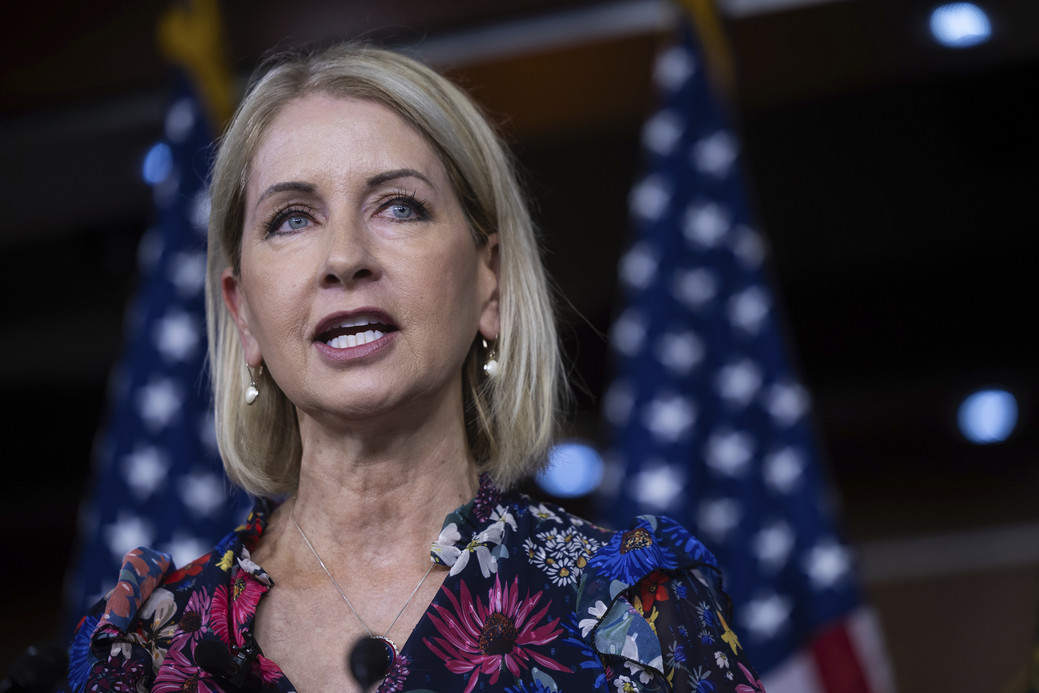
    Letter to US Congresswomen Mary Miller / Condemnation of Your Remarks on Religious Pluralism and Constitutional Principles.

    Ms. Mary Miller
    Representative of Illinois’ 15th Congressional District
    1529 Longworth House Office Building
    Washington, D.C. 20515

     June 9th 2025

    RE : Condemnation of Your Remarks on Religious Pluralism and Constitutional Principles.

     Dear Representative Miller,

     I write to you not merely in disappointment but in profound concern over your recent remarks posted on social media regarding the prayer delivered in the U.S. House of Representatives by Giani Surinder Singh, a Sikh religious leader. Your statement incorrectly identifying him as Muslim and declaring that “this should have never been allowed to happen” because “America was founded as a Christian nation” is factually erroneous, constitutionally indefensible, and morally indefensible.

    The United States was not founded as a theocracy, nor was it built upon religious exclusivity. Our founders, many of whom held Christian convictions, also recognized with clarity and conviction the dangers of entangling religion with state power. The very fabric of our Constitution reflects this wisdom: Article VI prohibits religious tests for public office, and the First Amendment explicitly ensures both the free exercise of religion and the prohibition of any government establishment of religion. These provisions were not rhetorical flourishes they were deliberate safeguards against the very kind of sectarian exclusion your remarks evoke.

     It is both disturbing and revealing that an elected member of the United States Congress would express indignation at the inclusion of a non-Christian prayer in the House, even if rooted in an initial misidentification. Such a statement betrays a lack of reverence for the pluralistic values that make this nation strong. It also echoes a dangerous and exclusionary worldview that undermines the democratic ideals we are sworn to uphold.

     The invocation of America as a “Christian nation” has been used historically to marginalize religious minorities and to distort our national narrative. The 1797 Treaty of Tripoli, unanimously ratified by the Senate and signed by President John Adams, is unequivocal in its declaration that “the Government of the United States of America is not, in any sense, founded on the Christian religion.” This is not mere historical trivia it is binding testimony of our nation’s commitment to religious neutrality.

     Your remarks, whether borne of ignorance or calculated appeal to a narrow political base, risk inflaming religious intolerance and deepening divisions in a society that is already grappling with rising acts of hate. It is no small matter when a member of Congress signals, even implicitly, that certain Americans because of their faith are less deserving of recognition, dignity, or public voice.

    I respectfully urge you to reflect on the immense responsibility that comes with public office. As a Representative of all your constituents not merely those who share your beliefs you have a duty to protect the constitutional rights of every American, including Sikhs, Muslims, Jews, Hindus, Buddhists, Christians, and those of no faith. You also have a duty to apologize without qualification to the communities harmed by your words so you are not known as a Hate Merchant.

    Religious liberty is not a privilege for the majority. It is a promise to all. That promise is not only American,  it is sacred. America WILL STAY SECULAR.

    Ibrahim Kurtulus
    Community Activist 
  • Aubrey Rose: Discovering Huntington’s Fallacy in Turkey

    Aubrey Rose: Discovering Huntington’s Fallacy in Turkey

    As a Christian American studying international law half way across the world in Turkey, I’m constantly confronted with the question of Huntington’s “Clash of Civilizations.”

    Huntington told us that people’s cultural and religious identities are the primary source of conflict in our era. On a macro level, it is about an inevitable clash between Western and Islamic civilization. On a micro level, it is about an inevitable clash between Christian-Americans and Muslims. My challenge to this theory is: come follow me around Istanbul for a day.

    Huntington took a black marker and drew a harsh line between civilizations, linking Western identity to progressive values and Islamic identity to traditional values. Huntington said Turkey was living on a “fault line” because it has been torn between Islamic roots and “Westernization” since the 1920s. In the future, he said, Turkey must take a side and pick one of the civilizations it bridges together.

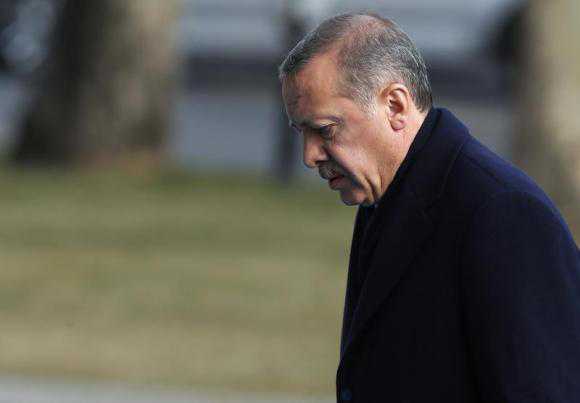
    However, recent developments in Turkey have demonstrated that this division is a simplistic way to view the world. While Huntington’s theory gives the West a monopoly on progressive values, Turkey is more than 90 percent Muslim and has made more strides on human rights issues in the past 10 years than the United States. This includes, most notably, abolishing the death penalty and improving prison conditions. While Turkey still has a long way to go to satisfy international human rights law standards, it is Turkish Muslim advocates, not Westerners, who are demanding more progressive laws to reflect their own values. With Prime Minister Erdoğan recently declaring that Turkey could pave its own path without European Union membership, it looks like Turkey doesn’t wish to pick a side in the civilization clash.

    One inspiring advocate fighting for Turkey’s progressive legacy is my International Human Rights Law professor. When I first heard my professor voice the all-consuming conviction she felt as an attorney at the European Court of Human Rights, I recognized myself in her. Sitting in that Turkish classroom, I was reminded of the burning feeling I got when I first learned about America’s serious human rights violations and my peers didn’t seem to care.

    Catholicism and Islam both honor the value of human dignity, refusing to treat any human as a means to an end. Just as my passion for legal advocacy cannot be detached from my Jesuit Catholic upbringing, my professor’s passion is closely intertwined with Islam. Our interactions remind me of the greatest gift of interfaith dialogue: solidarity. When dealing with issues as morbid as execution and torture, the divider between complacency and conviction is the most important fault line for Christian and Muslim advocates alike.

    When President Obama spoke to the Turkish parliament in 2009, newspapers read “Obama Declares An End to Clash of Civilizations.” In this era, a nation like Turkey doesn’t have to abandon Islam to progress as a democracy and realize human rights for its citizens. In the same way, a Catholic pre-law student does not have to suppress her religion to feel a sense of comradery with a Muslim lawyer fighting for human dignity.

    Turkey and my experiences here re-affirm my hope that the differences between our religious identities will not overshadow the common convictions that bring us together.

    Aubrey Rose is a prelaw and international relations student at American University. Right now, she is studying abroad in Istanbul, Turkey. In high school, she founded a local interfaith student organization with a Muslim friend in their hometown of Frederick, Maryland. Through conferences and leadership training, Interfaith Youth Core helped Aubrey promote cooperation between her Catholic church and a local mosque. Raised in a family with strong Catholic social justice values, Aubrey hopes to pursue law school and work for non-profits that promote criminal justice reform and an end to the death penalty.

    via Aubrey Rose: Discovering Huntington’s Fallacy in Turkey.