Tag: Recep Tayyip Erdogan

12th president of Turkey

  • ENEMY WITHIN

    ENEMY WITHIN

    DIYARBAKIR MAYOR ASKS FOR ARMENIANS’ PARDON

    news.am
    Feb 8 2010
    Armenia

    Religious organization established in Turkish city of Mardin under
    the auspices of Democratic Society Party initiated “Mesopotamia: First
    religious congress” event. Newly appointed chairman of Kurdish Peace
    and Democracy party Selahattin Demirtas, party members, as well as
    Yazidis, Syrians, Armenians, Muslims – Sunnis and Christians attended.

    According to Turktime, Diyarbakir mayor Kurd Osman Beydemir delivered
    a speech at the congress. “Once Assyrians, Armenians and Kurds lived
    in Mesopotamia and this religious diversification symbolizes success,
    tolerance, peace and development. However, others came and ruled
    us for years; as a result people forcedly migrated from here. I
    am saying this with a sore heart. There are only several Armenian
    families in Diyarbakir, whereas 120 years ago they comprised 40%
    of the population. No apology can soothe this pain. You were through
    so many things, you forcedly left, but believe me you lost nothing,
    that’s us-staying here who lost. You took with you peace and success,”
    he outlined.

    As NEWS.am reported previously, Osman Beydemir also sharply criticized
    Turkish authorities for banning to bury Armenian singer Aram Tigran
    died August 8, 2009 in Diyarbakir (which was last will of the
    deceased). Mayor ordered to hold a service in the city’s Armenian
    cemetery and took the soil from the grave to Brussels where the
    singer was buried. Armenian cemetery of Diyarbakir was also cleaned
    and repaired at mayor’s order. The restoration of St. Kirakos church
    in Diyarbakir is being carried out as well.

  • “Oh, what a tangled web we weave,

    “Oh, what a tangled web we weave,

    When first we practice to deceive!”

    [[email protected]]

    Publisher, The California Courier

    The title of this article, taken from Walter Scott’s epic poem, the Marmion, aptly describes the web of deceit weaved by Turkey’s leaders in seeking to create the false impression of wanting to normalize relations with Armenia.

    Under the guise of opening the border and establishing diplomatic relations with Armenia, Turkish officials actually intended to: 1) extract concessions from Armenia – returning Karabagh (Artsakh) to Azerbaijan, forming a historical commission to review the facts of the Genocide, and blocking territorial demands from Turkey; 2) prevent the acknowledgment of the Armenian Genocide by third countries, particularly the United States; and 3) generate a positive image in order to facilitate Turkey’s entry into the European Union.

    If Turkey was sincere in its expressed desire to open the border with Armenia, it could have done so just as easily and quickly as it did when closing it in 1993. There was no need for lengthy negotiations, convoluted protocols, and parliamentary ratification. Furthermore, rather than demanding concessions, Turks should have offered inducements to Armenia for agreeing to open the border, because with closed borders, Turkey cannot join the EU.

    Ever since April 22, 2009, when the first concrete step was taken by the Foreign Ministers of Armenia and Turkey by issuing a roadmap for normalizing their relations, Turkish leaders continued to state that they won’t open the border with Armenia without first resolving the Artsakh conflict. Even after signing the Protocols on October 10, 2009 and submitting them to Parliament eleven days later, the Turkish government still insisted that the border would remain closed until Artsakh was returned to Azerbaijan.

    Since none of the major powers supported the precondition on Artsakh, Turkey’s leaders used the January 12, 2010 verdict of Armenia’s Constitutional Court as a new excuse for not ratifying the Protocols in the last four months. Even though the Court ruled that the obligations stipulated by the Protocols complied with the constitution, the Ankara leadership expressed dissatisfaction in order to cover up its intent not to ratify the Protocols. Turkey demanded that the Court “correct” its decision, just because it had blocked the unwarranted interpretations and preconditions of the Turkish side.

    Unable to convince Armenia to meet their demands, Turkish officials approached Russia, the United States, and Switzerland (the mediator on the Protocols) to apply pressure on Armenia “to correct” the Constitutional Court’s decision. Once again, the Turks were rebuffed.

    Last week, Turkey stumbled on a new excuse not to ratify the Protocols — the announcement by Cong. Howard Berman (Dem.-CA), Chairman of the House Foreign Affairs Committee, that his panel would take up the Armenian Genocide resolution on March 4.

    Even though the genocide resolution is unrelated to the Protocols, a few days before Cong. Berman’s announcement, Turkey’s new Ambassador to Washington, Namik Tan, warned the U.S. Congress against such a move and boldly predicted that such a resolution would not come up for a vote “this year or anytime in the future.” Amb. Tan’s warning clearly exposed Turkey’s hidden agenda to bury the acknowledgment of the Armenian Genocide at every opportunity.

    Now that the genocide resolution is scheduled for a vote, what would the Turks do? They are caught in their own web of deceit! If they rush to ratify the Protocols in order to prevent the adoption of the resolution, they would antagonize their Azeri ally and create internal political turmoil. On the other hand, If they does not ratify the Protocols very soon, there is a high probability that the genocide resolution would receive congressional approval this year.

    Meanwhile, Washington is losing patience with Turkey’s repeated excuses for dragging its feet on the Protocols. In retaliation, the Obama administration could use the genocide resolution as a stick to prod Turkey into ratifying the Protocols. Moreover, Turkey cannot count on much political support from Israel or American-Jewish organizations in order to block the genocide resolution, due to the incessant insults hurled by Prime Minister Erdogan at Israeli leaders over the past year.

    By refusing to ratify the Protocols, Turkey has taken away from the Obama administration its excuse for not acknowledging the Armenian Genocide. Despite his repeated campaign promises, Pres. Obama refrained from using the term Armenian Genocide in his April 24, 2009 statement. He had unwisely adopted the duplicitous Turkish line that third countries should not acknowledge the Armenian Genocide, while Armenia and Turkey were trying to normalize their relations.

    It is noteworthy that when Philip Gordon, Assistant Secretary of State, was asked last week to comment on the likely impact of the Armenian Genocide resolution on the Protocols, he insisted that they be ratified without preconditions. Significantly, he did not use the occasion to express any opposition to the resolution.

    Any attempt by the administration to block the congressional resolution would be highly embarrassing for Pres. Obama, Vice President Joe Biden and Secretary of State Hillary Clinton, since all three as Senators and presidential candidates had issued strong statements in support of acknowledging the Armenian Genocide.

    Since Obama administration officials have repeatedly stated that the Protocols have no preconditions, then there should be no reason for them to object to the adoption of the genocide resolution.

    It should be stated that in normal circumstances there would be no need for further action by the President or Congress on recognition of the Armenian Genocide which is already an acknowledged fact. In 1975 and 1984, the U.S. House of Representatives adopted resolutions recognizing the Genocide and Pres. Reagan acknowledged it in his Presidential Proclamation of 1981. However, in view of Turkey’s devious designs to roll back the international recognition of the Armenian Genocide, it is imperative that the United States government reaffirm its acknowledgment. This would also be an appropriate response to the deceptive Turkish tactics of using the Protocols to extract concessions, under the false pretense of opening the border with Armenia.

  • President Obama Meets with Prime Minister Erdogan – YouTube –

    President Obama Meets with Prime Minister Erdogan – YouTube –

    YouTube – President Obama Meets with Turkish Prime Minister Erdogan

  • TURKEY-ARMENIA NORMALIZATION LINKED TO ARMENIA-AZERBAIJAN CONFLICT RESOLUTION

    TURKEY-ARMENIA NORMALIZATION LINKED TO ARMENIA-AZERBAIJAN CONFLICT RESOLUTION

    Wednesday, December 9, 2009—Volume 6, Issue 226  THE JAMESTOWN FOUNDATION


    by Vladimir Socor

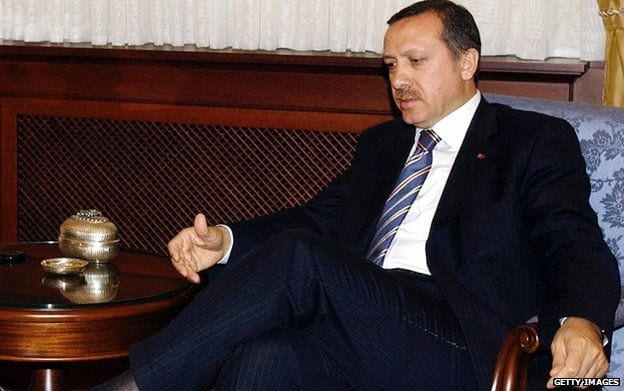
    Turkish Prime Minister Recep Tayyip Erdogan has clearly reaffirmed the linkage between normalization of Turkey-Armenia relations and early substantial progress toward resolution of the Armenia-Azerbaijan conflict. Ankara defines such progress as an agreement on withdrawal of Armenian troops from occupied districts of Azerbaijan beyond Upper Karabakh, pending a determination of the latter’s future status.

    Erdogan reinforced this linkage during his December 7-8 visit to Washington, despite U.S. and E.U. attempts in recent months to break that linkage and to convince Ankara also to break it. That course of action ignored and alienated Azerbaijan, playing into Russia’s hands and jeopardizing Western strategic interests in the South Caucasus. Washington and Brussels seemed to be guided primarily by internal political considerations in adopting that policy. They will now have to reconsider it, in the wake of Erdogan’s and Foreign Minister Ahmet Davutoglu’s latest clarifying statements.

    The U.S. agenda for Erdogan’s visit, as publicized ahead of the event (White House website, December 4) included neither the Karabakh conflict nor energy projects such as Nabucco among the issues to be discussed by President Barack Obama with Erdogan.

    The first omission reflected Washington’s attempts to de-link the Karabakh conflict-resolution negotiations from Turkey-Armenia normalization. U.S. policy (seconded by that of the E.U. and Russia) pressed for Turkish parliamentary ratification of the October 10 Turkey-Armenia protocols on establishing full diplomatic relations and opening the land border between them, without conditioning this on Armenian troop withdrawal from certain Azerbaijani districts.

    The omission of energy transit issues from the U.S.-prepared agenda remained without official explanation, but could be seen as relegating Caspian and European energy security to a secondary level on the White House’s list of priorities. This perception would ipso facto reduce Azerbaijan’s importance to U.S. policy in this administration, compared with preceding U.S. administrations of both parties. Obama solicited Turkish support on Afghanistan, Iran, and Iraq as top U.S. priorities, while also urging Turkish ratification of the protocols with Armenia.

    Obama did not mention the Armenia-Azerbaijan conflict or a Karabakh resolution process at the concluding news conference. It was Erdogan who reintroduced this issue into the equation: “We have also discussed [issues] between Azerbaijan and Armenia, which are of great importance in the context of Turkey-Armenia relations…because the normalization process between Turkey and Armenia is very much related to those issues,” Erdogan stated at the joint news conference (White House press release, December 7; APA, PBS, December 8).

    In follow-up statements in Washington, Erdogan recounted that he had “explained to him [Obama]” that Turkey-Armenia normalization is difficult without resolving the Armenia-Azerbaijan conflict. The Turkish parliament is “conditioning” the protocols’ ratification on conflict-resolution, it “feels strongly about this,” and it “cannot be dictated to,” he declared. He called for Armenian troop withdrawal from seven Azerbaijani districts and urged the “Minsk Group’s” co-chairs (U.S., Russia, France) to promote that goal (APA, December 8).

    U.S. policy makers were still pressing as recently as last month for de-synchronizing the two processes. On the eve of Erdogan’s visit, however, the Turkish position had become clear. During the OSCE’s year-end conference in Athens, Davutoglu stated that the Turkish parliament can only ratify the Turkey-Armenia protocols after the Karabakh issue is resolved (Trend, December 2).

    Erdogan clarifiedin an interview televised in Azerbaijan–that “resolution” means, in this context, “reaching an agreement [between Azerbaijan and Armenia] regarding the seven districts….We have told U.S. officials all along: If you want to resolve the Turkey-Armenia issue, you should also resolve the Karabakh conflict. Otherwise any resolution would be impossible…The Turkish-Armenian issue and the Karabakh problems are closely related” (ANS TV cited by Day.az, December 4, 5).

    The Turkish parliament’s foreign policy commission chairman, Suat Kiniklioglu, corroborated this view in a public debate in Brussels. While Turkey-Armenia normalization has the potential to dramatically improve the overall situation in the South Caucasus, “it would be incomprehensible and illogical to normalize relations on one side while maintaining a conflict on the other side” (Day.az, December 4).

    Ankara was slow to clarify its position in recent months. For its part, Washington put domestic politics ahead of strategic considerations. To deflect pressures from Armenian advocacy groups and a large part of the U.S. Congress, the Obama administration decided to push for re-opening the Turkish-Armenian border before April 2010, when the Armenian genocide resolution comes up for reconsideration in Congress. Candidate Obama had promised to sign such a resolution, but President Obama cannot do so. Instead, the White House decided in April 2009 (at the time of Obama’s visit to Turkey) to press for re-opening the Turkish-Armenian land border, hoping to defuse the explosive potential from the annual political debate on the genocide issue.

    This course of action, however, could only be pursued at Azerbaijan’s expense and at the risk of fracturing the Turkey-Azerbaijan partnership, instead of nurturing it. That partnership largely accounts for the West’s strategic gains in the South Caucasus-Caspian region over the past decade. Strained recently by Russian advances in the region and a burgeoning Russo-Turkish partnership, the West’s gains could be severely jeopardized by policies that isolate Azerbaijan or sacrifice its interests.

    Baku does recognizeas presidential adviser Novruz Mammadov has put it (www.day.az, December 6)that the U.S. initiative to help normalize Turkey-Armenia relations can generate positive dynamics for regional cooperation, if this initiative is synchronized with Karabakh conflict-resolution. But it would only exacerbate tensions in the region, if the two processes are separated, instead of converging.

    –Vladimir Socor

  • Lies, Damn Lies, and Armenian Deaths

    Lies, Damn Lies, and Armenian Deaths

    Bruce Fein

    Posted: June 4, 2009 06:10 PM

    On April 24, 2009–Armenian Remembrance Day– President Barack Obama issued a statement “remember[ing] the 1.5 million Armenian [deaths] in the final days of the Ottoman Empire.” The President stumbled.

    To paraphrase Mark Twain, there are three kinds of lies: lies, damn lies, and the number of Armenians who are claimed by Armenians and their echo chambers to have died in an alleged World War I genocide. Almost a century later, the number of deaths they assert oscillates between 1.5-2 million. But the best contemporary estimates by Armenians or their sympathizers were 300,000-750,000 (compared with 2.4 million Ottoman Muslim deaths in Anatolia). Further, not a single one of those deaths necessarily falls within the definition of genocide in the authoritative Genocide Convention of 1948. It requires proof that the accused was responsible for the physical destruction of a group in whole or in substantial part specifically because of their race, nationality, religion, or ethnicity. A political or military motivation for a death falls outside the definition.

    Immediately after the war, when events and memories were fresh, Armenians had no incentive to concoct high casualty figures or genocidal motivations for their deaths. Their objective was statehood. Armenians were encouraged by the self-determination concept in President Woodrow Wilson’s Fourteen Points, (while conveniently forgetting that they were a minority in Eastern Anatolia where they hoped to found a new nation). Armenian leaders pointed to their military contribution to defeating the Ottomans and population figures that would sustain an Armenian nation.

    Boghus Nubar, then Head of the Armenian Delegation to the Paris Peace Conference (1919), wrote to the French Foreign Minister Stephen Pichon: “The Armenians have been, since the beginning of the war, de facto belligerents, as you yourself have acknowledged, since they have fought alongside the Allies on all fronts, enduring heavy sacrifices and great suffering for the sake of their unshakable attachment to the cause of the Entente….” Nubar had earlier written to the Foreign Minister on October 29, 1918, that Armenians had earned their independence: “We have fought for it. We have poured out our blood for it without stint. Our people played a gallant part in the armies that won the victory.”

    When their quest for statehood shipwrecked on the Treaty of Lausanne and annexation by the Soviet Union in 1921, Armenians revised their soundtrack to endorse a contrived genocide thesis. It seeks a “pound of flesh” from the Republic of Turkey in the form of recognition, reparations, and boundary changes. To make their case more convincing, Armenians hiked the number of deaths. They also altered their story line from having died as belligerents against the Turks to having perished like unarmed helpless lambs.

    Vahan Vardapet, an Armenian cleric, estimated a prewar Ottoman Armenian population of 1.26 million. At the Peace Conference, Armenian leader Nubar stated that 280,000 remained in the Empire and 700,000 had emigrated elsewhere. Accepting those Armenian figures, the number of dead would be 280,000. George Montgomery of the Armenia-American Society estimated a prewar Armenian population of 1.4-1.6 million, and a casualty figure of 500,000 or less. Armenian Van Cardashian, in testimony before the Senate Foreign Relations Committee in 1919, placed the number of Armenian dead at 750,000, i.e., a prewar population of 1.5 million and a post-war figure of 750,000.

    After statehood was lost, Armenians turned to their genocide playbook which exploited Christian bigotries and contempt for Ottoman Muslims. They remembered earlier successful anti-Ottoman propaganda. United States Ambassador to the Ottoman Empire during the war, Henry Morganthau, was openly racist and devoted to propaganda. On November 26, 1917, Morgenthau confessed in a letter to President Wilson that he intended to write a book vilifying Turks and Germans to, “win a victory for the war policy of the government.” In his biography, “Ambassador Morgenthau’s Story,” Morgenthau betrays his racist hatred toward Turks (“humanity and civilization never for a moment enters their mind”) and unconditional admiration for Armenians (“They are so superior to the Turks intellectually and morally.”).

    British Prime Minister Gladstone’s histrionic figure of 60,000 Bulgarian Christians slaughtered in 1876 captured the imagination of the west. The true figure later provided by a British Ambassador was 3,500–including Turks who were first slain by the Christians.

    From 280,000-750,000, Armenians initially raised their death count to 800,000 to test the credibility waters. It passed muster with uninformed politicians easily influenced by campaign contributions and voting clout. Armenians then jumped the number to 1.5 million, and then 1.8 million by Armenian historian Kevork Aslan. For the last decades, an Armenian majority seems to have settled on the 1.5 million death plateau–which still exceeds their contemporary estimates by 200 to 500 percent. They are now testing the waters at 2.5-3 million killed as their chances for a congressional genocide resolution recede. It speaks volumes that champions of the inflated death figures have no explanation for why Armenians on the scene would have erred. Think of the absurdity of discarding the current death count of Afghan civilians in the United States-Afghan war in favor of a number deduced in the year 2109!

    Armenians have a genuine tale of woe. It largely overlaps with the tale of tragedy and suffering that can be told by Ottoman Muslims during the war years: 2.4 million deaths in Anatolia, ethnic cleansing, starvation, malnutrition, untreated epidemics, and traumatic privations of war under a decrepit and collapsing Empire.

    Unskewed historical truth is the antechamber of Turkish-Armenian reconciliation. That is why the Government of Turkey has proposed an international commission of impartial and independent experts with access to all relevant archives to determine the number and characterization of World War I deaths. Armenians are balking because they are skeptical of their own figures and accusations.
  • Obama Should Forfeit his Nobel Prize

    Obama Should Forfeit his Nobel Prize


    Until he Tells the Truth on Genocide

    By Harut Sassounian
    Publisher, The California Courier
    sassounian3
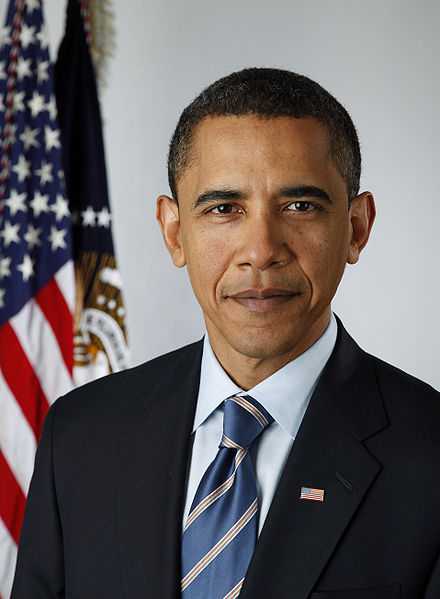
    In his letter of November 20 to Armenian American organizations, Pres. Obama once again played shameful word games with the term genocide. At this point, one has to be incredibly naïve to believe that he is going to acknowledge the Armenian Genocide during the rest of his term in office.

    During the presidential campaign, when Sen. Obama was making repeated promises to acknowledge the Armenian Genocide, Armenian activists were nervously following the Turkish government’s attempts to use the false pretext of dialogue with Armenia to prevent him from fulfilling his pledge after the election.

    In early April, during a press conference in Ankara, when Pres. Obama was asked about his views on the Armenian Genocide, he dodged the question by stating: “My views are on the record and I have not changed views. What I have been very encouraged by is news that under President Gul’s leadership, you are seeing a series of negotiations, a process in place between Armenia and Turkey to resolve a whole host of longstanding issues, including this one.”

    Clearly, Presidents Obama and Gul, for their own reasons, were scheming to undermine the recognition of the Armenian Genocide by pushing forward the Armenia-Turkey negotiations. They were joined in this unholy alliance by Russia and the European Union in pressuring Armenia’s leaders, who were only too eager to comply.

    This sinister deal was sealed when on the eve of April 24, Armenia and Turkey issued a joint press release announcing a roadmap for reconciliation!

    Not surprisingly, in his first April 24 statement, Pres. Obama repeated all the euphemisms and word games for which he had strongly condemned his predecessor, President Bush! Obama used the old and all too familiar denialist terminology of past presidents, such as “atrocity,” “massacre,” “terrible events of 1915,” and most incredibly, “Meds Yeghern”!

    In that statement, Pres. Obama used the same evasive answer he gave in Ankara: “I have consistently stated my own view of what occurred in 1915, and my view of that history has not changed.” Yet, he adamantly persisted in refusing to state what his actual views were.

    Furthermore, Pres. Obama urged Armenians and Turks “to address the facts of the past as a part of their efforts to move forward.” He expressed his strong support for their “courageous and important dialogue…to work through this painful history…” and applauded the Armenian and Turkish governments for accepting “a framework and roadmap for normalization.”

    Consequently, Pres. Obama left no doubt that he was going to sacrifice the truth of the “Armenian Genocide” on the altar of an illusory Armenian-Turkish reconciliation, using it as a fig leaf to conceal his erstwhile pledge.

    Last month, in a letter to Armenian American organizations, Pres. Obama reconfirmed that his view on “one of the great atrocities of the 20th century” had not changed. Once again, he failed to detail his views! The President was responding to a letter from the AGBU, Armenian Assembly, and Diocese of the Armenian Church of America. The three Armenian organizations had expressed their support for the Armenia-Turkey Protocols and appealed to the White House to acknowledge the Armenian Genocide. In his response, Pres. Obama cleverly exploited the expression of support by the Armenian organizations for the reconciliation process, and downplayed his campaign pledge to acknowledge the Armenian Genocide. He reiterated that “the best way to advance…the just acknowledgment of the facts” is for Armenians and Turks to address the past “as part of their efforts to move forward.” He pledged “to continue to vigorously support the normalization effort in the months ahead.” The President was thus using the Protocols to undermine all efforts to acknowledge the Armenian Genocide.

    Keeping his pledge on the Armenian Genocide is in Pres. Obama’s own interest, as it would help rehabilitate his moral and political credibility by joining Pres. Reagan and scores of national parliaments, international organizations, and Holocaust and genocide scholars who are already on record confirming the facts of the Armenian Genocide.

    Pres. Obama should not be surprised if Armenian-Americans no longer trust him, and do not support him for re-election. Those who play games with genocide should not be rewarded.

    Anyone who lacks the courage to stand up for the truth does not deserve a Nobel Peace Prize!