Tag: Ottoman Empire

  • Turkey’s New Mission

    Turkey’s New Mission

    Shlomo Ben-Ami

    TEL AVIV – Ever since Turkey’s establishment as a republic, the country has oscillated between the Western-oriented heritage of its founder, Kemal Ataturk, and its eastern, Ottoman legacy. Never resolved, modern Turkey’s deep identity complex is now shaking its strategic alliances and recasting its regional and global role. Indeed, Turkey’s changing perception of itself has shaped its so-far frustrated drive to serve as a peace broker between Israel and its Arab enemies, Syria and Hamas.

    Prime Minister Recep Tayyip Erdogan’s missionary zeal to replace Egypt as the essential regional mediator, and his violent tirades against Israel’s behavior in Gaza, looks to many people like an attempt to recover Turkey’s Ottoman-era role as the guarantor of regional peace and security. Its credentials for this role in the Middle East are by no means negligible.

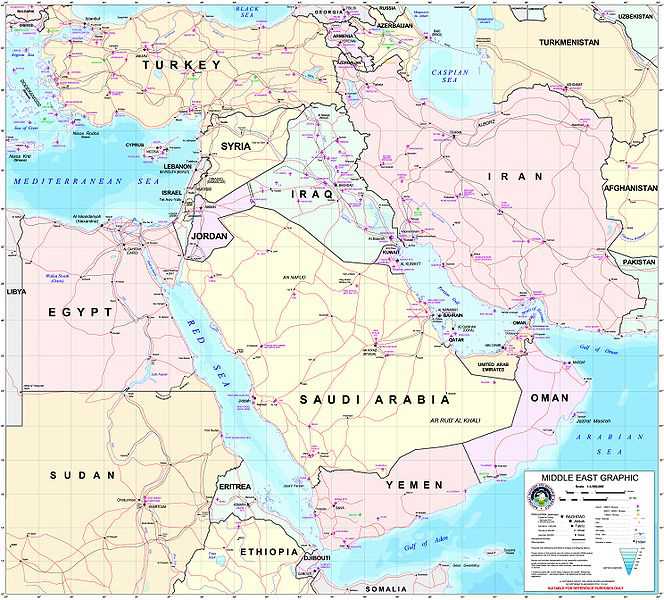
    Turkey is a true regional superpower, with one of the largest armies in the world. At the same time, it is the only Muslim country that, while no less worried than Israel about Iran’s nuclear ambitions, can maintain excellent economic and political relations with Iran, regardless of American displeasure. Of course, Syria is Iran’s ally, too, but no country in the region has the leverage with it that Turkey possesses. And Turkey’s diplomatic reach in the region is also reflected in its recent signing of a friendship treaty with Saudi Arabia, while maintaining excellent relations with Pakistan and Iraq.

    Europe’s persistence in snubbing Turkey’s attempts to join the European Union, the rise of violent anti-Western popular sentiment in the wake of the Iraq war, and strained relations with the US – owing in part to the forthcoming Armenian Genocide Act – are major factors in Turkey’s change of direction. The civilizing efforts that Ataturk’s revolution directed inward and in favor of disengagement from the Arab and Muslim worlds are now being revisited. The Turkey of Erdogan’s dominant Justice and Development Party (AKP) appears to be seeking a new mission civilisatrice , with the Middle East and the former Soviet republics as its alternative horizons.

    The uneasy challenge for Turkey is to secure its newfound regional role without betraying Ataturk’s democratic legacy. Turkish democracy and secular values have been greatly enhanced by the country’s dialogue with Europe and its American ties. Turkey can be a model for Middle Eastern countries if, while promoting its regional strategic and economic interests, it resists the authoritarian temptation and continues to show that Islam and democracy are fully compatible.

    For Israel, the long overdue message is that its future in the Middle East does not lie in strategic alliances with the region’s non-Arab powers, but in reconciling itself with the Arab world. In the 1960’s, David Ben-Gurion’s fatalistic pessimism about the possibility of ever reaching a peace settlement with the Arab countries led him to forge an “Alliance of the Periphery” with the non-Arab countries in the outer circle of the Middle East – Iran, Ethiopia, and Turkey (he also dreamed of having Lebanon’s Maronite community as part of that alliance).

    All of these countries did not have any particular dispute with Israel, and all, to varying degrees, had tense relations with their Arab neighbors. The myth of Israel’s military power, resourcefulness in economic and agricultural matters, and an exaggerated perception of its unique capacity to lobby and influence American policy combined to make the Israeli connection especially attractive to these countries.

    The “Alliance of the Periphery” was a creative attempt to escape the consequences of the Arab-Israeli conflict. It reflected the yearning of the Jewish state to unleash its creative energies in economic and social matters, as it created space for an independent, imaginative foreign policy that was not linked to, or conditioned by, the paralyzing constraints of the Arab-Israeli conflict.

    Shlomo Ben Ami, a former Israeli foreign minister who now serves as vice-president of the Toledo International Centre for Peace, is the author of Scars of War, Wounds of Peace: The Israeli-Arab Tragedy.

    But the security that this scheme was supposed to produce could never really be achieved; the centrality of the Arab-Israeli conflict could not be attenuated. The Arabs’ capacity to maintain their pressure on Israel and to keep world opinion focused on the Palestinians’ plight made Israel’s quest for evading the consequences of the conflict, either through periodic wars or by forging alternative regional alliances, a futile exercise.

    The Islamic revolution in Iran, the changes in Ethiopia following the end of Haile Selassie’s rule, the collapse of Maronite Lebanon, and Hezbollah’s takeover of that country left Turkey as the last remaining member of Israel’s Alliance of the Periphery. Turkey’s powerful military establishment may want to maintain close relations with Israel, but the widely popular change in Turkey’s foreign policy priorities, and the serious identity dilemmas facing the nation, send an unequivocal message that the alliance can no longer serve as an alternative to peace with the Arab world. From now on, it can only be complementary to such a peace.

    Shlomo Ben-Ami is a former Israeli foreign minister who now serves as the vice-president of the Toledo International Center for Peace. He is the author of Scars of War, Wounds of Peace: The Israeli-Arab Tragedy.

    © Project Syndicate 1995-2009

    Source:  www.guatemala-times.com, 03 March 2009
  • Turkish spirit has never left Syria

    Turkish spirit has never left Syria

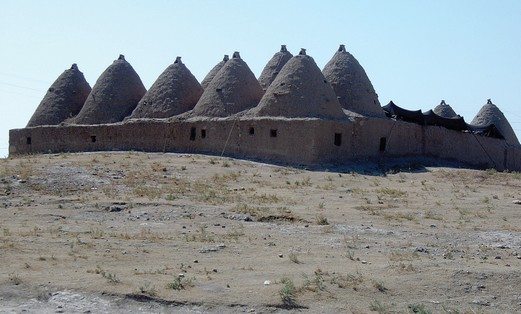
    Caber Kalesi (Jaber Castle) was a historical castle considered as a territory of Turkey
    within today’s Syrian borders. The tomb of Suleyman Shah, grandfather of Osman I
    the founder of the Ottoman Empire, was placed within the castle. It was conquered by
    Ottoman Sultan Selim I during 16th century, and was ceded along with the rest of the
    Syrian province to the French Mandate of Syria in 1920, following the dissolution of the
    Ottoman Empire after World War I.

    In accordance with Article 9 of the Treaty of Ankara (1921) signed between France and
    Turkey, the castle containing the tomb has been considered Turkish territory.

    In 1973, the castle was submerged into the reservoir lake of the newly built Tabka Dam.
    The tomb of Suleyman Shah was relocated to a designated area of 8,797 m² close to
    Karakozak village in Aleppo Governorate, in accordance with the negotiations between
    Turkish and Syrian governments.

    In accordance with the treaty, the tomb is guarded by a squad of the Turkish Army.

    Source: Learn.TurkishForum.co.uk

    Epigraph in the Tomb of Süleyman Şah, reading “This is the grave of SÜLEYMAN BİN
    KAYA ALP, grandfather of Osman Gazi, the founder of the Ottoman Empire. He was
    drowned in the Euphrates along with two of his men, in search for a home for himself
    and his people. This grave had been relocated to this place in year 1973 from its original
    place in CABER, due to the construction of the TABKA dam.

    Source:  Learn.TurkishForum.co.uk

    Special thanks to our site volunteer Ghenwa from Aleppo, Syria.

  • TURKISH FORUM’S LETTER TO PRESIDENT OBAMA

    TURKISH FORUM’S LETTER TO PRESIDENT OBAMA

    TURKISH FORUM”S LETTER OF FACTS TO PRESIDENT BARRACK HUSEYIN OBAMA

    PO. Box 1104 Marblehead MA 01945 USA

    6 February 2009 cc:H.E James Jeffry Ambassador

    The Honorable Barack H. Obama
    President of the United States
    The White House
    1600 Pennsylvania Avenue NW
    Washington, DC 20500
    USA

    Dear Mr. President:

    Please accept our congratulations and best wishes, Mr. President, for a very fruitful and rewarding term at the White House.  We sincerely hope that your presidency will bring the much needed change in the world political scene, away from polarizations and conflict, and towards compassion and peace.  I am sure you will agree, that the great leader and founding father of Republic of Turkey in 1923, ATATURK’s immortal words may best guide us all into the anxious future:  “Peace at Home, Peace in the World.”

    We urge you to be fair in your dealings with all, but especially with Turkey, given the increased pressure the Armenian lobby has been applying on you recently.  In this day and age of global village with internet and satellites, I am sure you will agree with me, Mr. President, that the old motto  “all politics is local” is no longer valid.  We sincerely hope that you will not offend and estrange Turkey on 24 April 2009 by using the term genocide to describe the human tragedy that affected all the people of Anatolia during WWI (Turks, Armenians, and others alike,) not just the Armenians.

    Mr. President, you are the leader of the free world now with tremendous responsibility.  You are no longer a candidate without any accountability.   Whatever you promised Armenians when you were a candidate cannot be allowed to hold the great American interests hostage to nagging Armenian squabbling.   An erroneous choice of words on your behalf can have lasting destructive effects on  the United States-Turkey relations for many decades to come.   I hope and trust that you realize the gravity of this situation.  No internal politics is worth losing the confidence and support of one of the greatest allies of America in the last 50+ years.

    The Turkish-Armenian conflict is one of inter-communal warfare fought by Muslim and Christian irregular forces against a backdrop of a world war.  This issue cannot be explained without acknowledging the Armenian propaganda, agitation, terrorism, raids, rebellions, treason, territorial demands, and Turkish suffering and losses caused by all of these factors, in that order, from 1890 to 1921,  where 1915 is a stop in that tragic journey.

    We urge you, Mr. President, to be on the side of dialog and peace; not polarization and conflict.  Please support more research, study, and debate on such complex historical events by impartial historians, not legislation of history by politicians.  Principles of fairness prevent the settlement of this matter by partisan groups with vested interests. We support, therefore, Turkey’s 2005 offer to Armenia to establish a Joint Historical Commission which is, so far, rejected by Armenia.

    As Turkish Forum, we look forward to meeting the challenges of a new chapter between the United States and Turkey and pledge to you our full support to improve and advance this relationship to the benefit of both of our nations.

    Truthfully Yours,

    Dr. Kaya Buyukataman, CEO
    President & Founder Turkish Forum

    Cc: Mr. M. Kaska, Chairman BOT
    Mr. Taner Ertunc, VP Turkish forum
    Dr. Robert B. McKay Advisor to President
    Mr. Sukru S. Aya Advisor to President
    Mr. Ergun Kirlikovali, Advisor to President
    BOD, Advisory Board, File, Members of Turkish Forum

    Attachments:  

    1- (File / Folder) Compiled 6-parts of “Documents discovered “as follows  

    a- Book: “WHY ARMENIA SHOULD BE FREE” Boston 1918 Auth: Arthur G. Pastermacian, Formerly terrorist in raiding Ottoman Bank, Elected representative of ERZURUM. Armenian revolution Lieder, USA ambassador for the Armenian Republic: Book outlines Armenian Massacres before the Relocation and prior to WWI, with references to General Dro, and Adranik administrated murders. Founding of free Armenian State under Ottoman protection. Armenian massacres to Ottomans Turks after the relocation.

    b- “THE ARMENIAN QUESTION Before the Peace Conference” Submitted By The Armenian Delegation Feb 26th 1929 (Clarification of all facts of treason, revolutions, braveries and asking in return more than half of Anatolia, (Free of non Christian people). [Question: Why are they asking Turkish lands if 1.5 million Armenian killed during relocation, who is going to occupy these lands“]. Also outlines previous formation of Free Armenian State by Ottomans, Their siding with Russia, and genocides committed by Armenian armed forces on Muslim population, after the formation Free Armenia by Ottomans.

    c- “ARMENIA and the Settlement ” Booklet for the minutes of Conference held in London on June 19th 1919 by prominent pro-Armenian Dignitaries, confessing anti-Turkism and support of British politicians. .. Booklet outlines how brave were Armenians in killing unarmed Muslim population, and how well they served Christian world.

    d- “NEAR EAST RELIEF REPORT” Joint resolution of the U.S. Senate & Congress, accepted unanimously on April 22nd, 1922. The contents of these official documents believe the arguments and reasons enlisted in HS-106. Though many other references were made in HS-106, “this one was overlooked or by-passed. WHY?” Resolution states that 1410 000. Armenians were alive and living in the lands of (with majority being in) Armenia, Syria, and Turkey, and they need 72 Million Dollars financial aid. (Question: if 1.5 million Armenian killed during relocation, where these people did came from). The 72 Million dollars were released by U. S. and distributed among Armenian population, no other race were given any financial aid or any help by U.S. officials send to above lands for that purpose.

    e- Documents: Adjustment of Payments due to United States by Turkey, Sept 1937. (No indemnity claims by USA is possible) Us requested originally 5 Million dollars and they settled 1 400 000 Dollars at The end. This was to cover all claims made by all U.S. citizens (MOSTLY ARMENIANS) from Turkish Government. “CASE CLOSED AND CANNOT BE OPENED AGAIN”.

    f- Order of the Court Case, European Court of Justice Dec. 17th 2003. Court unanimously rejected an application for < paying of indemnities and refusals of Turkey’s acceptance into E.U. unless she accepts the “genocide allegation” based on a decision of the European Parliament back in 1987>. Court resolved that 1987 resolution are political declarations that CAN CHANGE IN TIME. Cannot therefore have binding legal consequences for other institutions. Details are also posted in Turkish Forum web pages.

    2- (Book) “The Genocide of Truth” (Jan. 2008) Istanbul Commerce Univ. Pub. No.25 ISBN 978-975-6576-24-9 This 702 pages book does contain large number documents from reliable and non Turkish sources including National Archives of various countries, Author: S. S. Aya

    Note: Other documents compiled by non-Turkish or Turkish sources are also available through TURKISH FORUM if requested. Please place above documents to National Archives for all to see. < THE GENOCIDE OF TRUTH>.

  • New Resist of Turkish Outlook

    New Resist of Turkish Outlook

    After the Belfour Declaration Turkey shared a new strong hand on Middle East.

    Turkish Prime Minister R. Tayyip Erdogan told Peres that “you must feel guilty to be so strong in your words,” referring to the president having raised his voice loudly during his address.

    For first time a man told about Israeli realities : “You killed babies and women. God says that “don’t kill” in Torah.”

    It is original access to share Middle Eastern fortune as referring to massacre mind of Shimon Peres, Ariel Sharon and other Israeli person in charge who are originally military base. “You have prime ministers who had said they felt quite happy when they entered in Palestine on tanks.”

    Today Menahem Begin and Ariel Sharon can not see new balances which are made by Muslim Turkey. Israel must understand that Muslim people can create riots if Turkey wants. Also they know Ottoman resist against to Jewish invasion on Middle East. New Hava Nagila sing will appear for Muslims as happiness in region.

    Turkey’s historical feelings will keep situations among Muslim nations.

    In 1901 the Jewish representatives of Ottoman parliament went to Sultan Abdulhamid the II and offered to pay tremendous amount of money to keep the Islamic State for Palestine. Sultan Abdulhamid the II replied:


    I am not going to give one inch of Palestine to the jews as Palestine is not mine give but it belongs to the Ummah and Ummah have shed blood to defend this land but if one day the Islamic State falls apart then you can have Palestine for free but as long as I am alive I would rather have my flesh be cut up then cut out Palestine from the Muslim land I will not allow any carving up while we are alive!

    Turkey says to stop Israeli massacre and invasion today with its empire heritage.

    The premier then walked out saying Peres had spoken for more than twice as long as he was given.Also Turkey understand that western world will not give right to speak for Turkey.  Peres received 25 minutes, Erdogan 12.

    Western world created a cold diplomatical, academical feelings. And their demands are about opposition of other’s interest.

    Today Greeks are defending their Cyprus massacres, but they sued Atilla Olgac because of war actions. But Greek side don’t talk about Israeli slaughter.

    We will see new political attacks by big powers about just and unjust states.

    Mehmet Fatih ÖZTARSU

  • Turkey Confronts a Disputed Period in Its History

    Turkey Confronts a Disputed Period in Its History

    Turkey Confronts a Disputed Period in Its History

    Publication: Eurasia Daily Monitor Volume: 5 Issue: 240
    December 17, 2008
    By: Saban Kardas
    A group of Turkish intellectuals have taken a bold step to open a public debate on the disputed events of 1915, when the Armenians living in the Ottoman Empire were forced to relocate, leading to the death of scores of people and the beginning of what the Armenians claim was genocide. Turkey officially denies claims of genocide and maintains that both peoples suffered from interethnic conflicts. The group led by leading academics, writers, and journalists, who are known for their critical position on the official Turkish thesis, has initiated a campaign inviting the Turkish people to sign a petition to apologize for the suffering of the Ottoman Armenians.

    Having first collected signatures from other intellectuals, the initiators of the campaign, including Baskin Oran, Ahmet Insel, Ali Bayramoglu, and Cengiz Aktar, started to solicit signatures from Turkish citizens on the internet on December 15 (www.ozurdiliyoruz.com). The website is named “Ozur Diliyoruz” (we apologize). The short and precise petition offers a personal apology yet falls short of demanding the Turkish state to do likewise. The text reads as follows:
      

    My conscience does not accept the insensitivity toward and the denial of the Great Catastrophe that the Ottoman Armenians were subjected to in 1915. I reject this injustice; and for my share, I empathize with the feelings and pain of my Armenian brothers and sisters. I apologize to them (www.ozurdiliyoruz.com).
      
    The text calls on the Turkish people to confront a controversial episode in their history. The organizers say the signatures are a demonstration of the reaction of individual to their historical responsibility. In their view, many Turks’ knowledge of the deportation of Armenians is based on hearsay, and there is an urgent need to offer people an objective account of the events. Although official history presents these events as mutual massacres, according to the organizers, the reality is much different. They believe that Turkish citizens have a right to learn history outside the official theses, and this campaign might be a step in that direction (Vatan, December 4).

    Despite the organizers’ optimism, the campaign has already led to divisions in Turkish society. As soon as the news about the petition drive came out, nationalist forces, the staunchest supporters of the official theses, reacted vehemently against the organizers, as reflected in nationalist daily Yeni Cag’s headline: “Ermeni Agziyla Kampanya” (A Campaign Mimicking Armenians) (Yeni Cag, December 5). Nationalist critics questioned the sincerity of the organizers, charging them with being on the verge of hysteria. In a stark response to the organizers’ call for reevaluating the official Turkish stand on the deportation, nationalists maintained that the organizers lacked a basic knowledge of the actual course of history. For the nationalists, the real victims of the 1915 events were the Ottoman Turks. “Every house has memories of people butchered by Armenians. I regard apologizing to the Armenians as an insult to the Turkish nation. People who call themselves intellectuals have not even been enlightened about their own history,” said Zeki Ertugay, a Nationalist Movement Party (MHP) deputy from Erzurum (Today’s Zaman, December 6).

    The MHP leader Devlet Bahceli was outraged by the campaign and issued a written statement. For him, there was no one to whom the Turks should apologize. “The dirty campaign” was “humiliating,” he said, and reflected the extent of “degeneration and decay” being imposed on Turkish society by so-called intellectuals working as collaborators of outside powers. Bahceli blamed the Justice and Development Party (AKP) government for creating a fertile environment for this situation. He lambasted the AKP’s recent openings to Armenia, because they compromised national priorities and created inside Turkey a pro-Armenian front that worked to undermine Turkish historical heritage (www.mhphaber.com, December 7; www.internethaber.com, December 16).

    Another response to the petition campaign came from a group of retired Turkish envoys who issued a counter-declaration on December 15. Around 50 diplomats, including former undersecretaries of the Turkish Foreign Ministry Sukru Elekdag, Korkmaz Haktanir, and Onur Oymen, maintained that the apology initiative was “unjust, wrong, and damaging to [Turkey’s] national interests.” Their declaration read:
      

    Such a false and one-sided initiative is tantamount to disrespecting our history and betraying our citizens who lost their lives due to the violence perpetrated by terror organizations during the last days of the Ottoman Empire [and] into the Republican era. Although the Armenian relocation, which took place under wartime conditions, resulted in tragic outcomes, the loss and suffering of the Turkish people due to Armenian rebellions and terror attacks were no less than those of Armenians (ANKA, December 12).
      
    The retired diplomats noted that a rapprochement between Turkey and Armenia could not be achieved by such one-sided “compromises,” but what was needed was mutual recognition of each other’s borders and suffering. They went on to challenge the organizers of the petition campaign: “Will there be an apology for the victims of Armenian terror?” Since the Turkish diplomatic corps lost some of its members to terrorism by the Armenian Secret Army for the Liberation of Armenia (ASALA), the envoys’ sensitivity to this issue can be better understood.

    Although the apology initiative seeks to break taboos, the reactions so far indicate that it might actually re-ignite the controversy and deepen the preexisting divisions. Instead of conversing across the aisle, the parties prefer so far to fortify their dug-in positions on the 1915 events and continue to furnish contrasting “factual” accounts about what took place during that period.

  • Armenian Activities in the Archive Documents 1914-1918

    Armenian Activities in the Archive Documents 1914-1918

    Turkish Armed Forces published archive documents about Armenian activities between 1914 and 1918. You can download those documents below. (In English, Turkish and original documents in Ottoman)

    Volume 1 | Volume 2 | Volume 3 | Volume 4 | Volume 5 | Volume 6