Tag: Ottoman Empire

  • Is Turkey ready to become a ‘binational’ state?

    Is Turkey ready to become a ‘binational’ state?

    The Republic of Turkey was the heir of the multinational, multi-faith and multi-linguistic Ottoman Empire. Its founding fathers sought to create a homogenous nation-state similar to the attempts of the ethnic groups that had previously seceded from the empire. Almost a century later, despite the ongoing controversy surrounding the matter, we can safely say that this goal was to a large extent achieved.

    However, some groups, primarily the Kurds, were able to resist the nation-state project. Ultimately, Turkey has reached a new stage of its century-old nation-state project.

    There were many reasons why the completion of the nation-state project through the inclusion of the Kurds has not been entirely possible: The first reason was the size and density of the Kurdish population. Secondly, Islamic practices played an important role in sustaining the Kurdish ethnic identity and language. Thirdly, the Kurdish identity was also enhanced and protected by democracy, social mobilization and the market economy. Fourthly, the fact that most Kurds lived outside Turkey also mattered. Another reason linked to this is the military advantages bestowed upon the Kurds by regional conflicts. In addition, globalization, the promotion of human rights, and enhanced communication technologies have all generally contributed to the development of micro-nationalisms.

    Finally, the efforts of the outlawed Kurdistan Workers’ Party (PKK) to build an identity and a political status through the use of violence have also hampered the full realization of the Turkish nation state project.

    Today, the Turkish government is trying to come up with a solution that will keep its own Kurds inside Turkey. As former prime minister and president Süleyman Demirel declared in the early 1990s that he recognized the Kurdish reality, Prime Minister Erdoğan has also expressed that he recognizes and respects the Kurdish identity. He has also declared the end of assimilation and “denial” policies.

    Erdoğan’s statements show that he also knows how difficult this process is. Though currently at the apex of his power, he also knows that he cannot escape from his fate. The question is this: How can we satisfy the Kurds who are represented by the PKK, and who want to rise up from the position of an ethnic group to the position of a nation with political institutions inside Turkey? And how can we do this without making the Turks mad? Erdoğan hopes that Islam will be the answer.

    The Turkish government took irreversible steps when it knocked on the door of the PKK’s jailed leader Abdullah Öcalan on Imralı island for negotiations. Although the government does not explicitly state this, Turkey is on the fast track to becoming a binational state. The real debate involves how this will be achieved and how the new state will look. Notwithstanding the final outcome, the Turks have already completed their nation building process, while the Kurds are on the verge of an uncertain adventure in their latecomer nation-building process.

    February/21/2013

    PRINTER FRI

    via NİHAT ALİ ÖZCAN – Is Turkey ready to become a ‘binational’ state?.
  • Turkey revives the idea of the Ottoman Empire

    Turkey revives the idea of the Ottoman Empire

    Photo: EPA

    Turkey reserves the right to acquire all kinds of weapons to defend itself against any Syrian threat, Turkish President Abdullah Gul declared last Thursday.

    This was his comment on the rumours that Ankara intended to ask NATO to deploy Patriot surface-to-air missiles on Turkish territory, allegedly due to the growing tension on the Turkish-Syrian border.

    Turkish Prime Minister Erdogan and NATO Secretary General Anders Fogh Rasmussen both dismissed this information as guesswork. However, Rasmussen admitted that NATO had plans to defend Turkey from potential danger. Experts stress that Turkey is turning into the main regional springboard of the West’s policy of force. Some experts say that labelling neighbouring Muslim countries as a source of danger, Turkey loses more than it gains. Nevertheless, in an attempt to boost its prestige by any means Turkey decided to turn to Washington, as the attempt to rely on Brussels had not paid off. Many Europeans believe that Turkey is not a European country, has never been one and is unlikely to become one in the future.

    The Turkish public, in turn, believes that Turkey’s integration in the EU is artificial in many ways and Ankara should give Europe the go-by. At present, Turks are looking eastwards, so one is justified in talking about the revival of the idea of the Ottoman Empire which in the past embraced half of the Muslim world: Syria, Iraq, Palestine, part of the Arabian Peninsula, North Africa, the Balkans and Transcaucasia. Some experts call this idea pan-Turkism and neo-Ottomanism. In any case, these slogans find response in Turkish society.

    After WW1, Turkey lost its status of the actual lord of the Middle East and turned into an accessory of the West torn by internal contradictions. That was a severe blow on the Turks’ self-identification. Since the time of Ataturk, religion has been separated from the state in Turkey and Islam has had no bearing upon politics. However, the pendulum seems to have reached a standstill and have swung in the opposite direction. The current Turkish authorities are violating Ataturk’s traditions by focusing on Islamic values.

    At present, many people believe that they can hear military notes in Ankara’s rhetoric. The Justice and Development Party headed by current Prime Minister Erdogan has actually united the country around a new imperial project. Turkey’s support of the Syrian opposition could be considered one of the first steps on the way to fulfilling this project. Generally speaking, Ankara’s strategy is based on consistent attempts to weaken other candidates for regional leadership. Many people find it morally and ethically doubtful.

    Some Turkish politicians see a Eurasian Union as a modern replica of the Ottoman Empire. So far, Turkey has no definite role in this hypothetical supranational organisation but talk about its various shapes has been going on for a long time. Inessa Ivanova from the Institute of Oriental Studies at the Russian Academy of Sciences believes that talk about Turkey’s potential participation in some Eurasian Union is just part of Turkey’s political games in Europe.

    “This idea is not new and it is aimed against the EU. Turkey is secretly moving in this direction. It was included in the Shanghai Cooperation Organisation as a partner in dialogue. It is stepping up its activity, including political activity, in the Organisation for Economic Cooperation and Development which comprises Pakistan, Iran, Turkey and South Asian countries. On the one hand, Turkey will continue playing this card by talking about Eurasia and taking steps in this direction but on the other hand, it will retain its relations with the EU. Meanwhile, Turkey has no chance to set up a union in Eurasia without Russia’s participation. This is absolutely out of the question.”

    Even though many people consider Turkey’s membership in NATO an obstacle on the way of its regional integration processes, the Turkish government disagrees with this. In general, analysts believe that Turkey should take a sober view of its resources and carry out a sensible foreign policy. Otherwise, the country would be doomed to remain a champion of foreign interests, even if on a larger space than it was in the past.

    via Turkey revives the idea of the Ottoman Empire: Voice of Russia.

  • Americans Investigating Anatolia

    Americans Investigating Anatolia

    OTAP Archive: Other: Scholarly Resources

    Americans Investigating Anatolia by Brian Johnson

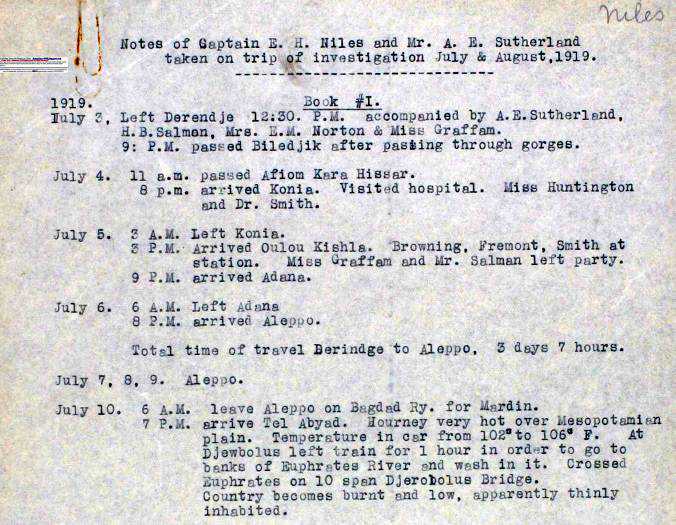
    In 1990, Professor Justin McCarthy revealed the existence of a report, which he had discovered in the US National Archives, of a survey of eastern Anatolia in the summer of 1919 by two Americans, Emory Niles and Arthur Sutherland. Their account is one of the first descriptions of this region by outside observers after World War I. However, the document lacks a critical component, Niles and Sutherland’s field notes, which the authors emphasized should be read in conjunction with their report. McCarthy assumed that the missing information was lost, perhaps destroyed, but he surmised that if it ever came to light, it would surely enhance our understanding of the period. Niles and Sutherland’s field notes have not been destroyed, nor are they lost. Two identical copies exist in the archives of the former American Board of Commissioners for Foreign Missions (ABCFM) in Istanbul. This paper describes Niles and Sutherland’s mission to eastern Turkey and places it in historical context. It also speculates why the results of their investigation were probably ignored and eventually forgotten. A digital copy of their original field notes is appended. (A print version of this essay, without the notes, was published in The Journal of Turkish Studies, 34/2 (2010), 129–147.)

      • Americans Investigating Anatolia: The 1919 Field Notes of Emory Niles and Arthur Sutherland, Brian Johnson, The Journal of Turkish Studies, 34, II, 2010, 129-147. (PDF)
    • Field_Notes_of_Niles_and_Sutherland (PDF)


    Brian Johnson earned an MA in Near Eastern Languages and Civilization (1988) and a PhD in Middle East History (1999) from the University of Washington. From 2001 to 2010, he served as historian/archivist at the American Board Library in Istanbul, Turkey, where he supervised a project to catalogue and digitize the archives of the Western Turkey Mission of the American Board of Commissioners for Foreign Missions. Currently, he is the librarian of the Istanbul branch of the American Research Institute in Turkey (ARIT).

    (4/18/2012)

    via Americans Investigating Anatolia.

    http://courses.washington.edu/otap/archive/data/arch_20c/niles_suthr/bjohns.html

  • You’ve been audited

    You’ve been audited

    Be nice to beggars

    Fall of Constantinople by Fausto Zonaro.

    Some years after the Ottomans defeated the Byzantine Empire in the mid-1400s, the men of power around the ruling Sultan grew weary of the corruption of the bureaucracy they’d inherited and established a new system of integrity testing to weed out their less enthusiastic workers.

    According to Middle Eastern scholar, Dr Graham Leonard, these auditors would pop up all over the empire “to find out are you doing your duty, are you doing it with a smile, are you doing it quickly?”

    As he describes it, life in the public service wasn’t much different half a millennium ago, half way across the world: “What happens in a bureaucracy? If I get a job with the government, I’ve got a lifetime meal ticket and, so, I don’t do anything more than I have to, because I’m going to get promoted because I’ve been years and years in the service, whether I’m any good or not.

    “Bureaucracy grinds to a halt,” says Leonard in a lecture series recorded at East Tennessee State University in 2009.

    Of course, all public servants do not have this mindset but, I think we’ve all had dealings with bureaucracy and, for that matter, private companies and big corporations, where the provider of a service is simply not providing that service.

    “Well, you couldn’t do that in Turkey because if an auditor caught you … they’d take away your salary for three months or a month. Next time they caught you they might suspend you. Next time, no job,” says Leonard.

    Of course, the Byzantines didn’t earn their reputation (i.e. “relating to, or characterized by intrigue; scheming or devious; highly complicated; intricate and involved”) for nuffin.

    Says Leonard: “This [system of auditors] didn’t work very well because in those days transportation was difficult, so that people in Tunis would get news the auditors were in Tripoli and probably coming to Tunis, so everyone would behave nicely for a while.”

    Around the 1600s, the Ottoman government dreamed up a new idea – secret auditors, who did not announce their station or their arrival – and conscripted beggars, students, scholars and pilgrims to Mecca to test the bureaucracy wherever they happened to be.

    (In those days, Islamic scholars and students travelled constantly from teacher to teacher, pulling up stumps once they’d learned all they could, then moved onto the next person of knowledge).

    Says Leonard: “They would give half of a seal to these secret auditors and I’d come in and I was just a beggar and you’d treat me like dirt and you’d be out of a job because I’d take my half of the seal and, I’d go find one of the three ruling jannisaries.

    “He’d have the other half of the seal and we’d put the two together and use it to put a stamp on your record and cause you trouble,” says Leonard.

    “This worked wonderfully from about 1600 to 1800, maybe 200, 250 years,” says Leonard, until the jannisaries gained the power to actually name the Sultan, and once they did, that Sultan disbanded the secret auditors altogether.

    “By 1850, they’d gotten rid of all auditors. By 1900 the bureaucracy was so corrupt it was not really working any more and Turkey was then called the ‘sick man of Europe’,” says Leonard.

    Leonard by no mean suggests the fall of the Ottoman Empire was a result of the loss of these secret auditors and outlines many other factors, but it’s an interesting story of how accountability keeps people honest.

    I started thinking about the secret auditors last week when I read of Aussie NBA star Andrew Bogut, ripping into Telstra on Twitter about the problems he had getting his wireless router installed.

    “Passed around and around. Problem still not solved. Wait another 72 hours they say,” wrote Bogut, expressing a frustration we’ve all experienced with one company or another.

    However, the rest of us are not Australia’s highest paid sportsman. When we scream in cyberspace, no one hears.

    Or do they?

    It seems to me companies are becoming increasingly sensitive to the way they are portrayed online because traditional advertising has fallen off a cliff.

    Part of that is the decline of news print advertising but, another part of it, I’d speculate, is that consumers are now hearing their concerns and scepticism about many companies confirmed and amplified via the internet.

    If you had a problem with a company years ago, unless you chanced to talk to someone who had the same problem, you probably just put it down to a one-off or bad luck.

    But as campaigns like #vodafail have shown, when we realise we are just one of many and that problems with a certain service provider are widespread and common – we get angry.

    In this regard, the internet, and particularly the Twitter hash tag, has delivered us all half of the secret auditor’s seal. We need only pair it with another user’s half seal – their bad experience – and our complaint is corroborated and legitimised.

    It may not cause as many waves as an Andrew Bogut does with his 90,000 followers, but it does mean that even the smallest customer now has the potential to cause trouble.

    Be nice to beggars, I say.

    via You’ve been audited.

  • Impressions of Ottoman Culture in Europe: 1453-1699

    Impressions of Ottoman Culture in Europe: 1453-1699

    by Nurhan Atasoy – Lale Uluç
    Price: 154.00 USD
    Availability: In Stock
    Pre-order now.
    This book will be available in the US on
    April 1,2012
    Quantity
    Editorial Reviews
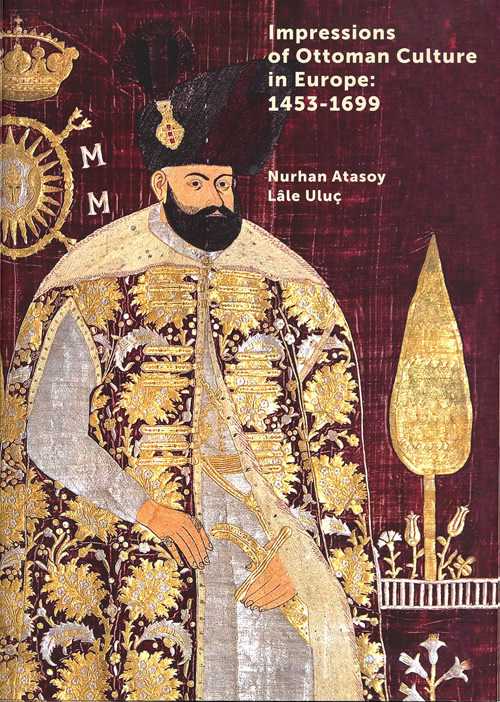
    Impressions of Ottoman Culture in Europe: 1453-1699 by Dr. Nurhan Atasoy and Dr. Lâle Uluç reveals the multi-faceted cultural influences of the Ottomans on Europe. This ground-breaking new book is the culmination of a six-year research project by the authors conducted in 14 countries. It explores the impressions of Ottoman material culture on Europe in the early modern age when the expansion of Ottoman territory created common borders and intensive political, diplomatic and trade ties with Europe.
    Product Details

    Pages : 443 pages
    Publisher : Armaggan Publications
    Language : English
    ISBN-13 : 978-605-62544-1-3
    Product Dimensions : 2 x 9 x 11 inches
    Shipping Weight : 1 pounds
  • ACTION ALERT Call President Obama

    ACTION ALERT Call President Obama

    Dear Friends and Members of the Turkish-American Community:

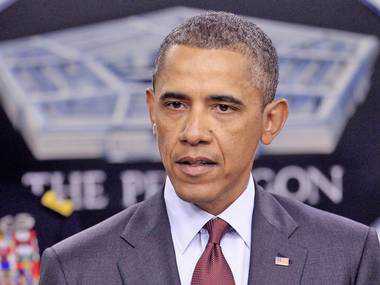
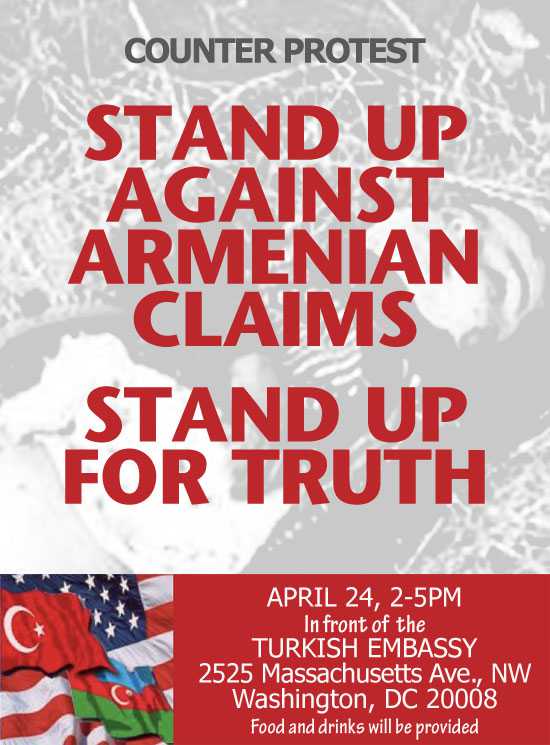
    Azerbaijani and Turkish American organizations throughout America have initiated a major campaign to urge President Obama not to use the term “genocide” if his Administration chooses to make a statement regarding events that occurred in the Ottoman Empire in 1915.

    To date, no American President has described the events of 1915 as genocide.  Unlike many other tragedies and massacres, whether the Armenian case constitutes genocide is widely disputed.  The Armenia allegation of genocide has even been rejected by the United Nations.

    We urge Turkish Americans and friends of Turkey to send their messages to President Obama and Congress NOW!

    Please click on the following links to take urgent action:
    • Click here to send your message to President Obama not to use the term “genocide” when describing the sad events in the Ottoman Empire in early 1900’s.
    • Click here to send your message to your legislators.
    • Click here to send your message to your legislators to celebrate April 23rd, as per H.Res 221.
    We also encourage you to send your message by calling the White House at 202.456.1111 between 9:00am and 5:00pm, EST. In addition, you may reach the White House online at www.whitehouse.gov
    www.ataa.org