Tag: Orhan Pamuk

  • East meets west: Orhan Pamuk’s words paint a thousand pictures

    East meets west: Orhan Pamuk’s words paint a thousand pictures

    The novel My Name Is Red offers a compelling evocation of the cultural dialogue between Venice and the Ottoman empire
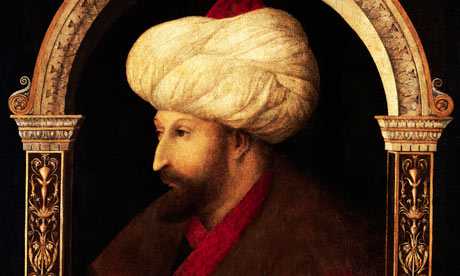
    Gentile Bellini's portrait of a young scribe at the court of Sultan Mehmed II evokes the world about which Orhan Pamuk writes in My Name Is Red. Photograph: Corbis
    Gentile Bellini's portrait of a young scribe at the court of Sultan Mehmed II evokes the world about which Orhan Pamuk writes in My Name Is Red. Photograph: Corbis

    Sultan Mehmet II

    Gentile Bellini’s portrait of a young scribe at the court of Sultan Mehmed II evokes the world about which Orhan Pamuk writes in My Name Is Red. Photograph: Corbis

    Orhan Pamuk’s My Name Is Red is my summer book, and one of the most fascinating works of art history I have ever encountered. It also happens to be a gripping novel.

    My Name is Red
    by Orhan Pamuk

    The book is one of several about Istanbul that won Pamuk the 2006 Nobel prize in literature. It is set among the art community of the Ottoman capital in the 1590s, at a time when the Islamic art of book illustration is under threat from new European innovations including perspective and portraiture. Should Istanbul’s miniaturists adopt some of the new European methods, or preserve beautiful traditions handed down from the old masters of Persia?

    There’s no danger of me revealing the end of a novel structured as a murder thriller – I haven’t finished it yet – but the art history in Pamuk’s book has me absorbed just as much as the whodunnit plot. It imagines the workshops of the miniaturists and lets them discuss, in erudite detail, the history of book arts, the influence of China, the belief that pictures must illustrate stories, the exquisite beauty of detail.

    The knowledge these artists have of European art comes entirely from Venice, the “Frankish” city that traded most closely with the powerful Ottoman empire. Contact between east and west is a powerful phenomenon in Venetian art. A portrait that conveys the very world this novel recreates can be seen today in the Isabella Stewart Gardner Museum in Boston. It is by Gentile Bellini – at least that is the usual attribution, questioned by some – and portrays a young scribe at the court of Mehmed II in Istanbul. Sitting in profile in ornate and gorgeous robes, he concentrates on his work while the European artist visiting the Ottoman court concentrates on portraying him.

    How do we know it’s a European artist? Because the young scribe’s face is modelled in the round with explicit individuality. It is a great example of the type of Venetian portraiture that Orhan Pamuk’s characters argue about. Is such a revelation of the individual in a painting a brilliant artistic triumph or a symptom of amoral selfishness? Would it be decadence or development for Ottoman artists to adopt such techniques?

    In fact, the portrait, which was bound into a Turkish album, may have been intended to help young miniaturists learn those Venetian skills. Bellini visited the Ottoman court in the late 1470s. If he is the author of this work, did he leave it behind as a teaching aid? If so, it cleverly appeals to artists trained in Islamic traditions by respecting their own abilities. This is in fact a masterpiece of cultural dialogue. While the scribe’s face is a Venetian portrait, his pose and the details of his fine clothes have the calm abstraction and jewel-like accuracy of a great Islamic court painting.

    Venetian artists learned enthusiastically from the east. Venetian painterly light and colour have little in common with other Italian Renaissance art. They have much more in common with the rich eastern cultures whose crystal treasures were brought back from wars and trade. While Venice embraced Islamic decorative sensuality, by the late 15th century Venetian artists were showing off their modern portrait skills in Istanbul.

    Pamuk creates a world where east and west are at a turning point in their relations, and art reflects this moment of choice, on the brink of modernity. My Name Is Red is a beautiful novel and opens up a story of art that is new, unfamiliar, and magical.

    via East meets west: Orhan Pamuk’s words paint a thousand pictures | Art and design | guardian.co.uk.
  • The Wellspring Of Orhan Pamuk

    The Wellspring Of Orhan Pamuk

    by Fabio De Propris

    (Swans – June 20, 2011) The first novel of Nobel Prize winner Orhan Pamuk has yet to be published in English. This is a pity since Cevdet bey ve Oğulları (“Cevdet Bey and His Sons”) lays the foundation from which the unified structure of his work rises. Pamuk’s theme, as always, is the never ending dialectic within Turkey between East and West. For all of Anatolia lies on the Asian side of the Bosphorus while Istanbul, the commanding center, forms a great blot on the European side. The Pamuk Family Building rises there in the city’s elegant Nishantashi quarter. In one of its rooms the author sat down with pen and paper and began to create his literary world. He was twenty and had given up his ambition to be a painter. In Istanbul (2003) he tells us of his childhood and youth until 1975. Closed in his room from 1974 to 1978, he wrote Cevdet bey ve Oğulları, to be published in 1982. There’s something of a paradox in the fact that his first novel begins where Istanbul ends.

    The novel recounts the mighty East-West encounter viewed from the intimacy of three generations of a bourgeois family much like Pamuk’s. It begins in 1905, just before the rise of the Young Turks and the end of the Ottoman Empire, then moving on to 1938 and the celebration of the Republic’s fifteenth anniversary. Atatürk dies and the clouds of WWII gather. The story ends in 1970 just before the military coup d’état strikes a blow at both the political left and the Islamists.

    Cevdet bey, a rich and astute businessman, keeps out of politics. He’s a Muslim at a time when Armenians, Greeks and Jews dominate Istanbul commerce. The book may count 683 pages, but the three generations of the family parade before us at some speed, like photographs snapped at thirty-year intervals. In the chapter “Night and Life,” for instance, Cevdet, thirty-seven, wonders if he will be happy with his future spouse Nigân. She is the timid daughter of a Pasha who is devoted to the Sultan but near financial ruin and given to drink in the bargain. A few pages later Cevdet, now a grandfather, has lost his vigor, overshadowed by his sons Osman and Refik.

    The placid Cevdet, appointed exclusive supplier of streetlights to the municipality, had also acquired the nickname of the Enlightener. This contrasted him to his brother Nusret, a passionate proponent of the French Revolution and another kind of Enlightenment. Likewise, Osman is rock-solid, whereas the restless Refik never knows satisfaction. Refik’s friends, like himself, are former engineering students at the university. Omer imagines himself a world-beater in the line of Balzac’s Rastignac, while Muhittin, ugly and long-faced, identifies with Baudelaire and vows to become a great poet or else commit suicide at thirty. Cevet’s nephew Ziya, also a bringer of municipal light, (but disliked by the family), forsakes illumination to become an army officer. (Given his choice of names, the author may have in mind the nationalist Ziya Gökalp.)

    The novelist’s building blocks are the strong contrasts of temperament that mark the many characters. The narrative proceeds by dialogs, many of them interior and unspoken. Although few pages are devoted to Cevdet, his name graces the title and his exchanges with his brother and his father-in-law are the finest and most meaningful of the novel. All the author’s books to come exist in embryo in this first novel. Similarly, the novel’s first part determines how it will develop, one question always resonating, “Who am I and how should I live my life?” The theme will be worked out musically in infinite variation. Rhythmic repetitions of words and concepts emphasize the musicality (e.g., to be a Rastignac, to commit suicide, to fight over Hatay province). Characters reappear even after hundreds of pages (such as the unidentified Cenap Sorar who, referred to in a cited article of no importance on page 130, returns on page 613 as the second husband of one of the novel’s main characters).

    The symphonic complexity of the story sends us back to its obvious model, Buddenbrooks of Thomas Mann. The Nishantashi quarter recalls Lubeck; the businessman Cevdet is like the businessman Johann; Refik nervously reading The Confessions of Rousseau suggests Thomas Buddenbrook seeking answers in Schopenhauer’s The World as Will and Representation. But the similarities of the two books also serve to underline their fundamental difference: Mann’s novel recounts the decline of a family and a world, while Pamuk’s tells of a family, however tormented and dramatic, that is decidedly on the rise. The key word of the novel is nishan, “target.” Each character seeks to determine his own objective and so move forward. The word recurs throughout in different contexts, confirming Pamuk’s masterful control of his mother tongue. At this point translators must not opt for synonyms and a more facile flow of language for fear of scaring off readers. (Nor should publishers attempt to be reader friendly by neglecting to complete this historical novel with adequate notes.)

    By law in 1934 Turks had to choose a surname. Muhittin chose Nishanci, because his father had been a “target shooter” in the army, a specialist rifleman. That explains Muhittin’s bitter remark when downhearted that he should instead have chosen Nishancioglu, “son of the target shooter,” seeing that he has no aim in life. Again, the successful or failed betrothals that involve so many of the characters recall that in Turkish an engagement ring is called “a target ring.” Finally, it should be noted that Cevdet’s villa, the novel’s sacred space and privileged location, lies in the Nishantashi quarter that translates as “target stone” because Ottoman soldiers went there, before it became residential, for target practice.

    While not all the characters have found a target to aim at, the author is clear about his: He presses into service the great tradition of the European novel to search the soul of the rising Turkish middle class. Pamuk found inspiration not only in Thomas Mann but in nineteenth-century Russian writers. The frenetic political reunions that Muhittin frequents owe something to Dostoevsky’s The Possessed. Refik, the would-be reformer of the agricultural system, has much in common with Levin of Anna Karenina. (Refik is a Levin who failed.) Pamuk’s undertaking, moreover, has interesting parallels in the world of film. Ingmar Bergman’s Fanny and Alexander (1982) is a lengthy family saga in which the director revisits his own childhood. Woody Allen’s Love and Death (1975) is a wistful bow to War and Peace by way of parody. Like Allen and Bergman, Pamuk’s raw material comes from his own inner life, which he then fits into a preexisting model.

    Pamuk’s way of proceeding is revealed in My Father’s Suitcase, his Stockholm speech of 2006 on receiving the Nobel Prize for Literature. A dialectic like that between Pamuk and his father occurs, modified by the needs of the novel, between Refik and Muhittin. And Pamuk is present in all the characters of the novel, but especially in Ahmet, Refik’s son, an aspirant painter who in 1970 reads the diary of his father without completely understanding it. Unlike Hanno Buddenbrook, however, who dies of typhus ending his dynasty, Orhan Pamuk, far from declining, rises. He closes himself in a room and sets to work.


    Alias, the cultural supplement of the Roman newspaper Il Manifesto, published this article in Italian, May 14, 2011. Peter Byrne has translated and edited it.

  • Turkey: Five Writers You Should Know Other Than Orhan Pamuk

    Turkey: Five Writers You Should Know Other Than Orhan Pamuk

    A walk through an Istanbul airport bookstore might lead an unsuspecting traveller to think that English-language literary works from Turkey begin and end with the novels of Nobel-Prize-winning author Ohran Pamuk. In reality, a diverse range of Turkish writers now garners a growing amount of press time in English.

    The tradition of writing in Turkey was strongest during the Ottoman Empire with Divan poetry, a flowery form recited at court, but new generations post-Empire have adopted the European form of the novel for their own logic. Poetry, though, remains the more satisfying and most developed written art.

    1. Ersan Üldes broke out onto the writing scene in 1999 with the novel Yerli Film (Local Film), a story about an all-consuming cross-genre film that won the İnkilap Publishing House Novel Award. A translated excerpt from his third novel, Zafiyet Kuramı (The Theory of Infinity), was published in Dalkey Archive’s Best European Fiction 2011. Üldes’s humorous and tight prose recounts the experiences of a translator who “improves” on a series of German novels he is commissioned to translate; so much so that the books are more popular in translation than in German. The heavily self-reflective, but controlled writing should push the 38-year-old Üldes beyond other writers of his generation.

    2. The heavily popular, but under-translated Kuçuk İskender writes in a variety of styles and genres, which include novels, short stories, poetry and reviews. Primarily, however, İskender is known as a poet, frequently appearing at readings and poetry festivals in Istanbul. Some of his work has appeared in the Eda, From Souljam and New European Poets anthologies and has been translated at workshops, but those translations remain unpublished. İskender lately has developed a jazz-influenced, colloquial style, which sounds best read aloud.

    3. Mario Levi’s novels and memoirs remain uncovered gems from the past 30 years. His most recent work, İçimdeki İstanbul Fotografları (Photographs from the Inside of My Istanbul), is a biography of Istanbul in the late 1950s and early 1960s as much as it is Levi’s own autobiography. Often translated into French, Levi’s sole English-language story, “I Did Not Kill Monsieur Moise,” appeared last year in the collection, The Book of Istanbul. The story, heavily nostalgic, is a detailed character sketch of an agnostic Sephardic Jew through his belongings at the time of his death.

    4. Cemal Süreya, dead since 1990, had his first poetry collection, Üvercinka (Pigeonwoman), translated in its entirety for the first time last year. Süreya was a member of the “İkinci Yeni” (“Second New”) movement in Turkish poetry, which pared down the trimmed language of that time into stark, juxtaposed lines similar to that of T.S. Eliot. His poetry and letters, centering around sex, death and life, are passionate, erotic and touching.

    5. The trilingual Turkish Cypriot poet Mehmet Yaşın writes in Turkish, English and Greek, sometimes using all three languages in one poem. Yaşın has lived in Turkey, Cyprus and the United Kingdom. Turkey’s military government deported him in 1986 because the frank descriptions of Cyprus and his criticism of war contained in his first collections of poetry, Sevgilim Ölü Aşker (My Love, the Dead Soldier) and Işık-Merdiven (Light-Ladder), were deemed “subversive.” His overall oeuvre is lyrical, narrative and poignant, particularly when he writes about the conflicts of language as he does in the poem Wartime. Wartime and Don’t Go Back to Kyrenia are two of his translated poetry collections as well as Step-Mothertongue: From Nationalism to Multiculturalism: Literatures of Cyprus, Greece and Turkey, a book of literary criticism on national and cultural identity in Greek and Turkish literature from a multilingual approach.

    Editor’s note:

    Maria Eliades is an Istanbul-based writer who covers Turkish literature and culture.

    via Turkey: Five Writers You Should Know Other Than Orhan Pamuk | EurasiaNet.org.

  • Orhan Pamuk fined for “denigrating Turkishness”

    Orhan Pamuk fined for “denigrating Turkishness”

    PanARMENIAN.Net – Sisli trial court in Istanbul sentenced Nobel Prize recipient Orhan Pamuk to pay 6,000 liras in total to plantiffs for his statement in an interview with Das Magazin Swiss publication.

    Pamuk said, “30 thousand Kurds have been killed here, and 1 million Armenians. And almost nobody dares to mention that. So I do.”

    The court charged Pamuk with “distortion of historic reality and profanation of Turkish nation’s character.”

    Turkish novelist Orhan Pamuk has been persecuted in Turkey since 2005 for his statements on 1915 Armenian massacres. In 2006 Pamuk was awarded a Nobel Prize for his novel Snow, containing mention of Kars- residing Armenians.

    via Orhan Pamuk fined for “denigrating Turkishness” – PanARMENIAN.Net.

  • The Museum of Innocence

    The Museum of Innocence

    By Cory Ruf

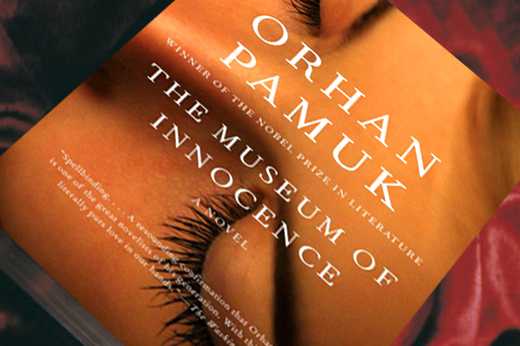
    The Museum of Innocence
    By Orhan Pamuk
    (Vintage) $21

    Nobel Prize-winning author writes a love story set in his native Istanbul
    Nobel Prize-winning author writes a love story set in his native Istanbul

    In 2006, the Swedish Academy awarded Istanbul-born novelist Orhan Pamuk the Nobel Prize in literature for his career-long “quest for the melancholic soul of his native city.” In his latest outing, 2008’s The Museum of Innocence, he continues that quest, depicting 1970s Istanbul, the setting of his young adulthood.


    The book’s narrator, Kemal, is set to be engaged to Sibel, a sociable, educated woman with a well-connected family. The couple belongs to a secular class of young professionals who inhabit Nişantaşı, Istanbul’s equivalent to a tony Paris arrondissement. Seemingly oblivious to the poverty and strife writhing in other parts of the city, Kemal and his friends wear haute western clothing, devour American pop culture and — most daringly — make love out of wedlock.

    Kemal’s chance en-counter with Füsun, an 18-year-old shopgirl to whom he’s distantly related, causes him to realize his discontentment with bourgeois life. Startled by Füsun’s callow beauty, he offers to tutor her in math, and the two begin meeting at the dusty apartment where his parents store old furniture. They fall in love and carry on a secret, tempestuous affair. Fearful of how his family and friends would react if they found out he was leaving Sibel for a common shopgirl, however, Kemal follows through with his planned engagement — an action he will come to regret.

    The rest of the novel is predictably dedicated to Kemal’s mourning for their brief affair. He collects objects he associates with Füsun — an earring that tumbled into the bed sheets, the butts of cigarettes she had smoked — to establish a “museum of innocence,” a shrine to the memory of their love.

    Though poetic, Pamuk’s description of Kemal’s misery is trudging in its detail. It’s easy to lose patience with the narrator’s pining. After all, as readers later learn, Kemal’s indiscretions in love end up causing others much greater suffering.

    On its surface, The Museum of Innocence is an elegy to lost love. But its strengths lie in Pamuk’s detailed, irreverent take on the folly and excesses of Istanbul’s moneyed classes during the mid-1970s. Perhaps Pamuk, like his glum protagonist, is channelling a complicated nostalgia for that Istanbul, the one that existed in a frivolous, more innocent time.

    Cory Ruf is The Observer’s summer intern.

    via The Museum of Innocence – The United Church Observer.

  • Nobel Laureate Orhan Pamuk: Bulgaria, Turkey Very Much Alike

    Nobel Laureate Orhan Pamuk: Bulgaria, Turkey Very Much Alike

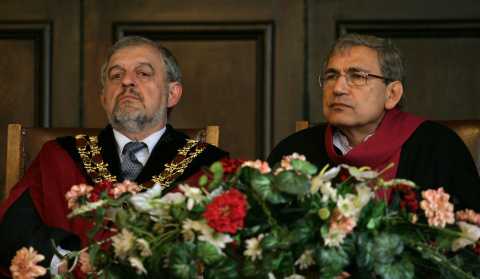
    Orhan Pamuk (R) and Ivan Ilchev, rector of the Sofia University (L) during Thursday's ceremony. Photo by BGNES
    Orhan Pamuk (R) and Ivan Ilchev, rector of the Sofia University (L) during Thursday's ceremony. Photo by BGNES

    Bulgaria and Turkey have much in common according to Turkish Nobel Prize winner Orhan Pamuk, who is on a visit to Sofia.

    “For a long time, Bulgaria and Turkey had a common history, though unhappy and very bloody,” Pamuk stated. “For 400 years, we led similar lives, we had the same feelings. If we leave out the atrocities, Bulgarians and Turks have had the same everyday lives, similar music and architecture,” the writer pointed out.

    He spoke upon receiving a doctor honoris causa title by Sofia University, Bulgaria’s oldest and biggest higher education institution.

    “As a writer, I do not consider history to be about what the king or the sultan did, it is the people’s everyday lives. Those are the heroes of my books. And I am truly happy that the Bulgarians understand my books,” he said.

    Starting 7 PM Thursday, Pamuk will hold a discussion in the Red House in downtown Sofia about his new book “Other Colors”, which hit the Bulgarian market two weeks ago.

    In “Other Colors” the Nobel laureate confronts openly the readers by presenting in a series of essays and reflections his views on literature, the world around us, the political realities and the state of mind. In a world of crumbling value systems and the lack of new ones Orhan Pamuk seeks the truth in the works of the biggest names in world literature. Thursday is the second and last day of Pamuk’s Bulgarian visit.

    via Bulgaria: Nobel Laureate Orhan Pamuk: Bulgaria, Turkey Very Much Alike – Novinite.com – Sofia News Agency.