TURKEY: How far will new Constitution protect freedom of religion or belief?
By Mine Yildirim, Åbo Akademi University & <http://www.inancozgurlugugirisimi.com>
Turkey’s Constitutional Reconciliation Commission (AUK) has begun the drafting a new Constitution. But the political parties represented on the AUK have not reached a consensus on freedom of religion or belief, Forum 18 News Service notes. What are the implications of the new Constitution’s possible omission of parts of Turkey’s international religious freedom commitments, affecting for example religious education, conscientious objection, and the neutrality of the state? The scope of constitutional guarantees of religious freedom in Turkey should not be limited by the boundaries of the AKP government. Constitutional provisions must reflect the provisions on religious freedom in Turkey’s international human rights commitments.
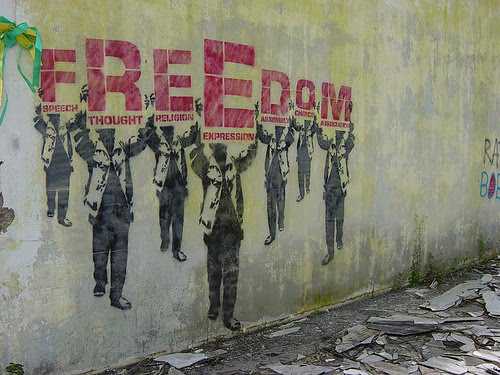
Turkey’s Constitutional Reconciliation Commission (AUK), in drafting a new Constitution, has been considering the provision protecting the right to freedom of religion or belief. However, the political parties represented on the AUK have not reached a consensus on this. The ruling Justice and Development Party (AKP) has presented its own proposal, rejecting proposals from the main opposition Republican People’s Party (CHP). If the AKP’s proposal is the basis for this part of the new Constitution, partial progress in protecting freedom of thought, conscience or religion will be seen. But perhaps not as much progress as if the CHP’s proposal had been accepted as the start. These protected the right to conscientious objection, and defined secularism as meaning that the state will observe equal distance towards all religions.
So will the new Constitution – when it is eventually adopted – advance the protection of freedom of religion or belief in Turkey? What would be the implications of the omission of some religious freedom commitments, affecting for example religious education, conscientious objection, and the role of the Diyanet?
Politicians and society had hoped that the AUK would make unanimous decisions in drafting the new Constitution. On issues where consensus has not been reached, the proposals of parties are included so that the texts will be considered by the – AKP-dominated – General Assembly of the Parliament. The final draft text ready to be passed to the General Assembly has however not been completed. It was hoped that Turkey would have a new Constitution by the end of 2012 but this now seems unlikely.
The AUK is chaired by Grand National Assembly Speaker Cemil Cicek, and its members are drawn from the AKP, the opposition CHP (through which the Republic’s founder, Mustafa Kemal Atatürk, led Turkey as a one-party state), the Nationalist Movement Party (MHP), and the Peace and Democracy Party (BDP).
The AUK has received submissions on religious freedom from various religious and civil society groups. However, some such as the Baha’is, Jehovah’s Witnesses, atheist and agnostic groups did not become involved in this process (see F18News 13 June 2012 .
The AKP proposal
The AKP government has proposed the following text:
“(1) Everyone has freedom of religion, conscience and belief. This right includes the right to live and to manifest one’s religion or belief, alone or together, in public or private, through worship, education, teaching, practice and performing ceremonies, and has the freedom to change one’s religion or belief.
(2) No one may be compelled to participate in worship, religious practice and religious ceremonies, to disclose one’s religious beliefs and thoughts, and may not be prevented from performing these [worship, religious practice and religious ceremonies]. No one may be condemned, accused or subjected to different treatment based on their belief, thoughts, opinion and performing or not performing the requirements of these [worship, religious practice and religious ceremonies].
(3) In carrying out its tasks in the field of education and teaching, the state will comply with the parents’ right to desire that the education and teaching be carried out in line with their religious and philosophical beliefs. Religious Culture and Knowledge of Ethics lessons will be among the compulsory lessons taught in primary and middle educational institutions. Religious education and teaching is subject to the consent of individuals, and in the case of minors, their legal representatives.”
Also, Turkish media reported on 10 August that the AKP is proposing a phrase stating that “the right to freedom of religion includes the right to associate”. The CHP’s reaction to this is not known. The proposal was reportedly accepted by the BDP, while the MHP opposed its inclusion.
– Broadening of protection
The first paragraph broadens the protection of freedom of religion or belief, as Article 24 of the current Constitution only explicitly protects the right to worship (see F18News 30 November 2011 https://www.forum18.org/archive.php?article_id=1641). Yet it is unclear what the AKP means by adding the phrase “to live”, which is not found in international human rights provisions.
Protecting manifestations of religion or belief and practice provides a basis for protecting the wearing of religious symbols or clothing, religious practices such as praying the namaz (Islamic prayer rituals) five times daily, or fasting. This may open the way for wearing religious clothing such as headscarves in public institutions, such as universities, where this right is restricted for employees (see Forum 18’s Turkey religious freedom survey at https://www.forum18.org/archive.php?article_id=1379).
– The right to change belief
The explicit reference to the right to change religion or belief is in line with Article 9 (“Freedom of thought, conscience and religion”) of the European Convention on Human Rights and Fundamental Freedoms (ECHR), which Turkey ratified in 1954. Article 24 of the current Constitution does not explicitly protect this right (see F18News 30 November 2011 https://www.forum18.org/archive.php?article_id=1641).
Fortunately, the AKP and the other parties did not hesitate to provide this explicit protection. This may also be seen as important as it sets an example for Middle Eastern countries where the right to change one’s religion or belief is not recognised.
– The need for a limitations clause
The second paragraph does not include any conditions under which the right to manifest religion or belief can be restricted. It would be good if the new Constitution were to include the restriction clause used in Article 9 of the ECHR (see F18News 7 February 2011 https://www.forum18.org/archive.php?article_id=1537). This states:
“Freedom to manifest one’s religion or beliefs shall be subject only to such limitations as are prescribed by law and are necessary in a democratic society in the interests of public safety, for the protection of public order, health or morals, or the protection of the rights and freedoms of others.”
Adopting a specific restriction clause for religious freedom would be better than adopting a general constitutional restriction clause on all fundamental rights. This would lay down the specific conditions, in line with international human rights law, under which the right to manifest religion or belief may be restricted. This would also reduce the risk of unspecific laws or regulations being introduced that could be used arbitrarily.
– Education
The third paragraph in the AKP’s proposed text on teaching religion or belief is crucial, as it reflects the basis of policies in the field of education (see F18News 13 June 2012 . The inclusion of respect for parents’ right to educate their children in line with their own religious or philosophical views is consistent with Turkey’s international human rights obligations.
But the continuation of the compulsory Religious Culture and Knowledge of Ethics (RCKE) lessons is incompatible with international human rights obligations. The European Court of Human Rights (ECtHR) in Strasbourg in its Zengin v. Turkey judgment, as well as Turkey’s Court of Cassation, have held that RCKE lessons are incompatible with the country’s human rights obligations (see F18News 23 August 2011 https://www.forum18.org/archive.php?article_id=1603). Despite changes in the curricula of the lessons, the Reform in Education Initiative found that significant problems remain (see F18News 13 June 2012 .
Calls have continued from some parts of the Alevi community as well as civil society organisations for compulsory RCKE lessons to be abolished. But as with conscientious objection to compulsory military service, the government’s political will – not court judgments or the experience of victims of human rights violations – is the deciding factor in this part of the AKP’s constitutional proposal (see F18News 1 May 2012 .
– Conscientious objection
The AKP’s rejection of the CHP’s proposals to allow conscientious objection and broaden the definition of secularism may indicate that the AKP’s commitment to freedom of religion or belief is limited. The AKP appears to resist strongly recognition of the right to conscientious objection and making genuinely civilian alternative service available. This is consistent with the AKP’s refusal to make any legal changes, despite continued calls from the Council of Europe Committee of Ministers, to bring Turkey’s legislation into line with the requirements of the ECHR (see F18News 1 May 2012 .
Failure to include the right to conscientious objection to military service weakens the overall protection of freedom of thought, conscience or belief. Demands for the protection of conscientious objection and the introduction of civilian service were made in proposals from civil society, including the Istanbul Anti-militarist Inisiyatif (IAMI – Istanbul Antimilitarist Initiative, the Türkiye Insan Haklari Vakfi (HRFT – Human Rights Foundation of Turkey), the Toplum Gönüllüleri Vakfi (TOG – Community Volunteers Foundation) and Mazlumder (Organisation of Human Rights and Solidarity for Oppressed People) (see F18News 1 May 2012 .
The jurisprudence of the international human rights standards to which Turkey is a party, such as the ECHR and the International Covenant on Civil and Political Rights (ICCPR), defends the right to conscientious objection to military service (see F18News 26 July 2011 https://www.forum18.org/archive.php?article_id=1597).
The AKP’s resistance to recognition of this right, despite both international obligations and domestic pressure, can be seen as a serious limitation to the AKP’s commitment to religious freedom.
CHP proposals
In addition to the right to have and change religion or belief, the right to manifest religion or belief in public or private in worship, teaching, practice and observance and the recognition of the right to conscientious objection, the CHP made additional proposals.
– “Exploitation of religion”
The CHP proposed in the discussion within the AUK, on 9 August, the inclusion of a provision that would prohibit the “exploitation of religion”. The AKP rejected this. “Exploitation of religion” is a vague term and its inclusion may have given rise to arbitrary restrictions. The same proposed provision includes the prohibition of any law being made based on religious rules. The AKP also rejected this.
On 7 August the CHP proposed a provision that “the state is impartial toward all religions and beliefs in all its proceedings and actions and will respect social pluralism based on the diversity of religions, beliefs and opinions”. The opposition MHP and BDP parties supported the proposal. However, the AKP did not, stating that such a provision would not be compatible with the existence of the Diyanet, whose already large role and status has increased under the AKP (see F18News 4 May 2011 https://www.forum18.org/archive.php?article_id=1567).
This CHP proposed provision would have been improved, were it to specify that it should also apply in education, public broadcasting, and the activities of the Diyanet.
Yet, this proposal would have run directly counter to the AKP government’s latest actions (see F18News 13 June 2012 .
At the same time, the CHP also proposed a provision that “the state will take the necessary measures to establish and maintain mutual respect and tolerance between difference religions and beliefs and those who do not believe”. The AKP rejected this proposal, pointing to the difficulty of defining “respect and tolerance” and noting that relevant provisions exist in the Turkish Criminal Code that the state can use when intolerant acts are carried out between citizens.
But as may be seen in the recent prosecutions of atheists, some parts of Turkey’s Criminal Code and the way it is used by the authorities itself raises serious concerns about freedom of religion or belief in Turkey (see F18News 11 February 2012 https://www.forum18.org/archive.php?article_id=1667).
Had the CHP proposals been accepted, there would have been strong constitutional guarantees of an impartial state in relation to followers of Turkey’s varied religions and beliefs, and for the protection of religious minorities’ rights. Given the CHP’s history, the change in the party’s thinking to uphold human rights and state impartiality is significant.
That the CHP provisions pertaining to conscientious objection, an impartial state and respect for diversity were not adopted is regrettable, as they would have significantly improved the protection of the right to freedom of religion or belief. Turkey’s religious minorities would have welcomed such provisions.
AKP’s future policies on religious freedom
The AKP’s refusal to accept the CHP proposals may indicate its future policies concerning religious freedom. Its strong opposition to both abolishing compulsory RCKE lessons and changing the Diyanet are in line with Prime Minister Recep Tayyip Erdogan’s statement on 31 January 2012 that he wanted to raise an [Islamic] religious generation.
The legislative changes relating to education in June 2012 made it possible to introduce optional lessons on the life of the Prophet Mohammed and the Quran. Also, optional modular lessons on “Basic Religious Knowledge” will be available. In theory, providing such lessons on non-Sunni Muslim beliefs on request would also be possible (see F18News 13 June 2012 .
However, the availability of teachers, the content of curricula, and the organisation of classes are all unknown – and all will be decided by the AKP government. Experience with the way RCKE classes are currently run does not encourage optimism that such Basic Religious Knowledge lessons will in reality be run in such a way as to respect people’s freedom of religion or belief (see F18News 23 August 2011 https://www.forum18.org/archive.php?article_id=1603).
The AKP prioritises the religious instruction it thinks necessary for its goal of raising a religious generation. This is highly problematic from a human rights perspective, as it inevitably undermines the impartial nature of the state and raises concerns in relation to the rights of children, parents, teachers and others to freedom of religion or belief. The AKP also made a proposal to include a constitutional provision “protecting family and the generation”. This may open up possibilities to impose certain moral values on society as a whole, in a way that would be incompatible with Turkey’s international obligations.
It is important to remember that the new Constitution will belong to all of Turkey’s citizens, regardless of their ethnic origin, religious affiliation or other identities. Constitutional provisions on freedom of religion or belief must take this into account. Instead of drawing the boundaries of religious freedom in Turkey according to the boundaries or future aims of the AKP, the freedoms must be all encompassing and reflect the international provisions on religious freedom.
The challenge for the AKP – as the current ruling party – remains to devise policies which genuinely respect the religious freedom of Turkey’s increasingly pluralistic society. This starts with the Constitution and also includes other legislative changes to protect religious freedom in line with the country’s existing human rights commitments. The AKP’s non-recognition of Alevi cem houses (places of worship), insistence on the compulsory RCKE lessons, strengthening the Diyanet’s position as a publicly-funded religious institution, and the comments of AKP politicians, indicate that the party fails to devise policies that respect Turkey’s pluralistic reality and observe the principle of impartiality on the part of the state. (END)
For more background, see Forum 18’s Turkey religious freedom survey at https://www.forum18.org/archive.php?article_id=1379.
More analyses and commentaries on freedom of thought, conscience and belief in Turkey can be found at .
A compilation of Organisation for Security and Co-operation in Europe (OSCE) freedom of religion or belief commitments can be found at https://www.forum18.org/archive.php?article_id=1351.
A printer-friendly map of Turkey is available at .
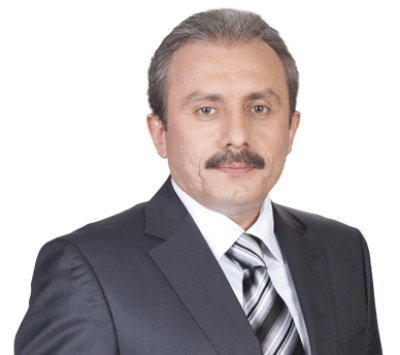 Deputy Mustafa Şentop from the ruling Turkish AKP party says LGBT rights have no place in the country’s constitution or international agreements