Newsweek Inc,
The Graham Holdings Company
One World Trade Center, Floor 72
New York, NY 10007
To the Editors of Newsweek,
Your recent article, “The U.S. Should Not Sell Weapons to Turkey,” presents a deeply flawed and misleading analysis, marred by selective omissions, strategic distortions, and a troubling lack of diplomatic nuance. Rather than offering a constructive critique, the piece unfortunately aligns with a broader campaign that seeks to delegitimize a sovereign nation and NATO’s second-largest military power: the Republic of Türkiye.
To begin with, a basic yet critical correction: the internationally recognized name of our country is the Republic of Türkiye. Continued use of outdated terminology disregards the democratic will of the Turkish people and fails to meet the diplomatic standards expected of a global publication.
Türkiye’s role in NATO and global security is both substantial and indisputable. From Afghanistan to the Balkans, Libya to the Black Sea, Türkiye has borne a disproportionate share of the burden in defending collective security. It was Türkiye that engaged in direct ground combat against ISIS, and Türkiye that fortified NATO’s southeastern flank during times of regional volatility.
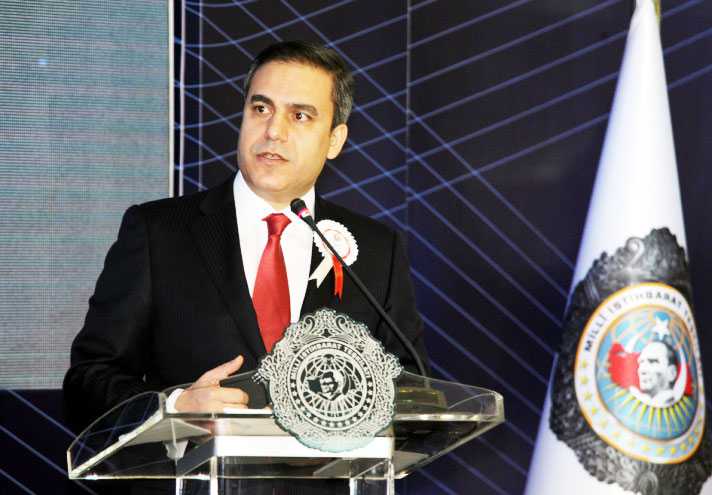
The assertion that Türkiye has distanced itself from the West is factually incorrect. NATO officials and European partners have repeatedly affirmed that Turkish intelligence—particularly under the leadership of Hakan Fidan—has been instrumental in thwarting terrorist plots, countering extremism, and managing mass migration. Far from turning away from the West, Fidan’s tenure as head of MIT was defined by pragmatic cooperation with Western intelligence agencies.
As Foreign Minister, he continues to advocate a balanced foreign policy anchored in sovereign interests and regional stability. International actors, including the United States and Germany, have recognized Türkiye’s intelligence contributions as reliable and indispensable. NATO sources have even described Fidan as a “reliable interlocutor.”
The article’s portrayal of Türkiye’s engagement with Russia also omits vital facts: it was Türkiye that closed the Straits to Russian warships, supplied Ukraine with Bayraktar drones, and led the Black Sea Grain Initiative—helping to avert a global food crisis. These are not the actions of a nation disengaged from the West, but of a responsible actor committed to sovereign diplomacy and international order.
Regarding the S-400 issue: Türkiye sought to purchase the U.S. Patriot missile defense system for over a decade and was repeatedly denied. In the absence of viable alternatives, Türkiye acted to safeguard its national security. The subsequent imposition of CAATSA sanctions was not only punitive but revealed a stark double standard—other NATO allies operating Russian systems have not faced similar penalties like Bulgaria, Slovakia ,Greece and Non NATO member India .
Additionally, the issue of U.S. foreign aid directed toward entities with ties to terrorist organizations, as highlighted in Gregg Roman’s testimony before the House Oversight and Government Reform Subcommittee, warrants urgent scrutiny. Ignoring such troubling contradictions while fixating on Türkiye’s legitimate security concerns represents a grave lapse in intellectual and journalistic integrity. Michael Doran of the Hudson Institute has rightly noted: “Türkiye is invaluable to the central task of American statecraft: countering the challenge from the revisionist bloc of China, Russia, Iran, and North Korea.” Without Türkiye, the West cannot uphold a viable order in Eurasia, nor effectively support partners such as Ukraine or Azerbaijan. Türkiye anchors critical energy corridors, promotes regional stability, and counters malign influence in the Caucasus and Central Asia.
Regrettably, this Newsweek article appears less focused on nuanced analysis and more intent on perpetuating a narrative of Türkiye-bashing that serves certain political agendas. This is not a good-faith policy critique—it is a concerted effort to portray Türkiye as a perennial antagonist, to the detriment of transatlantic unity and the principles of equitable diplomacy.
The authors’ distortions and inflammatory rhetoric offer little substance and much harm. Once again, Türkiye and the Turkish people are unfairly vilified in a narrative that disregards facts in favor of ideological convenience. In this era where principles are often forsaken for personal or political gain, these authors exemplify the erosion of objective discourse.
I urge Newsweek to reflect with greater journalistic and editorial responsibility. Opinion pages should foster informed and balanced dialogue—not serve as conduits for interest-driven disinformation. The Republic of Türkiye remains a committed NATO ally, a sovereign democracy, and a force for regional and international stability. It will continue to uphold its responsibilities—but it will also defend its right to national security, territorial integrity, and diplomatic respect.
I call on Newsweek and its contributors to recognize these realities, reject politicized narratives, and engage in more honest, fact-based dialogue.
Respectfully,
Ibrahim Kurtulus
Community Activist