Tag: Michael Rubin

  • Send Israeli Peacekeepers to Cyprus

    Send Israeli Peacekeepers to Cyprus

    National Security Journal
    Harry J. Kazianis – Editor-In-Chief and CEO
    800 N King Street Suite 304
    Wilmington, DE 19801

    November 1, 2025 

    Dear Mr. Kazianis,

     At the outset, I must note that the article in question repeatedly refers to the nation as “Turkey,” despite the fact that the country’s official and internationally recognized name is Türkiye. Respecting a nation’s chosen name is not symbolic—it is a matter of acknowledging the identity and will of its people. I am writing in direct response to Michael Rubin’s recent piece advocating for the deployment of Israeli forces in the sovereign territory of the Turkish Republic of Northern Cyprus and calling for Turkish peacekeeping forces to be barred from participating in the stabilization of Gaza. His assertions are not merely historically inaccurate they reflect a consistent posture of antagonism toward Türkiye’s sovereignty, diplomatic legitimacy, and historical truth.

     Let us be unequivocal: Türkiye did not “invade” Cyprus. The Turkish Peace Operation of 1974 was carried out under the legal authority of the 1960 Treaty of Guarantee, which empowered the three guarantor states Türkiye, Greece, and the United Kingdom to intervene should the constitutional order or the security of either community be endangered. It was Greece’s own extremist and illegal coup, orchestrated with the objective of Enosis the annexation of Cyprus by Greece that triggared Türkiye’s intervention.

     This was not speculation; it was confirmed by Greece itself. The Athens Court of Appeals Decision No. 2658/79 (March 21, 1979) acknowledged that the coup was engineered by Greek officers and was the direct cause of the events of 1974.

     In contrast to this unlawful coup, Türkiye’s action was a necessary humanitarian and legal measure to stop mass killings, village burnings, ethnic cleansing, and forced displacement directed against Turkish Cypriots. The continued presence of the Turkish Peace Force in Northern Cyprus remains the sole guarantee that Turkish Cypriots may live in safety and dignity today. History is not something to be rewritten to fit modern editorial fashion.

     Furthermore, Rubin’s comparison of Gaza with the Turkish Republic of Northern Cyprus is a deliberate distortion. Northern Cyprus is a functioning democracy with its own parliament, rule of law, civil institutions, and elected leadership. Turkish Cypriots overwhelmingly supported a peaceful federal settlement during the 2004 Annan Plan referendum 65% voted “Yes” while the Greek Cypriot side rejected reunification with 85% voting “No,” following an emotional televised appeal urging rejection by their leader, Tassos Papadopoulos. If this region remains divided, it is not by the will of Turkish Cypriots.

     The proposal to replace UNFICYP with Israeli troops is not a diplomatic strategy; it is a provocation. It would escalate regional tensions and deliberately undermine delicate peace mechanisms. And the suggestion to remove the Turkish Cypriot flag from the mountainside is not political commentary it is cultural vandalism   .

    What compounds the tragedy is the silence of those who are entrusted to defend our community’s dignity. The absence of a clear, strong, and principled response from Consulate General Ambassador Ahmet Yazal Republic of Turkiye to New York leaves our community exposed to mischaracterization and distortion. At such a moment, silence is not neutrality it is abandonment by the worst Consulate General our community has seen in 40 years. If our history, sacrifices, and rights are challenged publicly, then they must also be defended publicly.

    As a citizen, a community activist, and someone who has always advocated for peace and dignity rooted in historical truth for what I call it the Turkish Republic of Cyprus, I cannot remain silent where others choose to do so.

    Our NATO ally Türkiye has never opposed peace, transparency, or negotiation grounded in fairness. But it will not accept erasure, revisionism, or the rewriting of the lived suffering of Turkish Cypriots. Rubin’s article is not a policy recommendation it is an attempt to delegitimize a people’s right to exist in security on their own land. It nothing but a smear campaigns across the world against 

    Türkiye. All I can do is  laugh at these ludicrous smear campaigns by the Hate Merchant Rubin, We will not allow smear campaigns to go unanswered.  We will not stay quiet.  

    Respectfully,

    Ibrahim Kurtulus
    Community Activist 
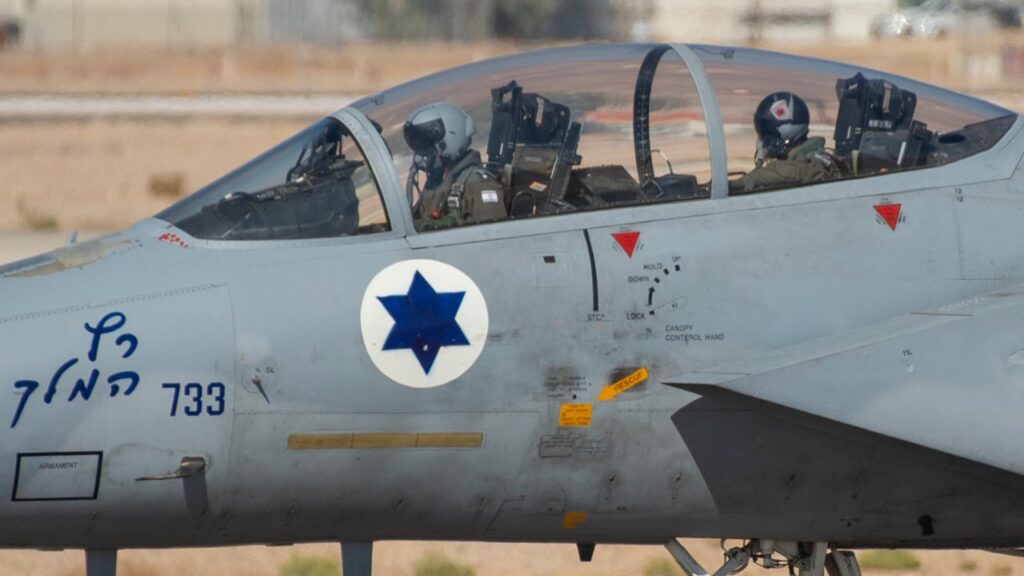
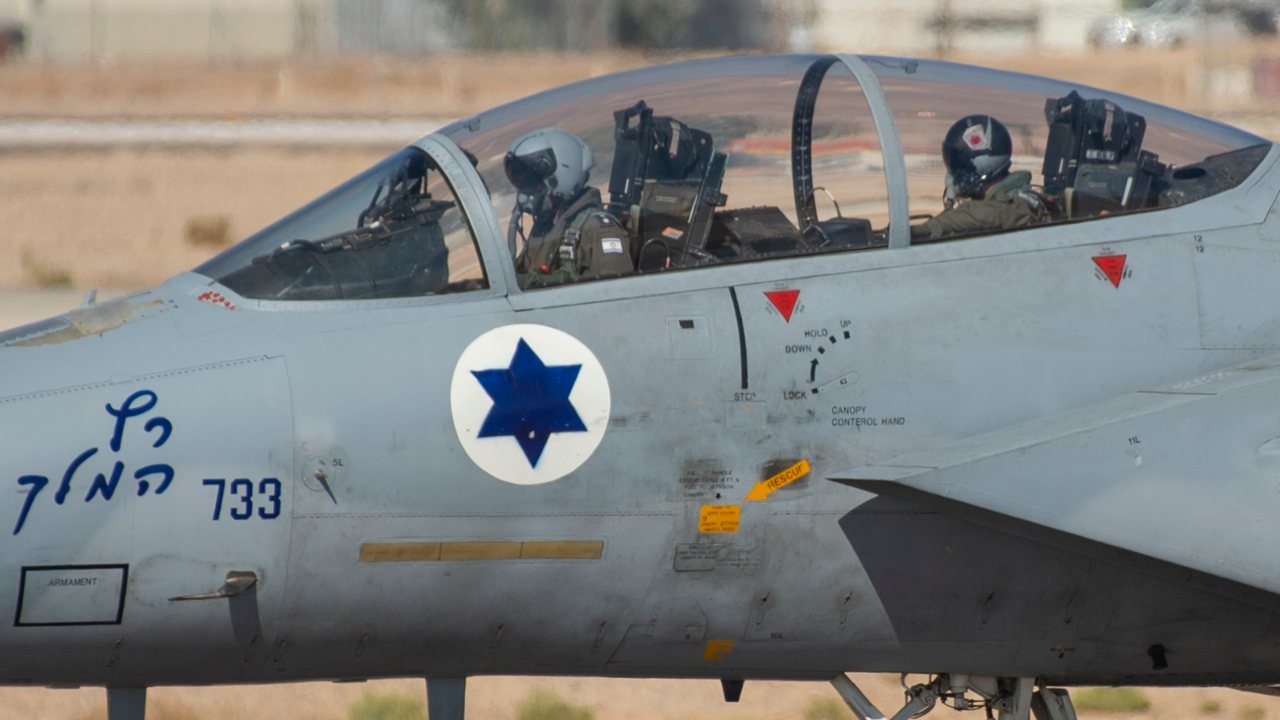
    An Israeli air force F-15I Ra’am taxis down the runway during Blue Flag 2019 at Uvda Air Base, Israel, November 4, 2019. The U.S. and Israel have a strong and enduring military-to-military partnership built on trust and developed over decades of cooperation. (U.S. Air Force photo by Airman 1st Class Kyle Cope)

    Send Israeli Peacekeepers to Cyprus

  • Response to Michael Rubin’s Article: “Try Turkish Army Veterans for Human Rights Violations”

    Response to Michael Rubin’s Article: “Try Turkish Army Veterans for Human Rights Violations”

    President Robert Doar
    American Enterprise Institute
    1789 Massachusetts Avenue, NW
    Washington, DC 20036

    Re: Response to Michael Rubin’s Article: “Try Turkish Army Veterans for Human Rights Violations”

               Silence of Consul General of Turkiye to New York Ahmet Yazal.

    November 25, 2025

    Dear President Doar,

    To begin with, a basic yet critical correction: the internationally recognized name of “Turkey” country is the Republic of Türkiye. Continued use of outdated terminology disregards the democratic will of the Turkish people and fails to meet the diplomatic standards.

     I am writing to express my unequivocal objection to the deeply flawed, politically motivated, and factually inaccurate assertions advanced in Michael Rubin’s recent article, “Try Turkish Army Veterans for Human Rights Violations.” The piece does not constitute reasoned analysis or human-rights advocacy; it is a partisan polemic designed to delegitimize the Republic of Türkiye, distort the historical record, and sanitize the violent extremism of a designated terrorist organization. It represents a troubling departure from the standards of rigor, objectivity, and scholarly integrity that institutions such as the American Enterprise Institute have historically upheld.

     Mr. Rubin’s central claim that Türkiye targets Kurds is a demonstrable falsehood. Türkiye is home to more than 15 million citizens of Kurdish heritage who have lived on the Anatolian peninsula in shared nationhood, intermarriage, and cultural coexistence for centuries. The Republic’s longstanding struggle is not against Kurds, but against the PKK, an internationally recognized Marxist-Leninist terrorist organization designated by the United States, the European Union, NATO allies, the United Kingdom, Canada, Japan, and others. To conflate Kurdish identity with the PKK’s separatist violence is not only inaccurate but deeply insulting to the millions of Kurdish citizens who reject terror, coercion, and the Marxist-Leninist terrorist organization     PKK’s extremist ideology.

     Equally troubling is Mr. Rubin’s mischaracterizetion of Türkiye’s counter-terrorism operations in southeastern cities. During periods of heightened PKK aggression, militants turned residential neighborhoods into fortified combat zones, rigged homes with explosives, dug trenches to sever city access, and used civilians as human shields. Turkish security forces repeatedly implemented evacuation corridors, medical access routes, and civilian-protection protocols while confronting an armed group that weaponized hospitals, mosques, and schools. To portray these operations as “collective punishment” is not analysis it is propaganda by omission.

     The same selective amnesia appears in Mr. Rubin’s framing of Cyprus. The 1974 Turkish intervention was a lawful action under the 1960 Treaty of Guarantee and a direct response to a violent Athens-backed coup seeking Enosis. Even Archbishop Makarios, the first President of the Republic of Cyprus, stood before the United Nations Security Council on July 19, 1974, and declared: “The coup by the Greek junta is an invasion, and from its consequences all the people of Cyprus suffer, both Greeks and Turks.” This statement made one day before Türkiye intervened remains one of the clearest confirmations of the existential danger Turkish Cypriots faced after years of massacres, pogroms, and ethnic cleansing by extremist groups such as EOKA-B. Today, approximately 16,000 Greek Cypriot and mainland Greek troops remain stationed on the island, supported by nearly 70,000 reservists. The continued division of Cyprus persists not due to Türkiye’s actions, but because the Greek Cypriot administration rejected the Annan Plan, which Turkish Cypriots approved by 85 percent in a democratic referendum.

     Yet while Mr. Rubin speaks of alleged human-rights abuses, he conspicuously ignores the well documented and ongoing violations committed by Greece against refugees that if Ray Charles was alive could even read about, migrants, and its own Turkish Muslim minority. His silence is not scholarly oversight; it is ideological convenience and a clear smear campaign againt Turkiye and Turks.

     In the Aegean Sea, Greek military and coast guard units have repeatedly fired live ammunition near, around, and directly at unarmed refugee vessels many carrying women and children. Numerous documented incidents include Greek forces puncturing inflatable rafts, spearing life boats with metal poles, destroying engines, and leaving families adrift to drown. Independent investigations by the United Nations, Amnesty International, Lighthouse Reports, and global media outlets have confirmed Greek coast guard involvement in forced pushbacks that led to the deaths of infants and small children. Greek personnel have been recorded beating refugees on beaches, stripping men to their underwear, confiscating their belongings, and abandoning them on rafts without motors. On land,Greek police have engaged in arbitrary detention, forced expulsions, and violent assaults on asylum seekers, including shooting rubber bullets and even live rounds at unarmed civilians attempting to reach border crossings.

     Similarly, Greece continues to violate the human rights of its Turkish Muslim minority in Western Thrace and Athens denying them the right to self-identify, seizing community properties, interfering in religious leadership, restricting education, and maintaining Athens as the only European capital without a single functioning state-sanctioned mosque.

     Despite these realities, Mr. Rubin directs no criticism at Greece or other EU country that to have a blind eye to relious rights and expressions. Instead, he advances a narrative intended to isolate, stigmatize, and delegitimize Türkiye an indispensable NATO ally on the front lines of counter terrorism and regional stability.

     Most concerning is the silence of those who should defend our community against such blatant distortion like the AKP sided  Consul General of Turkiye to New York Ahmet Yazal. When our history, rights, and sacrifices are challenged publicly, they must be defended publicly. Silence is not neutrality it is abdication.

     Türkiye will continue to protect its sovereignty like another other Nation , safeguard all its citizens Kurdish and nonKurdish alike and confront terrorism with the full force of law. Those who attempt to weaponize misinformation will ultimately find themselves not aligned with human rights, but with destabilization, distortion, and extremism.

    Respectfully,

    Ibrahim Kurtulus

    Community Activist

  • Kurdish leaders are drunk with power

    Kurdish leaders are drunk with power

    by Michael Rubin
    Daily Star (Beirut)
    July 1, 2009

    On June 12, Iranians voted for a president. While the Islamic Republic may not be a democracy, its leadership has always looked to the polls to bestow popular legitimacy. Ayatollah Ahmad Janati, chairman of the Guardian Council, for example, said just two days before the election: “The enemies have always tried to question the legitimacy of the regime by trying to reduce public participation in elections … The people must blind the eyes of the enemies by vast participation in elections.” Iran’s desire for elections, however, does not extend to accepting their results. Outraged, millions took to the streets across the country, some chanting “Death to the Dictator.”

    Iranians, however, may not be the only ones to take to the streets to protest election fraud this summer. On July 25, Iraqi Kurds will vote in long-delayed regional elections. For the first time, the major political figures – Kurdistan Democratic Party (KDP) leader Massoud Barzani and Patriotic Union of Kurdistan (PUK) leader, and Iraqi president, Jalal Talabani – face serious local opposition.

    In the wake of Kuwait’s liberation in 1991, Iraqi Kurds rose up against Saddam Hussein’s tyrannical rule. Rather than allow Saddam’s helicopter gunships to massacre the civilian population, the United States, France, Turkey and Great Britain created a safe-haven in northern Iraq. The following winter, Saddam withdrew Iraqi officials from what would become Iraqi Kurdistan, believing he could starve the Kurds into submission. It did not work. The Kurds organized elections. Almost a million people voted. Barzani edged out Talabani, 45 to 44 percent, with smaller parties splitting the remainder. Power sharing was not always smooth: Both leaders like to command; both became addicted to power. So long as Saddam remained a threat, Kurds tolerated abuses. Since Saddam’s fall, however, impatience at the failure to reform has grown.

    While the Kurdistan Regional Government could once describe itself as a democratic beacon in the region, today such depictions lack credibility. Seventeen years after its first election, Iraqi Kurdistan is at best as democratic as Egypt or Iran, and worst akin to Syria or Tunisia. Corruption is rife. Barzani uses the government budget as a family slush fund, for example donating hundreds of millions of dollars from public coffers to allow a relative to win a 2007 bid to operate an Iraq-wide cell phone company. Few profitable businesses – oil, finance, industry or trade – can operate without either silent partnership with or outright payment to the Barzani or Talabani families.

    Nepotism is also rife. Barzani, for example, appointed his son to head the region’s intelligence service, the dreaded Parastin, which Amnesty International has accused of torture. While free media have become an engine for democracy in the rest of Iraq, the Kurdish security services threaten, harass, and in some cases even kill independent journalists.

    The people of Iraqi Kurdistan say they have had enough. Noshirwan Mustafa, Talabani’s one-time deputy, has joined the former KDP secretary general to form a rival election list. Two prominent Islamic parties have joined with secular counterparts to create an additional reform list. Both challenging lists are polling well.

    Barzani and Talabani are worried. Rather than allow open election lists as in the rest of Iraq, the Kurdish leaders insist that party lists be closed, a way of preventing voter repulsion at examples of nepotism or those known to be abusive of power. As the rival lists, the Change List and the Service and Reform List, have gained traction, the Kurdish security forces have threatened and roughed up opposition candidates. Party officials have told apolitical bureaucrats that they will lose their jobs if they do not support Barzani and Talabani. There is widespread belief that KDP and PUK officials have compromised the Independent Higher Election Commission’s regional offices after KDP security forces visited and, in some cases, arrested opposition candidates within hours of their filing theoretically confidential candidacy papers.

    As has the Islamic Republic’s leaders, Iraqi Kurdistan’s leaders speak of democracy, but have become drunk with power, and disdainful of public accountability. As in Iran, Kurdistan Regional Government officials have amassed vast fortunes inconsistent with salaries. Today, ordinary Kurds refer to Barzani, his nephew, and his sons, as “little Saddams.” Actually, “little Rafsanjanis” might be as accurate. As in Iran, Iraqi Kurdish officials have also worked to constrain independent monitoring which might report on intimidation and interference before election day.

    As a consequence of all this, it appears that the Iraqi Kurdish people seek change. What remains to be seen, however, is if Iraqi Kurds will stand up for freedom and liberty as have the Iranian protestors, and if the Iraqi Kurdish security forces will, like their Iranian counterparts, use the point of a gun and midnight roundups to disenfranchise a deserving people.

    Michael Rubin, a senior editor of the Middle East Quarterly, is a resident scholar at the American Enterprise Institute and a senior lecturer at the Naval Postgraduate School.