Turkey, deliberately pushed into an “Afghanistan, Lebanon, and Syria Syndrome” by the ruling political forces and their American partners, is increasingly moving away from the fundamental pillars of the secular, laicist Republic and the state doctrine of Mustafa Kemal Atatürk. Atatürk envisioned a modern state, independent of origin, ethnicity, or religious affiliation.
The fact that U.S. support and the courting of Islamists represent a fundamental and massive issue for European security architecture is still not widely understood within the EU.
It is no coincidence that in March 2025, U.S. President Trump appointed Thomas J. Barrack as U.S. Ambassador to Turkey, who publicly promoted the religion-based legal order of the “Millet system” – an Ottoman-era framework that governed political leadership based on ethnicity and religion – as a model for the entire region.
“Divide et impera” – divide and rule – is the guiding principle of U.S. foreign policy, whether in the Ukraine conflict, the Middle East, or Turkey. Henchmen, opportunists, and accomplices of this disastrous imperialist policy are plentiful – in the EU, in Turkey, in the Arab world, and in Latin America. Remote-controlled statesmen and their political cabinets, Islamists in pinstripe suits, or former murderers and terrorists – who are suddenly and transparently declared as respectable politicians and Western interlocutors – lay the groundwork for the sellout of their own countries (while enriching themselves and their corrupt circles), and are the reason why millions are forced to flee.
Who ends up dealing with the refugees and the negative consequences of these developments? The EU and its member states – to varying degrees and with different national implications.
U.S. policy has repeatedly demonstrated – both in the past and present – where its loyalties lie and its willingness to finance and arm Umayyad-Sunni clerical Islamists. This U.S. state doctrine is a root cause of many of the conflicts and wars that are the result of a mix of ignorance and calculated strategy.
Something is brewing on Europe’s doorstep – in Turkey – that will, in the foreseeable future, crystallize into a massive security disaster for us Europeans. A concrete example from Turkey:
Under the guise of peace negotiations orchestrated by U.S. policymakers, discussions have taken place with the ruling AKP, the far-right MHP, the clerical-fascist SP, and the Kurdish terrorist organization PKK. At their core, these negotiations aim to transform Turkey into a federal system, fragmented along ethnic and religious lines.
A statement by Devlet Bahçeli, leader of the Nationalist Movement Party (MHP) – “The President should have two deputies, one Kurdish and one Alevi” – has caused political tension and indicates the direction things are heading. Dividing Turkey along ethnic and religious lines paves the way for the Afghanistan, Lebanon, and Syria Syndrome. This will have serious consequences for Europe’s security structure and our societies.
What happened before the Alevi initiative within the police?
Journalist Tolga Şardan wrote in his T24 column that after Ali Yerlikaya took office as Minister of the Interior, a decree was issued that removed several Alevi provincial police chiefs from their posts.
Regular readers of Büyüteç (“Magnifying Glass”) had already learned about the debate over an “Alevi Initiative” triggered by Bahçeli’s statements on June 20.
Since then, a sense of anxious anticipation has spread within the Alevi community. At a time when the idea of a “terror-free” country was being strongly emphasized, the debate resonated widely within both the AKP and MHP.
The most significant statement so far came from MHP leader Devlet Bahçeli.
Bahçeli’s claim – picked up by journalist İsmail Saymaz – that “one of the vice presidents should be Kurdish and the other Alevi” sparked an unexpected public reaction. Some viewed it as a step toward the “Lebanonization” of the country. Supporters of this view see Bahçeli’s proposal as an official acknowledgment of an ethno-religious division.
In response to the criticism, Bahçeli stated:
“At a time when Turkey is progressing step by step, the idea was considered that one of the vice presidents could be Alevi and the other Kurdish. Associating this with Lebanon is a distortion and deliberate misdirection!”
But beyond the “Lebanon aspect,” the real question remains:
To what extent are appointments in the state apparatus based on merit (loyalty vs. qualification)?
Let’s be honest: If appointments were truly based on merit, Bahçeli’s proposal wouldn’t even be necessary. It wouldn’t matter what worldview, religion, denomination, or ethnic background someone has.
Let me now give a revealing recent example of what has already occurred on this path.
The institution in question – as you might suspect – is the police force.
After the 2023 elections, Ali Yerlikaya took office as Minister of the Interior and issued a sweeping decree replacing many provincial police chiefs appointed by his predecessor. Among them were four Alevis. While some chiefs were simply reassigned, these four Alevis were directly recalled to the ministry (“sidelined”). Yerlikaya’s aim was to replace the heavily criticized personnel associated with his predecessor Süleyman Soylu. He largely succeeded – many of Soylu’s affiliates lost their positions. However, the four Alevi chiefs were not part of Soylu’s inner circle. On the contrary, they were known within the police force for their competence and integrity.
They belonged to the group that the government turned to after the December 17–25, 2013 corruption scandal, asking them: “Help us rid ourselves of the Gülen movement.” These officers were also loyal to Atatürk’s principles. Yet, because they were appointed during Soylu’s tenure, they were wrongly lumped in with his faction. Currently, there is not a single Alevi provincial police chief left.
And it didn’t stop there:
Among the foreign police liaison officers during the Soylu era, there were also three Alevis. After returning to Turkey – along with other attachés – only these three Alevi officers were treated differently and not reassigned to new international posts like their colleagues. They reported their legitimate complaints to senior management.
Eventually, they – along with other “recalled” Alevi officers – were reassigned to the same department, the Inspection Board (Teftiş Kurulu).
Even if the police leadership won’t admit it publicly – this is the reality. One would have hoped that the MHP leadership would have stood up for these police officers – even before the talk of an Alevi initiative. That they would have advocated for appointments based on merit, regardless of denomination or worldview. But the MHP apparently preferred to support officials with questionable pasts – even those under judicial investigation – instead of defending the rights of capable Alevi officers.
After Soylu, Yerlikaya is now also surrounded by MHP-affiliated actors who clearly influence him. So if an Alevi initiative is being discussed and Bahçeli is following developments, then the MHP leadership should lead the way in implementing genuine performance-based fairness (loyalty vs. competence).
Only in this way can positions be assigned to capable individuals, regardless of religious or ethnic background. The same, by the way, applies to the AKP.
Tag: MHP
-
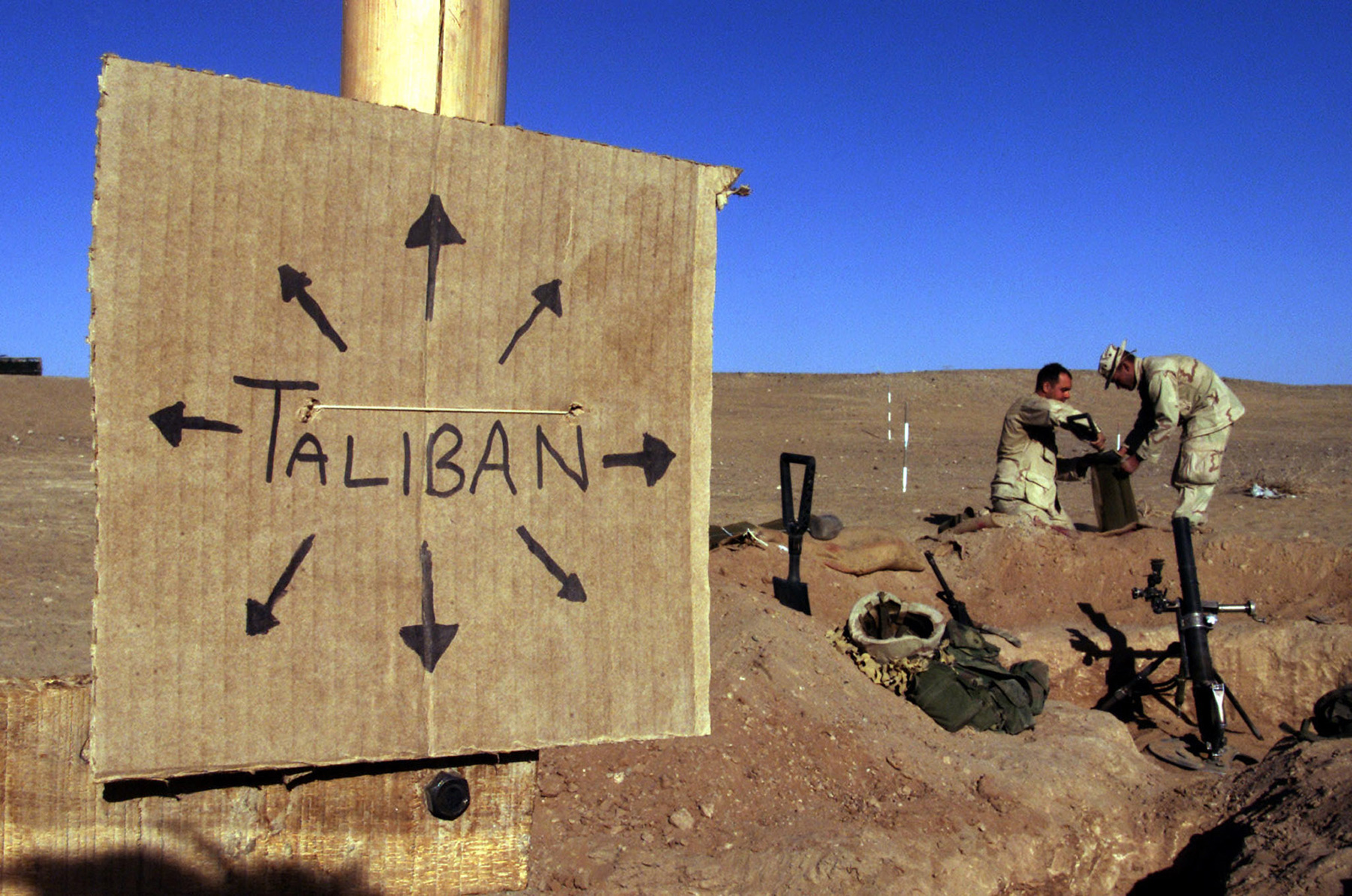
Turkey on the Path to the “Afghanistan, Lebanon, and Syria Syndrome”
-
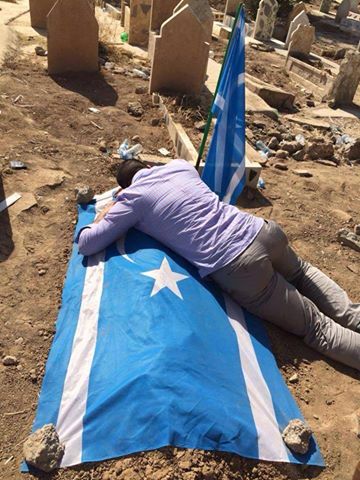
A massacre against the Türkmen by this terrorist organization ISIL in Emirli is imminent
A massacre against the Türkmen by this terrorist organization ISIL in Emirli is imminent
Sadly the Kurdish policy/regime toward the Türkmen people is no different from that of the Arabisation policy that was carried out against the Türkmen during Saddam Hussein’s reign.
Following the fall of Saddam Hussein’s government in 2003 and the control of Northern Iraq by the Kurdish Regional Government, the Iraqi Türkmen’s situation has deteriorated dramatically. At that time the Türkmen expected to see justice, equality and human rights but tragically the reverse has been happening. The lands of the Türkmen people have been confiscated and at times destroyed; many Türkmen have been kidnapped, arrested and assassinated. The Türkmen people have been subjected to tremendous pressure from the Kurdish party militias, to disregard their Türkmen identity and they are been forced to blend Kurdish society.
The current disregard of the Türkmen people’s situation is unacceptable in Türkmeneli. The Türkmen people are again been subjected to a most brutal campaign by a terrorist Islamic State in Iraq, the Levant (ISIL) militants, thousands of Türkmen were forced to flee the Türkmen District of Telafer, when jihadists overran the area.
The Türkmen people in the sub-district of Taze Khormatu, Tuz Khormatu and specifically the sub_district of Emirli has been under siege by the terrorist organization ISIL for the last two months. Their water, electricity, medical and food supply has been cut off and they have been living in horrific conditions. A massacre against the Türkmen by this terrorist organization ISIL in Emirli is imminent and tragically avoidable.
When thousands of the Yazidis religious minority were forced to flee Sinjar as the jihadists overran their area, this prompted an international aid operation and helped to trigger the US air strikes.
Türkmens are questioning why Britain, Germany, France, Italy, Canada, and the Czech Republic do not show this same solidarity/urgency towards the Iraqi Türkmen people. As over 100,000 Türkmen people have sought refuge as thousands of Türkmen are executed by the terrorist Islamic State (IS) militants.
Türkmen are also questioning why Germany, France, the Czech Republic, Italy, Canada, and Britain are not showing the same solidarity toward the Iraqi Türkmen in Emirli, who have been under siege for the past two months? Türkmens believe that the humanitarian aid should be distributed equally and fairly to all the Iraqi people who are fleeing Islamic militants in Northern Iraq.
The Türkmen and Christian people are left defenceless, after the occupation of the city of Mosul by the terrorist Islamic State militants and the retreat of the Iraqi army from Mosul and Kerkuk. The Kurdish armed forces, instead of fighting and stopping the State militants from occupying Türkmen villages around the city of Kerkuk, have used the sectarian chaos in Iraq to expand their autonomous territory to include Kerkuk.
Kerkuk sits on vast oil deposits, that could make the Kurdish region an independent state that many dream of in Iraq’s mountainous north and beyond, more viable. Türkmen question why Germany, France, the Czech Republic, Italy, Canada, and Britain did not stop the Kurdish Peshmerga from occupying the Türkmen city of Kerkuk without question their objective?
While the Islamic State militants have swept across northern Iraq, pushing back Kurdish regional forces, threatening the Kurdish regional Capital of Erbil and driving tens of thousands of Christians and members of the Yazidis religious minority from their homes, Germany, France, Czechs Republic and Britain have shown great empathy towards the Kurdish people.
Funnelling arms to the Kurdish Peshmerga forces by Britain, the United States and some European countries can start to change the dynamics in the region. The U.S. and EU’s provision of arms support for the Kurds is a good and positive step against the terrorist organization ISIL. However, this help should not only be given to the Kurdish people, the Türkmen people should also be given arms support. If the support is only limited to the Kurds, it could be an indication that there are other plans/incentives behind the decision of establishing a Kurdish state.
The U.S. and EU’s stance on supporting the Kurds could be motivated by plans to divide Iraq into three parts that consist of a Shiite region in the south, a strengthened Kurdish region in the north and a Sunni region in the central Iraq. This action would be totally rejected by the Türkmen people and civil war will be imminent if this plan is implemented by the U.S. and EU’s countries. In the view of many Türkmen, an independent Kurdish state would further destabilize the region and create new tensions, possibly also within the states neighbouring Iraq.
In the view of many Türkmen, ignoring the plight of the Türkmen could be seen to be part of a plan for creating a special region for Christians and Yazidis on the Nineveh plane. The Türkmen would be the biggest losers from the implementation of such a plan. The Türkmen have suffered a lot during and after the fall of the Saddam Hussein regime. Iraqi Türkmen, the third largest ethnic group affected by the violence in Iraq, should also be equally armed by Britain to fight the Islamic State in Iraq and the Levant.
The Türkmen people totally disapprove of sending weapons only to the Kurdish Peshmerga as these weapons could later be used by the Kurdish Peshmerga, to suppress the other ethnic groups in Northern Iraq. The Türkmen, Christian and Yazidis were betrayed by the Kurdish Peshmerga when they retreated from the Türkmen district of Telafer and sub- district of Beshir, Kusteppa, Biravchi, Makhmur and Sinjar.
The Kurdish Peshmerga left the Türkmen, Christian and Yazidis under the mercy of the terrorist organization ISIL. The Kurdish Peshmerga is fighting to protect their own state, not for the Iraqi people as is believed. The Türkmen are worried about the formation of an independent Kurdish state, as this would risk further destabilizing the region.
The Türkmen people of Iraq are extremely anxious to see the US and the West take action against the terrorist organization ISIL. However, the US, England, France, Italy, Canada, and Germany should show the same equality and empathy towards the Türkmen people. Iraqi Türkmen people are asking for arms/help/support from the West, asking for equal treatment to fight the terrorist organization ISIL.
Mofak Salman Kerkuklu
Türkmen Liberation Front
-
Turkey’s National Action Party Resists Peace With PKK
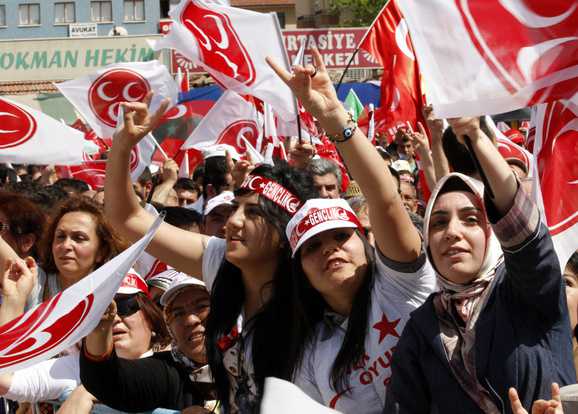
Supporters of the Nationalist Movement Party (MHP) make the grey wolf sign of the party during an election rally in Ankara, June 4, 2011. (photo by REUTERS/Umit Bektas ) ISTANBUL —Two dozen retired men, most in woolen blazers, turned their chairs to the café’s center table. A grey-haired member of parliament in a black overcoat had taken a seat, in from a light February rain following Friday prayers at a nearby mosque. Celal Adan, Nationalist Action Party deputy for Istanbul and a politician on the hustings, quickly came to the crux.
About This Article
Summary : The National Action Party (MHP) is poised to oppose peace with the Kurdistan Workers Party (PKK) on the grounds that it will compromise Turkish identity, writes Caleb Lauer.Author: Caleb Lauer
“Who is it that wants to break Turkey’s union? Not Turks. Not the state,” Mr. Adan told the men in this working-class Istanbul neighborhood. “The PKK has killed Turkish soldiers, and now they say ‘Let’s make peace’?”
No, he said. Turkey should not legitimize the Kurdistan Workers’ Party (PKK) by negotiating peace. “Those that strike our soldiers or at our flag … need to be tried in court.”
The Nationalist Action Party, known by its Turkish initials MHP, is the only party in the Turkish parliament opposed to the unprecedented movement under way toward ending the three-decade PKK insurgency that has killed more than 40,000 people.
Despite having just 51 of 550 seats in parliament and being often labeled “far-right” and “ultranationalist,” the MHP is neither fringe nor marginal. The party is the second choice of many voters, pro-government and pro-main opposition alike.
What was once the party of Turkey’s “sans-culottes” under Alparslan Turkes (the Cyprus-born army colonel and veteran of Turkey’s 1960 coup d’état, who founded the MHP in 1969) has become a party of better-educated and higher-earning voters, says Ali Carkoglu, political science professor and voter behavior specialist at Istanbul’s Koc University.
Devlet Bahceli, a 65-year-old former economics professor, has transformed the MHP since taking control in 1997 soon after Turkes’s death, moving the party toward the center and suppressing the violence that used to be committed in its name.
The MHP opposes talks with the PKK not because it fears losing votes to peace. In fact, the MHP does not really see increased support when there is increased conflict with the PKK, Mr. Carkoglu said. “The end of the PKK does not mean the end of the MHP. Rather, a more open and civilized Turkey could mean a stronger MHP.”
For many voters, peace may seem a bigger threat than insurgency. They fear settlement with the PKK and more cultural rights for Kurds will diminish the “Turkishness” of the state, something tantamount to toppling a pillar of national security.
“There is a bloodless war being fought in Turkey today … between those that would liquidate, and those that would preserve the national Turkish state,” said Serif Gul, a 32-year-old former senior official of the MHP and of the Ulkucu (Idealists), the party’s affiliated youth movement. (Mr. Gul’s father, Mehmet Gul, was also a senior Ulkucu and MHP MP). We spoke at what was once Ataturk’s home on the Sea of Marmara, today an enclave for Turkish MPs, near where airliners flew a few hundred feet over the sea on final approach to Ataturk Airport. While political Islamists, liberals, and “Kurdists” would eliminate the “Turkishness” of the state, Mr. Gul argued, the MHP and the Ulkucu movement (along with some leftist nationalists) fight to protect it. The MHP offers anxious voters a “guarantee” in this fight, Mr. Gul said.
The “Turkishness” of the Turkish state has long been seen as a precondition of the country’s national security. Continuing a policy of the Ottoman Empire’s last years, the Turkish Republic institutionalized the belief that only a common language, an idealized history, and Sunni Islam — all semi-purged of foreign, especially Arab, influence —could bind society together and prevent loss of territory. The Treaty of Sèvres of 1920 is still regularly invoked here to remind people exactly how foreign powers have wanted to divide Turkey.
At a concert in an Istanbul basketball arena on the weekend of the MHP’s 44th anniversary, groups of young men — Ulkucu members — were directed to their feet between songs by sharp-dressed leaders. In unison they shouted, “God is Great!” and “Martyrs are immortal! The fatherland is indivisible!”
By the snack bar, vendors sold MHP and Ulkucu merchandise — pennants, wristwatches, flags, adorned with grey wolves, Ottoman heraldry, and crescent moons in red, white, and turquoise, and pocket copies of Alparslan Turkes’s Nine Lights: The Ulkucu’s Handbook.
A small girl playing in the stands wore a MHP flag as a superhero’s cape. To the music, many waved the MHP/Ulkucu wolf’s head salute — index and pinky pricked into ears, middle fingers and thumb pressed into a snout; despite a grandfather’s best efforts, one toddler couldn’t quite manage it. Half the women wore headscarves that were chic, not traditional.
“Our society is breaking apart,” said Cihan Dabak, a software engineering student and Ulkucu member. Turkey faced threats, such as the PKK and pressure to recognize the Armenian Genocide — both, for Mr. Dabak, were just land grabs.
“The Turkish identity cannot be understood outside the conception of internal and external threats,” Jenny White, anthropology professor at Boston University, and author of Muslim Nationalism and the New Turks, said in a phone interview.
In this, many see racism. When “Turkishness” is seen as an instrument of national security, “others” in society — for example, Kurds, or Armenians — become potential internal national security threats susceptible to manipulation by external foreign powers looking to weaken the Turkish state, Ms. White explained. In Turkey, such suspicion has led to murder and hate crimes.
The MHP, predictably, says its policies have nothing to do with race, or discrimination. Race is too weak a concept for national security: race differentiates, culture unifies, Serif Gul said. In a society born of a multinational empire, “One of my ancestors could have easily been Greek or Armenian … Not everyone living in Turkey can be a ‘Turk’, but everyone can be embraced within Turkish culture,” he said.
The party makes no apologies for insisting Turkish culture must dominate Turkey’s society. Extending cultural rights to Kurds or a new constitution, as is currently being drafted, without reference to “Turkishness” is too risky, Mr. Gul said. “If we were Sweden, we could be the most democratic country in the world because our neighbors would be Norway and Finland.” Turkey’s neighborhood — consisting of Russia, Iran, Iraq, and Syria — does not allow such luxury.
The prospect of peace with the PKK is the most dramatic illustration that Turkey is coming to terms with its Kurdish identity. The fortunes of the MHP will be a key indicator of whether Turkey can integrate this with its Turkish identity.
Caleb Lauer is a Canadian freelance journalist covering politics, law, media, and business in Turkey.
Read more: http://www.al-monitor.com/pulse/originals/2013/02/turkey-kurdish-peace-plan-derailed-pkk-mhp-identity-conflcit.html#ixzz2MNIVYQ3D
-
MHP accuses Turkey’s government of enjoying own ‘Tulip Era’
ANKARA – Hürriyet Daily News
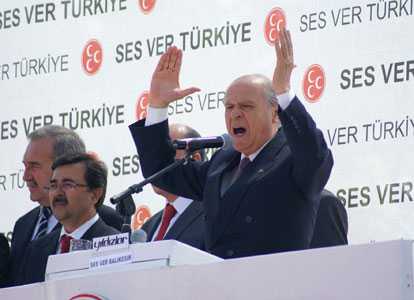
The AKP 'is focused on showing off. They are living a luxurious lifestyle and see everything as a bed of roses,' said the MHP chief. DHA photo The ruling Justice and Development Party, or AKP, has been enjoying its own “Tulip Era” marked by the distribution of wealth merely to its own supporters, the leader of Turkey’s main nationalist party said Monday.
Referring to the AKP’s slogan of “Let the stability continue,” the Nationalist Movement Party, or MHP, said there was no stability in Turkey except among the ruling party and its supporters, who are hoping to continue what he called their “Tulip Era.”
The Tulip Era was a period in the Ottoman Empire where the focus shifted toward pleasure and enjoyment.
The AKP “is focused on showing off. They are living a luxurious lifestyle and see everything as a bed of roses,” said the MHP chief.
“They have not ruled the country well,” said Bahçeli, adding that Turkey had serious economic and employment problems that had been hidden by the partisan press that supports the government.
“Society is not happy,” said Bahçeli, pointing to rising poverty and crime rates.
Prme Minister Recep Tayyip Erdoğan’s “spiritual state and chemistry will not allow him to serve for a third term. The ruling party needs to change, because there is nothing left they can do,” said Bahçeli.
Speaking in Balıkesir in his second election rally of the day, Bahçeli once again criticized the AKP for behaving in a way similar to the sultanate of the Ottoman Empire, especially during the Tulip Period, adding that this “magnificence” only benefited their supporters and not Turkish citizens as a whole.
via MHP accuses Turkey’s government of enjoying own ‘Tulip Era’ – Hurriyet Daily News and Economic Review.
-
What does the future hold for Turkey’s nationalists?
KEMAL CAN / HİLMİ HACALOĞLU
Milliyet
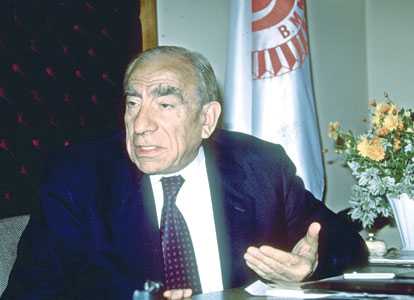
MHP founder Alparslan Türkeş was the most prominent figure of the nationalist movement in Turkey since the 1960s.
MHP founder Alparslan Türkeş was the most prominent figure of the nationalist movement in Turkey since the 1960s. Eleven years ago, Turkey’s conservative Nationalist Movement Party, or MHP, won a surprising election victory that lifted it into a coalition government with the then-ruling party. Today, following a poor showing in the Sept. 12 constitutional referendum, the party’s relevance is again a subject of heated political debate.
The nationalists and the MHP have been an influential force in Turkish politics since the early 1960s. Party founder Alparslan Türkeş, referred to by the nationalists as “başbuğ” (commander), was one of the early leaders of the May 27, 1960, military coup as a young colonel. Türkeş, who was court-martialed in 1945 on later-dismissed charges of “fascist and racist activities,” was expelled by an internal coup within the junta. He later joined the Republican Peasants’ Nation Party, or CKMP, and was elected its chairman. In 1969 the CKMP was renamed the MHP.
Türkeş took the rightist attitudes of predecessors such as Nihal Atsız, who is known for his explicitly racist views, and transformed them into a powerful political force. In 1965, Türkeş released a political pamphlet titled “Dokuz Işık Doktrini” (The Nine Lights Doctrine) listing nine basic principles that formed the core of the main nationalist ideology in Turkey: nationalism, idealism, moralism, societalism, scientism, independentism, ruralism, progressivism, populism, industrialism, and technologism.
Türkeş and the MHP also led the anti-communist vanguard in Turkey. Members of the party and its youth organization were heavily involved in the street clashes that were used as an excuse for the 1980 military coup. The MHP was shut down by the coup leaders and party executives, including Türkeş, faced trial.
Türkeş was kept under arrest for more than four years but was later acquitted and returned to politics. He was elected as a deputy in the 1991 elections, but the MHP failed to surpass the 10 percent electoral threshold in the next general elections, held in 1995.
Two years after Türkeş’ death, following a period of internal fights and conventions that threatened to tear the MHP apart, even party supporters did not expect much from the April 18, 1999, general elections. But under new leader Devlet Bahçeli, the MHP won an unexpected 18 percent of the votes, second only to Prime Minister Bülent Ecevit’s Democratic Left Party, or DSP.
The election boosted the importance of the MHP and its “ülkücü” (party traditionalists) in the political equation. But when the party failed to meet the 10 percent election threshold for parliamentary representation in 2002, people asked: “Where did the MHP ülkücü go?” and even “Is the MHP finished?” Many believed the country’s political actors and priorities were changing, leaving the MHP behind. In the July 22, 2007, general elections, though, the party topped 10 percent again, joining the winning Justice and Development Party, or AKP, and the main opposition Republican People’s Party, or CHP, in Parliament.
Challenges to the MHP’s relevance re-emerged following September’s constitutional referendum, in which the party failed to get the “no” votes it sought in many of its typically loyal precincts. Chairman Bahçeli, under fire for moving the party away from its grassroots, accused actors “from across the Atlantic” of plotting to destroy the MHP.
Prime Minister Recep Tayyip Erdoğan, who lobbied hard for a “yes” vote, thanked the “independent ülkücü” who voted in favor of the amendments, while the CHP, which also opposed the changes, questioned the MHP’s contribution to the “no” campaign. In the wake of the elections, many columnists have suggested new strategies for the MHP to make an “appropriate change.” The question “Is it over?” is on many people’s lips once again.
As the 2011 general elections approach, how the MHP’s traditional supporters will vote is a question of keen interest to all political parties. How deeply were the ülkücü affected by the referendum loss? Do they believe the solution to the party’s woes lies in change or in going back to its roots? Will they take to the streets again? Is the MHP in its death throes, or simply preparing for another resurrection? Are its areas of support within the country shifting? What advantages does the party hold and what challenges does it face going into the election?
To find out how MHP members would answer these and other key questions, daily Milliyet reporters Kemal Can and Hilmi Hacaloğlu visited 15 cities across the country to interview more than 100 people, from party administrators at the MHP headquarters to workers in the cafeteria, from academics to ordinary supporters. What they learned sheds light on how the ülkücü perceive the ongoing discussions about their party and what they themselves are saying about the future of the MHP.
-
Local Elections Herald a New Era For The AKP
Local Elections Herald a New Era For The AKP
Publication: Eurasia Daily Monitor Volume: 6 Issue: 61March 31, 2009By: Saban KardasTurkey’s local elections on March 29 produced mixed results, with the governing Justice and Development Party (AKP) emerging victorious, yet underperforming compared with earlier elections. The AKP received a 38.86 percent share of the vote, while the Republican People’s Party (CHP) and the Nationalist Action Party (MHP) gained 23.10 and 16.08 percent respectively. The AKP’s support fell from 46.6 percent in the 2007 general elections and 41.7 percent in 2004 local elections (www.ntvmsnbc.com.tr, March 30). While retaining its popularity within major cities, it failed to further expand this and lost several mayoral posts. The gains made by opposition parties raise the specter of imminent changes in Turkish politics.
Prime Minister Recep Tayyip Erdogan, acknowledging his party’s losses, emphasized that the AKP did not fall below its performance in the local elections in 2004. It received almost the total percentage of votes cast for its two rival parties (www.cnnturk.com, March 29). The representatives of the opposition parties, in contrast, referred to their increases in the share of the vote, and the “erosion” of the incumbent party’s popular support.
The results exposed wide regional variations and followed an apparent trend in previous elections: whereas the AKP controlled central Anatolia, the CHP and MHP were popular in the Aegean and Mediterranean coastal provinces as well as in the northwestern provinces in the Thrace region. Significantly, the MHP regained some of its past strength in central Anatolia, challenging the AKP’s dominance over center-right voters. In addition to the defeat it suffered vis-à-vis the pro-Kurdish Democratic Society Party (DTP) in the southeastern provinces, the AKP’s support also declined in some northern regions. The Islamist Felicity Party (SP), an alternative to the AKP for some conservative voters, also increased its vote to 5.17 percent.
The local elections marked the first decline in the AKP’s share of the vote since the general elections in 2002. Despite surpassing its major rivals by a clear margin, the psychological effect of this decline is undeniable. Previously, the party claimed to be the only viable choice for the electorate. However, a series of electoral victories arguably bred a sense of overconfidence, which left the AKP in general, and Erdogan in particular, open to accusations that they have grown insensitive to criticism, either from society or opposition parties, and developed an authoritarian style of leadership. Faced with losing popular support, the AKP will likely soften its discourse, and foster compromise with the opposition.
Turkish opposition parties, however, are now seeking to capitalize on the AKP’s apparently declining support, claiming that it has entered a period of rapid decay (www.ntvmsnbc.com.tr, March 29). Whether such drastic erosion is occurring remains to be seen, but the results may force the AKP to reconsider its policies. Indeed, Erdogan expressed dissatisfaction with the polls and admitted that the AKP must assess the causes of its decline. Meanwhile, he is expected to reshuffle his cabinet, possibly replacing some high-profile ministers involved in preparing the AKP’s discredited election strategy (www.cnnturk.com, March 29; www.ensonhaber.com, March 30). The AKP will also need to reevaluate its economic policies as well as the Kurdish question and the pursuit of political reforms.
Thus far, the government has ignored charges that the Turkish economy has been badly impacted by the global financial crisis. Although some of the AKP’s populist policies helped cushion the full effects of the crisis, economic considerations played a major role in the local elections. Particularly, the declining performance of the AKP in the Marmara, Aegean, and Thrace regions, as well as some Anatolian cities, reflected the impact of the crisis in Turkey’s industrial heartlands. In this context, the AKP will come under intense pressure to secure a loan from the IMF which it has tried to avoid, consequently leaving the country in a weaker bargaining position than before.
Moreover, the results represent a blow to the image of the AKP as an inclusive party, representing not only conservative Turks and Kurds but also liberal and secular voters. There appear to be limits to the AKP’s appeal to the Turkish people. Its failure to gain support within the western coastal provinces and in the Thrace region, and the traditionally less conservative central Anatolia, shows that the AKP has been unable to diversify its appeal. The DTP’s strong performance in the southeastern provinces is a setback for the AKP’s policies on the Kurdish issue. It shows that “identity politics” remains on the popular agenda, and the AKP’s policy of providing services and socioeconomic incentives alone cannot resolve the Kurdish problem. Crucially, the higher profile of the DTP suggests it cannot be ignored as a major stakeholder in any resolution of the Kurdish problem. Paradoxically, the AKP’s initiatives on the Kurdish issue, though failing to satisfy Kurdish voters, alienated some Turkish voters in the west, in turn boosting the MHP’s popularity.
The AKP has been a largely populist party, attracting votes from across the political spectrum. Since it is potentially losing ground to its rivals, it will come under pressure to address the deeper causes of these failures, or risk the further erosion of its popular support. Whether it can formulate consistent policies to address these multiple challenges, particularly over the looming economic crisis, will be an immediate and major test for the AKP’s government.
https://jamestown.org/program/local-elections-herald-a-new-era-for-the-akp/