Op-Ed Contributors
Turkey’s Gain Is Iran’s Loss
By ELLIOT HEN-TOV and BERNARD HAYKEL
Published: June 18, 2010
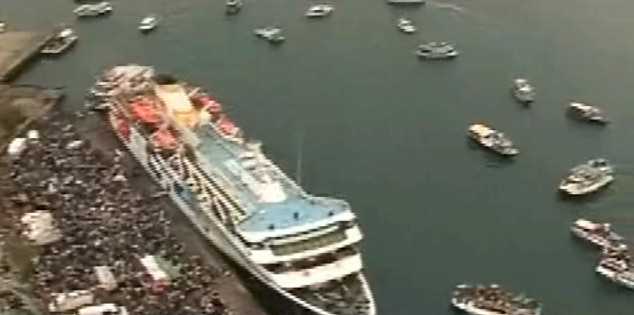
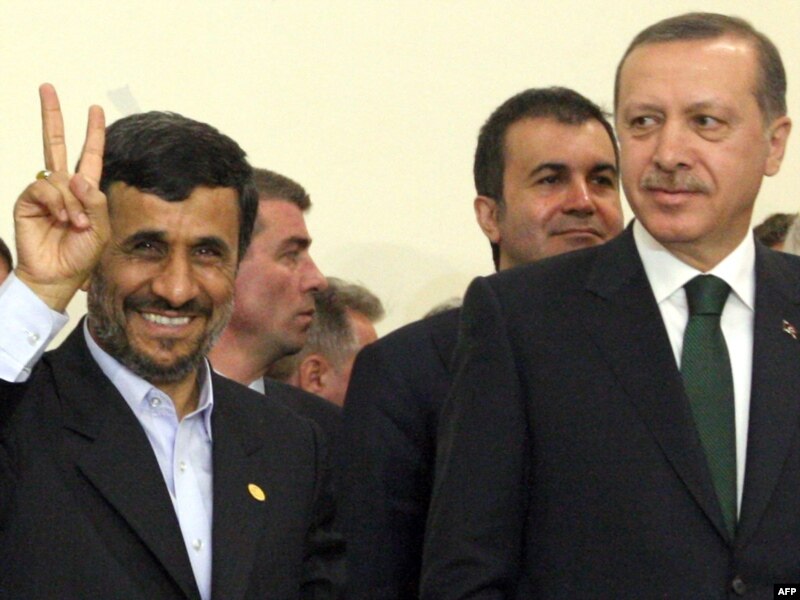
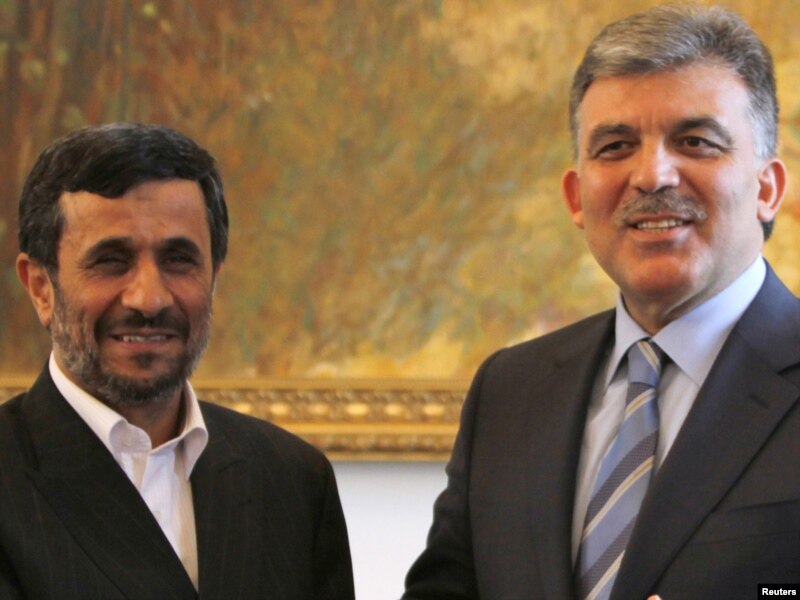
Princeton, N.J. SINCE Israel’s deadly raid on the Turkish ship Mavi Marmara last month, it’s been assumed that Iran would be the major beneficiary of the wave of global anti-Israeli sentiment. But things seem to be playing out much differently: Iran paradoxically stands to lose much influence as Turkey assumes a surprising new role as the modern, democratic and internationally respected nation willing to take on Israel and oppose America. While many Americans may feel betrayed by the behavior of their longtime allies in Ankara, Washington actually stands to gain indirectly if a newly muscular Turkey can adopt a leadership role in the Sunni Arab world, which has been eagerly looking for a better advocate of its causes than Shiite, authoritarian Iran or the inept and flaccid Arab regimes of the Persian Gulf. Turkey’s Islamist government has distilled every last bit of political benefit from the flotilla crisis, domestically and internationally. And if the Gaza blockade is abandoned or loosened, it will be easily portrayed as a victory for Turkish engagement on behalf of the Palestinians. Thus the fiery rhetoric of Turkey’s prime minister, Recep Tayyip Erdogan, appeals not only to his domestic constituency, but also to the broader Islamic world. It is also an attempt to redress what many in the Arab and Muslim worlds see as a historic imbalance in Turkey’s foreign policy in favor of Israel. Without having to match his words with action, Mr. Erdogan has amassed credentials to be the leading supporter of the Palestinian cause. While most in the West seem to have overlooked this dynamic, Tehran has not. President Mahmoud Ahmadinejad used a regional summit meeting in Istanbul this month to deliver an inflammatory anti-Israel speech, yet it went virtually unnoticed among the chorus of international condemnations of Israel’s act. On June 12 Iran dispatched its own aid flotilla bound for Gaza, and offered to provide an escort by its Revolutionary Guards for other ships breaking the blockade. Yet Hamas publicly rejected Iran’s escort proposal, and a new poll by the Palestinian Center for Policy and Survey Research found that 43 percent of Palestinians ranked Turkey as their No. 1 foreign supporter, as opposed to just 6 percent for Iran. Turkey has a strong hand here. Many leading Arab intellectuals have fretted over being caught between Iran’s revolutionary Shiism and Saudi Arabia’s austere and politically ineffectual Wahhabism. They now hope that a more liberal and enlightened Turkish Sunni Islam — reminiscent of past Ottoman glory — can lead the Arab world out of its mire. You can get a sense of just how attractive Turkey’s leadership is among the Arab masses by reading the flood of recent negative articles about Ankara in the government-owned newspapers of the Arab states. This coverage impugns Mr. Erdogan’s motives, claiming he is latching on to the Palestinian issue because he is weak domestically, and dismisses Turkey’s ability to bring leadership to this quintessential “Arab cause.” They reek of panic over a new rival. Turkey also gained from its failed effort, alongside Brazil, to hammer out a new deal on Iran’s nuclear program. The Muslim world appreciated Turkey’s standing up to the United States, and in the end Iran ended up with nothing but more United Nations sanctions. In taking hold of the Palestinian card, Prime Minister Erdogan has potentially positioned Turkey as the central interlocutor between the Islamic/Arab world and Israel and the West, and been rewarded with tumultuous demonstrations lauding him in Ankara and Istanbul. Meanwhile, the streets of Tehran have been notably silent, with Mr. Ahmadinejad’s regime worried about public unrest during the one-year anniversary of last summer’s fraudulent elections. Prime Minister Erdogan has many qualities that will help him gain the confidence of the Arab masses. He is not only a devout Sunni, but also the democratically elected leader of a dynamic and modern Muslim country with membership in the G-20 and NATO. His nation is already a major tourist and investment destination for Arabs, and the Middle East has long been flooded with Turkish products, from agriculture to TV programming. With Turkey capturing the hearts, minds and wallets of Arabs, Iran will increasingly find it harder to carry out its agenda of destabilizing the region and the globe. For Americans, it may be hard to see the blessings in a rift with a longtime ally. But even if Turkey’s interests no longer fully align with ours, there is much to be gained from a Westernized, prosperous and democratic nation becoming the standard-bearer of the Islamic world.
Elliot Hen-Tov is a doctoral candidate and Bernard Haykel a professor of Near Eastern studies at Princeton.
 "I can best describe it as the Turkish government being able to offer business class seats to any potential customer who wants to ally itself with Turkey, and the Iranians can offer a coach or economic class. I think the majority of people are going to be attracted to the business class rather than the other one, unless they have to."
If that assessment comes as a relief to Western diplomats fretting over Turkey's supposed defection, there may be a sobering corollary. Javedanfar fears the results of any renewed Iranian-Turkish rivalry will be greater efforts by the leadership in Tehran to acquire a nuclear-weapons capability.
"When it comes to economic power, when it comes to military power, when it comes to diplomatic position, Iran is inferior to Turkey," Javedanfar says. "So they are going to look at areas where they are superior and the only other one where they can gain an edge over the Turks, one of the very few areas, is the nuclear program.
"Turkey is not a nuclear power. Therefore, Iran would have even more of a reason and an excuse to become a nuclear power in order to gain an edge over their Turkish rivals."
Likely Launch Pad
The prediction may seem far-fetched, yet hardly more so than an article published earlier this year by the Jahan News website -- believed to be linked to the Iranian intelligence services -- that identified Turkey as the likely launch pad for a future war against Iran. Written by Farid Al Din Hadad Adel, grandson of Iran's supreme leader, Ayatollah Ali Khamenei, the article asked: "Which country can hope for the entry of its European and American friends into the arena of war, if it enters into war against us? The answer is clear. Turkey is the only option for the advancement of the West's ambitions."
The Islamic regime has a history of suspiciousness towards Turkey. In 2005, the Revolutionary Guards closed Tehran's newly built Imam Khomeini Airport for "security reasons" because a Turkish company had been awarded the contract to run it. The airport was only reopened after the contract was canceled and awarded to an Iranian consortium. In the same year, the Turkish mobile-phone operator Turkcell was stripped of a $2 billion contract giving it a stake in a private Iranian mobile network.
Murat Bilhan, vice chairman of the Istanbul-based think tank TASAM and who served as a Turkish diplomat in Iran, believes continuing Iranian disquiet over its Western neighbor has recently surfaced in its rejection of Ankara's offer of mediation in relations with the United States. Even the recent nuclear swap deal may have been accepted only because of Brazil's role, he suggests.
"Iran feels itself a little split off from the Western connections because it's in the hands of Turkey," says Bilhan. "They feel rivalry, as a competitor, and they would not like Turkey to be stronger than Iran. That's the feeling in Iran, in Iranian statesmen, in Iranian decision makers, policy planners, and such.
"So Turkey, for Iran, is, in a way, not a threat but something to get along [with], to share the same geography, not to create any problems, but not to be overwhelmed by."
Afraid Of Iran
A further source of potential friction could be Turkey's increasing closeness to Arab states in the Persian Gulf, most of which fear Tehran's nuclear activities, Bilhan says.
"There are some contradictions in the Turkish position in the sense that Turkey should be aware that the Arab nations in the Persian are too much afraid of Iran and they just feel threatened by the Iranian existence and Iranian ambitions in the region, especially their nuclear ambitions," Bilhan says. "So when Turkey supports the Iranian position, it might contradict its own Arab policy because the Arabs have enmity towards Iran."
Turkish officials argue that Turkey's geography and shared Muslim heritage make it uniquely qualified in the Western alliance to win Iran's trust. In private, they admit that negotiations with the Islamic regime can be fraught -- citing the Iranian political system's diverse power centers. They also say the two countries still have important differences, notably over Iraq.
"We are not defending Iran, we are looking after our own interests" one Turkish official, speaking on condition of anonymity, told RFERL. "We don't want to see a nuclear Iran in the military sense at all. Our aim in that is the same as other countries. It's just our approach that's different."
He added: "On Iraq, we don't see eye-to-eye with Iran at all. We want an all-inclusive government in Iraq made up Shi'ites, Sunnis, and Kurds, whereas Iran only wants a Shi'ite government. We are not always in parallel with Iran on many issues.
"But I don't think they should see us as a rival. The fact that we can talk to almost everyone, in contrast to them, means Iran should use us to try and get back into the international community. That's what we are trying to do."
"I can best describe it as the Turkish government being able to offer business class seats to any potential customer who wants to ally itself with Turkey, and the Iranians can offer a coach or economic class. I think the majority of people are going to be attracted to the business class rather than the other one, unless they have to."
If that assessment comes as a relief to Western diplomats fretting over Turkey's supposed defection, there may be a sobering corollary. Javedanfar fears the results of any renewed Iranian-Turkish rivalry will be greater efforts by the leadership in Tehran to acquire a nuclear-weapons capability.
"When it comes to economic power, when it comes to military power, when it comes to diplomatic position, Iran is inferior to Turkey," Javedanfar says. "So they are going to look at areas where they are superior and the only other one where they can gain an edge over the Turks, one of the very few areas, is the nuclear program.
"Turkey is not a nuclear power. Therefore, Iran would have even more of a reason and an excuse to become a nuclear power in order to gain an edge over their Turkish rivals."
Likely Launch Pad
The prediction may seem far-fetched, yet hardly more so than an article published earlier this year by the Jahan News website -- believed to be linked to the Iranian intelligence services -- that identified Turkey as the likely launch pad for a future war against Iran. Written by Farid Al Din Hadad Adel, grandson of Iran's supreme leader, Ayatollah Ali Khamenei, the article asked: "Which country can hope for the entry of its European and American friends into the arena of war, if it enters into war against us? The answer is clear. Turkey is the only option for the advancement of the West's ambitions."
The Islamic regime has a history of suspiciousness towards Turkey. In 2005, the Revolutionary Guards closed Tehran's newly built Imam Khomeini Airport for "security reasons" because a Turkish company had been awarded the contract to run it. The airport was only reopened after the contract was canceled and awarded to an Iranian consortium. In the same year, the Turkish mobile-phone operator Turkcell was stripped of a $2 billion contract giving it a stake in a private Iranian mobile network.
Murat Bilhan, vice chairman of the Istanbul-based think tank TASAM and who served as a Turkish diplomat in Iran, believes continuing Iranian disquiet over its Western neighbor has recently surfaced in its rejection of Ankara's offer of mediation in relations with the United States. Even the recent nuclear swap deal may have been accepted only because of Brazil's role, he suggests.
"Iran feels itself a little split off from the Western connections because it's in the hands of Turkey," says Bilhan. "They feel rivalry, as a competitor, and they would not like Turkey to be stronger than Iran. That's the feeling in Iran, in Iranian statesmen, in Iranian decision makers, policy planners, and such.
"So Turkey, for Iran, is, in a way, not a threat but something to get along [with], to share the same geography, not to create any problems, but not to be overwhelmed by."
Afraid Of Iran
A further source of potential friction could be Turkey's increasing closeness to Arab states in the Persian Gulf, most of which fear Tehran's nuclear activities, Bilhan says.
"There are some contradictions in the Turkish position in the sense that Turkey should be aware that the Arab nations in the Persian are too much afraid of Iran and they just feel threatened by the Iranian existence and Iranian ambitions in the region, especially their nuclear ambitions," Bilhan says. "So when Turkey supports the Iranian position, it might contradict its own Arab policy because the Arabs have enmity towards Iran."
Turkish officials argue that Turkey's geography and shared Muslim heritage make it uniquely qualified in the Western alliance to win Iran's trust. In private, they admit that negotiations with the Islamic regime can be fraught -- citing the Iranian political system's diverse power centers. They also say the two countries still have important differences, notably over Iraq.
"We are not defending Iran, we are looking after our own interests" one Turkish official, speaking on condition of anonymity, told RFERL. "We don't want to see a nuclear Iran in the military sense at all. Our aim in that is the same as other countries. It's just our approach that's different."
He added: "On Iraq, we don't see eye-to-eye with Iran at all. We want an all-inclusive government in Iraq made up Shi'ites, Sunnis, and Kurds, whereas Iran only wants a Shi'ite government. We are not always in parallel with Iran on many issues.
"But I don't think they should see us as a rival. The fact that we can talk to almost everyone, in contrast to them, means Iran should use us to try and get back into the international community. That's what we are trying to do."