Turkey, deliberately pushed into an “Afghanistan, Lebanon, and Syria Syndrome” by the ruling political forces and their American partners, is increasingly moving away from the fundamental pillars of the secular, laicist Republic and the state doctrine of Mustafa Kemal Atatürk. Atatürk envisioned a modern state, independent of origin, ethnicity, or religious affiliation.
The fact that U.S. support and the courting of Islamists represent a fundamental and massive issue for European security architecture is still not widely understood within the EU.
It is no coincidence that in March 2025, U.S. President Trump appointed Thomas J. Barrack as U.S. Ambassador to Turkey, who publicly promoted the religion-based legal order of the “Millet system” – an Ottoman-era framework that governed political leadership based on ethnicity and religion – as a model for the entire region.
“Divide et impera” – divide and rule – is the guiding principle of U.S. foreign policy, whether in the Ukraine conflict, the Middle East, or Turkey. Henchmen, opportunists, and accomplices of this disastrous imperialist policy are plentiful – in the EU, in Turkey, in the Arab world, and in Latin America. Remote-controlled statesmen and their political cabinets, Islamists in pinstripe suits, or former murderers and terrorists – who are suddenly and transparently declared as respectable politicians and Western interlocutors – lay the groundwork for the sellout of their own countries (while enriching themselves and their corrupt circles), and are the reason why millions are forced to flee.
Who ends up dealing with the refugees and the negative consequences of these developments? The EU and its member states – to varying degrees and with different national implications.
U.S. policy has repeatedly demonstrated – both in the past and present – where its loyalties lie and its willingness to finance and arm Umayyad-Sunni clerical Islamists. This U.S. state doctrine is a root cause of many of the conflicts and wars that are the result of a mix of ignorance and calculated strategy.
Something is brewing on Europe’s doorstep – in Turkey – that will, in the foreseeable future, crystallize into a massive security disaster for us Europeans. A concrete example from Turkey:
Under the guise of peace negotiations orchestrated by U.S. policymakers, discussions have taken place with the ruling AKP, the far-right MHP, the clerical-fascist SP, and the Kurdish terrorist organization PKK. At their core, these negotiations aim to transform Turkey into a federal system, fragmented along ethnic and religious lines.
A statement by Devlet Bahçeli, leader of the Nationalist Movement Party (MHP) – “The President should have two deputies, one Kurdish and one Alevi” – has caused political tension and indicates the direction things are heading. Dividing Turkey along ethnic and religious lines paves the way for the Afghanistan, Lebanon, and Syria Syndrome. This will have serious consequences for Europe’s security structure and our societies.
What happened before the Alevi initiative within the police?
Journalist Tolga Şardan wrote in his T24 column that after Ali Yerlikaya took office as Minister of the Interior, a decree was issued that removed several Alevi provincial police chiefs from their posts.
Regular readers of Büyüteç (“Magnifying Glass”) had already learned about the debate over an “Alevi Initiative” triggered by Bahçeli’s statements on June 20.
Since then, a sense of anxious anticipation has spread within the Alevi community. At a time when the idea of a “terror-free” country was being strongly emphasized, the debate resonated widely within both the AKP and MHP.
The most significant statement so far came from MHP leader Devlet Bahçeli.
Bahçeli’s claim – picked up by journalist İsmail Saymaz – that “one of the vice presidents should be Kurdish and the other Alevi” sparked an unexpected public reaction. Some viewed it as a step toward the “Lebanonization” of the country. Supporters of this view see Bahçeli’s proposal as an official acknowledgment of an ethno-religious division.
In response to the criticism, Bahçeli stated:
“At a time when Turkey is progressing step by step, the idea was considered that one of the vice presidents could be Alevi and the other Kurdish. Associating this with Lebanon is a distortion and deliberate misdirection!”
But beyond the “Lebanon aspect,” the real question remains:
To what extent are appointments in the state apparatus based on merit (loyalty vs. qualification)?
Let’s be honest: If appointments were truly based on merit, Bahçeli’s proposal wouldn’t even be necessary. It wouldn’t matter what worldview, religion, denomination, or ethnic background someone has.
Let me now give a revealing recent example of what has already occurred on this path.
The institution in question – as you might suspect – is the police force.
After the 2023 elections, Ali Yerlikaya took office as Minister of the Interior and issued a sweeping decree replacing many provincial police chiefs appointed by his predecessor. Among them were four Alevis. While some chiefs were simply reassigned, these four Alevis were directly recalled to the ministry (“sidelined”). Yerlikaya’s aim was to replace the heavily criticized personnel associated with his predecessor Süleyman Soylu. He largely succeeded – many of Soylu’s affiliates lost their positions. However, the four Alevi chiefs were not part of Soylu’s inner circle. On the contrary, they were known within the police force for their competence and integrity.
They belonged to the group that the government turned to after the December 17–25, 2013 corruption scandal, asking them: “Help us rid ourselves of the Gülen movement.” These officers were also loyal to Atatürk’s principles. Yet, because they were appointed during Soylu’s tenure, they were wrongly lumped in with his faction. Currently, there is not a single Alevi provincial police chief left.
And it didn’t stop there:
Among the foreign police liaison officers during the Soylu era, there were also three Alevis. After returning to Turkey – along with other attachés – only these three Alevi officers were treated differently and not reassigned to new international posts like their colleagues. They reported their legitimate complaints to senior management.
Eventually, they – along with other “recalled” Alevi officers – were reassigned to the same department, the Inspection Board (Teftiş Kurulu).
Even if the police leadership won’t admit it publicly – this is the reality. One would have hoped that the MHP leadership would have stood up for these police officers – even before the talk of an Alevi initiative. That they would have advocated for appointments based on merit, regardless of denomination or worldview. But the MHP apparently preferred to support officials with questionable pasts – even those under judicial investigation – instead of defending the rights of capable Alevi officers.
After Soylu, Yerlikaya is now also surrounded by MHP-affiliated actors who clearly influence him. So if an Alevi initiative is being discussed and Bahçeli is following developments, then the MHP leadership should lead the way in implementing genuine performance-based fairness (loyalty vs. competence).
Only in this way can positions be assigned to capable individuals, regardless of religious or ethnic background. The same, by the way, applies to the AKP.
Tag: islamist autocracy
-
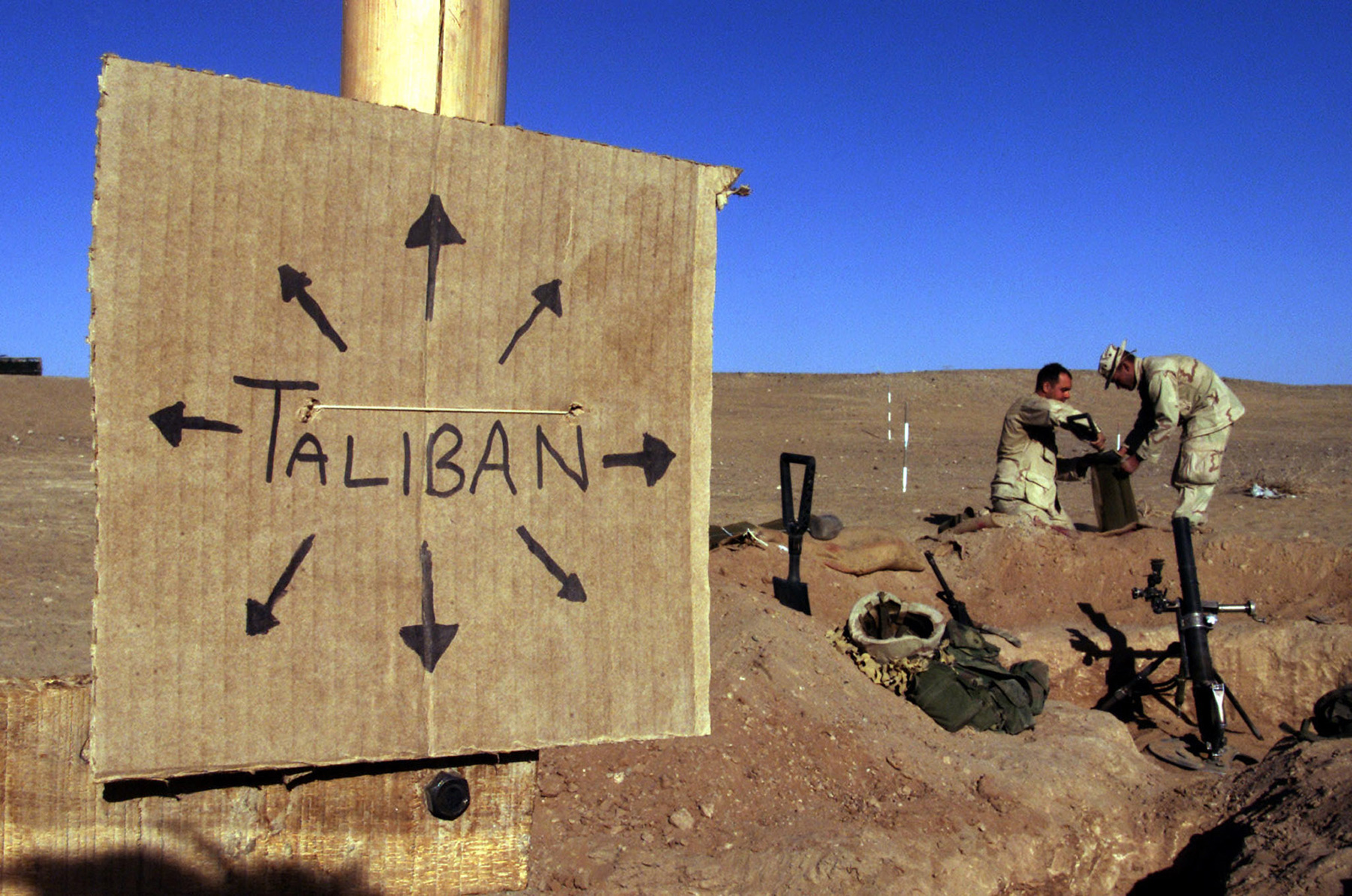
Turkey on the Path to the “Afghanistan, Lebanon, and Syria Syndrome”
-
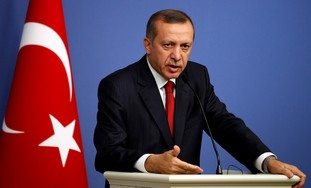
Turkey: Another emerging Islamist autocracy
By ISI LEIBLER10/24/2012 22:45Candidly Speaking: Bernard Lewis predicted that Turkey would evolve into an aggressive Islamist dictatorship and could become the greatest threat to Israel. Alas, his prediction about Turkey is being realized.
Photo: REUTERS/Umit BektasBernard Lewis, one of the world’s greatest experts on the Islamic world, told me a few years ago that the emerging younger Iranian generation and the alienated middle class would bring about regime change. However, he also predicted that Turkey would evolve into an aggressive Islamist dictatorship and could become the greatest threat to Israel.Alas, his prediction about Turkey is being realized.
When, 12 years ago, Recep Tayyip Erdogan assumed the reins of leadership in Turkey, many expressed concern that beneath the veneer of moderation and commitment to a fusion of moderate Islam and democracy, the real Erdogan was a fanatical Muslim whose objective was to transform Turkey into an authoritarian Islamic state. They were vindicated.
The military, which controlled the nation since Kemal Ataturk created a secular Turkish Republic in 1923, undoubtedly displayed autocratic tendencies in the course of its relentless determination to suppress Muslim extremism. Yet in terms of freedom of speech and democratic process, the situation today is significantly worse than before Erdogan.
Erdogan imprisoned thousands of Turkish citizens on spurious grounds without adequate trials; one in four former Turkish generals is currently languishing in prison; journalists, nonconforming academics and politicians have been summarily arrested; dissenting newspapers were closed down.
To some extent, leaders can be judged by their associates.
Erdogan proudly accepted a “human rights award” from the late Libyan tyrant Muammar Gaddafi and welcomed as his guest Omar Bashir, the genocidal leader of Sudan, a certified war criminal responsible for the deaths of hundreds of thousands of his own citizens.
Erdogan denies that Hamas is a terrorist organization, referring to its adherents as heroic liberation fighters and treating visiting Hamas head Ismail Haniyeh virtually like a head of state. Last month he invited the other Hamas leader, Khaled Mashaal, to be his personal guest of honor at a state Iftar dinner to mark the end of Ramadan.
Erdogan also expanded Turkish diplomatic ties to the most radical Muslim terrorist regimes and organizations, including until recently the Syrians and the Iranian ayatollahs who he continues to insist are entitled to become a nuclear power. Now having parted ways with Assad, he has closely allied himself with Egyptian President Mohamed Morsi of the Muslim Brotherhood.
Clearly his objective is to emerge as the popular leader of a neo-Ottoman Sunni Muslim arc.
To promote this objective, he has consciously exploited popular hatred of Israel as a vehicle by which to gain widespread support from the Arab masses.
To this end, he has transformed Turkey’s former close alliance with Israel into one of aggressive confrontation and demonization, emerging as one of the leading Arab states directing hostility against the Jewish state.
The first public display of this behavior was his bitter and contrived confrontation of President Shimon Peres at the World Economic Forum in Davos in January 2009. Millions of television viewers saw him excoriating Peres over alleged Israeli war crimes and then dramatically storming out of the conference.
The deterioration in Turkish-Israel relations climaxed in 2010 when nine members of the IHH, a Turkish government-sanctioned jihadist terrorist group, were killed on board the Mavi Marmara, a Turkish boat in the Gaza “peace” flotilla, after having attacked the IDF boarding party with metal bars, clubs and knives.
An independent Israeli commission of inquiry vindicated the IDF actions as self-defense. A separate UN commission ruled that while there may have been excessive violence, the Israeli action was entirely consistent with international law.
However, Erdogan exploited this incident to intensify the confrontation with Israel. He demanded that the Israeli government apologize, pay restitution to families and unconditionally lift the blockade on Gaza.
Seeking to ease tensions, the Israelis expressed regret at the loss of lives and, without accepting blame, sought to reach an accommodation including a rumored offer to pay $6 million to families of the victims.
But it soon became clear that Erdogan was seeking confrontation rather than compromise.
The Turkish government downgraded its diplomatic representation and intensified its global campaign to demonize Israel, seeking to have it barred from participating at all international gatherings.
Last month, on the second anniversary of the flotilla, the Turkish High Court issued indictments against Israeli military officers for their alleged involvement in the incident, pronouncing life sentences on the former IDF chief of staff Gabi Ashkenazi and other military leaders.
Campaigns against Israel were accompanied by intensification of anti-Semitic propaganda in the government- controlled media which included ghoulish television dramas (Valley of the Wolves) portraying Israelis as dealers in body parts, murderers of innocent children and other foul criminal activity. Not surprisingly, Turkish opinion polls reflect a 76 percent negative attitude towards Jews.
Erdogan has been especially viral in his denunciation of Israel’s targeted assassinations of terrorists. Yet when a number of Syrian shells errantly crossed his border, he had no hesitation in launching a brutal military attack, in stark contrast to Israel’s reluctance to maximize its deterrent capabilities in response to missiles continuously being launched against Israeli civilians from Gaza.
Nor does Erdogan display any scruples in employing the fiercest means to suppress protests or efforts by the Kurdish minority to achieve greater autonomy or independence.
One of the most disconcerting aspects of this confrontation is that despite his concerted campaign to delegitimize Israel, Erdogan has successfully forged a close alliance with President Barack Obama, who describes him as “an outstanding partner and an outstanding friend on a wide range of issues.” Erdogan reciprocates, stating “from the moment Barack became president, we upgraded the status of our relations from a strategic partnership to a model partnership, on which he also placed a lot of importance.”
Indeed, following pressure from Turkish Foreign Minister Ahmet Davutoglu, Obama agreed to bar Israel – a NATO partner country and member of NATO’s Mediterranean dialogue – from participating in a NATO summit which took place in Chicago.
Turkey also demanded that NATO intelligence information be denied to Israel.
Likewise, Turkey succeeded in excluding Israel from a special meeting of the World Economic Forum. More outrageously, Obama caved in to Turkey’s demand that Israel – the Western country which has suffered more terrorism than any other – be barred from a global forum on counterterrorism.
Israel can do little to lessen the tension. Those who suggest that by prostrating and groveling towards Turkey Israel would overcome this enmity are naïve and misguided. In the context of an aggressive Islamist government such behavior conveys weakness and surrender and would only further embolden Erdogan into making even greater demands. If we cannot generate friendship it is far better that we command respect.
However, the Turks would hesitate to demonize and delegitimize us if they believed that they would be penalized. We could surely expect our principal ally, the United States, to stand firm and not kowtow to Turkish efforts to isolate or demean us.
The writer’s website can be viewed at www.wordfromjerusalem.com.