Tag: Iraqi Turkmens

  • Yalman haceroğlu interviews Turkmeneli party leader Riyaz sarıkahya

    Yalman haceroğlu interviews Turkmeneli party leader Riyaz sarıkahya

    Yalman Haceroğlu interviews Turkmeneli Party leader: This is what made Kirkuk a focus of political conflicts

    • The crises that Kirkuk suffers related to the policies of the Kurdish parties
    • We presented in the Turkmen Eli Party the Kirkuk province Project, which received great support.
    • The best solution for the administration of Kirkuk is to form the Kirkuk province to end the conflicts.
    • The majority of the Turkmen parties are formal, far from party specifications, structures and political activities
    • The Turkmen people became the subject of marginalisation because of the weakness of the Turkmen parties and the media
    • Electoral laws must be enacted to achieve fair representation of the Turkmen in the government
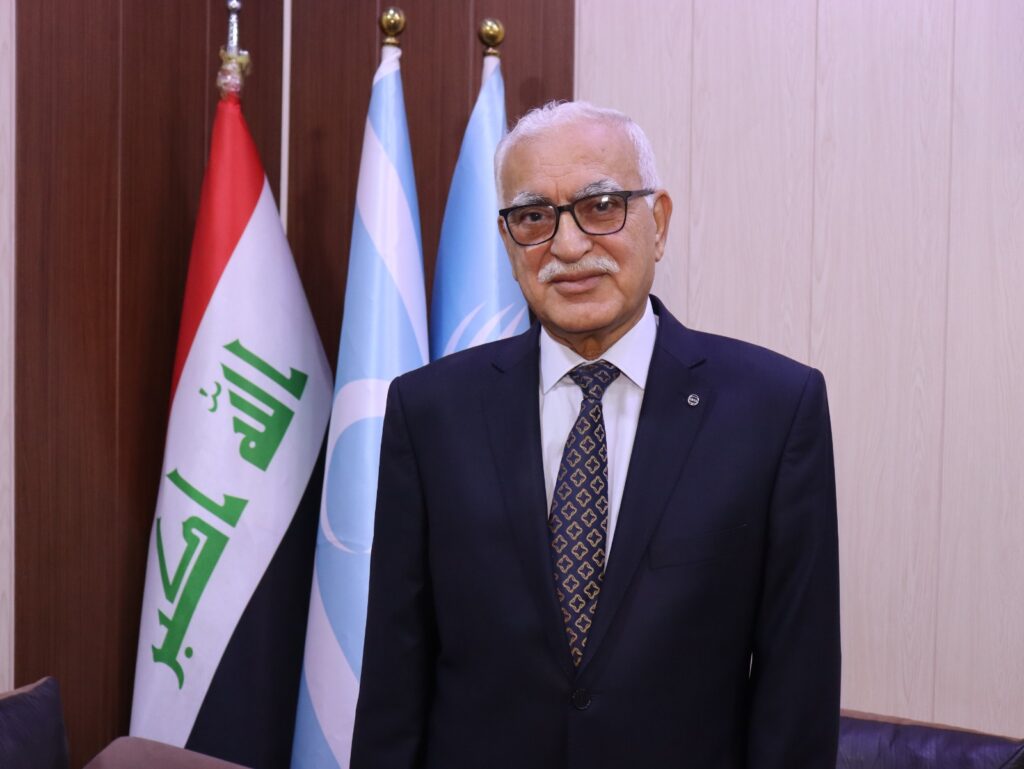
    The leader of Turkmeneli party leader Riyaz Sarıkahya

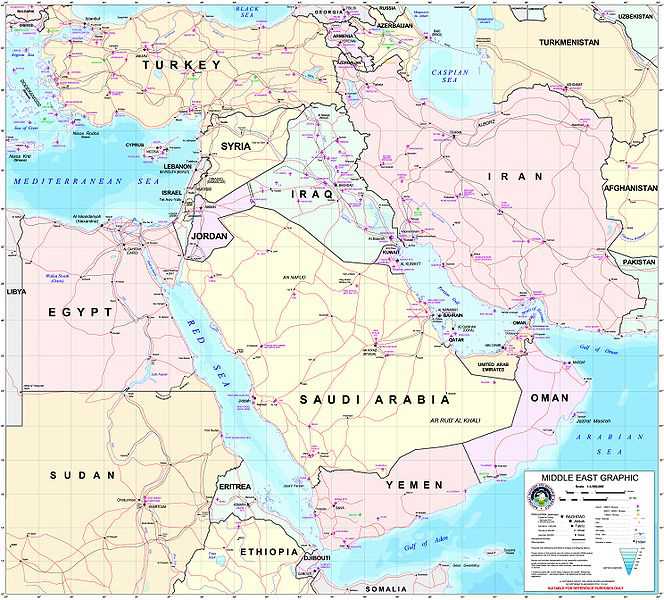
    Kirkuk city, which is being discussed in international forums for its underground energy and geographical location, has become the subject of disputes between local political forces and is capable of producing crises to be available for regional powers to intervene . What attracts attention and attention is that this city has been exposed to demographic change policies before and after 2003 and continues to this day.

    To shed light on the sequences of events and crises that have affected this city, we interview the leader of the Turkmeneli Party, Engineer Riyaz Sarıkahya .

    Welcome to 180 Investigations

    1-Why has Kirkuk city become the subject of demographic change policies since the seventies of the last century until now?

    Because Kirkuk was the main source of Iraqi oil exports until the seventies of the last century.

    For this reason, the Kurdish parties were trying to affiliation Kirkuk to their region that was to be established at that time to achieve a financial source for their region .

    In return, the central governments’ attempts to ensure and continue the dominance of Kirkuk brought many many Arab citizens to Kirkuk and carried out Arabization operations in the city that continued until 2003. After the Kurdish parties took control of the administration in Kirkuk, they brought many many Kurdish citizens to the city in order to create a balance with the Arab element that was brought during Saddam’s rule. This process continued until 2017, when the federal government took control of Kirkuk and exploited this control to bring hundreds of thousands of Arab citizens from other governorates such as Salah al-Din and Diyala to the city of Kirkuk in a tangible and clear manner, which led to the Arabization of the city of Kirkuk for the second time.

    All these attempts led to a demographic change in the city of Kirkuk, which had a Turkmen identity for hundreds of years.

    2- Do you think that the crises that chase the city of Kirkuk are crises fabricated by local political forces that rely on international or regional powers?

    The main reason for the attempts to change the demographics of Kirkuk city was primarily due to the views and policies of the local Kurdish parties, and there were no regional reasons and the impact of the regional policies of Kirkuk was minimal. However, during the liberation of Iraq from Saddam, the US administration granted the administration of Kirkuk city to the Kurdish parties as a reward and honor for their positions and cooperation with the US forces during the overthrow of Saddam Hussein’s regime, and this US policy led to opening the way for the implementation of the Kurdification policy for Kirkuk city from 2003 to 2017.

    3- As the Iraqi Turkmeneli Party, have you presented projects related to Kirkuk city politically, economically and socially?

    We in the Turkmeneli. Party presented (Kirkuk Region Project) which received great support from many of the political parties in Kirkuk. A request for a referendum on Kirkuk’s regionalization was submitted to the federal government in early 2006 after more than a third of the provincial council members signed, but the federal government did not meet this constitutional request for fear of the Kurdish parties at that time because the Kurdish parties were requesting a referendum on annexing Kirkuk to the Kurdistan Region based on Article 140.

    On the social side, we presented the Kirkuk Council of Elders project to consolidate relations between the components.

    4- In your political view, as you are experienced in Turkmen politics, what are the realistic solutions derived from the essence of the city for the Kirkuk crisis?

    We see that the ideal solution for administering Kirkuk is to form a Kirkuk Region, which ends the conflicts between the Kurdistan Region and the federal government on the Kirkuk issue. And to form a joint rotating administration and distribute key positions equally among the components

    5- How do you view the reality of the political activity of the Turkmen parties to preserve the identity of Kirkuk and fixed in the literature of the Turkmeneli Party?

    The majority of the Turkmen parties are far from the specifications and compositions of the parties and political activities, but rather they are parties of title and formality and headquarters in the first degree and are artificial for personal purposes and calculations.

    Therefore, these parties lack political activities and influences. Despite this, there is a section of the Turkmen parties that have a history of struggle against the Saddam regime and have honorable and influential positions and political activities that represent the Turkmen movement. Thanks to these real and basic parties, the federal, local, regional and international governments have made it necessary to take into account the Turkmen component in political equations, whether in Kirkuk, Iraq or the Kurdistan Region. At the forefront of these parties is the Turkmeneli. Party, which has political and administrative projects that concern Kirkuk, the region and Iraq.

    6- How do you read the relationship of the Turkmen parties with each other first and with the central government?

    The relationship between the Turkmen parties is a natural relationship based primarily on personal relationships between the officials of these parties rather than political and methodological points of view. However, during the election process, there are some electoral cooperations between these parties.

    7-Is there marginalisation and exclusion of the Turkmen from the political process in Iraq? What are the reasons and factors?

    This marginalisation varies from one stage to another, but it continues with a difference in percentages from one stage to another. The most prominent of this marginalisation is in the leadership of the High Electoral Commission in Baghdad and other governorates, which creates an opportunity for the Turkmen parties to lose in the elections and allows for a lot of fraud for non-Turkmen parties in the elections. There is marginalization in the Council of Ministers and the leadership of the police and army, contrary to Article 9 of the Iraqi Constitution. The main reason for this marginalization is the silence of the Turkmen parties and the Turkmen media and their failure to address this deliberate marginalization for the personal calculations of some of these parties and candidates at the expense of the interests of the Turkmen people. The silence of the Turkmen media and their failure to address this deliberate marginalization on these violations led to the creation of an opportunity for other components to seize the rights of the Turkmen people.

    8- How can the marginalisation of the Turkmen from the political process be eliminated?

    It will be through enacting electoral laws that stipulate fair representation for the Turkmen in line with the population size, which according to the 1977 statistics organized by the racist government was 6%. Therefore, we demand as a maximum the application of this percentage for fair representation in the federal government and its institutions, especially in the army, police, security and foreign agencies. And achieving a percentage of 32% in each of Kirkuk and Erbil, 20% in Nineveh and Salah al-Din, and 10% in Diyala and Baghdad governorates. And enacting laws based on Article 125 of the Iraqi Constitution regarding the rights of the Turkmen.
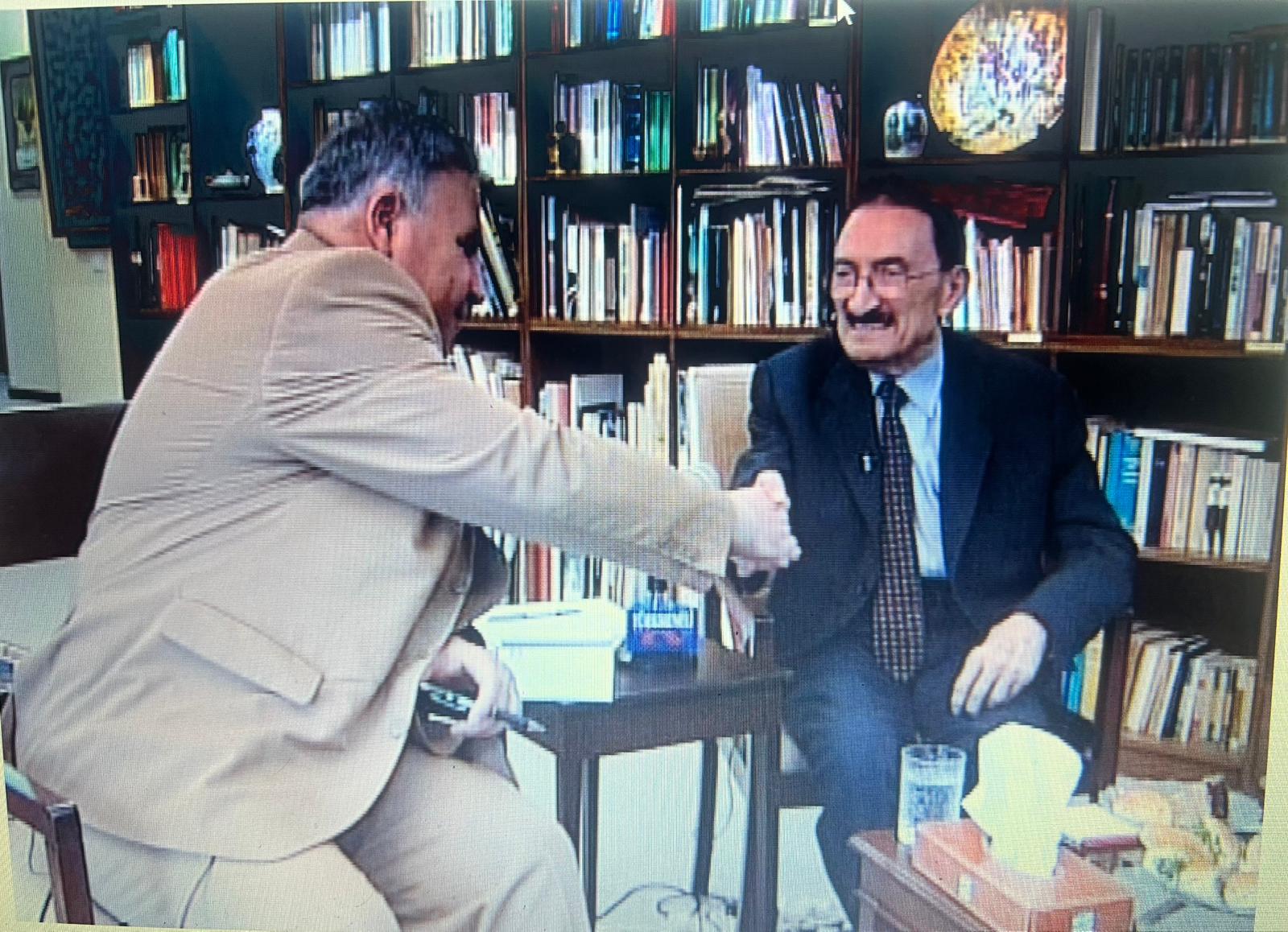
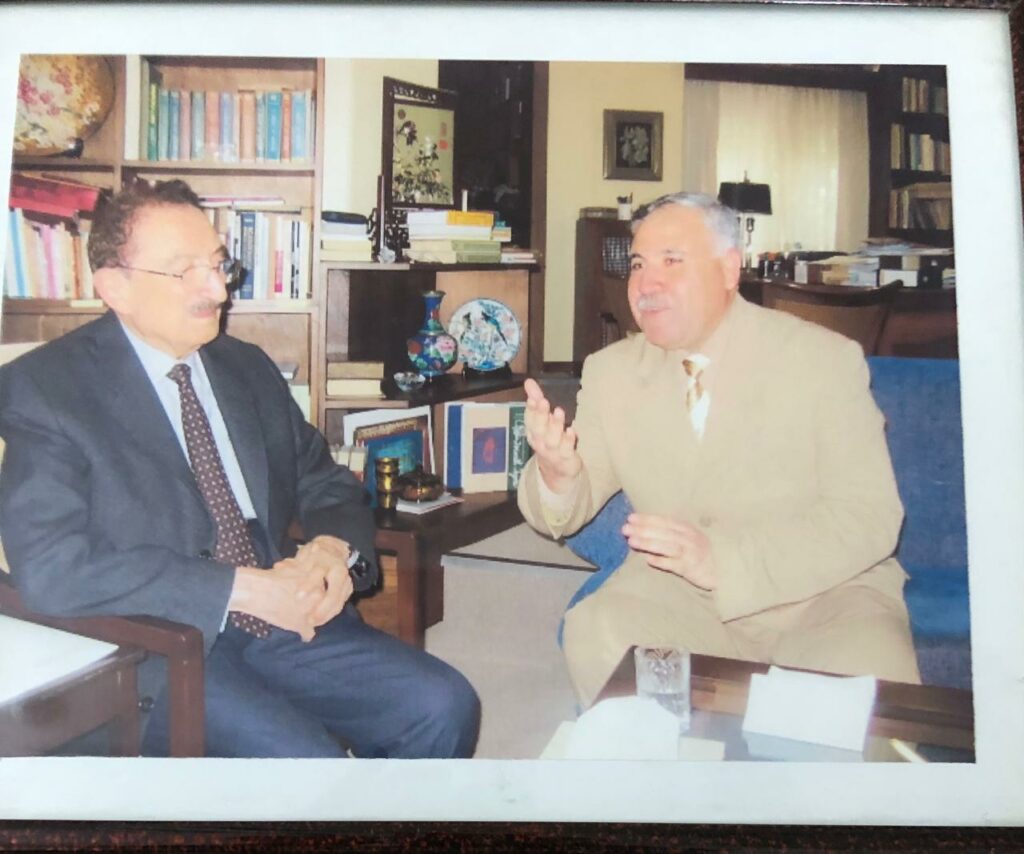
  • Bulent Ecevit, Saddam Hussein and Turkmen issue

    Bulent Ecevit, Saddam Hussein and Turkmen issue

    My journalist journey extends to more than 25 years, starting from my capital Baghdad, which is the center of my culture and the source of my academic achievement and my beginnings for journalistic work by passing through the capitals of states such as Cairo, Amman, Damascus, Ankara ,Baku, Nicosia and Washington.

    During this journalist trip, God enabled and helped me to interview international politics ,thinkers And some presidents of state, ministers and diplomats, Iraqis, Arabs, Turks, Americans and the British.

    However, this trip sometimes brought me some troubles from the closed minds and the mercenaries, but my passion for my profession gave me the continuity in the journalistic work.

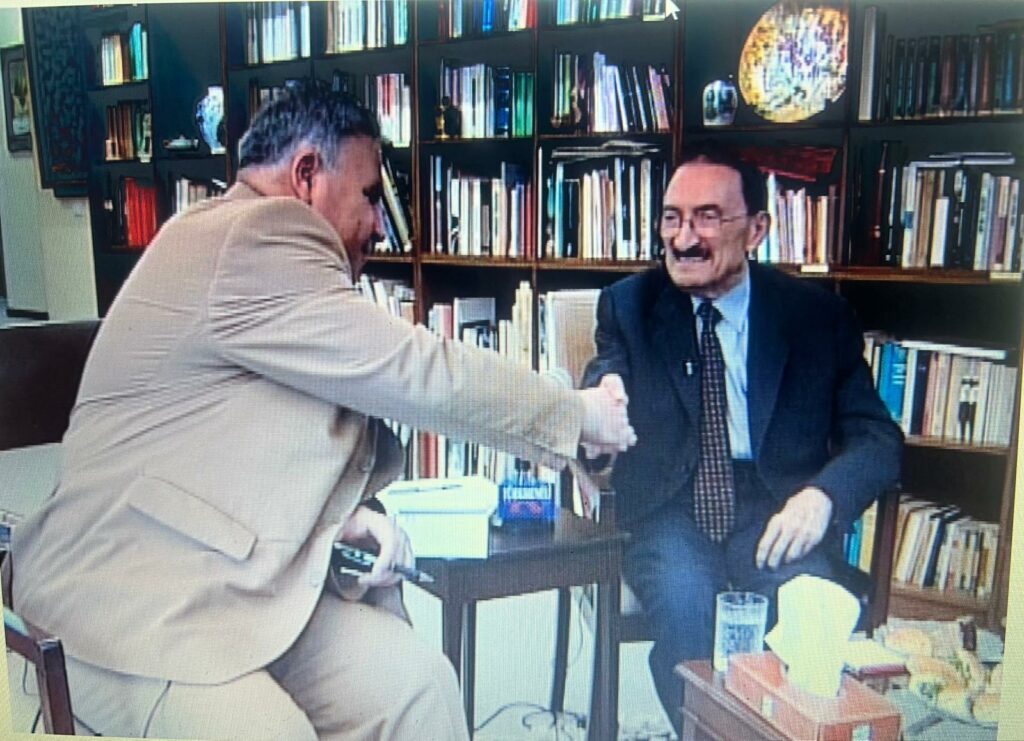
    Among the dozens of television interviews that I conducted and I can’t express and reveal them with a few words, which left inside me a passionate basis for the press and media field, is my distinguished and historical meeting with former Turkish Prime Minister Bulent Ecevit in 2004 in his house in the Oran district of the Turkish capital, Ankara.

    Bulent Evevit , who was born in 1925 in Istanbul and died in 2006, and his presidency took over the ministers of Turkey for different periods until 2002 .He was not only a political man, but was an author, poet, writer and translator.

    He graduated from Robert American College in Istanbul in 1944, where he studied English and literature. During interview ,Bulent Ecevit was speaking Turkish literary language in elegant words and political phrases characterized by depth and Easter, and he was the last press interview in his political life.

    Bulent Ecevit was an accomplished politician who played an important role in Turkish and international policy, When he was prime minister in 1974 ,he led the liberation of the Turkish island of Cyprus which was called the Cyprus peace process .. He was also more popular politician, as he described as popular Ecevit due to his sympathy and solidarity with workers and peasants.

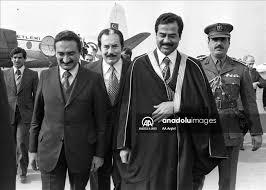
    The meeting I held with his excellency carries many meanings, and it was a historical document concerning the Turkmen people in Iraq. During the interview Bulent Ecevit mentioned about the number of visits to Iraq and his meeting with former Iraqi President Saddam Hussein. He discussed that he met Saddam Hussein three times for a period of three hours at a time, and that was before, during and after the first American attack in the first Gulf war (the eighties and nineties of the last century).

    Here, in one of his meetings with Saddam Hussein, Bulent Ecevit revealed the controversial topic, that related to the Turkmen people in Iraq and how Saddam Hussein intensified and raged when he defended and demanded the rights of Turkmen in Iraq.

    We will now narrate some of the important dialogue excerpts that took place between me and Mr. Bulent Ecevit , the former Turkish Prime Minister in Ankara, on 2004 on the issue of his defense of the Turkmen rights upon his meeting with former Iraqi President Saddam Hussein.

    Q/ Mr.Prime Minister … As one of the most prominent politicians in Turkey … You met with former President Saddam Hussein and you discussed with him the conditions of the Turkmen in Iraq, and you defended their rights … Can we return to that date and know the details of that meeting?
    A/ Of course, I met Saddam Hussein three times for a period The year … Saddam spoke to me about the damage to Iraq and all fields after the first American attack … especially since Iraq had just emerged from a long war with Iran … He also spoke to me about the resistance that the Iraqis showed regarding the American attack and its repercussions on The country … and outside these meetings, I had special visits with my wife to some of the role of our Turkmen brothers … We visited one of the children’s hospitals and we met with the sick children and their mothers and their parents … I saw closely what the Iraqi people suffer from difficult conditions and a cruel economic blockade and other Inherited social and economic problems.

    I also noticed how the Iraqis were able, during a short period of time, to achieve an important technological advancement despite the difficult circumstances that we referred to were surrounding them from every side … and I realized at the time that the Iraqi people in general and Turkmen in particular are able to build their homeland and practice democracy if they have the appropriate opportunity for that. .

    In one of my previous meetings with Saddam Hussein … I explained to him that the Turkmen were not at any time a problem for the Iraqi regime or the Iraqi governments … and they did not harm anyone, neither against power nor against any other social component … and explained to him It is better to give them their entire legitimate rights … or deal with them in a more flexible way … and explained to him how if the Turkmen rights were given … this step will improve from the image of the regime abroad and that they (Turkmen) will be able to persuade some opposition bodies in Outside of her position and changed her discourse.

    And by the surprise (stood) Saddam from his council in a troubled manner … and my friend and my friend stood as well … then Saddam left us and left the hall without uttering one word.

    We and the journalist stood up in amazement … Then they entered a group of accompanying and officials and asked us about the reasons for Saddam’s departure from the place so quickly … and we answered them in the negative … and then they also left the place … and then they (the accompanying) returned again and told us Saddam went to pray and will not return again .

    I was insisting to say all my words and opinions of Saddam as a matter of political and moral advice, and I believe that these tips would have been in the interest of the Iraqi people first and the same system second … except that it seems as if the regime is not prepared to accept such tips … I was aspiring that The Iraqi people receive their full rights because they are a civilized and authentic people, and I thought that these advice would be in the interest of Iraq and Turkey together.

  • Reporting from the Ground: A Turkmen Perspective

    Reporting from the Ground: A Turkmen Perspective

    We’re delighted to welcome Yalman, our dedicated correspondent in Kirkuk, to the Turkish Forum family.

    Your dedication to bringing the voices and perspectives of the Turkmen people to our readers is truly invaluable. We are grateful for your courage, professionalism, and the vital work you do.

    We’re honored to share his work and look forward to the rich contributions he will continue to make to Turkish Forum

    Yalman Haceroğlu

    Home​ GSM 00967709324224​
    E-mail​ [email protected]
    Iraq – Kirkuk

    Education

    bagdad university -college of arts- English DEP 1984​

    ➢ High School Ma. Preparatory stage- MOUSUL UNİVERSİTY ​2018

    Media experience

    I started media work in 1982 through my work as a translator at Baghdad Radio, the Turkmen section. I have been appointed in the Public Corporation for Radio and Television under the title of Announcer on the Permanent Owner from 1994 to the end of 2002. I worked in the field of translation and translated many books into Arabic, Turkish, English. After 2003, I worked as the news director for Turkmen Eli satellite channel from April 2003 to May 2007, then I took over the management of Turkmen Eli satellite channel as general manager until the year 2020 in September. During my working in TURKMAN ELI TV I did more than 700 television interviews with iraqi, Araps and foreigners politicians, presidents and foreign diplomats I present lectures in media colleges in Arab countries and Iraq, especially at the University of Kirkuk about the writing of news. I participated in international visitors in USA that arranged by USA foreign ministry in 2006 as presentative of Iraq with 14 Arap countries. I take position in Iraq neighbors conference in Egypt sharm el-shyh. I was correspondent of los angels times in 2004-2005 in Kirkuk .
    I wrote articles in Arabic and Turkish in newspapers and websites on political, literary and media topics.

    Syndicates & Association Memberships
    1- Member of Iraqi announcers association 2001
    2- Association of radio and TV 1999
    3- Iraqi journalist syndicate 2003
    4- Iraqi translators association 1984
    5- Iraqi authors and litterateurs union 1999.

    DEGREE and DIPLOMAED
    1- Degree of honorary doctorate from union of middle east of France in Iraqi media
    2- 100 most effective characters in media

    WORKS and BOOKS

    1-Iraq after globalism discussing by politician
    2-Modrn Turkish media
    3-Translion the novel kill Henry kissinger

  • Kurdish governor of Iraq’s Kirkuk resigns

    Kurdish governor of Iraq’s Kirkuk resigns

    KIRKUK, Iraq – The Kurdish governor and the provincial council chief of Iraq’s flashpoint city of Kirkuk have resigned in what political opponents said was a bid to ease public discontent with powerful Kurdish political parties.

    Iraq’s Kurdish areas have been caught up in the political ferment sweeping North Africa and the Middle East this year, with public demonstrations against the firm rule of the two parties who jointly dominated Kurdish politics for decades.

    Kirkuk lies just outside Iraq’s semi-autonomous Kurdish zone and is divided among Kurds, Arabs and Turkmen. Its provincial government has been led for years by the same Kurdish parties that control the semi-autonomous zone.

    www.jpost.com, 23.03.2011

  • Iraqi Turkmens commemorate 51st anniversary of the Kerkuk massacre

    Iraqi Turkmens commemorate 51st anniversary of the Kerkuk massacre

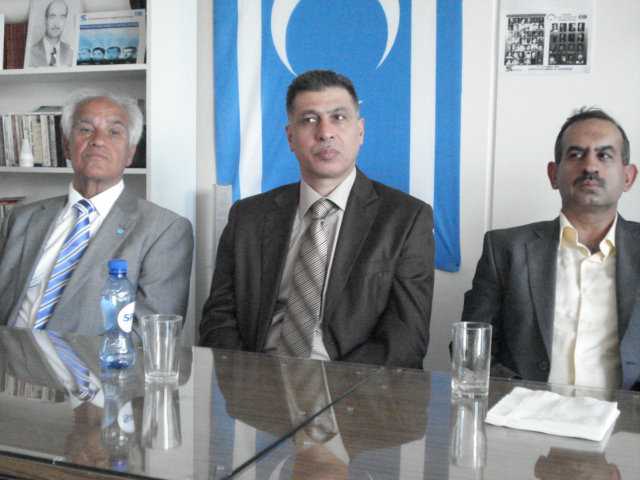
    Beverwijk, the Netherlands, 18th July 2010 – Iraqi Turkmen Representatives commemorated the 14-16 July 1959 massacre of Turkmens by the communists and Kurds.

    In this photo from left to right: Dr. Hasan Aydinli, ITF EU representative Mr. Ershat Salihi, Member of ITF Executive Committee, ITF Kerkuk representative and Member of the Iraqi Parliament. Mr. Hasan Turan, Member of Kerkuk Provincial Council.