Tag: IDF

  • Iran’s Next Move Will SHOCK The World. Israel Has No Answer

    Iran’s Next Move Will SHOCK The World. Israel Has No Answer

    Scott Ritter WARNS Iran’s Next Move Will SHOCK The World Israel Has No Answer

    One hundred and twenty thousand soldiers trapped.

    No fuel, no ammunition, no food.

    In Washington, the most powerful military machine in human history sitting on its hands because there is literally nothing it can do.

    What you’re about to hear is not analysis.

    It is an autopsy.

    And the body on the table is the myth of Israeli military invincibility.

    Let me be clear about who I am and why what I am saying matters.

    I served as a Marine Corps intelligence officer.

    I sat inside the American national security apparatus at levels most people do not reach in a lifetime.

    I reviewed war plans, intelligence assessments, and logistics architectures for conflicts across three decades.

    And I am telling you with the full weight of that experience behind every word, what Iran executed over five days against the IDF supply chain is the most comprehensive, most surgically precise, most strategically complete interdiction campaign I have ever studied.

    Not in briefing documents, not in historical case studies, ever in any conflict at any scale.

    What the mainstream media will not tell you because telling you would require them to dismantle twenty years of carefully constructed narrative about the balance of power in the Middle East is that this was not a military engagement.

    It was a controlled demolition.

    Iran did not fight Israel.

    Iran switched Israel off.

    And the architecture of how they did it, the sequencing, the targeting logic, the operational discipline required to execute five simultaneous phases against redundant systems without a single phase failing, that is what I’m going to walk you through today.

    Because once you understand the mechanics, you will never look at this region or at American power the same way again.

    Start with the foundational reality that almost nobody in Western commentary is willing to state plainly.

    A modern army does not run on courage.

    It does not run on training.

    It does not run on ideology or nationalism or the quality of its officer corps.

    A modern army runs on logistics, fuel, ammunition, food, spare parts, medical consumables, the invisible river of material that flows from port facilities through road and rail networks into forward depots and ultimately into the hands of the soldier in the fighting position.

    Cut that river and the most sophisticated military force on Earth becomes within days a collection of very well-armed, very well-trained and completely immobile human beings sitting in positions they cannot advance from, cannot be reinforced to, and cannot safely extract from.

    That is not theory.

    That is the operational reality that every serious military planner understands at a foundational level.

    The question that Iran answered over five days, the question that should be occupying every defense ministry and every war college in the world right now is this.

    How do you cut that river when the river has been engineered with fifty years of American technical assistance specifically to survive being cut?

    The answer, and this is where the professional sophistication of what Iran accomplished becomes genuinely arresting, is that you do not attack the river at one point.

    You attack every point simultaneously, including the points that exist specifically to compensate for attacks on the other points.

    You eliminate the redundancy by striking every redundant pathway at the same moment so that the system has no surviving mechanism through which to route around the damage.

    When every port is struck, every bridge is destroyed, every forward depot is burning, and every airfield capable of receiving heavy cargo aircraft has cratered runways, there is no logistics system left.

    There is only the clock, the clock that counts down from whatever stockpile remains to the moment when the last round is fired, the last fuel tank runs dry and a hundred and twenty thousand soldiers confront the physical reality of what supply chain collapse actually means for human beings in active combat conditions.

    Uh, Iran did not improvise this.

    Uh, I want to drive that point home because the instinct in Western analysis, and I have watched this pattern play out across three decades of professional observation, is to explain away military success by non-Western actors as luck, as confusion on the other side, as some operational anomaly that preserves the underlying assumption of Western superiority without requiring anyone to revise it.

    That instinct is analytically bankrupt in this case.

    What Iran executed was the product of years of systematic intelligence collection, target development and operational planning.

    Years.

    The precision with which Iranian targeting databases reflected the actual locations of IDF forward logistics depots, facilities whose coordinates represent some of the most closely held operational security in the Israeli military system, is a finding whose intelligence implications extend far beyond the immediate military situation.

    Someone built that database.

    Someone updated it.

    Someone verified it against current operational configurations.

    And that process did not begin last month.

    The campaign opened at two forty in the morning on day one.

    I want you to register that timing because it reflects a specific operational logic.

    Two forty in the morning is the hour of minimum human alertness, minimum institutional responsiveness and minimum ability to execute the kind of rapid damage assessment and emergency response that might in some alternate scenario have allowed Israeli logisticians to begin rerouting supply flows before the interdiction was complete.

    By choosing that moment, Iranian operational planners ensured that the full scope of phase one was complete before Israeli command could transition from shock to organized response.

    Phase one struck Israel’s three functioning port facilities simultaneously.

    Ashdod, the primary military import terminal handling approximately fifty-five percent of IDF equipment and munitions imports by sea, absorbed thirty-four impacts in a strike package that lasted twenty-eight minutes.

    I want you to understand the targeting logic inside that strike package because it reflects a level of operational sophistication that goes well beyond simply putting warheads on port infrastructure.

    The container handling cranes serving the military cargo terminal were struck individually, not the terminal building, not the administrative complex, the cranes.

    Because cranes are what move military cargo from ship to shore, and destroying the cranes means that even if a vessel somehow reaches Ashdod through the subsequent interdiction environment, it cannot offload.

    The fuel offloading pier was destroyed in a sequencing pattern specifically designed to produce complete structural collapse rather than repairable damage.

    The distinction matters enormously.

    Repairable damage buys you days before the facility is functional again.

    Complete structural collapse buys you months, and in the context of an acute supply crisis, months is operationally equivalent to forever.

    The bonded military warehouse complex received penetrating warhead impacts designed to achieve internal detonation of stored munitions, not merely collapsing the external structure, but destroying what was inside it.

    Haifa, the northern port serving as the primary logistics gateway for forces on the northern front, absorbed forty-one strikes with specific targeting focus on its military fuel terminal and the rail connection linking port to forward logistics base network.

    The Red Sea port, representing Israel’s only non-Mediterranean maritime import pathway, was struck by eighteen weapons that destroyed its container handling infrastructure and severed its road and rail connections to the rest of the country.

    By the time the sun came up on day one, ninety percent of Israel’s maritime import capacity was gone.

    Not degraded, not damaged, gone.

    But here is what the cable networks are not explaining to you, and this is where the operational picture becomes something genuinely different from a successful strike campaign.

    The destruction of the ports was not the end of phase one.

    It was the beginning of the sequence.

    Because Iranian planners understood something that their Western counterparts had apparently not fully internalized.

    Destroying the entry point means nothing if the system can route around it.

    And the IDF logistics system had been specifically engineered with American assistance to do exactly that, which is why phase two was already underway before phase one was fully concluded.

    Phase two targeted the overland logistics network.

    Twelve major road bridge crossings on the primary logistics routes between Israel’s central stockpile complex and its northern and southern operational fronts were struck with precision weapons achieving structural collapse at the bridge deck level.

    Not damage, structural collapse.

    The rail lines serving the northern logistics corridor were struck at nine separate points, each chosen to maximize the length of track rendered unusable by a single impact.

    And I want you to understand the targeting philosophy here because it represents a level of analytical sophistication that goes beyond simply knowing where the bridges are.

    Iran’s planners did not attack the vehicles on the road.

    Attacking vehicles is operationally costly, produces only temporary disruption, and triggers workaround behavior that a sophisticated logistics system will execute within hours.

    Instead, they attack the infrastructure the vehicles must use.

    A destroyed bridge cannot be bypassed by a different route when every bridge on every alternate route has also been destroyed.

    The IDF‘s overland logistics capability was not degraded in phase two.

    It was structurally eliminated.

    And the distinction between degradation and elimination is the difference between a logistics system that is operating at reduced efficiency and a logistics system that has ceased to function.

    Stay with me because phase three is where this campaign transitions from impressive to something that should be genuinely alarming to anyone who has spent serious time thinking about how modern military power actually works.

    Because phase three did not target infrastructure that appears on satellite imagery and in publicly available port records.

    Phase three targeted the IDF‘s forward logistics depots, the hardened dispersed operationally secret stockpile facilities maintained in theater to sustain operations for a defined period without resupply.

    These are not places that appear on maps available to the public.

    Their locations are among the most closely held operational security information in the Israeli military system, protected by multiple layers of access restriction and counterintelligence procedure.

    Eleven of Israel’s fourteen identified forward logistics depots were struck.

    Eleven out of fourteen.

    The three that survived did so because they were located within urban areas where the collateral damage calculus constrained the strike package, a constraint that Iranian planners appear to have consciously incorporated into their targeting architecture, which is itself a reflection of operational discipline that many Western analysts would not have predicted.

    The surviving depot inventory after phase three represented supply availability of between three and seven days at current consumption rates, and that clock was already running by the time the assessment was complete.

    You think you’ve heard the worst of it?

    You haven’t.

    Not even close.

    Because everything I have described so far, the ports, the bridges, the rail lines, the forward depots, all of it exists within a planning framework that American and Israeli logisticians had already gamed.

    They had already identified maritime interdiction as a risk.

    They had already built the compensating mechanism into the contingency plan.

    And Iranian operational planners knew they had done so, which is why phase four existed.

    Phase four addressed the emergency resupply pathway that American and Israeli planners had specifically identified as the primary compensating mechanism for maritime and overland interdiction.

    Air logistics, the runways at Ben Gurion International Airport, serving as the primary entry point for air delivered military cargo, were struck at six separate points with penetrating warheads designed to produce subsurface detonations, creating craters resistant to emergency repair.

    Ramon Airport in the south, the secondary air logistics facility, was struck simultaneously.

    The military airfields with runway capacity sufficient to handle heavy cargo aircraft had already been rendered non-operational in the preceding strikes against IDF bases.

    By the end of phase four, Israel had no functional air cargo terminal capable of receiving the heavy lift aircraft that emergency military resupply requires.

    The air bridge that Washington needed to execute emergency resupply did not exist, and that is not a circumstance that arose from poor planning or inadequate preparation on Washington’s part.

    It was a condition that was deliberately engineered by Iranian operational planners who understood exactly what the American compensating response would be and designed the campaign architecture specifically to defeat it before it could be executed.

    That is the level of strategic thinking we are dealing with.

    Not reactive, not opportunistic, anticipatory.

    Iran did not respond to American resupply planning.

    Iran preempted it, and now we arrive at the arithmetic, the cold, unforgiving mathematics of what supply chain collapse actually means for a hundred and twenty thousand human beings in active combat positions.

    Because this is the part of the story that most analysts skip past, either because the numbers are uncomfortable or because the human dimension of military logistics failure is harder to discuss in the clinical language that professional analysis tends to prefer.

    An IDF armored brigade in active operations consumes approximately a hundred and eighty thousand liters of diesel fuel per day across all organic vehicles, tanks, infantry fighting vehicles, artillery tractors, engineering equipment, logistics trucks.

    Israel had approximately eight armored brigades deployed in operational configurations.

    At that consumption rate, the fuel inventory surviving the phase one and phase three strikes, estimated at approximately forty percent of pre-campaign levels, represented between four and six days of operational consumption.

    By day five, fuel availability had fallen below the minimum threshold required to sustain offensive operations.

    Armored vehicles began being immobilized, not by enemy action, not by mechanical failure, not by tactical decision, but by empty fuel tanks.

    I want that to register in its full weight.

    The IDF, the force that the United States and Israel spent fifty years and hundreds of billions of dollars constructing, was being rendered immobile by the simple physical fact of having nothing left to put in its fuel tanks.

    Aviation fuel presents an even more acute constraint.

    IDF air operations at current sortie rates consume approximately two point four million liters of aviation fuel daily.

    The surviving aviation fuel inventory after the port strikes and depot destruction was assessed at approximately eight days of consumption.

    By day five, sortie rates had been reduced by over sixty percent as fuel conservation protocols were implemented.

    The F-35s, Israel’s most capable strike platform, the aircraft around which IDF operational doctrine for deep strike missions is organized, were being flown at a fraction of their operational tempo.

    Their missions rationed against a fuel supply that everyone involved could see was counting down to zero.

    The ammunition mathematics tell a parallel story.

    An Israeli artillery battalion firing at standard sustained rates expends approximately eight hundred rounds per day.

    Multiply that across the artillery systems deployed across five active fronts.

    Add tank main gun ammunition, mortar rounds, anti-tank guided missiles, and the precision guided munitions that modern combined arms combat depends on at every level.

    The daily ammunition consumption figure runs to thousands of tons.

    The surviving forward depot inventory after phase three represented approximately five days of consumption at reduced operational tempo, and that estimate assumed consumption rates lower than what active combat actually demands.

    By day five, multiple artillery units had reported exhaustion of available ammunition stocks.

    Fire missions were being canceled not because the tactical situation did not require fires, but because there were no rounds left to fire.

    And if the fuel picture is alarming and the ammunition picture is alarming, the food situation is the variable that carries the most direct human weight and receives the least serious attention in professional military analysis.

    Military ration supply for a hundred and twenty thousand personnel requires approximately three hundred and sixty tons of food daily.

    IDF doctrine calls for forward units to carry three days of organic ration supply.

    By day four, units in the most forward positions were consuming emergency ration reserves intended for genuine last resort situations.

    By day five, operational assessments across multiple sectors included language that no military commander wants to read and no soldier wants to hear described about themselves.

    Personnel combat effectiveness degraded by nutritional insufficiency.

    Let me translate that out of the bureaucratic register and say what it actually means.

    Soldiers were hungry.

    Soldiers who are hungry make decisions differently than soldiers who are fed.

    They assess risk differently.

    They sustain effort differently.

    They maintain cohesion differently.

    And an army whose soldiers are making different decisions under the pressure of physical deprivation is not the army that its commanders planned for, trained for, or built their operational concepts around.

    Keep watching because the next part of this story is where the American dimension enters and where the gap between what Washington promised and what Washington could actually deliver becomes something that every serious student of military power needs to confront directly.


  • PositiveID Corporation Receives VeriChip Order for Use With Israeli Military

    PositiveID Corporation Receives VeriChip Order for Use With Israeli Military

    PRESS RELEASE

    DELRAY BEACH, Fla., Oct 11, 2011 (GlobeNewswire via COMTEX) — PositiveID Corporation (“PositiveID” or “Company”) PSID -2.94% , a developer of medical technologies for diabetes management, clinical diagnostics and bio-threat detection, announced today that it has received an order for its VeriChip(TM) microchip to be used for disaster preparedness and emergency management in Israel by an integration partner.

    The VeriChip radio frequency identification (RFID) microchip was cleared by the U.S. Food and Drug Administration in 2004 for patient identification. The VeriChip can also be used to assist in the management of emergency situations and disaster recovery in conjunction with a customized camera capable of receiving both RFID scanned data and GPS data wirelessly, and a Web-enabled database for gathering and storing information and images captured during emergency response operations.

    The Company’s integration partner intends to provide the microchips to the Israel Defense Forces (IDF), the State of Israel’s military force.

    Marc Poulshock, PositiveID’s Vice President of Business Development, said, “We believe there are many important applications for the VeriChip and our associated intellectual property including next-generation identification and bio-sensing capabilities. Our partner is looking to help healthcare organizations, militaries including the IDF, and governments with their disaster preparedness and emergency response needs.”
    About PositiveID Corporation

    PositiveID Corporation develops unique medical devices and molecular diagnostic systems, focused primarily on diabetes management, rapid medical testing and airborne bio-threat detection. Its wholly-owned subsidiary, MicroFluidic Systems, is focused on the development of microfluidic systems for automated preparation of and performance of biological assays. For more information on PositiveID, please visit www.PositiveIDCorp.com .

    The PositiveID Corporation logo is available at

    Statements about PositiveID’s future expectations, including the likelihood that the VeriChip will be used for disaster preparedness and emergency management in Israel by an integration partner; the likelihood that the VeriChip can also be used to assist in the management of emergency situations and disaster recovery in conjunction with a customized camera capable of receiving both RFID scanned data and GPS data wirelessly, and a Web-enabled database for gathering and storing information and images captured during emergency response operations; the likelihood that the Company’s integration partner intends to provide the microchips to the IDF; the likelihood that the Company’s partner is looking to help healthcare organizations, militaries including the IDF, and governments with their disaster preparedness and emergency response needs; and all other statements in this press release other than historical facts are “forward-looking statements” within the meaning of Section 27A of the Securities Act of 1933, Section 21E of the Securities Exchange Act of 1934, and as that term is defined in the Private Litigation Reform Act of 1995. Such forward-looking statements involve risks and uncertainties and are subject to change at any time, and PositiveID’s actual results could differ materially from expected results. These risks and uncertainties include the Company’s ability to successfully deliver the VeriChip to its integration partner and the ability of the integration partner to provide the VeriChip to the IDF; as well as certain other risks. Additional information about these and other factors that could affect the Company’s business is set forth in the Company’s various filings with the Securities and Exchange Commission, including those set forth in the Company’s 10-K filed on March 25, 2011, and 10-Qs filed on May 13, 2011, and August 15, 2011, under the caption “Risk Factors.” The Company undertakes no obligation to update or release any revisions to these forward-looking statements to reflect events or circumstances after the date of this statement or to reflect the occurrence of unanticipated events, except as required by law.

    This news release was distributed by GlobeNewswire, www.globenewswire.com

    SOURCE: PositiveID Corporation

            CONTACT: Allison Tomek
            561-805-8000
            [email protected]
    www.marketwatch.com, Oct. 11, 2011
  • Turkish prosecutor seeks IDF arrests over flotilla raid

    Turkish prosecutor seeks IDF arrests over flotilla raid

    By REUTERS

    10/12/2011 22:57

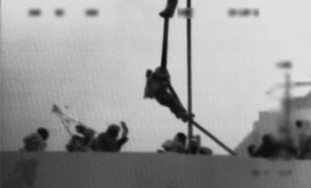
    CNN Turk reports that Istanbul state prosecutor had written to Turkish Justice Ministry calling for arrest of 174 involved in ‘Marmara’ raid.

    A Turkish prosecutor is seeking the arrest of 174 IDF personnel allegedly involved in the naval commando raid that killed nine Turks on the Mavi Marmara ship carrying aid to the Gaza Strip last year, broadcaster CNN Turk reported on Wednesday.

    CNN Turk said on its website that Istanbul state prosecutor Mehmet Akif Ekinci had written to the Turkish Justice Ministry calling for the arrest of those who carried out the raid and those who ordered it.

    An official contacted by Reuters was not aware of the report and was checking.

    Last month, the IDF said it was taking legal precautions to protect soldiers and officers who participated in the operation to stop the Mavi Marmara, senior defense officials said. Turkish news reports claimed intelligence agencies had compiled a list identifying 174 soldiers who could be prosecuted for their involvement in the operation.

    The Istanbul deputy public prosecutor Ates Shasan Sozen told the Today’s Zaman newspaper that the list was compiled by IHH, the organization that organized the Gaza flotilla, and not by Turkish intelligence.

    The Sabah newspaper wrote that the names were acquired by Turkish intelligence agencies that had studied social connections on Facebook and Twitter, as well as photographs on those websites with ones taken on board the Mavi Marmara.

    The list of 174 names was transferred to Turkish prosecutors, in addition to pictures of 10 IDF soldiers the paper said could not be identified.

    Yaakov Katz and Oren Kessler contributed to this report.

    via ‘Turkish prosecutor seeks IDF arrests over flo… JPost – Defense.

  • Was the Obama Administration involved in the Planning of the Israeli Attack on the Gaza Freedom Flotilla?

    Was the Obama Administration involved in the Planning of the Israeli Attack on the Gaza Freedom Flotilla?

    The Broader Military Agenda

    by Michel Chossudovsky

    Global Research, June 6, 2010

    The Israeli Naval Commando had prior knowledge of who was on the Turkish ship including where passengers were residing in terms of cabin layout. According to Swedish author Henning Mankell, who was on board the Marmara , “the Israeli forces attacked sleeping civilians.”

    These were targeted assassinations. Specific individuals were targeted. Journalists were targeted with a view to confiscating their audio and video recording equipment and tapes.

    “We were witnesses to premeditated murders,” said historian Mattias Gardell who was on the Mavi Marmara.

    “…Asked about why activists on the Turkish ship had attacked the Israeli soldiers, Gardell stressed “it is not as if Israel is a police officer whom no human being has the legitimate right to defend him or herself against”:

    “If you are attacked by commando troops you of course must have the right to defend yourself … Many people on this ship thought they were going to kill everyone. They were very frightened … It’s strange if people think one should not defend oneself. Should you just sit there and say: ‘Kill me’?” he said.” (See Mahdi Darius Nazemroaya, Detailed Compiled Eyewitness Accounts Confirm Cold-Blooded Murder and Executions by Israeli Military, Global Research, June 1, 2010)

    “They even shot those who surrendered. Many of our friends saw this. They told me that there were handcuffed people who were shot,” (quoted by Press TV)

    The Israeli Commando had an explicit order to kill.

    What was the role of the United States?

    The raids on the Gaza Freedom Flotilla, bear the mark of  previous Israeli operations directed against unarmed civilians. It is a well established modus operandi of Israeli military-intelligence operations, which is tacitly supported by the US administration.

    The killing of civilians is intended to trigger a response by Palestinian resistance forces, which in turn justifies Israeli retaliation (on “humanitarian” grounds) as well as a process of military escalation. The logic of this process was contained in Ariel Sharon`s “Operation Justified Vengeance” initiated at the outset the Sharon government in 2001. This Operation was intent upon destroying the Palestinian Authority and transforming Gaza into an urban prison. (See Michel Chossudovsky, “Operation Justified Vengeance”: Israeli Strike on Freedom Flotilla to Gaza is Part of a Broader Military Agenda, Global Research, June 1, 2010).

    The Israeli attack of the Flotilla bears the fingerprints of a military intelligence operation coordinated by the IDF and Mossad, which is headed by Meir Dagan. It is worth recalling that as a young Coronel, Dagan worked closely with then defense minister Ariel Sharon in the raids on the Palestinian settlements of Sabra and Shatilla in Beirut in 1982.

    There are indications that the US was consulted at the highest levels regarding the nature of this military operation. Moreover, in the wake of the attacks, both the US and the UK have unequivocally reaffirmed their support to Israel.

    There are longstanding and ongoing military and intelligence relations between the US and Israel including close working ties between various agencies of government: Pentagon, National Intelligence Council, State Department, Homeland Security and their respective Israeli counterparts.

    These various agencies of government are involved in routine liaison and consultations, usually directly as well as through the US Embassy in Israel, involving frequent shuttles of officials between Washington and Tel Aviv as well as exchange of personnel. Moreover, the US as well as Canada have public security cooperation agreements with Israel pertaining to the policing of international borders, including maritime borders. (See Israel-USA Homeland Security Cooperation, See also Michel Chossudovsky, The Canada-Israel “Public Security” Agreement, Global Research, 2 April 2008)

    The Role of Rahm Emmanuel

    Several high level US-Israel meetings were held in the months prior to the May 31st attacks.

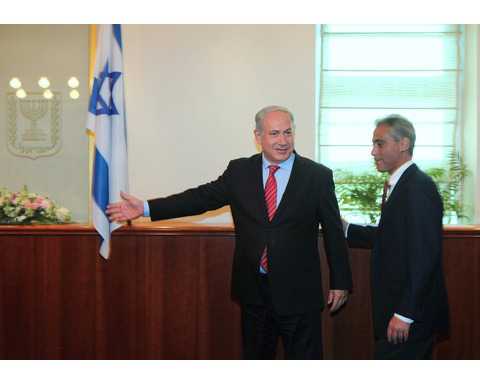
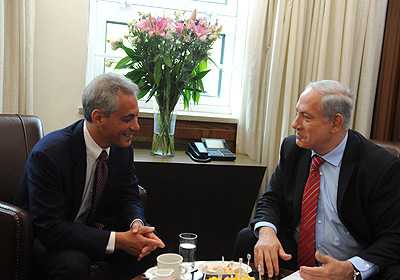
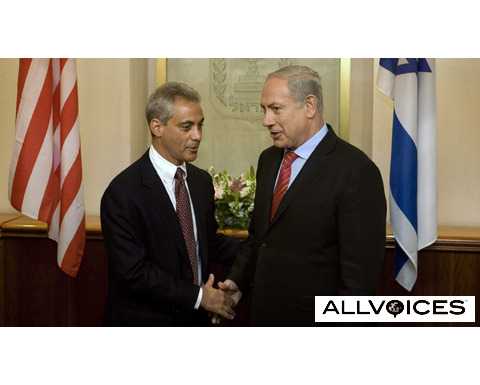
    Rahm Emmanuel, Obama’s White House chief of Staff was in Tel Aviv a week prior to the attacks. Confirmed by press reports, he had meetings behind closed doors with Prime Minister Netanyahu (May 26) as well as a private visit with President Shimon Peres on May 27.

    May 26 meeting between Rahm Emmanuel and Prime Minister Binyamin Netanyahu

    Official statements do not indicate whether other officials including cabinet ministers or IDF and Mossad officials were present at the Rahm Emmanuel-Netanyahu meeting. The Israeli press confirmed that Rahm Emmanuel had a meeting with Defense Minister Ehud Barak, whose Ministry was responsible for overseeing the Commando attack on the Flotilla. (Rahm Emanuel visits Israel to celebrate son’s bar mitzvah – Haaretz Daily Newspaper | Israel News, 23 May 2010). The White House also confirmed that Rahm Emmanuel was to meet other high-ranking Israeli officials, without providing further details. (Rahm Emanuel in Israel for Son’s Bar Mitzvah, May Meet With Officials)

    “Our Man in the White House”

    While born in the US, Rahm Emmanuel also holds Israeli citizenship and has served in the Israeli military during the First Gulf War (1991).

    Rahm is also known for his connections to the pro-Israeli lobby in the US.  The Israeli newspaper Maariv calls him “Our Man in the White House” (quoted in Irish Times, March 13, 2010). Rahm Emmanuel gave his support to Obama in the November 2008 presidential elections following Obama`s address to the pro-Israeli lobby AIPAC.

    At the time of Rahm Emmanuel’s confirmation as White House chief of staff, there were reports in the Middle East media of Rahm Emanuel’s connections to Israeli intelligence.

    The exact nature of Rahm Emmanuel’s ties to the Israeli military and intelligence apparatus, however, is not the main issue. What we are dealing with is a broad process of bilateral coordination and decision-making between the two governments in the areas of foreign policy, intelligence and military planning, which has been ongoing for more than 50 years. In this regard, Israel, although exercising a certain degree of autonomy in military and strategic decisions, will not act unilaterally, without receiving the “green light” from Washington. Rahm Emmanuel`s meetings with the prime minister and Israeli officials are part of this ongoing process.

    Rahm Emmanuel’s meetings in Tel Aviv on May 26 were a routine follow-up to visits to Washington by Prime Minister Netanyahu in March and by Minister of Defense Ehud Barak in late April. In these various bilateral US-Israel encounters at the White House, the state Department and the Pentagon, Rahm Emmanuel invariably plays a key role.

    While the pro-Israeli lobby in the US influences party politics in America, Washington also influences the direction of Israeli politics. There have been reports to the effect that Rahm Emmanuel  would “lead a team of high octane Democratic party pro-Israel political operatives to run the campaign for the Defense Minister Ehud Barak” against Netanyahu in the next Israeli election. (Ira Glunts, Could Rahm Emanuel Help Barak Unseat Netanyahu? Palestine Chronicle, June 2, 2010)

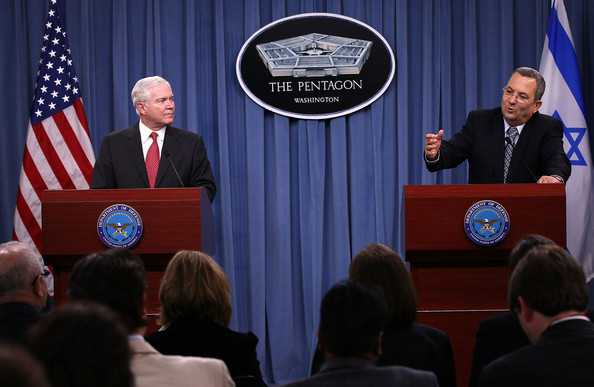
    The April 27 meeting between US Defense Secretary Robert Gates and Defense Minister Barak pertained to “a range of important defense issues” directly or indirectly related to the status of the Palestinian territories under Israeli occupation:

    “As President Obama has affirmed, the United States commitment to Israel’s security is unshakable, and our defense relationship is stronger than ever, to the mutual benefit of both nations. The United States and our ally Israel share many of the same security challenges, from combating terrorism to confronting the threat posed by Iran’s nuclear-weapons program.

    For years, the United States and Israel have worked together to prepare our armed forces to meet these and other challenges, a recent major example being the Juniper Cobra joint exercise held last October. Our work together on missile-defense technology is ongoing, and the United States will continue to ensure that Israel maintains its qualitative military edge.” (Press Conference with Secretary Gates and Israeli Defense Minister Barak, April 2010 – Council on Foreign Relations April 27, 2010)

    These consultations pertained to ongoing military preparations regarding Iran. Both Israel and the US have recently announced that a pre-emptive attack against Iran has been contemplated.

    Washington views Israel as being “‘integrated into America’s military architecture,’ especially in the missile defense sphere.” (quoted in Emanuel to rabbis: US ‘screwed up’ Jerusalem Post, statement of Dennis Ross, who is in charge of the US administration’s Iran policy in the White House, May 16, 2010).

    Targeting Iran

    The attack on the Freedom Flotilla, might appear as a separate and distinct humanitiarian issue, unrelated to US-Israeli war plans. But from the standpoint of both Tel Aviv and Washington, it is part of the broader military agenda. It is intended to create conditions favoring an atmosphere of confrontation and escalation in the Middle East war theater;

    “All the signs are that Israel has been stepping up its provocations to engineer a casus belli for a war against Hamas in Gaza and Hezbollah in Lebanon. Tel Aviv sees as unfinished business its inconclusive wars: the first in Lebanon in 2006, and the second in Gaza in 2008-09.” (Jean Shaoul Washington Comes to the Aid of Israel over Gaza Convoy Massacre, Global Research, June 4, 2010)

    Following Israel’s illegal assault in international waters, Netanyahu stated emphatically “Israel will continue to exercise its right to self defence. We will not allow the establishment of an Iranian port in Gaza,” suggesting that the Gaza blockade was part of the pre-emptive war agenda directed against Iran, Syria and Lebanon. (Israeli forces board Gaza aid ship the Rachel Corrie – Telegraph, June 5, 2010, emphasis added) .

    Moreover, the raid on the Flotilla coincided with NATO-Israel war games directed against Iran. According to the Sunday Times, “three German-built Israeli submarines equipped with nuclear cruise missiles are to be deployed in the Gulf near the Iranian coastline.” (Israel Deploys Three Nuclear Cruise Missile-Armed Subs Along Iranian Coastline).

    While Israeli naval deployments were underway in the Persian Gulf, Israel was also involved in war games in the Mediterranean. The war game codenamed “MINOAS 2010” was carried out at a Greek air base in Souda Bay, on the island of Crete. Earlier in February, The Israeli air force “practiced simulated strikes at Iran’s nuclear facilities using airspace of two Arab countries in the Persian Gulf, which are close territorially with the Islamic republic and cooperate with Israel on this issue.” Ria Novosti,War Games: Israel gets ready to Strike at Iran’s Nuclear Sites,, March 29, 2010)

    Also, in the wake of the final resolution of the 2010 Review Conference of the Parties to the Treaty on the Non-Proliferation directed against Israel’s nuclear weapons program, the White House has reaffirmed its endorsement of Israel’s nuclear weapons capabilities. Washington’s statement issued one day before the raid on the flotilla points to unbending US support to “Israel’s strategic and deterrence capabilities”, which also include the launching of a pre-emptive nuclear attack on Iran:

    “a senior political source in Jerusalem said Sunday that Israel received guarantees from U.S. President Barack Obama that the U.S. would maintain and improve Israel’s strategic and deterrence capabilities.

    According to the source, “Obama gave [Prime Minister Benjamin] Netanyahu unequivocal guarantees that include a substantial upgrade in Israel-U.S. relations.”

    Obama promised that no decision taken during the recent 189-nation conference to review and strengthen the 40-year-old Nuclear Non-proliferation Treaty “would be allowed to harm Israel’s vital interests,” the sources said.  Obama promised to bolster Israel’s strategic capabilities, Jerusalem officials say – Haaretz Daily Newspaper)

    Robert Gates and Israel's Minister of Defense Ehud Barak, Press Conference, April 27, 2010

    The Turkey-Israel Relationship in Jeopardy?

    The actions of Israel against the Freedom Flotilla have important ramifications. Israel’s criminal actions in international waters has contributed to weakening the US-NATO-Israel military alliance.

    The bilateral Israel-Turkey alliance in military, intelligence, joint military production is potentially in jeopardy. Ankara has already announced that three planned military exercises with Israel have been cancelled. “The government announced it was considering reducing its relations with Israel to a minimum.”

    It should be understood that Israel and Turkey are partners and major actors in the US-NATO planned aerial attacks on Iran, which have been in the pipeline since mid-2005. The rift between Turkey and Israel has a direct bearing on NATO as a military alliance. Turkey is one of the more powerful NATO member states with regard to its conventional forces. The rift with Israel breaks a consensus within the Atlantic Alliance. It also undermines ongoing US-NATO-Israel pre-emptive war plans directed against Iran, which until recently were endorsed by the Turkish military.

    From the outset in 1992, the Israeli-Turkish military alliance was directed against Syria, as well as Iran and Iraq. (For details see See Michel Chossudovsky, “Triple Alliance”: The US, Turkey, Israel and the War on Lebanon, Global Research, 2006)

    In 1997, Israel and Turkey launched “A Strategic Dialogue” involving a bi-annual process of high level military consultations by the respective deputy chiefs of staff. (Milliyet, Istanbul, in Turkish 14 July 2006).

    During the Clinton Administration, a triangular military alliance between the US, Israel and Turkey had unfolded. This “triple alliance”, which in practice is dominated by the US Joint Chiefs of Staff, integrates and coordinates military command decisions between the three countries pertaining to the broader Middle East. It is based on the close military ties respectively of Israel and Turkey with the US, coupled with a strong bilateral military relationship between Tel Aviv and Ankara.

    Starting in 2005, Israel has become a de facto member of NATO. The triple alliance was coupled with a 2005 NATO-Israeli military cooperation agreement which included “many areas of common interest, such as the fight against terrorism and joint military exercises. These military cooperation ties with NATO are viewed by the Israeli military as a means to “enhance Israel’s deterrence capability regarding potential enemies threatening it, mainly Iran and Syria.” (“Triple Alliance”: The US, Turkey, Israel and the War on Lebanon).

    The Issue of Territorial Waters

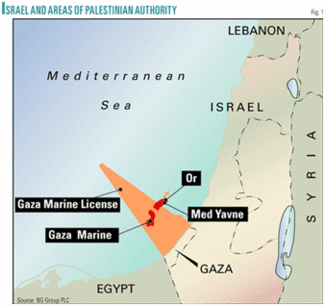
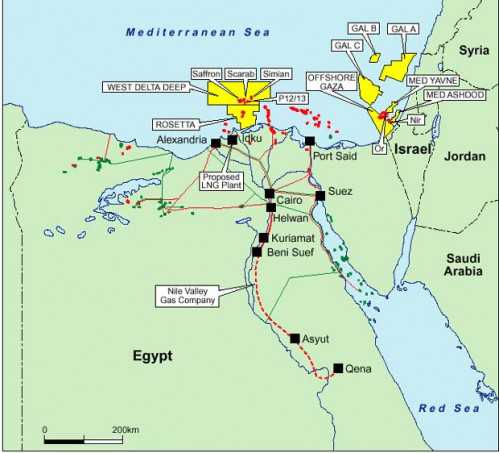
    Israel’s blockade of Gaza is in large part motivated by the broader issue of control of  Gaza’s territorial waters, which contain significant reserves of natural gas. What is at stake is the confiscation of Palestinian gas fields and the unilateral de facto declaration of Israeli sovereignty over Gaza’s maritime areas. If the blockade were to be broken, Israel’s de facto control over Gaza’s offshore gas reserves would be jeopardy. (See Michel Chossudovsky,War and Natural Gas: The Israeli Invasion and Gaza’s Offshore Gas Fields, Global Research, January 8, 2009. See also Michel Chossudovsky, The War on Lebanon and the Battle for Oil, Global Research, July 23, 2006)

    , 6.6.2010

  • Israeli army chief visits Turkey amid tension

    Israeli army chief visits Turkey amid tension

    JERUSALEM, March 15 (Xinhua) — Israeli army chief headed for Turkey Monday morning for a one-day visit amid tension between the two countries.

    Gabi Ashkenazi, Israel Defense Forces (IDF) chief of the general staff, is scheduled to take part in a NATO conference on terrorism and international cooperation, and hold a meeting with his Turkish counterpart during the trip, IDF said in a statement.

    It is the first time in five years that an Israeli army chief has visited Turkey, according to the statement.

    The once close ties between Israel and Turkey were strained after the Jewish state launched a massive attack at the Gaza Strip at the end of 2008.

    Turkish military cancelled a joint air force drill with Israel last October due to the offensive.

    The relation hit a freezing point when Israeli Deputy Foreign Minister Daniel Ayalon in January humiliated Turkish ambassador to Israel by deny the latter a handshake and sitting him on a lower chair at a meeting.

    An IDF spokesperson told Israeli army radio on Monday that Ashkenazi’s visit “is on the military-strategic level, not a diplomatic level.”

    xinhua net

  • Israel soldiers speak out on Gaza

    Israel soldiers speak out on Gaza

    A group of soldiers who took part in Israel’s assault in Gaza say widespread abuses were committed against civilians under “permissive” rules of engagement.

    The troops said they had been urged to fire on any building or person that seemed suspicious and said civilians were sometimes used as human shields.

    Breaking the Silence, a campaign group made up of Israeli soldiers, gathered anonymous accounts from 26 soldiers.

    Israel denies breaking the laws of war and dismissed the report as hearsay.

    “We were told soldiers were to be secured by fire-power. The soldiers were made to understand that their lives were the most important, and that there was no way our soldiers would get killed for the sake of leaving civilians the benefit of the doubt,” said one soldier in the report.

    “People were not instructed to shoot at everyone they see, but they were told that from a certain distance when they approach a house, no matter who it is – even an old woman – take them down,” said another.

    Many of the testimonies are in line with claims made by human-rights organisations that Israeli military action in Gaza was indiscriminate and disproportionate.

    Amnesty International has accused both Israel and Hamas of committing war crimes during the 22-day conflict.

    Israeli officials insist troops went to great lengths to protect civilians, that Hamas endangered non-combatants by firing from civilian areas and that homes and buildings were destroyed only when there was a specific military need to do so.

    ‘Ill discipline’

    According to testimonies from the 14 conscripts and 12 reserve soldiers:

    • Rules of engagement were either unclear or encouraged soldiers to do their utmost to protect their own lives whether or not Palestinian civilians were harmed.

    • Civilians were used as human shields, entering buildings ahead of soldiers

    • Large swathes of homes and buildings were demolished. Accounts say that this was often done because the houses might be booby-trapped, or cover tunnels. Testimony mentioned a policy referred to as “the day after”, whereby areas near the border were razed to make future military operations easier

    • Some of the troops had a generally aggressive, ill-disciplined attitude

    There was incidents of vandalism of property of Palestinians

    • Soldiers fired at water tanks because they were bored, at a time of severe water shortages for Gazans

    • White phosphorus was used in civilian areas in a way some soldiers saw as gratuitous and reckless

    • Many of the soldiers said there had been very little direct engagement with Palestinian militants

    The report says Israeli troops and the people who justify their actions are “slid[ing] together down the moral slippery slope”.

    “This is an urgent call to Israeli society and its leaders to sober up and investigate a new the results of our actions,” Breaking the Silence says.

    Israel said the purpose of the 22-day operation that ended on 18 January 2009 had been to end rocket fire from Gaza aimed at its southern towns.

    Palestinian rights groups say about 1,400 Palestinians died during the operation. Thirteen Israelis died in the conflict, including 10 soldiers serving in Gaza.

    According to the UN, the campaign damaged or destroyed more than 50,000 homes, 800 industrial properties, 200 schools, 39 mosques and two churches.

    Investigations

    Reacting to the report, Israeli military spokeswoman Lt Col Avital Leibovich said:

    “The IDF [Israel Defence Forces] regrets the fact that another human rights organisation has come out with a report based on anonymous and general testimony – without investigating their credibility.”

    She dismissed the document as “hearsay and word of mouth”.

    “The IDF expects every soldier to turn to the appropriate authorities with any allegation,” Lt Col Leibovich added. “This is even more important where the harm is to non-combatants. The IDF has uncompromising ethical values which continue to guide us in every mission.”

    There have been several investigations into the conduct of Israel’s operation in Gaza, and both Israel and Hamas, the Palestinian militant group that runs the territory, have faced accusations of war crimes.

    An internal investigations by the Israeli military said troops fought lawfully, although errors did take place, such as the deaths of 21 people in a house that had been wrongly targeted.

    UN Secretary General Ban Ki-moon has requested more than $11m (£7m) in compensation from Israel for damage to UN property in Gaza. A limited UN inquiry blamed Israel in six out of nine attacks on UN facilities, resulting in casualties among civilians sheltering there.

    Meanwhile, a fact-finding team commissioned by the Arab League concluded there was enough evidence to prosecute the Israeli military for war crimes and crimes against humanity, and that “the Israeli political leadership was also responsible for such crimes”.

    It also said Palestinian militants were guilty of war crimes in their use of indiscriminate rocket attacks on civilians.

    BBC