Tag: F-35

  • Letter to Newsweek Inc

    Letter to Newsweek Inc

    Newsweek Inc, 
    The Graham Holdings Company
    One World Trade Center, Floor 72
    New York, NY 10007

    To the Editors of Newsweek,

    Your recent article, “The U.S. Should Not Sell Weapons to Turkey,” presents a deeply flawed and misleading analysis, marred by selective omissions, strategic distortions, and a troubling lack of diplomatic nuance. Rather than offering a constructive critique, the piece unfortunately aligns with a broader campaign that seeks to delegitimize a sovereign nation and NATO’s second-largest military power: the Republic of Türkiye.

    To begin with, a basic yet critical correction: the internationally recognized name of our country is the Republic of Türkiye. Continued use of outdated terminology disregards the democratic will of the Turkish people and fails to meet the diplomatic standards expected of a global publication.

    Türkiye’s role in NATO and global security is both substantial and indisputable. From Afghanistan to the Balkans, Libya to the Black Sea, Türkiye has borne a disproportionate share of the burden in defending collective security. It was Türkiye that engaged in direct ground combat against ISIS, and Türkiye that fortified NATO’s southeastern flank during times of regional volatility.

    The assertion that Türkiye has distanced itself from the West is factually incorrect. NATO officials and European partners have repeatedly affirmed that Turkish intelligence—particularly under the leadership of Hakan Fidan—has been instrumental in thwarting terrorist plots, countering extremism, and managing mass migration. Far from turning away from the West, Fidan’s tenure as head of MIT was defined by pragmatic cooperation with Western intelligence agencies. 

    As Foreign Minister, he continues to advocate a balanced foreign policy anchored in sovereign interests and regional stability. International actors, including the United States and Germany, have recognized Türkiye’s intelligence contributions as reliable and indispensable. NATO sources have even described Fidan as a “reliable interlocutor.”

    The article’s portrayal of Türkiye’s engagement with Russia also omits vital facts: it was Türkiye that closed the Straits to Russian warships, supplied Ukraine with Bayraktar drones, and led the Black Sea Grain Initiative—helping to avert a global food crisis. These are not the actions of a nation disengaged from the West, but of a responsible actor committed to sovereign diplomacy and international order.

    Regarding the S-400 issue: Türkiye sought to purchase the U.S. Patriot missile defense system for over a decade and was repeatedly denied. In the absence of viable alternatives, Türkiye acted to safeguard its national security. The subsequent imposition of CAATSA sanctions was not only punitive but revealed a stark double standard—other NATO allies operating Russian systems have not faced similar penalties like Bulgaria, Slovakia ,Greece and Non NATO member India .

    Additionally, the issue of U.S. foreign aid directed toward entities with ties to terrorist organizations, as highlighted in Gregg Roman’s testimony before the House Oversight and Government Reform Subcommittee, warrants urgent scrutiny. Ignoring such troubling contradictions while fixating on Türkiye’s legitimate security concerns represents a grave lapse in intellectual and journalistic integrity. Michael Doran of the Hudson Institute has rightly noted: “Türkiye is invaluable to the central task of American statecraft: countering the challenge from the revisionist bloc of China, Russia, Iran, and North Korea.” Without Türkiye, the West cannot uphold a viable order in Eurasia, nor effectively support partners such as Ukraine or Azerbaijan. Türkiye anchors critical energy corridors, promotes regional stability, and counters malign influence in the Caucasus and Central Asia.

    Regrettably, this Newsweek article appears less focused on nuanced analysis and more intent on perpetuating a narrative of Türkiye-bashing that serves certain political agendas. This is not a good-faith policy critique—it is a concerted effort to portray Türkiye as a perennial antagonist, to the detriment of transatlantic unity and the principles of equitable diplomacy.

    The authors’ distortions and inflammatory rhetoric offer little substance and much harm. Once again, Türkiye and the Turkish people are unfairly vilified in a narrative that disregards facts in favor of ideological convenience. In this era where principles are often forsaken for personal or political gain, these authors exemplify the erosion of objective discourse.

    I urge Newsweek to reflect with greater journalistic and editorial responsibility. Opinion pages should foster informed and balanced dialogue—not serve as conduits for interest-driven disinformation. The Republic of Türkiye remains a committed NATO ally, a sovereign democracy, and a force for regional and international stability. It will continue to uphold its responsibilities—but it will also defend its right to national security, territorial integrity, and diplomatic respect.

    I  call on Newsweek and its contributors to recognize these realities, reject politicized narratives, and engage in more honest, fact-based dialogue.

    Respectfully,

    Ibrahim Kurtulus 
    Community Activist 
  • Letter to US Secretary of State Marco Rubio

    Letter to US Secretary of State Marco Rubio

    US  Secretary of State Marco Rubio

    U.S. Department of State
    2201 C Street NW
    Washington, DC 20520
    United States

    April 5, 2025 

    Honorable Secretary of State

    I write to address the so called concerns raised by American citizens of Greek heritage and Philhellenes

    regarding the Republic of Türkiye and to provide a factual and balanced perspective that counters misleading narratives and unjustified accusations against our NATO ally. The argument against Türkiye’s procurement of F-35 fighter jets is based on outdated rhetoric, mischaracterizations of Turkish policies, and a failure to acknowledge Türkiye’s indispensable role in regional and global security.

    1. Türkiye’s Commitment to Counterterrorism and Regional Stability

    The assertion that Türkiye harbors or supports terrorist organizations is categorically false. As a nation that has suffered immensely from terrorism, Türkiye has been at the forefront of the fight against groups such as ISIS, the PKK/YPG, and other extremist elements. Contrary to the claims made, Türkiye has actively dismantled terrorist networks and conducted military operations to secure its borders and protect civilian populations.

    On Hamas: Türkiye has engaged with Hamas as part of its diplomatic efforts to promote regional stability, much like other states in the region, including Qatar and Egypt. Diplomatic engagement does not equate to material support. Moreover, the recent normalization of Türkiye-Israel relations, including intelligence-sharing agreements, demonstrates Türkiye’s pragmatic approach rather than hostility toward Israel.

    On Hezbollah: There is no factual basis to claim that Türkiye has exhibited “sympathy” toward Hezbollah. Türkiye has maintained a consistent position against Iran-backed militant groups that threaten regional security.

    2. Türkiye’s Right to Defend Its Borders and Counter the PKK/YPG Threat

    The claim that Türkiye’s military operations in Syria constitute aggression against U.S. allies ignores key realities:

    The PKK is a U.S.-designated terrorist organization. The YPG, its Syrian branch, has been armed and supported under the guise of counter-ISIS operations. However, it continues to attack Turkish cities and civilians.

    Türkiye has conducted counterterrorism operations in full compliance with international law and the right to self-defense under Article 51 of the UN Charter. No sovereign nation would tolerate terror threats emanating from its borders.

    The argument conveniently omits that Türkiye was the only NATO country to engage in direct combat against ISIS in Syria, including the liberation of key cities such as al-Bab and Jarabulus, saving thousands of lives.

    3. Türkiye’s NATO Commitment and Relations with Russia

    Accusations that Türkiye has failed to impose sanctions on Russia ignore the complexity of Türkiye’s geopolitical position and strategic autonomy. It is important to note:

    Türkiye has supplied Ukraine with Bayraktar TB2 drones, which have played a crucial role in resisting Russian aggression.

    Unlike several European NATO members, Türkiye closed the Bosporus and Dardanelles Straits to Russian warships, limiting Moscow’s naval mobility.

    Sanctions are not the sole measure of alignment; Türkiye’s diplomatic efforts, such as the Black Sea Grain Initiative, prevented a global food crisis by ensuring Ukrainian grain exports.

    4. The F-35 and the S-400 Issue

    The decision to sanction Türkiye under CAATSA due to its procurement of the Russian S-400 system was a strategic miscalculation that weakened NATO’s southern flank. The United States refused to sell Türkiye the Patriot missile system, leaving Türkiye with no choice but to seek alternatives for its air defense needs.

    It is hypocritical to punish Türkiye while permitting other NATO countries like Greece, Bulgaria,  Slovakia (NATO members)  to operate(d) Russian-made S-300 systems without similar repercussions.

    The exclusion of Türkiye from the F-35 program disrupts NATO’s interoperability and emboldens adversaries by weakening alliance cohesion.

    5. Greek Provocations and the Eastern Mediterranean

    The claim that Türkiye threatens Greece is a one-sided misrepresentation of the ongoing disputes in the Aegean and Eastern Mediterranean.

    Greece has repeatedly violated international law by militarizing Aegean islands, contrary to the 1923 Lausanne and 1947 Paris Peace Treaties.

    Greek airspace violations and unlawful expansionist policies under the “Blue Homeland” doctrine have escalated tensions, not Türkiye’s legitimate actions to protect its maritime rights.

    Türkiye has consistently called for diplomatic dialogue, while Greece continues to seek unilateral military escalations and misrepresentations to international partners.

    6. The Cyprus Issue: A Call for Equitable Solutions

    Türkiye does not “occupy” Cyprus but rather protects Turkish Cypriots from historical ethnic violence that began in 1963, years before the 1974 intervention.

    The international community has failed to hold Greece and the Greek Cypriot administration accountable for violating the rights of Turkish Cypriots.

    The 2004 Annan Plan, which proposed reunification, was overwhelmingly rejected by Greek Cypriots while Turkish Cypriots supported it, proving who is the obstructionist party.

    Conclusion: Türkiye is an Indispensable Ally

    Denying Türkiye advanced defense capabilities weakens NATO rather than strengthening it. Türkiye has:

    The second-largest military in NATO, securing the alliance’s southern flank.

    Been a reliable partner in Afghanistan, Iraq, Syria, Libya, and the Black Sea in various military and humanitarian missions.

    Played a vital role in counterterrorism, energy security, and regional stability, far outweighing the misleading narratives propagated by interest groups seeking to undermine U.S.-Türkiye relations.

    Decisions on arms sales should be based on strategic security interests, not lobbying efforts rooted in historical grievances. Türkiye remains committed to its NATO obligations, counterterrorism efforts, and regional diplomacy, and it is in the best interest of the United States to reinforce this partnership rather than weaken it.

    We must recognize that we are confronted by a highly coordinated and determined network of individuals who thrive on promoting hatred and misinformation.

    These so-called “merchants of hate” have become adept at exploiting digital platforms and engaging with non-governmental human rights organizations in increasingly sophisticated ways to advance their agenda.

    If this ongoing campaign of delegitimization is left unaddressed, it risks becoming a significant impediment to regional peace and stability.

    While some may dismiss these smear campaigns as absurd, the consequences they produce are far from trivial. It is important to acknowledge that many of those perpetuating such narratives harbor longstanding grievances and nationalistic ambitions. Rather than examining their own domestic shortcomings, including the reality that Greece remains the only European capital without a functioning mosque and continues to draw condemnation from the European Court of Human Rights for its treatment of the Turkish Muslim minority, they attempt to shift attention through baseless accusations against the Republic of Türkiye.

    Greece’s antagonism toward Türkiye is multifaceted—extending well beyond the political and military spheres. It encompasses direct attacks on the spiritual and cultural identity of the Turkish and broader Muslim communities, including deeply offensive acts such as the desecration of mosques and the burning of the Holy Quran.

    Moreover, Greece has invested substantial resources in establishing a global apparatus of influence and propaganda. Through the strategic use of social media, transatlantic platforms, and well-funded lobbying efforts—particularly within the U.S. Congress—Greece has sought to shape international narratives to its advantage. These efforts are further supported by investments in academia, think tanks, and media outreach, all designed to undermine the legitimacy of the Turkish state.

    This issue has become another weapon in the international campaign to de-legitimize the Turkish state and the Turkish people. Once again, Turkiye is painted as a villain. 

    What we are witnessing is not a simple diplomatic disagreement but a deliberate and sustained effort to target the very existence and sovereignty of the Republic of Türkiye. At the heart of this campaign is a singular and troubling objective: to demonize Türkiye at every opportunity. This orchestrated rhetoric has become yet another tool in a broader international campaign aimed at eroding the legitimacy of both the Turkish state and its people.

    It is therefore imperative that we confront these efforts with unity, resolve, and strategic communication, firmly asserting Türkiye’s rightful place and reputation on the world stage.

    Respectfully,

    Ibrahim Kurtulus 

    Community Activist 
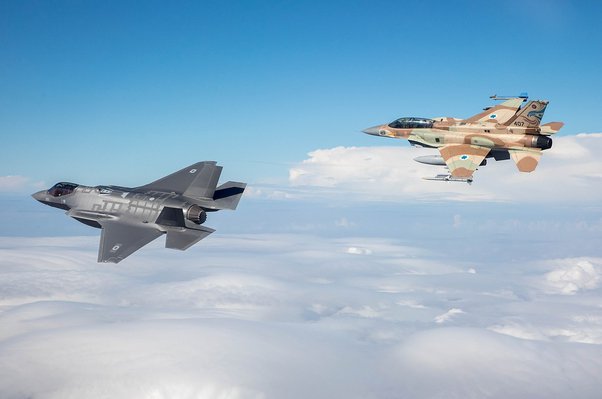
  • Is Turkey the reason why the F-35 has become a failure?

    Is Turkey the reason why the F-35 has become a failure?

    Is kicking out Turkey from the F-35 fighter program the reason why the F-35 has become a failure?

    Former Operations Specialist at United States Navy (USN) Eric Wicklund answers this question on quora as:

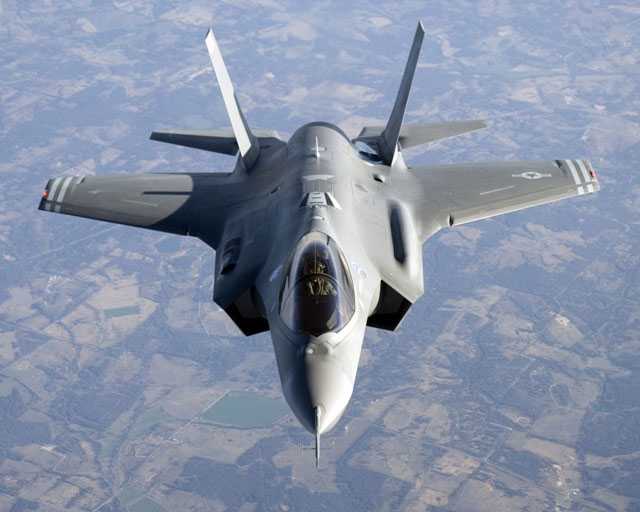
    The F-35 is far and away the most successful stealth aircraft in the world. There are 890 of them in service with various nations. No other stealth fighter has matched production numbers like that.

    There have been more F-35s placed into service than ALL of the F-22s, Chinese J-20s, Russian Su-57s, B-2s, B-21s, and F-117s…combined!

    Yes, Turkey should have got some of them, and they would have. The US and NATO asked only that Turkey not import the Russian S-400 air defense system. Easy as that. And to all who claim that NATO members must follow the orders of the USA, well…Turkey is proof positive that NATO members don’t have to listen. Turkey bought the S-400 anyway, and that’s why they’ll not get the F-35. Yet Finland, who only now is joining NATO, already had a signed contract to get the F-35, prior to joining NATO.

    • To all who will claim that the F-35 is too expensive, citing the oft-published 1.5 Trillion price tag, well, that’s the cost of acquisition, maintenance, and upgrades for thousands of aircraft for the next 50 years. You show me another plane that has costs covered over that same period of time, and tell me what the number is. I’ll bet you can’t even find it.
    • Other detractors will mention that one F-16 or Rafale or Typhoon has shot down an F-35 in exercises. Well yeah, they did. There isn’t a single aircraft on this planet, that cannot “ever” be shot down. The West believes in “test until failure.” That means creating scenarios that are harder and harder, until the system of man and machine fails, then figure out how to avoid that failure. Then, once again, test until failure. What no detractor of the F-35 ever mentions is how many F-16s, Rafales, and Typhoons were shot down by the F-35 in exercises in response. Well, the answer is “hundreds.” I don’t have the exact number, but it’s very high, and that’s the whole point. If I shoot down many more of your guys before you shoot down mine, my guys/planes didn’t fail…yours did.

    So, no, the F-35 is not a failure, it’s a stunning success. And Turkey not receiving the F-35 has no bearing whatsoever on that fact.

    And if you don’t believe it coming from me, listen to Alex Hollings, who’s makes his living studying this stuff. Listen to what he has to say.

    The F-35 is the most SUCCESSFUL stealth aircraft in HISTORY
    The F-35 may have been an acquisition nightmare, but the resulting fighter is the most technologically advanced tactical aircraft ever to fly… and with creeping up on 900 airframes built, it’s also one of the most prolific.
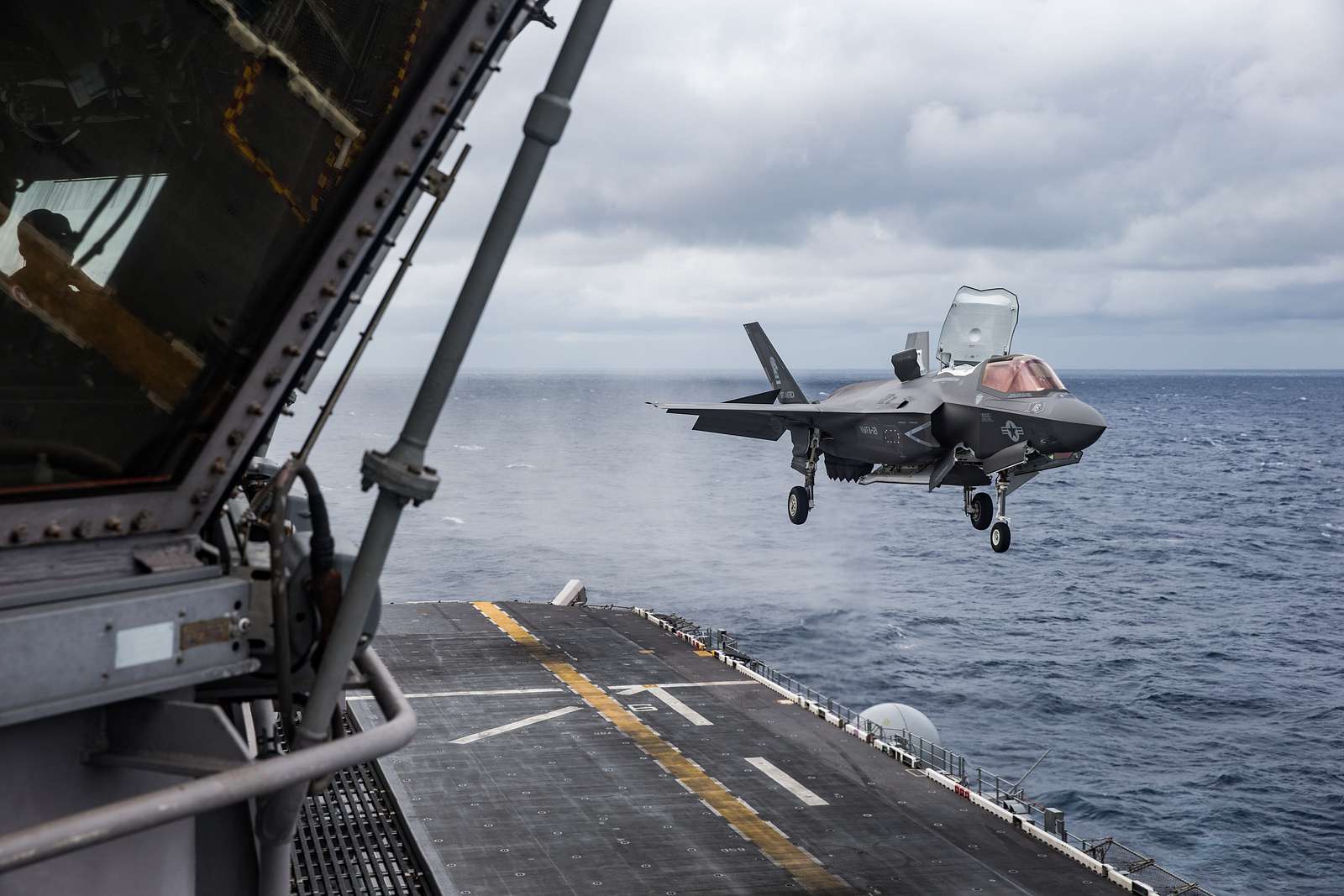
  • US F-35 shows off its insane vertical takeoff capability

    US F-35 shows off its insane vertical takeoff capability

    US F-35 shows off its insane vertical takeoff capability

    F-35B

    Can land vertically like a helicopter and take-off in very short distances. This allows it to operate from austere, short-field bases and a range of air-capable ships. The F-35B is operated by the United States Marine Corps, the United Kingdom, and the Italian Air Force.

  • What is the comparison between the Su-35 and the F-35?

    What is the comparison between the Su-35 and the F-35?

    Anyone who thinks the Su-35 would win falls into one of three distinct categories: first, he could be a Russian bot (yes there are tons of them, along with a fair number of Russian sympathizers who love to post); second, he could be a person who is very poorly informed (most likely reliant on hopelessly dated/inaccurate information); third, he could be a person who loves to assign ludicrous/unrealistic restrictions and rules of engagement that profoundly limit the F-35 for inexplicable reasons (i.e.both pilots must be able to see the white’s of each other’s eyes before the fight begins).

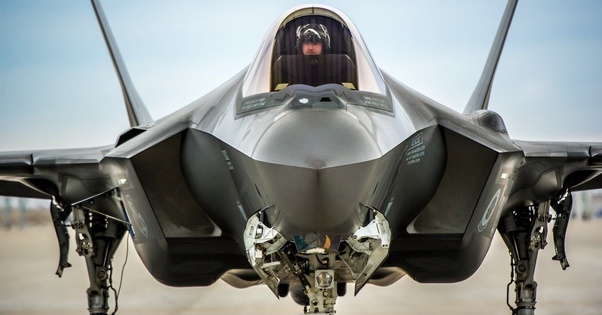
    There is simply no comparison to be had between a stealth fighter and a non-stealth fighter. None. The Su-35 is a perfectly capable plane, it just has no means to detect an F-35 before an F-35 detects (and subsequently kills or evades) it. It’s a fact, the F-35 can detect the Su-35 well within its missile’s guaranteed kill range while remaining undetectable by the Russian plane. The Su’s great maneuverability, its best feature, does not solve that problem. What’s more, even if the detection range of the SU’s IRST pod expands (though there are limits) the range and kill radius of U.S. missiles is just as certain to expand. In fact, once LREW and the AIM 260 (the AMRAAM replacement missile) comes online, there will be even less hope for the Su-35 and there already isn’t any. Though little is known, the AIM 260 is probably a long-range ramjet missile with an AESA radar that the Air Force has been working on for a few years. It’s probably a combination between the British Meteor missile’s ramjet, which provides a much enhanced guaranteed no escape zone since it can be throttled up as it gets closer to the target and a combination optical/infrared seeker and AESA seeker ( the latter of which the Japanese have already deployed on one of their new missiles). In other words, it is a combination of mature technologies. The U.S. will soon have a very long range (mach 4+) missile, that is practically impossible to spoof because of its multimode seeker, with vastly improved terminal performance compared to the already superb AAMRAM. The LREW is a multi-stage air to air missile that will likely outrange any air to air missile ever conceived.

    The only real air to air deficit for the F-35 is total missile carriage capacity; even that is being remedied.. the internal missile capacity of the F-35 is (supposedly) getting enhanced to six AMRAAMs during the block 4 upgrade from its current capacity of 4. If that still isn’t sufficient, there is also another new class of missile, called the SACM which may jump the internal carriage to 12. SACM is a program of record that will result in a hit to kill missile akin to Lockheed’s Cuda concept, which is significantly shorter than an AMRAAM, with similar range and seeker but no explosive warhead. The shorter, lighter, missiles allow for double carriage. While these will not be as sophisticated as the LREW or AIM 260 they will certainly complicate an enemy’s plans.

    So, how would a typical engagement go between the two planes? Well, Russian ground-based VHF radar may very well warn a squadron of Su-35’s sitting on alert that stealth fighters are inbound though it can not track them or target them precisely (there is a lot of electronic interference). The squadron of Su-35’s launch to intercept. Within minutes the VHF radars in the area go down. After all, they must be on in order to see F-35’s and if they are on, the F-35’s can also see the radars and will lob standoff missiles at them. F-35’s are excellent wild weasels.

    Now the newly airborne squadron of 12 SU-35′s use their IRST pods to search the sky for F-35’s. But these don’t help. For starters, IRST has a very narrow field of view and are highly impacted by environmental conditions like humidity… Pilots equate it to looking at the sky through a straw. Meanwhile, the F-35’s have some of the most powerful AESA radars ever mounted on a fighter aircraft (and Su-35’s are perfectly visible from more than 100 miles away), a supercomputer and millions of lines of code also tell the F-35’s exactly how many and what type of planes they are up against and the first F-35 aircraft that detects the Russian flight seamlessly shares that information across the entire squadron, heck the F-35’s powerful computer might even be able to identify the squadron to which the enemy planes belong. And the F-35’s aren’t alone. They have MALDs with them, which are basically cheap drones designed to mimic stealth fighters.

    The Sukhoi’s are flying to the last known location that they were directed to by the high-frequency ground radar before it went offline. Suddenly, one of the Su-35’s believes he’s gotten “lucky” when he sees a bright spot on his IR sensors. He’s found one! A single-engine fighter! What he has actually detected is a MALD, which he believes to be an F-35 and immediately the squadron of Sukhois begin to engage. More brights spots appear. The MALDs take evasive action and the Sukhois bleed energy engaging. It was a trap of course (the F-35s had plenty of time to prepare). As the Russians begin to engage the dummy targets, their missile warning lights pop on. Before they have sufficient time to react several explode. Hey, but at least they downed two drones! The remaining Su-35’s turn tail and run. But F-35’s were anticipating the retreat, and like good shepherds driving their sheep to the slaughter, the American fighters ran the Russian planes directly into more missiles launched by other F-35’s. BAM, BAM, BAM. No more SU’s. How many F-35s were there in the wolf pack? Who knows? It might have been six, it might have been 20. Within minutes the reserve Russian fighters on the airfield begin to explode as Small diameter bombs take out every target worth hitting.

    That’s basically the reality of what a Su-35 vs F-35 fight would look like. The SU-35’s would never know how many there are, they could never be sure of their targets; meanwhile, the F-35’s can pick how they want to engage and when they want to engage.

    Stealth vs. nonstealth is like a game of Marco-Polo in an Olympic sized swimming pool where the hunted (the Marcos) are allowed to keep their eyes open and throw tennis balls at the hunters (the Polos) to eliminate them. The hunters (Polos) meanwhile have to keep their eyes closed and don’t have any tennis balls to throw and must instead tag the Marcos in order to get a “kill”. Sure, they can occasionally detect the Marcos by screaming out and listening for the callback “Polo”.. but that fleeting hint doesn’t stop a tennis ball knocking them in the head and eliminating them. Even if they do catch a “Marco” it most likely was just a fake Marco. In other words, it doesn’t matter if the Polos are faster swimmers can hold their breath longer or are really good at listening, the game is entirely played on the Marcos’ home court because eyes and tennis balls are more important for this version of the game… just as stealth, sensors and missiles are more important in the fighter game.

    J.P.

  • Turkey Says Cost, Problems Prompted JSF Purchase Delay

    Turkey Says Cost, Problems Prompted JSF Purchase Delay

    ANKARA — Although Turkey has been one of the strongest partners in the multinational F-35 Joint Strike Fighter program, continuing financial and technical problems have created a more cautious attitude and interest in backup plans.

    f35-lightning_ii1

    Officially, Ankara cites rising costs and technological issues for its Jan. 10 decision to postpone an order to purchase its first two F-35 fighter jets. But top procurement officials admit there is a “certain degree of psychological deliberation at work, too.” Turkey does not want to “stand alone in the dark’’ on the program, said an official with Turkey’s procurement agency, the Savunma Sanayi Mustesarligi (SSM).

    “Due to the current state of the JSF … and the rising cost … it was decided to postpone the order placed on Jan. 5, 2012, for the two aircraft,” said the SSM. It also said the decision was made because the technical capabilities of the aircraft were “not at the desired level yet.”

    After the initial purchase of the two jets, Turkey plans to order 100 units of the stealth fighter to replace its F-4 Phantoms and F-16 Fighting Falcons, according to the statement.

    “It is true that the costs are rising, and we calculate that it would be safer for us to join other skeptical partners,” the SSM official said. “We think it is wiser to wait and see … to have a concerted position with the other partners.”

    In December, JSF partner Canada threatened to reconsider its purchase of the F-35. Shortly after that, Australia said it would buy 24 Boeing F/A-18 Super Hornets if it saw any more delays in the JSF program.

    European partners Britain and the Netherlands may delay their orders and question the rising costs. Also, Italy cut its JSF order by 30 percent last year as part of a broader reduction in government spending.

    Lockheed Martin, which builds the F-35, said it still expects to sell about 3,000 of the fighters over the next 25 years, including 2,443 to the U.S.

    Industry sources said any reduction in numbers will make individual planes more expensive because Lockheed will be unable to spread development and other costs as widely. The average cost per plane, pegged at $161 million, has doubled since Lockheed won the development contract in 2001. Since then, the U.S. has cut its total order by 400 planes.

    Another SSM official familiar with the program said the country was not considering leaving the program.

    “We have spent nearly $1 billion for this venture. The top management [at the SSM] told us to wait and see before we renew our first order. This is an indefinite postponement, but certainly not an intention to pull out.”

    An Air Force officer said further delays could disrupt operational requirements and planning at the headquarters.

    “In that case, we may have to sit down with the procurement people and devise a stopgap plan,” he said.

    The senior SSM official ruled out buying the Eurofighter Typhoon but said Ankara could consider an F-16 purchase.

    “We can compensate for rising costs with larger work share for our domestic industry. We also think that technical failures are not failures but just delays. If things get worse, we can consider an F-16 buy,” he said.

    Turkey is one of nine countries that are part of a U.S.-led consortium to build the F-35 fighter. The others are Britain, Canada, Italy, the Netherlands, Australia, Norway and Denmark.

    Turkey announced in March 2011 that it was placing its order for 100 jets on hold due to U.S. refusal to provide adequate access to the aircraft’s source codes. Ankara said that negotiations for access to the codes, including codes that can be used to control the aircraft remotely, had not yielded satisfactory results, and under these conditions, Turkey could not accept the aircraft. The issue remains unresolved.

    In April 2012, Turkey suggested program costs could be reduced by outsourcing more production to Turkish defense and aerospace companies, which operate with lower labor costs compared with their counterparts in the U.S. and other partner countries.

    via Turkey Says Cost, Problems Prompted JSF Purchase Delay | Defense News | defensenews.com.