Tag: Cyprus

  • Turkey Threatens Greek Cypriots Against Unilateral Oil and Gas Exploration In the Eastern Mediteranean

    Turkey Threatens Greek Cypriots Against Unilateral Oil and Gas Exploration In the Eastern Mediteranean

    Turkey Threatens Greek Cypriots Against Unilateral Oil and Gas Exploration In the Eastern Mediteranean

    Publication: Eurasia Daily Monitor Volume: 8 Issue: 177
    September 27, 2011 01:53 PM Age: 1 days
    By: Saban Kardas
    Amidst growing concerns about the escalation of Turkish-Israeli tensions in the Eastern Mediterranean, Ankara’s decision to undertake seismic exploration for oil and gas – in retaliation for the Greek Cypriot administration’s ongoing exploration activities – further raised tensions in the region. Recently, the Greek Cypriots issued a license to a US firm, Noble Energy, to launch exploratory offshore drilling for gas off Cyprus. Turkey condemned immediately this development, viewing it as an attempt to undermine the rights of Turkish Cypriots. Moreover, since the resumption of reunification talks on the island has recently reappeared on the agenda, Turkey believes this move will be potentially damaging to further diplomatic efforts to resolve the conflict. Therefore, the Greek Cypriot side should avoid such unilateral provocative actions, and delay discussing drilling projects until after a political solution to the existing division is found (Hurriyet, September 13).

    Later, Ankara went as far as issuing warnings that it would undertake its own exploration work and boost its military presence in the Eastern Mediterranean, should the Greek Cypriots proceed with their plans. Energy Minister Taner Yildiz also added that the Turkish Petroleum Corporation (TPAO), in cooperation with a Norwegian firm, was preparing to carry out seismic surveys off Northern Cyprus. To this end, Turkey started talks with the Turkish Republic of Northern Cyprus (TRNC) to conclude a continental shelf delineation accord to determine the areas for exploration (Anadolu Ajansi, September 19).

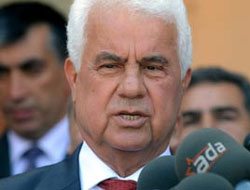
    Despite Ankara’s threats of retaliation, the first phase of Noble’s drilling activities started on September 18. Turkish Prime Minister Recep Tayyip Erdogan reacted harshly to this development, adding that Turkey would dispatch naval and air force assets to the area. While in New York to attend the UN General Assembly, Erdogan raised the issue during his talks with President Barack Obama. More significantly, he signed the continental shelf agreement with the leader of the TRNC, Dervis Eroglu. Erdogan argued “to caution international oil/natural gas companies that have and will undertake business with Greek Cypriots. Our Ministry of Energy is working to ban admission of these companies from energy projects in Turkey and impose a series of sanctions upon them” , September 21). The Greek Cypriot President Dimitris Christofias described Turkey’s actions as provocations and sought to highlight the issue during his address at the UN General Assembly (Hurriyet, September 23).

    In a demonstration of determination, a Turkish ship set off for seismic exploration in the Eastern Mediterranean sea, escorted by frigates and submarines (www.haberturk.com, September 23). As the issue was internationalized and risked militarization, especially coinciding with the UN General Assembly, efforts were made to cool down the tensions. While the Greek side seemed disinterested in Erdogan’s proposal for the simultaneous renouncement of the exploration work, UN Secretary General Ban Ki-moon also intervened to resolve the dispute. As a more concrete proposal, Eroglu presented to Ban Ki-moon another plan which would involve mutual suspension of such exploration (Anadolu Ajansi, September 25). While Ankara expressed support for this proposal, the Greek Cypriot side has yet to accept it.

    A promising step toward achieving a diplomatic solution was the telephone conversation between Erdogan and his Greek counterpart Yorgo Papendreu. While discussing the agenda for the next high level strategic cooperation council, the two leaders expressed their desire to address bilateral tensions (Anadolu Ajansi, September 26). However, in the absence of any concrete steps by the Greek Cypriots to halting their exploration plans, Yildiz said that the Turkish seismic exploration ship will start its operations today (September 27). Yildiz also added that the TPAO was in touch with the firms interested in carrying out drills in partnership with Turkey (Cihan, September 27).

    Exploration of the underwater energy resources around Cyprus has been a matter of controversy for some time, as it has been intermingled with the unresolved Cyprus issue and, by implication, Turkey-EU relations. The EU admitted into membership the government on the Greek part of the island as the sole representative of the Republic of Cyprus in 2004, but Turkey has protested against this decision because it ignored the rights of Turkish Cypriots who established the TRNC as a separate state. Turkey remains the only country to recognize the TRNC, though the Turkish government has supported talks for the reunification of the two communities on the island. However, at least since the collapse of the Annan plan in 2004, which was backed by Turkey, there is a line of thought in Turkish politics that views a two state-formula as the most viable solution for the Cyprus dispute. If the current tensions continue to escalate, with each side carrying out unilateral drilling projects, this development might de facto pave the way for a two-state solution. Whether the Turkish government has moved in the direction of adopting such a position remains to be seen.

    At the same time, Ankara’s refusal to recognize the Greek Cypriot administration’s claim for full sovereignty over the island poses a major obstacle to the Turkish bid for EU membership, further complicating the issue. Turkey has sought to delay the exploration of energy resources by linking it to the resolution of the dispute, which has angered the Greek Cypriot side. For instance, in protest over what it viewed as Turkey’s veiled threats against exploring their energy resources in the Mediterranean, the Greek Cypriot administration has been vetoing the opening of the Turkish-EU accession talks in energy and other chapters. As Turkey reacts to such policies, Turkish-EU relations have already become deadlocked.

    Only recently, Erdogan threatened to freeze Turkey’s relations with the EU, if the Greek Cypriot government is allowed to assume the EU presidency in 2012 before a political settlement is found on the future of the island (Anadolu Ajansi, July 20). Such statements by Turkish leaders continue to present obstacles to Turkey’s EU accession process, which is already stalled due to numerous issues. However, Ankara’s brinkmanship over the drilling issue shows that it is increasingly unconcerned with the EU’s negative reactions, perhaps indicating the degree to which Turkey is keen to pursue unilateral policies in the Eastern Mediterranean.
    https://jamestown.org/program/turkey-threatens-greek-cypriots-against-unilateral-oil-and-gas-exploration-in-the-eastern-mediteranean/
  • Operation Sunshine in Cyprus

    Operation Sunshine in Cyprus

    Does anyone know what Operation Sunshine is, or was? It is, or was, an MI6 operation in Cyprus back in 1959. The details are revealed in the enlightening research of Stephen Dorril under the title “MI6-Inside the Covert World of Her Majesty’s Secret Intelligence Service.”

    The summary is as follows: Cyprus was drawn into ethnic conflict in the late 1950s. Armed, right-wing Greek bands were carrying out attacks against British rule on the island and against Turkish civilians – something that would be named as an attempt at ethnic cleansing in today’s world. In response, Turkey secretly helped an embryonic resistance among Turkish Cypriots, organizing and arming them.

    The Brits decided to take effective steps. MI6 started to tap some VIP telephones, relying on the cutting-edge technology of the day in order to prevent further killings and provide a basis for a settlement between Greek and Turkish Cypriots. The names included the Greek leader, Archbishop Marakios III. While eavesdropping on Makarios’ lines in order to obtain some political and military information, they recorded some other stuff by mistake – “Rather unusual homosexual proclivities,” as described by the book.

    That was in 1958 and when Makarios resisted signing an agreement with Turkish Cypriots under the guarantee of Britain, Turkey and Greece in 1959 in Zurich, he had a visitor in his hotel room with some information to share. Makarios changed his mind overnight, came down to the hotel lobby where his Turkish counterpart Fazıl Küçük was waiting and signed the first treaty on Cyprus which lead the establishment of the Republic of Cyprus in 1960.

    That was Operation Sunshine. That is a part of the background story about how the Republic of Cyprus with Makarios as the president and Küçük as the deputy president was established.

    That British-made fragile structure began to fall apart a few years later, ultimately leading to theTurkish military intervention which divided Cyprus into two in 1974.

    Being happy with the status quo, Ankara did almost nothing other than support the declaration of the Turkish Republic of Northern Cyprus, of which only Turkey recognizes.

    Turgut Özal was the first Turkish leader who talked about a “bi-zonal, bi-communal, federal system” in the 1980s. In the mid-1990s, Turkey silently distanced itself from that formula, which was not adopted by the Greeks anyway.

    Under the Justice and Development Party, or AK Parti, Prime Minister Tayyip Erdoğan adopted a U.N.-backed reunification strategy, which was rejected by the Greek Cypriots in 2004. The European Union’s subsequent admittance of the Republic of Cyprus (officially representing the separated Turks in the north as well), made Erdoğan upset, like many of the Turks.

    Now Erdoğan is going back to Özal’s federal model and is threatening whomever by starting to support two separate states on the island, risking Turkey’s relations with the EU.

    That brings us to the threshold of a series of very interesting events in the coming months in the eastern Mediterranean.

    Hürriyet Daily News


  • Cyprus the most racist country in Europe among other negative aspects

    Cyprus the most racist country in Europe among other negative aspects

    In a research study that was done by the European University in 30 countries *Cyprus topped the list in most of the negative categories including: racism, low trust in others, selfishness, negative attitude towards immigrants, possessive individualism, being passive and detached from a set of important issues, and obsession with television while at the same time we are the slowest at becoming an information society. Among our few positive aspects of our society it was found that we are the most satisfied by the public health system, the tax system, the standard of living and trust in state institutions.

    In 2006 the 30% of the population was watching more than 3 hours of TV per day and sadly by 2008 this increased to 50%. Considering the quality of TV programmes that are popular in Cyprus this is indeed an alarming issue. At the same time, we have the lowest use of Internet with just 20% of the population engaging into daily Internet activities compared to 40% in case of Nordic countries. On the xenophobia side more than any other European country we do not like people from different cultural backgrounds. More surprisingly Cypriots even present racist tendencies towards fellow Cypriots who have different sexual preferences or different attitudes than themselves.

    Cyprus Updates

    *Greek part

  • Turkey seeks response to Greek Cyprus hooliganism

    Turkey seeks response to Greek Cyprus hooliganism

    FULYA ÖZERKAN
    ANKARA – Hürriyet Daily News

    Turkey is readying to use legal and political channels to respond to attacks against Turkish basketball players during a match in Greek Cyprus. ‘Our first priority was to ensure the players’ safe return after the attack. That was done and the next step will be to bring the issue onto the international agenda,’ a diplomatic source says

    Turkey is poised to take strong legal and political measures in pressing for an international response to an assault Tuesday night on a Turkish basketball squad by home-team fans during a match in Greek Cyprus.

    “Our first priority was to ensure the players’ safe return after the attack. That was done and the next step will be to bring the issue onto the international agenda,” a diplomatic source told the Hürriyet Daily News & Economic Review on Thursday.

    Turkey will pursue legal channels by sending a letter of complaint to the world basketball governing body, while the government presses the United Nations and the European Union to take action. Ankara holds the U.N. Peacekeeping Force in Cyprus responsible for not taking sufficient security measures.

    “We will, of course, complain to the United Nations both in Nicosia and New York because while our team’s initiative to play the match in Greek Cyprus was a [friendly] gesture, our players’ safety was not ensured,” the diplomatic source said. “Because Greek Cyprus is a member of the European Union we will also take initiative at the EU level.”

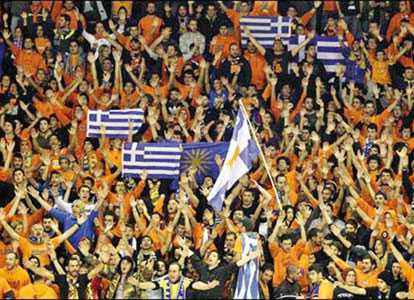
    During a FIBA Eurochallenge game against Apoel in Nicosia on Tuesday night, players on Turkey’s Pınar Karşıyaka were severely attacked by hundreds of Apoel fans who threw objects at the team and charged the court after the match’s final buzzer. The game had no particular importance since both teams’ places in Group G were already certain.

    The Turkish basketball players returned home to the Aegean province of İzmir through Greece because Greek Cypriot officials rejected Pınar Karşıyaka’s request to spend the night with security in northern Cyprus. They argued that such a step would be tantamount to recognizing Turkish Cyprus, which is only recognized by Turkey. Greek and Turkish Cypriots have been divided since 1974, when Turkey sent troops into the north after a rebellion by Greek Cypriots who wanted to unify with Greece.

    “The Greek Cypriot squad played in a previous match in İzmir, where they were warmly welcomed without encountering any incident. Turkish authorities did not even feel the need to take any extra security measures,” one source familiar with the developments told the Daily News.

    “Our players thought they would be treated the same and in return decided to play the match in Greek Cyprus but what was expected did not happen,” the source added.

    Immediately following the incident, Turkish Foreign Minister Ahmet Davutoğlu held a telephone conversation with Kaya Türkmen, the country’s ambassador to northern Cyprus. Embassy officials contacted by the Daily News said Türkmen would be unable to comment due to his busy schedule.

    Turkey will track the issue, says FM

    In Istanbul, Davutoğlu said Thursday that necessary security measures were not taken. “This is not an excusable situation, and we will keep track of the issue,” he told a group of journalists in Istanbul’s Çırağan Palace, where he was attending the 11th summit of the Economic Cooperation Organization.

    The Turkish foreign minister also said statements of apology made by Greek Cypriot authorities immediately after the attack were not sufficient, and emphasized that brotherhood and peace must prevail in sports events.

    In initial remarks, Greek Cypriot President Dimitris Christofias slammed those involved in the assault as “brainless,” saying their actions harmed the interests of the Greek Cypriot side.

    “This has caused big problems for the Republic of Cyprus because this gives great fuel to Turkish propaganda,” he was quoted as saying.

    * Daily News reporter Erisa Dautaj Şenerdem contributed to this report from Istanbul.

    Hürriyet Daily News

  • Turkey to bring water to Cyprus through pipelines beneath sea

    Turkey to bring water to Cyprus through pipelines beneath sea

    Turkey’s environment minister said that Turkey would bring water to Cyprus through pipelines beneath the sea.


    Turkey’s environment minister said on Wednesday that Turkey would bring water to Cyprus through pipelines beneath the sea.

    Minister Veysel Eroglu defined the project a difficult one, and said it would be the first of its type in the world.

    “Thus, we will be connected to Turkish Republic of Northern Cyprus (TRNC) with water,” Eroglu said during his meeting with TRNC’s Tourism, Environment and Culture Minister Kemal Durust in Ankara.

    Eroglu said Turkey hoped to solve Cyprus’ water problem, and tenders had been opened for the project–the first step of which was Alakopru Dam.

    Turkey’s Prime Minister Recep Tayyip Erdogan would lay the foundation of the dam on November 3, Eroglu also said.

    Another dam named Gecitkoy will also be constructed within the framework of the project aiming to carry water from Turkey to TRNC through pipelines beneath the sea. The tender for the Gecitkoy dam will be held as soon as possible.

    Alakopru dam is expected to be constructed within four years and Gecitkoy within three years.

    WorldBulletin

  • Cyprus and Arguments II

    Cyprus and Arguments II

    This file contains history and arguments about Cyprus İsland.

    Download