Tag: CIA

  • Erdogan resists US calls for Iran sanctions

    Erdogan resists US calls for Iran sanctions

    Erdogan15

    By DESMOND BUTLER, Associated Press Writer Desmond Butler, Associated Press Writer 1 hr 43 mins ago

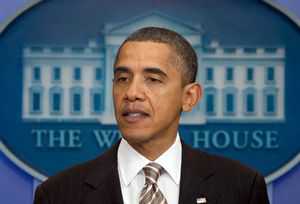
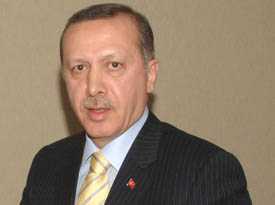
    WASHINGTON – President Barack Obama has failed to persuade the prime minister of Turkey of the need for sanctions against Iran.

    Turkish Prime Minister Recep Tayyip Erdogan (REH’-jehp TY’-ihp UR’-doh-wahn) stressed at a press conference following his White House meeting, that persuading Iran to give up its nuclear ambitions should be left to diplomacy.

    He said that he expressed Turkey’s willingness to mediate negotiations between Iran and the West. But he also criticized current sanctions against Iran as being ineffective because of loopholes for Western goods to reach the Iranian market.

    The Obama administration may seek new sanctions against Iran in the United Nations Security Council, where Turkey currently votes as a non-permanent member.

    THIS IS A BREAKING NEWS UPDATE. Check back soon for further information. AP’s earlier story is below.

    WASHINGTON (AP) — Seeking more help in the war in Afghanistan, President Barack Obama praised Turkey for its “outstanding” contributions there.

    Speaking in the Oval Office after a private meeting with Turkish Prime Minister Recep Tayyip Erdogan, Obama said Turkey’s commitments have helped bring stability to Afghanistan. Turkey took over the rotating command of the NATO peacekeeping operation in Kabul last month and doubled its number of troops to around 1,750. However, it has resisted repeated U.S. requests to send its troops on combat operations.

    Last week, Obama ordered 30,000 more U.S. troops be sent to Afghanistan. The administration expects its allies to provide up to 10,000 reinforcements.

    Obama also expressed his condolences for a recent terrorist attack in Turkey, and said the two leaders reaffirmed their commitment to defeat terrorism “regardless of where it occurs.”

    At least five Turkish soldiers were killed and several others wounded in an ambush Monday in central Turkey. Authorities have not identified the attackers but Kurdish and leftist militants are active in the area.

    Monday’s meeting between the two leaders comes at a time of rising Turkish influence in the Middle East and Central Europe. Before leaving for Washington, Erdogan said Turkey has already contributed the “necessary number” of troops in Afghanistan, and that Turkish military and police will train their Afghan counterparts and press ahead with health, education and infrastructure projects there.

    Turkey’s participation in the Afghan mission carries enormous symbolic importance because it is the only Muslim country working with U.S. troops to beat back the resurgent Taliban and deny al-Qaida a sanctuary.

    More broadly, however, the United States would like Turkey to use its sway as a regional power and Muslim majority ally to help solve some of America’s trickiest foreign policy problems. But the two sides disagree on many of the important issues.

    Turkey has sought to become a mediator for the United States with Iran and Arab countries, but it is unclear whether the Obama administration is eager for Ankara to play that role. The two sides disagree on sanctions against Iran and the Obama administration is uneasy about recent Turkish disputes with Israel.

    Greater friction is looming as the Obama administration intensifies pressure on Iran to end its nuclear ambitions. A U.S. push for sanctions at the U.N. Security Council, where Turkey currently sits as a nonpermanent member, will force Ankara to choose between a NATO ally and an important neighbor.

    The two allies also will need to navigate the perennial issue of an annual U.S. statement on the World War I-era massacre of up to 1.5. million Armenians by Ottoman Turks. Breaking a campaign pledge, Obama has refrained from referring to the killings as genocide, a term widely viewed by genocide scholars as an accurate description.

    The Obama administration has said it is wary that the sensitive issue could upset talks that could lead to reconciliation and a reopening of the border between Armenia and Turkey. It remains unclear how the administration will handle the issue in the future, especially if talks between Turkey and Armenia falter.

    Tensions have eased over cooperation in Northern Iraq. Turkish complaints about a lack of U.S. help in rooting out Kurdish militants launching attacks on Turkey from Iraq loomed over Erdogan’s White House visit with former President George W. Bush in 2007.

    Since then Turkey has boosted trade in the region and improved ties with members of the Kurdish minorities living on both sides of its border with Iraq.
  • Milan: CIA chief given eight years for abduction

    Milan: CIA chief given eight years for abduction

    Rendition trial ends with Milan CIA chief given eight years

    • Italian court convicts Robert Lady and 23 others in absentia
    • First prosecution for US abduction of suspects to torture states

    The former head of the CIA in Milan has been given an eight-year jail sentence for kidnapping at the end of the first trial anywhere in the world involving the agency’s “extraordinary rendition” programme.

    Robert Lady was tried in his absence and convicted of helping to organise the seizure of Osama Moustafa Hassan Nasr, known as Abu Omar, from a Milan street in February 2003. His superior, Jeff Castelli, the head of the CIA in Italy at the time, was acquitted on the grounds that he was covered by diplomatic immunity. Most of the other 23 alleged CIA operatives on trial were given five-year jail sentences in their absence.

    Extraordinary rendition involved the abduction of suspects and their forcible transfer for interrogation to third countries, often states in which torture was routinely employed.

    The judge ruled that neither the former head of Italian military intelligence, Nicolo Pollari, nor his deputy could be convicted because the evidence against them was subject to official secrecy restrictions. Two other Italian intelligence officials were given three years’ jail.

    Successive Italian administrations avoided applying to the US for the extradition of the 26 American defendants, who included a senior US air force officer. Their lawyers, appointed by the court, had no contact with their clients, who were regarded in Italian law as being on the run.

    Eyewitnesses testified that Abu Omar was stopped, apparently by Italian police, and bundled into a van. The prosecution charged that he was driven to the US air base at Aviano near Venice, then transferred to another American military facility at Ramstein in Germany. He was allegedly flown from there to Egypt.

    Four years later he was released without charge. He said he had been reduced to a “human wreck” by torture in a Cairo jail.

    The prosecution alleged the Americans enjoyed co-operation from the Italian authorities. The head of the government when Abu Omar was kidnapped was Silvio Berlusconi, who returned to office as prime minister last year.

    More than two years after the trial opened, the judge, Oscar Magi, heard final submissions from the prosecution and defence before retiring to consider his verdict. He told the court: “This was not an easy trial and the mere fact of its having been held is a significant event.”

    The CIA has declined to comment on the case. Successive Italian governments have denied involvement in renditions.

    To build their case, prosecutors ordered police to tap intelligence officers’ telephones and seize documents from intelligence service archives. Earlier this year Italy’s constitutional court dealt the prosecution a heavy blow when it ruled that much of the evidence gathered was protected by official secrecy and could not be used in court. Magi ruled that the trial should continue regardless.

    In a reference to the two senior Italian intelligence officials, prosecutors told the court yesterday that the defendants included those who “by kidnapping Abu Omar compromised, rather than safeguarded, national security”.

    Italian investigators had been tapping the cleric’s calls before he was abducted. Court documents leaked to the media showed he was suspected of recruiting young Muslims for the Iraqi insurgency.

    The prosecution contended that his seizure not only violated Italian sovereignty but aborted an important anti-terrorist investigation.

    The Guardian

  • CIA mock executions alleged in secret report

    CIA mock executions alleged in secret report

    Julian Borger, diplomatic editorAbd al-Rahim al-Nashiri, al-Qaida's chief of operations for the Persian Gulf and a suspected mastermind of the USS Cole bombing in October 2000, is now in U.S. custody. (AP Photo/ABC World News Tonight, HO).

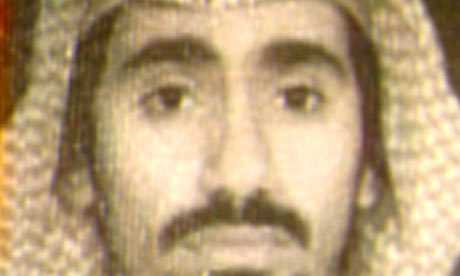
    Abd al-Rahim al-Nashiri, al-Qaida’s chief of operations for the Persian Gulf and a suspected mastermind of the USS Cole bombing in October 2000, is now in U.S. custody. (AP Photo/ABC World News Tonight, HO).

    The CIA will come under some of its toughest scrutiny for years tomorrow with the publication of a report detailing the agency’s use of mock executions, and the possible appointment of a special prosecutor to investigate its detention policy.

    The alleged abuses all took place under the Bush administration but some intelligence officials are arguing that the pendulum has now swung too far in the other direction, and congressional preoccupation with the CIA’s past misdeeds is hindering its current operations.

    The report was drawn up in 2004 by the CIA inspector general, John Helgerson, and kept secret until now. According to leaks in the US press over the weekend, it will say that CIA interrogators carried out mock executions to terrorise suspected terrorists into giving information.

    In one case, Abd al-Rahim al-Nashiri, suspected of playing a role in the bombing of the USS Cole in 2000, was threatened with a gun and a power drill. In another case, a gun was fired in a room next to a detainee who was being questioned, to convince him a fellow detainee had been killed. Threatening a detainee with summary execution is a violation of US law.

    The reports come weeks after the CIA’s admission that it had considered the use of hit squads to target senior al-Qaida leaders around the world, loosely inspired by the Israeli Mossad assassination teams that tracked down and killed Arabs believed to have been responsible for the murder of Israeli athletes at the 1972 Munich Olympics. It also emerged that private contractors were hired to take part in the CIA programme. Although the programme was cancelled because of legal and logistical misgivings before any assassinations were carried out, the revelations have added to the CIA’s embarrassment.

    Barack Obama’s administration has been reluctant to open an investigation but pressure from Democrats in Congress and human rights groups has been fuelled by the revelations. The attorney general, Eric Holder, is now reported to be contemplating the appointment of a prosecutor to look into the allegations contained in the Helgerson report, as well as detainee deaths in CIA custody.

    The new wave of scrutiny of the intelligence services has been compared to the Senate’s Church committee investigations in the mid-1970’s which uncovered widespread abuses including assassination plots against foreign leaders and espionage against American citizens. The Church committee was credited with cleaning up an agency that had run amok, but after the 9/11 attacks it was retrospectively blamed for over-regulating the CIA, rendering it institutionally cautious and unable to infiltrate hostile countries or terrorist groups.

    The new CIA director, Leon Panetta, who has brought some of his predecessors’ excesses to the attention of Congress, warned this month that the political wrangling over the past could distract the agency from its key task.

    “The CIA no longer operates black sites and no longer employs ‘enhanced’ interrogation techniques,” Panetta wrote in the Washington Post. “Yet my agency continues to pay a price for enduring disputes over policies that no longer exist.”

    Vincent Cannistraro, a former CIA official, said that “the pendulum on intelligence has swung from one side to the other.”

    “The clandestine capability that was arduously built up is already weakened through bureaucratisation, potential congressional hearings and investigations motivated by partisan political concerns,” Cannistraro said.

    Robert Baer, another former CIA officer, disagreed, arguing the need for accountability was paramount.

    “It’s the appearance of illegality that keeps running through this as a watermark,” Baer said. “You can’t just say let’s put this behind us.” “In the meantime clandestine intelligence will be bypassed by military action with all the drawbacks of limited oversight and lack of clandestine refinement.”

    Source:  www.guardian.co.uk, 23 August 2009

  • ‘CIA and Mossad paying $1,000 to Christian converts in northern Iraq’

    ‘CIA and Mossad paying $1,000 to Christian converts in northern Iraq’

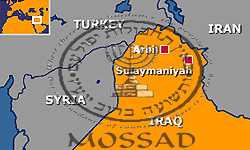
    christianzionismIran’s Fars news agency claimed Tuesday that the CIA and the Mossad were actively promoting Christianity in the Kurdish region of northern Iraq.

    According to the report, the Americans and Israelis were offering $1,000 to any youngster willing to convert to Christianity.

    The news agency further claimed that several Christian organizations had translated the Bible into Kurdish and were distributing them to young Kurds.

    Source:  www.jpost.com, Aug 4, 2009

    CIA, Mossad Promoting Evangelism in Northern Iraq

    christianzionism2TEHRAN (FNA)- The US and Israeli spy agencies are trying to promote evangelism in Iraq’s Kurdistan region, sources said.
    According to a series of information obtained by FNA, the Central Intelligence Agency (CIA) and Israeli Secret Services (Mossad) are striving to promote Christianity among the youth in Iraq’s northern region of Kurdistan.

    According to FNA dispatches, the two intelligence agencies have also allocated heavy funds for the task and pay $1,000 to every young person who turns to Christianity.

    The plot began from the very beginning of US military aggression against Iraq and occupation of the country after ousting former Iraqi dictator Saddam Hussein and even earlier, sources said.

    Head of the Islamic Group in Kurdistan Ali Bapir warned about the development, saying, “The international organization for evangelism in Iraq will pay 1,000 US Dollars to those who convert to Christianity.”

    Member of the Islamic Unity Movement of Kurdistan Babakr Ahmad told FNA, “Islamic parties have felt the danger. Unfortunately, the international Christian organizations are actively promoting Christianity given their available huge funds.”

    Kurds who have recently embraced Christianity hold annual meetings in Arbil, the capital of the Kurdistan autonomous region.

    Ali Bapir strongly criticized the authorities of Kurdistan autonomous region for their inaction in the face of the development and for issuing the required permission for holding such meetings.

    According to FNA dispatches, other evangelist institutions like ADS Institution are funding translation of Bible into the Kurdish language.

    An informed source from the evangelist institution in Arbil told FNA on the condition of anonymity that the main mission of the institution is distribution of Bible in Kurdish language.

    The source said the manager of the institution is a British who uses an alias name, “Eskandar” (Alexander), to escape identification.

    The source underlined that the institution’s books are coming from England and Greece and that the translated books are distributed among the people for free.

    Source: english.farsnews.com,  2009-08-04

  • AP sources: Cheney told CIA not to discuss program

    AP sources: Cheney told CIA not to discuss program

    Did Cheney Urge CIA Concealment? Play Video ABC News – Did Cheney Urge CIA Concealment?

    • Slideshow:Dick Cheney
    • George's Bottom Line on Cheney's Role Play Video Video:George’s Bottom Line on Cheney’s Role ABC News
    • Play Video Video:Sources: Cheney told CIA not to discuss program AP

    AP – FILE — In this June 1, 2009 file photo, former Vice President Dick Cheney speaks at the National Press … By PAMELA HESS, Associated Press Writer Pamela Hess, Associated Press Writer Sun Jul 12, 7:28 am ET

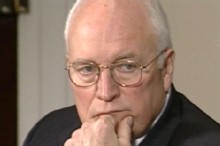
    WASHINGTON – Former Vice President Dick Cheney directed the CIA eight years ago not to inform Congress about a nascent counterterrorism program that CIA Director Leon Panetta terminated in June, officials with direct knowledge of the matter said Saturday.

    Subsequent CIA directors did not inform Congress because the intelligence-gathering effort had not developed to the point that they believed merited a congressional briefing, said a former intelligence official and another government official familiar with Panetta’s June 24 briefing to the House and Senate Intelligence committees.

    Panetta did not agree.

    Upon learning of the program June 23 from within the CIA, Panetta terminated it and the next day called an emergency meeting with the House and Senate Intelligence committees to inform them of the program and that it was canceled.

    Cheney played a central role in overseeing the Bush administration’s surveillance program that was the subject of an inspectors general report this past week. That report noted that Cheney’s chief of staff, David Addington, personally decided who in Bush’s inner circle could even know about the secret program.

    But revelations about Cheney’s role in making decisions for the CIA on whether to notify Congress came as a surprise to some on the committees, said another government official. All spoke on condition of anonymity because they were not authorized to discuss the program publicly.

    An effort to reach Cheney was unsuccessful.

    A former intelligence official, who was familiar with former CIA Director Gen. Michael Hayden’s tenure at the CIA, said Hayden never communicated with the president or vice president about the now-canceled program and was under no restrictions from Cheney about congressional briefings. The official said Hayden was briefed only two or three times on the program.

    Exactly what the counterterrorism program was meant to do remains a mystery. The former intelligence official said it was not related to the CIA’s rendition, interrogation and detention program. Nor was it part of a wider classified electronic surveillance program that was the subject of a government report to Congress this past week.

    The official characterized it as an embryonic intelligence gathering effort, and only sporadically active. He said it was hoped to yield intelligence that would be used to conduct a secret mission or missions in another country – that is, a covert operation. But it never matured to that point.

    The government official with direct knowledge of the Panetta briefing and the former intelligence official said the CIA has numerous efforts ongoing under its existing authorities that have not yet been briefed to Congress. He said they are not yet known to be viable for intelligence gathering.

    The Cheney revelation comes as the House of Representatives is preparing to debate a bill that would require the White House to expand the number of members who are told about covert operations. The White House has threatened a veto over concerns that wider congressional notifications could compromise the secrecy of the operations.

    That provision, however, would have no effect on programs like this one.

    The former intelligence official familiar with Hayden said Congress has a right to contemporaneous information about all CIA activities. But he said there are so many in such early stages that briefing Congress on every one would be too time consuming for both the CIA and the congressional committees.

    The New York Times initially reported about Cheney’s direction not to tell Congress of the program on its Web site Saturday.

  • CIA’s Iranian Plan?

    CIA’s Iranian Plan?

    Short video explores the possibility that the CIA is involved in Iran’s recent election unrest.