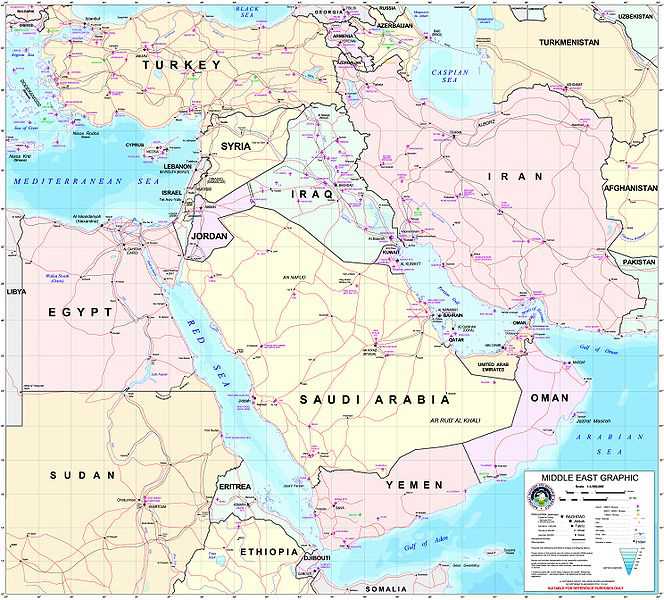
The outbreak of the riots in Libya just after Tunisia and Egypt (Libia is geographically between these two) makes evident that the riots in North Africa has caused domino effect. However, the situation of Libya may slightly be differentiated as compared with Tunisia and Egypt. (more…)
Tag: Ataturk
Mustafa Kemal Atatürk, the founder of the Turkish Republic and itsfirst President, stands as a towering figure of the 20th Century. Among the great leadersof history, few have achieved so much in so short period, transformed the life of a nationas decisively, and given such profound inspiration to the world at large. The Greatest Leader of ALL Time: ATATURK Soldier, Diplomat, Statesman, Orator, Teacher, Scholar, Genius Proactive Ataturk Community
-
Kemalism still has an important role to play in Turkey
Financial Times’dan bir okuyucu mektubunu bilginize sunuyorum……
Pulat Tacar
================================================================
Kemalism still has an important role to play in Turkey
Published: February 9 2011 00:12 | Last updated: February 9 2011 00:12
From Prof Emeritus Feroz Ahmad.
Sir, I read with interest Andrew Duff’s article “EU and Turkey avoid last ditch Cypriot talks” (FT.com, January 20). Much of the article was informative; but Mr Duff showed a lack of understanding about Turkey today when he talked of “Turkey’s exaggerated adherence to its state ideology of Kemalism”.
Mustafa Kemal never created a state ideology because he argued that ideologies become fossilised. He didn’t simply labour “to modernise Turkey along western lines”, he launched a determined struggle against the patriarchal society the new republic inherited from the Ottomans. In that society knowledge was based on myth and belief, truth was religious, government was dynastic and social relations were vertical, while social stratification was based on family, clan or sect.
The Kemalists introduced rational knowledge, truth based on science, a party-led government, social relations that were horizontal, and a society based on class.
Turkey is only 87 years old and therefore young by the standards of “old Europe”. The reforms of the 1920s and 1930s have still to be protected from attempts to restore patriarchal values, especially the rights gained by women. There is also the question of education and scientific thought; for example, in recent years the idea of evolution has been challenged by creationists in schools and institutions of science.
Mr Duff does not seem to understand what is happening in Turkey today and that is why Kemalists are alarmed.
Feroz Ahmad,
Professor Emeritus of History,
University of Massachusetts,
Boston, MA, US
Copyright The Financial Times Limited
======================================================
The development of secularism in Turkey
By Niyazi Berkes, Feroz Ahmad
-
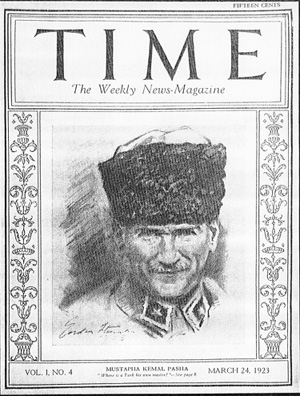
Turkey: The land a dictator turned into a democracy
Monday, Oct. 12, 1953He who loves the rose should put tip with its thorns.
—Old Turkish saying
ONE day in 1853, Nicholas I, Czar of all the Russias, peered southward over his aristocratic nose and voiced the opinion that Turkey was indeed “the sick man of Europe.” Exactly 100 years later, an astute and wealthy Texan named George McGhee, at the time U.S. Ambassador to Turkey, looked out over the green plains of Anatolia and said: “You know what this country reminds me of? It’s got the stuff, the git up and go, and it’s rolling. Why, Turkey today is just like Texas in 1919.”
Both Czar and ambassador had it right. In one century, the sick man of Europe has become the strong man of the Middle East. If not the paradise that propagandists sometimes paint, Turkey is stable, strong, democratic, progressive, booming. No nation stands so steadfast against Russia. In NATO it is the free world’s strong southern anchor; in the Korean war, its brigade was the “BB Brigade,” the Bravest of Brave. Turkish landing fields put U.S. strategic air half an hour away by jet from the Baku oilfields of Russia.
Assisted by U.S. dollars and skill, but doing its own hard work and running its Own show, Turkey is increasing its per Capita income 7% per annum, its gross national product 10%. As recently as 1950, Turkey had to import wheat; today she is the No. 4 wheat exporter in the world. In the same three years, Turkey’s tractors increased by 900%, farm acreage 25%, mileage of all-weather roads 100%, port capacity 250%, cotton output 300%. Yet these are the people of whom the Bulgar peasant used to say, making the sign of the cross: “No grass grows where the Turk’s horse treads.”
Ruthless Miracle. What brought the change? Between the days of the sick man and the Texas-style Turkey of today, the nation brought forth Kemal Ataturk. He worked his miracle, closed history’s gap in just 15 years, 1923-1938, and died 15 years ago next month.
By conventional standards, Kemal Ataturk was hardly an admirable character. He was a bitter, sullen and ruthless man, a two-fisted drinker and a rake given to shameless debauch. Politically, though he proclaimed a Bill of Rights, he flouted it constantly; though he talked of loyalty, he hanged his closest friends. He was devoid of sentiment and incapable of love, unfaithful to everyone and every cause he adopted save one—Turkey. But before he died, his driven, grateful people thrust on him the last and greatest of his five names: Ataturk, Father of All the Turks.
The Father of All the Turks (who left no legitimate heirs) was born in 1881 in Salonika, then part of the Ottoman Empire, of a mild Albanian father and a forceful Macedonian mother. Mustafa was a rebel from the start. His pious Mohammedan mother urged him to become a holy man, but he became a soldier; at 22, a captain, he rebelled against the Sultan and was nearly executed; at 27, he joined the Young Turks rebellion, then rebelled against the Young Turks. The army, fearful of him, shunted him from post to post, but could neither shake him nor subdue him. At Gallipoli, in 1915, he defeated the British; in the Caucasus, he checked the Russians; in Berlin, 1918, he drunkenly needled the high panjandrum of his allies, Field Marshal von Hindenburg; in Arabia, 1918, he held off T. E. Lawrence’s Bedouin hordes. At 38, he came out of the crash of the Ottoman Empire the only Turkish commander untouched by defeat.
Six Day Marathon. Eight years later, smartly turned out in his favorite civilian attire—the morning coat and striped pants of the Western diplomat—he stood before the Turkish National Assembly (which he created), in the capital at Ankara (which he created), and for six full days told in the Turkish language (which he purified and revised) the full story of what he had done. He began:
“Gentlemen, I landed at Samsun on the 19th of May, 1919. This was the position at the time…”
To his hearers, it was well-remembered history. Turkey in 1919 was crushed, defeated from without, disintegrating within. Gone was the fury and might which, beginning in 1299, had sent Ottoman legions smashing at Vienna’s gates and made Budapest a suburb of Constantinople. Gone was the conquering fervor that created a tri-continental empire the size of the U.S., encompassing what are now 20 modern nations stretching from the Dniester to the Nile, from the Adriatic to the Persian Gulf. In 1919, British warships still rode in the Bosporus and British troops held Constantinople; Italy, France and Greece were secretly dividing up the best of the remainder. The greatest empire between Augustus and Victoria had shrunk to a small, lifeless inland state in the barren interiors of Asia Minor; its Sultan was reduced to the status of a borough president of Constantinople. There was talk of asking Woodrow Wilson to take over the mess as a U.S. mandate.
Mustafa Kemal Pasha returned from his skillful but useless defense of Syria and asked for a job. “Get this man away—anywhere—quickly,” the Sultan cried. The government hoped to save itself by submission to the conqueror; Kemal’s unyielding patriotism endangered these schemes. So Mustafa got magnificent and meaningless titles—Inspector General of the Northern Area and Governor General of the Eastern Provinces—and was put aboard a leaky Black Sea steamer bound for Samsun, in remote Anatolia.
This suited Kemal fine. Arriving in Anatolia, he convoked a congress and proclaimed: “The aim of the movement is to free the Sultan-Caliph from the clutches of the foreign enemy.” Desperately, the Sultan, who did not want to be so freed, wired: “Cease all activity!” Replied Kemal: “I shall stay in Anatolia until the nation wins its independence.” Turkey, or what was left of it, had two governments: Kemal’s and the Sultan’s.
The victorious Allies, of course, favored the complaisant Sultan, but in their greed they served to further Kemal. The Sultan and the Grand Vizier went to Versailles to plead not to be denuded of all land and power. Clemenceau, the Tiger, said coldly: “Be silent, Your Highness! Relieve Paris of your presence.” The Allies handed the Sultan the Treaty of Sevres, which split Turkey six ways. The Greeks marched in to enforce the Diktat, and Kemal roared: “Turks! Will you crawl to these Greeks who were your slaves only yesterday?” He raised an army of peasants, veterans, criminals, patriots. Two years later, a few miles outside of Ankara, he gave the orders: “Soldiers, the Mediterranean is your goal,” and drove the Greeks back into the sea.
The Treaty of Lausanne which followed reversed the humiliation of Sevres. The last British admiral boarded the last British battleship in the Bosporus, snapped a respectful salute to the crescent flag and steamed off. The most defeated of enemies became the first to defy the victorious Allies, to scrap one of their treaties. The Ataturk miracle had begun: Mustafa Kemal, soldier, was master of Turkey.
Only Turks. The nation he put back together was slightly larger than Texas—296,000 sq.mi.—its vast bulk nestled in Asia Minor, with 9,000 sq.mi. wedging into Europe’s southeastern corner. Kemal was satisfied. “We are now Turks—only Turks,” he exulted. He wanted none of the old overextended Ottoman empire. “Away with dreams and shadows; they have cost us dearly,” he said.
Kemal went on a speaking tour among his people: “Remain yourselves, but take from the West that which is indispensable to the life of a developed people. Let science and new ideas come in freely. If you don’t, they will devour you.”
He began taking from the West, but he took with discrimination. He wanted to democratize Turkey, for “no country is free unless it is democratic.” But he recognized that “Democracy in Turkey now would be a caricature,” and set his dictatorship to preparing his nation for democracy. Thirty years ago this month (on Oct. 29, 1923), Kemal became: President of the new republic, commander in chief of the army, president of the Council of Ministers, chief of the only party, and speaker of the Assembly. He began ridding the Turks of the things that reminded them of the degenerate past. First he ordered the Sultan expelled; 16 months later the Caliph (or Moslem spiritual leader) was exiled. Kemal announced that “Islam is a dead thing,” and Turkey became a nondenominational state.
The break with the past had to be felt, simply and simultaneously, by all Turks. Ataturk looked about for the significant gesture. In India it had been salt-making in defiance of the British monopoly; in China it was cutting off the queue. Ataturk chose to attack the fez, traditional symbol of Ottoman citizenship. “The fez is a sign of ignorance,” said he. He laid down a deadline: after that date, no brimless headgear. Some Turks, unable to find hats with brims, wore their wives’ hats: better to look silly than to risk losing your head.
Coffee fo Kahve. Ataturk moved the capital from cosmopolite Constantinople to raw Ankara and changed Constantinople’s name to Istanbul. Though he personally abhorred emancipated women (they argued, instead of saying yes), he begged Turkey’s women to unveil, and most did. He abolished the Moslem sheriat (law) and took the best from Europe to replace it—Switzerland’s civil code, pre-Fascist Italy’s penal code, Germany’s commercial code.
Though he made haste, he had an intuitive awareness of his people’s gait. The old Turkish alphabet had become an esoteric nightmare of cumbersome Arabic scrawls; its difficulty contributed to illiteracy at home and incomprehensibility abroad. Kemal talked first to U.S. Educator John Dewey, then sat down with linguistic experts and worked out a new, simple Latin, A-B-C alphabet of 29 letters. Where new concepts lacked ancient symbols, he simply used Western forms: automobile to otomobil; coffee to kahve; statistic to istatistik.
Blackboards went up in the National Assembly, and Kemal himself gave the Deputies their first lesson. He went to the countryside and guided the gnarled hands of peasants who had never held a pencil before, as they wrote clumsy signatures in the new script. This patient teaching took five years; then abruptly he switched from precept to fiat. He gave civil servants three months to master the new script—or find new jobs. He had not been to Istanbul since 1919; now he returned in style and with a purpose. He sailed into the Golden Horn on the Sultan’s yacht, triumphantly marched past cheering crowds. He summoned Istanbul’s elite to the Sultan’s palace to a ball, and stood before them in full evening dress on a raised platform, chalk in hand, before a blackboard. For two hours he explained the new language, then the music blared, everyone drank, and the dancing went on until dawn. Nineteen twenty-eight became the Year One of Turkey’s new cultural life.
Oy Birligile. Ataturk liberated law, education and marriage from the mullahs; turned mosques into granaries; switched the day of rest from Friday to Sunday; tossed out the Islamic calendar and ordered in the Gregorian calendar of the Western world. He made suffrage universal, adopted the metric system, ordered all Turks to take on last names, took the first census in Turkish history. Harems were forbidden and monogamy became the law.
The most familiar phrase in the Turkish National Assembly during these electric days was Oy Birligile, meaning by unanimous vote. Opposed, Ataturk was ruthless. One evening in 1926, he gave a champagne party for foreign diplomats; it turned into an all-night carousal. Returning home at dawn, the diplomats saw the corpses of the entire opposition leadership, among them Kemal’s old friends, hanging in the town square.
But in his later years, after he had raised his people up, he decided to ease his dictatorship. He brought his ambassador home from France, ordered him to head an opposition, ordered his own sister to join it. The new Liberal Republican Party was so polite at first that Kemal demanded more vigor; when it became more vigorous he abolished it. “Let the people leave politics for the present,” he said. “Let them interest themselves in agriculture and commerce. For ten or 15 years more I must rule.”
After Ataturk. He did not have ten or 15 years more. Since his teens he had been drinking and whoring, searching, without finding, some personal peace. He tried marriage once in 1922 to Latife, the daughter of a Smyrna shipowner, but was soon divorced. In 1938, exhausted by periodic debauches and drinking bouts, undermined by diseases, he died. The timing was just right. Kemal Ataturk had held the Turks by the hand just long enough to help, not long enough to crush.
The day after Ataturk’s death, he was succeeded as President, legally and peacefully, by his handpicked successor, forceful soldier-administrator Ismet Inonu. For the next dozen years, the Inonu regime tried to maintain the Ataturk pattern. The people were kept on short rein, given few civil and personal liberties, and those grudgingly. But the momentum of progress continued.
In 1946, the Ataturk-Inonu party, the Republican People’s Party, won reelection, but only by using shabby tactics. It was the last time. A new, politically conscious opposition had grown up. Ataturk had unleashed forces greater than he; he had made so many new Turks that there was bound to be a new Turkey. In 1950, 88% of the voters went to the polls and swept out the Republican People’s Party which had held power uninterruptedly for 27 years. Inonu yielded gracefully. The newborn Democrats took over.
Their President was unspectacular Celal Bayar, an able banker and one of Ataturk’s ministers for five years, his Premier for one. This peaceful transfer of power was not the millennium, but it was the closest approach to it in the Middle East. Ataturk’s 15 years of ruthless education and preparation had paid off.
“Black Danger.” The new regime put an end to excessive state regulation of business. Ataturk had tried to industrialize Turkey through a cumbersome form of state socialism that he labeled étatisme. He developed some industry, but stifled it in red tape and scared away foreign investors. Now, under Bayar, Turkey is one of the few nations in the world heading towards more, not less free enterprise. Foreign investors are encouraged. There have been other reversals of Ataturk policy. Many emancipated Turks now fear “the black danger,” the resurgence of the once powerful mullahs. Religion is strong today in Turkey. The country is 98% Moslem. Ataturk relaxed the grip of a reactionary and decadent church, but he could not destroy the faith of his people. Just as Ataturk had taken the best from them, discarded the rest, the Turks are showing a talent for preserving what they think best in his teaching.
Turkey today is still far from Ataturk’s goals: 80% of its 21 million people live in mud huts in isolated villages, in half of which there are no primary schools. The currency is soft; inflation has doubled food prices. Much of the land is unfertilized and carelessly utilized. The Turk is poor: he gets a third of the meat that a meat-starved Briton received under austerity; only one in 2,000 owns an automobile. But Turkey’s spirit is good, the country is stable, its directon is sound.
A month hence, Ataturk’s body, which has lain in a “temporary” resting place these past 15 years, will be borne with ceremonial pomp to a new mausoleum on Ankara’s highest hill. The mausoleum, reached by 33 marble steps 132 feet wide, will probably be the biggest of its kind, until Evita Peron’s or the proposed Soviet pantheon tops it. For three days, Turkey’s 21 million citizens will do him honor.
“I will lead my people by the hand along the road until their feet are sure and they know the way,” Ataturk had said. “Then they may choose for themselves and rule themselves. Then my work will be done.” On his bronze statue overlooking the Golden Horn is another message to his people: “Turk! Be proud, hardworking and self-reliant!”
- Find this article at:
-
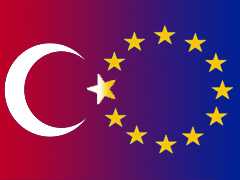
Europe, Look Outward Again
By CARL BILDT, FRANCO FRATTINI, WILLIAM HAGUE, and ALEXANDER STUBBEuropean Union enlargement, the transformation of a mainly Western European Club into a truly pan-European Union, has been one of the E.U.’s greatest success stories. But the historic mission to bring further stability, democracy and prosperity to the whole Continent is not yet finished.
On Monday, we will meet our colleagues from around the European Union at the General Affairs Council in Brussels to set out perspectives for the enlargement process and the countries moving down the path to E.U. membership. This will clearly be a significant occasion to turn around the inward-looking tendencies of recent years and revitalize the vision of an open Europe.
The economic crisis has underlined Europe’s need for much greater dynamism. Emerging from the crisis, we cannot afford to overlook the opportunity of expanding the free flow of capital, goods, services and labor.
Moreover, E.U. integration is about strengthening the rule of law and common European values and standards all over the Continent. This is apparent not least in Turkey, where E.U.-inspired liberal reforms have turned the country into one of Europe’s principal growth engines.
The crucial question is not whether Turkey is turning its back on Europe, but rather if Europe is turning its back on the fundamental values and principles that have guided European integration over the last 50 years.
In some quarters there is clearly some anxiety regarding the consequences of a Turkish E.U. membership. The doubts over admitting a large and self-confident nation are as explicit now as they were when Britain once applied — facing strong opposition from older members of the club. Voices of opposition were also heard when Sweden and Finland knocked on the door to the E.U.
Concerns are legitimate — but the counter-argument is clear: New members can help Europe return to economic dynamism and take on its proper weight in world affairs. By pushing prospective candidates toward liberal reforms and full respect for human rights, the European space of stability and growth can expand further.
In the back of our minds we should also remember that Turkey, like no other country, has the ability to advance European interests in security, trade and energy networks from the Far East to the Mediterranean.
The newly released Commission Enlargement Strategy clearly shows that
the membership perspective is still a forceful agent of change.Fifteen years after the conflict in the Western Balkans, all the countries of the region now have a clear European perspective. Turkey is in the midst of a far-reaching reform process. The application of Iceland, which is now at the start of its membership negotiations, proves that the E.U. remains attractive all over Europe.
Turkey is in a class of its own. It is an influential actor on the world stage with considerable soft power. Its economy is expected to expand by more than 5 percent this year, compared with a eurozone average of 1 percent. The O.E.C.D. predicts that Turkey will be the second-largest economy in Europe by 2050.
Turkish entrepreneurs in Europe already run EURO 40 billion worth of businesses and employ 500,000 people. A Turkish economy in the E.U. would create new opportunities for exporters and investors, and link us to markets and energy sources in central Asia and the near east. So the security and economic case for Turkish membership is strong.
That said, if we are all to reap those benefits, Turkey needs to play its full part. We want to see movement on important areas of fundamental human rights. Economic reform must continue and E.U. single-market rules must be implemented. We encourage Turkey to continue with the steps it has taken along this path.
Yet it is undeniable that the ongoing enlargement process is following a slower pace than the earlier waves of accession. This is partly a reflection of the economic situation in the Union, and weak administrations, shyness on reforms and prospective candidates falling short of fulfilling the Copenhagen criteria.
Let us be clear: The Union’s exacting standards of democracy and rule of law require a welcome but time-consuming reform process. However, the magnetism and the transformational capacity of enlargement works only if commitments are kept on both sides.
We, the member states, must stick to our established principles and benchmarks in order to safeguard the integrity and credibility of the process.
At its coming General Affairs Council, the E.U. should restate its strong commitment to further enlargement.
Carl Bildt, Franco Frattini, William Hague and Alexander Stubb are the foreign ministers, respectively, of Sweden, Italy, Britain and Finland.
I.H.T. OP-ED CONTRIBUTOR, December 10, 2010
-
Turkey continues to progress towards becoming a regional super power, WSJ says
05 December 2010, Sunday / THE ANATOLIA NEWS AGENCY, NEW YORKIn a full page news story on Turkish province of İstanbul, one of the US’s most prominent business dailies Wall Street Journal (WSJ) said that Turkey continued to progress towards becoming a regional super power.
The news story was published under the heading ‘Empire Returning Back’ and included photographs from must-see locations of İstanbul.
Written by Suzy Hansen, the WSJ article said that Turkey continued to move forward towards becoming a regional super power with a strong economy and a brave Prime Minister.
The 2010 European Capital of Culture İstanbul is full of confidence that Turkey achieved in recent times, the news story said.
The WSJ article also gave the names of various cites to be visited while in İstanbul.
AA
-

Why Turkey will emerge as leader of the Muslim world
By SONER CAGAPTAYThe AKP is setting the stage for a total recalibration of Turkey’s global compass.
Turkey is not thought of as the Muslim country par excellence, but it is perhaps the most Muslim nation in the world. Due to its unique birth during the collapse of the Ottoman Empire, as a state forged exclusively by and for Muslims through blood and war, Turkey is a Muslim nation by origin – a feature shared perhaps only with partitioncreated Pakistan.
Mustafa Kemal Ataturk’s secularization in the 1920s veneered the country’s core identity with a Kemalist, nationalistic overlay. However, a recent perfect storm has undone Ataturk’s legacy: Whereas the events of September 11 have, unfortunately, oriented Muslim-Western relations toward perpetual conflict, the Islamist-rooted Justice and Development Party (AKP) in Ankara has helped reexpose the country’s core identity. When the AKP came to power in 2002, many expected that the party’s promise to de-Kemalize Turkey by blending Islam and politics would not only create a stronger Turkey, but would prove Islam’s compatibility with the West. The result, however, has been the reverse.
The AKP has eschewed Ataturk’s vision of Turkey as part of the West, preferring a Manichean “us [Muslims] vs them” worldview. Hence, in the post- September 11 world, stripped of its Kemalist identity, Turkey’s self-appointed role is that of “leader of the Muslim world.” The country is, in fact, well-suited for this position: It has the largest economy and most powerful military of any Muslim nation. After years of successful de-Kemalization, the only obstacle that remains is convincing its Muslim brethren to anoint it as their sultan.
Turkey was created as an exclusive Muslim homeland through war, blood and tears. Unbeknownst to many outsiders, modern Turkey emerged not as a state of ethnic Turks, but of Ottoman Muslims who faced expulsion and extermination in Russia and the Balkan states. Almost half of Turkey’s 73 million citizens descend from such survivors of religious persecution. During the Ottoman Empire’s long territorial decline, millions of Turkish and non-Turkish Muslims living in Europe, Russia and the Caucasus fled persecution and sought refuge in modern-day Turkey.
With the empire’s collapse at the end of World War I, Ottoman Muslims joined ethnic Turks to defend their home against Allied, Armenian and Greek occupations. They succeeded, making Turkey a purely Muslim nation that had been born out of conflict with Christians. Religion’s saliency as ethnicity lasted into the post- Ottoman period: When modern Greece and Turkey exchanged their minority populations in 1924, Turkish- speaking Orthodox Christians from Anatolia were exchanged with Greek-speaking Muslims from Crete.
All Muslims became Turks.
Although Ataturk emphasized the unifying power of Turkish nationalism over religious identity, Turkishness never replaced Islam; rather, both identities overlapped. Ataturk managed to overlay the country’s deep Muslim identity with secular nationalism, but Turkey retained its Muslim core.
Turning to the post-September 11 world, states created on exclusively national-religious grounds are vulnerable to a Huntingtonian, bifurcated “us [Muslims] versus them” worldview.
Until the AKP, Turkey was successfully driven by large pro-Western and secular elites, and there was not much to worry about in this regard.
However, the AKP has replaced these elites with those sympathetic to the us versus them eschatology.
AKP leader and Turkish Prime Minister Recep Tayyip Erdogan, along with his government, believe in Huntington’s clash of civilizations – only they choose to oppose the West. The AKP’s vision is shaped by Turkey’s philosopher- king, Foreign Minister Ahmet Davutoglu, who summarizes this position in his opus Strategic Depth, in which he writes that “Turkey’s traditionally good ties with the West… are a form of alienation” and that the AKP will correct the course of history, which has disenfranchised Muslims since the collapse of the Ottoman Empire.
Undoubtedly, the AKP’s us versus them vision would not have had the same powerful resonance had the group come to power before September 11. Because those attacks defined a politically-charged “Muslim world,” the AKP’s worldview has found fertile ground and has changed not only Turkey itself, but also the nation’s role in foreign policy.
To this end, the AKP took advantage of Turkish anger with the US war in Iraq, casting it as an attack on all Muslims, Turks included. This reinforced its bipolar vision. Recently, while visiting Pakistan (of all places), Erdogan claimed that “the United States backs common enemies of Turkey and Pakistan, and that the time has come to unmask them and act together.” He later denied making these comments, which were reported in Pakistan’s prominent English-language dailies.
The AKP’s foreign-policy vision is not simply dualistic, but rather premised on Islam’s à la carte morals and selective outrage, and therein lies the real danger. One case in point is to compare the AKP’s differing stances toward Emir Kusturica and Omar al-Bashir. The former, a Bosnian film director who stood with the Yugoslav National Army as it slaughtered Bosnians in the 1990s, was recently driven out of Turkey by AKP-led protests, resulting in threats against his life – a victory for the victims of genocide in Bosnia. The latter, the Sudanese president indicted for genocide in the International Court of Justice, was gracefully hosted by the AKP in Turkey. Erdogan has said, “I know Bashir; he cannot commit genocide because Muslims do not commit genocide.”
This is the gist of the AKP’s à la carte foreign-policy vision: that Muslims are superior to others, their crimes can be ignored and anyone who stands against Muslim causes deserves to be punished.
The reason this vision will transform Turkey is because the country changes in tandem with its elites. Ever since the modernizing days of the Ottoman sultans, political makeover has been induced from above, and today the AKP is poised to continue this trend, as it is replete with pro-AKP and Islamist billionaires, media, think tanks, universities, TV networks, pundits and scholars – a full-fledged Islamist elite. Furthermore, individuals financially and ideologically associated with the AKP now hold prominent posts in the high courts since the September 12 referendum, which empowered the party to appoint a majority of the top judges without a confirmation process. In other words, the AKP now not only governs, but also controls Turkey.
Like their close neighbors, the Russians, Turks have moved in lockstep with the powerful political, social and foreign-policy choices that their dominant elites have ushered in. Beginning with the sultans’ efforts to westernize the Ottoman Empire in the 1770s, and continuing with Ataturk’s reforms and the multiparty democracy experiment that started in 1946, Turkish elites have cast their lot with the West. Unsurprisingly, the Turks adopted a pro-Western foreign policy, embraced secular democracy at home and marched steadily toward European Union membership.
Now, with the AKP introducing new currents throughout Turkish society, this is changing. In foreign policy, the dominant wind is solidarity with Islamist and anti-Western countries and movements. After eight years of AKP rule – an unusually long period in Turkish terms: if the AKP wins the June 2011 elections, it will have become the longest-ruling party in Turkey’s multiparty democratic history – the Turks are acquiescing to the AKP and its us versus them mind-set.
According to a recent poll by TESEV, an Istanbul-based NGO, the number of people identifying themselves as Muslim increased by 10 percent between 2002 and 2007, and almost half of them described themselves as Islamist. In effect, the AKP’s steady mobilization of Turkish Muslim identity along with its close financial and ideological affinity with the nation’s new Islamist elites is setting the stage for a total recalibration of Turkey’s international compass.
The writer is a senior fellow at the Washington Institute for Near East Policy and coauthor (with Scott Carpenter) of Nuanced Gestures: Regenerating the US-Turkey Partnership (2010).
, 24.11.2010