Blog

  • The Drive to Modernize Turkey

    The Drive to Modernize Turkey

    Cultural Connection

    After its establishment, the Turkish Republic embarked on a series of reforms that aimed at the modernisation, Westernisation and economic self-sufficiency of the country. A recent exhibition in Istanbul, Mindful Seed Speaking Soil: Village Institutes of the Republic 1940-1954 reveals more about this project.

    A community pose outside one of the Village Institutes, mid 1930s.

    After its establishment, the Turkish Republic (under the leadership of Mustafa “Atatürk” Kemal) embarked on a series of reforms that aimed at the modernisation, Westernisation and economic self-sufficiency of the country. A recent exhibition, Mindful Seed Speaking Soil: Village Institutes of the Republic 1940 – 1954, at the Istanbul Research Institute takes a look at one of the products of this drive towards modernisation: the village institutes.

    The village institutes were an important education experiment and targeted the rural areas of the country. According to the 1935 census—twelve years after the Republic was formed and some seven years after the language reforms were introduced—76.7 percent of males and 91.8 percent of females were still illiterate. For the republican leadership, it was imperative to create a class of peasant intellectuals for the Kemalist ideals to truly take hold. The village institutes were therefore formed with the broad aims of reducing poverty and ignorance, increasing agricultural productivity, and modernising social relationships. These institutes attracted both male and female peasant youth from the surrounding countryside and focussed not just on literacy but also on imparting important vocational training

    The first village institute was established in 1940. Between then and 1954, a total of twenty-one such institutes were set up across Turkey. These institutes attracted both male and female peasant youth from the surrounding countryside and focussed not just on literacy (the curriculum included a variety of academic subjects as well as art, music and literature) but also on imparting important vocational training. It was expected that the graduates of these schools would eventually work as teachers in their own villages, thus spreading the ideals and skills they themselves had learnt.

    Through a series of photographs and documents the exhibition vividly recreates the milieu of the institutes and the principles that they propagated. Often, students built the very buildings where they would be educated: photos show them mixing cement and laying bricks. The photographs of students learning construction and carpentry, sowing seeds, sewing, embroidering, and working in animal husbandry only bring to the fore the desire to create an army of heroic technicians. Through displays of student artworks, the musical instruments and scores they learnt, and the books they read, the exhibition also shows the importance the Republic put on inculcating a certain aesthetic in its ideal citizen. Of particular interest is the importance given to works by Tolstoy, Gorky, and Panait Istrati, a feature which would become problematic in the aftermath of WWII.

    By the late 1940s, the village institutes had become an increasingly controversial experiment and the subject of ideological debate in the country. For the conservatives, the institutes were the centres of subversive and communist ideology. That they were co-educational and encouraged interaction between the sexes only made them even more problematic. The rural landowners (who became an important voter base when Turkey moved to a democratic system after 1950) were concerned about a newly-educated peasant class questioning the authority of the elite. For those on the Left, the schools were a tool for spreading the ideology of the single-party regime. The post-war atmosphere in Turkey made it politically difficult for the institutes to continue operating, and they were eventually shut down. Even though they had a short lifespan, the history of these institutes sheds light on an important period in Turkish history as well as the nature of the Kemalist experiment.

    Vedica Kant

    Is a contributing writer for the Majalla. A graduate from the Singapore Management University in Economics and Political Science, she received her masters in Near and Middle Eastern Studies at the University of Oxford. She currently lives and works in Istanbul.

    via The Drive to Modernize Turkey | The Majalla Magazine.
  • Being Armenian is not insult

    Being Armenian is not insult

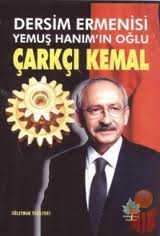
    ISTANBUL. – An Istanbul court made a ruling on the lawsuit filed by Turkey’s main opposition Republican People’s Party (CHP) Chairman Kemal Kilicdaroglu, who had sued the author of the book entitled “Engineer Kemal: Son of Dersim Armenian [Woman] Yemus” and noted that a slander campaign was launched against him by way of ethnic identity.

    The court, however, ruled that the harsh and crude expressions used in the book are within the parameters of freedom of speech specified by the European Convention on Human Rights, Istanbul’s Agos Armenian bilingual weekly reports.

    According to the ruling, the expressions used in the book do not jeopardize Kilicdaroglu’s political career and his professional and personal life.

    To note, the aforesaid book was distributed in the Turkish parliament in February 2011, and it included offensive expressions against the CHP leader, and his mother’s being Armenian was portrayed from an offensive point of view.

    As a result, Kemal Kilicdaroglu had filed a claim for compensation and demanded that the court order the collection of the book’s copies from bookstores.

    via Being Armenian is not insult | Armenia News – NEWS.am.

  • 8 Lessons for America from Anatolia

    8 Lessons for America from Anatolia

    Ellen Freudenheim

    Freelance Author, Activist

    Sustainable Farming, Organic Food: 8 Lessons for America from Anatolia, Turkey

    American college graduates are drifting back to the second oldest profession in the world: farming.

    Liberal arts grads, including kids with pricey degrees from Princeton and Wesleyan, are choosing to work on small, green-minded farms, reports a recent New York Times article.

    Punting on entry level jobs and office drudgery, they instead are wading up to their proverbial elbows in hay and manure, engaging in physical labor, and getting a graduate seminar from Mother Nature.

    The allure of an environmentally responsible, low-pesticide kind of agriculture is a logical outcome of the eco-conscious gestalt that partially defines this new generation.

    The romance of raising one’s own food is just a baby step from the slow food movement, “edible schoolyards” projects, and Michelle Obama’s White House garden. It’s related to campus concern over the climate crisis, the substitution of fast food for “real food,” and the sad oxymoron of food insecurity for the obese poor. Oh, and add to that list the crummy politics and perversely unhealthful financial incentives underpinning global agribusiness.

    It may seem weird to the parental units, but sustainable farming is in.


    Un-Fast Food in Sukran’s Garden
    In mid-September, I visited western Anatolia in Turkey where such ideas as “small farm,” “organic,” and “locally-grown” are so old hat they predate the fez. And from that trip, some words of wisdom for young American wanna-be farmers with sustainability on their minds:

    Lesson #1: Plan Ahead
    While tourists muse on the Roman ruins of Ephesus, heedless of where our next meal will come from, rural Turkish women are reenacting a timeless rite of survival: preparing the harvest bounty for the winter. During the still-warm autumn months, it’s not uncommon to see small groups of women working outside their homes, using canoe-length wooden paddles to stir food in huge metal vats cooking over a wood fire.
    Moral of the story: If you’re not going to rely on the supermarket (or restaurants, or mom’s fridge), then you have to plan ahead.

    Lesson #2: Keep It Simple

    The vats in question — some three feet deep and equally as wide, almost as big as a Sultan’s tub — are filled with the same burbling red sauce as last year, and the year before. Tomato sauce is an Anatolian staple, used in a popular cold green bean dish called taze-fasulye, and a thousand and one varieties of lamb stew. Let American foodies fiddle with the recipe, worrying over the melding of the complex flavors of truffles, shallots and wine. Turkish tomato sauce is healthful, but couldn’t be more basic: stewed tomato, cooked either with or without hot green peppers, salt, some herbs.

    If you’re aiming at sustainability, you might need to forsake fancy.

    Lesson #3: A College Education Isn’t Enough
    One of the women I met, Sukran, showed us the well-tended garden of her stone and adobe house. But first, hospitality. Over glasses of ice-cold fresh buttermilk, we take measure of each other: a shorts-wearing, college-educated New Yorker lathered in sunscreen and casually carrying an iPad, camera and iPhone, and a deeply tanned, traditional Muslim grandmother in traditional Anatolian baggy pants, floral print head shawl, and for extra coverage, a baseball cap. She has no Wi-Fi. We connected at about the only physical place where she wasn’t covered, the eyes.

    We both love providing healthy meals to our families — but only one of us knows how to do so from a garden.

    Bottom line: You need more than a college education to how to wring enough from an acre or two to feed the family year-round.

    Lesson #4: If You Want to Eat What You Sow, Think Systems
    On a quick tour of Sukran’s garden. She’s growing squash (the pulp is used for stews, flowers for salads, salted seeds for snacks); pumpkins (for pies and seed-snacks); tomatoes; robust Yukon-like potatoes; red, green and little hot green peppers, and beans. Dotted through the garden are trees: almond, apricot, pear, apple and cherry. Nuts are used in sweets and cooking. Grapes and fruits are eaten fresh in season, juiced and jellied. A beehive sits in the middle of the garden buzzing with activity. Olive trees are nearby.

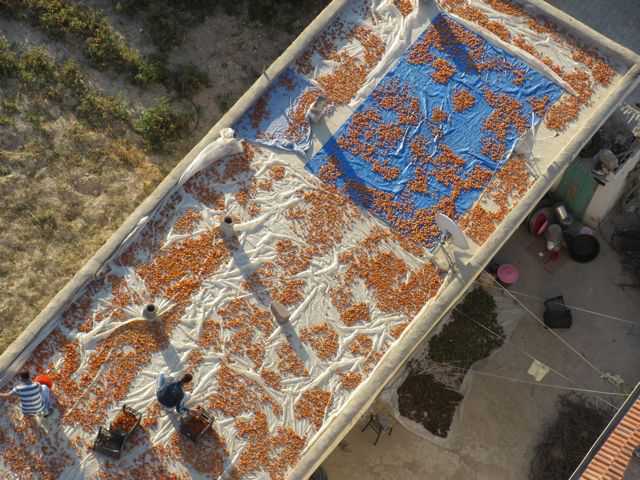
    Apricots are drying on the flat house rooftop (see photo), as are grapes.

    Meat, milk and cheese come from goats, lamb and seven cows, are kept nearby. Huge packets of meat are stashed in one of five freezers, the only obvious nod to modernity.

    The garden is as tightly laid-out as the architectural plan for a condo conversion. And, Sukran is operating with a food processing timetable that’s probably stored, like a spreadsheet, in her head.


    Lesson #5: Sustainable Gardening Takes Multiple Hands

    The extended family — Sukran and her husband, two sons and their wives and grandchildren — live together and participate in both food production and consumption. It may not take a village, but serious, sustainable home gardens big enough to feed a family require more than two hands.


    Lesson #6: Plan a Winter Vacation in Florida to Recover from Making Hay While the Sun Shines

    “You work very hard,” I say. Sukran nods, and replies,” In winter, I sleep for five months.” Clear-eyed and handsome, she looks much older than her 61 years.

    Raising your own food is not a cakewalk.

    Lesson #7: Don’t Underestimate How Much Skill and Knowledge Are Needed

    As urbanites with a fondness for restaurant dining, it’s obvious that successful, sustainable home gardening requires skills and a broad kind of practical knowledge that we lack.


    Lesson #8: “God’s Gift”

    Humbled, we thank our impromptu hostess for her hospitality. “You are God’s gifts,” replies Sukran quickly, referring to the belief that strangers who show up out of the blue appear for a reason, and to whom, therefore, a gracious welcome is due.

    Her words are more than pleasantries.

    Faith and optimism are important ingredients in a lifestyle in which food for sustenance depends not on what time the local Whole Foods store closes, but on rain, sun and natural elements beyond one’s control.


    Recipe for Change: The Sustainability Thing
    Sukran’s garden has some retro appeal as an alternative to the American way of “doing” food, though obviously American women aren’t going to spend 24/7 in their home and garden, as she does.

    Still, this Anatolian home farmer has nailed what, in Brooklyn one might call “the sustainability thing.”

      • She’s living a physically active and environmentally sustainable life, raising and eating home-grown organic produce.


      • Her family heats water on their roof with solar power, using government-subsidized solar panels.


      • Recycling cow dung and nitrogen-rich pigeon droppings as manure, they harness a rich natural ecosystem.


      • Their food security is independent of wages or agribusiness and leaves a small carbon footprint.


    • The family members’ interdependence may be emotional, but it is also based in tangible economic necessity.

    So here’s a recipe for change: Toss into a Sultan-sized vat the kind of traditional home farming know-how that makes Sukran’s garden bloom. Flavor with modern technology, wifi, metrics, CSAs and community gardens. Get some smart farmer kids with Princeton degrees to stir over a hot flame, fueled by growing unease over the quality of our food supply and the obesity epidemic.

    With luck, they’ll cook up a green stew of 21st-century sustainable, organic gardening projects that appeal to the appetites of American suburbanites and city dwellers.

    Because, for Americans, overstuffed with fast food and pesticide-rich produce as we are, an accessible bridge back to a healthier, more local food supply would, indeed, be God’s gift.

  • Turkey’s model of ‘moderate’ Islamism can be misleading

    Turkey’s model of ‘moderate’ Islamism can be misleading

    Murat Somer


    What do we learn from Turkey about building democracy in a Muslim society? When an unworthy movie mocking Prophet Mohammed provoked deadly protests in many Muslim nations, only peaceful protests occurred in Turkey. What makes it different?

    Related

    • ■ Turkey accused of using school system for ‘campaign of Islamisation’

    Prime Minister Recep Tayyip Erdogan has taken credit on behalf of his moderate Islamist AKP, which helped to calm many Islamists. It is also true that a major chapter in the relative success story of Turkish democracy and modernisation has been the moderation of political Islamism during the 1990s from an ideological and state-orientated brand into the AKP’s pragmatic and business-orientated brand.

    However, without telling the remaining chapters, this would be a misleading story from which to learn. Turkey’s model became a relative success because it managed to build relatively secular, relatively democratic, and rule-based social and political institutions. And it failed when these institutions were flawed, or were not improved upon through cooperation between religious and secular actors.

    Turkey didn’t succeed because of moderate Islamists; moderate Islamists succeeded because of Turkey’s partially working secular and democratic institutions.

    In recent years, the AKP has capitalised on the flaws in Turkey’s secular democracy instead of fixing them. Paradoxically, the democratic winds of the Arab Spring have accelerated this trend.

    Modern Turkey was founded in the 1920s by top-down, radical secularisation. The downside was a deeply complicated historical-cultural legacy, and the resentment of Islamist elites who were oppressed. On the upside were three crucial achievements: building an overarching national identity; limiting antipathy towards westernisation and de-linking socioeconomic modernisation and Islamic orthodoxy; and generating relatively robust secular and impersonal institutions.

    Nevertheless, this would not have distinguished Turkey from authoritarian secular republics of the Arab world, if Turkey’s secular elites had not moderated and allowed real multiparty elections after 1950. Additionally, Turkey built more inclusive and competitive economic institutions through liberalisation after 1980, and more accountable ones through IMF-guided reforms after its 2000-2001 financial crises.

    The AKP is a product of these accomplishments. Although secularist institutions had severely sanctioned political Islamists, free and fair elections gave them a chance to moderate and come to power. Relatively liberal economic institutions gave the AKP the tools to run the economy and foster a Muslim-conservative middle class.

    But Turkey’s secular-democratic institutions were flawed. Although secularists allowed the rotation of government through real elections, they left the ultimate power in the hands of the military and colossal state apparatus. While Turkey developed a strong national identity and relatively impartial institutions, there was discrimination against minorities, most notably Kurds. Under the disguise of separating state and religion, supposedly secular institutions controlled religion, promoted Sunni Islam, discriminated against Alevis, and violated both secular and religious freedoms. Governments retained tremendous powers to restrict economic freedoms and discriminate among business actors for political purposes.

    Supporters hoped the AKP would fix these flaws. The party did a lot. Most importantly, it tamed military praetorianism. Last week, a civilian court unprecedentedly sentenced three former top generals to 20 years in jail for planning a 2003 coup. In its first two terms, the AKP pursued a highly reformist agenda guided by EU criteria.

    Recently, however, the AKP has taken a religious-conservative, nationalist and authoritarian turn. Rather than making the political system more accountable, Mr Erdogan has centralised decision-making and wants a presidential system. Abandoning a “Kurdish opening”, Ankara has returned to military-based policies. Political, religious and opportunistic favouritism is rampant in government recruitments, promotions and tenders.

    Paradoxically, the region’s post-Arab Spring troubles exacerbate these trends. The policy of “zero problems with neighbours” has given way to tensions with Syria, Iran, Iraq and Israel. Foreign policy troubles have compelled the government to move closer to Sunni political forces in the region, and made it less tolerant of criticism.

    The mainstream discourse is becoming increasingly religious, sectarian and anti-western. There were no violent rallies against the recent Islamophobic film trailer, but “experts” with academic titles popped up saying things such as: “Westerners always need ‘hateful others’ to build their own identity”; “‘We easterners’ are different, we don’t need that and are tolerant of ethnic and religious others.”

    The AKP cannot be blamed for all of this. Turkey is still an electoral democracy and the AKP would be compelled to reform itself if there were a viable alternative. But the pro-secular Republican People’s Party (CHP) has yet to offer feasible alternative policies to resolve the Kurdish conflict, reform secularism, run the economy and provide services.

    Turkey can still be a positive example. Its comparative advantages were based on partially working secular and democratic institutions. The present, multiparty process drafting a new constitution can help to make these institutions truly secular and democratic.

    For this to happen, however, Turkey’s elites should not repeat the mistakes of the past. All stakeholders should have a say, including Turks and Kurds, men and women, haves and have-nots, and religious and secular actors.

    The main lesson from the Turkish experience is not how the AKP won elections, or moderated its Islamist ideology and discourse. The party may change again. Nor is the lesson to ignore ethnicity and religion. The challenge is to try to build ethnically and religiously neutral, impersonal and inclusive democratic institutions through cooperation and compromise.


    Murat Somer is an associate professor at Koç University in Istanbul

  • IPI decries censorship at Turkish political party convention in Ankara

    IPI decries censorship at Turkish political party convention in Ankara

    IPI decries censorship at Turkish political party convention in Ankara

    Dissident newspapers, television channels prevented from covering event

    By: Steven M. Ellis, IPI Senior Press Freedom Adviser

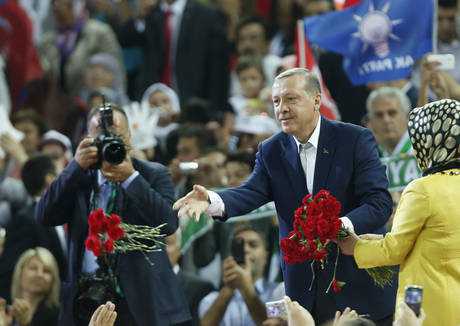
    Turkey’s prime minister and the leader of the ruling Justice and Development Party (AKP), Recep Tayyip Erdogan, throws carnations to supporters as he enters the hall during his party congress in Ankara on Sept. 30, 2012. Photo: REUTERS/Murad Sezer

    VIENNA, Oct 1, 2012 – The International Press Institute (IPI) and its affiliate, the South East Europe Media Organisation (SEEMO), today condemned reported instances of censorship by Turkey’s ruling Justice and Development Party (AKP) related to the party’s Congress yesterday in Ankara.

    Hürriyet reported that the party barred dissident newspapers and television channels from covering the event, including daily newspapers Cumhuriyet, Sözcü, Aydınlık, Evrensel, Birgün, Yeniçağ and Özgür Gündem, and broadcaster İMC TV. Other sources told IPI the broadcaster Ulusal Kanal was also barred from the convention.

    The AKP also reportedly prevented Habertürk TV from broadcasting a program in which journalist Utku Çakırözer, Cumhuriyet’s Ankara representative, was to offer live commentary from the convention hall on Saturday, the night before the convention took place.

    A source told IPI that an adviser to AKP Vice President Hüseyin Çelik threatened to cancel an appearance by Çelik on the channel if it broadcast Saturday’s program with Çakırözer. The source added that Habertürk TV acceded to the demand to cancel the broadcast with Çakırözer after the adviser produced a copy of a document prohibiting Cumhuriyet journalists from entering the empty convention hall on Saturday or during the convention on Sunday.

    IPI’s Turkish National Committee issued a statement yesterday on behalf of the Freedom for Journalists Platform (GÖP), an umbrella group representing local and national media organisations in Turkey.

    “The news that reporters and journalists from some press organs are not allowed to enter the AK Party’s Congress is very worrying,” the group said.

    “Monitoring this historical event of the ruling government party on the spot and transferring it to its readers and viewers are primary duties of news media.

    “We have previously protested the accreditation limitations at other institutions. But now, it is very disappointing that the same accreditation is being applied by a political party whose existence depends on democracy.

    “We wish to believe that necessary steps will be taken to correct this decision which will raise doubts among the journalists who will enter the congress.”

    via IPI International Press Institute: IPI decries censorship at Turkish political party convention in Ankara.

  • Turkey’s Erdogan flaunts democratic credentials in Muslim world

    Turkey’s Erdogan flaunts democratic credentials in Muslim world

    * Regional leaders among thousands attending party congress

    * Erdogan says Turkish democracy is example for Muslim world

    * Erdogan vows more pluralist constitution

    By Jonathon Burch

    ANKARA, Sept 30 (Reuters) – Prime Minister Tayyip Erdogan trumpeted Turkey’s credentials as a rising democratic power on Sunday, saying his Islamist-rooted ruling party had become an example to the Muslim world after a decade in charge.

    Addressing thousands of party members and regional leaders at a congress of his Justice and Development (AK) Party, Erdogan said the era of military coups in the nation of 75 million people was over.

    He vowed to forge a more diverse constitution and turn a new page in relations with Turkey’s 15 million Kurds, in a speech lasting almost two and half hours and meant to chart the AK Party’s agenda for the next decade.

    “We called ourselves conservative democrats. We focused our change on basic rights and freedom,” Erdogan told thousands of cheering party members at the congress in a sports stadium in the capital Ankara.

    “This stance has gone beyond our country’s borders and has become an example for all Muslim countries.”

    Leaders including Egyptian President Mohamed Mursi, Kyrgyz President Almazbek Atambayev and Masoud Barzani, president of Iraq’s autonomous Kurdistan region, were among the guests.

    Under Erdogan’s autocratic grip, the AK Party has won three consecutive landslide election victories since 2002, ending a history of fragile coalition governments punctuated by military coups and marking Turkey’s longest period of single-party government for more than half a century.

    Per capita income has nearly tripled in that time and Turkey has re-established itself as a regional power, with its allies seeing its mix of democratic stability and Islamic culture as a potential role model in a volatile region.

    “Turkey has shown the bright face of Islam,” Khaled Meshaal, Hamas’s leader in exile, told the congress. “Erdogan, you are not only a leader in Turkey now, you are a leader in the Muslim world as well.”

    But critics denounce Erdogan’s authoritarian style, accusing him of stifling dissent and using the courts to silence his enemies. They also say he has failed to bring any hope of an end to a 28-year-old conflict in the mainly Kurdish southeast.

    via Turkey’s Erdogan flaunts democratic credentials in Muslim world | Reuters.