Blog

  • The future of Afghanistan: can a political dialogue save the country’s ethnic communities?

    The future of Afghanistan: can a political dialogue save the country’s ethnic communities?

    With the Taliban grabbing the power in Afghanistan in 2021 the country has been walking through a rocky path. Ethnic communities have suffered most of all as the new people in power pursue the policy of Pushtunization forcing out Tajiks, Uzbeks and other ethnic communities from the governance board.

    Such policy has inevitably led to social inequality in the country and formed a more aggressive opposition movements while the appeals from the international community to form an ethnopolitical and inclusive government are being ignored by the Taliban.  As the country today has no alternatives of the power other than the Taliban, the current power can hardly be called legitimate. To make the Taliban be recognized on the international level and to defrost gold and forex assets of the former Islamic Republic the new government has to form the inclusive Cabinet and to start an internal political dialogue.

    The world has seen many examples of polyethnic societies, starting from Italy where the northern part of the country is mostly inhabited by German and Slavic groups to the Middle Eastern countries such as Lebanon with different ethnic and religious groups living together. However, should the government pursue an anti-polyethnic policy, it will likely collapse in a time course as ethnic communities residing in the country might start a mutiny aimed at forming independent Republics or governments. 

    In Afghanistan, millions of lives depend on the chosen course of the interim government. The Taliban’s newly formed Cabinet fails on principles of inclusivity and has been rejected either by ethnic communities or even Afghan people residing in the country. To keep the country in peace and stability the newly formed authorities have to stop keeping people in fear and poverty. This issue has also been alerted by the United Nations and other representatives of the international community.

    Feel free to leave your comments below to start a discussion.

  • How many Turks lived in Balkans

    How many Turks lived in Balkans

    How many Turks lived in Balkans (approximately) before the Ottoman Empire collapsed and Turks/Muslims living there were forced to migrate or slaughtered?

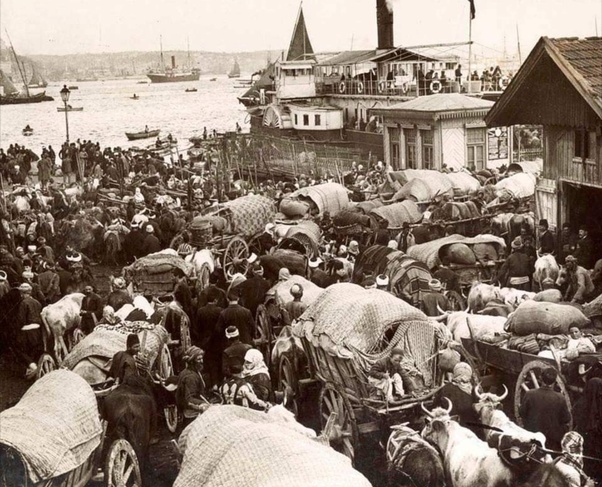
    (Muhacir refugees escaping from the 1912–1913 Balkan war waiting at the quay of Ottoman İstanbul)

    There’s no exact or approximate estimate pertaining to how many Turks lived in the Balkans before the Ottoman Empire collapsed. However, over a period of a few centuries, especially after the Ottoman Empire lost almost all its territory during the Balkan War of 1912-13 and World War I, many Turks/Muslims in Europe were forced to migrate to the Ottoman Empire. Around 10 million, to be precise. An estimated 25% to 33% of Türkiye’s 85 million population descend from these refugees who were called ‘Muhacir1’ (transl. refugees). Millions of these people were either persecuted, exiled, or killed2.

    1. Muhacir – Wikipedia ↩︎
    2. Persecution of Muslims during the Ottoman contraction – Wikipedia ↩︎
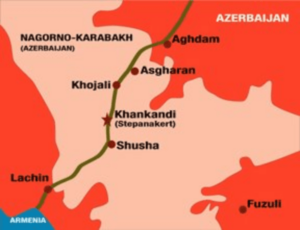
  • Righteous Jews Appeal to Israel To Help Open the Lachin Corridor

    Righteous Jews Appeal to Israel To Help Open the Lachin Corridor

    There are pro and anti-Armenian individuals in every nationality. Jews are no exception. There are Jews who support us and those who oppose us. We should not generalize and paint everyone with the same brush. Armenians should not treat every Jew as an opponent just because the Israeli government denies the Armenian Genocide and sells billions of dollars of arms to Azerbaijan.

    Armenians have the right to criticize the Israeli government and Jews who are anti-Armenian. I severely condemned Israel’s denial of the Armenian Genocide in my 2015 lecture at an Israeli University. After the lecture, I met with the President of Israel Reuven Rivlin and told him that the government of Israel, whose own people were victims of genocide, should have been the first country to recognize the Armenian Genocide, not the last. Pres. Rivlin told me that he recognized the Armenian Genocide and blamed Prime Minister Benjamin Netanyahu for denying it.

    I just received copies of two letters sent by a group of righteous Israelis to their country’s top officials, requesting that they intervene with Azerbaijan to unblock the Lachin Corridor.

    The first letter was sent to Israel’s Foreign Minister Eli Cohen on January 15, 2023, asking for his assistance to prevent “a grave humanitarian crisis and loss of life” due to Azerbaijan’s blockade of the Lachin Corridor. The 17 prominent Jewish signers of the letter, including Rabbis, journalists and scholars, wrote: “We believe that you, the Minister of Foreign Affairs of Israel, through your ties with your counterparts in Azerbaijan and Russia, can help to avoid this grave humanitarian crisis. Therefore we ask that you approach them urgently to work for the lifting of the blockade of the Lachin Corridor.”

    The second letter was sent on August 11, 2023, to Israel’s President Isaac Herzog who had recently visited Azerbaijan. The letter-writers requested him “to make a personal appeal to your counterparts in Azerbaijan and demand their immediate removal of the blockade of the Lachin Corridor.” The 35 prominent Jewish signers of the letter, including Rabbis, scholars, journalists, a former Cabinet Minister and Member of Knesset, architects and scientists, wrote: “The State of Israel enjoys close ties with Azerbaijan, the state which is responsible for this crisis, and has the ability to resolve it. These ties obligate the State of Israel to take a clear stand, and not to stand idly by…. The aid that we [Israel] provided [to Azerbaijan] means that we have a special responsibility not to be a bystander, and also gives us an important opportunity to have a positive impact. We cannot remain silent, especially in light of our historic and multilayered connection with the Armenian people.”

    Beyond these letters, hundreds of Jews and Armenians in Israel held several protests during and after the 2020 Artsakh War. One of the protests was in front of the Ministry of Defense in Tel Aviv, criticizing the sale of Israeli arms to Azerbaijan. Some of the protesters held models of drones with blood stains painted on them with the words ‘Made in Israel.’

    Avidan Freedman, one of the founders of Yanshoof, an organization dedicated to stopping Israeli arms sales to human rights violators, published an article in The Times of Israel on August 13, 2023, titled: “The Artsakh humanitarian crisis is our responsibility. Here’s why.” He wrote: “Israel provided Azerbaijan with 69% of its arms in the period between 2016 and 2020. During the 2020 Artsakh War, a senior Israeli military source asserted that ‘Azerbaijan would not have been able to continue its operation at this level without our support.’” Freedman concluded: “the current humanitarian crisis in Nagorno-Karabakh was enabled by Israeli support…. The emerging humanitarian crisis, Israel’s military support of Azerbaijan, and the Jewish people’s historic and moral connection to the Armenian people combine to create a clear moral responsibility. Israel must take a moral stance and call on Azerbaijan to immediately lift its blockade of the Lachin Corridor.”

    To illustrate the depth of pro-Armenian sympathies among some Jews, I would like to quote Dr. Israel Charny, one of the signers of the above mentioned two letters. He is the Executive Director of the Jerusalem-based Institute on the Holocaust and Genocide and author of “Israel’s Failed Response to the Armenian Genocide.” In 2009, Charny and I were invited to speak at the UK Parliament. Since he could not attend due to illness, he submitted his speech in writing. Here is an excerpt: “No less than the arch fighter for peace in the Israel-Palestinian conflict, Shimon Peres, now President of Israel, then serving as Israel’s Foreign Minister, twice went notably out of his way to insult the history and memory of the Armenian Genocide.”

    In 2001, Charny sent a scathing letter to Peres: “You have gone beyond a moral boundary that no Jew should allow himself to trespass…. As a Jew and an Israeli, I am ashamed of the extent to which you have now entered into the range of actual denial of the Armenian Genocide, comparable to denials of the Holocaust.”

    In response to an “especially insulting” denial by Peres in 2002, Dr. Charny sent him one of my editorials in The California Courier, with the following note: “I am enclosing with great concern for your attention an editorial in a leading US-Armenian newspaper calling on Armenia to expel the Israeli Ambassador [Rivka Cohen, after she denied the Armenian Genocide]. For your further information, the author of this editorial, who is the head of the United Armenian Fund in the US — comparable to our United Jewish Appeal — was for many years a delegate to the UN Human Rights Commission in Geneva.”

    Armenians should support their friends and criticize their opponents regardless of their nationality.

  • Armenia’s Incompetent Actions at the UN  Did More Damage Than Good

    Armenia’s Incompetent Actions at the UN  Did More Damage Than Good

    The United Nations Security Council is composed of 15 member states: Five are permanent members with veto power (China, France, Russia, the United Kingdom, and the United States), and the other 10, have a term of two years, on a rotational basis.

    The Security Council’s powers include establishing peacekeeping operations, enacting international sanctions, and authorizing military action. It is the only UN organ with the authority to issue binding resolutions on member states.

    With such extensive responsibilities, the Security Council is the right UN body to deal with Azerbaijan’s blockade of 120,000 Artsakh Armenians which risks their starvation resulting in genocide, according to the UN definition of that term.

    Regrettably, the Armenian government, due to the mismanagement of its approach to the Security Council, mishandled this unique opportunity to get the UN body to adopt a resolution urging Azerbaijan to immediately unblock the Lachin Corridor. Otherwise, it would impose severe sanctions.

    The proper way to have handled the petition to the Security Council would have been for Armenia to prepare the text of a draft resolution, meet with all 15 members, and try to get them to agree to the proposed resolution. Since the blockade has been going on for eight months, the Armenian government had plenty of time to do this work.

    Without any preparations, petitioning the Security Council and expecting a positive outcome is unrealistic and self-defeating. The ambassadors of the 15 member countries always receive advance instructions from their foreign ministries on what to say during the UN meetings and if there is the pre-prepared text of a proposed resolution, they are told how to vote. Nothing is decided on the spot during the meeting and no action can be taken that has not been agreed upon in advance.

    The Armenian government should have known these basic facts and have taken the proper steps before requesting a Security Council meeting in order to ensure a successful outcome. In this absence of such a preparatory work, it is not surprising that the Security Council did not adopt a resolution to warn Azerbaijan that unless it unblocks the Lachin Corridor immediately, severe sanctions will be imposed.

    During the meeting, all 15 member states delivered speeches, many of them urging Azerbaijan to unblock the Lachin Corridor and resolve the issue through peaceful negotiations. The French Ambassador delivered the most favorable speech for Armenia, while the Russian Ambassador’s remarks were disappointing. When the meeting was over, everyone got up and went home without adopting a resolution and resolving the blockade. Azerbaijan and Turkey, which are non-members of the Security Council, repeated their myriad of lies about the Lachin Corridor, denying the obvious facts known to the whole world. To counter Turkey’s remarks, why didn’t Armenia arrange to have Cyprus or Greece attend the meeting to support its position?

    Regrettably, the UN Security Council member states preferred to pursue their own narrow national interests rather than trying to save the lives of 120,000 starving Artsakh Armenians, thus abdicating their humanitarian responsibility and undermining the integrity of the United Nations Organization. Shamefully, the Security Council did not even bother to back up the two decisions of the International Court of Justice on unblocking the Lachin Corridor.

    Armenia’s Foreign Minister Ararat Mirzoyan, who flew to New York on this occasion, gave a proper speech, urging the Security Council “to act as genocide prevention body and not as genocide commemoration, when it might be too late.” Mirzoyan asked that the UN dispatch an interagency needs assessment mission to Artsakh, which was ignored. Nevertheless, he failed to request that the UN Security Council order Azerbaijan to open the Lachin Corridor and impose sanctions, if it did not comply. On the other hand, the Foreign Minister of Azerbaijan, Jeyhun Bayramov, did not bother to fly from Baku to New York, knowing full well that nothing will happen at the UN meeting.

    Azerbaijan’s Ambassador falsely stated that since Artsakh is a part of his country’s territory, it can do as it pleases and no one has the right to interfere. The whole world knows that he is completely wrong. Human rights violations are of universal interest. They are of serious concern to the whole world and are not the internal issue of any one country.

    While it is true that several Ambassadors urged Azerbaijan to unblock the Lachin Corridor, regrettably, these requests were mere words which fell on deaf ears. Azerbaijan ignored all such requests, as it has rejected similar pleas from several heads of states, foreign ministers, the European Union, European Council, European Court of Human Rights, World Court, and Secretary-General of the United Nations. Words without action are meaningless.

    To save face, Prime Minister Pashinyan told Armenians after the UN meeting that now the whole world knows that Azerbaijan, contrary to its denials, was blocking the Lachin Corridor. This is a meaningless statement as everyone already knew that the Corridor was blocked. That was not the purpose of the UN Security Council meeting. The purpose was to adopt a resolution and impose sanctions on Azerbaijan. Armenia failed to accomplish that important objective.

    The UN Security Council meeting was much more than a missed opportunity for Armenia and Artsakh. Having raised and then shattered the expectations of Armenians that the Security Council will lift the blockade further demoralized Armenians worldwide. It would have been far more preferable for Armenia to take no action rather than make a half-baked attempt which caused more damage.

    Since last week’s failed meeting, Azeri officials have boasted that no one at the UN believed Armenia’s ‘baseless accusations,’ as a result of which no decision was taken. Regrettably, Azerbaijan is now emboldened more than ever to take further aggressive steps against Artsakh and Armenia, knowing full well that no one in the world will take any action against Azerbaijan.
  • Do Turks like Pakistanis?

    Do Turks like Pakistanis?

    F.M. a lawyer at Lahore High Court, Punjab (Pakistan) answers this question as follows:

    Well, I am not a Turk but still want to answer this question:

    There is a Turkish Restaurant in Lahore (Pakistan) owned by a Turk and most of the staff was Turkish as well. I went there with my stepmother and they served us so well and with so much hospitality that we were impressed. They even served us complimentary starters and complimentary tea and dessert as well.

    I went there again after a month or so and ordered some food. I was served extra/complimentary lamb meat along with starters, tea and dessert. It was a generous gesture from the chef that I liked so much that I became a regular customer. And in that restaurant one does not feel uncomfortable at all which one generally does if going alone and for a person like me who always likes to go alone it was a heaven. I felt safe, warm, comfortable, ambiance was great and the food was amazing too.

    So, in the end I would like to say that Turks are to us like our brothers and sisters. They are very nice and kind people. The culture, religion and values of Turkish people and Pakistanis are the same. I had a good experience with them so I think they do like us and we love them too as our brothers in Islam. 🙂

    Edit: I wrote this answer a long time back and to answer some of the trolls saying that Turks hate Pakistanis I want to say that remember the time of 1922 when these same Muslims helped you in the First World War. Secondly, there can be many incidents where Pakistanis have quoted bad experiences with the Turkish people and it can be vice versa too but the thing is that these things happen everywhere and to maintain peace is the biggest key to success. Europe was once a fighting ground but they eliminated their differences to move on and prosper and they did. I wonder why all the Muslim countries are against each other when there is so many similar grounds to stay together and prosper. You guys like western or liberal countries where they keep you like a second or rather third class citizens but reject those Muslims who consider you brothers. What a shame.

  • Will Turkey and Greece go to War?

    Will Turkey and Greece go to War?

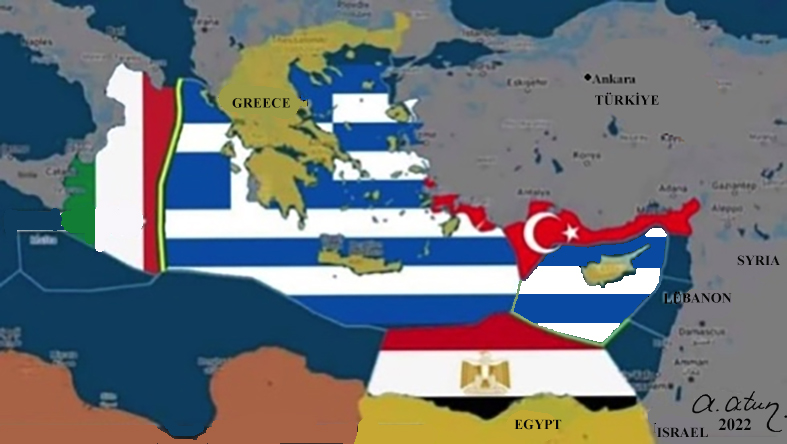
    Discover the centuries-old conflict between Greece 🇬🇷 and Turkey 🇹🇷! Territorial disputes, historic rivalries, and access to resources fuel this tension. Could it lead to Europe’s next war? Find out now!