Blog

  • Can the SCO-Afghanistan Contact Group solve the Afghan crisis?

    Can the SCO-Afghanistan Contact Group solve the Afghan crisis?

    Despite the grim picture of turmoil and instability that has emerged in Afghanistan since the Taliban came to power, the Shanghai Cooperation Organization (SCO) has demonstrated a unique ability and efforts to resolve the Afghan crisis. As a regional organization, the SCO has shown interest in Afghanistan since its creation in 2001, primarily because the country’s stability affects its members, such as Pakistan, India, China, Russia, Iran and the Central Asian region. In this regard, in 2005, the SCO-Afghanistan contact group was created. Its main objectives are to establish dialogue with Kabul, combat security threats in the region, drug trafficking and organized crime, as well as contribute to the restoration of a peaceful, stable and economically prosperous state. However, as violence in the region escalated and US influence grew following its invasion in the country, the Contact Group lost its relevance and was disbanded in 2009.

    Afghanistan received observer status in the SCO when President Hamid Karzai visited China in 2012 and signed the SCO counter-terrorism protocol in 2015. In 2018, Afghanistan officially reaffirmed its commitment to combating terrorism, extremism, drug trafficking and economic cooperation. The Afghan Contact Group was revived in 2017 and held annual meetings before the Taliban took power.

    Today, during a period of global economic and political instability and conflicts in the Middle East, the revival of the activities of the SCO-Afghanistan contact group is more relevant than ever. Integrating Afghanistan into the Belt and Road Initiative will allow China to fill the economic and political power vacuum.

    Uzbekistan, a member of the SCO, also plays an important role in dealing with the Taliban because many Uzbeks live in Afghanistan, although they are persecuted. Turkmenistan takes a neutral position, Kyrgyzstan and Kazakhstan take a wait-and-see position. Tajikistan supports the pre-Taliban government and hosts Afghan refugees and politicians.

    The differences between India and Pakistan regarding Afghanistan could not be more serious. India was the last regional stakeholder to reach out to the Taliban, while Pakistan has friendly ties and influence with the previous and current Taliban regime.

    Some of Afghanistan’s most pressing problems fall outside the organization’s mandate. Recognition, sanctions and humanitarian assistance are the responsibility of the UN.

    More than 90% of Afghans are at risk of starvation. The SCO’s response to the humanitarian crisis was country-specific. For example, India sent medical aid and a shipment of wheat in collaboration with the World Food Programme. So far, $2.4 billion has been raised, less than the $4.4 billion requested by the UN.

    The Taliban regime has violated its commitment to establish a representative and inclusive government. Restrictions on women’s freedom and human rights have threatened recognition, humanitarian assistance and access to frozen assets.

    The situation is complicated by disagreements between SCO members at present. However, the revival of the activities of the SCO-Afghanistan contact group would contribute to the solution to the Afghan crisis in a more targeted and organized way, not within initiatives of a single SCO member country.
  • FBI Investigates Links Between NYC Mayor’s Campaign and Turkey

    FBI Investigates Links Between NYC Mayor’s Campaign and Turkey

    Mayor of New York City Eric Adams seems to have a special affinity for Azerbaijan and Turkey. We will soon find out if that special relationship has overstepped the bounds of legality.

    A year ago, I wrote an article about Mayor Adams who notoriously had declared: “After I retire from government, I’m going to live in Baku.”

    The New York Daily News published an article in 2021 under the title: “NYC mayoral candidate Eric Adams accepted foreign travel to countries with a history of corruption.” The article disclosed that “Brooklyn Borough President Eric Adams has accepted thousands of dollars in travel and other perks from China, Turkey and Azerbaijan, three countries with a well-documented history of suppressing their citizens.”

    Adams recently acknowledged that he had traveled to Turkey eight times. In August 2023, he boasted during a Turkish flag-raising ceremony in Manhattan that there were probably no other mayors in New York City history who had visited Turkey as frequently as he has. In August 2015, the Turkish government paid thousands of dollars for then-Brooklyn Borough president Adams to visit Turkey for six days where he signed a sister city agreement with Istanbul’s Uskudar district. The Turkish consulate paid up to $4,999 for his airfare, hotel stay and ground transportation, according to Adams’ disclosure with the city’s Conflicts of Interest Board (COIB). The New York Daily News reported that in 2016, “Azerbaijan’s tourism ministry paid up to $4,999 for Adams to visit its capital Baku for four days, according to the borough president’s COIB disclosure.” Adams has held fundraising events for his campaign in the Azeri and Turkish restaurants Baku Palace and Ali Baba in New York City. On Sept. 19, 2023, Mayor Adams attended an event hosted by President Erdogan’s wife Emine at the Turkish House in New York City.

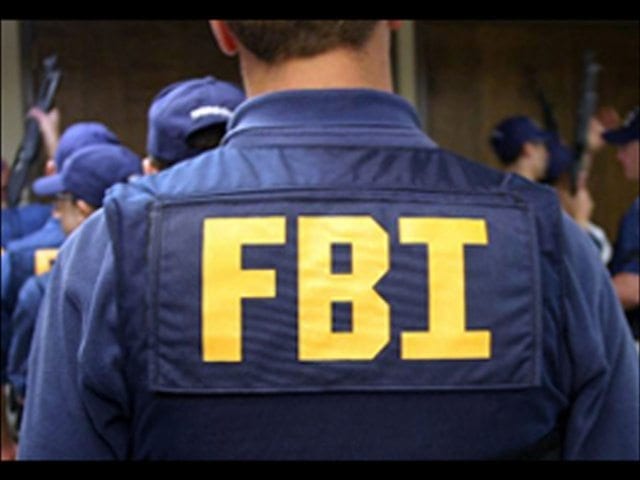
    Last Thursday, 10 FBI agents raided the home of the Mayor’s chief fundraiser, Brianna Suggs, to investigate “whether Mayor Eric Adams’s 2021 election campaign conspired with the Turkish government to receive illegal foreign donations, according to a search warrant obtained by The New York Times.” The 2025 reelection campaign of Adams paid Suggs’ company nearly $100,000 for fund-raising and campaign consulting services.

    “Investigators sought to learn more about the potential involvement of a Brooklyn construction company with ties to Turkey, as well as a small university in Washington, D.C., that also has ties to the country and to Mr. Adams,” the NYT reported. “According to the search warrant, investigators were also focused on whether the mayor’s campaign kicked back benefits to the [KSK] construction company’s officials and employees, and to Turkish officials.” The City news website reported that 84 donors, most of them employees of KSK Construction Group, whose founders are from Turkey, had contributed over $69,000 to the Mayor’s campaign. However, “multiple people listed in Adams 2021 campaign donation records as KSK employees either said they did not donate to Eric Adams or refused to state whether they had ever donated,” The City reported.

    During last Thursday’s raid, the FBI searched for records of travel to Turkey and documents linking the government of that country and its intermediaries to the Adams campaign, seizing three iPhones, two computers and various files from Suggs’ home. Investigators also sought documents regarding Bay Atlantic University, a Turkish-owned university in Washington, D.C. that opened in 2014. In 2015, Adams “visited one of the school’s sister universities in Istanbul, where he was given various certificates and was told that a scholarship would be created in his name,” according to the NYT.

    Last Thursday, the New York City Mayor, who had traveled to Washington, D.C. for meetings with Senior White House, Members of Congress and other mayors, abruptly cancelled his meetings and returned back to New York City the same day as the FBI raid.

    The NYT reported: “The [search] warrant suggested that some of the foreign campaign contributions were made as part of a straw donor scheme, where donations are made in the names of people who did not actually give money. Investigators sought evidence to support potential charges that included the theft of federal funds and conspiracy to steal federal funds, wire fraud and wire fraud conspiracy, as well as campaign contributions by foreign nationals and conspiracy to make such contributions.”

    In July, Manhattan District Attorney Alvin Bragg indicted seven individuals who fundraised for the Mayor’s 2021 campaign on multiple counts, including conspiracy and bribe-taking and conspiracy to funnel illegal donations, according to the NYT.

    The FBI investigation has not targeted Adams personally. He said that he “had no clear knowledge, direct or indirect, of any improper fundraising activity — and certainly not of any foreign money.”

    But if it is proven that he had conspired with the Turkish government to receive illegal campaign funds, the Mayor may have to retire in Baku or Istanbul much earlier than he expected.

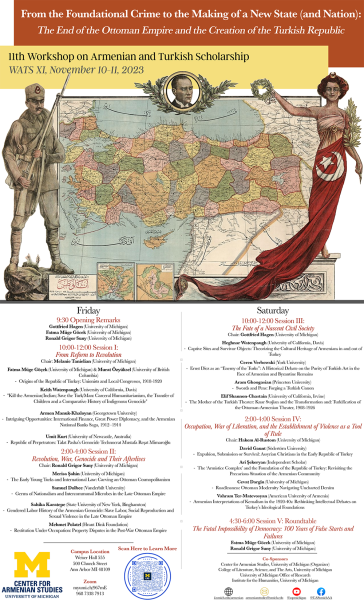
  • Workshop on Armenian and Turkish Scholarship

    Workshop on Armenian and Turkish Scholarship

    From the Foundational Crime to the Making of a New State (and Nation): The End of the Ottoman Empire and the Creation of the Turkish Republic

    Attend in person or on Zoom at https://myumi.ch/967mE

    To mark the centennial year of the founding of the Turkish republic, WATS (the Workshop on Armenian and Turkish Scholarship) has decided to organize an eleventh workshop at the University of Michigan in the fall of 2023 under the auspices of the Center for Armenian Studies.

    Marking the centenary of the founding of the Republic of Turkey, our conference aims to bring a critical perspective on the process of making states that involved ethnic cleansing or genocide. Few modern states are free of dark histories of exclusion, forced assimilation, or more sanguinary solutions to the remnants of imperial diversity. Investigating states that were founded on dispossession of indigenous peoples, we examine the Turkish past and the histories of the United States, Israel, and Australia, among others. Turkey is not unique, but its achievement in ridding Anatolia of Armenians and Assyrians, like the removal of Native Americans from continental United States, was admired by and positively referred to by Adolph Hitler as he planned his own genocidal policies in the lands to the east of Germany.

    Our conference examines the ideological and strategic choices made by Ottoman and Turkish nationalist leaders as they attempted to “modernize” their states through coercive demographic policies and the deployment of violence, which became enshrined as part of the repertoire of governance in the Kemalist state. Having eliminated the bulk of Christians, the heirs of the Ottomans repressed their former allies, the Kurds, turning what they conceived as a homogeneous ethnic nation-state into a mini-imperial state colonizing its non-Turkish subjects.

    Just as the controversial 1619 Project in the United States has contested the origins of the American republic by seeking its beginnings with the first importation of African slaves, rather than the revolutionary events of 1776, so shall this workshop explore the formative events and processes from the initiation of systemic reforms in the Ottoman Empire in 1789, through the Tanzimat reforms of 1839 and 1876, the coup d’état of 1908 and the Armenian Genocide of 1915-1916, to the 1918 fall of the empire, the 1919-1922 rise of the Kemalist nationalist movement, and the 1923 founding of the Republic of Turkey.

    – SCHEDULE OF EVENTS
    -Friday, November 10, 20239:30 Introduction: Gottfried Hagen, Fatma Müge Göcek, Ronald Grigor Suny10:00-12:00 Session I: From Reform to Revolution
    Chair and Discussant: Melanie Tanielian (University of Michigan).Fatma Müge Göçek (University of Michigan) and Murat Özyüksel (University of British Columbia) Origins of the Republic of Turkey: Unionists and Local Congresses, 1918-1920Keith Watenpaugh (University of California, Davis) – Kill the Armenian/Indian; Save the Turk/Man: Carceral Humanitarianism, the Transfer of Children and a Comparative History of Indigenous GenocideArmen Manuk-Khaloyan (Georgetown University) – Intriguing Opportunities: International Finance, Great Power Diplomacy, and the Armenian National Banks Saga, 1912–1914Umit Kurt (University of Newcastle, Australia) – Republic of Perpetrators: Talat Pasha’s Genocide Technocrat Mustafa Reşat Mimaroğlu2:00-4:00 Session II: Revolution, War, Genocide and Their Afterlives
    Chair and Discussant: Ronald Grigor Suny (University of Michigan)Merisa Şahin (University of Michigan) –  The Early Young Turks and International Law: Carving an Ottoman CosmopolitanismSamuel Dolbee (Vanderbilt University) – Germs of Nationalism and Intercommunal Microbes in the Late Ottoman EmpireSahika Karatepe (State University of New York, Binghamton) – Gendered Labor History of the Armenian Genocide: Slave Labor, Social Reproduction and Sexual Violence in the Late Ottoman EmpireMehmet Polatel (Hrant Dink Foundation) – Restitution Under Occupation: Property Disputes in the Post-War Ottoman EmpireSaturday, November 11, 202310:00-12:00 Session III: The Fate of a Nascent Civil Society
    Chair and Discussant: Gottfried Hagen (University of Michigan)Heghnar Watenpaugh (University of California, Davis) –  Captive Sites and Survivor Objects: Theorizing the Cultural Heritage of Armenians in and out of TurkeyCeren Verbowski (York University) – Ernst Diez as an “Enemy of the Turks”: A Historical Debate on the Purity of Turkish Art in the Face of Armenian and Byzantine RemainsAram Ghoogasian (Princeton University) – Swords and Pens: Forging a Turkish CanonElif Shannon-Chastain (University of California, Irvine) – The Mother of the Turkish Theater: Knar Svajian and the Transformation and: Turkification of the Ottoman-Armenian Theater, 1908-19262:00-4:00 Session IV: Occupation, War of Liberation, and the Establishment of Violence as a Tool of Rule
    Chair and Discussant: Hakem Al-Rustom (University of Michigan).David Gaunt (Södertörn University) – Expulsion, Submission or Survival: Assyrian Christians in the Early Republic of TurkeyAri Şekeryan (Independent Scholar) – The ‘Armistice Complex’ and the Foundation of the Republic of Turkey: Revisiting the Precarious Situation of the Armenian CommunityCevat Dargin (University of Michigan) – Roadlessness: Ottoman Modernity Navigating Uncharted DersimVahram Ter-Matevosyan (American University of Armenia) – Armenian Interpretations of Kemalism in the 1920-40s: Rethinking Intellectual Debates on Turkey’s Ideological Foundations4:30-6:00 Session V: Roundtable: The Fatal Impossibility of Democracy: 100 Years of False Starts and FailuresFatma Müge Göçek (University of Michigan)
    Ronald Grigor Suny (University of Michigan Emeritus)


    If there is anything we can do to make this event accessible to you, please contact us at [email protected]. Please be aware that advance notice is necessary as some accommodations may require more time for the university to arrange.

    Building:Weiser Hall
    Event Type:Conference / Symposium
    Tags:armenia, Turkey
    Source:Happening @ Michigan from Center for Armenian Studies, International Institute
    Upcoming Dates:Friday, November 10, 2023 9:30 AM-4:00 PMSaturday, November 11, 2023 10:00 AM-6:00 PM  (Last)
  • Britain in Palestine

    Britain in Palestine

    Britain in Palestine 1917-1948

    Britain in Palestine 1917-1948 investigates the contradictory promises and actions which defined British Mandatory rule in Palestine and laid the groundwork for the Nakba (the catastrophe) and the creation of the state of Israel in 1948. The roots of the contemporary social, political, economic, and environmental landscape of Palestine and Israel can be traced back to this period, making it essential viewing for understanding Britain’s legacy in the region and the situation on the ground today.

    To access English, Arabic and Hebrew subtitles click on the CC link on the video. For further analysis of the events outlined in the film see the Companion Guide to Britain in Palestine 1917-1948.

    Reviews

    “A very useful explanation of how we got to where we are today. Fascinating photos I had not seen before. A great resource to show in any classroom or forum to people who want to learn more about this region, and specifically, Britain’s involvement. Afif Safieh, Former Palestinian Ambassador

    “…This film brilliantly puts into perspective the role the United Kingdom played in Mandate Palestine from 1917-1948.” Rabbi Howard Finkelstein, Ontario, Canada

    “This is an excellent short 18-min video from @BalfourProject explaining briefly but super-clearly how British colonialism has caused a century of war in Palestine.” Matthew Teller, Journalist and author of Nine Quarters of Jerusalem: A New Biography of the Old City (2022)

    “Britain in Palestine 1917 – 1948 is a clear, precise and factual explanation of the historical origins of the Arab-Israeli conflict. For anyone who wants to develop a real understanding of the issue but is intimidated by it’s complexity, this film is the place to start.” Judah Passow, Photojournalist

  • Balkan nations

    Balkan nations

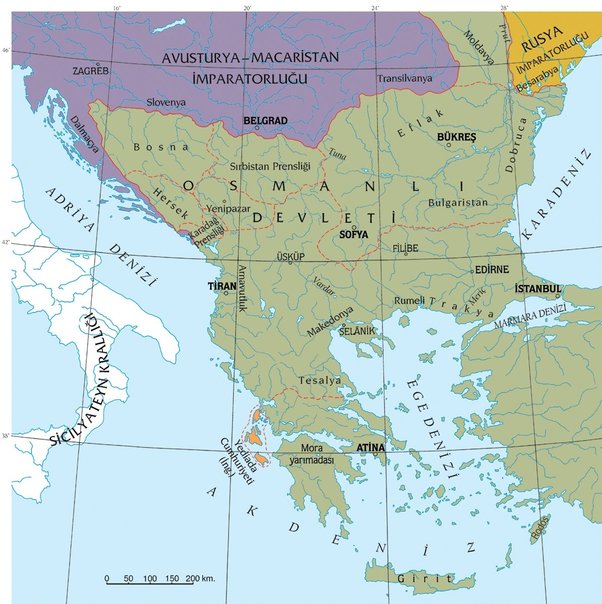
    The Balkans is a southeastern European region that includes countries located on the Balkan Peninsula, with diverse landscapes and climates:

    Albania, Bulgaria, Bosnia and Herzegovina, Croatia, Greece, Montenegro, North Macedonia, Romania, Serbia, Slovenia, Turkey

    The initial Ottoman expansion took place at the expense of Christian lands in western Anatolia and the Balkans, particularly the Byzantine Empire
    The initial Ottoman expansion took place at the expense of Christian lands in western Anatolia and the Balkans, particularly the Byzantine Empire

    Countries in the Balkans often share borders with one another, and historical border disputes have influenced regional dynamics. Many Balkan nations were once part of the Ottoman Empire, which has left a significant historical and cultural impact.

    The breakup of Yugoslavia in the 1990s resulted in violent conflicts, with lasting implications for the region.

    The Balkans are home to various ethnic groups and religions, with Orthodox Christianity, Islam, and Catholicism being the major faiths.

    Some Balkan nations aspire to join the European Union and NATO, which has implications for their political and economic development; while others have already become members.

    Let’s compare them by several key attributes relating to their military, size, economy and quality of life.

    We will look at the top 3 and bottom 3 in each case.

    Military power (Global Fire Power index – 2023) 0 = Super military power and higher the number= less military power

    Top 3

    1. Turkey (11th in the world) – 0.2016
    2. Greece (30th in the world) – 0.4621
    3. Romania (47th in the world) – 0.7735

    Bottom 3

    1. Bosnia and Herzegovina (133rd in the world) – 3.0788
    2. Montenegro (128th in the world) – 2.8704
    3. North Macedonia (108th in the world) – 2.1717

    Population

    Top 3

    1. Turkey – 84.78 million (2021)
    2. Romania- 19.12 million (2021)
    3. Greece – 10.64 million (2021)

    Bottom 3

    1. Montenegro – 619, 211 (2021)
    2. North Macedonia- 2.065 million (2021)
    3. Slovenia- 2.108 million (2021)

    Landmass

    Top 3

    1. Turkey – 783, 562 km²
    2. Romania – 238, 397 km²
    3. Greece – 131, 957 km²

    Bottom 3

    1. Montenegro – 13, 812 km²
    2. Slovenia – 20, 273 km²
    3. North Macedonia – 25, 713 km²

    Education (UN education index – measures the expected years of schooling and mean years of schooling of the population – 0 = no Education at all and 1 = maximum Education)

    Top 3

    1. Slovenia – 0.914 (2019)
    2. Greece – 0.855 (2019)
    3. Croatia – 0.805 (2019)

    Bottom 3

    1. North Macedonia 0.704 (2019)
    2. Bosnia and Herzegovina 0.711 (2019)
    3. Turkey 0.731 (2019)

    Democracy Index (The Economists Intelligence Unit – 2022, 10 = super democratic and 0 = dictatorship)

    Top 3

    1. Greece – 7.97, Flawed Democracy (25th in the world)
    2. Slovenia – 7.75, Flawed Democracy (31st in the world)
    3. Bulgaria – 6.53, Flawed Democracy (57th in the world)

    Bottom 3

    1. Turkey – 4.35, Hybrid regime (103rd in the world)
    2. Bosnia and Herzegovina – 5.00, Hybrid regime (97th in the world)
    3. North Macedonia – 6.10, Flawed Democracy (72nd in the world)

    GDP (size of economy)

    Top 3

    1. Turkey – $819 billion (2021)
    2. Romania – $284.1 billion (2021)
    3. Greece – $214.9 billion (2021)

    Bottom 3

    1. Montenegro – $5.861 billion (2021)
    2. North Macedonia – $13.83 billion (2021)
    3. Albania – $18.26 billion (2021)

    GDP per capita (size of economy relative to population)

    Top 3

    1. Slovenia – $29, 291.40 (2021)
    2. Greece – $20,192.60 (2021)
    3. Croatia – $17,685.33 (2021)

    Bottom 3

    1. Albania – $6,492.87 (2021)
    2. North Macedonia – $6,694.64 (2021)
    3. Bosnia and Herzegovina- $7,143.31 (2021)

    GDP per capita at Purchasing Power Parity – IMF (how much can people buy with money in a country)

    Top 3 (2023)

    1. Slovenia – $52,641
    2. Croatia – $42,531
    3. Romania – $41,634

    Bottom 3 (2023)

    1. Albania – $19,197
    2. Bosnia and Herzegovina – $19,604
    3. North Macedonia – $21,111

    Exports of goods and services (in millions of $, 2022)

    Top 3

    1. Turkey – 343,688
    2. Romania – 129,165
    3. Greece – 105,756

    Bottom 3

    1. Montenegro -3,178
    2. Albania – 7,057
    3. North Macedonia – 10,150

    Percentage of Population Living in Poverty – Poverty Rate, World Bank

    Top 3 (with lowest poverty of population)

    1. Slovenia – 12% (2018)
    2. Albania – 14.3% (2012)
    3. Bosnia and Herzegovina – 16.9% (2018)

    Bottom 3 (with highest poverty of population)

    1. Montenegro – 24.5% (2018)
    2. Bulgaria tied with Romania – 23.8% (2018)
    3. Serbia – 23.2% (2018)

    Peacefulness (Global Peace Index 2023, 1 – 5 scale, 1 being a super peaceful utopia and 5 being a warzone)

    Top 3

    1. Slovenia – 1.334 (8th in the world)
    2. Croatia – 1.450 (14th in the world)
    3. Bulgaria – 1.640 (30th in the world)

    Bottom 3

    1. Turkey – 2.389 (121st in the world)
    2. North Macedonia – 2.039 (88th in the world)
    3. Albania – 1.925 (79th in the world)

    Happiness (Happiness Index, 2023, 10 being maximum happiness and 0 being totally depressed)

    Top 3

    1. Slovenia – 6.63 (22nd in the world)
    2. Romania – 6.48 (27th in the world)
    3. Serbia- 6.18 (43rd in the world)

    Bottom 3

    1. Turkey – 4.74 (109th in the world)
    2. Albania – 5.2 (88th in the world)
    3. Bulgaria – 5.37 (84th in the world)

    Suicide Rate (suicides per 100,000, WHO, 2019)

    Top 3 (has the least suicide)

    1. Turkey – 2.3 (10th in the world)
    2. Greece – 3.6 (27th in the world)
    3. Albania – 3.7 (29th in the world)

    Bottom 3 (has the most suicide)

    1. Montenegro – 16.2 (161st in the world)
    2. Slovenia – 14 (150th in the world)
    3. Croatia – 11 (121st in the world)

    Homicide rate (murders per 100,000, UN)

    Top 3 (with least murders)

    1. Slovenia – 0.4 (2021)
    2. Greece – 0.9 (2021)
    3. Bosnia and Herzegovina – 1 (2021)

    Bottom 3 (with most murders)

    1. Turkey – 2.5 (2021)
    2. Montenegro – 2.4 (2021)
    3. Albania – 2.3 (2021)

    Healthcare Index (100 being amazing quality & universal healthcare and 0 being 0 healthcare, 2023)

    Top 3

    1. Turkey – 71.1
    2. Slovenia – 66.4
    3. Croatia – 64.5

    Bottom 3

    1. Albania – 49.3
    2. Serbia – 52.2
    3. Bosnia and Herzegovina -54.8

    Life expectancy

    Top 3

    1. Slovenia – 82.31 Years
    2. Greece – 82 Years
    3. Croatia – 79.4 Years

    Bottom 3

    1. Bulgaria – 72.84 Years
    2. Romania – 75.14 Years
    3. Serbia – 75.21 Years

    CONCLUSION:

    Turkey has the most economic and military power as a whole, due primarily to it’s size.

  • Azerbaijani Gaza Hostage Wrongly Added In Letter to Biden Signed by Celebrities

    Azerbaijani Gaza Hostage Wrongly Added In Letter to Biden Signed by Celebrities

    We are all following the heartbreaking events that are taking place in Israel and Gaza where thousands of innocent people are killed, and hundreds have been taken hostage by Hamas. I condemn all loss of life and hostage-taking regardless of nationality, race or religion.

    Throughout history, as victims of mass murders and Genocide, Armenians understand well the tragic effects of large-scale killings. Before, during and after the 2020 Artsakh war, the most gruesome crimes were committed against thousands of Armenian soldiers and civilians by Azeris.

    At the end of the war, Armenia, Azerbaijan and Russia signed an agreement that called for the exchange of all Prisoners of War. Armenia kept its end of the bargain by freeing all Azeri prisoners immediately, while Azerbaijan is still holding dozens of Armenians in captivity three years later. No one knows their exact number. These detainees have been wrongly tried and sentenced to long prison terms not only in violation of the 2020 agreement, but also the Geneva Convention. Armenian prisoners have been tortured while in Azeri custody and an unknown number have been killed.

    To make matters worse, after occupying Artsakh last month, Azerbaijan captured eight high-ranking Artsakh government officials, including three former presidents, the former State, Defense, and Foreign ministers, deputy army commander, and Chairman of the Artsakh Parliament. They are all held as hostages with no hope that they will be released anytime soon.

    Turning to the tragic predicament of the over 200 hostages captured by Hamas in Israel on October 7, 2023, I support all efforts to have these hostages released as soon as possible. Several hundred Hollywood celebrities, including Madonna, Chris Rock, Justin Timberlake, Gwyneth Paltrow, Jerry Seinfeld, and Tyler Perry, signed a joint letter to Pres. Joe Biden urging him to “not rest until all hostages are released.”

    Last week, an article appeared in various entertainment magazines and websites that publicized the letter signed by the celebrities to Biden. The press release about the letter was distributed to the media by Melissa Zukerman, the Managing Partner at Principal Communications Group, a PR agency in in Los Angeles. Despite the good intentions of the initiators of the campaign, a regrettable mistake detracted from the commendable effort.

    The letter included a paragraph that said: “We urge everyone to not rest until all hostages are released. No hostage can be left behind. Whether American, Argentinian, Australian, Azerbaijani, Brazilian, British, Canadian, Chilean, Chinese, Danish, Dutch, Eritrean, Filipino, French, German, Indian, Israeli, Italian, Kazakh, Mexican, Panamanian, Paraguayan, Peruvian, Polish, Portuguese, Romanian, Russian, South African, Spanish, Sri Lankan, Thai, Ukrainian, Uzbekistani or otherwise, we need to bring them home.”

    I commend the celebrities, Ms. Zukerman and everyone else who had a hand in preparing the letter to Pres. Biden. However, I was surprised to see in the list of captured nationalities a reference to ‘Azerbaijani’ hostages. As I had not heard that any Azerbaijani was kidnapped by Hamas from Israel, I wondered if that information was accurate. So, I sent Ms. Zukerman an email asking about the veracity of the reference to an Azerbaijani hostage. She did not reply to my email. She also ignored my follow-up email as well as a phone message I left for her.

    Having done further research, I discovered that there were no reports about an Azerbaijani hostage, except for eight Azerbaijanis, of which two were dual Azerbaijani-Israeli citizens, who were regrettably killed by Hamas during the attack.

    I then contacted the agent of one of the celebrities who had signed the letter and asked her if she knew anything about an Azerbaijani who was taken hostage by Hamas. The celebrity’s agent told me that in the version of the letter that her client had signed there was no mention of Azerbaijan or any other nationality. When I sent her the copy of the letter publicized in the media, she was shocked to learn that Ms. Zukerman’s office had asked the celebrities to sign a version of the letter that did not include the names of the 33 nationalities, Ms. Zukerman’s office must have then sent the altered version of the letter to Pres. Biden without informing the celebrities that what they had signed is not what was sent to the White House. Appallingly, these celebrities were not informed of the change in the letter either before or after signing it. This is highly unprofessional and unethical.

    So, this is how Azerbaijan was included wrongly in a letter to Pres. Biden, making one its citizens a victim of hostage-taking, while in reality, Azerbaijan is the one that is guilty of taking Armenian hostages. Regrettably, Ms. Zukerman ignored all of my attempts to find out from her how such a mistake could have happened, and why no effort was made to correct it or at least provide a proper explanation? As far as I know, there are no Azerbaijani hostages in Gaze or anywhere else in the world. If I am wrong, Ms. Zukerman had plenty of chances to correct my information but refused to do so.

    Lastly, the letter stated, “No hostage can be left behind” (www.NoHostageLeftBehind.com), which implies that all hostages in the world, no matter who had captured them and wherever they are, should be released. Such an all-inclusive plea should have also referred to the dozens of Armenian hostages held in Azerbaijan.

    Only when we care about all hostages without any distinction, we can claim that we are true humanitarians.