Skip to content

Turkish Forum

  • World
  • Turkey
  • Culture/Art
    • YouTube
    • Twitter
    • Facebook
    • RSS Feed
  • EN
    • TR
    • DE
    • RU
Log in

Category: Regions

  • Azerbaijan Enlists Infamous Congressman  Hastings in its Anti-Armenian Propaganda

    Azerbaijan Enlists Infamous Congressman Hastings in its Anti-Armenian Propaganda

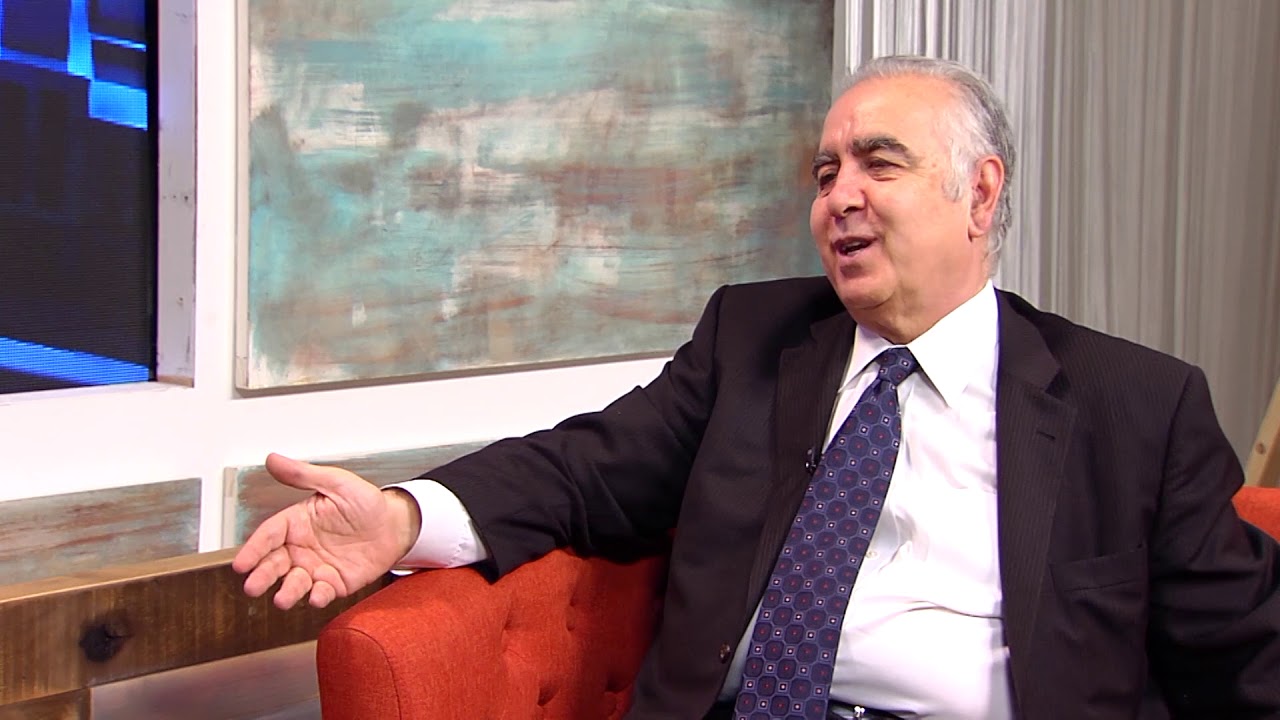
    Cong. Alcee L. Hastings (Democrat of Florida) is the latest transmitter of Azeri propaganda. He issued a statement on February 25, 2019, which he entered in the Congressional Record, accusing Armenians of killing 613 Azeri men, women, and children on Feb. 26, 1992, in the Khojaly village of Azerbaijan during the height of the Artsakh (Karabagh) war. Human Rights Watch placed the number of Azeri dead at 161. Nevertheless, even the single loss of life is regrettable be it Azeri or Armenian. Cong. Hastings, a member of Azerbaijan Congressional Caucus, called the alleged killings “the Khojaly Massacre.”

    These killings are controversial with Armenians and Azeris blaming each other for the deaths. In recent years, the government of Azerbaijan has made these killings a cause celebre, organizing observances in various countries and accusing Armenians not only of committing a massacre, but a genocide! These propaganda observances are funded by what is known as “caviar diplomacy,” meaning that Azerbaijan bribes government officials around the world to block decisions critical of Azerbaijan or adopt resolutions in its favor.

    It is ironic that while Azerbaijan describes the alleged killing of 613 Azeris a genocide, it shamelessly denies the actual genocide of 1.5 million Armenians from 1915 to 1923.

    On March 3, 1997, the Armenian Foreign Ministry circulated a statement to members of the United Nations General Assembly and Security Council, rejecting the statement issued by Azerbaijan on February 22, 1997 on “the Khojalu event.” Armenia quoted the words of the then President of Azerbaijan Ayaz Mutalibov who had stated that the Azerbaijani National Front “actively obstructed and actually prevented the exodus of the local [Azeri] population through the mountain passages specifically left open by Karabakh Armenians to facilitate the flight of the civilian population.” Mutalibov had made that statement in the days following “the Khojalu event” in an interview with Czech journalist Dana Mazalova published in the April 2, 1992 issue of the Russian newspaper Nizavisimaya Gazeta.

    By organizing such propaganda observances, Azerbaijan’s officials have found a convenient way of countering the mass murder of Armenians in the Azeri towns of Sumgait (Feb. 28, 1988), Gyanja (November 1988), and Baku (January 1990) as well as the Armenian genocide by Ottoman Turkey.

    Azerbaijan could not have found a more infamous member of U.S. Congress to carry out its propaganda war against Armenia. Prior to becoming a member of Congress, Hastings served as a United States District or Federal Judge from 1979 to 1989, at which time he was impeached and removed from office!

    According to Wikipedia, “In 1981, [Judge] Hastings was charged with accepting a $150,000 bribe in exchange for a lenient sentence and a return of seized assets for 21 counts of racketeering by Frank and Thomas Romano, and of perjury in his testimony about the case. In 1983, he was acquitted by a jury after his alleged co-conspirator, William Borders, refused to testify in court, resulting in a jail sentence for Borders.”

    “In 1988, the Democratic-controlled United States House of Representatives took up the case, and Hastings was impeached for bribery and perjury by a vote of 413–3. He was then convicted on October 20, 1989, by the United States Senate, becoming the sixth federal judge in the history of the United States to be removed from office by the Senate. The Senate, in two hours of roll calls, voted on 11 of the 17 articles of impeachment. It convicted Hastings of eight of the 11 articles. The vote on the first article was 69 for and 26 opposed….”

    Cong. Hastings was disgraced for the second time when a staff member of the Helsinki Commission for which he was the Chairman, accused him of inappropriate sexual behavior! The Roll Call newspaper reported on December 8, 2017 that the U.S. Treasury Department secretly paid the staffer $220,000 to settle an alleged sexual harassment case against Cong. Hastings.

    Winsome Packer, the staff member of the congressional commission, stated in a written document that Cong. Hastings touched her, made unwanted sexual advances, and threatened her job. In her lawsuit, Packer stated “that Hastings repeatedly asked to stay at her apartment or to visit her hotel room. Packer also said he frequently hugged her, and once asked her what kind of underwear she was wearing,” according to Roll Call. Cong. Hastings denied the accusation.

    Finally, it appears that Cong. Hastings has maintained extensive contacts with the BGR Group, a major U.S. firm that is paid $50,000 a month to lobby for Azerbaijan in Washington.

    Under the federal FARA (Foreign Agents Registration Act) laws, every lobbying firm has to register with the U.S. Justice Department, disclosing the contract signed with the foreign entity. More importantly, the lobbying firm’s employees are required to report to the Justice Department every contact they make with outsiders on behalf of their clients, whether by email, phone call, or personal meeting.

    For example, during the six-month period of December 1, 2017 to May 30, 2018, BGR reported contacting congressional offices hundreds of times. Each time the subject matter was listed as “U.S.-Azerbaijan Relations.” Cleverly, BGR had hidden the name of the Congressman or Senator, mentioning only his or her staff member’s name.

    Armenian National Committee of America (ANCA) conducted a lengthy investigation to identify the names of the Congress members for whom these staff members worked. The ANCA investigation disclosed that on Nov. 17, 2017, Feb. 27, March 5, March 12, April 30, May 22, May 23, and May 30, 2018 BGR lobbyists emailed Tom Carnes, a staff member of Cong. Hastings. BGR also had a meeting with Tom Carnes on May 30, 2018. In addition, on May 22, 2018, lobbyists from BGR e-mailed Susannah Jackson of Cong. Hastings office. In addition, on Nov. 2, 2017, Rob Mangas, Tim Hutchinson, K. Laurie McKay, Killoran Long, and Albert Wynn on behalf of a lobbying firm for Turkey, Greenberg Traurig, had discussions with Lale Morrison from the office of Cong. Hastings regarding U.S.-Turkish relations. Finally, on Oct. 27, 2017, Lydia Borland on behalf of another lobbying firm for Turkey, LB International Solutions, LLC, met with Lale Morrison from the office of Cong. Hastings regarding U.S.-Turkey relations.

    No wonder that Cong. Hastings was given the low grade of D and D plus in recent years by the ANCA for not supporting various Armenian issues in Congress.

    Azerbaijan has tried to cover up its crimes against Armenians and human rights violations of its deprived citizens by bribing foreign officials around the world and blaming others for its own wrongdoing!

    March 5, 2019
  • Azerbaijan’s Destruction of Armenian Monuments Exceeds ISIS Crimes

    Azerbaijan’s Destruction of Armenian Monuments Exceeds ISIS Crimes

    “A groundbreaking forensic report tracks Azerbaijan’s destruction of 89 medieval churches, 5,480 intricate cross-stones, and 22,700 tombstones,” is the subtitle of an incredible article by Simon Maghakyan and Sarah Pickman, published in the Hyperallergic Newsletter last week. The article is titled: “A Regime Conceals its Erasure of Indigenous Armenian Culture.”
    In April 2011, when the US Ambassador to Azerbaijan wanted to visit Nakhichevan, an Armenian territory classified by the Soviets as an “autonomous republic” of Azerbaijan, to verify the destruction of thousands of historical medieval Armenian khachkars (cross-stones), he was blocked by Azeri officials who told him that reports of their destruction was fake news.
    Under Azeri oppression, the longstanding Armenian community of Nakhichevan had dwindled to zero! Not content with ethnic-cleansing, the Azeris proceeded to eliminate all traces of Armenian monuments, claiming that no Armenians had ever lived in Nakhichevan.
    “In December 2005, an Iranian border patrol alerted the Prelate of Northern Iran’s Armenian Church that the vast Djulfa cemetery, visible across the border in Azerbaijan, was under military attack. Bishop Nshan Topouzian and his driver rushed to videotape over 100 Azerbaijani soldiers, armed with sledgehammers, dump trucks and cranes destroying the cemetery’s remaining 2,000 khachkars; over 1,000 had already been purged in 1998 and 2002,” reported Maghakyan and Pickman.
    The flattened land, where the khachkars stood for centuries, is now a military rifle range. The “demolition was the ‘grand finale’ of Azerbaijan’s eradication of Nakhichevan’s Armenian past,” wrote the two authors.
    Maghakyan and Pickman reported that “the American Association for the Advancement of Science (AAAS) employed remote sensing technologies in its pioneer investigation into cultural destruction. Their 2010 geospatial study concluded that ‘satellite evidence is consistent with reports by observers on the ground who have reported the destruction of Armenian artifacts in the Djulfa cemetery.’”
    “Absolutely false and slanderous information … [fabricated by] the Armenian lobby,” proclaimed Azerbaijan’s President Ilham Aliyev, who makes frequent threats against Armenia and distorts its history.
    The authors also quote from public decree No.5-03/S on December 6, 2005, by Nakhichevan’s “local autocrat” Vasif Talibov, a relative of Pres. Aliyev, “ordering a detailed inventory of Nakhichevan’s monuments. Three years later, the investigation was summed up in the bilingual English and Azerbaijani ‘Encyclopedia of Nakhchivan Monuments,’ co-edited by Talibov himself. Missing from the 522-page ‘Encyclopedia’ are the 89 medieval churches, 5,840 intricate khachkars, and 22,000 tombstones that [Armenian researcher Argam] Ayvazyan had meticulously documented. There is not so much as a footnote on the now-defunct Christian Armenian communities in the area — Apostolic and Catholic alike. Nevertheless, the official Azerbaijani publication’s foreword explicitly reveals ‘Armenians’ as the reason for No. 5-03/S: ‘Thereafter the decision issued on 6 December 2005 … a passport was issued for each monument … Armenians demonstrating hostility against us not only have an injustice [sic] land claim from Nakhchivan, but also our historical monuments by giving biassed [sic] information to the international community. The held investigations once again prove that the land of Nakhchivan belonged to the Azerbaijan turks [sic]….’”
    Any Azerbaijani who dares to speak out in defense of Armenians is also attacked as an enemy of Azerbaijan. A courageous Azerbaijani writer, Akram Aylisli, paid a hefty price for telling the truth about the destruction of Armenian monuments in his hometown of Agulis (known today as Aylis). The well-known novelist was furious that the Azeri government was destroying Armenian churches. In his novel, “Stone Dreams,” the protagonist, an intellectual from Agulis, refers to memories of the town’s eight of the 12 medieval churches that had survived until the 1990’s, and protects a victim of anti-Armenian pogroms in Azerbaijan’s capital Baku. Pres. Aliyev revoked Aylisli’s pension and title of “People’s Writer.” His writings were removed from school curricula, his books were publicly burned, and his family members were fired from their jobs. He has been under de facto house arrest since the release of his novel. Aylisli protested the destruction of the Armenian churches in Agulis and resigned from his position as Member of Azerbaijan’s Parliament. He fearlessly sent a telegram to Pres. Heydar Aliyev in 1997, calling the destruction of the Armenian churches in Aylis an “act of vandalism being perpetrated through the involvement of armed forces and employment of anti-tank mines.”
    The two authors spoke with Russian journalist Shura Burtin who after interviewing Aylisli in 2013 traveled to Nakhichevan and reported that he didn’t see “a trace of the area’s glorious past.” Burtin concluded: “Not even ISIS could commit such an epic crime against humanity.”
    The authors reported that Aylisli’s 2018 non-fiction essay in Farewell, claimed “that a mosque built five years ago on the site of one of the destroyed churches has been boycotted by locals because ‘everyone in Aylis knows that prayers offered in a mosque built in the place of a church don’t reach the ears of Allah.’”
    Argam Ayvazyan, a native of Nakhichevan who spent decades photographing the local Armenian monuments before their destruction, was quoted by Maghakyan and Pickman as decrying the world’s silence: “Oil-rich Azerbaijan’s annihilation of Nakhichevan’s Armenian past make it worse than ISIS, yet UNESCO and most Westerners have looked away.” ISIS-demolished sites like Palmyra can be renovated, Ayvazyan argued, but “all that remain of Nakhichevan’s Armenian churches and cross-stones that survived earthquakes, caliphs, Tamerlane, and Stalin are my photographs.”


    February 26, 2019
  • Baku. Remembering 20 January 1990

    Baku. Remembering 20 January 1990

    By Azer HASRET, [email protected]

    Those days I was a student. Azerbaijan still was a part of the Soviet Union. Thus, was not independent like today. There were no freedoms under hegemony of Russians in my beloved country. We were under exploitation.

    More than 250 thousands Azerbaijanis living in Armenia were forced to deportation in 1988. And they faced beating, harassment, insults and even killing by Armenians in order to be eliminated. That`s why people of Azerbaijan were on raise.

    And me, just coming back from the army service and as a student had joined newly formed Azerbaijan Popular Front in order to lead national struggle for the independence of Azerbaijan. Those days I was as an individual of my nation among those hundreds of thousands filling the squares.

    But the Soviets were not keeping silence as well. They used Armenian citizens to open a way to any kind of provocation in Azerbaijan. Just to show that Azerbaijanis are killing Armenians and likewise. But in reality no one was killing Armenians. Those individual killings, which arose sometimes were masterminded by the agents of Moscow`s KGB and their servicemen Armenians. So the people were provoked to cause clashes between two nations.

    In such a situation everyone was understanding that the Soviet soldiers are looking for excuse to occupy Baku. That was a case of moment for soldiers to step out their positions and to butter the people.

    We were on watch around with my student comrades those days. Just starting from 17 January 1990 in the centre of Baku, around “Salyan barracks” – the military base – we patrolled through the nights, early morning returned to student hostel, and for the night came back to patrol surrounding.

    The nights linking 17 January to 18 and 18 January to 19 passed in a quite environment. We were able to see bearded soldiers inside the military base. There were claims that they are Armenians. Anyway we urged everyone not to provoke soldiers.

    We started patrolling on the night of 19 January as usual. Somewhere around 11 p.m. I decided with my friend Nazim to go back to hostel and get a cup of tea. We came to the hostel. I started to prepare a tea. While waiting to drink a tea and listening to music we heard the first fire shout from a distance. Just looked at watches. It was 12 p.m. Yes, the attack on the city was started on the night of 19 January linking to 20 January.

    We just left our teacups on the table and rushed out in the direction of “Salyan barracks”. Everyone was running in a horror to escape from tanks and automatic rifles. Even there was nothing to do with panzers and tanks. While approaching the running away people I shouted: “Where are you running?! Just turn back immediately!” People stopped for a moment, turned opposite and immediately started to run after me. I thought that fires are made just with false bullets to scare people. But while a car was shout and stopped just in front of me next to the barracks and a young man got off it, laid down on the ground being wounded I realized that we are in the center of real war. I stopped for a moment, understood that there is no meaning to go forward. The young man put the efforts and managed to get up and reached us. We started to step back slowly. Now dozens of panzers were approaching the people shouting right and left. I laid down to the ground to save myself. As the forerunners of panzers passed a while I stood up and tried to get away. There was no one around. Everyone had run into yards and tried to escape.

    With my friend Nazim we walked in the city quarters up to that morning. We did not came back to the hostel. Because the people were not sleeping and everyone was wondering through balconies. Even those sleeping were on raise, the city was in excitement. We just walked around and were calling on the people to keep silence and not to be showed through balconies and windows. Because the mad bullets were throwing everywhere and everyone could become an occasional target.

    We opened the morning in this mood. While we did not know the balance, we learned that there are many killed and maybe 5 times more wounded. Yes, the city was occupied. The Soviet-Russian tanks and soldiers caused these atrocities to the unarmed people who even did not have a knife at the hand. There were cars pressed under tanks, the streets were filled with the pools of blood, the hospitals were full of wounded.

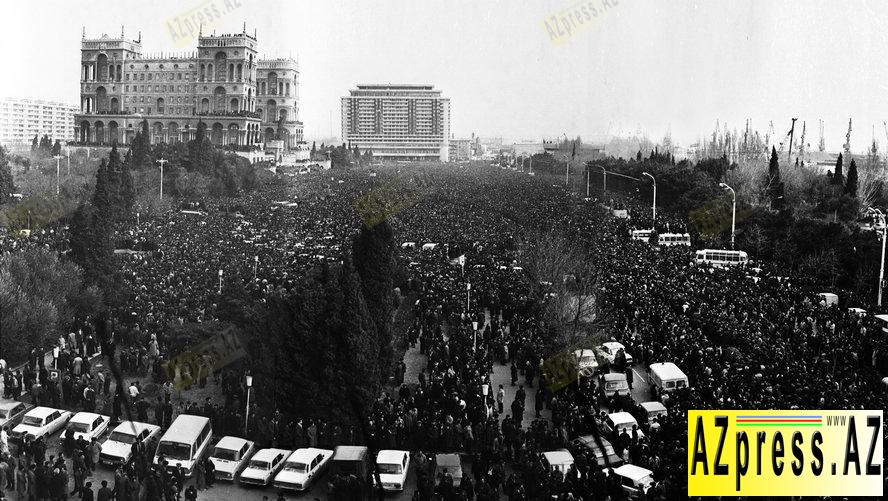
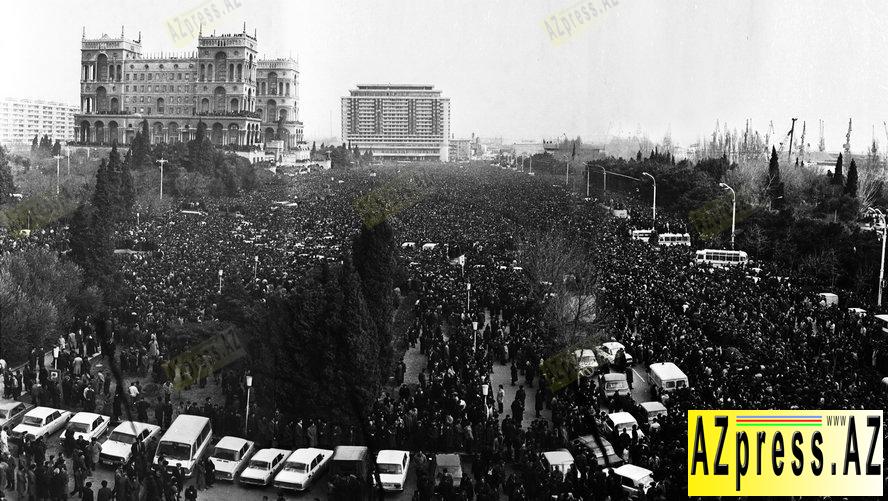
    Funeral of Martyrs on January 22, 1990. Baku. Estimated 1 million people attended. Photo: Rasim Sadikhov

    There was no wounded or killed among my friends. But there were a lot of elderly people, children and women among killed. And not only Turks were among killed, but Jews, Russians and representatives of other nations. We learned the figure afterwards: 147 people killed, more than 700 people wounded. Many cars, buses, ambulances were hit, the people inside were killed. Tanks were driven on some cars. On 20 January 1990 Baku was like a battlefield. But there was only one side of the war: Russians alongside with Armenians were fighting against the people of Azerbaijan…

    Now it is 20 January 2019. Total 29 years have passed from that night. Me and other eyewitnesses have not forgotten those atrocities implemented by Russians together with Armenians. Because we can`t forget…

    After so many years my Azerbaijan is independent, free and strong country. We have to solve yet a conflict with Armenia. One day we will manage with this conflict as well as we managed to get free of Russian-Soviet exploitation.

    January 22, 2019
  • Sen. Menendez Delays Senate Confirmation Of US Ambassador to Azerbaijan

    Sen. Menendez Delays Senate Confirmation Of US Ambassador to Azerbaijan

    By Harut Sassounian
    Publisher, The California Courier
    www.TheCaliforniaCourier.com
     
    Pres. Donald Trump nominated on Sept. 4, 2018 career Foreign Service Officer Earle Litzenberger to serve as US Ambassador to Azerbaijan replacing Amb. Robert Cekuta who left Baku nine months ago.
     
    A month before the Senate Foreign Relations Committee’s October 4, 2018 hearing on Litzenberger’s confirmation, the Armenian National Committee of America (ANCA) issued a press release urging the Armenian American community, friends of Armenia, and human rights activists to call on their Senators to scrutinize Litzenberger’s nomination.
     
    Aram Hamparian, Executive Director of ANCA, explained that “there’s never been a more urgent need for clarity regarding the nature and scope of American relations with the Aliyev regime. This confirmation process provides a much-needed opportunity for substantive Congressional oversight of an increasingly troubled U.S.-Azerbaijan bilateral relationship, characterized by escalating aggression against Armenians, a worsening crackdown on dissent, and a well-funded campaign to manipulate the American political process.”
     
    Litzenberger has served as Senior Fellow at the German Marshall Fund; Deputy Chief of Mission to the United States Mission to NATO; NATO Deputy Senior Civilian Representative to Afghanistan; Deputy Chief of Mission at the United States Embassy in Belgrade, Serbia; and Deputy Chief of Mission at the United States Embassy in Bishkek, Kyrgyzstan. Litzenberger earned a B.A. from Middlebury College and M.S. from the United States Army War College. He speaks French, Russian, Serbian, and Bulgarian.
     
    During the October 4, 2018 Senate Foreign Relations Committee hearing, Litzenberger came under intense scrutiny. The ANCA reported that Sen. Bob Menendez (D-NJ) referred to Azeri President Ilham Aliyev’s “bellicose rhetoric and sporadic outbursts of violence,” when pressing Litzenberger about Azerbaijan’s violent strategies. Litzenberger responded that he would urge the Azerbaijani government to step back from behaviors that would disrupt the line of contact in the Artsakh conflict. He also stated that the U.S. is working along three lines — the non-use of force, respect for territorial integrity, and the right to self-determination.
     
    In addition, Litzenberger referred to the Organization for Security and Cooperation in Europe (OSCE) Minsk Group, which condemns “any violence and any threat of the use of violence along the line of contact” without specifically citing Azerbaijan’s attacks.
     
    During the hearing, Sen. Menendez inquired whether providing weapons to Azerbaijan should be curtailed based on its human rights violations. Litzenberger responded that the State Department will be careful to ensure its decisions do not undermine efforts to reach a peaceful settlement of the Artsakh conflict. He also mentioned an increased focus on Azerbaijani training in human rights.
     
    Following the hearing, both Sen. Menendez and Sen. Ed Markey (D-MA) submitted written questions to Litzenberger. At the request of Sen. Menendez, the Senate Foreign Relations Committee postponed consideration of Litzenberger’s nomination to an unspecified date. Both Senators may have additional written questions to the nominee as a result of their concerns at National Security Advisor John Bolton’s offer to sell weapons to Armenia and Azerbaijan during his late October trip to the Caucasus.
     
    Litzenberger was the only one of 19 ambassadorial nominations to be postponed, very likely until next year, when the Committee will hold its next business meeting.
     
    ANCA’s Hamparian welcomed Litzenberger’s delay giving the Senators the “opportunity for more careful Congressional oversight of our country’s increasingly challenging bilateral ties with Azerbaijan’s aggressive and abusive Aliyev regime, particularly in light of National Security Advisor John Bolton’s controversial suggestion that the U.S. start selling arms to Baku.”
     
    Hamparian went on to assert: “We join with our Senate friends in seeking greater clarity on this point, and, more generally, regarding the Administration’s policy on Aliyev’s worsening pattern of aggression against Artsakh and Armenia, incitement of hatred against all Armenians, unapologetic blacklisting of U.S. legislators, obstruction of the Royce-Engel peace proposals, threats to shoot down civilian aircraft, the destruction of the Djulfa cemetery and other Christian heritage sites, and – of course – his severe crackdown against domestic dissidents and ethnic-religious minorities.”
     
    Azerbaijan’s Turan news Agency reported the news about the delay of the confirmation of the US Ambassador to Baku. Surprisingly, Turan speculated that Pres. Trump may make a recess appointment taking advantage of the absence of Senate sessions in December, which would mean that the President could appoint Litzenberger as Ambassador to Azerbaijan without Senate confirmation.
     
    Readers may recall that Pres. Obama made such a recess appointment in the case of Matt Bryza dispatching him as Ambassador to Azerbaijan, after Sen. Menendez twice blocked his confirmation. Bryza could only serve in Baku for 12 months before being forced to return to Washington, after the Senate Foreign Relations Committee refused to confirm his nomination.
     
    In the case of Matt Bryza, the Armenian-American community had a good reason to object to his nominations as he had a serious bias against Armenia and favored Azerbaijan and Turkey. However, Litzenberger does not seem to have such biases and there is nothing personal against him. Delaying his nomination is simply a means to ensure that he would defend human rights in Azerbaijan and would urge the Aliyev regime to be less bellicose in the Artsakh conflict. Litzenberger’s delay would also send a message to John Bolton that the Senate does not welcome his offer to sell weapons to Azerbaijan.
     
    The delay of the Ambassador’s Senate confirmation would serve the additional aim of upsetting the Aliyev regime by prolonging the lengthy absence of a US Ambassador to Baku, causing an irritation in Azerbaijan-United States relations.
    December 4, 2018
  • Top Aide to Kim Jong-un Is Bound for U.S., Trump Says

    Top Aide to Kim Jong-un Is Bound for U.S., Trump Says

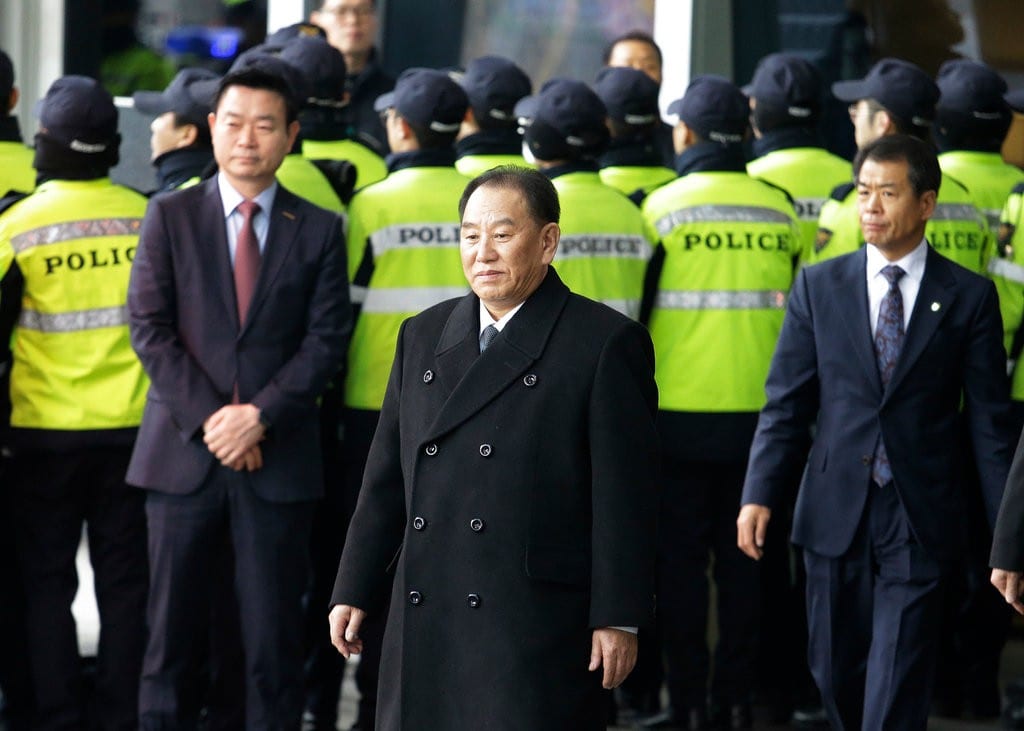
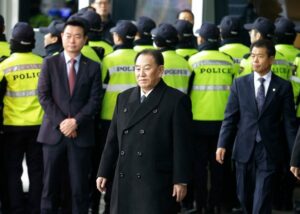
    North Korea’s top nuclear weapons negotiator was headed for New York on Tuesday and expected to meet with Secretary of State Mike Pompeo as officials race to settle on an agenda for a June 12 summit meeting between the North’s leader, Kim Jong-un, and President Trump in Singapore.

    Mr. Trump said on Twitter that Kim Yong-chol, one of the most trusted aides to the North’s leader and a former intelligence chief, was “heading now to New York.” In a reference to the moves made since he canceled the on-again-off-again summit meeting, the president added, “Solid response to my letter, thank you!”

    The former intelligence chief, who is 72, has been at the side of the North Korean leader, 34, during a recent whirl of diplomacy, meeting with South Koreans in the Demilitarized Zone dividing the peninsula and with the Chinese.

    Mr. Kim’s trip to the United States starts the most important negotiating track leading up to the summit meeting. Over the weekend, a team of American diplomats met with North Korean officials in the Demilitarized Zone, and White House logistics experts have been talking with North Koreans in Singapore about arrangements for the leaders’ meeting there.

    But a trip to the United States by Kim Yong-chol — who has served the three leaders of the Kim dynasty that has ruled the North since 1945 — signaled that negotiations were reaching a critical point.

    Mr. Kim would be the highest-ranking North Korean official to visit the United States since 2000, when Vice Marshal Jo Myong-rok invited President Bill Clinton to Pyongyang, with the prospect of sealing an agreement on curbing the North’s missiles. It never came to fruition.

    A diplomat in Beijing, where Mr. Kim stopped overnight Tuesday, said it was not immediately clear whether the negotiator would meet with the Chinese again before going on to New York, where he is expected to arrive on Wednesday.

    China’s Foreign Ministry would not confirm the former spymaster’s presence in Beijing, even though video footage showed him at the airport after his arrival from the North Korean capital, Pyongyang.

    In recent weeks, China and the United States have been vying for the attention of Kim Jong-un, with Mr. Trump accusing China of contributing to a toughened North Korean stance on denuclearization after the North Korean and Chinese leaders met this month.

    If the former spy chief met with senior Chinese officials in Beijing, he might risk angering Mr. Trump again, diplomats said. His stop in Beijing could also be related to his presence on a sanctions list that bars him from entering the United States.

    An American diplomat said a waiver would have to be granted for such an individual to enter the United States, although it was likely one would automatically be given under extraordinary circumstances like these.

    Mr. Kim was probably headed to New York, where North Korea has a mission to the United Nations, rather than to Washington because it was easier for him to get a visa there, another American diplomat said. North Korean diplomats and officials are not allowed to travel more than a few miles outside New York City.

    Kim Yong-chol has already met Mr. Pompeo twice in Pyongyang. On the second visit, Mr. Pompeo expected to come away with a set of details for the Singapore summit meeting relating to the denuclearization of the North, but failed to do so. After the second meeting this month, Mr. Pompeo returned to Washington with three Americans who had been detained in North Korea.

    In his most recent meeting with Mr. Pompeo, Mr. Kim struck a defiant tone, saying at a luncheon that North Korea’s willingness to enter into talks was “not a result of sanctions that have been imposed from the outside.” But he reminded the visiting Americans that North Korea intended to focus “all efforts into economic progress in our country.”

    Mr. Kim has served as a senior manager of the North’s intelligence operations for nearly 30 years, according to the website North Korea Leadership Watch.

    Mr. Kim’s rare combination of senior positions in the North’s highly stratified political and military apparatus makes him “one of the most powerful figures in North Korea,” it said.

    He is also one of the longest serving senior officials of the Kim dynasty. Mr. Kim was involved in the 1990s in one of the earliest efforts to limit the North’s nuclear weapons. According to an account in “The Two Koreas,” by Don Oberdorfer and Robert Carlin, Mr. Kim was the toughest of negotiators on an accord that eventually failed in 1992.

    At the time, Mr. Kim accused a South Korean diplomat of composing 90 percent of the language in the accord, it says, quoting him as saying, “This is your agreement, not our agreement.”

    In the mid-2000s, he was assigned as head of the Reconnaissance General Bureau, the North’s spy agency, and paid particular attention to operations against South Korea. When he was chief of the North’s intelligence service in 2010, South Korea accused him of being responsible for blowing up a South Korean Navy vessel, killing 46 sailors. Five months later, the United States Treasury put Mr. Kim on the sanctions list.

    In February, Mr. Kim was sent to the closing ceremony of the Winter Olympics in South Korea. He appeared in photographs seated behind Ivanka Trump, a stern expression on his face.

    Over the past few months, the United States and North Korea have come closer than ever to holding the first summit meeting of the countries’ leaders. In March, Mr. Trump surprised many people when he accepted Kim Jong-un’s invitation to meet, which was relayed through South Korean envoys. But last Thursday in a letter to the North Korean leader, Mr. Trump abruptly canceled the meeting.

    He then changed course again on Friday, saying that the meeting might take place as scheduled. Officials from the United States and North Korea have since started a whirlwind of working-level diplomacy to try to narrow a gap over how to denuclearize the North and salvage the planned meeting.

    May 29, 2018
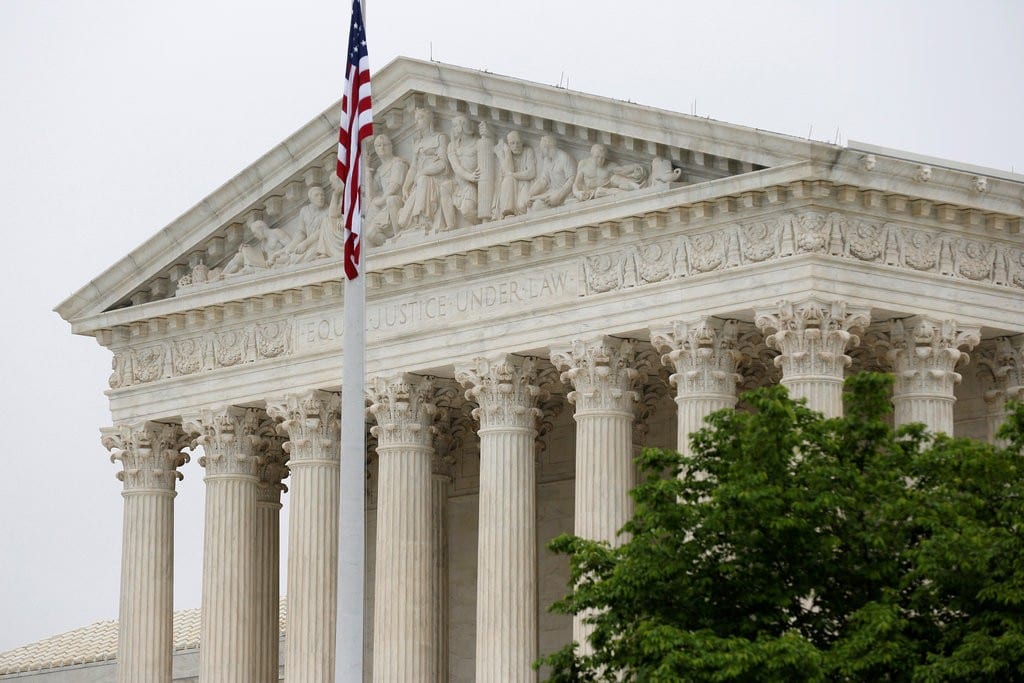
  • Supreme Court Won’t Hear Challenge to Restrictive Arkansas Abortion Law

    Supreme Court Won’t Hear Challenge to Restrictive Arkansas Abortion Law

    The Supreme Court refused on Monday to hear a challenge to an Arkansas law that could force two of the state’s three abortion clinics to close.

    The law concerns medication abortions, which use pills to induce abortions in the first nine weeks of pregnancy. The law, enacted in 2015, requires providers of the procedure to have contracts with doctors who have admitting privileges at a hospital in the state.

    The law is quite similar to one in Texas that was struck down by the Supreme Court in 2016.

    Writing for the majority in the 5-3 decision, Justice Stephen G. Breyer said the Texas law, which required doctors performing abortions to have admitting privileges at a nearby hospital, placed “a substantial obstacle” in the path of women seeking abortions and amounted to an “undue burden on abortion access” in violation of the Constitution.

    Judges considering laws restricting access to abortion, Justice Breyer added, must make a cost-benefit calculation, weighing the burdens a law imposes on abortion access against the benefits it confers.

    Judge Kristine G. Baker, of the Federal District Court in Little Rock, blocked the Arkansas law, saying its medical benefits were few at best and outweighed by the burdens it imposed. The law, she wrote, quoting an earlier decision, was “a solution in search of a problem.”

    But a unanimous three-judge panel of the United States Court of Appeals for the Eighth Circuit, in St. Louis, vacated that decision, saying that Judge Baker had not specified how many women would be affected.

    Arkansas has three abortion clinics. One, in Little Rock, offers both medication and surgical abortions. The others, in Little Rock and Fayetteville, offer only medication abortions.

    In its appeal to the Supreme Court, the local Planned Parenthood affiliate said it contacted every qualified doctor it could identify. No one of them, the group said, was willing to enter into the contract required by the law. This was unsurprising, Judge Baker found, as doctors in Arkansas who perform abortions “risk being ostracized from their communities and face harassment and violence toward themselves, their family, and their private practices.”

    Arkansas officials told the Supreme Court that Planned Parenthood had not tried hard enough or told the doctors how much it was willing to pay.

    If the law were to go into effect, Planned Parenthood said, only surgical abortions would be available in Arkansas. “This will particularly affect women who strongly prefer medication abortion,” the group told the Supreme Court, “including those who find it traumatic to have instruments placed in their vaginas because they are victims of rape, incest, or domestic violence, as well as women for whom medication abortion is medically indicated and safer than surgical abortion.”

    In their Supreme Court brief in the case, Planned Parenthood of Arkansas & Eastern Oklahoma v. Jegley, No. 17-935, Arkansas officials responded that “there is no right to choose medication abortion.”

    They added that their state’s law was not as onerous as the one from Texas, which required abortion providers to have admitting privileges. “Arkansas law only requires medication abortion providers to have a contractual relationship (to ensure follow-up treatment if needed) with a physician that has admitting privileges,” the officials’ brief said.

    The law would effectively require women to travel long distances to obtain even the abortion procedure that remained available, Planned Parenthood told the justices. Women in Fayetteville, for instance, would have to make a 380-mile round-trip journey, twice, as Arkansas law also requires an in-person counseling session 48 hours before an abortion.

    “Inability to travel to the sole remaining clinic in the state will lead some women to take desperate measures, such as attempting to self-abort or seeking care from unsafe providers,” Judge Baker wrote.

    Medication abortions are considered quite safe. One study found that six of every 10,000 women who used the procedure experienced complications requiring hospitalization.

    Since women typically take the second drug in the two-pill regimen at home, which may not be near the clinic, it is not clear that having a doctor on contract would make them safer than simply visiting an emergency room, Judge Baker wrote.

    “Emergency room physicians are well qualified to evaluate and treat most complications that can arise after a medication abortion,” she wrote, adding that the relevant medical issues are “identical to those suffered by women experiencing miscarriage, who receive treatments in hospitals every day through emergency physicians.”

    May 29, 2018
←Previous Page
1 … 41 42 43 44 45 … 1,160
Next Page→
Turkish Forum

Turkish Forum

Informed Cultures Cooperate

  • About
  • Authors
  • Legal
  • Contact

© 1993-2024 Turkish Forum. All Rights Reserved.

Designed and technology provided by Hosting4us