Former Cong. Bob Livingston published a commentary in the Wall Street Journal last week asking outgoing U.S. Attorney General Merrick Garland to apologize for investigating the Livingston Group, a lobbying firm that was paid millions of dollars by the Government of Turkey to deny the Armenian Genocide and block its acknowledgment by the U.S. Congress.
Livingston accused Garland of being “a tool in the Democratic Party’s strategy of misusing the Justice Department to visit injustice on innocent people with differing political views.” Livingston was a Republican congressman from 1977 to 1999. He was slated to become the Speaker of the House, but resigned after the revelation of his extramarital affair. Subsequently, he formed and headed the Livingston Group for 25 years.
Livingston wrote in his commentary that “in 2022 two FBI agents came to my home in New Orleans and questioned me [for 2.5 hours] about incidents involving our representation of an international client in 2018.” The FBI agents presented “a search warrant for all my company’s records related to their questions.” The next day, the FBI informed him that he was “the target of felony charges.”
Livingston claimed that in December 2023 an FBI agent interviewed one of his employees who “was scared to death. He went to bed on Dec. 31, 2023, and didn’t wake up the next day.” Livingston wrote that “every day and night for 20 months, I lived with the possibility that the hammer could drop at any moment. Everything I worked for would be tarnished. My firm would collapse, my employees would lose their jobs, all of us would be ruined in the press, and I could go to prison.”
Livingston claimed that he and his firm were “innocent of all charges…. We spent incredible amounts of money on legal counsel, more than three times what we earned by representing the client at issue. Our attorneys prepared an 88-page brief rebutting all charges. They succeeded in backing prosecutors down, but I am convinced the department’s actions were political and malicious, targeting me as a lobbyist who has supported Donald Trump and been critical of President Biden…. The statute of limitations expired on our case in November, and prosecutors have said they are no longer interested in pursuing charges.”
Rather than being satisfied that the charges against him and his firm were dropped, Livingston went on to claim that “members of the Trump administration and Mr. Trump himself have been hounded and arrested. They’ve had their lives ruined for minor white-collar infractions. Mr. Trump has prevailed over attempts to destroy him, but others have been less fortunate.” Livingston conveniently forgot that Trump was convicted of sexual abuse and 34 felonies, becoming the first U.S. President who is a convicted criminal.
In order to put Livingston’s complaint in context, let us learn a little more about this man and see who should apologize to whom.
The New York Times, in an article published on October 17, 2007, titled: “Turkey’s Man in the Lobbies of Capitol Hill,” provided a partial list of Livingston firm’s sinister activities on behalf of genocide denialist Turkey for millions of dollars.
The Times described Livingston as “the main lobbyist for Turkey in blocking Congressional efforts to pass an Armenian genocide resolution. After succeeding twice before [in 2000 and 2004] — and collecting more than $12 million in fees for his firm, the Livingston Group — he is pushing once again for his client…. He escorted Turkish dignitaries to Capitol Hill to warn that the resolution threatened to destroy a strong Iraq war alliance.”
“A surge of defections by [House] members who backed the resolution showed that Mr. Livingston’s high-powered effort was gaining momentum,” the Times reported. “Mr. Livingston has showered money on House and Senate members, the National Republican Congressional Committee and other political causes. He and his firm gave more than $200,000 in campaign donations in the last election cycle, records show.… The issue has pitted Turkey’s money and high-placed connections against a persistent and emotional campaign by Armenian-American citizens’ groups,” the Times wrote.
To leave no stone unturned, the Turkish government had also recruited the “former Cong. Stephen J. Solarz whose firm got $165,000 this summer lobbying for Turkey under an arrangement with Mr. Livingston.” Furthermore, Turkey hired “another prominent lobbyist, Richard A. Gephardt, of Missouri, the former House majority leader and a Democrat” who had co-sponsored the Genocide Resolution while he was a House member. His firm, DLA Piper, signed a year-long lobbying contract with Turkey for $1.2 million. Just in the 12 months beginning in August 2005, Turkey spent $3.2 million on lobbyists and public relations firms.
The Livingston group also lobbied for Azerbaijan, Congo and the Cayman Islands. “More than a quarter of the firm’s income, which has totaled more than $71 million, has come from foreign clients, records show,” the Times article revealed.
Rather than asking Attorney General Garland to apologize, Livingston is the one who should apologize to the global Armenian community for spreading and profiting from his heinous lies denying the Armenian Genocide. Livingston should donate to Armenian-American organizations all $12 million his firm earned from Turkey to right the wrongs he and his firm committed.
There seems to be no end to Prime Minister Nikol Pashinyan’s concessions to Azerbaijan’s demands. The only end will be the end of Armenia.
Last week, when Pres. Ilham Aliyev once again issued threats against Armenia, Pashinyan responded with further concessions. It feels like Aliyev is ruling Armenia from Baku.
Aliyev gave a lengthy press conference to the Azeri media on January 7, 2025, during which he made arrogant statements about Armenia using an extremely demeaning tone. Here are excerpts from his remarks:
— Armenia returned the four villages in the Tavoush region to Azerbaijan “as a result of a monologue rather than a dialogue.” Armenia returned these villages “under coercion.”
— “Armenia cannot compete with us in the arms race.”
— “The independent Armenian state is, in fact, a fascist state…. Therefore, fascism must be eradicated. Either the Armenian leadership will destroy it, or we will.”
— “Armenia must immediately cease arming itself. France and other countries that supply weapons to Armenia must terminate and cancel these contracts. The weapons that have already been delivered to Armenia must be returned.”
— “The dissolution of the Minsk Group and the amendment of the constitution; without these, a peace treaty is impossible.”
— “The Zangezur corridor must and will be opened.”
–“During his [Pres. Trump’s] first term, there was no issue in U.S.-Azerbaijan relations. On the contrary, the relations were very positive, and we were able to make progress in many areas. The main mistake of the Biden administration regarding Azerbaijan was that they sacrificed U.S.-Azerbaijan relations for U.S.-Armenia relations.”
— “Considering that the current territory of Armenia essentially includes the historical lands that were predominantly inhabited by Azerbaijanis, today we assert that 300,000 Western Azerbaijanis should return to those regions. However, the total number of those who have been displaced from that region, and who are now living in various parts of Azerbaijan, along with their descendants, is several times greater than 300,000.”
After members of the Armenian media complained about Pashinyan’s eerie silence about Aliyev’s threatening comments, he finally agreed to answer a few questions from Armenpress on January 8:
Pashinyan said that by making aggressive statements about Armenia, Aliyev expected a similar aggressive response from Armenia “to form the basis for a new escalation in the region. We will not take that path and we will remain committed to the strategy of peace.” Pashinyan keeps begging for peace and ignoring Aliyev’s multiple rejections. Aliyev prefers a piece of Armenia rather than a piece of paper which he will ignore even if he signs it. In this short interview, Pashinyan repeated the word peace 11 times.
When asked for his reply to Aliyev’s accusation that Armenia is “a fascist state,” Pashinyan sheepishly agreed that there is such a perception about Armenia in Azerbaijan, just as there is a similar perception about Azerbaijan in Armenia.
Regarding Aliyev’s persistent demands for an Azeri corridor through Armenia, Pashinyan once again failed to demand that, as stated in the 2020 agreement, Azerbaijan allow a reciprocal access for Armenia through Azerbaijan.
In responding to a question about Aliyev referring to the Republic of Armenia as “Western Azerbaijan,” Pashinyan simply said: Aliyev “has said nothing new about this topic for me to have a new reaction.”
Regarding Aliyev’s complaints about Armenia acquiring arms, Pashinyan stated: “no one can dispute the right of the Republic of Armenia to have a defensible army.” He then added: “we do not have an objective of militarily returning more than 200 square kilometers of occupied territories of the Republic of Armenia….”
In response to Azeri accusations of Armenia violating the ceasefire, Pashinyan repeated his proposal “to create a joint mechanism to jointly investigate each report about ceasefire violations, and draw joint conclusions.”
On January 9, Pashinyan posted on his Facebook page a lengthy statement comprised of 17 points, complying with Aliyev’s demands for concessions.
He described “Western Azerbaijan” as consisting of several towns located in the Western part of Azerbaijan, including parts of Artsakh. He falsely named cities in the Republic of Armenia as being “Western Armenia,” adding facetiously, “there is no Western Armenia beyond this and cannot be.”
He then detailed the components of “establishing lasting stability and peace in the region”:
— “Mutually abandon escalatory narratives.”
— “Continue the delimitation process.”
— “Sign a peace treaty which is 90% ready.”
— “Implement the ‘Crossroads of Peace’ project.”
— “Introduce a joint mechanism for investigating ceasefire violations.”
— “Fully resolve the issue of detained persons.”
— “Work in full intensity to locate and resolve the issue of determining the fate of those considered missing.”
— “Withdraw the claims against each other, including, but not limited to, claims in international courts.”
— “Work on the complete and effective implementation of the provisions of the peace treaty.”
— “Form a mechanism for negotiating around mutual arms control, quota allocation, and implementing restrictions on the use of armaments.”
— “Discuss in full the issues pertaining to refugees from the two countries by forming a joint professional, expert commission after the establishment of peace.”
— “Dissolve the OSCE Minsk Group.”
Some of these points are a rehash of Pashinyan’s previous proposals which Aliyev has not accepted. However, several are against Armenia’s interests, particularly: the withdrawal of mutual lawsuits in international courts and dissolving the OSCE Minsk Group. Both of these demands were dictated by Aliyev.
Regrettably, the only things that matter in this world are money and power. All the other issues that naïve people put a value on, such as truth, justice, and human rights, are self-defeating delusions. Rich and powerful people and countries can do almost anything they want. The only ones that can stop them are those who possess greater power. The weak are at the mercy of the powerful wolves.
These thoughts came to my mind as I received an email from the Lladro Company, which is world famous for the porcelain figurines it produces in Valencia, Spain. A lot of people have valuable collections of Lladro figurines in their homes. They are frequently given as gifts.
Karabakh horse – Alyetmez, photo 1867
The email I received from Lladro was a pitch to sell its latest porcelain figurine named: ‘Karabakh Horse.’ Next to the image of a horse, the email stated: “The Karabakh horse is a symbol of Azerbaijan’s cultural legacy and its indomitable spirit. Our artists have portrayed it in porcelain, underscoring the elegance and beauty of this unique breed. Following ancient tradition, the horse is covered with a Karabakh rug with its rightly famous patterns decorated in intense colors and golden lusters. Discover all the details of this specimen, available in a limited edition.”
In the above short paragraph, Lladro made several factual errors. First of all, the Karabagh horse cannot be a symbol of Azerbaijan since Karabagh (Artsakh) is a part of historic Armenia. To make matters worse, Lladro falsely added that this horse is a symbol of Azerbaijan’s “cultural legacy and its indomitable spirit.” There is no such thing as Azerbaijan’s ‘cultural legacy’ since the country is a little over 100 years old. I also don’t understand Lladro’s reference to Azerbaijan’s ‘indomitable spirit.’ Where did that ‘indomitable spirit’ come from? Azerbaijan, during its short-lived history, has engaged in barbaric beheadings of Armenian prisoners of war, committed massacres, ethnic cleansing, and genocide, destroyed Armenian churches and cultural monuments, distorted history, and committed massive violations of the human rights of its own citizens, including the jailing of journalists and political dissidents on trumped-up charges.
Since I know very little about horses, I searched about the ‘Karabagh horse’ on the Internet. Here is what I found: “The Karabagh horse breed is influenced by Persian horses and other breeds like the Akhal-Teke, Kabarda, Turkoman, and Arabian horses.” The Akhal-Teke horse originates from Turkmenistan, while the Kabarda from the Kabardino-Balkaria Republic in Russia. I don’t see any reference to Azerbaijan in that sentence.
In another obvious error, Lladro explained in its email that ‘Karabakh Horse’ means ‘golden horse.’ This is false. The name Karabagh is composed of two words: ‘Kara’ which means black in Turkish and ‘bagh’ which means garden in Farsi. Therefore, Karabagh means Black Garden.
Lladro is selling the ‘Karabakh Horse’ porcelain figurine for $6,580 each. It is a ‘limited edition’ production with only 750 copies. It weighs 20 lbs. The dimensions are: 17 inches (high), 20 inches (wide), and 8 inches (long).
To promote the ‘Karabakh Horse’ figurine, Lladro held its unveiling at the Shirvanshah Palace Museum in Baku, where the Azerbaijan National Conservatory provided a live musical concert. The guest speaker was Yashar Quluzade, the owner of the largest number of actual Karabagh horses.
To represent Karabagh as part of Azerbaijan, and promote the Karabagh horse worldwide, Pres. Aliyev gifted in 2022 a Karabagh horse and two equestrian-themed sculptures to Queen Elizabeth II of England. This is the second time that the Queen has received a Karabagh horse from Azerbaijan. The first one was in 1956.
Since the only thing Lladro executives care about is profit, Armenians and their supporters should counter the use of the Karabagh horse as a tool for Azeri propaganda by boycotting the purchase of all Lladro products. Complaints should be sent to Ana Rodríguez Nogueiras, the Chief Executive Officer of Lladro. Her email is: [email protected].
I do not know what kind of business arrangements have been made between Azerbaijan’s leaders and Lladro. Who is getting what percentage of the sales and who is personally benefiting from the resulting income?
It is surprising that the Karabagh Horse figurines are still not sold out since they were launched several months ago. Since Azeri leaders donate lavish gifts to foreign dignitaries visiting Azerbaijan, why haven’t they purchased all 750 copies of the Karabagh Horse porcelain and given them as souvenirs? I am certain that Pres. Aliyev, who is a billionaire, can easily afford to purchase all 750 copies at $6,580 each for a total cost of $4.9 million.
President Timothy G. Lynch College of Staten Island 2800 Victory Boulevard Staten Island, NY 10314 January 1, 2025
Dear President Lynch,
I write to you with deep concern regarding a matter that has the potential to tarnish the reputation of the College of Staten Island (CSI). I am compelled to address the recent remarks made by Ms. Özlem Gönér, who, as a Steering Committee member of the Emergency Committee for Rojava, appeared on Democracy Now on December 24, 2024. In her commentary, Ms. Gönér stated that “Turkey is a major threat to Kurds and to democratic experiments that Kurds have been implementing in the region starting in 2014,” and continued by claiming that “Turkey, Israel, and the U.S. collectively are trying to carve out this land, and Kurds are under threat.” While these statements may appear innocuous on the surface, they carry with them a dangerous misrepresentation of the realities on the ground, particularly concerning Türkiye’s legitimate national security concerns and its role as a NATO ally.
Ms. Gönér’s assertions are not only misleading but are also ideologically aligned with a group that maintains dangerous ties to the PKK (Kurdistan Workers’ Party), a Marxist-Leninist organization recognized as a terrorist group by the United States, the European Union, and Türkiye. Over 45,000 women, children, teachers, doctors and men, lives have been lost to PKK violence. U.S. Secretary of State Antony Blinken, during his visit to Ankara on December 12, 2024, aptly described the PKK as “an enduring threat” to Türkiye. Furthermore, U.S. Secretary of Defense Lloyd Austin December 9th 2024 acknowledged Türkiye’s legitimate security concerns, particularly regarding the Syrian Democratic Forces (SDF=YPG, PYD), which are closely tied to the PKK. December 13, 2024 Former CIA Senior Agent Glenn Corn on the Cipher Brief said” Turkiye is a much more strategic partner of importance for the U.S then working with YPG, PYD / PKK “Kurds”. Also Former US Ambassador to Turkey David Satterfield : recognizing A NATO Partner and Ally Turkey to defend itself against terror to exercise it right of self-defense CBS News December 18, 2024. December 19 2024 Former US Ambassador to Turkiye James Jeffery “US Backed SDF, given its undeniable ties to the PKK, is a serious national-security threat to Turkiye.”
During Senate Armed Services Committee Hearing on combating ISIS, U.S. Senator Lindsey Graham (R-South Carolina) questions Secretary Carter and General Dunford on the U.S. military strategy in working with terrorist PKK and YPG in Syrai and Iraq highlighting the YPG’s connections to the PKK and their acts of terror, which have cost thousands of civilian lives.
The political framework of Rojava, which Ms. Gönér supports, is rooted in the ideology of Abdullah Öcalan, the leader of the PKK, thus creating a direct or indirect link between her actions and the PKK’s objectives. It is crucial to distinguish between humanitarian advocacy and political or military affiliations.
Despite any claims of neutrality, the ideological overlap between these groups raises significant concerns about the motivations behind Ms. Gönér’s rhetoric.
First and foremost, Türkiye’s official name—the “Republic of Türkiye”—is not merely a formality but represents the nation’s sovereignty and identity. By referring to the country as “Turkey,” Ms. Gönér, along with others in her circle, undermines the diplomatic respect due to a sovereign state. This disregard for proper naming conventions is a symptom of a broader trend to delegitimize Türkiye and its government on the international stage. Furthermore, Ms. Gönér’s remarks about the deaths of journalists Nazım Daştan and Cihan Bilgin, who she claims were targeted by Türkiye are baseless and lack substantiation in any court of law, including the European Court of Human Rights (ECHR). There is no publicly available information supporting her allegations. Her attempt to frame these deaths as a pretext to vilify Türkiye’s counterterrorism efforts only serves to further distort the narrative surrounding the country’s legitimate security actions.
Also US State Department has never taken Ms Goner position.
Ms. Gönér’s comments about Türkiye’s engagement with ISIS are equally misguided. She falsely portrays Türkiye as a supporter of ISIS, a claim that has been repeatedly debunked by numerous international figures. U.S. Secretary of State Antony Blinken, during his visit to Ankara on December 12, 2024, correctly described the PKK & ISIS as “an enduring threat” to Türkiye. Additionally, U.S. Secretary of Defense Lloyd Austin, on December 9, 2024, recognized Türkiye’s legitimate security concerns, particularly regarding the Syrian Democratic Forces (SDF), which have strong ties to the PKK. Former CIA Senior Agent Glenn Corn, on December 13, 2024, emphasized that Türkiye is a far more strategic partner for the United States than groups like the YPG/PYD/PKK and ISIS . Former U.S. Ambassador to Turkey, David Satterfield, former U.S. Ambassador James Jeffrey also affirmed the necessity of recognizing Türkiye’s right to self-defense in the face of these terrorist threats.
Turkey has played a significant role in the fight against ISIS with only country with Soldier going face to face on the ground , receiving recognition from various Western leaders and institutions.
NATO Secretary General Jens Stoltenberg has highlighted the alliance’s and Turkiyes commitment to combating international terrorism, including ISIS.
Think Tanks: Council on Foreign Relations (CFR): While CFR has critically analyzed Turkey’s strategies, it acknowledges Turkey’s active military campaigns against ISIS. In an article titled “Turkey Is Lying About Fighting ISIS,” CFR discusses the complexities of Turkey’s involvement, indicating that while Turkey has engaged ISIS militarily, there are nuances to its broader regional strategy.
António Guterres: In October 2019, UN Secretary-General António Guterres expressed acknowledging Turkey’s security concerns related to fighting ISIS.
United Nations: Former Secretary-General Ban Ki-moon emphasized Turkey’s pivotal role in the fight against ISIS
Germany: The German government backed Turkey’s military initiatives against ISIS, with officials noting the importance of Turkey’s role in the regional fight against terrorism. India: In October 2019, during Turkey’s military operations in northeastern Syria, Turkey justified as part of its fight against terrorist groups, including ISIS.
Saudi Arabia – Saudi Arabia has also publicly supported Türkiye’s fight against ISIS, both in terms of military operations and international diplomatic efforts to combat terrorism.
Indonesia – Indonesian leaders have consistently commended Türkiye’s efforts in combating ISIS and terrorism in the region .
Malaysia – The Malaysian government has recognized Türkiye’s role in the fight against ISIS.
United Arab Emirates (UAE) – UAE leaders have praised Türkiye’s role in countering terrorism, particularly ISIS, noting Türkiye’s significant contributions to the security of the region.
Kuwait – The Kuwaiti government has expressed gratitude towards Türkiye for its contribution to the regional fight against ISIS, especially in terms of humanitarian and military efforts.
Jordan – As a neighboring country affected by ISIS, Jordan has often acknowledged Türkiye’s efforts in fighting ISIS, especially considering their shared interest in regional stability.
The Center for Strategic and International Studies (CSIS) has analyzed Turkey’s role in regional security dynamics. In discussions about Turkey’s actions in Syria, CSIS noted the complexities of Turkey’s involvement in the region, including its stance against ISIS.
These acknowledgments underscore Turkey’s active participation in the international effort to combat ISIS, as recognized by U.S. officials and policy analysis organizations.
Moreover, it is important to address Ms. Gönér’s use of the phrase “a big threat to the Kurdish population.” Such rhetoric ignores the fact that over 15 million Turkish Kurds live peacefully within Türkiye, enjoying equal rights under the law. Many of these Kurdish citizens hold positions of great responsibility, including in Türkiye’s highest offices. The PKK, however, is not representative of the Kurdish population; it is a terrorist organization that has waged a violent campaign against both Turkish civilians and the Kurdish people themselves.
o frame Türkiye’s counterterrorism efforts as an attack on the Kurdish people is not only inaccurate but harmful. Türkiye has long been a protector of vulnerable Kurdish populations, as demonstrated by its efforts during the Gulf War, when it sheltered over 500,000 Kurds fleeing Saddam Hussein. Since the Syrian Civil War began in 2012, Türkiye has hosted millions of refugees, including tens of thousands of Syrian Kurds, providing them with refuge from the brutality of PKK and YPG forces.
Türkiye’s anti-terror operations are focused on groups like the PKK and its affiliates, such as the YPG and PYD, which have exploited regional instability to pursue separatist and extremist goals. Not Kurds.
In recent statements, Nechirvan Barzani, President of the Kurdistan Regional Government (KRG) , has emphasized the need for the Kurdistan Workers’ Party (PKK / YPG- PYD ) to cease its activities within the Kurdistan Region. He has described the PKK / YPG, PYD as a “headache” for both the Kurdistan Region and Iraq, criticizing the group. Mr. Barzani has called on the terrorist YPG linked to PKK to distance its operations from the people of ”kurdistan”, highlighting that the group’s actions are detrimental to the region’s stability and security.
On December 25th 2024 Abdullah Keddo, a representative of the Kurdish National Council in Syria (ENKS), the main political representative of Kurds “We refuse to accept the presence of the PKK and its affiliates in Syria, all of which must be removed from the region,”
Kurdish Parliament in Iraq: The Kurdish Parliament has expressed gratitude to Turkey for its continued efforts to ensure the safety of Kurds in Iraq, including the provision of military support against ISIS during the 2014-2017 period. Many Kurdish parliamentarians have recognized Turkey’s role in promoting the Kurdish region’s economic development. Kurdish Regional Government (KRG) officials: Many Kurdish leaders in Iraq, particularly from the KRG, have expressed gratitude towards Turkey for its support in protecting the Kurdish population in northern Iraq from Saddam Hussein’s regime following the Gulf War. This support included humanitarian aid, shelter for refugees, and logistical assistance in the establishment of a safe zone in northern Iraq in the early 1990s. These expressions of gratitude and praise for Turkey’s support reflect the relationship that Kurdish groups have had with Turkey over the years, particularly in times of regional conflict. Ms. Goner forgot to mention.
As a NATO ally, Türkiye has continuously stood at the forefront of efforts to combat terrorism and preserve regional stability with us in America. Ms. Gönér’s characterization of Türkiye’s actions as a threat undermines the strategic importance of this alliance and sows division where none should exist. Instead of promoting a nuanced understanding of the situation, she inflames tensions and perpetuates misinformation that damages diplomatic relations between NATO allies.
In addition, I must express my concern that Ms. Gönér’s rhetoric is finding a platform at CSI. The College of Staten Island, a respected institution of higher learning, should not serve as a mouthpiece for groups with potential ties to terrorist organizations. The Emergency Committee for Rojava, of which Ms. Gönér is a part, has been associated with the PKK’s terrorist ideology, and her comments align with this group’s broader goals. It is crucial that CSI consider the implications of hosting individuals who, through their statements and affiliations, may inadvertently or intentionally undermine national security, harm U.S.-Türkiye and Israeli relations, and weaken NATO’s collective strength.
In conclusion, the ongoing campaign to delegitimize Türkiye—both within academic institutions and on the global stage—poses a grave threat to regional stability. The spread of one-sided, inflammatory narratives only exacerbates tensions and diverts attention from the real threats posed by groups like the PKK, YPG, and ISIS. I urge you to take this matter seriously and ensure that College of Staten Island, CSI remains a place where diverse perspectives are encouraged, but not at the cost of the integrity and national security of the United States, Turkiye, Isreal and its NATO allies.
Thank you for your attention to this important issue. I look forward to your response.
Yalman Haceroğlu writes: The axis of Turkish foreign policy towards Iraq between security and defense and diplomacy
Before drawing the strategic map of Turkish policy towards Iraq through the constants, determinants and calculations of Iraq in Turkish foreign policy, we must shed light on the imagination that contains sentences and phrases to explain the purpose of international policy.
Niccolò Machiavelli (1469-1527), an Italian thinker, philosopher and politician, says that the purpose of politics is to maintain the strength of the state and work to maintain and strengthen it, as these means based on the state’s foreign policy make it achieve internal strength and enable it to expand its authority abroad.
On the other hand, Friedrich Hegel (1770-1831), a German philosopher, believes that the state is based on the principle of the authority of the will, and from this standpoint the state must be independent in its external relations and not subject to the authority of another state. That is, it works according to what its will alone dictates.
By studying the opinions and theories of philosophers in politics and building an independent state, we must determine the components of building an independent state, and the source of these components is thought and politics, and in other words, political thought in building a state.
First, some researchers went to the point that politics is a person’s awareness of the creatures around him and the direct exchange of benefits with these creatures. Then this individuality turned into societalism through the development of human ideas that enabled him the ability and capacity to be an inventor. This transformation from individualism of relationship and benefit to collectivism of relationship and benefit was the role of politics. At each stage, man had to realize organisation and order, and since these two things require thought, which is the main driver of politics. Thus, man entered a new phase, which is the overlap between thought and politics.
The overlap between thought and politics includes three stages according to the aforementioned Italian thinker and philosopher, Niccolo Machiavelli: –
The first stage: the practical apply of political work
The second stage: the mental practice of political work, which includes writing, publishing ,literature, presentation and expression.
The third stage: Combining practical apply and mental practice, and led to output of balanced equation between thought and politics that appears and as two parallel lines. However, there remains a disparity in the mentality level between those who practice apply and in terms of the diversity of ideas. The mentality level will not disappear as long as there is a disparity in the culture possessed by politicians and as long as there is sufficient space for personal interests and whims in some souls and as long as there are mental illnesses that we can call political disability that may be apparent or hidden but appear in behavior.
In another context, Machiavelli believes that there are qualities and characteristics that the leader of the state or its prince must emulate, including shrewdness, insight and acumen that qualify the prince of the state to rely on his military strength without interacting with the outside and without resorting to additional forces or military assistance in terms of land, air and sea equipment and mechanisms.
When we examine these components in the nature of Turkish foreign policy and in Turkish internal affairs, we see it necessary to formulate these questions: Does the Turkish Republic have the authority of will? Is the Republic of Turkey an independent state in its foreign relations? How has Turkey been able to maintain its position of power? How do we view the overlap and interaction between politics and thought among Turkish politicians and those concerned with the Arab file, especially the Iraqi file, and the relationship between the intelligence establishment and the diplomatic establishment? To answer these questions, we will remove the curtain from the military and political scene in the Republic of Turkey, in addition to the statements of Turkish leaders, headed by Recep Tayyip Erdogan, President of the Republic of Turkey. We can consider 2023 the year of unprecedented Turkish defense industries. Turkey has sought with all its weight to standardize, fortify and strengthen its security forces in order to eliminate external dependency and create a long-term military defense vision through the use of modern technologies in military manufacturing and defense.
With its independent military industry, Turkey has produced the ATAK 2 attack helicopter, the combat drone and the jet trainer aircraft. Turkey was also not far from producing air defense systems and producing combat helicopter engines. In the field of armor, the Turkish military industry has produced the Tay tanks.
In the naval force, the largest Turkish ship, Anadolu TCG, entered the Turkish Navy’s arsenal.
The foreign policy of the Turkish state has adapted to the authority of the will in the state. Whereas the independent state is represented by its true entity through its foreign policy and not allowing interference in its internal affairs. The approach of foreign policy is the solid means to maintain the security and independence of the state by building a wall that prevents external interference in the internal affairs of that state. Here, Niccolo Machiavelli has proven his saying that the goal of politics is to maintain the power of the state and the expansion of its authority abroad, but in our opinion it must be in harmony with international decisions without affecting the sovereignty of the countries with which it deals diplomatically and politically.. These constants and determinants are among the priorities of Turkish foreign policy.
Turkey has recorded in its strategic file towards Iraq the pivotal points through an equation, which includes on the first side security and defense and on the second side of the equation there is intelligence diplomacy that forms foreign policy. That is, the Turkish Republic has drawn up a roadmap in its foreign policy towards Iraq since 2017, indicating the strongholds of the terrorist PKK organization on it in order to carry out military operations deep inside Iraqi territory in order to preserve its security and national borders.
Here the question arises, how did Turkey draw this military and political strategy together ?
Turkish foreign policy has focused on the two dimensions that included intelligence and diplomatic work since Dr. Hakan Fidan led the foreign policy portfolio in 2017, the head of the Turkish Intelligence Agency who assumed responsibility in 2010.
Fidan relied on applied intelligence to formulate Turkish foreign policy.
On the other hand, Hakan Fidan drew a foreign policy based on intelligence information. This is the practical apply of political work that constitutes the first stage in the overlap between thought and politics mentioned above, as he practiced political work in the Turkish presidency as an advisor and a foreign worker in NATO and his membership in the International Atomic Energy Agency and before all this his work as an officer in the Turkish army. Fidan also possesses the mental practice of political work through his writings and theses for obtaining master’s and doctoral degrees, and this is the second stage of the overlap between thought and politics, as Fidan combined political and mental work.
As a result of Hakan Fidan’s intelligence background and his extensive knowledge of Iraqi affairs in light of the experience accumulated through building diverse and different relationships with politicians from different Iraqi sects and bureaucratic circles, this constituted a noticeable shift towards policies that are more focused on the security dimension, heading towards curbing the threat posed by the terrorist organization PKK. With his appointment as head of the Ministry of Foreign Affairs on June 3, 2023, Turkish foreign policy in the Iraqi file has gained the ability to develop in different directions. During the years that Hakan Fidan led the Turkish intelligence service, he laid the foundations for bilateral relations with several effective communication channels in the Iraqi arena. It seems that he had built a good relationship with the head of the Iraqi intelligence service at the time, Mustafa Al-Kazemi. More importantly, he strengthened the bonds of close friendship with the head of the Hashd ELshabi Authority, Faleh Fayyadh, who is the real political actor in Iraq. He met with him many times in Baghdad and Ankara. Turkey also gave full confidence to the Sunni businessman Sheikh Khamis Khanjar, leader of the Azm Alliance, who emerged to the surface of Iraqi politics in recent years and became one of Turkey’s main partners, who initially allied with the leader of the EL Takddum (progress)Movement and former Iraqi Parliament Speaker Mohammed al-Halbousi, who formed the Sovereignty Alliance. However, this alliance collapsed after Mohammed al-Halbousi changed his political course. In terms of security and defense, Hakan Fidan achieved solid ground through foreign policy and diplomatic work The uniqueness of creating a legal outlet in agreement with the Iraqi side to protect the borders and Turkish national security by launching military operations inside Iraqi territory against the terrorist organization PKK that threatens Turkish national security, within a previous agreement with the Iraqi government that allows the Turkish army to penetrate Iraqi territory to fight the terrorist organization.
Also, the Iraqi Minister of Defense, Sheikh Thabet Muhammad Saeed Al-Aybek Al-Abbasi, had a close relationship with Hakan Fidan when he ran for the Iraqi Council of Representatives elections in 2018 within the Nineveh Our Identity coalition, which won a seat inside the Iraqi parliament. It is noteworthy that Sheikh Thabet Al-Abbasi founded the Iraqi Turkmen Salvation Front in 2017.
The Iraqi Minister of Defense, Sheikh Thabet Al-Abbasi, met with the Turkish Foreign Minister, Hakan Fidan, in Baghdad in August 2023.
Ammar al-Hakim
If we shed light on the Shia file in Turkish foreign policy, we find that Turkey has not marginalized any of the Shia politicians, and on every occasion it stands with the most prominent Shia leaders. On the other hand Turkey has special relations with Sheyh Ammar al-Hakim, the former head of the Supreme Islamic Council and head of the AL- Hikma Movement. In one of my television interviews with Sheyh. Ammar al-Hakim, I asked him about the Turkish role in Iraq, and he answered by saying:
Turkey represents serious policy in the region, as it is the largest economic partner of Iraq, and we look at Turkey as a strategic ally of Iraq, as there are dozens of agreements signed between Iraq and Turkey, it connects the Arabs with the West.
Thus, we find that Turkey has historical, economic and cultural relations with Iraq, as it is a large Islamic country with its status and role in the region, and the Turkish Republic is Iraq’s window to the West.
Turkey has been able to address hot issues in the region and in Iraq by adopting a wise and balanced policy. We are always in favor of strengthening bilateral relations with Turkey.
It always stands at equal distances with the spectrum of the Iraqi people.. and most importantly, Sheyh. Ammar al-Hakim said something that most Iraqis may not know, where he said:
We have a special and personal relationship with the Turks, as my wife’s mother is Turkish, meaning we have intermarriage relations with the Turks.
As for the Turkish foreign policy towards the Kurdish file in Iraq:
It is no secret that the Kurdish political arena includes the two main Kurdish parties (the KDP and PUK )
The KDP , led by Masoud Barzani, is characterized by its proximity to Turkey through economic and political ties, as the Kurdistan Democratic Party adopts a policy hostile to the terrorist organization PKK, and this policy is an important strategic line for Turkey.. In 2011, Mr. Recep Tayyip Erdogan went to Erbil and opened Erbil International Airport, and he was then serving as Prime Minister.. Then the visits between the two sides were repeated.
Turkey’s relationship with the PUK that led by Pavel Talabani, who is loyal to Iran, is tense due to the party’s support for the terrorist organization PKK. On many occasions, the Turkish government called on the PUK abandon its policy of supporting the terrorist organization.
Turkish foreign policy towards Iraq has been based on two main pillars since 2003.
First: The unity of Iraqi territory (geopolitical security), as Turkey considered that preserving the unity of Iraqi territory is related to its national security, and the Kirkuk issue falls within this framework.
Second: Stability in Iraq (economic security). For Ankara, the stability of Iraq is a strategic gain for the continuity of trade exchange between the two countries.
Adham Touq Demir
On July 12, 2004, an official delegation from the Turkish Ministry of Foreign Affairs headed by Ambassador Adham Tok Demir visited Kirkuk. The delegation included figures from various institutions in the Turkish government. It was the first official visit to Kirkuk after the fall of the former regime. During this visit, I was able to meet the ambassador. Adham Touq Demir in a television interview at the Kirkuk Governorate Diwan.. I asked the ambassador about the reasons for their visit to Kirkuk, and he answered saying:
Iraq is one of the important countries in the region that
Iraq is distinguished by its possession of huge human and natural resources. We also hope that the Iraqi people will live in peace and stability. Kirkuk represents a miniature Iraq that includes all nationalities and religions, and they are linked to each other by ties of kinship and neighborhood. We will also meet with all Turkmen, Kurdish, Arab and Assyrian parties, and we will visit Turkmen, Kurdish and Arab villages. We are also ready to extend a helping hand to all Iraqi brothers.
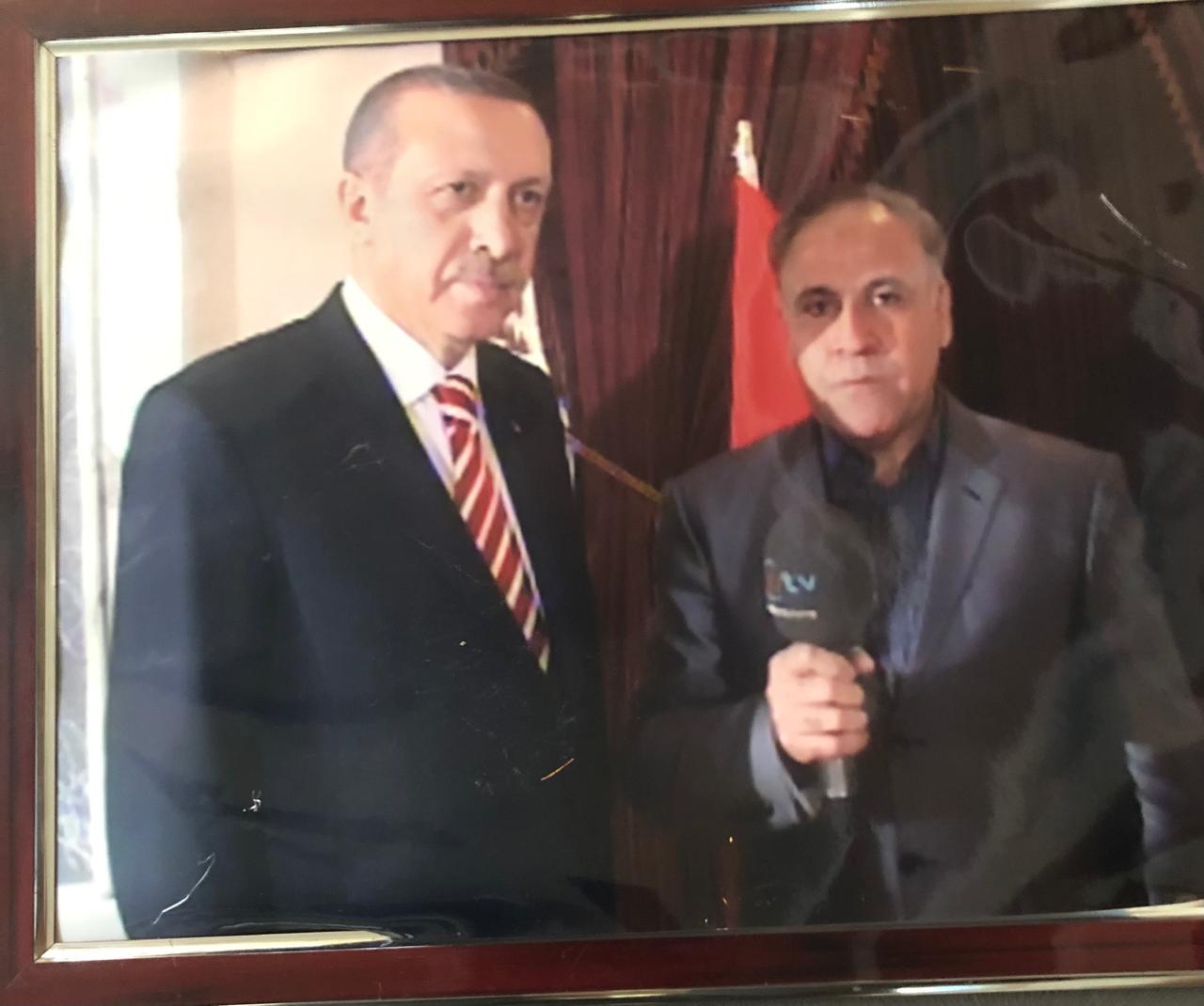
From the perspective of my journalistic and media profession, and through conducting dozens of television and press interviews with Turkish leaders, starting with President Recep Tayyip Erdogan, passing through the officials of the Iraqi file in the Turkish Foreign Ministry, and ending with Turkish ambassadors and diplomats inside Iraq from 2003 to 2020, I would like to respectfully present some recommendations to His Excellency the Turkish Foreign Minister, Dr. Hakan Fidan, regarding Iraqi-Turkish relations. In return, I held dozens of meetings with Iraqi leaders regarding bilateral relations between Iraq and Turkey, and within the framework of these meetings, I outline these recommendations for the Iraqi-Turkish interest.
1- Opening research and study centers on Iraqi affairs to draw up political, economic and security strategies.
2- Appointing intelligent and trustworthy advisors in Turkish missions inside Iraq who are fluent in both Arabic and Turkish.
3- Appointing electronic committees to respond to the deviant voices that appear here and there and to respond to the slander against Turkey.
4- Not relying on figures and partners from semi-intellectuals.
5- Not relying on political figures and those who have political hibernation.
6- Turkey must be careful in choosing its allied .
7- Allocating the necessary space on the TRT Arabic channel for Iraqi affairs within political programs.
The channel lacks political programs with Iraqi decision-makers and due to the importance of Iraqi-Turkish relations, a section of news and political programs must be allocated that are concerned with Iraqi affairs.
As we were in the Iraqi Turkmen Eli satellite channel, we used to produce programs and political news that specialize in Iraqi-Turkish relations within meetings with Turkish representatives and diplomats in order to bring viewpoints closer and show. Facts for Iraqis about Türkiye’s right to carry out some political or military operations and in return to hold meetings with Iraqi officials about relations between the two countries in different places, but this satellite channel now lacks such programs.
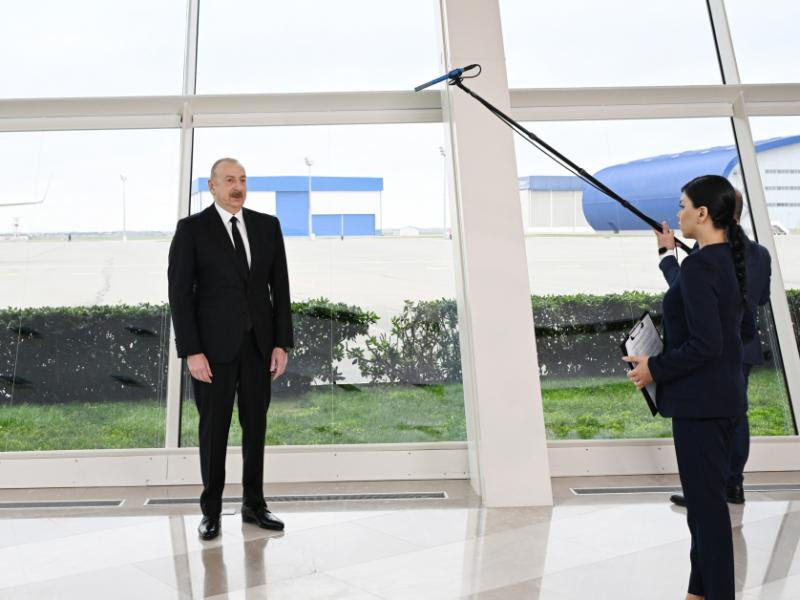
On December 29, President of the Republic of Azerbaijan Ilham Aliyev was interviewed by Azerbaijan Television at Heydar Aliyev International Airport.
AZERTAC presents the interview.
Journalist: Hello Mr. President.
President Ilham Aliyev: Hello.
Journalist: Unfortunately, an event that deeply shocked all of us occurred in recent days. On 25 December, an AZAL plane flying from Baku to Grozny crashed near the city of Aktau, Kazakhstan. We would like to know your thoughts on how subsequent developments unfolded.
President Ilham Aliyev: I received information about this while on the plane flying to St. Petersburg to participate in the CIS Summit. I was informed and immediately ordered that the plane should return to Baku. As soon as I arrived in Baku, I held an operational meeting at the airport. While I was still on the way to Baku, a State Commission was established on my instruction, and a delegation consisting of representatives of relevant agencies was immediately dispatched to the city of Aktau. Because they had to start work immediately. First of all, they had to get acquainted with the condition of the plane’s remains, conduct on-site observations, obtain video and photo footage, and present them to the public.
Additionally, a group of Azerbaijani doctors was dispatched to Aktau, although the Kazakh side spared no effort to treat the wounded and provide them with medical care. At the same time, the Prosecutor General’s Office of Azerbaijan started a criminal case on my instructions, and I know that similar steps were taken both in Kazakhstan and in Russia. Of course, work has begun on the initial theories. Of course, the final version will become clear after the black boxes have been examined. However, the initial theories are also quite reasonable and are based on facts. The facts indicate that the Azerbaijani civilian plane was damaged from the outside over Russian territory, near the city of Grozny, and almost lost control. We also know that means of electronic warfare put our plane out of control. This was the first impact on the plane. At the same time, as a result of fire from the ground, the tail of the plane was also severely damaged. Immediately, on the same day, our team captured this video footage from the city of Aktau and informed the public about it. The fact that the fuselage is riddled with holes indicates that the theory of the plane hitting a flock of birds, which was brought up by someone, is completely removed from the agenda. It is possible that when the plane was damaged, when it was hit, the pilot could have perceived it as a collision with birds. Because it would probably never have occurred to anyone that our plane might be fired at from the ground while flying over a country friendly to us. Unfortunately, however, some circles in Russia preferred to put forward this theory. Another regrettable and surprising moment for us was that official Russian agencies put forward theories about the explosion of a gas cylinder on board the plane. In other words, this clearly showed that the Russian side wanted to cover up the issue, which, of course, is unbecoming of anyone. Of course, our plane was hit by accident. Of course, there can be no talk of a deliberate act of terror here. Therefore, admitting guilt, apologizing in a timely manner to Azerbaijan, which is considered a friendly country, and informing the public about this – these were measures and steps that should have been taken. Unfortunately, for the first three days, we heard nothing from Russia except for some absurd theories.
Of course, the details of the accident will be fully investigated. I have no doubt about that. I must also note that Azerbaijan was in favor of a group of international experts engaging in this work from the very first day. The Russian side officially suggested to us that the Interstate Aviation Committee investigate this matter. But we categorically refused. The reason is clear. Because it is no secret that this organization consists mostly of Russian officials and is headed by Russian citizens. Objectivity factors could not be fully ensured here. If we had seen fair and reasonable steps by Russia in the immediate aftermath of the accident, we probably would not have objected. But we saw that attempts to cover up the case were quite obvious.
Therefore, we expressed this position in our close contacts both to the Kazakh side and the Russian side – a working group consisting of international experts only should be established, and it was. There are representatives of the aircraft manufacturer, Embraer, those of relevant Brazilian agencies, representatives of Azerbaijan, Kazakhstan, and Russia, including the Interstate Aviation Committee – not in leading roles, but simply as members of the working group. Let me repeat, after the flight recorders have been opened and we have obtained more detailed information, the full picture of what happened will be revealed and many questions that still remain outstanding today will be clarified. For example, why couldn’t the plane land in Grozny? To what extent did the means of radio-electronic warfare affect the plane’s controls? What was the extent of consequences of the strike and the explosion in the vicinity of the plane? Because I must also state that attempts to deny obvious facts and pull the wool over people’s eyes here are both nonsensical and absurd. Because fortunately, thanks to the heroism of the crew, an incident occurred that allowed the plane to land, even though it was an emergency landing. Many of the passengers survived, and their testimonies are available. The injuries inflicted on the passengers and crew by the shrapnel that pierced the plane are also obvious. Attributing this to a flock of birds or to the explosion of a gas cylinder is both foolish and dishonest. Therefore, we will find out why the plane could not land after the black boxes have been opened. When exactly was the plane fired at from the ground? Why didn’t the plane attempt to land at the nearest airports, which were Mineralnye Vody and Makhachkala? Was the plane sent to Aktau, or was this an objective choice? There are various hypotheses. Some believe that the plane was deliberately sent off course by ground handling services in Grozny because the plane was already out of control, and there was a high probability it would fall into the sea. If this had been the case, the cover-up attempts would have been successful, and the so-called bird theory would have been presented as the most likely version. According to some experts, Aktau was chosen because it is located in an open space, residential areas are far from the airport, and the crew of the plane could have assumed that this would be an emergency landing and chose a more suitable place for it. On the other hand, however, with nearby airports available, it was riskier for an uncontrollable plane to fly further, especially over the sea. In other words, there are no answers to all these questions yet. We, the Azerbaijani side, and I personally are trying to be as fair as possible. We do not want to express an opinion on unclear issues before they are fully clarified. However, we must, we do, and we will state our opinion with full determination on obvious issues. I said in my remarks here at the airport on the day of the accident that the Azerbaijani public will be regularly updated on this issue, and on the progress of this investigation, and that it is.
– Mr. President, how would you assess the performance of the aircraft crew?
– Very highly. I attended the farewell ceremony today and expressed my condolences to the relatives of the deceased crew members. Today, I will issue an order awarding the crew members. I highly appreciate their performance, professionalism, and dedication. The pilots and the entire crew showed true heroism. The pilots showed both professionalism and heroism in controlling the plane that was out of control in various ways. Of course, they were experienced pilots and knew that they would not be able to survive this emergency landing. However, they displayed tremendous heroism to save the passengers, and it is thanks to them that there are survivors in this plane crash. It is thanks to them that a section of the fuselage did not burn, and it is thanks to them that we can clearly say today that the plane was shot down by Russia. This is a fact, and no-one can deny this fact. Again, we are not saying that this was done intentionally, but it was done.
The pilots and crew members showed both professionalism and composure. I must specifically acknowledge the female crew members. They themselves were in a state of stress, but look how humanely they acted to calm the passengers and prevent chaos inside the plane. Their actions, I repeat, will be duly acknowledged by the Azerbaijani state. May Allah rest the souls of the deceased crew members and all those who died in peace. We wish the survivors a speedy recovery. Most of the survivors are already in Baku. They received immediate treatment in Kazakhstan. Some are still receiving treatment and will be evacuated to Azerbaijan as soon as possible.
– Mr. President, you phoned the President of Kazakhstan, Kassym-Jomart Tokayev. We would like to know your opinion on the issues discussed. In general, how would you evaluate the joint activity of Azerbaijani and Kazakh government officials working together on this issue?
– Yes, first of all, I called to express my gratitude to President Tokayev. Because we knew, and had received information, that as soon as the accident occurred, Kazakh rescuers immediately arrived at the scene and began to pull people out of the destroyed fuselage. They put their own lives at risk. Because they did not know whether there would be another explosion or not. A part of the plane had burned, and the other part could have caught fire as well. But despite this, they showed true heroism. At the same time, the activities of the medical teams were also very valuable. Because the injured passengers were immediately taken to medical facilities, and I expressed my gratitude to President Tokayev for this. I know that the demonstration of solidarity by our Kazakh brothers and sisters also left a great mark in the hearts of the Azerbaijani people. Ordinary people went to our consulate in Aktau, laid flowers, and expressed their attitude and solidarity with us. This is what true friendship and brotherhood are like. During my conversation with President Tokayev, I also expressed Azerbaijan’s position on the investigation and brought to his attention the issues I have just mentioned – that we are in favor of international examination and in no way can we put this issue at the disposal of the Interstate Aviation Committee. This position was also met with understanding. Of course, representatives of our government institutions, members and heads of the commission, and representatives of the prosecutor’s office are constantly in touch. Kazakhstan, in turn, has also created a State Commission, and President Tokayev informed me about this during the conversation. They also want and are trying to ensure that the issue is fully disclosed, of course. At the same time, I also expressed my condolences to President Tokayev because six citizens of Kazakhstan died as a result of the accident. He also expressed his condolences to me. In other words, no matter how serious the incident was, it was also a test. In other words, how will anyone come out of this test? I am glad that despite this tragedy, I see and am sure that people in Kazakhstan share the same opinion. Our friendship and brotherhood have become even stronger after this difficult situation.
– In the aftermath of the accident, AZAL suspended flights to some Russian cities. What was the reason for this decision and how are things going now?
– I gave this instruction, and the main reason for this, of course, is the issue of safety. Because airspace in many Russian cities is occasionally closed, and a special operating regime is applied there. They call this a “Kovyor (carpet) operation,” and returning to what I mentioned in the first question, I must also mention that one other thing must also be clarified: when was that “Kovyor operation” announced? Because according to the information on our hands, that “Kovyor operation” was announced only after our plane had been exposed to external influence. If this is the case, it once again shows that local services did this to cover up the issue.
As for AZAL flights, AZAL has indefinitely suspended its flights to seven Russian cities. At the same time, we have also suspended flights of Russian airlines from three Russian cities to Azerbaijan. Our air connection with a total of 10 cities has now been suspended, and let me repeat that, first of all, security issues are at the forefront here. We have always considered the safety of our passengers a priority, and this situation has been declared. Whatever we do, we do it openly. Let me repeat, this decision has been made. When will these flights be resumed, especially to the city of Grozny? Most likely, they will not. Life will tell, and the security of Russian airspace will certainly be taken into account.
– Mr. President, what are Azerbaijan’s expectations and demands from Russia in general in connection with what happened?
– We have clearly expressed our demands to the Russian side. These demands were officially communicated to them on 27 December. What do these demands consist of? First of all, the Russian side must apologize to Azerbaijan. Secondly, it must acknowledge its guilt. Thirdly, those responsible must be punished, brought to criminal responsibility, and compensation must be paid to the Azerbaijani state, to the injured passengers and crew members. These are our conditions. The first of these was fulfilled yesterday. I do hope that the other conditions will also be accepted. All these conditions are fair. There are no extraordinary demands or issues here; all of this is based on international experience and normal human conduct. That’s it. I repeat, the Azerbaijani public is and will be informed about all sides of the issue. The conditions I mentioned are conveyed to the public through you, of course, and I repeat, I do hope that our conditions are accepted.
– Thank you very much, Mr. President. We are grateful for your detailed answers to our questions.