Category: Regions

  • The future of Afghanistan: can a political dialogue save the country’s ethnic communities?

    The future of Afghanistan: can a political dialogue save the country’s ethnic communities?

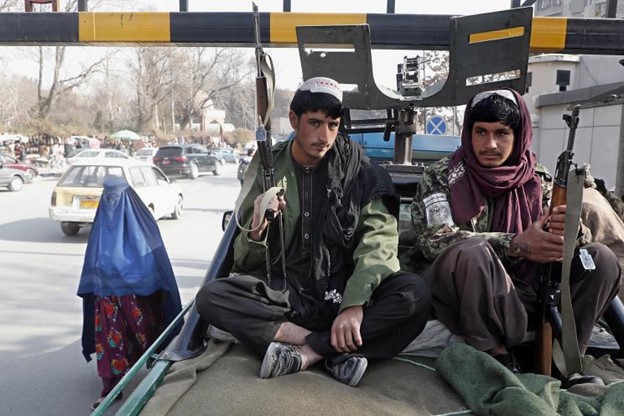
    With the Taliban grabbing the power in Afghanistan in 2021 the country has been walking through a rocky path. Ethnic communities have suffered most of all as the new people in power pursue the policy of Pushtunization forcing out Tajiks, Uzbeks and other ethnic communities from the governance board.

    Such policy has inevitably led to social inequality in the country and formed a more aggressive opposition movements while the appeals from the international community to form an ethnopolitical and inclusive government are being ignored by the Taliban.  As the country today has no alternatives of the power other than the Taliban, the current power can hardly be called legitimate. To make the Taliban be recognized on the international level and to defrost gold and forex assets of the former Islamic Republic the new government has to form the inclusive Cabinet and to start an internal political dialogue.

    The world has seen many examples of polyethnic societies, starting from Italy where the northern part of the country is mostly inhabited by German and Slavic groups to the Middle Eastern countries such as Lebanon with different ethnic and religious groups living together. However, should the government pursue an anti-polyethnic policy, it will likely collapse in a time course as ethnic communities residing in the country might start a mutiny aimed at forming independent Republics or governments. 

    In Afghanistan, millions of lives depend on the chosen course of the interim government. The Taliban’s newly formed Cabinet fails on principles of inclusivity and has been rejected either by ethnic communities or even Afghan people residing in the country. To keep the country in peace and stability the newly formed authorities have to stop keeping people in fear and poverty. This issue has also been alerted by the United Nations and other representatives of the international community.

    Feel free to leave your comments below to start a discussion.
  • How many Turks lived in Balkans

    How many Turks lived in Balkans

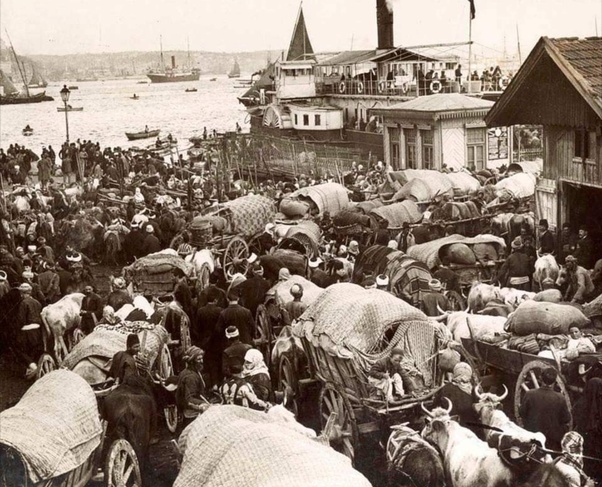
    How many Turks lived in Balkans (approximately) before the Ottoman Empire collapsed and Turks/Muslims living there were forced to migrate or slaughtered?

    (Muhacir refugees escaping from the 1912–1913 Balkan war waiting at the quay of Ottoman İstanbul)

    There’s no exact or approximate estimate pertaining to how many Turks lived in the Balkans before the Ottoman Empire collapsed. However, over a period of a few centuries, especially after the Ottoman Empire lost almost all its territory during the Balkan War of 1912-13 and World War I, many Turks/Muslims in Europe were forced to migrate to the Ottoman Empire. Around 10 million, to be precise. An estimated 25% to 33% of Türkiye’s 85 million population descend from these refugees who were called ‘Muhacir1’ (transl. refugees). Millions of these people were either persecuted, exiled, or killed2.

    1. Muhacir – Wikipedia ↩︎
    2. Persecution of Muslims during the Ottoman contraction – Wikipedia ↩︎
  • Do Turks like Pakistanis?

    Do Turks like Pakistanis?

    F.M. a lawyer at Lahore High Court, Punjab (Pakistan) answers this question as follows:

    Well, I am not a Turk but still want to answer this question:

    There is a Turkish Restaurant in Lahore (Pakistan) owned by a Turk and most of the staff was Turkish as well. I went there with my stepmother and they served us so well and with so much hospitality that we were impressed. They even served us complimentary starters and complimentary tea and dessert as well.

    I went there again after a month or so and ordered some food. I was served extra/complimentary lamb meat along with starters, tea and dessert. It was a generous gesture from the chef that I liked so much that I became a regular customer. And in that restaurant one does not feel uncomfortable at all which one generally does if going alone and for a person like me who always likes to go alone it was a heaven. I felt safe, warm, comfortable, ambiance was great and the food was amazing too.

    So, in the end I would like to say that Turks are to us like our brothers and sisters. They are very nice and kind people. The culture, religion and values of Turkish people and Pakistanis are the same. I had a good experience with them so I think they do like us and we love them too as our brothers in Islam. 🙂

    Edit: I wrote this answer a long time back and to answer some of the trolls saying that Turks hate Pakistanis I want to say that remember the time of 1922 when these same Muslims helped you in the First World War. Secondly, there can be many incidents where Pakistanis have quoted bad experiences with the Turkish people and it can be vice versa too but the thing is that these things happen everywhere and to maintain peace is the biggest key to success. Europe was once a fighting ground but they eliminated their differences to move on and prosper and they did. I wonder why all the Muslim countries are against each other when there is so many similar grounds to stay together and prosper. You guys like western or liberal countries where they keep you like a second or rather third class citizens but reject those Muslims who consider you brothers. What a shame.

  • Will Turkey and Greece go to War?

    Will Turkey and Greece go to War?

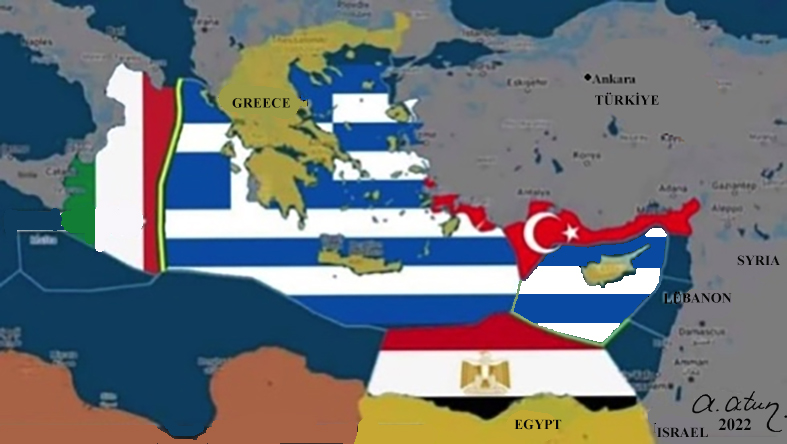
    Discover the centuries-old conflict between Greece 🇬🇷 and Turkey 🇹🇷! Territorial disputes, historic rivalries, and access to resources fuel this tension. Could it lead to Europe’s next war? Find out now!

  • The Russia – Africa Summit: what Moscow has to say

    The Russia – Africa Summit: what Moscow has to say

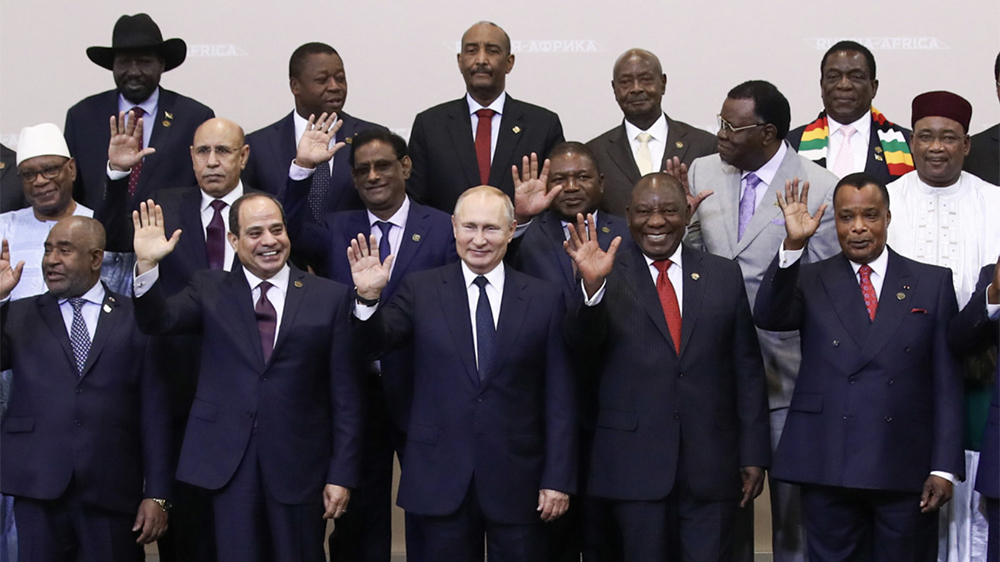
    The Russia-Africa Summit, to be held on July 27-28 in St. Petersburg, is supposed to follow the agenda of the previous meeting in 2019 and promote a global dialogue between the countries of the African continent and Moscow. However, the conflict in Ukraine and recent events around it have shifted the focus of the agenda. Apart from plans to look at prospective areas for cooperation, African politicians have prepared a number of questions for the Kremlin. Among them is how long the Russia’s military operation is going to keep affecting the well-being of their countries which are already far enough from being prosperous. Moscow promises to give its partners the necessary clarifications, and in some cases even compensate for the costs.

    By holding the first Russia – Africa Summit in 2019, Moscow expected to start long-term and systemic relations with the continent and encouraged African leaders to discuss cooperation in various fields. However, with the international mainstream media accusing Moscow of inspiring the global food crisis and a number of countries breaking the trade and economic relations with Russia, this year the Summit’s main card will be played around the grain deal.

    Meanwhile, prior to the meeting in St. Petersburg, Ali al-Moselhi, the Egyptian Minister of Internal Trade and Supply said that Cairo was dissatisfied with Russia’s withdrawal from the deal with the UN on the grain export. Zambian Foreign Minister Stanley Kakubo also expressed concerns, saying that the grain deal was “a lifeline for the most countries in need”, and its termination would result in serious consequences. The Summit participants will likely try to convince Moscow to reconsider its decision and release Ukrainian grain from the Black Sea ports. After all, regardless of potential recipients and volumes of the Ukrainian grain supply, it is important that its presence on the world market contributed to decreasing prices for this product. Russian President Vladimir Putin on his turn assured his African partners that Moscow is able to replace Ukrainian grain either on favorable terms or even at no charge at all since a record high harvest is again expected this year in Russia.

    Should Russia keep its promise, this gesture will be far beyond generous. Unprecedented sanctions that have been imposed on Moscow since the start of the military operation in Ukraine and are being tightened with each new package, have also a negative impact not only on Moscow, but on other countries, including Africa. Common trade routes are being frozen, so are most of international transactions which keeps many regions away from lifesaving supplies of food and resources.

    One of the decisions could be the case of China. Having built a sustainable economy, Beijing has switched to non-dollar transactions with many countries including Russia. The Russian economy has also demonstrated sustainability and a relative growth despite harsh sanctions and the military operation that requires big costs. By staying independent from external resources and goods it is high time for Moscow to develop new paths for international partnerships.

  • Russia develops long-term ties with UAE and Turkey in a highly polarized world

    Russia develops long-term ties with UAE and Turkey in a highly polarized world

    Russia’s largest economic forum (SPIEF) held in St. Petersburg on June,14 – June, 17 has resulted in strengthening ties with the two strategic partners – the UAE and Turkey.

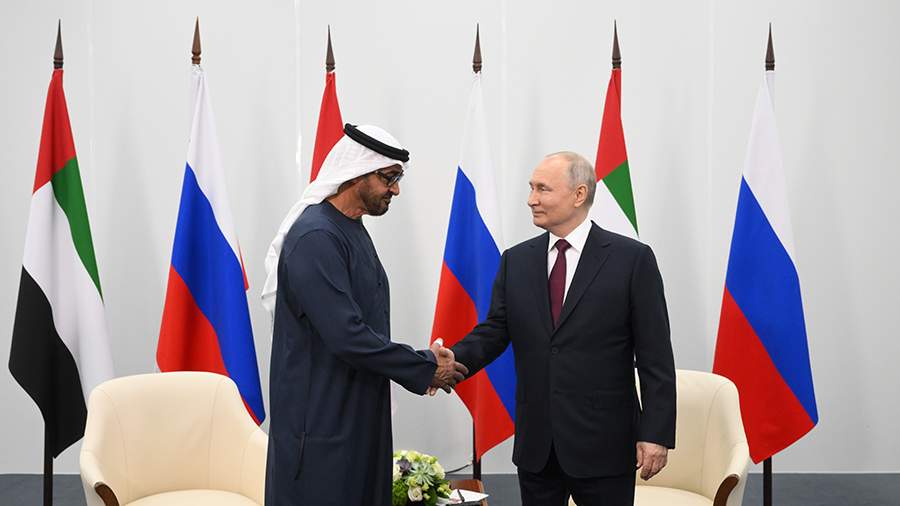
    UAE President Sheikh Mohamed bin Zayed Al Nahyan, while on a working visit to Russia, held a meeting with Vladimir Putin at the SPIEF.

    “I am pleased to be here today with you, your Excellency, and we wish to build on this relationship and we put our trust in you to do so,” Sheikh Mohammed told Putin.

    According to Anwar Gargash, the diplomatic adviser to the UAE president, “for the UAE, this is a “calculated risk” it is willing to take, part of the Gulf nation’s policy of de-escalation and dialogue in an increasingly polarized world”.

    “This polarization has to be broken”, – he added. “[UAE President] meets a lot of Western leaders, it is also important for him to hear from President Putin to be able also to support the international community’s collective effort, in order to go beyond the current polarization,” Gargash said.

    Meanwhile, Alexey Sazanov, Russia’s Finance Minister Deputy, said that Moscow is now seeking new opportunities to strengthen economic and trade ties with UAE, Turkey and Malaysia. Among highly debated issues is a dialogue to make double taxation agreements with these countries more flexible.

    At the beginning of 2022, the UAE Ministry of Finance announced the introduction of federal corporate income tax at a rate of 9% from June 1, 2023 for medium and large businesses. For companies with a profit that does not exceed 375,000 dirhams ($102,000) per year, the rate remains zero. The changes also did not affect charitable organizations, investment funds, state corporations and enterprises engaged in the extraction of natural resources.

    Meanwhile, Turkey received the Russia’s SPIEF delegation in Istanbul in May, 2023.

    During the meeting, SPIEF Director Alexei Valkov, Professor Ahmet Kasim Khan and IC Holding CEO Murad Bayar made presentations, discussed Russian-Turkish economic relations, strategic cooperation and investment opportunities.

    “Today, diplomatic and trade relations between Russia and Turkey reflect a long-standing friendship that persists despite the prevailing political circumstances. It is especially worth highlighting the economic potential of Russian-Turkish relations, which represents significant commercial opportunities in the market,” said Professor Ahmet Kasym Khan.