|
Summary of DEBKAfile Exclusives in Week Ending Jan. 15, 2009
|
|
| Hamas leadership locked in fierce controversy DEBKAfile Special Analysis 9 Jan.: Thursday, Hamas leaders and commanders emerged from their underground hideouts for their first look at the devastation wrought in 13 days of Israeli aerial bombardment, taking advantage of the pause Israel declared in its military operations for supplies to reach the Gaza population. IDF commanders hoped their lust for battle would be cooled by the sight of Gaza in ruins enough to give up and stop fighting. Hamas leaders are locked in a fierce controversy in both Damascus and Gaza over Egypt’s ceasefire proposals. Politburo chief Khaled Meshaal flatly rejects them; Mussa Abu Marzouk would accept them, backed by Gaza prime minister Ismail Haniyeh, who maintains that Egypt is Hamas’ only remaining lifeline which it dare not jeopardize. However, the military arm in Gaza and its heads, Khalil al Haya, Said Sayam and Muhammad Jabry, are strongly in favor of severing ties with Egypt and fighting on. Our sources disclose that the Hamas extremists are finding time for the brutal persecution of their rivals, the Palestinian Fatah. Under cover of the general mayhem, Hamas gangs are kidnapping Fatah operatives and executing them. Their bodies are tossed onto the mountains of uncollected garbage and their kinsmen informed where to find them. Hamas leaders are convinced their rivals are plotting to exploit the fighting to overthrow their regime.
Al Qaeda’s operations chief in Pakistan and top aide said killed by US Predator in Waziristan10 Jan.: Al-Qaeda’s operations chief in Pakistan Usama al-Kini and his lieutenant, Sheikh Ahmed Salim Swedan were recently killed by a missile fired by a US drone near the Afghan border. Kini was believed to be behind last year’s deadly attack on the Marriott hotel in Islamabad, in which 55 Both al-Qaeda suspects died in South Waziristan, on Pakistan’s border with Afghanistan.
First signs of Hamas cracking, Israel allows Gaza delegation through to Cairo DEBKAfile’s military sources identify them as: Jemal Abu Hashem, who rarely appears on public, Salah Bardaweel, leader of Hamas parliament faction, and Heiman Ta’a, member of the military wing’s command. In overnight fighting Friday, five Israel soldiers were injured and 15 Hamas operatives killed. Forty Israeli operations destroyed five tunnels, 14 missile stores and production sites. Israel held its fire for three hours Saturday for fresh aid supplies to reach the Gaza population.
US consigns 3,000 tonnes of US “ammunition” to Israel10 Jan.: The US Navy’s Military Sealift Command is hiring a merchant ship to carry the arms on two separate journeys from the Greek port of Astakos to Israel in mid-to-late January. A ‘hazardous material” designation on the manifest mentions explosive substances and detonators, but no other details. One broker said that the size of a shipment of this kind has not been seen for years. DEBKAfile’s military sources note that the Israel’s air, ground, tank and sea offensive against Hamas in Gaza entered its 15th day Saturday, Jan. 10.
US Congress’ overwhelming support for Israel 10 Jan.: The US Senate on Thursday backed Israel’s battle against Hamas militants in the Gaza Strip and the House of Representatives followed on Friday in landslide votes. The House passed a resolution “recognizing Israel’s right to defend itself against attacks from Gaza” by 390-5. The measure noted that the humanitarian situation in Gaza “is becoming more acute” but did not rebuke Israel. The Senate measure offered “unwavering commitment” to Israel. It recognized “its right to act in self-defense to protect its citizens against acts of terrorism” and urged a ceasefire that would keep Hamas from firing rockets at Israel.
First pro-Israeli demos in London, Frankfurt, Marseille, Lyon 11 Jan.: 40,000 Jews and Christians rallied in support of Israel against Hamas terror in London’s Trafalgar Sq. Monday. Sunday night, pro-Hamas protesters clashed with London police outside the Israel embassy. No new decisions by the Israeli cabinet11 Jan.: IDF Military Intelligence Head Maj.-Gen. Amos Yadlin on Sunday briefed cabinet ministers on the Gaza operation, stressing the cracks in Hamas resilience, its disconnected leadership in Syria, and its waning public support following the extensive Israeli attacks on the organization. But he predicted that Hamas was still capable of striking Israel. He pointed out that Hamas fighters were evading encounters with Israeli forces, hiding in built-up urban areas and hoping to gain the advantage by “remote control” tactics. In his view, Hamas is scared of more fighting and looking for an honorable escape that offers an end to the hostilities without requiring its forces to show a white flag. Shin Bet (Israel Security Agency) head Yuval Diskin noted that alongside the anger over Israeli bombardments, Gazans were angry at Hamas for bringing down such devastation on the Strip. He also noted that Hamas was using the ongoing clashes in the Strip as an excuse to execute Fatah supporters. Hamas fired rockets during one of Israel’s daily three-hour military pauses for the ingress of essential supplies to the Palestinian population. They hit Sderot, Kiryat Malachi, Eshkol, and an Ashkelon school and kindergarten. Since Dec. 27, Hamas missiles have demolished 900 buildings in Israel, hundreds of vehicles, damaged many farms.
Two Israeli-Arab lists barred from February poll – for “supporting the enemy”12 Jan.: Israel’s Central Elections Committee voted Monday, Jan. 12, to exclude the United Arab List and Balad from participating in the Feb. 10 general election. The High Court must rule on their appeal by Friday, the final date for registering Knesset lists. The last party to be banned in Israel was Rabbi Meir Cahane’s Kach in the 1980s for advocating the transfer of Arab citizens out of the country.
Hamas-Gaza bows to Damascus leaders’ veto against Egyptian ceasefire terms 12 Jan.: The Gaza Hamas faction failed to persuade its Damascus leaders to accept the Egyptian ceasefire terms and was ordered to carry on fighting in the Gaza Strip. This setback followed 48 hours of optimism in Jerusalem and Cairo where it had been hoped that with their backs to the wall, the Palestinian extremists would submit to the tough Egyptian-Israeli ultimatum. It is now up to the Israeli defense cabinet to decide whether Israeli forces stand still on their present battle lines or go forward to the crunch, which means entering Gaza City proper and capturing the Philadelphi smuggling corridor.
|
UK intel chief reports links uncovered between Mumbai terrorists and UK nationals
13 Jan.: Britain’s intelligence service MI5 chief says his agency has uncovered links between the Mumbai attackers and UK nationals. “We have looked at individuals’ communications, where they have been and so on and found they have got connections with most countries including the UK,” said MI5 Director General Jonathan Evans. A Russian naval task force led by aircraft carrier docks in Syrian port 13 Jan.: The Admiral Kuznetsov aircraft carrier, the Admiral Levchenko destroyer and the Nikolay Chiker salvage tug, called in at the Syrian port of Tartus Monday, Jan. 12 after joint exercises with the Turkish navy. DEBKAfile’s military sources report that the arrival of the Russian flotilla in wartime is unusual and especially significant given Syria’s role as one of the staunchest backers of Hamas which is fighting Israel further down the coast in Gaza. Our sources believe Moscow may be signaling its disapproval of Israel’s military operation in the Gaza Strip.
Iran recruits Somali pirates to replenish Hamas ordnance stocks 13 Jan.: DEBKAfile’s military sources reveal a secret war waged by the US, Israel and Egypt to shut down Iran’s serpentine maritime routes through the Red Sea and Suez for refilling Hamas’ depleted arsenal by sea. After Hamas lost an estimated 60 percent of its weapons stocks in Israeli bombardments, Iran enlisted Somali pirates to help bring smuggled hardware to Gaza to stiffen the Palestinian Islamists’ resistance to Egypt’s ceasefire terms. Iranian aid ship turned back in two attempts to break Gaza blockade 14 Jan.: An Iranian “Shahed” was turned back by an Israel Navy Saar 4.5 ship Tuesday, Jan 13, and again Wednesday, attempting to breach the 40-km blockade Israel imposed on Gaza on Dec. 27. After the first try, the boat tried to unload its cargo of food, medicines and clothing at Port Said and was prevented by the Egyptian authorities. After being intercepted by the Israeli Navy again Wednesday, the Iranian vessel turned south to the Sinai port of El Arish. Two Egyptian boats prevented it docking. Mubarak sends son-and-heir Gemal to assess Philadelphi situation Our military sources explain the lack of progress in the Egyptian-Hamas ceasefire talks in the last 48 hours by the easing of military pressure on Hamas. Israeli forces have confined operations to aerial bombardment and the occasional exchange of fire on the ground. They are essentially holding back and waiting for cabinet orders to go for the decisive push into the densely-populated areas of Gaza City and the Philadelphi Corridor.
Israel intelligence: Hizballah is synchronizing rocket offensive with Hamas 15 Jan.: After the northern Israeli city of Kiryat Shemona sustained a rocket salvo Wednesday, Jan. 14, the Israeli Air Force stepped up its reconnaissance flights over South Lebanon in search of rocket launchers. Like the Palestinian Hamas, Lebanese Hizballah chiefs appear to believe that Israel’s policy-makers will refrain from a resounding military assault to smash Hamas’ military strength in Gaza. Therefore, Hamas is believed by Israel’s Northern Command to be preparing more rocket attacks in sync with its terrorist allies in Gaza. And indeed, the Kiryat Shemona attack turned out to be the overture for a long-range missile-rocket cascade from Gaza against a wide range of Israeli population centers. Both believe a two-front rocket offensive will enhance Hamas’ bargaining position in the ceasefire negotiations. Emerging Gaza ceasefire allows Hamas to restock rockets and fire them The understandings Egypt is fashioning will tie Israel’s military hands and let Hamas claim it is ahead after Israel refrained from either toppling its Gaza government or extinguishing its missile capabilities. Though vanquished on the battlefield, the Hamas terrorists are winning the diplomatic war. Thursday, Jan. 15, two Israeli envoys headed out – the foreign ministry’s director general Aharon Ambramovich to Washington and the defense ministry’s political adviser Amos Gilead to Cairo – to hear about the proposed American and Egyptian ceasefire mechanisms for controlling weapons smuggling through Sinai and the Philadelphi Corridor. DEBKAfile’s military sources note that even if the two mechanisms are agreed, they will take a year or more to put in place, during which time Hamas will be free to restock its arsenals and resume firing rockets.
Israel air strike kills top Hamas leader, interior minister Siad Sayam 15 Jan.: Hamas interior minister Siad Sayam died in an Israeli aerial bombardment over Gaza, Thursday, January 15, as the third week of Israel’s offensive ended. Killed with him were his brother, Salah Abu Sarah, head of the organization’s security service and Mahmoud Watfa, commander of Hamas military wing. In Damascus, Hamas leader Khaled Meshaal declared there would be no concessions for a ceasefire. The Shin Bet security service discovered the top Hamas leaders’ whereabouts in Gaza with exceptional speed two weeks after Sayam’s brother rented the hideout when the war was already underway. Its precise targeting indicates Israeli intelligence has penetrated the top Hamas echelon. Thursday, Beersheba came under heavy rocket attack, which injured six people, as Hamas stepped up its attacks. Israeli artillery struck UNWRA’s Gaza City HQ, starting a fire. Israel forces continued to chew aroujnd the edges of Gaza City – purging the already occupied outskirts of Shatti, Zeitun, Tofah, Tel El Hawa and Saltin without pushing into the densely-packed town alleys.
|
Blog
-
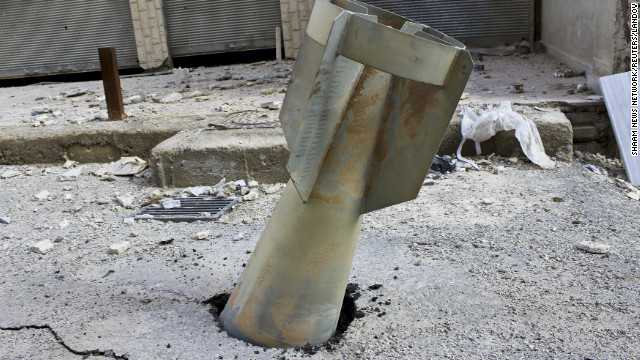
Exclusives in Week
-
A Firebell in the Night: The Prospect of Turkey’s Membership Sounds the Knell for the European Union
This column first appeared at PoliGazette.
A Firebell in the Night: The Prospect of Turkey’s Membership Sounds the Knell for the European Union
By Robert EllisThomas Jefferson, in a memorable letter written in 1820, considered the issue of slavery “a firebell in the night” which would toll the knell of the Union. It is with the same sense of foreboding that some of us today consider the issue of Turkey’s membership of the European Union.
In the winter issue of the Middle East Quarterly, which deals with Turkey’s Islamist danger, Bassam Tibi concludes: “Western politicians, scholars, and opinion makers barely understand what is going on inTurkey”. This view is borne out by, for example, Condoleeza Rice’s statement in May 2007 that the AKP (Justice and Development Party) government is “a government dedicated to pulling Turkey west towardEurope” and last March the Swedish foreign minister, Carl Bildt, declared: “The AKP government is made up of profound European reformers”.
Turkey’s long road towards EU membership began with associate status in 1963 and it was not until the EU summit in Helsinki in 1999 that its candidacy was recognized. Beginning in 2001 under the premiership ofBülent Ecevit, Turkey embarked on a series of reforms to get the green light from the EU to start accession negotiations. These reforms included a revision of the civil and penal codes, a dilution of the role of the military and greater freedom to use Kurdish in the public sphere.
Despite the fact that these reforms for the most part existed on paper, in October 2004 the EU Commission found that Turkey had “sufficiently” fulfilled the political crtiteria for membership and recommended that negotiations be opened. In October 2005 negotiations were formally opened, after a great deal of wrangling over the recognition of (Greek) Cyprus, which became a member together with nine other states in May 2004.
However, in starting negotiations the EU left the back door open, concluding that “if Turkey is not in a position to assume in full all the obligations of membership, it must be ensured that Turkey is fully anchored in the European structures through the strongest possible bond.” Since then, the enthusiasm forTurkey’s membership has waned considerably on both sides.
The UK, which played a major role in brokering the start of entry talks, has under US tutelage always been an active proponent of Turkish membership. So much so that when Turkey’s Constitutional Court last July decided not to ban the AKP, the British foreign secretary, David Miliband, declared it was “a cause for celebration”.
It is the same Miliband, who in´a keynote speech in Bruges in November 2007 outlined his vision forEurope in 2030. He is clearly delusional when he speaks of a European Union that would ultimately include the countries of the Mahgreb, the Middle East and Eastern Europe. In his own words: “The goal must be a multi-lateral free-trade zone around our periphery …. not as an alternative to membership but potentially as as step toward it.”
A community of values
Quite apart from the formal criteria for EU membership, it has been repeatedly stressed that the Union is a community of values. After the start of entry talks the British foreign secretary, Jack Straw, rejoiced: “It means we have a Europe based on values, not history”, and earlier Olli Rehn, the EU’s enlargement commissioner, explained that Europe was defined by values, not borders. However, in the light of Turkey’s development since the AKP came to power in 2002, it can be argued Turkey is no longer eligible.
A blueprint for dismantling the secular republic established by Mustafa Kemal in 1923 was put forward by Omer Dincer, Prime Minister Erdogan’s former undersecretary, at a symposium held in Sivas in 1995. Two years earlier 37 people, most of them participants in an Alevi cultural festival, were killed in a hotel fire, when the hotel was burned down by a raging mob of Islamic fundamentalists.
At the symposium Omer stated: “I believe that the republican regime in Turkey should be replaced by a more participatory one, and the principle of secularism should be replaced with integration with Islam. Therefore I believe that it’s time, and absolutely necessary, to replace all the fundamental principles outlined at the start of the Turkish Republic, such as secularism, republicanism and nationalism, with a structure that is more participatory, more decentralized and more Muslim.”
The same year Abdullah Gül, deputy leader of the Islamic Welfare Party (banned in 1998) and now Turkey’s president, was more succinct in an interview with The Guardian. “This is the end of the republican period,” he stated. “If 60 percent of Ankara’s´population is living in shacks, then the secular system has failed and we want to change it. “
And this is precisely what these “reformed post-Islamists” (Olli Rehn’s term) have set out to do, despite the fact that the preamble to the Turkish constitution stipulates: “there shall be no interference whatsoever by sacred religious feelings in state affairs and politics”.
Anti-secular activities
Last July Turkey’s Constitutional Court found by 10 votes to one that the AKP was “a focal point of anti-secular activities” but instead of closing the party decided to halve its Treasury funding. In its indictment the Court paid close attention to controversial statements made by party members, but there is ample evidence of the reorientation of Turkish society in the last six years.
Since coming to power, the AKP has made systematic and sustained efforts to replace the top echelons of the state administration, the education system and the judiciary with its own followers. Two years ago an attempt to appoint the general manager of Albaraka Turk, an Islamic bank, as governor of the central bank, was vetoed by President Ahmet Necdet Sezer, a staunch secularist, as “inappropriate” but the AKP has otherwise placed its own candidates in key positions.
The autonomy of independent administrative authorities such as the Energy Market Regulatory Authority (EPDK) and the Capital Markets Board (SPK) has also been eroded. For example, the EPDK awarded an oil refinery construction permit to the Calik Group, where Prime Minister Erdogan’s son-in-law is the general manager, and not a prior applicant, Petrol Ofisi. Petrol Ofisi is owned by Aydin Dogan, who is also the owner of the Dogan Media Group, the Prime Minister’s outspoken opponent.
The sale of the Sabah-ATV media group, Turkey’s second largest, also to the Calik Group, was facilitated by the Savings Deposit Insurance Fund (TMSF), which is staffed by AKP appointees, and was for the most part financed by a loan from two state banks, also managed by AKP appointees.
The new head of the Higher Education Board (YÖK), Yusuf Ziya Özcan, was handpicked, which together with a pliable president makes it possible to overrule the universities’ own choice of candidate as rector.
Furthermore, the president of the Supreme Board of Radio and Television (RTÜK), Zahid Akman, is embroiled in a scandal which could overwhelm the government. In September the three Turkish directors of a charitable foundation in Germany, Deniz Feneri (Lighthouse), were found guilty of siphoning off €14.5 million ($20.6 million) and transferring the funds to business associates in Turkey, including Kanal 7, the Islamist tv channel.
The operation is believed to have been directed from Turkey and Zahid Akman was named as a courier. However, although four months have elapsed, no steps have been taken to require the documents fromGermany and to launch an investigation in Turkey. In addition, a recent law requires the prime minister’s consent into any investigation into an RTÜK president.
The general elections of 2002 and 2007 provided for the establishment of the AKP’s political power but it was the Public Procurement Laws of 2003 and 2008 which have made possible a transfer of resources to the new elite. According to the first amendment energy, water, transportation and telecommunications contracts are exempt from the law and new amendments have made the awarding of public contracts even less opaque.
There have been a number of land and tender scandals involving members of the AKP, but as acerbic columnist Burak Bekdil has pointed out: “Corruption is an ideology-free disease.” For example, almost 100 municipal employees, including two district mayors from the CHP, the opposition party, were recently detained in a corruption and bribery operation in Izmir province.
Neighbourhood pressure
Two years ago Professor Serif Mardin, the eminent Turkish sociologist, coined the phrase “neighbourhood pressure” to explain the social pressure to conform to conservative religious norms. Last month a controversial study, “Being different in Turkey”, published by the Open Society Institute and BosphorusUniversity, in fact confirms that the non-devout and secularists in Turkey feel under pressure to confirm to the social norms and standards promoted by the AKP.
Among the examples given are pressure to attend Friday prayers and fast during Ramadan and to have their wives wear a headscarf in order to protect their businesses and their jobs. When Tayyip Erdogan was mayor of Istanbul 15 years ago alcohol was banned at municipal facilities but now in 56 of Turkey’s 81 provinces alcohol is not served in municipal or private restaurants or clubs. During Ramadan last September anAnkara shop owner was beaten by municipal police for selling alcohol.
In November 2005 the European Court of Human Rights upheld the ban on the wearing of the Islamic headscarf at Turkish universities and underlined: “Pluralism, tolerance and broadmindedness are hallmarks of a democratic society.” Prime Minister Erdogan contested this view and stated that it was only Islamic scholars (‘ulema’) who had the right to speak on this issue.
Egemen Bagis, AKP deputy for Istanbul and close associate of Tayyip Erdogan, has just been appointed chief EU negotiator in an attempt to revive Turkey’s flagging hopes of membership. It was this gentleman who in an op-ed piece in the LA Times, “My party is good for Turkey”, last March claimed: “We are only upgrading the country’s democratic standards.”
Unfortunately there are a number of European and American politicians and opinion makers who are prepared to indulge this Alice in Wonderland fantasy. Therefore it would be prudent to heed Bassam Tibi’s warning: “Through its support for institutional Islamism in Turkey, the West loses its true friends: liberal Muslims.”
Robert Ellis is a regular commentator on Turkish affairs in the Danish press and was also a frequent contributor to the Turkish Daily News.
-
Turkey warns US over recognizing Armenian claims on 1915 incidents
Turkey warns US over recognizing Armenian claims on 1915 incidents .hurriyet
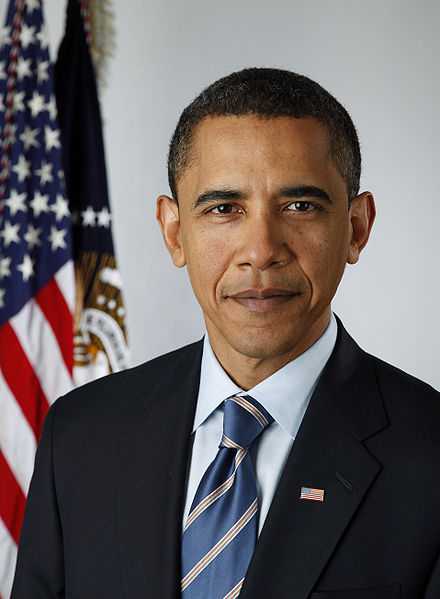
Turkey’s foreign minister has warned Barack Obama’s incoming administration that any U.S. recognition of Armenian claims regarding the 1915 incidents could derail reconciliation efforts between the two neighbors.
“It would not be very rational for a third country to take a position on this issue… A wrong step by the United States will harm the process,” the Anatolia news agency quoted Ali Babacan as saying late Friday.
Turkey has “never been closer” to normalizing ties with Armenia, its eastern neighbor, and a breakthrough could be secured in 2009, the minister said, according to the AFP.
Obama, who takes office Tuesday, pledged to his Armenian-American supporters during his election campaign to recognize the 1915 incidents as “genocide”.
The issue of 1915 incidents is highly sensitive for Armenia as well as Turkey. Around 300,000 Armenians and at least as many Turks, died in civil strife that emerged when Armenians took up arms, backed by Russia, for independence in eastern Anatolia.
However Armenia, with the backing of the diaspora, claims up to 1.5 million of their kin were slaughtered in orchestrated killings in 1915. The issue remains unsolved as Armenia drags its feet in accepting Turkey’s proposal of forming a commission to investigate the claims.
ISSUE DISCUSSED BY TWO COUNTRIES
Babacan said the dispute was among the issues that Ankara and Yereven had been discussing since reconciliation efforts gathered steam in September when Turkish President Abdullah Gul paid a landmark visit to Armenia, AFP reported citing Anatolian Agency’s report.
“Turkey and Armenia have never been closer to a plan on normalizing relations,” Anatolia quoted Babacan as saying.
Turkey and Armenia have no diplomatic relations and their border has been closed for more than a decade, as Armenia presses the international community to admit the so-called “genocide” claims instead of accepting Turkey’s call to investigate the allegations, and Armenia’s invasion of 20 percent territory of Azerbaijan.
The fence-mending process, he said, was boosted by similar reconciliation efforts between Armenia and Azerbaijan, a close ally of Turkey.
“The prospect of normalizing relations both between Azerbaijan and Armenia and between Turkey and Armenia in 2009 is not a dream,” he added.
Gul became the first Turkish head of state to visit Armenia when he travelled to Yerevan in September to watch a World Cup qualifying football match between the two countries on the invitation of his Armenian counterpart Serzh Sarkisian.
-
Russia Again Denies Arms Supplies To Armenia
Faced with continuing protests from Azerbaijan, Russia on Friday again denied Azerbaijani media claims that it supplied large quantities of military hardware and other weapons to Armenia last year.
An Azerbaijani news website published late last week a scanned copy of what it called a document certifying the transfer of the weapons that belonged to Russian troops stationed in Armenia.
The document, purportedly signed by a deputy commander of Russia’s North Caucasus Military District, contained a long list of armaments allegedly handed over to the Armenian military free of charge. Those included 21 battle tanks, 50 armored vehicles, as well as more than 40 artillery systems and 4,000 automatic rifles along with ammunition for them.
The Russian Defense Ministry denied the report on Wednesday after Baku demanded an explanation from Russia’s ambassador to Azerbaijan. But that did not stop the Azerbaijani Foreign Ministry from expressing “strong protest in connection with the transfer of arms to Armenia” the next day.
“The person whose name was mentioned by mass media did not sign any documents, and no deliveries were carried out,” Russian Foreign Minister Sergey Lavrov insisted at a news conference on Friday. Russian news agencies quoted him as saying that he will reiterate these assurances during his upcoming visit to Baku.
Lavrov noted at the same time that as a member of the Russian-led Collective Security Treaty Organization (CSTO), Armenia is entitled to receiving Russian weapons at cut-down prices. “Armenia is a member of the CSTO and enjoys more privileged terms,” he said. “Our Azerbaijani colleagues are aware of that and have no questions.”
https://www.azatutyun.am/a/1599318.html
-

European Union pays huge money to the organizers of Internet-campaign for apologizing to Armenians in Turkey
Baku-APA. The European Union was a promoter of the Internet-campaign for apologizing to Armenians in Turkey and paid huge money to the organizers of this campaign, the Turkish sources told APA.
Founders of the Helsinki Civil Assembly in Turkey professors Ahmet Insel and Halil Berktay, professor of the Bilgi University Murad Belge, Kurdish national Sherafettin Elchi, Kanal D presenter Mehmet Ali Birand, writer Adalet Agaoglu received 107 thousand 414 euro for each of them, professor Ibrahim Kaboglu – 193 thousand 548.73 euro, journalist Mine Kirikkanat – 70 thousand euro, professor Atilla Yayla – 449 thousand 620.40 euro, communist Ertogrul Kurkchu – 809 thousand 414 euro, “Mazlumder” circle – 81 thousand 735.15 euro, editor of the Armenian “Agos” newspaper Etien Mahchupian – one million 32 thousand 921.35 euro.
For this money they have to provide the Internet-campaign “We apologize to Armenians” and to involve more people in this campaign.
-
Turkey Is Optimistic About Nabucco as Budapest Summit Approaches
Turkey Is Optimistic About Nabucco as Budapest Summit Approaches
Publication: Eurasia Daily Monitor Volume: 6 Issue: 10January 16, 2009By: Saban KardasIn the midst of the gas transit row between Russia and Ukraine and discussions on diversifying the continent’s energy supplies, Turkey is pleased to see an opportunity for itself.
Turkey is seeking a mediating role in the diplomatic standoff between Russia and Ukraine. Following his visit to Moscow, Turkish Energy Minister Hilmi Guler told reporters that Turkey’s talks with the two parties were continuing and it was ready to mediate, if necessary by hosting a meeting in Turkey. Noting that some Balkan countries that were hit by the crisis, such as Bulgaria, were demanding gas from Turkey, he announced that Ankara was holding talks for building alternative supply routes to them. It will be similar to Turkey’s exports to Greece and might help these countries weather future energy interruptions. Guler also was content that the importance of the Nabucco project for diversifying Europe’s energy supplies was appreciated. He told reporters that Turkey was determined to realize this project, and concrete steps to make it operational would be taken soon (Anadolu Ajansi, January 15).
Ahead of the Nabucco summit to be hosted by Hungary this month, it appears that Turkey’s hand has been strengthened. Despite calls for prioritizing energy security following a similar crisis in 2006, the EU has failed to reduce energy dependence, which has raised questions about the effectiveness of the EU’s energy policy (Hurriyet, January 15). The latest Russian-Ukrainian crisis prompted a debate on diversifying both sources and gas transportation routes through alternative pipelines. The EU and Russia now have incentives to support projects that bypass Ukraine. Gazprom’s Nord Stream and South Stream projects, under the Baltic Sea and the Black Sea, respectively, are in progress. Since South Stream is a rival to the Nabucco project and European countries have differing preferences, it will be interesting to observe how pipeline politics develop.
The Nabucco project, originally projected to open in 2013, will carry gas from the Caspian basin, the Middle East, and Egypt to Europe by routes stretching through Turkey, Bulgaria, Romania, and Hungary and terminating at the Baumgarten hub in Austria. The 3,300-km (1,980-mile) project is expected to cost approximately €7.9 billion ($10.5 billion) (www.nabucco-pipeline.com).
Nabucco has gained increasing favor because of efforts to open European access to the resources of the Caspian (EDM, January 6). The Czech Republic, which currently holds the EU’s rotating presidency, is intent on speeding up the preparations for Nabucco. Czech Prime Minister Mirek Topolanek proposed that the EU make the realization of the project a top priority (www.trt.net.tr, January 14). Nonetheless, other EU members such as Italy back South Stream (EDM, June 25, 2007).
One major obstacle to the project has been whether the consortium can secure enough gas to make the project feasible. Turkey, hoping to project itself as a major player in gas markets through Nabucco, has worked hard to find sufficient gas resources. Its efforts to bring Turkmenistan on board did not produce any results in mid-2008 (www.asam.org.tr, May 2, 2008), because of Turkmenistan’s contracts with Russia, and concerns about transporting the gas across the Caspian Sea. A trilateral summit between the presidents of Turkmenistan, Azerbaijan, and Turkey in late November 2008, however, was interpreted as “quiet support” for the Nabucco project (EDM, December 1). Since then, European leaders have also been encouraging Turkmenistan to join the project. Recently it was suggested that the prospects for realizing the Trans-Caspian Gas Pipeline (TCGP) had increased, particularly following the Russian-Ukrainian dispute. Although “the route and means for Turkmenistan’s gas to cross the Caspian Sea has not yet been decided,” it is claimed that the TCGP could be integrated into Nabucco (www.isn.ethz.ch, January 15). Nonetheless, Turkmenistan has yet to commit gas exports to Europe through Nabucco.
Currently, the only supplier that is committed to Nabucco is Azerbaijan. Turkey has been pushing for including Iranian gas in the project, but the diplomatic standoff between Iran and the West over the Iranian nuclear issue raises questions about the likelihood of connecting Iranian Tabriz-Erzurum gas pipeline to Nabucco. Moreover, the reliability of Iran is also unclear, given the problems Turkey has encountered in its imports from Iran in the past. Turkey also hopes to connect gas from Iraq and Egypt to the Nabucco line.
Turkey had even raised the possibility of Russia joining the Nabucco project. During his visit to Moscow in February 2008, Foreign Minister Ali Babacan invited his Russian counterpart to join the project (Turkish Daily News, February 21, 2008; EDM, February 28, 2008). Later, Guler argued that the South Stream and Nabucco projects could be combined (Today’s Zaman, March 21, 2008). Nonetheless, Russian officials continued to scorn Nabucco for being infeasible.
Another concern is whether this ambitious project could be completed, given the global economic crisis. Reinhard Mitschek, Managing Director of Nabucco Gas Pipeline International GmbH, maintained that “the actual situation of the markets is more or less a benefit for projects like Nabucco.” As positive developments, he referred to falling steel prices and the willingness of banks to support long-term infrastructure projects in times of crisis (www.nabucco-pipeline.com, January 9).
Turkey’s demands from other shareholders (Bulgaria, Romania, Hungary, Germany, and Austria), particularly those relating to the pricing mechanism, have been considered another obstacle by experts (EDM, December 12). Speaking after a working meeting in Istanbul on January 13, Mitschek maintained that the parties were close to signing the intergovernmental agreement, emphasizing consensus among countries involved in the construction project about how to “share the benefits and risks of the project equally, each owning a 16.6 percent stake in the project.” Mitschek argued that its flexibility in receiving gas from many sources and being open to different partners and commercial models was what gave Nabucco a competitive advantage over its rivals. He also counted the many benefits of the project to Turkey but said that “we should not mix the two issues. Our consortium is about the transmission of the gas, not about the trading of gas” (Today’s Zaman, Hurriyet Daily News, Milliyet, January 14).
Guler told reporters that Turkey had submitted its own draft of the intergovernmental agreement to its partners and was awaiting their response (Cihan Haber Ajansi, January 15). Nonetheless, Prime Minister Recep Tayyip Erdogan has not confirmed that he will take part in the Budapest summit. Disagreements over Turkey’s demands, as well intra-EU bargaining, are likely to continue until the leaders meet on January 27.
https://jamestown.org/program/turkey-is-optimistic-about-nabucco-as-budapest-summit-approaches/