Blog

  • Good Bye Stocks – Hello Bonds

    Good Bye Stocks – Hello Bonds

    Poor Richard’s Report
    Over 300,000 readers

    My Mission: God has uniquely designed me to seek, write, and speak the truth as I see it. Preservation of one’s wealth while continuing to provide needed income is my primary goal for these unsettled times. I have been given the desire to study and observe global money progressions and trends for the last 50 years. I evaluate possible future trends in order to provide positive concepts for you to form your own conclusions. The main purpose of this letter is to warn you of possible financial sinkholes.

    Good Bye Stocks – Hello Bonds

    We are leaving the golden era of free enterprise due to unmitigated greed and chicanery. We can easily adjust if we accept the true meaning of what awaits us. If we fight to retain our old dreams and fantasies we will see ourselves being spoon fed by fat socialist bureaucrats for the “common good”.

    In this letter I will present some facts for your perusal and then you can make up your own mind in regards to your financial decisions. Those willing to change their offensive strategy can become winners in life’s never ending battles.

    The result of these recent price disturbances (all the bubbles bursting) is the falling value of the property that has been borrowed against. The value of the property’s income also falls. We have come from extreme over indebtedness and now find ourselves in a hole – we should stop digging.

    This is a hard lesson that our grandparents learned in the 1930’s, but sadly has been forgotten as satanic greed took over our souls. We now find ourselves caught between a recession and a depression. I call it a MESSYSESSION.

    All the corporations whose bubbles have burst must work down their inventories; since many are in the financial sector this will take time. Individuals must use their earnings to pay down debts to save their homes instead of spending money on frivolous purchases. The Rule of 72 has the deck stacked against them, unless the Usury Law is resumed. The lack of the Usury Law is quicksand for our economic recovery.

    The working down of inventories alone can be deflationary, however, the Federal Reserve has been pumping money into our supply pipeline at super speed. When an entity goes bankrupt, those debts do not go back into circulation, they go to money heaven. This is why the Fed has to keep the supply pool full and why this action should keep us out of a depression.

    Having to pay down all this debt slows down our economy and hurts our suppliers worldwide. This is why we have a world wide Messysession.

    Corporations that have borrowed from the Government will have a hard time maintaining their common stock dividends because their first priority is bond interest. Their second priority is preferred dividends. What is left over will then be distributed to common stock holders or used for debt reduction. Debt reduction means job security.

    Sooner or later the US Government will have to go on a massive borrowing campaign. This could weaken the dollar and send interest rates soaring along with the price of Gold – for a while.

    Some recessions are “V” shaped, which means stocks fall down hard and come back up quickly. Stocks tumble, but recover because there are people looking across the valley. If the recovery is like an elongated “U” or “L” one needs binoculars to see across the valley to a recovery. This could cause price to earnings ratios to shrivel, since analyst’s earnings estimates will be suspect at best. The economy can take a year or two to recover based upon how responsible Congress is. It will be years before our economy fully recovers from all the bubble bursting. What we need is a cheap new energy invention.

    The only period, since 1872, where stocks substantially outperformed bonds on a prolonged basis was the 1950s to 1960s. This was a golden era for stocks and it has taken many abuses to wind down.

    These are some of the many issues that President Obama faces on the home front. Now we shall look at some of his international problems.

    Europe is changing. It used to be that France and Germany were the major players, with Great Britain looking on. The United States has encouraged the expansion of the European Community to diminish the power of the two largest countries. Poland is emerging as an economic power and if Turkey is admitted, as they should be, they will bring new found political clout for the first time since the demise of the Ottoman Empire 90 years ago. Their inclusion could bring stabilization to the chaotic Middle East situation. Turkey has freedom of religion, a vigorous economy (17th largest), and a solid government. Their influence is growing. They also have a strategic location to insure peace long term.

    Then, there is Russia, who can throw all kinds of money around, but when it comes to signing on the dotted line – they cannot be trusted. Turning off gas supplies in mid-winter and canceling major contracts with world-renowned companies are actions that are hard to forget. Obama has pledged to focus US military power on the war in Afghanistan. The bulk of supplies must come from the north. Russia does not want a ballistic missile defense system in central Europe. It wants a halt to NATO expansion and reduced American influence in the Caucus and central Asia. They also want a broad renegotiation on non-trivial treaties that are terrible for Russia in 2009. (Anyone want to be President?)

    We must come up with a way to renew confidence for the consumer. First and foremost is the renewal of our Usury laws that were dropped because disintermediation was wrecking the banking system in the 1970s. Creating lasting jobs will not happen by just building roads. These programs must be done so that they promote or improve future growth. It is difficult to do this on a national level because there are too many fingers in the pie. Programs done on a state level are easier to control. It is more realistic to meet regional needs.
    Lowering corporate taxes when a corporation moves into intercity areas would mean better roads, and businesses to support them. Raising taxes invites tax avoidance schemes that only benefit the issuer. It also removes money from the private sector. Today, pricing power has evaporated.

    There must be global reorganization of the securities laws, most importantly the Uptick rule. Countries that do not participate should be banned from trading within the member countries. Today hedge funds and institutions have spent millions of dollars on sophisticated trading programs. This makes for an uneven playing field and has driven the small investor to the sidelines, as witnessed by declining volume on the exchanges. The small investor becomes the ultimate bag-holder at the bottom of markets when they have no one to sell to.

    If a country’s Gross Domestic Product (GDP) is declining that means the average on corporate earnings will be declining also. This means fewer companies will be showing an increase in earnings and therefore there will be fewer securities that have an investment grade value. Since there are already too many mutual funds and they all cannot buy the same stocks, that game is over. I would sell your mutual funds while you can if you are over 55 years old. If they get too many orders for liquidation they have the option of delivering stock of the same value to you. That is an easy way to get rid of their losers. If you are under 55 and own a balanced fund where the income can be reinvested on a periodic basis you are in the catbird seat. Lower prices will mean more shares and 10 to 15 years from now when the market recovers you could be a wealthy person. Other low income on non paying funds should be sold. It could be 20 to 25 years just to breakeven and that is only if it is a survivor.

    First quarter earnings are going to be a disaster. I suspect this is when many will throw in the towel and give up.
    Gold should be considered a hedge – possible short term.

    Here are some moneymaking ideas. A successful portfolio can be 20% equities 50% fixed income and 30% cash.
    By equities I mean income-producing securities yielding over 5%. There are a few out there that are “stupid” cheap versus dirt-cheap. Then there are preferred stocks, many of which are 85% tax-free. Many are selling below their call price. This means if a company wants to improve its balance sheet, they can do that by calling your preferred from you by paying the call price. If they fail to pay a preferred dividend it becomes cumulative. To resume payments they must make up the back dividends first. One that falls into this category is: AMERCO Pfd A (NYSE) 20 (2-6-09) pays $2.125 which yields 9.41%. gives you a tax free yield of 8%. If they call the stock at $25 you will have a $5 gain which amounts to a 25% gain. You won’t be able to have this return with common stocks over the next several years.

    Tax free bonds were good when income tax rates were 55%-92%. The low tax rates today are beaten by preferred stock’s rates, such as the one I mentioned above. You have a ready market and real value. What you see is what you get. There was an issue on Long Island that defaulted in the depression. A default like that today would wreck havoc in the entire sector. For safety reasons, please avoid tax-free bonds.

    Since the US has to borrow around a trillion dollars or more, Government bonds could be an instant loss. For now, I would avoid these also. That leaves us with corporate bonds. Many corporate bonds have a better balance sheet than the United States. Buying bonds in the five year range is the safest place to be. As the bond gets closer to maturity the price fluctuations are at a minimum and easily salable. You are better off buying an individual bond than a fund. The fund will charge a yearly management fee as well as anything else they can get away with. Also, some funds simply dump bonds into a portfolio and walk away. There was a case where a fund dumped their holdings of an issue right at the very bottom, only to have the bonds called a few months later. Please remember that corporate bond holders have first lien on a corporation’s asset.

    I suspect that in a few months you will see a stampede out of many mutual funds and a proliferation of all types of bond funds trying to cash in on the new trend. Keep it simple- buy your own.

    I know I have thrown many ideas your way in this letter and I apologize, but I feel the times warrant such thinking. I will be available, free of charge, to anyone who would want to discuss any of these ideas at the addresses below.

    CHEERIO!!!!
    Richard C De Graff
    256 Ashford Road
    RER Eastford Ct 06242
    860-522-7171 Main Office
    800-821-6665 Watts
    860-315-7413 Home/Office
    [email protected]

    This report has been prepared from original sources and data which we believe reliable but we make no representation to its accuracy or completeness. Coburn & Meredith Inc. its subsidiaries and or officers may from time to time acquire, hold, sell a position discussed in this publications, and we may act as principal for our own account or as agent for both the buyer and seller.

  • Pontic Greeks

    Pontic Greeks

    As a consequence of unveiling of a plaque, on 20th December 2008, located at the Migration Museum in Adelaide, South Australia, commemorating the Genocide of the Pontic Greeks, it appears to be fairly essential that the following statement be issued by the Rector of Giresun University, which is a university located on the Black Sea Coast.

    “It is very well known by everyone approaching to recent history objectively that after the Treaty of Mondros, signed in 1918, armed activities of the Greek gangs threw Anatolia into disorder, severely threatened the security of life and property , and precautions were taken accordingly.

    Pontic Greek problem and genocide allegations are not based on a historical and scientific basis. This is an issue, which the governments, having designs on Anatolia, want to take advantage of so as to fulfil their aims by distorting the historical truths and misusing the scientists. The said issue and allegations bare no relation to reality.

    The best example to this is the following declaration published in Trabzon in the issue of “İstikbal Gazetesi” dated 18th February 1921 by Trabzon Orthodox Community.
    “It is, not only for today but also for tomorrow, our forever principle to be allies of the Turks forever, whom we considered to be asserting our law as well while asserting their rights.”

    Turkey and the Turks are a country and a nation, at peace with their history. As a country and a nation we do not have a history that we cannot give account of and feel shame for. Turkish history is full of noble, humanistic and meritorious behaviours, displayed in the presence of badness and injustice towards themselves. The most well-known example to this is the Battle of Gallipoli. The Turks did not ask the Anzacs, coming from thousands of miles away and attempting to invade Gallipoli and Anatolia, “Why are you here?”. Instead, in the post-war era, the Turks embraced the Anzacs and treated them friendly.

    It is necessary that everyone see that the creators of badness, the exaggerators of badness and the illuminators of badness will not be able to be the creators of goodness and beauty. As long as we desire a more peaceful and liveable world, we are supposed to seek after good and beautiful things.

    Giresun University, located on the most beautiful shores of the Black Sea, is inviting you to bring a world of peace to light, to bring you, the humans together, to illuminate the good and the beautiful.

    Respectfully submitted for your information.”
    Prof. Dr. Osman Metin ÖZTÜRK
    Rector of Giresun University

    www.giresun.edu.tr

    [email protected]
    0090 454 310 10 03
    0090 506 531 28 88”

  • Gilad Atzmon: Israel needs Turkey

    Gilad Atzmon: Israel needs Turkey

    The world famous Israeli- born musician Gilad Atzmon said to TIMETUR:“Turkey’s friendship is very important for Israel and Israel needs Turkey.”

    Hasan: Dear Gilad, How do you evaluate the Israeli carnage in Gaza?

    Gilad: Dear Hasan, I don’t really think that it is a matter of evaluation. We are all aware of the level of destruction brought upon innocent civilians by the Jewish state. Gaza looks as if it was nuked. Yet, as we know, the devastation is not the outcome of a single atomic bomb. It was actually a merciless and lengthy campaign conducted by a national and popular army that employed a chain of heavy bombardment using conventional and unconventional shells.  Gaza’s carnage is the outcome of a sinister, continuous, intense air raid against civilians in the most populated spot on this planet.  Hence, rather than evaluating the carnage itself, I am very interested in the evaluation of the people who are capable of bringing such destruction about. In other words, I am interested in the Israeli and the Jewish collective identity. I wonder how is it possible that the Israelis, the people who were ‘raised from the ashes’, have matured collectively into the embodiment of modern evil. How is it that Diaspora Jews happen to institutionally support Israel and its crimes against humanity?

    Hasan: Why does Israel always break the international laws and does not obey the agreements?

    Gilad: I assume that the Israeli is imbued with feelings of superiority that have something to do with the secular interpretation of the notion of Jewish Chosenness. At the end of the day, Israel is the Jewish state. Though Israel is largely a secular society, it manages to maintain the Judaic heritage of racial supremacy. It is actually the secular nationalist interpretation of Judaic tradition that had evolved into a collective murderous inclination. It is important to note that while within the Judaic context, chosenness is interpreted as a moral burden in which Jews are demanded to stand as an exemplification of ethical behaviour, in the Jewish state, chosenness is interpreted as an entitlement to dominate and kill. Since the Israelis regard themselves as the chosen people, they clearly feel free of any ethical or moral concerns. Moreover, they are not concerned at all with other peoples’ or nations’ judgment or thought. This arrogant philosophy was defined by Israeli PM David Ben Gurion in the 1950’s when he said, “it doesn’t matter what the Goyim (Gentiles) say, the only thing that matters is what the Jews do.”

    Hasan: What is the importance of PM Erdogan’s reaction in Davos?

    Gilad: For me it is clear that PM Erdogan was rather courageous in confronting the Israeli lie on an international stage. Moreover, he really hit the nail on the head by exposing the ultimate symbol of this very lie. I am referring here to war criminal President Shimon Peres, who in spite of his devastating past (Kefar Kana, Nuclear reactor Dimona etc.) has managed to grab a Nobel Prize for peace. Considering his contribution to the Dimona WMD project, a Nobel Prize in nuclear physics would be more appropriate.

    Hasan: How does / can the Jewish lobby work against PM Erdogan and the Jews with conscience?

    Gilad: This is a very good question, I am not an expert on Jewish lobbying tactics. However I am fully aware of their influence. As long as British Labour finance is run by rabid Zionists such as Lord cash Machine Levy and as long as White House chief of staff is a rabid Zionist, we should expect Zionist interests to shape our reality and this means a lot of conflicts, carnage and blood of innocent civilians.

    However, we have to bear in mind that the tide is turning. What we see and hear in Gaza brings about a mass indignation against Israel and its lobbies around the world.

    It is hard for me to predict what the measures taken by Jewish lobbies against PM Erdogan will be. He can probably expect himself to be presented as their new anti-Semite protagonist.  As we know it doesn’t take a lot to become one. While in the old days, anti-Semites were those who didn’t like Jews, nowadays, anti-Semites are those the Jews Hate.

    Nevertheless, we must bear in mind that Turkey’s friendship is very important for Israel. Turkey had been Israel’s only friend in the region. Lately, it had been a negotiator with Syria.  In short, Israel needs Turkey.

    Hasan: How can the Israeli-Turkish relations be effected after the Erdogan-Peres clash in Davos?

    Gilad: I really prefer not to answer this question, I am not exactly an expert on the subject…

    Hasan: What kind of days are waiting for Israel and Turkey in the global political arena?

    Gilad: Again, international affairs isn’t exactly a topic I specialise in.

    Hasan: Do you have a final message for the world and the Turkish people?

    Gilad: I do not like to come with final messages for three reasons:

    1.      I do not like final statements, I insist upon reserving the option of regretting and want to be able to revise my views on every possible topic.

    2.      I believe that people who come with ‘final messages’ must be very important and clever. I am more of an artist. I look into myself, and I share what I see with my listeners and readers.

    3.       Unlike politicians who know what is right and wrong for other people, I hardly know what is right for myself.

    However, my politics, so to say, are very simple. I am looking for an ethical voice. It means that in any given circumstance, I would try to find out myself what is right and what is wrong. I do not believe in dogmatism. I insist that the ethical search is a dynamic process of shaping and reshaping.

    A week ago or so, a friend of mine, the legendary musician Robert Wyatt, helped me put it into words in the most eloquent and simple way. “My politics”, he said,  “is very simple, I am just an anti-racist”.  This is really what it is all about, being an ‘anti-racist’.

    I am totally against any form of racist politics and this is why I despise any form of Jewish politics left, right and centre. I am tired of all these ‘Jew only’ settings. Whether it is the ‘Jews only state’ or ‘Jews for peace’. I am against it because; it is there to promote Jewish tribal interests rather than humanity and brotherhood. The Jewish political experience is somehow always racially orientated and chauvinist to the bone.

    Though I believe that people are entitled to fight for their rights e.g., the Palestinian national struggle, I also believe that people should know how to reinstate peace and harmony. As far as Israel and Jewish politics is concerned, this is exactly what we lack. All we see is vengeance and anger that lead to more and more violence. It is rather apparent that Israelis are not familiar with the notion of mercy and compassion. Jesus’ spiritually harmonious suggestion known as ‘turning the other cheek’ sounds to the Israeli as an amusing ludicrous concept. Apparently, for them, ‘shock and awe’, sounds far more appealing. They democratically vote for carnage, destruction and genocide. At the end of the day, they are entitled to vote. They are the ‘only democracy in the Middle East’, at least this is what they claim to be.

    Source:  , 07 February 2009

  • Talking Turkey About Israel

    Talking Turkey About Israel

    Philip Giraldi *

    The Israeli invasion of Gaza and the slaughter of civilians was such an egregious error in judgment that the usual suspects are working overtime to make it all look like a heroic defense of democratic values. The expected beneficiary of the “defensive action,” the ruling Kadima Party, so miscalculated that it is now likely to lose today’s election, with the Israeli electorate convinced that an even more extreme right-wing government is the only solution to the moderate right-wing bungling.

    Israel will likely choose hard-right nationalism by electing Bibi Netanyahu as the next prime minister. Netanyahu has never let any values, democratic or otherwise, stand in his way in his quest for a Greater (Arab-free) Israel encompassing all of the West Bank and running from the Litani River in Lebanon in the north to the Suez Canal in the south. He has already promised that if elected he will not turn any occupied land over to the Palestinians.

    There have been numerous signs that the world is no longer buying into the Israeli creation myth, even in the United States, where the suffering of the Gazans, neatly concealed by most of the mainstream media, nevertheless produced an outpouring of sympathy. The beleaguered little state of Israel founded as a homeland and refuge for the victims of persecution in Europe has become a regional military superpower ruled by a corrupt political class, with a socialist economy kept afloat by the U.S. taxpayer. Israel continues and even expands its occupation of the lands of its neighbors and engages in the brutal suppression of those who resist. Far from seeking a political solution that would create two states side by side, it has deliberately aborted every genuine peace initiative and now seeks absolute regional hegemony, pressing forward with racist policies that marginalize its own citizens of Arab descent. Most of the world has finally realized that claiming perpetual victimhood as a shield against criticism does not work very well when you can muster Merkava tanks, helicopter gunships, and white phosphorus against a civilian population.

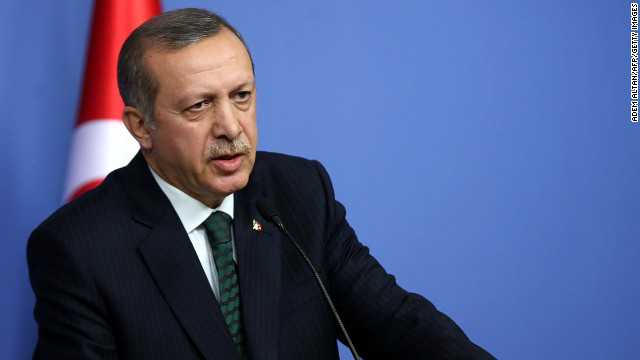
    The sharp exchange between Israeli President Shimon Peres and Turkish Prime Minister Recep Tayyip Erdogan at Davos on Jan. 29 exemplifies Israel’s public relations problem and also casts light upon what steps the Israeli government and its friends in the United States are taking to counteract the negative press. Media reports suggest that Israel preceded its attack on Gaza by alerting a network of supporters to post comments on blogs, saturating the Web with the Israeli government’s justification for its action. This was evident on a number of blogs, including Huffington Post and the Washington Note. Many of the posters were Israelis, and it is believed that a number of them were active-duty military personnel selected for their fluency in English and other European languages as well as their familiarity with the Internet.

    The coverage of the Erdogan-Peres exchange was carefully managed in the U.S. media, but less restrained in Europe and the Middle East. In a one-hour discussion of Gaza moderated by David Ignatius of the Washington Post, an odd choice for such an important discussion, Peres was allowed 25 minutes to speak in defense of the Israeli attack. Erdogan and two other critics on the panel were given 12 minutes each. The YouTube recording of the debate shows Peres pointed accusingly at Erdogan and raised his voice. When Erdogan sought time to respond, Ignatius granted him a minute and then cut him off claiming it was time to go to dinner. Erdogan complained about the treatment and left Davos, vowing never to return. Back in Turkey, he received a hero’s welcome.

    Four days later the Washington Post featured an op-ed entitled “Turkey’s Turn From the West” by Soner Cagaptay, a Turkish-born, American-educated academic who is a senior fellow at the Washington Institute for Near East Policy (WINEP). WINEP was founded by the American Israel Public Affairs Committee (AIPAC). Cagaptay is also on the board of the American Turkish Friendship Council, one of several Turkish lobbying groups that are supportive of the Israel-Turkey relationship. A review of Cagaptay’s writings reveals that he is AIPAC’s go-to guy for any argument that Turkey is becoming more anti-Western and religious.

    That Cagaptay is a genuine expert on the country of his birth is clear, but his view on developments there is very much shaped by who pays him. He finds anti-Semitism lurking everywhere in Turkey and being “spread by the political leadership.” He is astonished by Erdogan’s assertion at Davos that Israel is “killing people.” He finds inexplicable the prime minister’s belief that there was “Jewish culpability for the conflict in Gaza” and that the “Jewish-controlled media outlets were misrepresenting the facts.” For good measure, Cagaptay believes it “doubtful whether Turkey would side with the United States in dealing with the issue of nuclear Iran,” and he sees a regrettable Turkish “solidarity with Islamist regimes or causes.”

    AIPAC’s Turkey expert might be surprised to learn that most of the world, which saw the images of dying Palestinian children on nightly television, would probably agree with Erdogan. Israel planned its invasion of Gaza six months in advance, timed the assault for maximum political benefit for the ruling party and to engage the incoming U.S. president in its policies, committed war crimes against a largely defenseless civilian population, and then kept journalists out of the combat zone so it could lie about everything that it was doing. The U.S. media in particular chose to ignore the carnage and present the Israeli point of view. Though it would be unfair to claim that the media is controlled by any ethnic or religious group, it is certainly true that Jewish organizations mobilized to make sure that pro-Israel commentary far exceeded any reporting of Palestinian suffering.

    Cagaptay likewise fails to see what the rest of the world sees regarding Iran. No one admires Iran’s government, but America’s European allies, not just Turkey, will not support yet another war in the Middle East, even if Tehran does move closer to acquiring a nuclear weapon. Turkey’s development of closer ties with the Islamic world, which Cagaptay tellingly insists on calling “Islamist,” is also an understandable response to being repeatedly snubbed in its bids to join the European Union, something that even WINEP’s reliable scholarly claque surely knows to be true.

    Efforts to control and spin the narrative, to turn black into white, have been unrelenting since the Israelis decided to attack Gaza. Cagaptay is only a part of that effort, but his smearing of Turkey and its elected leaders is unfortunate, particularly as his newspaper audience probably knows little about Turkey and will assume that the analysis is credible. Anyone who knows Turks well knows that they are an exceedingly stubborn and honorable people who will invariably say what they think to be true. Prime Minister Erdogan spoke the truth in Davos and has been speaking the truth about the invasion of Gaza. Attempts to label him anti-Semitic and to denigrate the Turks in general will certainly have some impact, most certainly on the U.S. Congress, which will rapidly fall into line and comply with AIPAC’s instructions on an appropriate punishment. But Israel’s attempt to portray itself as always the victim of a global anti-Semitic, anti-Western conspiracy just will not stand any more, no matter how many Soner Cagaptays are paid by AIPAC to write for the Washington Post.

    Source: www.antiwar.com, 10.02.2009

    * Philip Giraldi is a former officer of the United States Central Intelligence Agency who became famous for claiming in 2005 that the USA was preparing plans to attack Iran with nuclear weapons in response to a terrorist action against the US, independently of whether or not Iran was involved in the action. He is presently a partner in an international security consultancy,  Cannistraro Associates.

  • Man in the News: Pope Benedict XVI

    Man in the News: Pope Benedict XVI

    By Guy Dinmore

    Published: February 6 2009 19:17 | Last updated: February 6 2009 19:17

    As the head of the world’s oldest organisation, holding a global market share of 17.5 per cent and with defined values and established decision-making procedures, Joseph Ratzinger should be the envy of any corporate chief executive.

    Yet in the space of two weeks Pope Benedict XVI has stumbled into the worst crisis of his four-year-old papacy, dealing in the process the most serious blow to relations between the Roman Catholic Church and the Jewish faith in half a century. Cardinals and bishops are starting to mobilise in revolt. For the moment their disquiet is aimed at a handful of figures surrounding the 81-year-old pontiff who they fear is becoming a timid recluse, buried in his reading and writing, vulnerable to manipulation.

    That is the charitable explanation of why last month Pope Benedict lifted the excommunication of four ultra-traditionalist clerics, including British bishop Richard Williamson, who has questioned the extent of the Holocaust and denied the existence of gas chambers in Nazi death camps.

    But for progressive theologians this latest attempt by Benedict to heal a decades-old schism confirms his barely disguised sympathies for the doctrinal views of the ultra-conservatives and calls into question the reforms of the historic Second Vatican Council of 1965. The harm done to interfaith dialogue is considerable, says Miroslav Volf, an Episcopalian and professor of theology at Yale University. “This is not the first time that this pope has caused such interfaith damage. He is an equal opportunity interfaith offender,” Prof Volf tells the FT, recalling the angry response of Muslims to the Pope’s 2006 Regensburg speech interpreted as equating Islam with violence.

    “Only some of it can be attributed to the Vatican bureaucracy. He is over-zealous in protecting the truth of the faith and unity of the church, the hallmarks of his pontificate … His mistakes and blunders all lean in one direction, appealing to the traditionalists. He is not a Holocaust denier. But why this blunder?”

    The reactions from political and religious leaders – including Germany’s Chancellor Angela Merkel – have focused on Mr Williamson’s blatant anti-Semitic (and sexist) views. That the decree was issued just days before International Holocaust Remembrance Day was seen as a public relations disaster. One close follower of the Vatican says Pope Benedict’s media image as “God’s rottweiler” is wrong. “In reality he is timid, shy, bordering on the recluse and could potentially be bullied.”

    The pontiff is a popular teacher but appears cut-off, rarely giving access to cardinals and nuncios, unlike his predecessor. His isolation is a subject of considerable debate and mystery, as is how the decision was made to revoke the excommunication of the clerics, followers of the Pius X Fraternity established by Marcel Lefebvre, the schismatic French archbishop who died in 1991.

    Sandro Magister, a prominent commentator, blames Cardinal Tarcisio Bertone, the secretary of state who is effectively the Vatican’s prime minister. The cardinal was “distinguished by his absence” in the affair, travelling in Mexico and Spain, indulging in endless rounds of conferences and celebrations. “Benedict XVI was left practically alone, and the curia (civil service) was abandoned to disorder,” Mr Magister writes on his blog.

    Others suggest the Italian cardinal – appointed by the Pope in September 2006 – played a more deliberate role, keeping key cardinals out of the decision-making process. They note he helped the then Cardinal Ratzinger in trying to negotiate a solution with Lefebvre in 1988, shortly before Pope John Paul excommunicated the rebel archbishop and the four bishops he had illegally ordained.

    In rare displays of public discord, prominent cardinals have expressed dismay at not being consulted. Cardinal Bertone was forced into damage control, issuing a statement that the Pope did not know of Mr Williamson’s views on the Holocaust. He also ordered the renegade bishop to recant his views if he wanted to serve as prelate in the Church.

    Mr Williamson’s remarks on the gas chambers were made to a Swedish television station in November but only released on January 21. That was the day the Vatican decided to lift his excommunication although the decree was not made public until three days later. The timing has led to a conspiracy theory that someone in the curia tipped off the broadcaster. Even so, Mr Williamson had aired similar statements before. As Rabbi Marvin Hier, dean of the Simon Wiesenthal Center, says: “All somebody had to do was Google him.”

    Others must have known, despite their denials, critics contend. One was Cardinal Dario Castrillon Hoyos who persuaded the Pope to reverse the excommunications. Cardinal Hoyos heads Ecclesia Dei, a group with ties to the ultra-traditionalists, sharing their adhesion to the traditional Latin mass whose return was permitted amid great controversy by the Pope in 2007. There are doubts Benedict will remove Cardinal Bertone, but a revolt by senior clerics could persuade him to resign.

    For Benedict – the first German pope since Victor II in 1055 – the furore must be painful. While he has been unapologetic in his rejection of religious pluralism, moral relativisim, economic liberalism, contraception, divorce, women priests and same-sex civil unions, he has consistently spoken out against the Holocaust and persecution of Jews.

    Born in 1927 in a Bavarian village not far from Hitler’s own birthplace, his childhood was spent in the shadow of the Third Reich. As a 14-year-old seminary student, he was obliged to join the Hitler Youth. He saw prisoners from the Dachau camp and Hungarian Jews shipped to their death. He was later sent to the Austrian Legion where he was “bullied by fanatical ideologues” and in 1945 he deserted, to be taken prisoner by US soldiers.

    Ordained in 1951, he became a professor of dogma and fundamental theology at age 30, starting a long life in academia. By 50 he was archbishop of Munich and soon a cardinal but with little pastoral experience. In 1978 Karol Wojtyla became Pope and in 1981 persuaded Cardinal Ratzinger to head the Congregation of the Doctrine of the Faith, the Vatican’s enforcer of orthodoxy tracing its roots to the Holy Inquisition. He disciplined at least a dozen high profile, liberal Catholics. Some were excommunicated.

    Much is now at stake in how Benedict responds to this latest challenge to the Church. In an interview he gave when still a cardinal, he remarked however: “I am like the cellist Rostropovich. I never read the critics.”

  • CLINTON SIGNALS A SMART RETREAT FROM DEMOCRATISATION

    CLINTON SIGNALS A SMART RETREAT FROM DEMOCRATISATION

    By Gideon Rachman

    Published: February 5 2009 20:39 | Financial Times

    Taking questions from staff at the state department this week, Hillary Clinton highlighted the hard-headed approach she hopes to take to the US’s relations with the rest of the world, write Daniel Dombey and Demetri Sevastopulo. “When we talk about the three pillars of American foreign policy – defence, diplomacy, development – they’re not just words to the president and me,” the new secretary of state (below) declared, repeating a formula she has spelled out several times in the days since she took office.

    Singularly absent from her outline of the struts of US foreign policy is a fourth “D” – democracy promotion – a goal that served as one of the guiding themes of the Bush administration.

    The Obama administration has gone out of its way to signal a pragmatic, non-ideological approach. It is a modus operandi that stresses continuity with policy under George W. Bush in terms of the tools it uses while setting out arguably more “realistic” goals.

    “This team is very deliberate and what you’ll see is them taking a long look at what they’ve inherited to see what of that works,” says a US official. “They have learnt the lesson from the beginning of the Bush administration, which threw everything out that had to do with [former president Bill] Clinton.”

    Mrs Clinton’s “three D’s” mantra uses a vocabulary of the possible rather than charting grand objectives. It suggests that the US will continue to assert its military might while emphasising the kind of diplomatic outreach many US allies called for during Mr Bush’s presidency. The secretary of state also wants to use US aid to put pressure on countries such as Iraq, Afghanistan and Pakistan and to win control of assistance currently dispensed by the US military so that it can be more easily put to the service of political goals.

    In a phrase Mrs Clinton has borrowed from Joseph Nye, a Harvard professor, and Richard Armitage, a former Bush administration state department official, she labels such an alliance of “hard” and “soft” power as “smart power”. Her stance is bolstered by similar positions struck by President Barack Obama and Robert Gates, defence secretary – a veteran champion of “realism” in the long-running Washington debate with liberal interventionist “idealists”.

    Not for nothing did Mr Obama promise to work with authoritarian states in his inaugural address. While Mr Bush used his second inauguration to set out “the ultimate goal of ending tyranny in our world”, Mr Obama told undemocratic states that “we will extend a hand if you are willing to unclench your fist” – an offer he later explicitly addressed to Iran.

    Indeed, just days before taking office, the then president-elect took care to avoid Mr Bush’s emphasis on free elections. “Elections aren’t democracy, as we understand it,” Mr Obama told The Washington Post, stressing priorities such as freedom from arbitrary arrest and fighting corruption. “They are one facet of a liberal order.”

    Mr Obama’s emphasis on stabilising Afghanistan to reduce the threat of terrorism rather than on establishing a US-style “Jeffersonian democracy” follows this train of thought, as did his pre-election suggestion to General David Petraeus, then the commander of forces in Iraq, that the US should be content with a “messy, sloppy status quo” in that country.

    Ahead of Mr Obama’s expected approval of the deployment of 12,000 more soldiers to Afghanistan, Mr Gates has also suggested that the US scale back its ambitions, cautioning that any attempt to create “some sort of Central Asian Valhalla over there” would inevitably fail.

    Yet while the goals set out by the Obama administration may differ from – or sometimes be more pragmatic than – those endorsed by the Bush administration – the tools it employs are often the same. Last week Mr Gates signalled that the US would continue to launch missile strikes against suspected terrorists inside Pakistan. Less than three days after Mr Obama moved into the White House, the CIA carried out such a strike, an attack that almost certainly was approved by the new president.

    Other instruments established by Mr Bush and set to continue include the six-party talks on North Korea’s nuclear programme, which Mrs Clinton has labelled “essential”, and similar discussions on Iran. “Where continuity is appropriate, we are committed to doing that,” Mrs Clinton said, also instructing Todd Stern, her climate change envoy, to take part in both “United Nations negotiations and processes involving a smaller set of countries” – an apparent reference to Mr Bush’s controversial “major emitters” grouping.

    “From Iran to the plans for an early meeting with [Russian president Dmitry] Medvedev to recent statements on Afghanistan, there is a strong realist strain appearing, although whether that will hold sway at the end of the day remains to be seen,” says Cliff Kupchan, a Washington-based analyst and former Clinton administration official.

    While the debate between realists and idealists that rocked the Bush administration continues, Mr Kupchan observes that now “the portions of meat and vegetables are different”.