Category: Regions

  • Prospects for Israel/Turkey Relations

    Prospects for Israel/Turkey Relations

    Contrary to what common interests might otherwise suggest, the upheaval in Syria has not altered the Turkish government’s view of Israel. Turkish Prime Minister Erdogan’s recent assertion that Israel was operating like a “terrorist state” when it bombed targets outside Damascus last month indicates that Turkey is not seeking to incorporate Israel into its Syria strategy. Although Israel might wish otherwise, there is little reason to believe that Turkey will change its tune regarding bilateral relations in the near term, but there is prospect that relations may thaw in the longer term.

    Erdogan stated that Turkey would only renew ties with Israel under three conditions — that Israel issue an official apology for the Mavi Marmara (Palestinian flotilla) incident in May 2010, provide financial compensation to the victims’ families, and lift the blockade on Gaza. It is highly unlikely that the Israeli government would meet the first two conditions; if it were inclined to do so, it would have already done so, and no Israeli government would support lifting the blockade on Gaza as long as it remains under Hamas’ administrative authority.

    By linking a restoration of ties with Israel to a condition that Turkey knows Israel will not meet, one must conclude that Ankara is not inclined to mend fences with Israel and prefers an antagonistic relationship. Indeed, this is consistent with Erdogan’s ongoing ambition to be a hero to the Arab ‘man in the street,’ as well as the foreign policy objectives of the ruling Justice and Development Party (AKP).

    Since the AKP’s rise in 2002, Ankara’s foreign policy decisions have become increasingly under the control of elected civilian leaders committed to catering to public opinion. While Erdogan’s opponents have criticized his administration’s handling of certain aspects of foreign affairs — especially vis-à-vis Syria — he has faced virtually no condemnation for severing ties with Israel. It seems only Turkish businesses active with Israel are concerned about the deterioration of bilateral relations. Given that bilateral trade has actually increased since diplomatic relations deteriorated, there is no reason for Erdogan to expect a backlash from the domestic business community. Moreover, Turkey’s conservative Islamists — the APK’s core constituency — are supportive of their government’s current policies vis-à-vis Israel. As Erdogan eyes continued rule, his position on Israel only shores up his base.

    Turkey’s stance on Israel must also be analyzed within the context of Ankara’s pursuit of greater autonomy from Washington, and its interest in capitalizing on Turkey’s strategic depth throughout the Arab world. While remaining a U.S. ally under AKP rule, on numerous occasions Ankara has refused to march to Washington’s drum, opting instead for a more independent foreign policy, which has provided greater returns over the past last decade. Turkey has largely and successfully filled a vacuum created by America’s declining influence on the Arab Street.

    Whereas the U.S. position on Israel/Palestine is widely resented throughout the Arab world, Ankara is advancing a position far more reflective of public opinion throughout the region. Erdogan’s calls for Israel to disband its nuclear arsenal, lift the blockade on Gaza and recognize a sovereign Palestinian state have been well received throughout the Arab world. Due largely to this, Erdogan is arguably the most popular leader in the Middle East and North Africa (MENA). With the world’s 17th largest economy and a deep historical connection to the inhabitants of the former Ottoman Empire, Turkey is well poised to expand its soft-power influence throughout MENA. More likely than not, the benefits of maintaining the poor bilateral relations with Israel will continue to outweigh the benefits of restoring ties.

    Given the ‘Islamic winter’ that is developing as an outcome of the Arab Awakening, and its growing isolation, Israel would clearly welcome improved ties with Turkey. Israel’s isolation is evident beyond its immediate borders, as was noted by many of Israel’s traditional European allies voting in favor of non-member observer state status for Palestine at the UN last year and the entire Non-Aligned Movement voting unanimously in favor of Iran’s right to pursue nuclear energy in Tehran last August.

    As Turkey and Iran compete for expanded soft-power influence and control over energy corridors in the Middle East and Central Asia, Syria has become a focal point of their rivalry, however Ankara and Tehran’s mutual interests will likely prevent any conflicts of interests from creating a hostile bilateral relationship. That said, Turkey and Israel’s shared interest in reducing Iran influence’s in Syria is not a strong enough commonality to unite Turkey and Israel. Turkey would not want the replacement of President Assad and/or Iran’s weakened strategic posture vis-à-vis Syria to result either in diminished bilateral business interests in Iran, or stronger Israeli influence in the region.

    While Turkey’s relationship with the Free Syrian Army indicates Ankara’s commitment to toppling the Ba’athist regime in Syria, Israel would view Assad’s ouster with much hesitation, despite its ambition to weaken the so-called “resistance axis” of Iran/Syria/Hezbollah. While no friend of Israel, the Assad regime has in the past stated its willingness to make peace with Israel, and a de facto peace has existed since the 1973 Arab-Israeli war, when the Assad regime regulated militant groups in Syria and afforded the Israelis with four decades of peace along their border. Israel recognizes that Salafi jihadists resent Assad’s willingness to hold peace talks with Israel and regulate factions that seek to confront the Jewish state. The rise of groups such as Jabhat al-Nusra in a post-Assad Syria would constitute grave security dilemmas for Israel.

    The high level of animosity between Ankara and Jerusalem undermines prospects for any short-term reconciliation, and the evolving Arab Awakening does not appear to be a force likely to alter Turkey’s calculus — at least in its present form. As Washington is preoccupied with more pressing issues — such as winding down the Afghan war, Iran’s nuclear program, and the Syria conflict — facilitating a rapprochement between Turkey and Israel is not a high priority for the Obama Administration. Likewise, Turkey’s decision-makers are more likely to continue devoting their energy toward Syria and securing Turkey’s long-term commercial interests. Israel can be expected to maintain its focus on its growing security dilemmas along its borders, and its standoff with Iran over Tehran’s alleged nuclear ambitions, so restoring the health of bilateral relations is not a priority for either state.

    That said, recent reports indicate that Turkey’s leaders intend to maintain a line of communication with Israel. During Operation Pillar of Defense in November last year, Turkey’s head of intelligence met with Mossad’s head in Cairo, and a senior Israeli envoy in Switzerland. It seems both governments realize what is at stake, and that neither can afford a complete cessation of communication. As the Arab Awakening continues to reveal unexpected and unwelcome surprises, and as Iran continues to barrel toward a full nuclear weapon capability, Ankara and Jerusalem are more likely than not to acknowledge that they have more to lose than to gain as a result of the continuation of a chilly relationship. Even though Mr. Erdogan clearly wishes to prolong his credibility with the ‘Arab Street’ as long as possible, with the stakes so high, and with Turkey wishing at the same time to maintain its ‘street cred’ with the West, the two states should eventually find a way to reach some common ground.

    Daniel Wagner is CEO of Country Risk Solutions, a cross-border risk management consulting firm, and author of the book “Managing Country Risk”. Giorgio Cafiero is a research analyst with CRS.
  • Turkey-US Tension Develops Over Al-Qaeda Member

    Turkey-US Tension Develops Over Al-Qaeda Member

    By: Deniz Zeyrek Translated from Radikal.

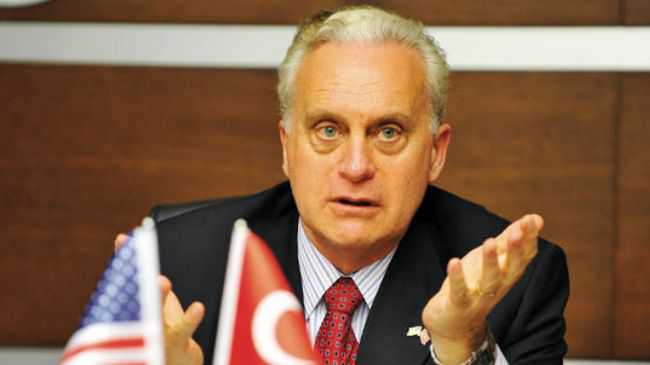
    The media coverage of U.S. Ambassador Francis Ricciardone’s meeting with journalists this week focused mostly on the DHKP-C suicide attack [at the U.S. embassy in Ankara], his criticism of the judiciary and Kurdish problems. But the picture the ambassador painted shows that the current state of bilateral ties is not very promising, let alone human rights violations in Turkey. The two countries are deeply divided on Iraq, Syria, Israel and Iran. Now they have also a crisis over al-Qaeda.

    About This Article

    Summary :Recent remarks by the U.S. ambassador to Turkey suggest that bilateral ties between the two states are waning, with Turkey’s stance toward al-Qaeda member Suleiman Abu Ghaith being a point of contention, writes Deniz Zeyrek.Publisher: Radikal (Turkey)
    Original Title:
    Turkey-US Tension Over Ghaith
    Author: Deniz Zeyrek
    First Published: February 7, 2013
    Posted on: February 8 2013
    Translated by: Sibel Utku Bila

    Washington has already complained of Turkey’s failure to take a clear stance against al-Qaeda militants fighting Assad in Syria and its reluctance to fully join the global alliance against the financing of terrorism, especially of al-Qaeda. Nowadays Washington is irked that Suleiman Abu Ghaith, a prominent al-Qaeda figure, is treated as an ordinary asylum seeker in Ankara.

    ‘Outside actors’ in Syria

    The U.S. ambassador may argue that Turkey and the United States have similar approaches on Syria, but the situation on the ground is quite different. In Ankara’s view, the clout of al-Qaeda affiliated groups in Syria and the risk of a sectarian conflict are being exaggerated, but those groups will grow stronger if Assad’s departure is further delayed.

    Ankara denies that jihadists are being allowed to use Turkish territory. The United States agrees that foreign groups will become stronger if the transition process is protracted, but is already alarmed over their presence in Syria. Commenting on the issue, Ricciardone said: “It is a complicated question with no easy answers. We are concerned about outside actors. We are worried that they are obstructing and high-jacking the struggle of the Syrian people. That is a very serious worry! The reason why we are so cautious [on Syria] is that we want to make sure of whom we are supporting.”

    Terrorist or ordinary asylum seeker?

    Prime Minister Recip Tayyip Erdogan often accuses Westerners, especially Europeans, of tolerating terrorists active in Turkey. However, the picture that Ricciardone paints indicates that Turkey itself differentiates between “my terrorists and the terrorists of others” when it comes to issues of “terrorism” that Westerners focus on. The ambassador argues that the problem stems from Turkey’s failure to straighten its legislation on terrorism and points to the controversy in Turkey over the draft law on money laundering and terror financing.

    A fresh problem that erupted ten days ago has fuelled the debate on double standards. It emerged that Suleiman Abu Ghaith, a senior aide of Bin Laden, had entered Turkey from Iran and settled in a hotel in Ankara. He was detained at the bequest of the United States, but was soon released on grounds he had committed no crime in Turkey. The authorities continue to hold him as “a guest” because he does not have a passport.

    Washington has asked to interrogate Ghaith and take him to the United States under an agreement on the extradition of criminals. However, it has not been allowed to do so, with Ankara digging in its heels and asking for some papers. What irks the Americans most is the prospect of Ghaith being deported to Iran or another country of his choice instead of being handed over to them. Tough bargaining over Ghaith is currently under way between Washington and Ankara.

    Concerns over a Kurdish state

    The United States and Israel both believe that the emergence of a Kurdish state in the north of Iraq will be at odds with their regional strategies. They believe that such a development would divert energy supply routes to the Strait of Hormuz, which is controlled by Iran. The issue has led to disagreements between Ankara and Washington.

    Ricciardone’s comments on the topic are extremely delicate but amount to a virtual lesson of foreign policy. Iraq’s territorial integrity, which used to be a “red line” for Turkey back in 2003, is today an indispensable condition for Israel and the United States, who worry that Iraq’s break-up would produce a second large Shiite state alongside Iran and result in full Iranian control over the Persian Gulf.

    When Ricciardone says that Turkey should “have access to and become a route for not only 20% of the oil and gas in Iraq but 100%, and that high-quality Turkish goods should be sold not only in Erbil and Sulaymaniyah, but also in Basra and Baghdad,” he is in fact criticizing Turkey’s regional vision. He implies that Ankara is failing to see the forest for the trees.

    Turkey-Israel tensions

    The United States sees good relations between Turkey and Israel as a “must” for its regional strategies and wants Turkey to end the heavy sanctions it is imposing on Israel. Turkey, however, is not only refusing to move an inch back but is adding new sanctions. Most recently, Turkey on Jan. 23 vetoed Israel’s membership in the International Renewable Energy Agency (IRENA), ignoring insistent U.S. advice to the contrary.

    The Turkish media had reported that the first foreign trip of new U.S. Secretary of State John Kerry would be to Turkey, and that Prime Minister Erdogan would visit Washington in February. It turns out, however, that foreign ministry undersecretary Feridun Sinirlioglu’s recent visit to Washington has resulted in a conclusion that it is too early for Kerry to come to Ankara, and for Erdogan to go to Washington. In response to a question on the issue, Ricciardone said the new U.S. secretary of state had a very busy schedule, that no date had been fixed, and that he would visit when mutual schedules permit. With respect to Erdogan’s prospective visit to Washington, Ricciardone said that “it seems possible this year,” which is a noteworthy expression.

  • Re-Betting on Turkey

    Re-Betting on Turkey

    By: Kemal Kirişci

    During his second term, President Obama has the opportunity to re-invested in the U.S.-Turkish relationship, focusing on a long-time U.S. ally. Kemal Kirişci wrote this memorandum to President Obama as part of Big Bets and Black Swans: A Presidential Briefing Book.

    • Why is Turkey an important cornerstone in establishing the liberal global order?
    • Can Turkey set an example and help spread democratic values to neighboring countries?
    • How can the Transatlantic Free Trade Agreement (TAFTA) boost the U.S.-Turkish relationship?

    Download Memorandum (pdf) | Download the Presidential Briefing Book (pdf)


    TO: President Obama

    FROM: Kemal Kirişci

    Turkey is a country that has been a long time ally of the United States with a major stake in the liberal world order.  During your first term, you rightly recognized the nation as a Big Betpaying your first official visit in Europe to Turkey and becoming only the second U.S. president, after Bill Clinton, to address the Turkish Parliament. Turkey was offered a model partnership with the U.S., and great hopes were invested in the relationship. However, reality evolved somewhat differently and a number of Black Swans intervened. The 2010 Turkish vote at the United Nations Security Council against sanctions on Iran accompanied with deteriorating relations with Israel as well as the EU and persistent anti-Americanism among the Turkish public have all led to fears that Turkey is “shifting axis” and being “lost”. Yet, this is only part of the picture.

    Your Big Bet on Turkey fostered the development of a close rapport with Turkish Prime Minister Tayyip Erdogan, and you made the most of this connection by frequently consulting with one another on world and regional affairs. Turkey cooperated closely with the U.S. on Afghanistan as well as in Iraq. Both countries adopted similar approaches towards the Arab Spring even if Erdogan expressed some virulent frustration with the U.S. for not supporting the opposition against the Assad regime in Syria more forcefully and decisively. There were also modest but important gains made in bi-lateral trade that had constantly been falling in relative terms since the end of the Cold War. This was coupled with field oriented pragmatic cooperation to assist reform in the Arab and Muslim world.

    Recommendation:

    Clearly, much more could have been achieved and highlighting a more ambitious agenda for U.S.-Turkish relations for your administration is critical. Turkey itself is still a Big Bet if the global liberal order in Turkey’s neighborhood and Turkey’s own membership to that order is going to be ensured. That would also help keep the multitude of Black Swansfrom getting in the way of realizing the grander Big Betsor for that matter Turkey itself becoming a Black Swan.

    The time to double-down on Turkey is especially ripe, and a delay could be costly.  As Turkish President Abdullah Gul reaffirmed in the January-February issue of Foreign Affairs, “from a values point of view we are with the West”. This opportunity coincides with a time when there are increasing signals from Turkey to reinvest into its relations with the West.

    Background:

    It is often forgotten that Turkey was a participant in the making of the global liberal order at the end of the Second World War, albeit of course a very junior one. Yet, it was this experience that set Turkey on the unusually long path of becoming a multi-party democracy with a liberal market economy. Indeed Turkey’s transformation was a slow and painfully one with lots of ups and downs. All U.S. administrations from Harry Truman onwards played a role in this process but the most critical one was probably the Clinton administrations. They played a particularly central role in nudging Turkish democracy and economy a little closer to European standards and helped Turkey first to sign a customs union with the EU in 1995 and then eventually become a candidate country for EU membership in 1999 followed by the beginning of accession negotiations. These policies were Big Betsthat handsomely paid off. Both President George W. Bush in 2004 like his successor in 2009 recognized Turkey’s economic and democratic success and hoped that Turkey could set an example for its neighborhood, particularly for the Arab and Muslim worlds.

    Actually, some of their hopes can be said to be materializing. Turkey has both economically and politically become deeply integrated with its neighborhood. Turkey’s Gross Domestic Product in 2011 was greater than all of its surrounding eleven neighbors economies put together excluding Iran and Russia. This economy is increasingly becoming an engine of growth for these neighboring countries even if modestly. Turkey’s trade with these countries increased from 10 percent  of Turkey’s overall foreign trade in 1991 to 22 percent in 2011 while its trade with the EU and the U.S. has dropped from 50 and 9 percent to 41 and 5 percent  respectively. An ever growing number of Turkish companies are investing in most of these countries while Turkey is fast becoming an immigration country and a source of remittances for labor migrants of the region. This kind of economic engagement is having a transformative impact and helping to integrate this neighborhood into the global markets. Turkish government and civil society are also modestly involved in projects and programs assisting political transition and reform. However, Turkey’s both economic and democracy gains remain fragile. Turkey runs an important current accounts deficit and needs to raise its savings levels as well as research and development budgets. The Arab Spring has adversely affected its trade and economic relations with the Middle East. There are also growing concerns about an erosion of the democratic gains achieved in the recent past particularly with respect to freedom of expression and rule of law. The Kurdish question still constitutes a major challenge to long term domestic stability. The constitutional reform process appears to be stuck too.

    Conclusion:

    At a time when Turkey’s neighborhood is filled with vital challenges, it is of paramount importance that your second administration recognizes the importance of securing Turkey’s commitment to the global liberal order and its potential bearing on the America’s capacity to realize regional foreign policy objectives. There are many ways in which this could be achieved, but the most effective one may well arise from associating Turkey with negotiating a Transatlantic Free Trade Area (TAFTA). This is critical because the free trade agreements that the EU signs with third parties have long been a major source of resentment and grievances for Turkey. This is because the customs union requires that Turkey take on all the obligations associated with such agreements without binding third parties to extend any trade privileges to Turkey.  So far the EU has not been very responsive to Turkish calls to rectify this situation.

    The U.S. is uniquely positioned to help. Seating Turkey at the negotiating table for TAFTA would be unrealistic. However, the U.S. could convince the EU to at least involve Turkey in a consultation process and ensure that as Turkey opens up its markets to the U.S. Turkish businesses can also enjoy better access to U.S. markets. The logic behind why this would be an effective Big Bet is quite straight forward. The more Turkey can participate in TAFTA, the more its economy would grow. The more it grows, the more it can import U.S. as well as EU goods and services. Furthermore, the more Turkey’s liberal market grows, the greater the demands for the consolidation of democracy and the rule of law in Turkey. In turn, with an economy equaling the 6th largest in the EU and 15th largest in the world, Turkey’s economic force would benefit the neighborhood as well. In this way not only would Turkey be tied to the liberal global order, but it would also become an even more effective conduit for disseminating liberal economic and democratic values to a neighborhood still struggling to transition from the legacy of command economies and authoritarian political systems.

  • A Look at Turkey’s Past Gives Some Insight Into Its Unresolved Troubles

    A Look at Turkey’s Past Gives Some Insight Into Its Unresolved Troubles

    A Look at Turkey’s Past Gives Some Insight Into Its Unresolved Troubles

    By TIM ARANGO
    Published: February 8, 2013

    ISTANBUL — Two galleries in this city’s old European quarter recently opened exhibitions that showcase the political violence that convulsed the country in the 1970s. The echoes for contemporary Turkey were unmistakable.

    turkey-popup
    SITE Intelligence Group, via Agence France-Presse — Getty Images

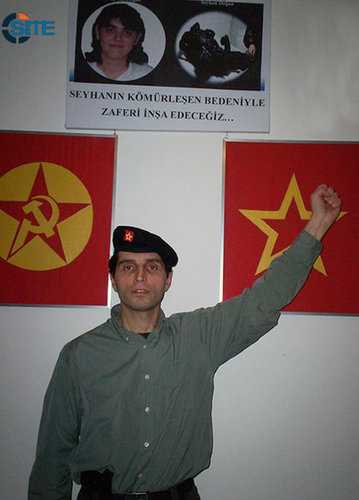
    Alisan Sanli, identified as the bomber in the embassy attack last week.

    On one wall are rows of old newspapers that chronicled through blaring headlines and grainy photographs the bloody street fighting and chaotic demonstrations that culminated in a military coup in 1980.

    “Socialist revolution can only be achieved in Turkey through armed victory,” is how one newspaper of the time described the aims of a radical left-wing group that promised to use “revolutionary terror” and “urban chaos” to realize Marxist rule.

    That bloody past burst violently into the present with last week’s suicide bombing of the American Embassy in the Turkish capital, Ankara. Initially assumed by many to be the work of Islamic extremists, the attack was quickly traced by the authorities to a man who sneaked into the country by boat from a Greek island in the Aegean Sea and was linked to a homegrown left-wing extremist group whose roots lie in the tumult of the ’70s.

    As such, the bombing — even though it struck an American target and was motivated in part by American policy in the Middle East — revealed more about modern Turkey, its violent past and potential for instability than it did about the United States’ campaign against terrorism.

    “This was no Benghazi,” wrote Ross Wilson, a former American ambassador to Turkey, in an online column for the Atlantic Council, referring to last year’s attack by Islamic extremists on a diplomatic outpost in Libya that resulted in the death of the American ambassador and three others.

    For Turkey, the attack was an unpleasant reminder that despite a decade of reforms under the current ruling party, which is rooted in political Islam and headed by Prime Minister Recep Tayyip Erdogan, Turkey has yet to fully emerge from its dark past. Coming at a time when Turkey, with its prosperous economy and political stability, is trying to present itself as a model for countries convulsed by the Arab Spring revolutions, the attack served for many Turks as a reminder of the work left to put their own house in order.

    “I think what people have forgotten, because of what happened here in the last 10 years, was how violent Turkish politics used to be,” said Gerald Knaus, of the European Stability Initiative, a policy research organization based in Istanbul. “In the last 10 years Turkey tried to emerge from this period of political violence and confront the skeletons in its closet. But we’ve forgotten how many skeletons there were.”

    The attack also underscored how Turkey’s rulers sometimes use those skeletons to justify a growing crackdown on dissent, particularly with a campaign against the news media that has Turkey as the world’s leading jailer of journalists — more even than China or Iran.

    “If the activist who blew himself up today had possessed a press card, they would have called him a journalist,” Mr. Erdogan said in comments broadcast on Turkish television shortly after the bombing last week that were immediately condemned by the advocacy group Reporters Without Borders.

    Before the attack, Turkish security forces rounded up nearly 100 people accused of ties to the outlawed Revolutionary People’s Liberation Front, the organization the perpetrator belonged to, among them journalists, lawyers, even members of a rock band. The arrests were condemned by human rights groups as another example of Turkey’s broad use of antiterrorism laws to crack down on domestic opponents, particularly journalists and human rights lawyers, with no links to violent activities.

    “Turkey’s overbroad antiterrorism laws have been used against an ever-widening circle of people charged for nonviolent political activities and the legitimate exercise of freedom of expression, association and assembly,” Human Rights Watch wrote in a report condemning many of the arrests.

    Efkan Bolac, a member of the Contemporary Lawyers Association, was detained in that roundup but was released for lack of evidence.

    “A lawyer doesn’t become a rapist if he represents one, or a drug dealer if he represents one,” Mr. Bolac said. “They claim we are members of a terror group, but how is that possible when we spend our entire time at courthouses?”

    This week the American ambassador to Turkey, Francis J. Ricciardone Jr., said the F.B.I. was investigating the attack and suggested that the Justice Department might prosecute the group that carried out the bombing.

    Yet the attack seemed out of another time and carried a whiff of cold-war-era intrigue, when links between the C.I.A. and Turkey were central to efforts by the United States to counter Soviet influence in the region. It also upended the conventional narrative about modern terrorism. “You’d think 10 years after the war on terror things would be clearer rather than more obfuscated,” said Bruce Hoffman, a terrorism expert at Georgetown University.

    In his column in The Hurriyet Daily News, Nihat Ali Ozcan, a security specialist at the Economic Policy Research Foundation in Ankara, likened the attack to a “cold-war-style proxy war” that he speculated was the work of Syria, given the historical links between the group and Syrian intelligence. His observation was reminiscent of the paranoia of a bygone era. At one of the art galleries here, newspapers chronicled the 1977 May Day celebration in Istanbul, when leftist groups gathered for a demonstration that turned bloody.

    “This attack is a provocation that links all the way to the C.I.A.,” one headline shrieked.

    Sebnem Arsu contributed reporting.

    A version of this article appeared in print on February 9, 2013, on page A4 of the New York edition with the headline: A Look at Turkey’s Past Gives Some Insight Into Its Unresolved Troubles.
  • US-Turkey tensions escalate over Washington’s criticism of Ankara

    US-Turkey tensions escalate over Washington’s criticism of Ankara

    kaffash20130208093649897

    US Ambassador to Turkey Francis Ricciardone

    Tensions between the United States and Turkey have flared up as Washington says its ambassador to Ankara declared nothing new in his recent critical comments leveled against the Turkish judiciary system.

    “This is nothing new from our point of view. We have always been very clear on these issues before the public and during private meetings,” said US State Department spokeswoman Victoria Nuland during her daily press briefing on Thursday.

    The report was published by the Turkish daily Hurriyet on Friday.

    “Ambassador Ricciardone only repeated what [former] Secretary of State Clinton has already said, and I am sure that Secretary of State John Kerry will say the same things when he has the opportunity to speak in public on these issues,” Nuland added.

    On February 5, Ricciardone criticized Turkey’s judiciary for “lengthy pre-trial detentions, lack of clarity in presenting charges,” and “lack of transparency.”

    The US ambassador had also denounced Ankara over jailing the country’s military leaders and parliament members “sometimes on unclear charges.”

    On Thursday, Turkish Deputy Prime Minister Bekir Bozdag told Ricciardone to stop interfering with the country’s judiciary system, saying ambassadors “should stay away from assessments that mean interference in Turkey’s judiciary and domestic affairs.”

    According to diplomatic sources, Turkish Foreign Ministry Undersecretary Feridun Sinirlioglu has also expressed Ankara’s discontent with Ricciardone’s remarks during a recent meeting with the US envoy.

    A diplomatic official said after the meeting, “We have conveyed our unease with his statements. This is unacceptable, we told him. And we also expressed that this should not happen again.”

    Meanwhile, it was also reported that Ricciardone has sent a letter to Huseyin Celik, number two of the Turkish Justice and Development Party (AKP), to offer an apology for his remarks. However, the US embassy has denied the report.

    MKA/HSN

    via PressTV – US-Turkey tensions escalate over Washington’s criticism of Ankara.

  • Rapporteur says renewed agreement on Turkey’s EU bid needed

    Rapporteur says renewed agreement on Turkey’s EU bid needed

    PanARMENIAN.Net – Ria Oomen-Ruijten, the European Parliament rapporteur on Turkey, has said a renewed mutual agreement in the context of Turkey’s EU accession process is needed to maintain a constructive relationship, commenting on a recent statement by Turkish Prime Minister Recep Tayyip Erdoğan that the EU’s stance on Turkey is “disrespectful”, Today’s Zaman reports.

    144955Speaking about Turkey’s EU process last week during a trip to Central Europe, Erdoğan said Turkey was continuing to fulfill its obligations rising out of EU membership negotiations. However, he noted that Turkey’s membership process began in 1959 – with the European Economic Community – and was accelerated in 1963.

    “And we have been patient all this time. How far we have come? When you look, there is the customs union [1996] and the Helsinki summit [1999, when Turkey was given candidate status] and the official start of Turkey’s negotiations. We can call these three important steps. Except for these three, they have only stalled. Has any other country been treated like this? No. This is in essence disrespect to Turkey. What is more natural than us expressing this situation?” Erdoğan said, adding that being an EU reject is not the end of the world.

    In comments to Today’s Zaman on Erdoğan’s remarks, Oomen-Ruijten said Turkey needs to step up its efforts in the reform process, while the EU needs to make renewed efforts for the opening of negotiation chapters.

    “There appears to be frustration in Turkey about the lack of progress in the accession negotiations. I believe that to maintain a constructive relationship, renewed mutual engagement in the context of the negotiation process is needed. Mutual engagement means efforts from both Turkey and the EU. Turkey needs to step up its efforts in the reform process, while the EU needs to make renewed efforts for the opening of negotiation chapters. The interdependence between Turkey and the EU can lead to positive results, but only in a context of mutual commitment,” Oomen-Ruijten stated.

    via Rapporteur says renewed agreement on Turkey’s EU bid needed – PanARMENIAN.Net.