Category: Regions

  • Young activists march to protest attacks on Armenians in Istanbul

    Young activists march to protest attacks on Armenians in Istanbul

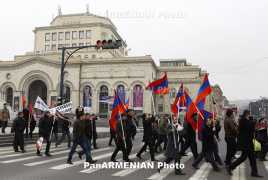
    PanARMENIAN.Net – Members of Young Diplomats Club NGO and Nikol Aghbalyan Student Union marched to the UN office in Yerevan to pass a letter protecting against the attacks on Armenians in Istanbul.

    145215The activists further urged Armenian public, NGOs, youth organizations to unite in protest against discrimination of Armenians in Turkey.
    As one of the activists told a PanARMENIAN.Net reporter, the rally urges international organizations against showing the same indifference as was demonstrated during the Armenian Genocide.

    On Dec 28, an 85-year-old Armenian woman was repeatedly stabbed and killed in her home, with assailants carving a cross on her chest. On Jan 6, three assailants tried to kidnap an elderly Armenian woman. Other attacks include the Nov 2012 beating of an 87-year-old Armenian woman, and a failed attempt to abduct an elderly Armenian woman on Jan 6. Three elderly Armenian women were attacked in Istanbul on Jan 22, 23 and 25.

    via Young activists march to protest attacks on Armenians in Istanbul – PanARMENIAN.Net.

  • Turkey’s Rapidly Changing Landscape Photographed by George Georgiou

    Turkey’s Rapidly Changing Landscape Photographed by George Georgiou

    Turkey’s Rapidly Changing Landscape Photographed by George Georgiou

    by Alison Zavos on February 11, 2013 · 0 comments

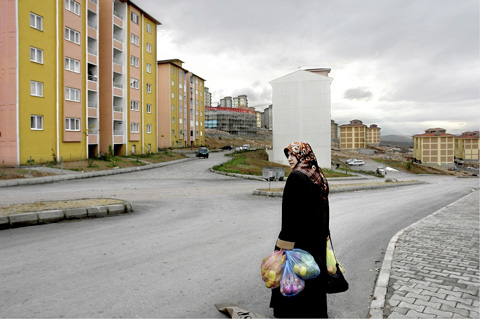
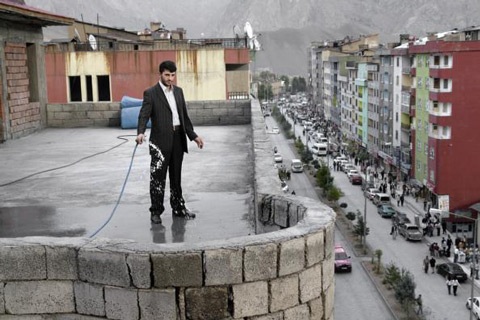
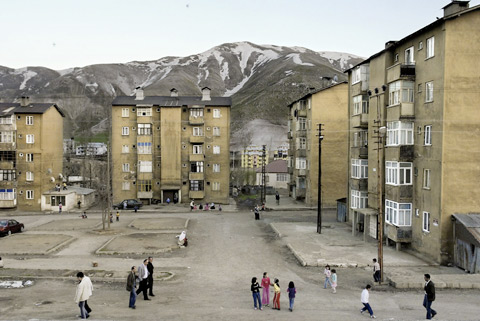
    Turkey is a strategically important nation, poised geographically and symbolically between Europe and Asia. But the tensions at the heart of Turkey are becoming increasingly severe. A struggle is taking place between modernity and tradition, secularism and Islamism, democracy and repression—often in unlikely and contradictory combinations.

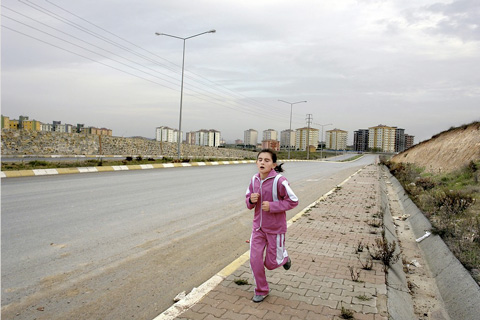
    My work seeks to address and question the concept of East and West and the process of modernization, urbanization, and national identity that is happening against a rising tide of nationalism and religion. I have chosen to represent the changes by focusing on the quiet everyday life that most people in Turkey experience.—George Georgiou

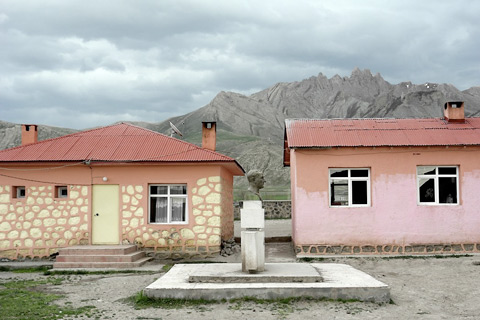
    British photographer George Georgiou lived in Turkey for four and a half years, witnessing the rapid changes taking place in landscape, cities, town centers, housing, and infrastructure. He discovered that many Turkish cities were becoming carbon copies of each other. Fault Lines: Turkey/East/West opens at Jackson Fine Art in Atlanta on February 22, 2013.

    GEORGEGEORGIOU_10

  • Erdogan: “The Image of the Jews Is No Different from that of the Nazis”

    Erdogan: “The Image of the Jews Is No Different from that of the Nazis”

    by Samuel Westrop

    February 11, 2013 at 5:00 am

    Now that we know that Turkey’s Prime Minister, Recep Tayyip Erdogan, uttered anti-Semitic comments similar to those made by Egypt’s President Mohamed Morsi, will the media do its best to avoid reporting those, too?

    In November 1998, the Institute for Jewish Policy Research released its annual report on current trends in anti-Semitism across the world. In the section for Turkey, the journal quoted the then-mayor of Istanbul, Recep Tayyip Erdogan, in June 1997, at a meeting organized by the municipality to celebrate the city’s conquest by the Ottoman Turks, remarking: “The Jews have begun to crush the Muslims of Palestine, in the name of Zionism,” the mayor said, “Today, the image of the Jews is no different from that of the Nazis.”

    Erdogan later became, and still is, the Prime Minister of Turkey, a man whom President Obama describes as a personal friend, in a country that is a member of NATO, and head of a government that is regarded as moderate, and, as the London Times recently reflected, an example of how Islamism and democracy do not have to be mutually exclusive.

    Birikim, a Turkish socialist culture magazine, also attributes the quote to Erdogan. A search through Western newspaper records, however, shows no mention at all of these comments.

    That remark is not the only example of Erdogan’s hostility in this regard. Turkish newspaper Yeni Safak has reported Erdogan commenting that the media does not fully report Israel’s “murder of innocent children” because the “world’s media is under the control of Israel, and this needs to be emphasised.”

    In 2009 another Turkish newspaper, Taraf, reported that Erdogan, while attending the opening of a university, stated, “wherever Jews settle, they make money. They are not property owners, as being tenants suits them best. On the other hand, whatever we have or do not have, we will invest in our houses.”

    In early January, when the Middle East Media Research Institute (MEMRI) produced a video of Morsi describing Zionists as “the descendants of apes and pigs,” it took almost two weeks and a barrage of criticism for a leading newspaper, the New York Times, finally to report the comments. The eventual action led to worldwide denunciation of Morsi’s remarks and even a condemnatory statement from the White House. Now that we know that Erdogan, Prime Minister of a country considered to be a leading ally of the West, made comments similar to Morsi’s, will the media do its best to avoid reporting those, too?

    via Erdogan: “The Image of the Jews Is No Different from that of the Nazis” :: Gatestone Institute.

  • Foreign Residential Property: Turkey or Montenegro?

    Foreign Residential Property: Turkey or Montenegro?

    Business And Politics News

    Foreign Residential Property: Turkey or Montenegro?

    09 February 05:04 PM

    turkeyu_1309296707

    These days more and more investors tend to investors in foreign residential property. Wealthy people purchase apartments, villas and townhouses in Spain , Great Britain, Switzerland etc.

    At the same time, those people who cannot afford to buy expensive homes, strive to invest in the residential property of other countries. Turkey and Montenegro are especially popular with them.

    Turkey and Montenegro

    Most foreign investors know little about those countries and their housing markets. The key fact is that both the countries are tourist centers with high-quality services and relatively low prices.

    Montenegro has an outlet to the Adriatic sea, which is colder but much cleaner than the Mediterranean and Black seas. Montenegro offers tourists a wide range of leisure opportunities from sunbathing on the beach and swimming in the sea to skiing and snowboarding in the mountains. Beautiful nature, fresh air low prices and high-quality services make Montenegro a perfect place for vacation. Loyal legislation is another factor speaking in favor of investing in Montenegro .

    However, there is a certain percent of uncertified residential property left after the disintegration of Yugoslavia.

    As for Turkey, there are no such legal issues. Turkey can boast a well-developed and efficient cadastral system. The local legislation defends an individual’s right if he/she has a TAPU – the certificate of property rights. Moreover, it is impossible to purchase residential property in Turkey without the Turkish Ministry of Defense as there are special zones in Turkey where property sales contradict the country’s military doctrine.

    It should be noted that most foreign investors buy Turkish property to make profits. The local housing market grows by 10% a year on average, which means you can make decent profits as the market is still undervalued.

    On the other hand, the territory of Turkey is relatively big. So, it is necessary to examine closely the current situation in the local housing market of any region where you want to purchase residential property. The closer the area is to the borders with Syria, Iraq or Iran and the farther it is from the sea, the lower the housing prices in this area are.

    Turkey, Antalya. An apartment – €70 000, 75 square meters — (€933 /m²). 100 meters to the sea.

    Montenegro is another story. Its territory is relatively small. However, the transportation and tourist infrastructure is highly developed and is being improved.

    However, there are problems with constructing new buildings in coastal areas. So, it is better to purchase ready-made housing units or those that are under construction.

    Montenegro , Бар, Dobra Voda. A villa – €250 000. 170 square meters.

    Expenses

    When buying residential property in Montenegro , you will have to pay a 3% budget tax and an annual maintenance tax – form 0.08% to 0.8%. In turkey, you will have to pay a 4% tax plus 0.01% a year per maintenance.

    Obviously, the cost of a certain housing unit depends on several factors, including the location, living space, infrastructure and others. A square meter of residential property in Montenegro and turkey starts from €500. However, the cost of most housing units available for sale is within the range of €1.500-€3.500 per square meter.

    Experts recommend buying residential property in Montenegro if you want to lead a calm and slow-paced lifestyle. However, if you are planning to purchase foreign residential property for investment or commercial purposes, Turkey is a better option.

    You are free to discuss this article here: forum for traders and investors

    via Market Leader : News :: Foreign Residential Property: Turkey or Montenegro?.

  • Turkey: Land where climates, people and cultures meet

    Turkey: Land where climates, people and cultures meet

    Sunday, February 10, 2013 – Islamabad —Viewing Turkey through the lens of Erkut Onart was pleasantly refreshing for many as the photographs reflected a Turkey, culturally rich and diverse. Erkut Onart’s photography exhibition titled “Turkey: the land where climates, people and cultures meet” that opened here at Satrang Gallery was attended by art enthusiast and diplomats. Mr. Onart himself, H.E Babur Hizlan, Ambassador of Turkey, and Faisal Karim Kundi, Deputy Speaker of National Assembly were the chief guests at the occasion. The exhibition is first of the events as part of the cultural activities between Pakistan and Turkey. “2013-2014 would be celebrated as the Cultural Years of Turkey in Pakistan and Pakistan in Turkey to strengthen the ties of the two countries” said the Turkish Ambassador, Babur Hizlan. Faisal Kundi hoped that Pakistani artists would also go to Turkey under the cultural exchange program.

    The vibrant photographs, portraying places, people, architecture and landscapes of Turkey, depicted a rich culture full of diversity. “Mr. Onart has truly captured the beauty and spirit of the people and places of Turkey,” said Asma Khan, director of the Gallery. Every photograph allows a glance into nature, ambiance, people and places of different cultures. “Each photo reflects a different region of Turkey and is a great opportunity for Pakistanis to learn about the country” remarked Madame Hizlan.

    The exhibition reflects the diversity and richness of the Turkish culture. “It is refreshing and different from what we generally see in Turkish dramas on our (Pakistani) channels” said Ahsan Akhtar, a visitor, who was impressed enough to plan a visit to Turkey.

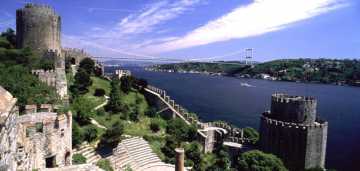
    Places of Istanbul are the highlight of the exhibition but the photographer has brought out other striking places as well such as the city of Bursa and Konya, city of Rumi and the Whirling Dervishes. Photographs of the Blue Mosque, the prestigious landmark of Istanbul; photo Dolmabahce Palace, in all its glory, stood tall among other photos on display.

    via Turkey: Land where climates, people and cultures meet.

  • Syria crisis: ‘Powerful’ minibus explosion kills 13

    Syria crisis: ‘Powerful’ minibus explosion kills 13

    _65831124_crossinggetty

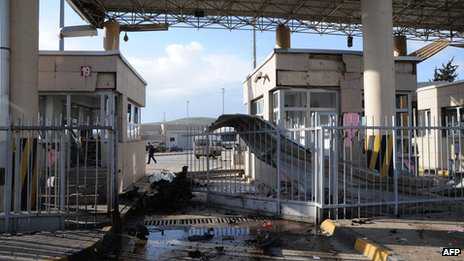
    The blast happened near the Cilvegozu border post, one of the main crossing points for Syrian refugees into Turkey

    A minibus exploded on the Syria-Turkey border, killing at least 10 Syrians and three Turkish nationals, Turkish officials have said.

    It is not yet known what caused the blast, which wounded dozens more.

    Meanwhile, rebels have reportedly seized control of Syria’s largest hydro-electric dam, in what would be a strategic loss to the government.

    Activists and opposition groups said fighters were guarding the dam’s entrances and exits in Raqa province.

    Reports said the dam on the Euphrates River in the country’s north was still operational.

    Syrian President Bashar al-Assad reiterated on Monday that he would not step down, “no matter how pressures are building up”, state-run Sana news agency reports.

    “Syria will remain the beating heart of the Arab world and will not give up its principles despite the intensifying pressure and diversifying plots not only targeting Syria, but all Arabs,” he is quoted as saying by Sana.

    Scene of clashes

    Monday’s explosion happened in the area of the Cilvegozu customs post on the Turkish side of the border, in the southern province of Hatay.

    It is one of the main crossing points for Syrian refugees into Turkey.

    The Syrian-registered minibus blew up only metres away from the Turkish border gate, where scores of civilians and humanitarian workers were congregated, Turkish deputy prime minister Bulent Arinc said.

    “It was a powerful explosion. But whether this was a vehicle laden with explosives or another type of explosion, I think, at the latest, will become clear tomorrow,” he said.

    “All possibilities are on the table, including political motives.”

    Turkey’s interior, justice and customs ministers were due to fly to the area to be briefed on the incident.

    The crossing, which lies opposite the Syrian border post of Bab al-Hawa, has been the scene of clashes in recent months. Rebels fighting to overthrow Syrian President Bashar al-Assad captured Bab al-Hawa in July.

    The latest incident comes after continued violence across the country left some 77 people dead on Sunday, AFP news agency quoted opposition activists as saying.

    The Local Coordination Committees said clashes had broken out in the al-Afif neighbourhood of Damascus, near the the presidential complex.

    Information from inside Syria is almost impossible to verify because of the heavy restrictions placed on international journalists there.

    The fighting in Syria has killed at least 60,000 people, the UN says.

    Dam ‘taken’

    The Syrian Observatory for Human Rights, a UK-based activists group, said Islamist fighters now controlled the Tabqa dam. The facility provides much of the electricity to the city of Aleppo.

    Rebels launched an offensive in Aleppo in July, but since then the city has been divided between fighters and government forces, with neither side apparently able to push the other out.

    “The rebels took control of the dam, which is still in operation. They are guarding both entrances but have forbidden the fighters from staying inside for fear the regime will bomb it,” SOHR director Rami Abdel Rahman told AFP.

    The SOHR said Islamist fighters also took over three districts in the neighbouring town of Tabqa, where employees of the dam and their families live.

    The SOHR is one of the most prominent organisations documenting and reporting incidents and casualties in the Syrian conflict. The group says its reports are impartial, though its information cannot be independently verified.

    Moaz al-Khatib (file photo) Moaz al-Khatib’s offer of talks was criticised within his own movement

    ‘A Syrian opposition leader meanwhile has criticised the government for not taking up his offer of peace talks.

    Moaz al-Khatib, of the Syrian National Coalition, said the regime’s response sent a “very negative” message to the world.

    In a statement on his Facebook page, Mr Khatib said the government had “lost a chance to engage in a dialogue” to end the two-year conflict.

    Last month, Mr Khatib said the Syrian National Coalition – an alliance of opposition groups – would meet Syrian officials, so long as Syria freed 160,000 political prisoners.

    His overture, which has the backing of the US, was criticised by many of his coalition colleagues, who reject discussions while President Assad and his inner circle remain in power.

    On Friday, Syrian Information Minister Omran al-Zohbi said the government was prepared to hold talks with the opposition without preconditions.

    “We are serious about the question of dialogue,” Mr Zohbi said on state television. [But] When you speak of dialogue, it means dialogue without conditions, which excludes no-one.”

    via BBC News – Syria crisis: ‘Powerful’ minibus explosion kills 13.