Category: Regions

  • School curriculum slimmed down

    School curriculum slimmed down

    İngiltere’de “Evrim Teorisi” ilkokullarda okutulacak

    By Angela Harrison Education correspondent, BBC News

    State-funded schools have to follow the national curriculum
    State-funded schools have to follow the national curriculum

    The government has published its plans to slim down the national curriculum followed by primary and secondary schools in England.

    Foreign languages will be compulsory for older primary school children.

    And computing will replace the more general information and communication technology (ICT) subject, as expected.

    The new curriculum sets out detailed “essential knowledge” expected for core subjects of English, maths and science from children aged from four to 16.

    But schools are to have more freedom in what they teach on other subjects, so there is less detail on those.

    The new courses for children up to the age of 14 are due to come in from autumn next year. GCSE-level changes are due to come in a year later, tied in with changes to GCSEs for some subjects.

    The curriculum has to be followed by state-funded schools that are not academies.

    More and more schools – especially secondaries – have become academies. These are free to set their own curriculum, although the government says the national framework it is setting out can be a guide for them.

    The new draft proposals for the curriculum say all state-funded schools must provide an education that is “balanced and broadly based and which promotes the spiritual, moral, cultural, mental and physical development of pupils at the school and of society, and prepares pupils at the school for the opportunities, responsibilities and experiences of later life”.

    All schools have to publish their curriculum online.

    ‘British progress’

    The government says the new curriculum will promote more rigour in mathematics, where there will be a greater emphasis on arithmetic, while scientific programmes will be “more ambitious” with a stronger focus on scientific knowledge.

    For the first time, primary school children will have to taught about evolution.

    In English, officials say the curriculum should “embody higher standards of literacy” and have a new emphasis on the great works of literature.

    Another aim is “to develop their [children’s] love of literature through reading for enjoyment” and to help them “appreciate our rich and varied literary heritage”.

    As expected, there is also an aim to help children learn confidence in public speaking and debate.

    In history, children should be given a clear “narrative of British progress” with an emphasis of heroes and heroines of the past, the proposals say.

    As expected, children will learn a complete history of Britain under the new curriculum.

    The youngest children, as today, will be taught about key historical figures and from seven, youngsters will be expected to learn a detailed chronological history of Britain, from the Stone Age through to the end of the Cold War and the fall of the Berlin Wall.

    In geography, there will be a focus on using maps and learning key geographical features – from capital cities to the world’s great rivers.

    Computing replaces ICT and this will include online safety and programming.

    The plans for children from four to 14 are out for consultation and a further consultation on GCSE-level changes will follow later.

    via BBC News – School curriculum slimmed down.
  • Frustrated Turkey still wants EU entry, but maybe not euro

    Frustrated Turkey still wants EU entry, but maybe not euro

    By Mohammed Abbas

    LONDON | Wed Feb 13, 2013 2:14pm EST

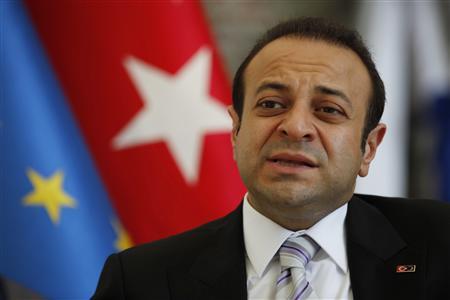
    Turkey's EU Affairs Minister Bagis talks during an interview with Reuters in Istanbul

    (Reuters) – Turkey is committed to joining the European Union despite mounting frustration over decades of talks on the issue, but has little appetite for adopting the euro currency, a senior Turkish official said on Wednesday.

    In a speech in London, Turkey’s chief negotiator on EU accession said it was time the EU made up its mind on whether Turkey can join the 27-member bloc, and said it should be allowed in even if some countries object.

    Talks on Turkish integration into Europe originally began in 1963, but the intractable dispute over the divided island of Cyprus – an EU member that Turkey does not recognize – have blocked talks on several policy issues candidate states must conclude before entry.

    “We want to be in the EU, but the EU has to make a decision. The decision to start the negotiation process with Turkey was a unanimous decision, and only a unanimous decision can put an end to this process,” Egemen Bagis, EU affairs minister and senior member of the ruling Justice and Development (AK) Party, said.

    “If there’s one principle of the EU I would like to criticize it’s the unanimity principle … One single member country, the Greek Cypriots, can block the opening of the energy chapter,” he said, accusing Cyprus of holding the EU “hostage”.

    The island was split in a Turkish invasion in 1974 triggered by a brief Greek-inspired coup.

    Turkish Prime Minster Tayyip Erdogan has said the delay was “unforgivable”, warning that the EU would lose Turkey, a mostly Muslim and largely conservative country, if it was not granted membership by 2023.

    Enthusiasm among the Turkish public for EU membership is waning given the bloc’s economic woes, particularly the sovereign debt crisis hitting some members of the currency union, but Bagis was confident any referendum would pass.

    “If there was a vote today I could easily get a yes vote … on membership of the EU, but I’m not so sure about joining the euro zone,” Bagis said.

    GROWING INFLUENCE

    That could pose problems for accession given that joining the euro zone single currency bloc is a condition for entry.

    However, Bagis said economic circumstances and opposition to the euro and could change by the time accession is agreed.

    Formal talks to join the EU have stalled since they were launched in 2005, and Turkey has completed only one of the 35 chapters need for entry.

    On Tuesday, France said it was ready to unblock membership talks on one of the chapters, in contrast to its position under former President Nicolas Sarkozy, who said Turkey did not form part of Europe.

    Bagis said France’s change of heart was “better late than never”, and lambasted “narrow minded” politicians who have objected to accession, citing discrimination and Islamophobia.

    Some EU countries express concern about Turkey’s handling of human rights, freedom of expression and treatment of minorities. Turkey says it is addressing those concerns, and on Wednesday drafted changes to its penal code [ID:nL5N0BD3D9].

    Bagis dismissed concerns about mass Turkish emigration to other EU countries after accession, saying that Turkey’s growing economic clout meant that it instead was at risk from immigration from other EU states.

    “Of course, every nation has their pride. So does mine. And no country has been kept in the waiting room for 54 years. Sometimes our reactions might seem emotional, but believe me if anyone else was in our shoes …,” he said, referring to when Turkey applied for association with the then European Economic Community.

    Turkey, a long-time NATO member, has seen its diplomatic influence rise alongside its economic prosperity. The Islamist-rooted AK Party says Turkey has jumped to 16th largest economy in the world from 26th since it came to power in 2002.

    Turkey’s stock is particularly high in the Middle East, where it is seen as a model for a prosperous Islamic democracy, and has won admiration for its tough stance on Israel.

    Bagis touted Turkey’s sway in the Middle East as a major boon for Europe should it be allowed to join the EU.

    “The EU is the grandest peace project in the history of mankind … Turkey, being the most eastern part of the West, and the most Western part of the East, can turn this continental project into a global peace project,” he said.

    (Editing by Alison Williams)

    via Frustrated Turkey still wants EU entry, but maybe not euro | Reuters.

  • Turkey builds closer oil links with Kurds, angering US

    Turkey builds closer oil links with Kurds, angering US

    ISTANBUL // Turkey is pushing ahead with plans to extend economic cooperation with Iraq’s Kurdistan region, brushing aside warnings from the United States that this approach could lead to the disintegration of the Iraqi state.

    Related

    A Syrian rebel fires shots in the air as mourners carry the body of Mohammed Hafar, 20, during his funeral in the northern Syrian town of Azaz on October 29, 2012. Mohammed Hafar and his brother were killed during clashes between Kurdish militiamen and Free Syrian Army fighters near the village of Al-Kastal close to the border with Turkey, amid rising communal tensions. AFP PHOTO/PHILIPPE DESMAZES *** Local Caption *** 778087-01-08.jpg

    ■ Kurds talk of intervention in Syria, raising danger of escalation

    ■ Kurd-Turkish clashes feared along Syrian border

    Comment Kurdish killings in Paris will not derail Ankara-PKK peace

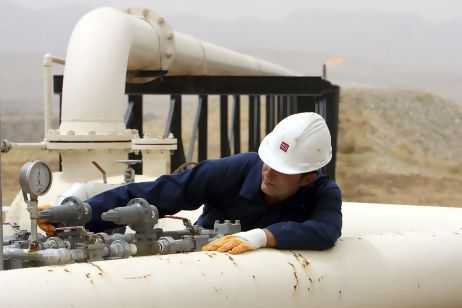
    AD20130215716463-A_worker_checks

    Iraq’s Kurdish region had become so important to Turkey, economically and politically, that Ankara was willing to risk tensions with the US, its most important ally, said Celalettin Yavuz, an analyst at a think tank in the Turkish capital.

    Taner Yildiz, Turkey’s energy minister, yesterday said that oil imports from northern Iraq to Turkey by truck had resumed after a pause of several weeks for technical reasons.

    He said Turkey was determined to sell refined-oil products to Iraqi Kurdistan, the state-run Amnadolu news agency reported.

    Oil exports from northern Iraq to Turkey have angered the central-Iraqi government. It said the trade was illegal, which Ankara denies.

    Mr Yildiz stressed that Turkey was also buying oil from southern Iraq, because doing otherwise would be “discrimination”.

    US officials are concerned that Turkey’s strained ties with Baghdad could have implications for the rest of the region.

    The Kurdish Regional Government (KRG) in northern Iraq said last week it planned to press ahead with building an oil-export pipeline to Turkey. “We want to have an oil pipeline to ourselves,” said Ashti Hawrami, the Iraqi Kurdish minister for natural resources.

    Crude from the Kurdistan region used to be shipped to world markets through a Baghdad-controlled pipeline to Turkey, but exports via that channel dried up in December, from a peak of around 200,000 barrels per day (bpd), due to a row with Baghdad over payments.

    Recep Tayyip Erdogan, the Turkish prime minister, said his country was not obliged to wait for a new agreement between the central Iraqi government and the KRG over oil exploration and export rights, even though Washington wanted Ankara to be cautious.

    “Our economic relations are getting broader, despite everything, including America,” Mr Erdogan said last week, referring to the KRG.

    Mr Erdogan, who has been careful to develop close relations with the US, freely acknowledged tensions with Washington over the issue.

    “America says: ‘What you are doing is wrong,’” Mr Erdogan said. “We are saying: ‘No, Iraq’s constitution allows it.’”

    The present constitution, drawn up after the US-led invasion in 2003, gave Iraqi Kurds the right to more than 18 per cent of the country’s oil reserves, he added.

    Mr Erdogan’s remarks followed a public warning by Francis Ricciardone, the US ambassador to Ankara. Speaking on February 5, he said a failure by Turkey and the central Iraqi government to deepen their cooperation would be dangerous for the whole region.

    “There could be more violent conflict in Iraq and the forces of disintegration within Iraq could be emboldened,” he said.

    Mr Yavuz, the deputy director of the Turkish Centre of International Relations and Strategic Analysis, said the KRG was a priority for Turkey despite US concerns.

    On the political front, Ankara was trying to secure the support of the KRG for efforts to end the Kurdish conflict in Turkey, he added.

    The Turkish intelligence service had been negotiating with Abdullah Ocalan, the jailed leader of the Kurdistan Workers’ Party, a rebel group that has been fighting Ankara since 1984.

    “The KRG is indispensable for Turkey,” Mr Yavuz said.

    That outlook collides with US interests in the region. “The USA wants to secure the Gulf and keep Iran out,” he added.

    He said Iraq was drifting towards Iran, despite the US launching the 2003 invasion that had toppled Saddam Hussein, claimed the lives of several thousand US soldiers, cost trillions of dollars and battered America’s image in the region.

    “So one may ask: why did they go into Iraq in the first place?” said Mr Tavuz. “This is what makes the US concerned. By turning away from Turkey, Iraq is turning away from the West and towards Iran.”

    About 90 per cent of Turkish exports to Iraq went to the Kurdish region, he said. KRG oil and gas could help to reduce Turkey’s dependence on energy imports from Iran and Russia.

    The oil-exports row has also heightened existing tensions between Mr Erdogan’s government and Iraq’s prime minister, Nouri Al Maliki.

    Turkey has accused Mr Al Maliki, a Shiite, of trying to centralise power in his hands, while Mr Al Maliki has said predominantly Sunni Turkey was meddling in Iraq’s internal affairs and was a “hostile state”.

    [email protected]

    * With additional reporting by Reuters

    via Turkey builds closer oil links with Kurds, angering US – The National.

  • Government Of Ghana Says Its Digging Deep Into Turkey Gold Affair

    Government Of Ghana Says Its Digging Deep Into Turkey Gold Affair

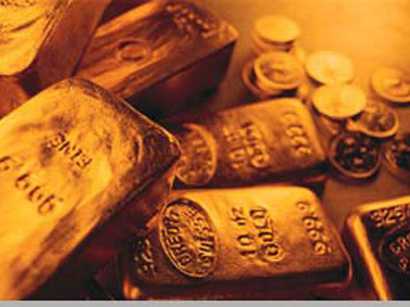
    ACCRA, Feb 8 – The government of Ghana said here Friday it was digging deeper into the seized gold bars at the Ataturk International Airport in Istanbul, Turkey, last month.

    Minister for Information and Media Relations Mahama Ayariga said in a statement the state investigative apparatus, Bureau of National Investigations (BNI), had been tasked to unravel the mystery surrounding the gold deal.

    Two Ghanaians, Peter Bedzrah and Fredrick Kojo Essumang, the statement said, had been operating under the corporate identity of “Omanye Gold Mining Ltd” from a house at Tanta Hill, a suburb of the capital, without visible signs of a corporate entity.

    The statement said the two, said to have been involved in the transaction to supply gold to one Vahid Moradi Moghaddam, were still being interrogated.

    The statement continued that a ULS cargo aircraft (Airbus 300-B4) arrived at the Kotoka International Airport (KIA) from Tripoli, Libya, and filled a Landing Clearance Request form indicating it was to lift gold bars as its cargo.

    It said the aircraft was handled by Menzies Airline Handling Services from touchdown to departure.

    “The cargo departed Accra on 31st December 2012 with the goods which were destined for Dubai but was detained in Ataturk International Airport in Istanbul on 1st January, 2013, because of claims of questionable documentation,” the statement added.

    It explained that the consignment had arrived at the KIA for pre-export formalities under two certificates for ‘mineral samples’ and ‘laboratory analysis only and of no commercial value’.

    One Thomas Adu signed both forms for the Director of Geological Survey, one dated 31st December 2012, and the other dated 7th January 2013.

    The said mineral samples were consigned to an address in Dubai in the United Arab Emirates (UAE), said the statement.

    It said while one Isaac Anakwa Asante, Head of Operations of Menzies who inspected the cargo before scanning by Nick TC-Scan reported sighting gold bars, the exporter, Kofi Bedzrah of Omanye Gold Mining Ltd, insisted his company exported gold bars of 1.5 tons with a value of 62,000,000 dollars.

    “However, the Customs Division of the Ghana Revenue Authority (CD/GRA) Instructions for the Dispatch of Goods (IDG) form entered the goods as ‘mineral samples’. The pre-departure formalities were endorsed by Kwesi Avemee, a collector of CD/GRA, and Albert Kan Dapaah, a Narcotics Control Board (NACOB) official.

    “While mineral samples do not attract tax liability, it was found unusual to have mineral samples shipped in such tonnage,” the statement stated.

    Sections of the media reported last month the detention of an aircraft in Istanbul allegedly carrying 1.5 tons of gold originating in Ghana and destined for the Islamic Republic of Iran.

    There was speculation in the local media that the said shipment was payment by Ghana in respect of some financial transaction with the Islamic Republic of Iran.

    Government however distanced itself from the said transaction. Enditem.

    Source: Justice Lee Adoboe

    via Government Of Ghana Says Its Digging Deep Into Turkey Gold Affair.

  • Turkey seeks more air connectivity with India to boost tourism, trade

    Turkey seeks more air connectivity with India to boost tourism, trade

    NEW DELHI: Turkey today said it wants to double the number of flights from Delhi and Mumbai connecting the country to boost tourism and enhance trade and investments relations.

    “We want to double the frequency of flights from Delhi and Mumbai. We also want to start flights to more Indian destinations. It will help in boosting tourism sector in both the countries,” Ambassador of Turkey to India Burak Akcapar said here at a CII function.

    At present, a total of seven flights from Mumbai and Delhi connect India to Turkey.

    “We have completed all the procedures from our side (to increase flight frequency). Now the ball is in India’s court,” he added.

    Akcapar emphasised on the need to increase awareness among the business community of both the countries to enhance trade and investments relations.

    He said that the bilateral trade between the countries reflects that a lot needs to be done to increase two-way commerce as India is lagging behind several of its peers including China and several African nations.

    “Trade figure is very low. India lags behind in the way it represents in Turkey. It lags behind China, Africa and its peers in the world,” he said.

    The bilateral trade stood at USD 4.5 billion in 2011-12. The Ambassador said that huge opportunities exists in Turkey for Indian business community in sectors like infrastructure, IT and automobile.

    He also emphasised to increase cultural cooperation between the countries and urged the Indian Prime Minister to visit Turkey.

    Major imports from Turkey comprise minerals, fertilisers, nuclear reactors and machinery, while exports include pharma, manmade yarn and electronic goods.

    via Turkey seeks more air connectivity with India to boost tourism, trade – The Economic Times.

  • Israel to allow Turkey to build Gaza hospital

    Israel to allow Turkey to build Gaza hospital

    ‘Israel to allow Turkey to build Gaza hospital’

    By JPOST.COM STAFF

    02/11/2013 20:05

    Turkish daily reports J’lem permits entry of construction materials as part of easing of blockade agreed, gesture to Turks.

    is

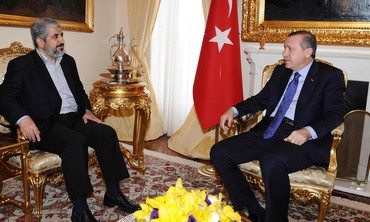
    Mashaal and Erdogan meet in Ankara

    Mashaal and Erdogan meet in Ankara Photo: REUTERS

    Israel has authorized Turkey to transport construction materials into the Gaza Strip in order to build a Turkish-funded hospital in the coastal territory, Turkish daily Hurriyet reported on Monday.

    According to the report, the hospital will be inaugurated within a year’s time, and the ceremony will be attended by Turkish Prime Minister Recep Tayyip Erdogan.

    Related:

    Official: Turkish tirades reveal ‘brazen hypocrisy’

    ‘Turkey hurting NATO by undermining Israel ties’

    The Israeli government gave the authorization earlier this month after studying a list of materials the Turks were asking to import to Gaza. Hurriyet stated that Israel gave permission to transport the construction materials to Gaza as a gesture of goodwill toward Turkey.

    Turkey has long opposed Israel’s naval blockade of the Gaza Strip and relations between the countries deteriorated in the aftermath of the IDF’s raid of the Gaza-bound Mavi Marmara vessel in May 2010, in which nine Turkish pro-Palestinian activists were killed.

    The hospital is slated to contain 150 beds, making it Gaza’s biggest hospital, Hurriyet reported.

    In addition to serving as a goodwill gesture to Ankara, the Israeli move was also described by Hurriyet as part of Israel’s softening of the Gaza blockade in the aftermath of Operation Pillar of Defense.

    Turkey has called for the lifting of the Gaza blockade, as well as an apology to Turkey for the Mavi Marmara raid and compensation for the families of those killed, as conditions to normalize relations between the countries.

    Hurriyet quoted diplomatic sources in Ankara as saying the January 22 Knesset election in Israel could provide a new opportunity to pacify relations between the countries.

    “Although I do not want to seem too optimistic over reconciliation between the two countries, I see a window of opportunity in light of the election results,” the sources told Hurriyet.

    via ‘Israel to allow Turkey to build … JPost – Diplomacy & Politics.