Category: Regions

  • Appeal to Turkish Justice Minister to end trial of God-denying pianist

    Appeal to Turkish Justice Minister to end trial of God-denying pianist

    Appeal to Turkish Justice Minister to end trial of God-denying pianist

    fazilFebruary 17, 2013 by Norman Lebrecht

    Fazil Say is due back in court tomorrow to face charges of religious defamation – blasphemy, in other words – for avowing his right to be an atheist on Twitter. The following letter has been posted tonight by British musicians and writers:

    Minister of Justice
    06669 Kizil
    Ankara
    Turkey

    17 February 2013

    Dear Minister

    We are joining with English PEN to protest the charges against our fellow composer, musician and writer Fazıl Say.

    On 18 February 2013, celebrated pianist, composer and writer Fazıl Say will appear in court for the second time for comments posted on the social networking service Twitter.

    Say has been charged with religious defamation under Article 216/3 of the Turkish Penal Code in response to a series of messages posted on Twitter, including one which simply states ‘I am an atheist and I am proud to be able to say this so comfortably’. He has also been charged under Article 218 of the Turkish Penal Code, which increases sentences by half for offences committed ‘via press or broadcast’. Say denies the charges.

    The charges are in violation of Say’s right to freedom of expression, as guaranteed by the International Covenant on Civil and Political Rights (ICCPR) to which Turkey is a signatory. Even those who are usually critical of Say have voiced concerns over this case, which they believe could be damaging to Turkey’s international reputation.

    Say first appeared in court in Istanbul on 18 October 2012, where his lawyers demanded his immediate acquittal. The acquittal call was rejected and the case adjourned until 18 February 2013. He faces up to 18 months in prison if found guilty.

    Fazıl Say is gravely concerned about the negative impact a prison sentence would have on his career as the country’s leading classical composer and an internationally renowned pianist. Furthermore, he has suggested that he would consider moving abroad as a result of the ‘growing culture of intolerance’ in Turkey.

    As fellow composers, musicians and writers who cherish both creative freedom and the right to free expression we strongly urge you to drop all charges against Fazıl Say immediately and unconditionally.

    Yours sincerely

    Thomas Adès

    Alan Ayckbourn

    William Boyd

    Brian Eno

    Moris Farhi

    Michael Frayn

    Maureen Freely

    Roland Gift

    David Hare

    Charles Hazlewood

    Eva Hoffman

    Hanif Kureishi

    Ian McEwan

    Kamila Shamsie

    Gillian Slovo

    Ahdaf Soueif

    Salil Tripathi
  • Feast of St Paul in Istanbul

    Feast of St Paul in Istanbul

    The Catholic Bishop in Istanbul, Mgr Louis Pelatre, with Malta’s Consul General in Istanbul Reuben Gauci.

    The Consulate General of Malta in Istanbul celebrated the feast of St Paul’s Shipwreck on February 10 at the Franciscan Catholic church of St Anthony of Padua, located in Istiklal Caddesi, a famous avenue in the city of Istanbul.

    Consul General of Malta in Istanbul Reuben Gauci, accompanied by his family, attended Mass at St Anthony of Padua church, which was celebrated by the Catholic Bishop of Istanbul, Mgr Louis Pelatre.

    Mass was also attended by Maltese citizens and people of Maltese descent living in Turkey. A delegation from the AK Party, currently in government in Turkey, was also present.

    After Mass, Mr Gauci invited Beyoglu mayor Ahmet Misbah Demircan to open an exhibition on the veneration of St Paul in Malta. Mr Gauci said St Paul was born in the city of Tarsus, which today can be found in the Turkish Republic. He added that in Malta St Paul was regarded as a spiritual father of faith and that his shipwreck was celebrated with great piety.

    The director of the Franciscan Catholic church of St Anthony, Fr Iulian Pista, OFM Conv., was also among the guests.

    The exhibition will remain open for the next two weeks.

    via Feast of St Paul in Istanbul – timesofmalta.com.

  • Afghan refugees leave Iran for Turkey

    Afghan refugees leave Iran for Turkey

    ISTANBUL // A dark and damp basement of an Istanbul mosque is home to about 30 people who have nowhere else to go, victims of a new and largely unnoticed refugee crisis in Turkey.

    AD20130217459527-1-Sajjad_Ramizani

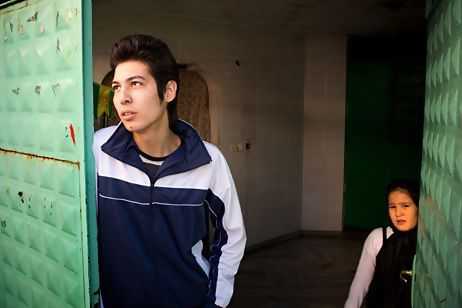
    Most of the inhabitants of the basement, which used to serve as the mosque’s morgue, are Afghan refugees. They are new arrivals, not from Afghanistan directly, but from Turkey’s eastern neighbour Iran, where conditions for refugees have started to worsen.

    There are about 20,000 Afghan refugees in Turkey, most of whom have arrived in recent months, according to the Ankara office of UNHCR, the UN refugee agency.

    At the mosque in the neighbourhood of Zeytinburnu, just outside the ancient city walls, a local charity has been providing shelter, food and clothes for the Afghans and several Iranians, who have also moved into the basement.

    “What else can we do,” Kiyaz Aras, the deputy chairman of the charity that runs the mosque, said this week. “They would be out on the street otherwise.”

    One of the refugees, Sajjad Ramizani, 18, son of a family of Afghan refugees in Iran, said his parents decided to send him to Turkey with his grandmother and an uncle half a year ago.

    He and other refugees say there is increasing pressure on Afghans in Iran to leave, as Tehran is facing growing economic difficulties, caused in part by western sanctions in response to Iran’s nuclear programme.

    Mr Ramizani’s parents remain in Iran. “But they want to come as soon as they have the money,” he said.

    In the past two years, efforts to help refugees in Turkey have focused on the region bordering Syria, where close to 180,000 Syrians are sheltered in government-run camps. But in the shadow of the Syrian crisis, the number of Afghan refugees in Turkey has started to rise dramatically.

    Only 7,000 Afghans are officially registered, the UN agency said in a written response to questions this week. “As a result of a sharp increase from June 2012 onwards an additional 13,000 have approached UNHCR.”

    Most of the Afghans arriving here come not straight from their homeland, but from Iran, home to around 820,000 Afghan refugees.

    The UNHCR said the increase was “due to many factors, including the fear of Afghans for what will happen in Afghanistan after the international troops pull out in 2014 and the economic situation in Iran which makes it very difficult for many Afghans in Iran to be able to survive”.

    Abdulriza Sagagi, a spokesman for the Iranian embassy in Ankara, denied that his country was pushing the Afghans out.

    “There is no pressure whatsoever,” Mr Sagagi said by telephone. He suggested that such complaints came from Afghans who wanted to improve their chances of being accepted by a western country.

    But refugees, such as Mr Ramizani, said the pressure was real.

    Born into a family of Afghan refugees in the Iranian city of Isfahan, Mr Ramizani said his family was suddenly confronted with a hostile attitude by Iranian authorities last year.

    “We had a shop there, and we had a car,” Mr Ramizani said. “Then the police came and closed down our shop and took away our car.”

    Mr Ramizani now works as a helper at a car park in Istanbul and tries to keep in touch with his parents by calling them from one of the phone shops in Zeytinburnu that advertise cheap telephone calls to Afghanistan, Iran and central Asian countries.

    Up the road from the mosque, Aci Nusrat, another newly-arrived Afghan refugee, was taking a walk in the warm February sun.

    Mr Nusrat, 60, fled Afghanistan shortly after the Soviet invasion of 1979 and settled in the Iranian city of Shiraz, where he worked as a teacher in a karate school. Then, about two months ago, the life he had known for 30 years came to an abrupt end.

    “All of a sudden, they refused to give new papers to Afghans,” he said about Iranian authorities. Mr Nusrat and his family of seven decided to go to Turkey, which they reached after a trek over the mountains. After arriving in Zeytinburnu, his son found work at a construction company so the family can afford its own apartment.

    Since coming to Istanbul, Mr Nusrat, whose crushing handshake betrayed the lifelong athlete, has been trying to keep fit by working out on gym machines in a public park on the shore of the nearby Sea of Marmara. Although he entered Turkey illegally and lacks valid identity papers, he said he was not concerned about being extradited from Turkey.

    “The police here are good, they are bad in Iran,” he said. “I want to stay here.”

    Turkey does not grant refugee status to Afghans, but agrees to let them stay in the country while UNHCR officials try to find countries willing to take them in, a process that can take years.

    Taner Kilic, director of the Association for Solidarity with Refugees (Multeci-Der), an NGO, said Afghan refugees in Turkey had to wait up to four years before getting their first interview at the UNHCR to talk about a possible move to another country.

    via Afghan refugees leave Iran for Turkey – The National.

  • Georgia and Turkey discuss joint military exercises

    Georgia and Turkey discuss joint military exercises

    Georgia, Tbilisi, 16 Feb. / Trend N.Kirtskhalia /

    Herbi_telim_160213

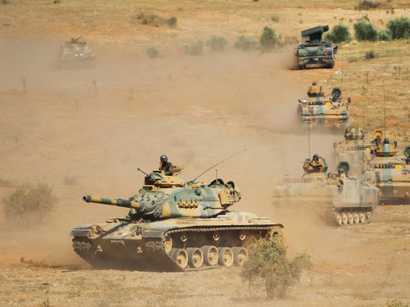
    Georgian Defense Minister Irakli Alasania and Chief of Staff of the Turkish Armed Forces, Army General Necdet Ozel agreed on issues of conducting joint military exercises at a meeting in Ankara on Saturday, the Georgian Defense Ministry told Trend.

    According to the ministry, the meeting discussed matters related to strategic partnership of the two neighboring states, particularly, the future cooperation and joint exercises.

    On Saturday, the Georgian delegation also met with representatives of the defense industry of Turkey.

    Within the visit, Alasania and delegation members met with the management of the committee for defense and security of Turkish Parliament.

    During the meeting, the sides discussed both military cooperation and strategic partnership between the two countries. The Turkish side also expressed its full support for Georgia’s aspirations to join NATO.

    via Georgia and Turkey discuss joint military exercises – Trend.Az.

  • Turkey complains only 7 terrorists extradited from Europe in past 5 years

    Turkey complains only 7 terrorists extradited from Europe in past 5 years

    Baku-APA. European countries have extradited only seven terrorism suspects to Turkey in the past five years, a senior Turkish security official said on Saturday, APA reports quoting Todays Zaman.

    National Security Council (MGK) Secretary-General Muammer Türker said while speaking at an international symposium on terrorism in southern Turkish province of Antalya that Turkey expects more support from European countries in its fight against the terrorist Kurdistan Workers’ Party (PKK), complaining that only seven wanted terrorists were extradited by European countries to Turkey in the past five years.

    Speaking at the session titled “Terror: EU and Turkey Perspective” Türker underlined that the balance between security and freedom was highly critical.

    “We should not put aside freedom while working on the issue of security,” he said.

    “The most important issue in the fight against terror has to do with eradicating the atmosphere in which terror feeds itself,” he added.

    “Turkey has taken important steps in this regard,” Türker noted.

    Speaking at the same session, EU’s Counter-terrorism Coordinator Gilles de Kerchove claimed that certain individuals do not get extradited since concrete evidence is not presented other than just arguing that s/he was a member of a certain organization working against the government.

    Turkey has been party to the European Convention on Extradition since 1959 and the European Convention on Suppression of Terrorism since 1980. In addition to these international agreements, Turkey has also ratified the Convention on the Transfer of Sentenced Persons, but it has been unable to manage the return of a single suspect from Europe. Most of the inmates repatriated to Turkey are those who themselves would prefer to serve their time in Turkish prisons.

    Turkey has fought the terrorist PKK since 1984, when it was set up with the goal of establishing an autonomous Kurdish state in east and southeast Turkey. More than 40,000 soldiers and civilians have been killed in clashes thus far.

    The PKK has been declared a terrorist organization by the international community, including the US and the EU.

    Turkey has long criticized the EU for failing to to take the necessary measures to prevent thePKK from operating on their soil.

    Turkish Prime Minister Recep Tayyip Erdoğan last week lamented the fact that cooperation against terrorism in Europe falls short of expectations.

    “The EU, which criticizes us in every field, should put its relations with terror under the spotlight,” Erdoğan said during his Justice and Development Party’s (AK Party) parliamentary group meeting on Tuesday.

    via APA – Turkey complains only 7 terrorists extradited from Europe in past 5 years.

  • Iran, Turkey unity can solve many regional problems: Envoy

    Iran, Turkey unity can solve many regional problems: Envoy

    rabbani20130216133328947

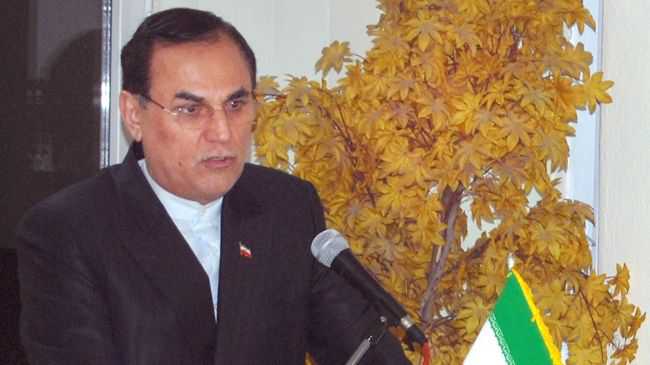
    Iran’s outgoing ambassador to Ankara Bahman Hosseinpour (file photo)

    Iran’s outgoing ambassador to Ankara has described Iran and Turkey as two powerful countries in the region, saying their unity can solve many regional problems.

    “Iran and Turkey can solve many regional problems through unity…but some countries are trying to prevent this,” Bahman Hosseinpour said in a ceremony on Saturday.

    Reflecting on mutual economic ties, Hosseinpour said the expansion of economic relations between the two countries can contribute to further development of Tehran-Ankara cooperation in different areas.

    The outgoing Iranian ambassador also stated that over the past five years, the volume of trade between the two countries has increased from USD5 billion to USD23 billion.

    Iran and Turkey have sharply increased their trade ties over the past years.

    The value of the Iran-Turkey trade exceeded USD16 billion in 2011 and surpassed USD22 billion by the end of 2012.

    According to official data released by the Turkish Statistical Institute in November 2012, Iran was the third major trade partner of Turkey in the first three quarters of 2012.

    Turkey’s imports from Iran hit their highest monthly total in March 2012 at over USD1.63 billion.

    Meanwhile, the highest monthly exports from Turkey to Iran were recorded in July 2012 at more than USD2.15 billion.

    The two countries plan to increase the level of their bilateral trade volume to USD30 billion by 2015.

    AR/SS/SL

    via PressTV – Iran, Turkey unity can solve many regional problems: Envoy.