Turkey, Syria and the dynamics of ‘cold war redux’
Karabekir Akkoyunlu
17 February 2013Subjects:
- Conflict
- Civil society
- Democracy and government
- Economics
- International politics
- Russia
- Iraq
- Iran
- EU
- United States
- Syria
- Turkey
- middle east
- Can Europe make it?
- Geopolitics
- Violent transitions
- Arab Awakening
- Security in Middle East and North Africa
- Syria’s peace: what, how, when?
Syria’s neighbours, including Turkey, have the most to lose from an intensifying Syrian conflict, as they directly bear the brunt of it. Thus it is imperative that there is some sort of dialogue across the geopolitical divide. The EU is conspicuous in its absence.
Ecevit Şanlı, the man who carried out the suicide attack at the US embassy in Ankara on February 1, was not a radical Islamist. Unlike the perpetrators of the previous two attacks against western diplomatic interests in Turkey – the bombing of the British and the US consulates in Istanbul in 2003 and 2008, respectively – the 40-year-old militant did not have ties to any jihadist network.
Şanlı belonged to the ‘Revolutionary People’s Liberation Party-Front’ (DHKP-C), a Marxist-Leninist group known for targeting police officers and NATO personnel in Turkey during the 1980s and the early 90s. The group’s emergence as the culprit of the Ankara bombing has rekindled memories of Cold War-era tensions. But more than just a blast from the past, the incident reveals the shifting alliances and emerging battle lines across Turkey, and indeed, much of the Middle East today.
Less than two weeks before the embassy attack, the Turkish police rounded up 85 people in a countrywide raid against alleged members and collaborators of the DHKP-C. Among those detained were students, musicians as well as 15 lawyers from the Progressive Lawyers’ Association, which handles high-profile cases of police brutality, torture and other civil rights violations.
A week later, Pinar Selek, a feminist writer and sociologist researching on Kurdish rights, was sentenced to life in prison in a case that has sparked considerable international furore. Selek has been accused of involvement in an explosion in Istanbul’s Spice Bazaar that killed 7 people in 1998 – a charge she was already acquitted of three times in the past.
And in late December, several hundred students clashed with a 3,500-strong police force inside the campus of the Middle East Technical University (ODTU) during a visit by the Turkish Prime Minister, Recep Tayyip Erdoğan. ODTU was the heart of the left-wing student movement in Turkey during the 1970s and still cherishes that reputation as an institution. A dozen students were detained after the clashes for suspected links to the DHKP-C.
Cold War redux…
Indeed, there seems to be more than just a flavour of the Cold War in Turkey’s emerging political divide. On one side of this divide, there is the Islamist-rooted Justice and Development Party (AKP) government, led by charismatic Erdoğan to a third successive general election victory in 2011 on the back of a booming economy and growing international stature. This is the party that put in place sweeping democratising reforms during the early 2000s and officially initiated Turkey’s membership talks with the European Union in 2005. But as Erdoğan’s government grew in strength, taming the country’s powerful military guardians along the way, it also adopted a visibly authoritarian rhetoric with forceful nationalist and Sunni Islamic undertones. This rhetoric has been reinforced by Erdoğan’s personal ambition to replace Turkey’s existing parliamentary system with a presidential one, which he plans to take over from 2014. This could be a powerful presidency in the US mould, but crucially with few of its checks and balances, it is arguably more along the lines of Mohammad Morsi’s presidency in Egypt.
On the other side – also comparable to the emerging Egyptian bloc against Morsi – we come across a wide spectrum of highly disparate and often antagonistic groups that unite in their opposition to the AKP, and in little else. These include, roughly, social democrats who criticise the government’s neo-liberal socio-economic policies; liberals disillusioned by its abandoned pursuit of EU membership; hardliner leftists who vehemently oppose Turkey’s NATO and EU engagements; Alevis and Kurds who have been marginalised by the hegemonic Sunni-Turkish patriarchy now upheld by Erdoğan’s government; as well as secularist Turks who represented that patriarchy until recently and despise the AKP not only for its promotion of religious and ‘provincial’ values and its campaign against the Kemalist military, but also for its periodic ‘concessions’ towards the Kurds.
Astonishingly, Kemal Kılıçdaroğlu, the leader of the main opposition Republican People’s Party (CHP), has been at pains to accommodate all these groups at once. As a result, the party has become largely dysfunctional, marred by fighting between its ideologically irreconcilable factions, and thus posing scant challenge to Erdoğan’s highly disciplined and hierarchically organised party machinery.
For the AKP government the line between legal and illegal opposition has become blurred. The prime minister readily labels whoever clashes with his ubiquitous police force as terrorists. His former interior minister, Idris Naim Şahin, once notoriously declared that a terrorist did not have to be an armed militant, but could also be a poet, painter, singer, satirist or academic. With its broad and highly illiberal scope, the current anti-terrorism legislation reflects Şahin’s worldview.
The legislation allows for left-leaning students, artists and activists to be easily linked to groups like the DHKP-C on spurious grounds, and landed in prison. The same goes for prominent Kurdish politicians, elected mayors, academics, publishers and lawyers who were arrested en masse between 2010 an 2012 for aiding and abetting the urban faction of the Kurdish separatist group PKK. At the other end of the spectrum, scores of secularist journalists, academics and Kemalist activists have found themselves behind bars alongside hundreds of military officers on charges of coup-plotting and membership in an ultra-nationalist terror network known as Ergenekon.
But such measures have done little to eliminate militant groups or curtail their activities. On the contrary, marginal groups like the DHKP-C appear emboldened, as evidenced by the US embassy attack in Ankara. More people died in fighting between an energised PKK and the Turkish state between the summer of 2011 and the fall of 2012 than at any time since the apprehension of the PKK leader Abdullah Öcalan in 1999. And legal inconsistencies and suspicions of political revanchism have watered down the Ergenekon case, dampening hopes that it would provide an historic opportunity for the Turkish state to cleanse itself of its ultra-nationalist, criminal and putschist elements – the so-called “deep state”.
This is the dark underbelly of a country that has been widely praised as the ‘victor of the Arab Spring’ and presented by foreign policy strategists on both sides of the Atlantic, and indeed by the Obama administration itself, as a shining model of stability, democratic governance and ‘moderate Islam’ for the ascendant Sunni Islamist movements across the Arab world. Does this suggest there is a fundamental disconnect between Turkey’s own socio-political fault lines and the regional dynamics of the new Middle East? It does not. On the contrary, the two are intimately connected.
…with a sectarian twist
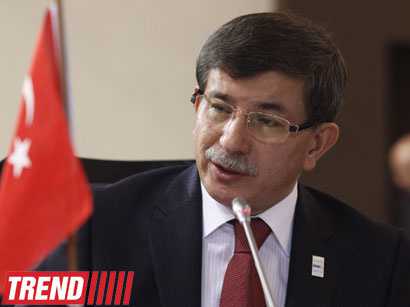
Turkey’s decision-makers saw in the Arab uprisings an opportunity to realise Foreign Minister Ahmet Davutoğlu’s longstanding vision of establishing Turkey as the “order setting agent” in a geography spanning from the Balkans to the Middle East, connected by trade and diplomatic ties based on a shared historical and religious heritage dating back to the Ottoman Empire. But the ‘Arab Spring’ also forced the Turkish government to abandon a fundamental pillar of this vision, Davutoğlu’s much-touted “zero problems with neighbours” policy, with the Bahraini uprising and the Syrian conflict redrawing geopolitical battle lines along the oldest schism within Islam: the Sunni-Shia rivalry. As the Syrian uprising evolved into full-blown civil war, the Turkish government has moved from being a friend of the Assad regime to being one of its staunchest opponents. Ankara’s volte-face has strained its carefully nurtured ties with Syria’s principle supporters, namely Iran, Iraq and, to a lesser extent, Russia.
The conflict has also thrown Turkey on the same side with an odd mix of Sunni actors, including the Gulf Arab monarchies that are locked in rivalry with Iran, the Kurdish administration in Northern Iraq, whose relationship with the Shia-dominated central government in Baghdad has steadily deteriorated, as well as popular movements like Egypt’s Muslim Brotherhood and the Palestinian Hamas; all, with the exception of the latter, staunch allies of the US. To this, we may even add a range of ultra-conservative Salafist groups and violent jihadist networks. Finally, it has brought Turkey firmly into the fold of NATO following a brief spell of autonomous foreign policy making, putting to rest, for now, the alarmist discourse of Turkey’s imminent departure from the west. Drawn together by shared strategic interests arising out of the Arab uprisings, the US and the Turkish governments have entered what Davutoğlu has called the “golden era” of bilateral relations.
If the foreign policy strategists in Ankara calculated Assad would meet the same speedy end as Tunisia’s Ben Ali or Egypt’s Mubarak, to be replaced by a Sunni-dominated government that would look to Turkey as a close ally and model, soon they had a rude awakening. By 2012, Turkey was on the receiving end of a bulging refugee crisis, disrupted trade relations and occasional mortar fire by the Syrian army across its southern border, not to mention an enlivened PKK carrying out violent attacks inside the country. But instead of rallying the public behind its leaders in the face of an external challenge, the Syrian conflict, and the geopolitical power struggle it has spurned in the region, has actually deepened Turkey’s existing divisions.
At the same time as the AKP officials exchanged threats with their Syrian counterparts, parliamentarians from the opposition CHP paid cordial visits to Damascus, meeting regime representatives. While the pro-AKP media have been covering extensively the atrocities carried out by the Assad regime, opposition news outlets tend to detail the massacres perpetrated by the Free Syrian Army. However, it would be far too simplistic to suggest that domestic criticisms of the government’s Syria policy have been driven purely by an ideological affinity for the Assad regime. This may be the case for hardliner leftists, who read the Syrian conflict as a struggle between the forces of western imperialism, of which the AKP is considered a top agent, and those of the anti-imperialist resistance, very much in line with the discourse put forward by the Shia “axis of resistance”, or indeed for secularist Turks, who sympathise with the fate of a secular dictatorship being taken apart by western-backed Islamists.
But there are in fact other, arguably less ideological reasons for this ambivalence as well. Tensions have been rife between Turkey’s small Alawite community (referred to as Nusayri in Turkey) and the free roaming Salafists and jihadists who have been using Alawite-populated towns in the border province of Antakya as safe haven in their fight against the Alawites of Syria. For the country’s much larger Alevi community, which shares with the Alawites a distant Shia heritage, the government’s Sunni discourse has become more aggressive and hegemonic over the course of the Syrian conflict. And for yet others, the moral high ground that the Turkish prime minister has claimed by championing the causes of freedom and democracy in the Arab world clearly contradicts his government’s illiberal and anti-democratic tendencies at home. This in turn raises the question whether Turkey’s promotion by the US as a model for the emerging Arab polities has more to do with the country’s success in terms of human rights and democratisation, or the strategic needs of the western security establishment in the new Middle East.
What is to be done?
Ultimately, the bombing of the US embassy in Ankara by a leftist militant group at a time when NATO is deploying Patriot missiles on Turkey’s border with Syria comes as a telling sign of the changing times and dynamics for Turkey and for the region as a whole.
With the western security establishment once again aligned with a constellation of Sunni actors, it signals, if not the definitive end, at least a temporary break from the culture wars spawned by Osama Bin Laden’s al-Qaeda and George W. Bush’s neo-conservatives that culminated in the terrible conflict in Iraq. But the new arrangement – somewhat reminiscent of the Cold War-era geopolitical alliances and rivalries, with a sectarian twist and more independent regional players – is already proving as polarising and destructive as the old one. What can (or should) Turkey, its neighbours and its western partners do to avoid a further slide down this dangerous path?
To start with the obvious, the future course and the outcome of the Syrian conflict are of vital importance for all concerned. Contrary to popular wisdom, the critical issue here is not whether Bashar al-Assad will stay or go, but rather how Syria’s different ethnic and religious communities can coexist after all the violence. As things stand, there are two possible scenarios: the first is an all out war until one side completely destroys the other. This is the path collectively taken so far and it is the most perilous one: the battle of Syria is no longer just a battle for Syria; it is also for survival and hegemony in the wider region. As such, a fight ‘till the bitter end’ has the potential to create a vicious cycle of violence and retribution within a much larger geography than Syria. Indeed, it is difficult not to see the link between an intensifying Syrian conflict and escalating military tensions in the Persian Gulf.
The other, admittedly more difficult scenario involves a compromised settlement with the participation of all involved parties. This can only happen if and when these parties come to a realisation that continued violence in Syria only further destabilises the Middle East. Syria’s neighbours, including Turkey, have the most to lose from this, as they directly bear the brunt of the conflict. Thus it is imperative that there is some sort of dialogue across the geopolitical divide. For Turkey, this also necessitates – and can in turn facilitate – internal socio-political dialogue. Cautious attempts between Turkey, Iran and Russia to re-establish cooperation at the end of 2012 can be seen as a constructive step in this direction.
Secondly, Turkey’s western partners, especially the United States, should stop promoting Turkey as a ‘beacon of stability, democracy and moderate Islam’ for the region. Not only does this narrative paint a misleading picture of the country at present, but by adding to the hubris of its governing elite, it also arguably contributes to their slide towards authoritarianism. But even if the Obama administration did have leverage over the AKP government to influence its domestic conduct, it is still questionable whether it would have the intent to use this to nudge Turkey towards a democratic agenda at the risk of jeopardising the existing strategic relationship.
Conversely, the one western actor that until recently possessed both the intent and the leverage to steer Turkey towards a democratic path has been conspicuous in its absence from the discussion. Yet for all its internal woes, the European Union cannot afford to divest itself from its Mediterranean neighbourhood. It might be argued that Europe’s socio-economic crises and Turkey’s entanglement in the Middle East’s confrontations have put too wide a wedge between the two sides. But this is also precisely what makes re-engagement and regional cooperation desirable, even a necessity for both actors, despite the apparent lack of enthusiasm in resuscitating Turkey’s stalled accession process to the EU.
Finally, Turkey’s political actors should seize the opportunities that the new geopolitical arrangement throws out to mend its domestic divisions, not to intensify them. One such opportunity is presented by the strategic rapprochement between the Turkish government and the Kurdish administration in northern Iraq on the basis of intensive trade and energy links as well as a shared rivalry with the Maliki government in Baghdad. This is also a chance for Turkey to make amends with its own Kurdish population. To their credit, by publicly entering into negotiations for disarmament, the release of political prisoners and ultimately a peace settlement as of the new year, the AKP government and the PKK have shown that they are aware of this nascent opportunity and are willing to seize it.
An end to the three-decade conflict would remove the most contentious issue that continues to polarise society and politics in Turkey at the present day, and profoundly alter regional dynamics in Turkey’s favour. This of course is by no means a foregone conclusion. The fragile process already faces pitfalls and obstacles, not least in the shape of an incentive to undermine it by Turkey’s southern neighbours – Iran, Iraq and Syria – or by its own deep state. It also risks being undone by the government’s nationalist instincts and the various sectarian and political divisions among the Kurds.
Even if a settlement can be reached, there is no guarantee that this would make Turkey a more democratic country in the long term. One possible scenario is that it would strengthen the existing authoritarian tendency by opening the way for Erdoğan to become the all-powerful president that he intends to be on the back of a rising Sunni populism. But this is a risk that might be worth taking now and contending with in due course, especially considering the alternatives. Ultimately there is little doubt that a Turkey torn with ideological divisions, ethnic strife and sectarian tensions would very much look like the Turkey of the Cold War years and represent a source of instability for both its Middle Eastern and European neighbourhoods.