Category: Regions

  • ‘Radical’ French student on bail in Turkey

    ‘Radical’ French student on bail in Turkey

    ‘Radical’ French student on bail in Turkey

    Published: 19 Feb 2013 08:44 GMT+01:00 | Print version

    Updated: 19 Feb 2013 08:44 GMT+01:00

    Photo: Bulent Kilic/AFP
    Photo: Bulent Kilic/AFP

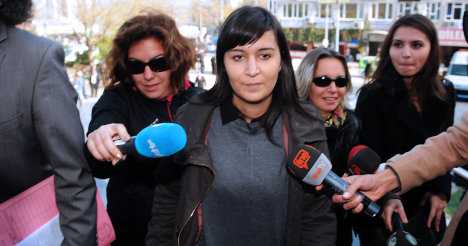
    A French-Turkish student sentenced last week to more than five years in prison for terrorist propaganda on Monday paid bail of 10,000 Turkish lira (€4,250) enabling her to return to France pending an appeal, her lawyer said.

    Turkey calls on France to extradite arrested Kurds (15 Feb 13)

    Kurds arrested in French anti-terror raids (12 Feb 13)

    The court in Bursa, northwestern Turkey,  agreed the bail terms immediately after convicting the 21-year-old Sevil Sevimli on Friday.

    “I paid her bail to the court today,” her lawyer Inayet Aksu said. “She now has the right to leave Turkish territory at any time,” he said, adding that the date for her return to France has not yet been set.

    Sevimli’s friends and supporters hailed the news, indicating that she may return to the central-eastern French city of Lyon, where she studied before arriving in Turkey in early 2012, as early as Wednesday.

    Born in France to Turkish Kurd parents, Sevimli was completing a final year of studies in Turkey with Erasmus, an inter-European university exchange programme, at the time of her arrest. She had joined a May Day parade in Istanbul and went on trial in September on charges punishable by up to 32 years in prison.

    Although Sevimli was initially accused of belonging to a terrorist organisation, the court sentenced her to five years and two months in prison for disseminating propaganda on behalf of the Revolutionary People’s Liberation Party-Front (DHKP-C), which is listed as a terrorist group by the United States and the European Union. She has denied the accusations.

    Since the 1970s, the DHKP-C has been behind numerous attacks against the Turkish state that have killed dozens. This month it claimed responsibility for a suicide bombing at the US embassy in Ankara that killed a Turkish security guard.

    AFP

    via ‘Radical’ French student on bail in Turkey – The Local.

  • Syria opposition warns Turkey against military intervention

    Syria opposition warns Turkey against military intervention

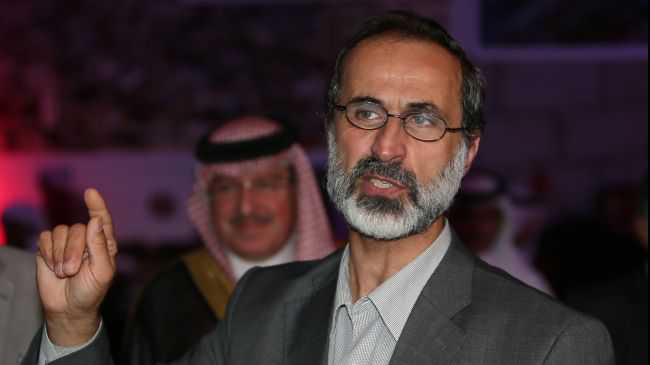
    The leader of the foreign-backed Syria opposition coalition, Ahmed Moaz al-Khatib, says any military intervention by Turkey in Syria would pose a great danger to the entire Middle East.

    Leader of the foreign-backed Syrian opposition coalition Ahmed Moaz al-Khatib (file photo)
    Leader of the foreign-backed Syrian opposition coalition Ahmed Moaz al-Khatib (file photo)

    Speaking in an interview with Anatolia News Agency on Tuesday, he noted that deceitful forces are determined to trigger war in the region in order to keep the Muslim world contained in a desert for centuries, reiterating that he is opposed to foreign military intervention in Syria.

    “Turkey’s military intervention in Syria will result in the engagement of the regional powers, above all Iran, which will then cause the conflict to spread to the Persian Gulf, and this would be a great threat to the entire region,” he added.

    Ankara has openly voiced support for the militants fighting against Damascus.

    Commenting on negotiating with President Bashar al-Assad, Khatib said, “We offered negotiating with Bashar al-Assad’s government not for the political and military benefits, but to save the lives of people and end the violence and clashes.”

    On January 30, Khatib announced that he is ready for “direct discussions” with representatives of the Syrian government in Cairo, Tunis or Istanbul.

    However, he added that there are “basic conditions” before holding talks with the Syrian officials over the crisis in the Arab country.

    The so-called Syrian National Coalition and other foreign-backed opposition groups had stressed in the past that the Syrian president must step down before any negotiations.

    Syria has been experiencing unrest since March 2011. Many people, including large numbers of security forces, have been killed in the turmoil.

    The Syrian government has said that the chaos is being orchestrated from outside the country, and that a very large number of the militants operating in the country are foreign nationals.

    PG/SS

    via PressTV – Syria opposition warns Turkey against military intervention.

  • Russia and Turkey open Samsun-Caucasus train ferry – exclusive interview

    Russia and Turkey open Samsun-Caucasus train ferry – exclusive interview

    TURKEY SPAIN ALVAREZ

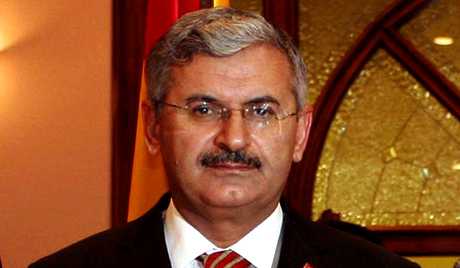
    Binala Yildirim

    Photo: EPA

    The opening ceremony of the Samsun-Caucasus train ferry, which links the North of the country to the South of Russia, will be held on February 19 in the Turkish city of Samsun. This project will give a new dimension to the two country’s bilateral relations, Turkey’s Minister of Transport Binala Yildirim stated in an exclusive interview with the Voice of Russia.

    The Samsun-Caucasus will be the shortest transport corridor between the countries.

    Its connection to the internal areas of the country will be established in the Russian territory.

    Northern and Southern corridors in the territory of Turkey will also be connected to provide a combined and fully integrated transportation network.

    Meanwhile, Russia will be able to establish transport links with the Mediterranean region and the Middle East; and Turkey – with Turkic states (former Soviet republics) and Siberia.

    The Minister pointed out that there was road, air, railway and sea communication between Russia and Turkey.

    As for relations between the two countries as a whole, they continue to develop in a friendly vein, in the framework of mutual respect, Binala Yildirim is sure.

    He expressed hope that in 5-10 years bilateral trade would increase three times and would amount to 100 billion dollars.

    via Russia and Turkey open Samsun-Caucasus train ferry – exclusive interview: Voice of Russia.

  • Solen Istanbul — a treat from Turkey

    Solen Istanbul — a treat from Turkey

    Spicy Turkish dishes including Lahmacun and Kofta Izgara delighted people. PHOTO: PUBLICITY

    KARACHI: A Turkish man’s gastronomical obsession, a bit of dreaming and a great deal of destiny is what brought Turkish restaurant Solen Istanbul to Pakistan.

    Restaurateur Mehmet Celal Ulutatar came to Karachi to set up a business venture, and realised during his stay how much potential the port city has. “I see a lot of potential in Karachi for Solen Istanbul. Destiny brought me here,” said Ulutatar at the opening of his restaurant at Dolmen City Mall in Clifton on Friday.

    Solen Istanbul, which is a chain of restaurants, has five outlets in Turkey’s capital Istanbul. At the event, the excited Turkish Consul General Murat M Onart said that he had been hoping that a Turkish restaurant would open in the city. “It is sheer luck. Whatever I dream of becomes true. It was just a dream which has finally become a reality.”

    Guests present at the event were treated to Turkish delicacies, including Lahmacun — a round, thin piece of dough flattened and topped with minced meat and chopped vegetables. The herbs included onions, tomatoes and parsley and the bread was baked to perfection. Turkish pizza, made by stuffing pita bread with spicy minced meat, red tomatoes and bell pepper was also served to guests who kept asking for more.

    Chefs, Abdullah, Abdul Hakim and Omar Farooq were specially flown into Karachi to train the staff. The local crew was taught to cook Turkish cuisine including Kofta Izgara (grilled meatballs) and Sutlac (rice pudding).

    Onart, who is very hopeful of the restaurant’s success said, “Pakistanis would love the splendours of Turkish cuisine — we are as obsessed with food as them!” Endorsing his statement, Ulutatar added, “I hope that people find the food extraordinary for their taste buds.” He also recommended that people try Iskender, a Turkish shawarma.

    Among the locals present at the event to host the Turkish expats was Talha Nawabi, who said, “It is surely going to be a treat for those who enjoy Turkish cuisine.” Nawabi added that people are losing interest in fast food and that Solen Istanbul will become a hit because most of the meat is grilled.

    For Pakistanis accustomed to spicy and chatpata food, Turkish cuisine may seem a little bland. Authentic Turkish food concentrates on retaining the flavour of the meat instead of adding spices, so Solen Istanbul’s fate really depends on whether or not desi foodies can live without their mirchi.

    Published in The Express Tribune, February 19th, 2013.

    Like Life & Style on Facebook for the latest in fashion, gossip and entertainment.

    via Solen Istanbul — a treat from Turkey – The Express Tribune.

  • Turkey-Iran Ties Strained  By Iraq, Syria

    Turkey-Iran Ties Strained By Iraq, Syria

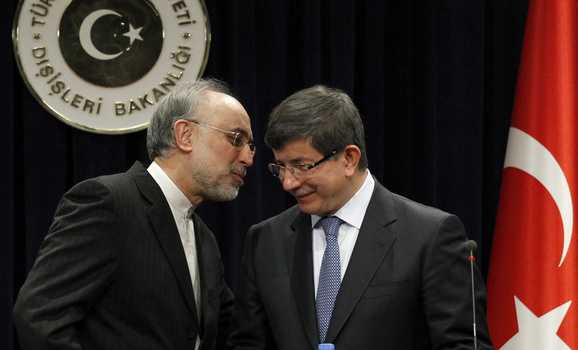
    Turkey's Foreign Minister Ahmet Davutoglu and his Iranian counterpart Ali Akbar Salehi attend a news conference in Ankara
    Turkey’s Foreign Minister Ahmet Davutoglu and his Iranian counterpart, Ali Akbar Salehi (L), attend a news conference in Ankara, Jan. 19, 2012. (photo by REUTERS/Umit Bektas)

    Semih Idiz for Al-Monitor Turkey Pulse. Posted on February 19.

    Ask diplomats from both countries and they will say Turkish-Iranian relations rest on a solid foundation, despite occasional turbulence and attempts by “nefarious western countries” to spoil them. But the situation is not that rosy with Ankara and Tehran increasingly competing for influence in the Middle East, rather than cooperating to stabilize the region.

    About This Article

    Summary :

    Tehran and Ankara are struggling to keep up appearances as differences over Iran and Syria begin to take a toll on their bilateral relationship, writes Semih Idiz.

    Author: Semih Idiz
    Posted on : February 19 2013

    Take Syria, for example, a topic that both countries diverge on radically. Tehran continues to support President Bashar al Assad as a matter of vital importance for its regional interests. Ankara, on the other hand, continues to support Syrian groups fighting to depose Assad and overturn his regime.

    Given this situation, Turkey and Iran are now accusing each other of prolonging the Syrian crisis. In a rare confession Foreign Minister Ahmet Davutoglu even admitted, only a few days ago, that he had what appears to be a futile phone conversation on the topic with his Iranian counterpart Ali Akbar Salehi.

    “I discussed Syria with the Iranian foreign minister, but we cannot agree.” Davutoglu told reporters bluntly after a meeting of the Turkey-EU Join Parliamentary Commission in Ankara on Feb. 14. He nevertheless added that “they would keep the lines of communication open” with Tehran.

    But this is not the only problem between the two countries. Tehran is also disappointed with Turkey for ostensibly bowing to pressures from the US in order to facilitate what Iranian officials claim are Western and Israeli military plans for the region. Tehran is also unhappy over the fact that Turkey’s trade with Iran has started to drop because of US pressures, a fact that is particularly noticeable in the dramatic fall seen in Turkey’s crude oil imports from Iran.

    This fact is particularly noteworthy since officials from both countries frequently pointed to the growing levels of trade in the past, when trying to show just how “excellent,” ties between the two countries were despite pressures on Ankara to comply with Western sanctions on Iran.

    Looking back over these past three decades one does see that lines of communication between the two countries have remained open and that ties have weathered many storms. This was especially the case in the 1980s and 1990s when staunchly secularist Turkish governments frequently accused Tehran of trying to export its Islamic revolution to Turkey.

    Great hopes were raised in Ankara and Tehran for taking these ties even further after the advent of the Islamist Justice and Development Party (AKP) in Turkey in 2002. The AKP’s Islamist roots did in fact turn Ankara into a staunch supporter of Tehran against its Western critics and enemies who were, and still are, concerned that Iran is trying to become a regional nuclear power.

    Prime Minister Recep Tayyip Erdogan annoyed Washington and Turkey’s NATO allies at that state when he  frequently suggested that he could not understand why those who possessed nuclear weapons where trying to prevent Iran from getting them. Erdogan’s first target was Israel, of course, but his remarks were clearly aimed at the US, too.

    Turkey also achieved what it believed at the time to be major international coup for Turkish diplomacy, when, together with Brazil, it negotiated a swap deal in May 2010 with Tehran for Iran’s stock of enriched uranium. In Tehran, a jubilant Davutoglu said after the announcement of the deal that there was no longer any need for any UN sanctions against Iran, a remark taken in the West as a clear sign of Turkey’s advocacy of Iran.

    But Washington rejected the Turkish-Brazilian deal and none of Turkey’s NATO allies were prepared to support it either. Instead, the US started applying pressure on Ankara to comply with the sanctions against Tehran, and to allow the stationing of NATO’s advanced anti-missile radar systems in Turkey — a vital part of the US-led missile defense shield project targeting Iran.

    Weighing its NATO membership against advocacy of Iran’s rights, Ankara eventually complied with this request in November 2011 and allowed the deployment of this radar system in the town of Kurecik, in eastern Turkey. Erdogan and Davutoglu insisted vehemently then, and still do, that the radar was not against Iran, citing the fact that no NATO document relating to it referred to any country as a target.

    American and NATO officials, however, made it clear through various statements that Iran was indeed the prime target. Meanwhile no one in Tehran accepted the Erdogan-Davutoglu line either. In the end, this deployment turned out to be a critical turning point in Turkish-Iranian relations that have since also come under added pressure due to the Syrian crisis.

    The strong opposition by Iran to the deployment of Patriot missiles against a possible attack from Syria is also related to this topic. Tehran says the Patriots are in Turkey for the long haul adding that their real mission is to guard the radar system in Kurecik against a possible attack from Iran. Ranking Iranian military officials have made it clear that if Israel attacks Iran, all US and NATO facilities in the region will be considered legitimate targets.

    Meanwhile Turkey’s tense relations with the pro-Iranian Maliki government in Baghdad, as Ankara continues to deepen political and economic ties with Northern Iraqi Kurds, are also fueling Iranian suspicions over Turkey’s regional intentions. Tehran is making its dissatisfaction over this known, too.

    The Kurdish daily Rudaw reported recently that Iran had “warned Iraq’s autonomous Kurds against thinking about independence, harming relations with the Shiite government in Baghdad and getting too close to Turkey.”

    This message was reportedly transmitted by Qasem Soleimani, the commander of Iran’s powerful Al Quds Force, to a delegation from Northern Iraq which recently visited Tehran. Al Quds is said to have enormous influence in Iraq, and is reportedly also helping the Assad regime in Syria fight against opposition forces.

    “You should not think about the division of Iraq and harming Kurdish-Shiite relations” Soleimani reportedly told a delegation from the Patriotic Union of Kurdistan (PUK), one of the two major parties in Kurdish Northern Iraq.

    The PUK delegation is said to have included Kosrat Rasul Ali, the party’s acting leader, its deputy secretary general Barham Salih and Khasraw Gul Muhammad, a member of the party’s leadership council. All three are highly influential figures in Northern Iraq.

    Meanwhile, Baram Majeed Khan, a PUK advisor on Iranian affairs, was quoted saying “Iran is worried about the fact that the Kurdistan Region has strong economic and commercial ties with Turkey” and adding, “Iran feels that Turkey has crept into the Kurdistan Region more than it should.”

    Meanwhile, Iranian officials are said to be deeply disappointed with the 29% drop in crude oil exports by Turkey from Iran in December 2012, compared to the previous month, after Washington effectively blocked a “gold-for-oil” deal between the two countries.

    Ankara could circumvent Western sanctions against Tehran by means of that deal under which oil and gas purchased by Turkey would be paid for in Turkish liras lodged in Halkbank, a state owned Turkish bank. Iranian operators would then buy gold bullion on the Turkish market with that money and transport it overland to Iran.

    According to Reuters, a new provision of US sanctions which came into force on Feb. 6, effectively tightens control on sales of precious metals to Iran and also prevents Halkbank from processing oil payments for Iran by other countries.

    Clearly, the lines of communication between Ankara and Tehran will remain open, but these developments belie the rosy picture diplomat are trying to paint for Turkish-Iranians relations which are marked increasingly with rivalry rather than amity.

    Semih İdiz is a contributing writer for Al-Monitor’s Turkey Pulse. A journalist who has been covering diplomacy and foreign-policy issues for major Turkish newspapers for 30 years, his opinion pieces can be followed in the English language Hurriyet Daily News. He can also be read in Taraf. His articles have been published in The Financial Times, the Times, Mediterranean Quarterly and Foreign Policy magazine, and he is a frequent contributor to BBC World, VOA, NPR, Deutche Welle, various Israeli media organizations and Al Jazeera.

    Read more: http://www.al-monitor.com/pulse/originals/2013/02/turkey-iran-tensions-rise-syria.html#ixzz2LQrdcliz
  • Turkey and Libya draw closer over police training

    Turkey and Libya draw closer over police training

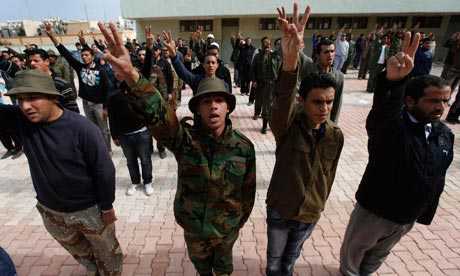
    Premier Zeidan congratulates the first of the Libyan police graduates

    Tripoli, 19 February 2013:

    Prime Minister Ali Zeidan was in Istanbul today, Tuesday, to hand out diplomas to new Libyan police graduates who have successfully completed their training in Turkey.

    The award-ceremony was for 817 police graduates, who have completed seven and a half months’ training at the Adile Sadullah Mermerci Police Training Centre in Istanbul.

    Zeidan thanked the Turkish authorities for the police training programme, which was part of a Memorandum of Understanding signed between Libya and Turkey. He spoke of the long-term cooperation between the two countries and stressed how important continued good relations with Turkey were for the new Libya.

    Zeidan’s visit to Turkey appears to be part of intensified efforts to resolve economic relations between the two countries. It has been estimated that Turkish firms are owed some $20 million in back payments and compensation.

    More new Libyan police recruits are also being trained in Qatar, the UAE, Jordan and the UK.

    via Turkey and Libya draw closer over police training | Libya Herald.