Category: Saudi Arabia

  • The Iranian Threat

    The Iranian Threat

    Noam Chomsky

    The dire threat of Iran is widely recognized to be the most serious foreign policy crisis facing the Obama administration. General Petraeus informed the Senate Committee on Armed Services in March 2010 that “the Iranian regime is the primary state-level threat to stability” in the U.S. Central Command area of responsibility, the Middle East and Central Asia, the primary region of US global concerns. The term “stability” here has its usual technical meaning: firmly under US control. In June 2010 Congress strengthened the sanctions against Iran, with even more severe penalties against foreign companies. The Obama administration has been rapidly expanding US offensive capacity in the African island of Diego Garcia, claimed by Britain, which had expelled the population so that the US could build the massive base it uses for attacks in the Central Command area. The Navy reports sending a submarine tender to the island to service nuclear-powered guided-missile submarines with Tomahawk missiles, which can carry nuclear warheads. Each submarine is reported to have the striking power of a typical carrier battle group. According to a US Navy cargo manifest obtained by the Sunday Herald (Glasgow), the substantial military equipment Obama has dispatched includes 387 “bunker busters” used for blasting hardened underground structures. Planning for these “massive ordnance penetrators,” the most powerful bombs in the arsenal short of nuclear weapons, was initiated in the Bush administration, but languished. On taking office, Obama immediately accelerated the plans, and they are to be deployed several years ahead of schedule, aiming specifically at Iran.

    “They are gearing up totally for the destruction of Iran,” according to Dan Plesch, director of the Centre for International Studies and Diplomacy at the University of London. “US bombers and long range missiles are ready today to destroy 10,000 targets in Iran in a few hours,he said. “The firepower of US forces has quadrupled since 2003,” accelerating under Obama.

    The Arab press reports that an American fleet (with an Israeli vessel) passed through the Suez Canal on the way to the Persian Gulf, where its task is “to implement the sanctions against Iran and supervise the ships going to and from Iran.” British and Israeli media report that Saudi Arabia is providing a corridor for Israeli bombing of Iran (denied by Saudi Arabia). On his return from Afghanistan to reassure NATO allies that the US will stay the course after the replacement of General McChrystal by his superior, General Petraeus, Chairman of the Joint Chiefs of Staff Admiral Michael Mullen visited Israel to meet IDF Chief of Staff Gabi Ashkenazi and senior military staff along with intelligence and planning units, continuing the annual strategic dialogue between Israel and the U.S. The meeting focused “on the preparation by both Israel and the U.S. for the possibility of a nuclear capable Iran,” according to Haaretz, which reports further that Mullen emphasized that “I always try to see challenges from Israeli perspective.” Mullen and Ashkenazi are in regular contact on a secure line.

    The increasing threats of military action against Iran are of course in violation of the UN Charter, and in specific violation of Security Council resolution 1887 of September 2009 which reaffirmed the call to all states to resolve disputes related to nuclear issues peacefully, in accordance with the Charter, which bans the use or threat of force.

    Some analysts who seem to be taken seriously describe the Iranian threat in apocalyptic terms. Amitai Etzioni warns that “The U.S. will have to confront Iran or give up the Middle East,” no less. If Iran’s nuclear program proceeds, he asserts, Turkey, Saudi Arabia, and other states will “move toward” the new Iranian “superpower.” To rephrase in less fevered rhetoric, a regional alliance might take shape independent of the US. In the US army journal Military Review, Etzioni urges a US attack that targets not only Iran’s nuclear facilities but also its non-nuclear military assets, including infrastructure — meaning, the civilian society. “This kind of military action is akin to sanctions – causing ‘pain’ in order to change behaviour, albeit by much more powerful means.”

    Such inflammatory pronouncements aside, what exactly is the Iranian threat? An authoritative answer is provided by military and intelligence reports to Congress in April 2010 [Lieutenant General Ronald L. Burgess, Director, Defense Intelligence Agency, Statement before the Committee on Armed Services, US Senate, 14 April 2010; Unclassified Report on Military Power of Iran, April 2010; John J. Kruzel, American Forces Press Service, “Report to Congress Outlines Iranian Threats,” April 2010, .

    The brutal clerical regime is doubtless a threat to its own people, though it does not rank particularly high in that respect in comparison to US allies in the region. But that is not what concerns the military and intelligence assessments. Rather, they are concerned with the threat Iran poses to the region and the world.

    The reports make it clear that the Iranian threat is not military. Iran’s military spending is “relatively low compared to the rest of the region,” and of course minuscule as compared to the US. Iranian military doctrine is strictly “defensive,” designed to slow an invasion and force a diplomatic solution to hostilities.” Iran has only “a limited capability to project force beyond its borders.” With regard to the nuclear option, “Iran’s nuclear program and its willingness to keep open the possibility of developing nuclear weapons is a central part of its deterrent strategy.”

    Though the Iranian threat is not military aggression, that does not mean that it might be tolerable to Washington. Iranian deterrent capacity is considered an illegitimate exercise of sovereignty that interferes with US global designs. Specifically, it threatens US control of Middle East energy resources, a high priority of planners since World War II. As one influential figure advised, expressing a common understanding, control of these resources yields “substantial control of the world” (A. A. Berle).

    But Iran’s threat goes beyond deterrence. It is also seeking to expand its influence. Iran’s “current five-year plan seeks to expand bilateral, regional, and international relations, strengthen Iran’s ties with friendly states, and enhance its defense and deterrent capabilities. Commensurate with that plan, Iran is seeking to increase its stature by countering U.S. influence and expanding ties with regional actors while advocating Islamic solidarity.” In short, Iran is seeking to “destabilize” the region, in the technical sense of the term used by General Petraeus. US invasion and military occupation of Iran’s neighbors is “stabilization.” Iran’s efforts to extend its influence in neighboring countries is “destabilization,” hence plainly illegitimate. It should be noted that such revealing usage is routine. Thus the prominent foreign policy analyst James Chace, former editor of the main establishment journal Foreign Affairs, was properly using the term “stability” in its technical sense when he explained that in order to achieve “stability” in Chile it was necessary to “destabilize” the country (by overthrowing the elected Allende government and installing the Pinochet dictatorship).

    Beyond these crimes, Iran is also carrying out and supporting terrorism, the reports continue. Its Revolutionary Guards “are behind some of the deadliest terrorist attacks of the past three decades,” including attacks on US military facilities in the region and “many of the insurgent attacks on Coalition and Iraqi Security Forces in Iraq since 2003.” Furthermore Iran backs Hezbollah and Hamas, the major political forces in Lebanon and in Palestine — if elections matter. The Hezbollah-based coalition handily won the popular vote in Lebanon’s latest (2009) election. Hamas won the 2006 Palestinian election, compelling the US and Israel to institute the harsh and brutal siege of Gaza to punish the miscreants for voting the wrong way in a free election. These have been the only relatively free elections in the Arab world. It is normal for elite opinion to fear the threat of democracy and to act to deter it, but this is a rather striking case, particularly alongside of strong US support for the regional dictatorships, emphasized by Obama with his strong praise for the brutal Egyptian dictator Mubarak on the way to his famous address to the Muslim world in Cairo.

    The terrorist acts attributed to Hamas and Hezbollah pale in comparison to US-Israeli terrorism in the same region, but they are worth a look nevertheless.

    On May 25 Lebanon celebrated its national holiday Liberation Day, commemorating Israel’s withdrawal from southern Lebanon after 22 years, as a result of Hezbollah resistance — described by Israeli authorities as “Iranian aggression” against Israel in Israeli-occupied Lebanon (Ephraim Sneh). That too is normal imperial usage. Thus President John F. Kennedy condemned the “the assault from the inside” in South Vietnam, “which is manipulated from the North.” This criminal assault by the South Vietnamese resistance against Kennedy’s bombers, chemical warfare, programs to drive peasants to virtual concentration camps, and other such benign measures was denounced as “internal aggression” by Kennedy’s UN Ambassador, liberal hero Adlai Stevenson. North Vietnamese support for their countrymen in the US-occupied South is aggression, intolerable interference with Washington’s righteous mission. Kennedy advisors Arthur Schlesinger and Theodore Sorenson, considered doves, also praised Washington’s intervention to reverse “aggression” in South Vietnam — by the indigenous resistance, as they knew, at least if they read US intelligence reports. In 1955 the US Joint Chiefs of Staff had defined several types of “aggression,” including “Aggression other than armed, i.e., political warfare, or subversion.” For example, an internal uprising against a US-imposed police state, or elections that come out the wrong way. The usage is also common in scholarship and political commentary, and makes sense on the prevailing assumption that We Own the World.

    Hamas resists Israel’s military occupation and its illegal and violent actions in the occupied territories. It is accused of refusing to recognize Israel (political parties do not recognize states). In contrast, the US and Israel not only do not recognize Palestine, but have been acting relentlessly and decisively for decades to ensure that it can never come into existence in any meaningful form. The governing party in Israel, in its 1999 campaign platform, bars the existence of any Palestinian state — a step towards accommodation beyond the official positions of the US and Israel a decade earlier, which held that there cannot be “an additional Palestinian state” between Israel and Jordan, the latter a “Palestinian state” by US-Israeli fiat whatever its benighted inhabitants and government might believe.

    Hamas is charged with rocketing Israeli settlements on the border, criminal acts no doubt, though a fraction of Israel’s violence in Gaza, let alone elsewhere. It is important to bear in mind, in this connection, that the US and Israel know exactly how to terminate the terror that they deplore with such passion. Israel officially concedes that there were no Hamas rockets as long as Israel partially observed a truce with Hamas in 2008. Israel rejected Hamas’s offer to renew the truce, preferring to launch the murderous and destructive Operation Cast Lead against Gaza in December 2008, with full US backing, an exploit of murderous aggression without the slightest credible pretext on either legal or moral grounds.

    The model for democracy in the Muslim world, despite serious flaws, is Turkey, which has relatively free elections, and has also been subject to harsh criticism in the US. The most extreme case was when the government followed the position of 95% of the population and refused to join in the invasion of Iraq, eliciting harsh condemnation from Washington for its failure to comprehend how a democratic government should behave: under our concept of democracy, the voice of the Master determines policy, not the near-unanimous voice of the population.

    The Obama administration was once again incensed when Turkey joined with Brazil in arranging a deal with Iran to restrict its enrichment of uranium. Obama had praised the initiative in a letter to Brazil’s president Lula da Silva, apparently on the assumption that it would fail and provide a propaganda weapon against Iran. When it succeeded, the US was furious, and quickly undermined it by ramming through a Security Council resolution with new sanctions against Iran that were so meaningless that China cheerfully joined at once — recognizing that at most the sanctions would impede Western interests in competing with China for Iran’s resources. Once again, Washington acted forthrightly to ensure that others would not interfere with US control of the region.

    Not surprisingly, Turkey (along with Brazil) voted against the US sanctions motion in the Security Council. The other regional member, Lebanon, abstained. These actions aroused further consternation in Washington. Philip Gordon, the Obama administration’s top diplomat on European affairs, warned Turkey that its actions are not understood in the US and that it must “demonstrate its commitment to partnership with the West,” AP reported, “a rare admonishment of a crucial NATO ally.”

    The political class understands as well. Steven A. Cook, a scholar with the Council on Foreign Relations, observed that the critical question now is “How do we keep the Turks in their lane?” — following orders like good democrats. A New York Times headline captured the general mood: “Iran Deal Seen as Spot on Brazilian Leader’s Legacy.” In brief, do what we say, or else.

    There is no indication that other countries in the region favor US sanctions any more than Turkey does. On Iran’s opposite border, for example, Pakistan and Iran, meeting in Turkey, recently signed an agreement for a new pipeline. Even more worrisome for the US is that the pipeline might extend to India. The 2008 US treaty with India supporting its nuclear programs — and indirectly its nuclear weapons programs — was intended to stop India from joining the pipeline, according to Moeed Yusuf, a South Asia adviser to the United States Institute of Peace, expressing a common interpretation. India and Pakistan are two of the three nuclear powers that have refused to sign the Non-proliferation Treaty (NPT), the third being Israel. All have developed nuclear weapons with US support, and still do.

    No sane person wants Iran to develop nuclear weapons; or anyone. One obvious way to mitigate or eliminate this threat is to establish a nuclear weapons-free zone (NWFZ) in the Middle East. The issue arose (again) at the NPT conference at United Nations headquarters in early May 2010. Egypt, as chair of the 118 nations of the Non-Aligned Movement, proposed that the conference back a plan calling for the start of negotiations in 2011 on a Middle East NWFZ, as had been agreed by the West, including the US, at the 1995 review conference on the NPT.

    Washington still formally agrees, but insists that Israel be exempted — and has given no hint of allowing such provisions to apply to itself. The time is not yet ripe for creating the zone, Secretary of State Hillary Clinton stated at the NPT conference, while Washington insisted that no proposal can be accepted that calls for Israel’s nuclear program to be placed under the auspices of the IAEA or that calls on signers of the NPT, specifically Washington, to release information about “Israeli nuclear facilities and activities, including information pertaining to previous nuclear transfers to Israel.” Obama’s technique of evasion is to adopt Israel’s position that any such proposal must be conditional on a comprehensive peace settlement, which the US can delay indefinitely, as it has been doing for 35 years, with rare and temporary exceptions.

    At the same time, Yukiya Amano, head of the International Atomic Energy Agency, asked foreign ministers of its 151 member states to share views on how to implement a resolution demanding that Israel “accede to” the NPT and throw its nuclear facilities open to IAEA oversight, AP reported.

    It is rarely noted that the US and UK have a special responsibility to work to establish a Middle East NWFZ. In attempting to provide a thin legal cover for their invasion of the Iraq in 2003, they appealed to Security Council Resolution 687 (1991), which called on Iraq to terminate its development of weapons of mass destruction. The US and UK claimed that they had not done so. We need not tarry on the excuse, but that Resolution commits its signers to move to establish a NWFZ in the Middle East.

    Parenthetically, we may add that US insistence on maintaining nuclear facilities in Diego Garcia undermines the NWFZ) established by the African Union, just as Washington continues to block a Pacific NWFZ by excluding its Pacific dependencies.

    Obama’s rhetorical commitment to non-proliferation has received much praise, even a Nobel peace prize. One practical step in this direction is establishment of NWFZs. Another is to withdraw support for the nuclear programs of the three non-signers of the NPT. As often, rhetoric and actions are hardly aligned, in fact are in direct contradiction in this case, facts that pass with as little attention as most of what has just been briefly reviewed.

    Instead of taking practical steps towards reducing the truly dire threat of nuclear weapons proliferation, the US is taking major steps towards reinforcing US control of the vital Middle East oil-producing regions, by violence if other means do not suffice. That is understandable and even reasonable, under prevailing imperial doctrine, however grim the consequences, yet another illustration of “the savage injustice of the Europeans” that Adam Smith deplored in 1776, with the command center since shifted to their imperial settlement across the seas.

    , July 2, 2010
  • Saudis test clearing skies for Israel to bomb Iran: report

    Saudis test clearing skies for Israel to bomb Iran: report

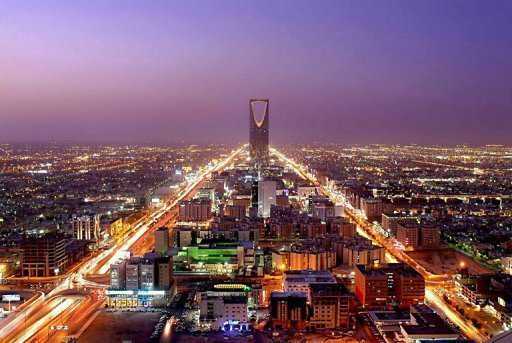
    A general view shows the Saudi capital Riyadh

    (AFP)

    LONDON — Saudi Arabia has conducted tests to stand down its air defences to allow Israeli warplanes to use its airspace in any bombing raid on Iran’s nuclear facilities, The Times newspaper reported Saturday.

    “The Saudis have given their permission for the Israelis to pass over and they will look the other way,” a US defence source in the region told the paper.

    “They have already done tests to make sure their own jets aren?t scrambled and no one gets shot down. This has all been done with the agreement of the (US) State Department.”

    Riyadh denied the British report on Saturday, calling it “false” and “slanderous,” the official Saudi Press Agency (SPA) reported.

    “Saudi Arabia has followed the false and slanderous allegations reported by some British media that it would let Israel attack Iran via its airspace,” SPA quoted a foreign ministry official as saying.

    The kingdom “rejects violating its sovereignty or the use of its airspace or territories by anyone to attack any country,” the unidentified official said, noting that Saudi Arabia does not have diplomatic ties with the Jewish state.

    Israel, which regards Iran as its principal threat, has refused to rule out using military action to prevent Tehran developing nuclear weapons. Iran says its nuclear programme is aimed solely at power generation.

    The Times said Riyadh, which views Iran as a regional threat, had agreed to allow Israel to use a narrow corridor of its airspace in the north of the country to shorten the distance in the event of any bombing raid on Iran.

    It said that a source in Saudi Arabia said the arrangement was common knowledge within defence circles in the kingdom.

    “We all know this. We will let them (the Israelis) through and see nothing,” the source told The Times.

    , 12 June 2010

  • Is Turkey new light ray in darkness of Middle East?

    Is Turkey new light ray in darkness of Middle East?

    UlviyyaSadigovaTrend News Middle East Desk Commentator, Ulviyya Sadikhova

    Perhaps, after the end of the Israel – Hamas war in the Gaza Strip in January, 2009, Turkey did not seek to solve the acute problems in the Middle East with such zeal, as it has shown in the last two months.

    Ankara made its debut in the Middle East by nominating itself as the chief mediator in the resolution of the Syrian-Iraqi dispute, which erupted after Iraqi Prime Minister Nouri al-Maliki accused the Syrian regime of sheltering organizers of two major terrorist attacks on Baghdad, which killed nearly 100 people.

    Although Turkish Foreign Minister Ahmet Davudoglu said his country does not mediate in the reconciliation of Damascus and Baghdad, since the very beginning of disagreements Davudoglu has met with Bashar al-Assad in Damascus and then with al-Maliki in Baghdad.

    At a meeting of the League of Arab States in Cairo the Arab countries acknowledged Turkey’s success in preventing acute Syria-Iraq conflict.

    In fact, Ankara needs to pacify the situation in the Middle East, which went out of control as a result of constant internal collisions. One can mention several reasons, but the most prominent are two: the fight against the separatists of the Kurdistan Workers Party (PKK) and the immense progress in relations with Syria.

    Regarding the PKK matter, the Iraqi government has never been the best assistant for Turkey. Firstly, views on cooperation with Turkey in the fighting against separatists, who are based in the north, have split up in Iraq. Despite President Jalal Talabani, a Kurd by origin, expressed his full support in the fight against PKK terrorists in Iraq, the issue of an independent Kurdistan is still questionable. Analysts also believe the Shiite parties in Iraq, including al-Maliki’s party, are unlikely to disregard the Kurdish political organizations on the eve of elections in January 2010. Therefore, Turkey will not benefit from the agreement with Iraq to cooperate against the PKK. Taking into account the internal weakness of Iraqi state power due to the struggle among of pro-Iranian Shiite, Kurdish and Sunni parties, new differences with Syria could offer a ground for further division of the country. Realizing this risk and the fear that the PKK will take advantage of the situation to strengthen fighting, Turkey demanded the Iraqi authorities to clarify accusations against Damascus and provide substantial evidence.

    Besides, a slight warming has been observed recently between the Iraqi pro-Iranian bloc and Turkey. One of the most influential Iraqi Shiite leaders, Muqtada al-Sadr, visited Turkey in summer.

    The cooperation with Syria in the fight against PKK terrorists is another issue. Though the PKK issue was about to cause the Syria -Turkey war ten years ago, now this is one of the pillars of relations between the two countries. Syria, where head of the Kurdistan Workers Party, Abdullah Ocalan, hid more than ten years ago, stated on its readiness to open its borders to the Syrian citizens of Kurdish origin, who are fighting against the Turkish government in mountainous areas, if the latter lay down their arms against Ankara.

    It seems Syria could not offer better one, because Turkey virtually received a guarantee and the place, where it will be able to banish the terrorists and extremists, whereas the Kurdistan administration of Iraq and the Kurdish parties in Iraq do not give any guarantee to Ankara in suppressing the PKK.

    It is interesting, since 2008, Turkey has focused on improving relations with Syria. Turkey started with the weak point – negotiations with Israel and the returning of the Golan Heights. Although a year later Turkey’s mediation failed, Syria and Israel were able to come together in only one – both were satisfied with Ankara’s role.

    In addition, Turkey’s rapprochement with Syria is not accidental. Damascus – Iran’s main ally among the Arab countries – has a direct impact on the internal situation in Lebanon, where a pro-Iranian Party of Hezbollah operates. More likely, Turkey wants to participate in an internal crisis in Lebanon and the Palestinian split, as well as to find alternative routes to Iran through Syria, given the ambitions to assume the role of chief peacemaker in the Middle East.

    Cooperation with Turkey is advantageous also for Syria, especially to improve relations with Sunni and pro-Western Arab countries.

    Al-Assad’s surprising visit to Riyadh on Wednesday, following the Turkish president’s meeting with King Abdullah II in Jeddah, was the first signal that Damascus resumed dialogue with the Saudis, who will have a direct impact on the political crisis in Lebanon, shaken by grim struggle for power between the pro-Saudi majority of Saad al-Hariri and the pro-Syrian opposition Hezbollah. Analysts predicted that the formation of government in Lebanon will delay until Syria and Saudi Arabia come to an agreement. However, Syria and the Saudi kingdom have very different interests in Lebanon and now Turkey, which is one of the largest Sunni countries, interferes in the dialogue. Ankara wants to show Saudi Arabia that it could persuade Syria to take a more moderate position in Lebanon. Al-Assad’s visit to Riyadh, on the backdrop of the refusal of the Saudi king Abdullah II to visit Damascus, is a great chance for Syria to demonstrate its “humility” in the Middle East policy and select a diplomatic way to solve the Arabian interior problems.

    Experts believe that attraction of Syria to the pro-Western Ankara is a hidden attempt to weaken Iran.

    Ankara has never had open tensions with Tehran and even enshrined Iran the right to peaceful atom in the issue of nuclear program. However, speaking to the 64th UN General Assembly in New York, Turkish Prime Minister Recep Tayyip Erdogan supported Russia’s plan and the United States to clear up the Middle East from nuclear weapons. Is Turkey decided to throw down a secret challenge to Iran? Although nuclear program exists in Israel and will soon appear in Saudi Arabia, it is still associated with the enrichment of uranium by Iran. Does Turkey strive for a new mediation in the nuclear program between Tehran and Western countries, what had Davudoglu hinted at during a visit to Iran?

    To prove and to demonstrate the effectiveness of its diplomacy in the Middle East – that is what Turkey wants to demonstrate to the West. Still the old interests of the Middle East will define whether Turkey will achieve it easily and what else Ankara has to do.

    Source:  en.trend.az, 26.09.2009

  • Poor Richard’s Report

    Poor Richard’s Report

    Poor Richard’s Report                                                                         


                                                                                                    Over 300,150 readers

    My Mission: God has uniquely designed me to seek, write, and speak the truth as I see it. Preservation of one’s wealth while providing needful income is my primary goal in these unsettled times. I have been given the ability to evaluate, study, and interpret world and national events and their influence on the future of the financial markets. This gift allows me to meet the needs of individual and institution clients.  I evaluate situations first on a fundamental basis then try to confirm on a technical basis. In the past it has been fairly successful.

                                 SPECIAL BULLITEN:


                                 Our President is about to be Tested – Big Time


                The Middle East is about to blow sky high. We have now involved the UN Security counsel plus Germany (called P-5+1) to make Iran negotiate their nuclear weapons program. The due date is September 24, 2009.  To make matters worse the President promised Israel that if they did not take military action with Iran, he would deliver crippling sanctions with Iran.

    Big deal. What we withhold, China and Russia will deliver. This is now guts ball diplomacy that will reverberate across the whole world.

                Here is a scary and realistic scenario that could happen while everyone is concerned with what is going on in the kiddy pool of health care reform and economic recovery.

                ISRAEL will never, never allow itself to be at mortal risk. If and when their intelligence concludes the Iranians are close to getting a bomb, diplomacy will end. Russian expansionism has always been in the setting of somebody else’s war. Putin will ignite the match if he ever gets the chance. Imagine. They get Georgia without a contest, and open the door to secure Ukraine, and make trillions of Rubles selling “high test” to Europe after the Iranians close the Straits of Hormuz. It would stir up a real blizzard and they could retake the Baltic region while NATO is off figuring out how to get the gulf oil turned back on.           

     Buy GLD (NYSE-$99+) or CEF (NYSE-$13+) and top off your home fuel tanks.

     Have a strong cash position also.


    Richard C De Graff

    256 Ashford Road

    RER      Eastford Ct 06242     

    860-522-7171 Main Office  

    800-821-6665 Watts

    860-315-7413 Home/Office

    [email protected]


    This report has been prepared from original sources and data which we believe reliable but we make no representation to its accuracy or completeness. Coburn & Meredith Inc. its subsidiaries and or officers may from time to time acquire, hold, sell a position discussed in this publications, and we may act as principal for our own account or as agent for both the buyer and seller.

  • The Ottoman Revival

    The Ottoman Revival

    Foreign Policy dergisinin son sayisinda Turkiye ve Osmanli gecmisi uzerine enteresan bir makale yayinlandi. Ingilizce versiyonu asagiya kopyaliyorum umarim keyifle okursunuz.
    En iyi dileklerimle, Akin Aytekin [[email protected]]

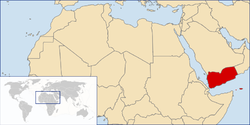
    One clear day in February, when Ali Babacan visited Yemen, his hosts brought him to a centuries-old, mud-brick building outside Sanaa, the Yemeni capital. There, about a dozen tribal leaders were waiting for the Turkish foreign minister with curved daggers drawn. If Babacan was at first startled, he soon realized that he was being greeted in a way once reserved for newly arrived Ottoman governors-complete with drums and a traditional dance that had probably not been performed for a Turkish official in almost a century.

    Not so long ago, top Turkish officials didn’t bother to visit Yemen, or for that matter most other countries in the Middle East. In the nearly 90 years since the founding of the modern Turkish Republic, its leaders have tended to equate the East with backwardness, and the West with modernity-and so focused their gaze primarily on Europe. Meanwhile, Arab countries, once ruled by sultans from Istanbul, looked upon Turkey with a mixture of suspicion and defensive resentment.

    Today that’s changing. Not only is Turkey sending emissaries throughout the region, but a new vogue for all things Turkish has emerged in neighboring countries. The Turkish soap opera Noor, picked up by the Saudi-owned MBC satellite network and dubbed in Arabic, became a runaway hit, reaching some 85 million viewers across the Middle East. Many of the growing number of tourists from Arab countries visiting Istanbul are making pilgrimages to locations featured in the show. In February, Asharq Alawsat, a pan-Arab newspaper based in London, took note of changing attitudes in a widely circulated column, “The Return of the Ottoman Empire?”

    This new mood started at home. Since it first came to power seven years ago, Turkey’s government, led by the liberal-Islamic Justice and Development Party, has taken a different approach to its role in the region. The mastermind of this turnaround-“neo-Ottomanism,” as some in Turkey and the Middle East are calling it-has been Ahmet Davutoglu, the Turkish prime minister’s chief foreign-policy advisor. In his 2001 book, Strategic Depth, he argued that in running away from its historical ties in the region, Turkey was also running away from political and economic opportunity. His strategy has paid off, literally, for Turkey. Trade with the country’s eight nearest neighbors-including Syria, Iran, and Iraq-nearly doubled between 2005 and 2008, going from $7.3 billion to $14.3 billion. And, from being on the verge of war with Syria a decade ago, Ankara is now among Damascus’s closest allies in the region.

    The Ottoman past is also in the air in Turkey. At a recent government rally, one enthusiastic supporter unfurled a banner proclaiming the prime minister “the last sultan.” Moviegoers have been flocking to see a new spate of Ottoman-themed films, from The Last Ottoman, an action flick set during World War I, to Ottoman Republic, a comedy imagining daily life in modern Turkey if the sultans were still in charge.

    Istanbul’s newest cultural attraction is the municipal-run Panorama 1453 History Museum, a granite-clad building just outside the city’s ancient walls that tells the story of the Ottomans’ conquest of Byzantine Constantinople. In the gift shop, visitors can buy everything from cuff links emblazoned with the sultans’ seal to a 1,000-piece puzzle showing Mehmet the Conqueror entering Constantinople on horseback.

    On a recent visit, I met a group of head-scarved women who were taking in the sights and sounds of the museum’s main exhibit: a circular diorama depicting Mehmet the Conqueror’s victorious final assault on Constantinople’s walls. “This is beautiful, most beautiful,” said one 28-year-old schoolteacher with a big smile, as the sound of thunderous cannon fire played in the background. “We must know our history.”

    Nationalism is nothing new in Turkey. Yet for much of the last century, it has meant rejecting the country’s Ottoman history. Today it means claiming it.

  • Osama bin Elvis

    Osama bin Elvis

    Cover Story

    Where is Osama Bin Laden?

    By Angelo M. Codevilla from the March 2009 issue

    All the evidence suggests Elvis Presley is more alive today than Osama bin Laden. But tell that to the CIA and all the other misconceptualizers of the War on Terror.

    Seven years after Osama bin Laden’s last verifiable appearance among the living, there is more evidence for Elvis’s presence among us than for his. Hence there is reason to ask whether the paradigm of Osama bin Laden as terrorism’s deus ex machina and of al Qaeda as the prototype of terrorism may be an artifact of our Best and Brightest’s imagination, and whether investment in this paradigm has kept our national security establishment from thinking seriously about our troubles’ sources. So let us take a fresh look at the fundamentals.

    Dead or Alive?

    Negative evidence alone compels the conclusion that Osama is long since dead. Since October 2001, when Al Jazeera’s Tayseer Alouni interviewed him, no reputable person reports having seen him—not even after multiple-blind journeys through intermediaries. The audio and video tapes alleged to be Osama’s never convinced impartial observers. The guy just does not look like Osama. Some videos show him with a Semitic aquiline nose, while others show him with a shorter, broader one. Next to that, differences between colors and styles of beard are small stuff.

    Nor does the tapes’ Osama sound like Osama. In 2007 Switzerland’s Dalle Molle Institute for Artificial Intelligence, which does computer voice recognition for bank security, compared the voices on 15 undisputed recordings of Osama with the voices on 15 subsequent ones attributed to Osama, to which they added two by native Arab speakers who had trained to imitate him and were reading his writings. All of the purported Osama recordings (with one falling into a gray area) differed clearly from one another as well as from the genuine ones. By contrast, the CIA found all the recordings authentic. It is hard to imagine what methodology might support this conclusion.

    Also in 2007, Professor Bruce Lawrence, who heads Duke University’s religious studies program, argued in a book on Osama’s messages that their increasingly secular language is inconsistent with Osama’s Wahhabism. Lawrence noted as well that the Osama figure in the December 2001 video, which many have taken as his assumption of responsibility for 9/11, wears golden rings—decidedly un-Wahhabi. He also writes with the wrong hand. Lawrence concluded that the messages are fakes, and not very good ones. The CIA has judged them all good.

    Above all, whereas Elvis impersonators at least sing the King’s signature song, “You ain’t nutin’ but a hound dawg,” the words on the Osama tapes differ substantively from what the real Osama used to say—especially about the most important matter. On September 16, 2001, on Al Jazeera, Osama said of 9/11: “I stress that I have not carried out this act, which appears to have been carried out by individuals with their own motivation.” Again, in the October interview with Tayseer Alouni, he limited his connection with 9/11 to ideology: “If they mean, or if you mean, that there is a link as a result of our incitement, then it is true. We incite…” But in the so-called “confession video” that the CIA found in December, the Osama figure acts like the chief conspirator. The fact that the video had been made for no self-evident purpose except perhaps to be found by the Americans should have raised suspicion. Its substance, the celebratory affirmation of a responsibility for 9/11 that Osama had denied, should also have weighed against the video’s authenticity. Why would he wait to indict himself until after U.S. forces and allies had secured Afghanistan? But the CIA acted as if it had caught Osama red-handed.

    The CIA should also have taken seriously the accounts of Osama’s death. On December 26, 2001, Fox News interviewed a Taliban source who claimed that he had attended Osama’s funeral, along with some 30 associates. The cause of death, he said, had been pulmonary infection. The New York Times on July 11, 2002, reported the consensus of a story widespread in Pakistan that Osama had succumbed the previous year to his long-standing nephritis. Then, Benazir Bhutto—as well connected as anyone with sources of information on the Afghan-Pakistani border—mentioned casually in a BBC interview that Osama had been murdered by his associates. Murder is as likely as natural death. Osama’s deputy, Ayman al-Zawahiri, is said to have murdered his own predecessor, Abdullah Azzam, Osama’s original mentor. Also, because Osama’s capture by the Americans would have endangered everyone with whom he had ever associated, any and all intelligence services who had ever worked with him had an interest in his death.

    New Osama, Real Osama

    We do not know what happened to Osama. But whatever happened, the original one, the guy who looked and sounded like a spoiled Saudi kid turned ideologue, is no more. The one who exists in the tapes is different: he is the world’s terror master, endowed with inexplicable influence. In short, whoever is making the post-November 2001 Osama tapes is pretending to far greater power than Osama ever claimed, much less exercised.

    The real Osama bin Laden, like the real al Qaeda over which he presided, was never as important as reports from Arab (especially Saudi) intelligence services led the CIA to believe. Osama’s (late) role in Afghanistan’s anti-Soviet resistance was to bring in a little money. Arab fighters in general, and particularly the few Osama brought, fought rarely and badly. In war, one Afghan is worth many Arabs. In 1990 Osama told Saudi regent Abdullah that his mujahideen could stop Saddam’s invasion of the kingdom. When Abdullah waved him away in favor of a half-million U.S. troops, Osama turned dissident, enough to have to move to Sudan, where he stayed until 1996 hatching sterile anti-Saudi plots until forced to move his forlorn band to Afghanistan.

    There is a good reason why neither Osama nor al Qaeda appeared on U.S. intelligence screens until 1998. They had done nothing noteworthy. Since the 1998 bombings of U.S. embassies in Africa, however, and especially after director of Central Intelligence George Tenet imputed responsibility for 9/11 to Osama “game, set, and match,” the CIA described him as terrorism’s prime mover. It refused to countenance the possibility that Osama’s associates might have been using him and his organization as a flag of convenience. As U.S. forces were taking over Afghanistan in 2001, the CIA was telling Time and Newsweek that it expected to find the high-tech headquarters from which Osama controlled terrorist activities in 50 countries. None existed. In November 2008, without factual basis and contrary to reason, the CIA continued to describe him and his organization as “the most clear and present danger to the United States.” It did not try to explain how this could be while, it said, Osama is “largely isolated from the day to day operations of the organization he nominally heads.” What organization?

    Axiom and Opposite

    Why such a focus on an organization that was never large, most of whose known associates have long since been killed or captured, and whose assets the CIA does not even try to catalogue? The CIA’s official explanation, that al Qaeda has “metastasized” by spreading its expertise, is an empty metaphor. But pursuant to it, the U.S. government accepted the self-designation as “al Qaeda” of persons fighting for Sunni-Baathist interests in Iraq, and has pinned the label gratuitously on sundry high-profile terrorists while acknowledging that their connection to Osama and Co. may be emotional at most. But why such gymnastics in the face of Osama’s incontrovertible irrelevance? Because focusing on Osama and al Qaeda affirms a CIA axiom dating from the Cold War, an axiom challenged during the Reagan years but that has been U.S. policy since 1993, namely: terrorism is the work of “rogue individuals and groups” that operate despite state authority. According to this axiom, the likes of Osama run rings around the intelligence services of Arab states—just like the Cold War terrorists who came through Eastern Europe to bomb in Germany and Italy and to shoot Pope John Paul II supposedly acted despite Bulgarian intelligence, despite East Germany’s Stasi, despite the KGB. This axiom is dear to many in the U.S. government because it leads logically to working with the countries whence terrorists come rather than to treating them as enemies.

    But what if terrorism were (as Thomas Friedman put it) “what states want to happen or let happen”? What if, in the real world, infiltrators from intelligence services—the professionals—use the amateur terrorists rather than the other way around? What is the logical consequence of noting the fact that the terrorist groups that make a difference on planet Earth—such as Hamas and Hezbollah, the PLO, Colombia’s FARC—are extensions of, respectively, Iran, Saudi Arabia and Egypt, and Venezuela? It is the negation of the U.S. government’s favorite axiom. It means that when George W. Bush spoke, and when Barack Obama speaks, of America being “at war” against “extremism” or “extremists” they are either being stupid or acting stupid to avoid dealing with the nasty fact that many governments wage indirect warfare.

    In short, insisting on Osama’s supposed mastery of al Qaeda, and on equating terrorism with al Qaeda, is official U.S. policy because it forecloses questions about the role of states, and makes it possible to indict as warmongers whoever raises such questions. Osama’s de facto irrelevance for seven years, however, has undermined that policy’s intellectual legitimacy. How much longer can presidents or directors of the CIA wave the spectra of Osama and al Qaeda before people laugh at them?

    An Intellectual House of Cards

    Questioning osama’s relevance to today’s terrorism leads naturally to asking how relevant he ever was, and who might be more relevant. That in turn quickly shows how flimsy are the factual foundations on which rest the U.S. government’s axioms about the “war on terror.” Consider: We know that Khalid Sheikh Mohammed (KSM) planned and carried out 9/11. But there is no independent support for KSM’s claim that he acted at Osama’s direction and under his supervision. On the contrary, we know for sure that the expertise and the financing for 9/11 came from KSM’s own group (the U.S. government has accepted but to my knowledge not verified that the group’s core is a biological family of Baluchs). This group carried out the 1998 bombings of U.S. embassies in Africa and every other act for which al Qaeda became known. The KSM group included the perpetrators of the 1993 World Trade Center bombings Abdul Rahman Yasin, who came from, returned to, and vanished in Iraq, as well as Ramzi Yousef, the mastermind of that bombing, who came to the U.S. from Iraq on an Iraqi passport and was known to his New York collaborators as “Rashid the Iraqi.” This group had planned the bombing of U.S. airliners over the Pacific in 1995. The core members are non-Arabs. They had no history of religiosity (and the religiosity they now display is unconvincing). They were not creatures of Osama. Only in 1996 did the group come to Osama’s no-account band, and make it count.

    In life, as in math, you must judge the function |of a factor in any equation by factoring it out and seeing if the equation still works. Factor out Osama. Chances are, 9/11 still happens. Factor out al Qaeda too. Maybe 9/11 still happens. The other bombing plots sure happened without it. But if you factor out the KSM group, surely there is no 9/11, and without the KSM group, there is no way al Qaeda would have become a household word.

    Who, precisely, are KSM and his reputed nephews? That is an interesting question to which we do not know the answer, and are not about to find out. Ramzi Yousef was sentenced to life imprisonment for the 1993 World Trade Center bombing after a trial that focused on his guilt and that abstracted from his associations. Were our military tribunal to accede to KSM’s plea of guilty, he would avoid any trial at all. Moreover, the sort of trial that would take place before the tribunal would focus on proving guilt rather than on getting at the whole truth. It would not feature the cross-examination of witnesses, the substantive proving and impeachment of evidence, and the exploration of alternative explanations of events. But real trials try all sides. Do we need such things given that KSM confessed? Yes. There is no excuse for confusing confessions with truth, especially confessions in which the prisoners confirm our agencies’ prejudices.

    The excuse for limiting the public scrutiny of evidence is the alleged need to protect intelligence sources. But my experience, as well as that of others who have been in a position to probe such claims, is that almost invariably they protect our intelligence agencies’ incompetence and bureaucratic interests. Anyhow, the public’s interest in understanding what it’s up against should override all others.

    Understanding the Past, Dealing With the Future

    Focusing on Osama bin Elvis is dangerous to America’s security precisely because it continues to substitute in our collective mind the soft myth that terrorism is the work of romantic rogues for the hard reality that it can happen only because certain states want it to happen or let it happen. KSM and company may not have started their careers as agents of Iraqi intelligence, or they may have quit the Iraqis and worked for others, or maybe they just worked for themselves. But surely they were a body unto themselves. As such they fit Osama’s description of those responsible for 9/11 as “individuals with their own motivation” far better than they fit the CIA’s description of them as Osama’s tools.

    More important, focusing on Osama and al Qaeda distorts our understanding of what is happening in Afghanistan. The latter-day Taliban are fielding forces better paid and armed than any in the region except America’s. Does anyone suggest seriously that Osama or al-Zawahiri are providing the equipment, the money, or the moral incentives? Such amounts of money can come only from the super wealthy of Saudi Arabia and the Gulf. The equipment can come only through dealers who work at the sufferance of states, and can reach the front only through Pakistan by leave of Pakistani authorities. Moreover, the moral incentives for large-scale fighting in Pushtunistan can come only as part of the politics of Pushtun identity. Hence sending troops to Afghanistan to fight Pushtuns financed by Saudis, supported by Pakistanis, and disposing of equipment purchased throughout the world, with the objective of “building an Afghan nation” capable of preventing Osama and al Qaeda from messing up the world from their mountain caves, is an errand built on intellectual self-indulgence.

    Intellectual Authority

    The CIA had as much basis for deeming Osama the world’s terror master “game, set, and match” in 2001 as it had in 2003 for verifying as a “slam dunk” the presence of weapons of mass destruction in Iraq, and as it had in 2007 for determining that Iran had stopped its nuclear weapons program. Mutatis mutandis, it was on such bases that the CIA determined in 1962 that the Soviets would not put missiles in Cuba; that the CIA was certain from 1963 to 1978 that the USSR would not build the first strike missile force that it was building before its very eyes; that the CIA convinced Bush 41 that the Soviet Union was not falling apart and that he should help hold it together; that the CIA assured the U.S. government in 1990 that Iraq would not invade Kuwait, and in 1996 that neither India nor Pakistan would test nuclear weapons. In these and countless other instances, the CIA has provided the US government and the media with authoritative bases for denying realities over which America was tripping.

    The force of the CIA’s judgments, its authority, has always come from the congruence between its prejudices and those of America’s ruling class. When you tell people what they want to hear, you don’t have to be too careful about premises, facts, and conclusions. Our problem, in short, is not the CIA’s mentality so much as the unwillingness of persons in government and the “attentive public” to exercise intellectual due diligence about international affairs. Osama bin Laden’s role may be as good a place as any to start.

    Angelo M. Codevilla, a professor of international relations at Boston University, a fellow of the Claremont Institute, and a senior editor of The American Spectator, was a Foreign Service officer and served on the staff of the U.S. Senate Intelligence Committee between 1977 and 1985. He was the principal author of the 1980 presidential transition report on intelligence. He is the author of The Character of Nations: How Politics Makes and Breaks Prosperity, Family, and Civility.

    Source:  The American Spectator, March 2009