Category: Israel

  • The Daily Worry: How I Learned to Live with Bombs in Turkey and Israel

    The Daily Worry: How I Learned to Live with Bombs in Turkey and Israel

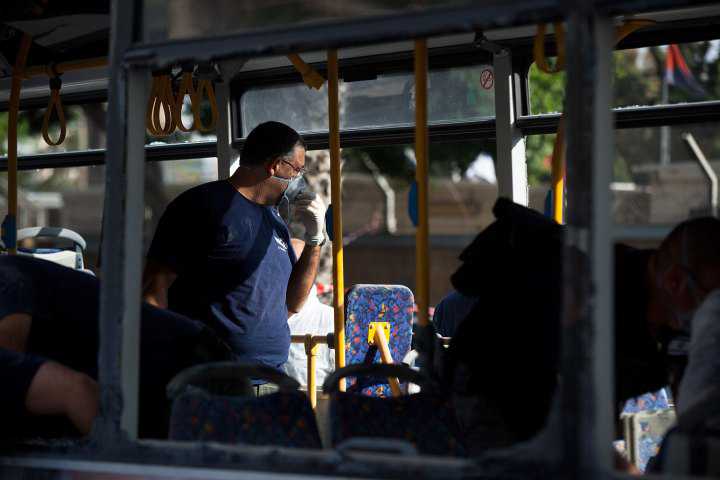
    URIEL SINAI / GETTY IMAGESEmergency services work the scene of an explosion on a bus in Tel Aviv on Nov. 21, 2012

    It is unsettling the first time the doors of a shopping mall glide open to reveal a magnetometer, an x-ray machine, and a person wearing a holster. Less so the second time, and the point quickly arrives when it’s no more remarkable than finding a maze of chrome posts and retractable belts standing between an airport’s ticket counters and the boarding gates.  Put your phone, keys and coins in the tray and get on with it.

    I first acclimated to the diffuse background threat of urban bombing in the summer of 2002, when I moved to Istanbul, where small explosives had become the weapon of choice for assorted separatists and radicals in the 1990s.  Turkey was a fine preparatory course for life in Israel, which on Tuesday celebrated 65 years of existence, not one passed in peace. Security is a way of life here — most famously at the airport, where the solemn questioning and extraordinary inspections are almost a feature of a tourist visit, one that visitors often relate afterward with the specificity of a lion sighting after a  drive through a game park.  But the preoccupation is scarcely less present in Israel’s cities, where a decade ago, storefronts would from time to time disintegrate in the same burst of ignition and billowing dust that rose over Boylston Street on Monday afternoon.

    There are different ways to go afterward.  The British “Keep Calm and Carry On,” as the sign says, the London subway bombings of July 2005 stiffening the upper lip that remained in place from the Blitz of World War II through the IRA attacks of a quarter century ago. London barely missed a beat. Jewish Israelis take some pride in cultivating the same attitude.  During the Second Intifadeh, which at its height in March 2002 meant something exploding somewhere inside Israel almost every day,  then-prime minister Ariel Sharon asked the social psychologist Reuven Gal to measure how the Israeli public was bearing up under the stress.  Politicians love anecdotes, but Gal went about it methodically, gathering metrics via objective indicators, such as movie attendance.  What he found was a striking resilience.  After an attack, attendance dipped, but always came back.

    Still, the memory of explosions changes things.  A shadow appears, like a penumbra, around a café that someone mentions in passing was once hit by a suicide bomber; photos of the carnage are available online for those who did not see them at the time. City buses hove into view bearing a specific menace, the entirely reasonable apprehension that accumulates watching untold hours of news footage panning the blackened skeleton belonging to the Egged or Dan lines. A No. 142 bus went up in Tel Aviv, in November, the first in years. The bomb was small, had been left under a seat, and no one was killed. But shock waves really are invisible, and can carry far. On an intercity bus approaching the city the day of that attack, cell phones rang with the news, and a woman, not saying a word but only hearing, burst into tears. Glenn Beck was in Jerusalem a year earlier, doing his shtick as featured guest at a Knesset committee. Beck said the first time he came to Israel it was after a long talk with his wife about risk.  The assumption, he said, was that he’d be “roasting my dinner over the flames of a burning bus.” Nobody laughed.  I saw one tight smile.

    The fact is it’s quite safe here, and feels so.  Part of it is the visible precautions, the magnetometers at the malls (here too, of course), the doormen with side arms.  At some point Jerusalem required restaurants to post a security guard at the front entrance; they’re still there, though at some of the glossier addresses they now wear short black skirts.  It doesn’t matter terribly because of the other, larger part of security in Israel, the part that’s less visible and quite possibly not suitable for export.

    That would be “internal security,” or “Shin Bet,” also known as “Shabak,” the Hebrew acronym for Israel Security Agency.  The agency’s thousands of secret police keep watch on the Jewish State, monitoring suspicious behavior, monitoring cell phones and coercing Palestinians. The work carries moral risks mulled absorbingly in the documentary The Gatekeepers, made up entirely of interviews with men who used to run the organization; it was nominated for an Academy Award.  But Shin Bet’s work is made infinitely easier by the fact that the agency is protecting something discreet. The Jewish State may have no shortage of enemies, but in a fight at bottom over land and ethnic identity,  the process of  screening  who to watch for trouble starts with an almost binary equation: Us and Them.  In a nation of immigrants, say, the United States, divisions will never be so clear, leaving aside the crucial question of civil liberties.

    Which leaves what in Turkey at least we called “hard security.”  Inside the mall, beyond the x-ray machine and the man in blue, was a food court, a huge one. But no rubbish bins.  Men and women with carts circulated among the tables, busing trash and collecting trays. It may have been an employment scheme, but it also obviated the need for a place where a bomb could be deposited and walked away from without raising any suspicion.

    Outside, when I finally did find a place to drop trash, it was a plastic bag hanging from an iron ring – clear, so you could see what was in there. Looking askance at a trash can turns out to be like flinching at the approach of a city bus: Odd, and not a little insidious. But here we all are.

    Karl Vick @karl_vick

    Karl Vick has been TIME’s Jerusalem bureau chief since 2010, covering Israel,the Palestine territories and nearby sovereignties. He worked 16 years at the Washington Post in Nairobi, Istanbul, Baghdad, Los Angeles and Rockville, MD.

    Read more: http://world.time.com/2013/04/16/life-during-wartime/#ixzz2QgytR3Ap
  • Kerry’s Request of Turkey May Boost Role as Mediator – Al-Monitor: the Pulse of the Middle East

    Kerry’s Request of Turkey May Boost Role as Mediator – Al-Monitor: the Pulse of the Middle East

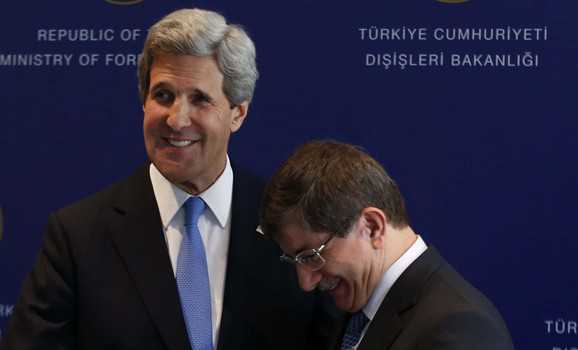
    U.S. Secretary of State Kerry  and Turkey's Foreign Minister Davutoglu leave after a joint news conference at Ciragan Palace in Istanbul

    US Secretary of State John Kerry (L) and Turkey’s Foreign Minister Ahmet Davutoglu leave after a joint news conference at Ciragan Palace in Istanbul, April 7, 2013. (photo by REUTERS/Murad Sezer )

    By: Mensur Akgun Translated from Haberturk (Turkey).

    US Secretary of State John Kerry, during his weekend visit to Istanbul, asked his counterparts to persuade Hamas to opt for peace, according to an April 8 headline in the daily Milliyet.

    ABOUT THIS ARTICLE

    Summary :

    Turkey can play a critical role on Israeli-Palestinian issues through its good relations with Hamas, but Mensur Akgun wonders whether it should do so.

    Publisher: Haberturk (Turkey)

    Original Title:

    To Be Made a Mediator is Not a Favor

    Author: Mensur Akgun

    First Published: April 9, 2013

    Posted on: April 15 2013

    Translated by: Timur Goksel

    Categories : Turkey   Israel   Palestinian Authority

    If this really was the focus of the visit (that is, if Milliyet’s editors did not run this item on the front page just because it would appear exciting), then the report written by Asli Aydintasbas is important. It could mean that the US will be placing a greater priority on the Palestinian issue than on Syria. This could mean that Washington will move to resolve the Palestine issue in the shadow of the Syrian crisis and put its weight on diplomacy involving Palestine instead of intervening in Syria.

    It is not easy to predict what implications this would have for the region and Turkey. Obviously, the US wants Turkey’s support in solving the Palestine issue by using its influence in the region, especially with Hamas.

    If Turkey wants to, it can really use its influence. Since the 2009 Davos affair there has been a tremendous sympathy for Turkey in Gaza. The Mavi Marmara flotilla incident and the way Turkey handled reconciliation with Israel has only added to this sympathy.

    When necessary, Turkey can convert this sympathy shown in Gaza to political clout and use it toward unification of the two Palestines. The recent victory of Khaled Meshaal over Ismail Haniyeh for the Hamas leadership further strengthened hopes for reconciliation and unification.  Also, the US decision to work toward resolving the Palestinian issue after 10 years of no meaningful action will empower Turkey and other regional actors who seek a solution. This also will provide them with further tools of persuasion.

    It is now understood that long-dormant Arab peace efforts will be reactivated by the second Obama administration and by the winds of the change in the Arab world.

    The US seems to be sincere in wanting to solve the problem and to prevent further destabilization of the region. But is Netanyahu prepared to put an end to the expansion of Jewish settlements and halt new ones?  Or will he act as he did Nov. 14 by putting Hamas leaders amenable to a solution on Israel’s target list and shoot them to pieces with its unmanned aerial vehicles?

    Will Israel do to Khaled Meshaal what it did to Ahmed Jabari by killing him with missiles in his car? If you ask me, there is no reason for Turkey to become a mediator without getting  answers to these questions.

    The US has to prove to the region and to the world that it can persuade Israel, that it will not surrender to Israel and that it will not stand idly by when [Israeli Prime Minister Benjamin] Netanyahu comes to Washington and makes statements embarrassing [President Barack] Obama.

    Of course Turkey and Israel should reconcile and normalize their relations. Ambassadors should be appointed, trade ties should increase and there should be more community contacts. A two-state solution should be backed; Hamas and Fatah should be assisted in reconciling with help from Qatar and Egypt.

    But, without getting meaningful US guarantees and making sure that such guarantees are robust, Turkey should not agree to be a mediator, to be a facilitator to bring the two sides together for peace, to be a front-runner, and use up its credibility in the Arab world when it is not convinced of Israel’s sincerity.

    As much as we need that credibility, so does the region and Israel. That is why we have to be careful in using up that credit. Turkey should not disappoint Hamas and, more important, the Arab world.

    Turkey doesn’t need the label of a mediator or a facilitator as some tend to think. What is important for Turkey is the stability of the region and its own political standing. It was not easy to achieve this standing. It should not be squandered.

    Moreover, we can’t tolerate another period of tension like December 2008 when relations with Israel hit rock bottom. We cannot bear another crisis.

    The cost of Israeli opportunism will be too high for everyone at a time when the Arab world is experiencing strong tremors. None of us would like to pay that cost, including the US.

    via Kerry’s Request of Turkey May Boost Role as Mediator – Al-Monitor: the Pulse of the Middle East.

  • ‘Turkey first state with ambassador to Palestine’

    ‘Turkey first state with ambassador to Palestine’

    ShowImage

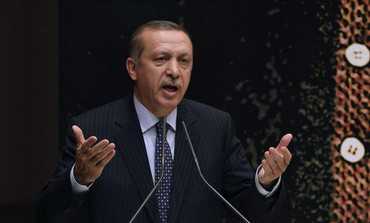
    Turkish Prime Minister Erdogan. Photo: REUTERS/Stringer

    Turkey’s consul general to the Palestinian Authority has presented his credentials to PA President Mahmoud Abbas and will become the first ambassador recognized by Palestine, Turkish daily Hurriyet reported on Monday.

    The move comes after the Palestinian upgrade to non-member observer state at the UN General Assembly in November.

    Turkey was one of a large majority of states which recognized the PA’s status upgrade at the United Nations.

    Şakir Torunlar, who has served as the consul general in Jerusalem, which provides consular services for Turkish citizens in the West Bank and Gaza, will be the new Turkish Ambassador to Palestine, according to the report.

    The move came weeks after Prime Minister Binyamin Netanyahu’s apology to Turkey for operational errors committed that may have led to a loss of life on the Mavi Marmara in May 2010. Nine Turks were killed when Israel Navy commandos, trying to keep the ship from breaking the blockade of the Gaza Strip, were attacked by those on board.

    Turkish Prime Minister Recep Tayyip Erdogan plans to visit the Gaza Strip for the first time at the end of May, Hurriyet reported on Monday.

    Herb Keinon contributed to this report.

    via ‘Turkey first state with ambassador to Palestine’ | JPost | Israel News.

  • Despite Israel’s apology, Turkey not normalizing ties

    Despite Israel’s apology, Turkey not normalizing ties

    Despite Israel’s apology, Turkey not normalizing ties

    NATO planned to invite foreign ministers from Mediterranean countries, including Israel and six Arab states, but Turkey nixes Israeli participation • Erdoğan: Turkey will not send an envoy to Tel Aviv before Israel lifts its naval blockade on the Gaza Strip.

    Eli Leon and Israel Hayom Staff

    136593045410631713a_b

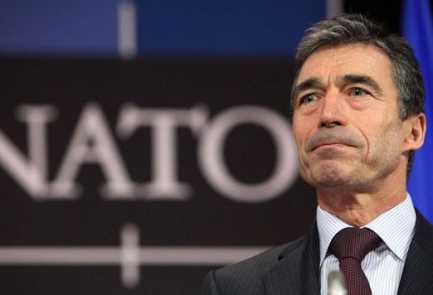
    NATO Secretary-General Anders Fogh Rasmussen. | Photo credit: AP

    Despite the Israeli apology for the 2010 Mavi Marmara incident, Turkey said it objects to meeting Israeli diplomats at the upcoming Mediterranean Dialogue group, in which Israel was supposed to have participated for the first time since 2008.

    In addition, Turkey’s Prime Minister Recep Tayyip Erdoğan said on Saturday that Turkey will not send an envoy to Israel as part of a recent move for normalization of ties before Israel lifts its naval blockade on the Gaza Strip.

    Erdoğan reiterated Turkey’s stance on the issue and said Israel should lift the blockade before full restoration of diplomatic ties, Turkish newspaper Sunday Zaman reported.

    According to the Turkish daily Hurriyet, Anders Fogh Rasmussen, the 12th and current secretary-general of NATO, planned to invite the foreign ministers from Mediterranean countries, including from Israel and six Arab states, but Turkey has objected, arguing that “it wasn’t the right time” for such a meeting.

    “The general-secretary was planning to invite the foreign ministers of the Mediterranean Dialogue countries on the sidelines of the NATO foreign ministers meeting scheduled for April 23 but Turkey objected to the idea,” a Western diplomatic source told Hürriyet on the condition of anonymity.

    A Turkish official told Hurriyet that “at this stage, such a meeting would not be useful.”

    According to the newspaper, the official also said that Egypt and Tunisia, two members of the Mediterranean Dialogue, did not want to hold such meeting at this stage either.

    NATO’s Mediterranean Dialogue was initiated in 1994 by the North Atlantic Council. It currently involves seven non-NATO countries in the Mediterranean region: Algeria, Egypt, Israel, Jordan, Mauritania, Morocco and Tunisia.

    According to Hurriyet, Turkey has been having a tough time normalizing relations with Israel since the relatives of slain Turkish activists still appear defiant about continuing their lawsuits against senior Israeli officials, with one even declaring that he would hand his compensation money from Israel to Hamas and Islamic Jihad. The dropping of legal cases against Israeli officials was one of the core conditions that Israel demanded from Turkey as part of the apology deal.

    via Israel Hayom | Despite Israel’s apology, Turkey not normalizing ties.

  • Turkey opts out of NATO talks with Israel

    Turkey opts out of NATO talks with Israel

    By TOVAH LAZAROFF

    Tunisia, Egypt also reportedly dismissed potential meeting; group intended to discuss security in region has not met since 2008.

    ShowImage

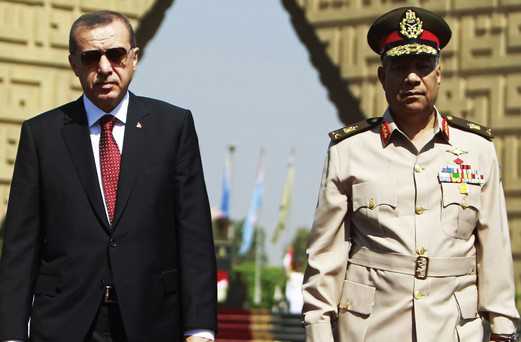
    Erdogan visits Egypt Photo: AMR ABDALAH DALSH / REUTERS

    Turkey, Tunisia and Egypt rejected plans to hold a meeting of NATO’s Mediterranean Dialogue group, Turkey’s Hurriyet Daily News reported on Saturday. Israel is one of the Dialogue group’s seven member-nations.

    The Mediterranean Dialogue group for Foreign Ministers – which also includes Algeria, Jordan, Mauritania and Morocco – has not met since 2008, according to Hurriyet.

    A Turkish official told Hurriyet that the meetings had not been held because of political problems between Israel and Arab member-nations.

    Israel’s Prime Minister’s Office had no comment.

    News that Turkey was among the countries that nixed the meeting comes as Jerusalem and Ankara struggle to reestablish diplomatic relations.

    Ties between Israel and Turkey were severed in 2010 after the IDF raided the Gaza-bound Mavi Marmara and killed nine Turkish activists.

    Last month, at the end of US President Barack Obama’s visit to Israel, Prime Minister Binyamin Netanyahu apologized to Turkey for the deaths.

    Turkey, in turn, agreed to reestablish diplomatic ties.

    However, it then asked Israel to delay sending a delegation to Turkey to discuss issues relating to the restoring of diplomatic relations.

    The delegation, which had been scheduled to leave for Ankara at the start of the month, is now scheduled to depart on April 22.

    via Turkey opts out of NATO talks with Israel | JPost | Israel News.

  • What does an Israel-Turkey Awakening Mean for Mediterranean Gas?

    What does an Israel-Turkey Awakening Mean for Mediterranean Gas?

    After nearly three years of tension, Israel’s olive branch to Turkey in late March was welcome news to most of the Eastern Mediterranean, not to mention Washington. With Prime Minister Benjamin Netanyahu offering an apology for Israeli actions against a Turkish aid flotilla in 2010, it seemed possible we might see some cohesion on the region’s roster of current challenges. Announcing a full resumption of diplomatic ties, the two governments opened the door to an assortment of possible joint efforts, including how to deal with a beleaguered Syria and a new Egypt. However, what stood out for many was what it all would mean for the region’s energy options.

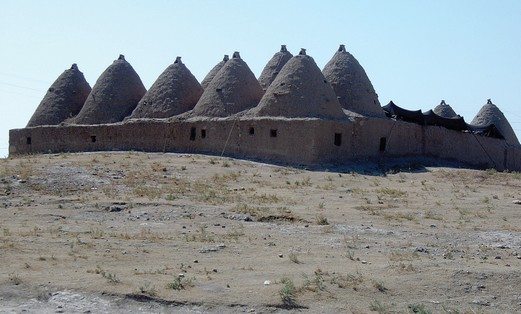
    Location of the Eastern Mediterranean (Photo credit: Wikipedia)

    After years of fruitless exploration in the Eastern Mediterranean, Israel hit upon billions in potential revenue and energy independence in 2009 with the discovery of one of the largest offshore finds in a decade. Since then, the country has rushed to exploit the reserves with the help of foreign partners, including Texas’s Noble Energy, in hopes of bringing in an estimated $80 billion over the coming years. However, while Israeli gas efforts officially started flowing during the final days of March, the challenge of just how to transport the product to worthwhile markets like Europe remains a challenge. Sure they’d explored alterative options, including a Cyrus-Greece line or LNG plants. But with Turkey eager to get involved in a gas bonanza they’d previously only watched from the sidelines and with the economic stability to back up their plans, Israel’s surest best now seems to rest in Ankara.

    So, with Israel and Turkey now willing to talk and plan for the future, where does this leave poor Cyprus? Always willing to play the cautiously neutral middleman as its neighbors laid claims to the region’s newfound gas fortunes, the partial island nation is finding itself newly isolated in the push to cash in on the region’s gas riches.

    This could not come at a worse time for Cyprus. Over the last few weeks, the country’s fiscal situation has gone from bad to worse as a push for a financial bailout package ended with a series of missteps that dashed any remaining confidence in the country’s economy. In addition to nearly destroying the country’s bloated banking system, the experience left them in a weaker position when it comes to developing their offshore claims.

    Cypriot leaders, including newly elected Prime Minister Nicos Anastasiades have insisted that gas revenues be left alone when it comes to dealing with the country’s current crisis. In order to avoid selling off the country’s future wealth in a panic to ensure a quick bailout or loans, gas revenue would be kept separate and not be considered until production efforts really started bringing in revenue, which they expect as early as 2018 or 2019. Even during recent negotiations to secure funding to fend off a collapse of their banking system and restructure a Russian loan, Cyprus balked at the idea of exchanging support for exploration and production rights to their offshore claims.

    However, as the dust has now settled and the reality of the country’s path towards economic recovery has become a little more clear – long and difficult – the ability to hold off on potential gas revenue has become much more difficult. Even with financial support pledged from Europe and the IMF, Cyprus may likely soon have to appeal for further support to stay afloat. Keeping gas off the table during those discussions may soon become impossible.

    In a more immediate, logistical sense, Cyprus’s role in exporting gas out of the region and to Europe has become a lot more difficult in terms of being able to pay to play. With an economy in tatters and investor confidence in the dumps, its unclear just how the country’s leaders plan to support their own energy infrastructure development, much less taking part in regional efforts linking the Eastern Mediterranean with more eager markets. Israel may have floated early partnerships when offshore gas first became a reality, but given Nicosia’s current financial standing,

    Here, it appears is where Turkey enters the picture. While Cyprus will be struggling to find ways to meet even basic spending needs, Turkey has shifted billions towards infrastructure projects in recent years.

    For now, Cyprus has pledged to push on with or without regional partnerships they explored over the last year. Also working with Noble Energy, Cyprus lays claim to an estimated 60 trillion cubic feet of offshore gas reserves, which they hope will start flowing within the next few years. While they intend to move on alone if they have to, moving the gas out of Cyprus may prove challenging or at the very least, very expensive. Early proposals include building a pipeline to Cyprus where Liquefied Natural Gas plants could process the reserves for transport to the rest of Europe, though such an effort would cost an estimated $13.3 billion. For a country that just barely nailed down a bailout package worth about as much, this is not an easy task.

    via What does an Israel-Turkey Awakening Mean for Mediterranean Gas? – Forbes.