Category: Non-EU Countries

  • Chomsky says Northern Ireland is model for Kurdish solution

    Chomsky says Northern Ireland is model for Kurdish solution

    Noam Chomsy

    BARRY J WHYTE

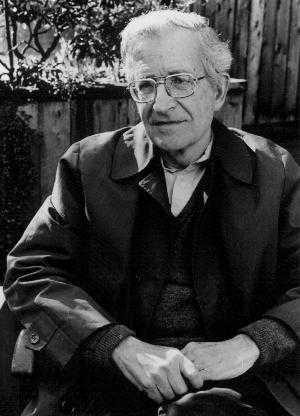
    Noam Chomsky, the American linguistics professor, believes that the Northern Ireland peace process can offer a model for solving the Kurdish problem.

    Chomsky, who is in Istanbul Bilgi University for the 7th annual “Gathering in Istanbul for Freedom of Expression,” said that careful examination of the Irish and Spanish models will provide the key to success. He said that he is in favour of a general amnesty for Kurdish guerillas, which was a key factor in convincing Irish Republicans to join the talks that led to the Good Friday Agreement.

    He also pointed out that there had been some recent positive developments on the Kurdish issue in Turkey.

    Chomsky teaches at Massachusetts Institute of Technology.

    , October 11, 2010

  • Proposal to Cede Cyprus to Greece

    Proposal to Cede Cyprus to Greece

    Proposal document from National Archives to cede Cyprus to Greece.

    Download

  • The road to Tehran runs through Ankara

    The road to Tehran runs through Ankara

    Posted By Geneive Abdo

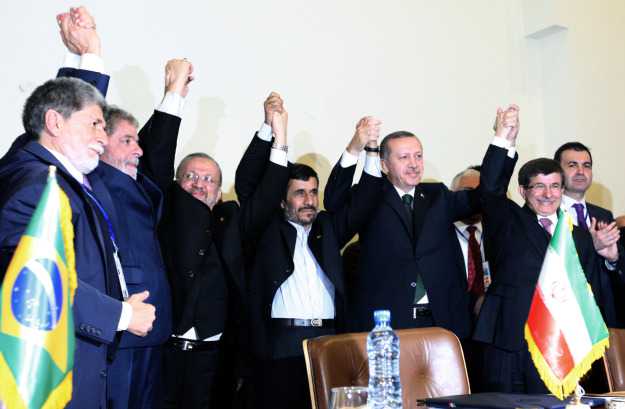
    Iran’s Foreign Minister Manouchehr Mottaki in recent days met with dignitaries at the United Nations to generate international support for Iran to engage in talks with the United States and other permanent members of the UN Security Council over Iran’s nuclear program. But when Mottaki and other Iranian officials in Tehran have talked recently about restarting talks, they are not referring to the nuclear negotiations the Europeans and the United States are hoping for; rather, they are trying to gain traction on negotiations about the Tehran Declaration, the agreement brokered between Iran, Brazil and Turkey in May, which is limited to a swap deal over a portion of Iran’s enriched uranium. This is the deal the United States, Britain, and France dismissed in May as a sideshow and a manipulative tactic by Iran to get out of tough sanctions, shortly before crippling sanctions were passed in the United Nations, the European Union, and the U.S. Congress. At the time, this action prompted a hostile reaction from Iran.

    Now that Mottaki is placing the deal squarely on the table again, the Obama administration should seize the moment. Rather than purse talks over Iran’s broader nuclear program and risk failure — during a period when there appears to be little time to waste before either a military attack is launched against Iran or Iran develops the technology to produce a nuclear weapon — a wiser move would be to talk with Iran first over the Tehran Declaration as a way of building trust.

    This is certainly the view of the Turks. A delegation of Turkish parliamentarians was in Washington last week for meetings with the Obama administration over Ankara’s relations with Iran, Israel and other issues. The delegation likely advised the United States to take Iran up on its offer to begin talks immediately over the Tehran Declaration. At least one other Turkish delegation visited Washington this past summer, delivering this same message. But their efforts produced little more than hostility from members of Congress and less than enthusiastic responses from officials in the administration.

    In interviews I had in Turkey during a recent trip there, Turkish diplomats who spent months shuttling between Ankara and Tehran last spring to broker the Tehran Declaration told me that the United States should accept Iran’s offer to make the Tehran Declaration the framework of any negotiations with the five-plus-one because there is no support in Tehran now to negotiate over Iran’s broader nuclear program. This might be what the United States wants, but there is no backing for it among a cross-section of Iran’s political elites. “The inner circle around [Supreme Leader Ali] Khamenei views this Tehran agreement as a first step to establish good faith with Western governments,” said one Turkish official with first-hand knowledge of the talks with Iran.

    Iran’s new campaign to revive the Tehran Declaration extends from New York to Tehran. On Sept. 28, Iranian Foreign Ministry Spokesman Ramin Mehmanparast reiterated Iran’s position: “We have repeatedly said that we are ready for talks with Vienna Group based on [the] Tehran Declaration and we are continuing consultation to specify details of the negotiation as well as its place and time.”

    Turkish officials have stated repeatedly — both last week during their Washington visit and in the summer — that Turkey wants to facilitate the negotiations with Iran and the five-plus-one. Indeed, as the arbiter Turkey would likely ensure success. By now, Turkish negotiators understand the internal politics inside the Iranian regime far better than their European or American counterparts do. The many months Turkish foreign ministry officials shuttled between Tehran and Ankara were instructive: “It was a good lesson in how to build a consensus with different political actors,” one Turkish foreign ministry official told me who participated in the delegation.

    The Turks believe that negotiations first over the fuel swap deal — even though it falls far short of the demands of the five-plus-one — will lead the inner circle around Khamenei and the supreme leader himself to compromise over other issues of concern to the West, such as Iran enriching uranium at 20 percent, which the Obama administration adamantly opposes because it could allow Iran to eventually produce a nuclear weapon.

    The United States should listen to the Turks, simply because there are no other options to begin a dialogue with Iran. At this point, we do not need any more negotiations with Iran to understand that Western states cannot effectively talk to the Iranians alone. Talks between the five-plus-one with Iran, with Turkey as the arbiter, are a positive path out of the deadlock.

    Geneive Abdo is the Director of the Iran program at The Century Foundation and creator of .

    ,

    October 6, 2010
  • Cyprus National Archives

    Cyprus National Archives

    Cyprus National Archives


    Download

  • A PUBLIC PETITION TO THE SWISS GOVERMENT FOR TANGIBLE PROOF OR OTHERWISE

    A PUBLIC PETITION TO THE SWISS GOVERMENT FOR TANGIBLE PROOF OR OTHERWISE

    WE THE UNDERSIGNED, SIGN A PETITION AGAINST A PAROCHIAL SWISS LAW PERTAINING TO SO CALLED ARMENIAN GENOCIDE AND ITS PUBLIC DENIAL THEREOF.  THE SAID SWISS LAW IS WITHOUT INTERNATIONAL LEGAL BASIS AND RESTRICTIVE ON FREEDOM OF SPEECH AND LAWFUL EXPRESSION, ACCORDINGLY UNTRIED AND UNTESTED BY INTERNATIONAL LEGAL BODIES; INCLUDING UNITED NATIONS AND THE INTERNATIONAL COURT OF HUMAN RIGHTS.

    THIS IS AN INTERNATIONAL PUBLIC PROTEST AGAINST THE BIASED AND RACIST SWISS LAW, GIVEN THAT ITS PAROCHIAL NATURE IS IMMORAL, AGAINST THE LETTER AND THE SPIRIT OF THE UNIVERSAL DECLARATION OF HUMAN RIGHTS OF 1948, EUROPEAN CONVENTION ON HUMAN RIGHTS OF 1950, INTERNATIONAL COVENANT ON CIVIL AND POLITICAL RIGHTS OF 1966  AND THE INTERNATIONAL COVENANT ON ECONOMIC, SOCIAL AND CULTURAL RIGHTS OF ALSO 1966 AND THE CLEAR REJECTION OF ARMENIAN CLAIMS BY THE UNITED NATIONS ON THE 15th OF OCTOBER, 2000.

    WE SUBMIT OUR PROTEST AGAINST SAID SWISS LAW AS EUROPEAN AND FREE WORLD CITIZENS, IN GOOD FAITH, ON OUR FREE WILL AND WITHOUT ANY UNDUE INFLUENCE FROM ANY PARTY. WE SEEK IMMEDIATE REPEAL FOR THIS INHUMANE AND RACIST LAW IN NO UNCERTAIN TERMS AND SUBMIT A POCKET GUIDE FOR YOUR INFORMATION AND ENLIGHTENMENT.

    This Petition is closed

  • BBC Turkçe’s TV Programme now Broadcasts Five Times a Week on NTV

    BBC Turkçe’s TV Programme now Broadcasts Five Times a Week on NTV

    The BBC‘s service in Turkish, BBC Turkçe, has further extended its presence on Turkey’s leading 24-hour news channel, NTV.

    The BBC‘s current-affairs TV programme, Dünya Gündemi (World Agenda), will now be broadcast five days a week, Tuesday to Saturday, adding two more editions to NTV’s weekly schedule.

    Dünya Gündemi brings TV audiences in Turkey reports and analysis of issues that dominate the global agenda. The 13-minute programme focuses on news that has a global and regional impact, covering subjects from worldpolitics and world economy to environment and climate change, from the social and ethical impact of latest scientific developments to arts, culture and sports.

    Sarah Jones, Business Development Manager, Europe, BBC World Service, says: “This is an exciting development for us as it means more BBC content is now brought to the audiences of our Turkish partner, NTV. We are looking forward to delivering the quality and range of BBC journalism, now five times a week, to the viewers of the NTV channel.”

    Hüseyin Sükan, Head of BBC Turkçe, adds: “We’ve had an excellent relationship with NTV since the beginning of our partnership in 2002. Dünya Gündemi was launched two years ago and has gone from strength to strength. I am delighted that we have reached a stage when we can reinforce our TV offer with two more editions of the programme every week. Both BBC Turkçe and NTV teams have put a lot of effort to make this happen, and we will make sure that our programme stands out.”

    Ömer Özgüner, Head of News Programmes, NTV, comments: “Our relationship with the BBC has always been marked with harmony and high performance ever since we started. With extended editions, BBC Turkçe’s Dünya Gündemi programme will now better satisfy the audience’s need for in-depth and comprehensive reporting on a wide range of international topics which the BBC is known for. We are excited that this expertise will now reach more people, more frequently.”

    Dünya Gündemi is now broadcast on NTV at16.30 local time Tuesday to Friday, and at 19.30 on Saturdays.

    BBC Turkçe is a multimedia service, delivering international news, information, reviews and analysis in Turkish. Theradio programmes are broadcast nationally in Turkey at 07.00 and 18.00 local time on weekdays, 18.00 on Saturdays, and 11.00 and 18.00 on Sundays via the partner NTV Radyo. The BBC Turkçe website bbcturkce.com offers news and analysis in text, audio and video, and can be accessed via mobile phones and via a range of partner websites.

    , 03 OCTOBER 2010