Category: Non-EU Countries

  • Germany says U.S. to lose financial superpower status

    Germany says U.S. to lose financial superpower status

    By Noah Barkin Reuters

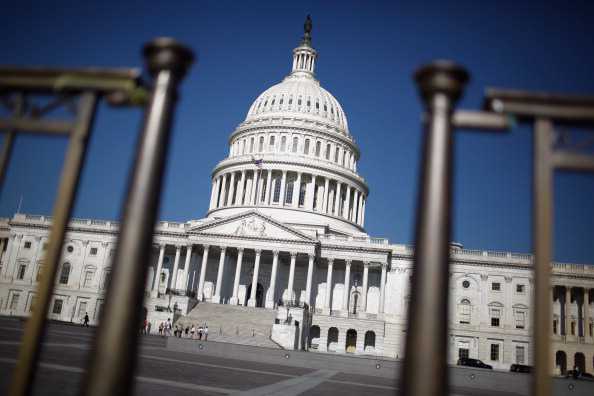
    BERLIN (Reuters) – Germany blamed the Anglo-Saxon capitalist model on Thursday for spawning the global financial crisis, saying the United States would lose its financial superpower status and have to accept greater market regulation.

    In unusually stark language, German Finance Minister Peer Steinbrueck told parliament the financial crisis would leave “deep marks” and proposed eight measures to address it, including a ban on speculative short-selling and an increase in bank capital requirements to offset credit risks.

    “The world will never be as it was before the crisis,” Steinbrueck, a deputy leader of the centre-left Social Democrats, told the Bundestag lower house.

    “The United States will lose its superpower status in the world financial system. The world financial system will become more multi-polar,” he said.

    Steinbrueck lay the blame for the crisis squarely on the United States and what he called an Anglo-Saxon drive for double-digit profits and massive bonuses for bankers and company executives.

    “Investment bankers and politicians in New York, Washington and London were not willing to give these up,” he said. “Wall Street will never be what it was.”

    The collapse of U.S. investment bank Lehman Brothers and financial woes of other financial institutions like insurer AIG has prompted the U.S. government to unveil a $700 billion rescue package for the country’s financial sector.

    Steinbrueck said it was neither necessary nor wise for Germany to replicate the U.S. plan for its own institutions.

    The German Bundesbank said earlier this week that the financial market turbulence would hit the earnings of Germany’s big commercial lenders, its publicly-owned Landesbanks and its cooperative banks.

    Tighter credit in the wake of the crisis could also constrain household consumption and corporate investment, increasing the likelihood the German economy will fall into recession this year.

    But Steinbrueck said German regulator Bafin believed German banks could cope with losses and ensure the safety of private savings.

    He said the crisis showed the need for a greater state role in setting the rules for markets and called the turmoil primarily an American problem.

    “The financial crisis is above all an American problem. The other G7 financial ministers in continental Europe share this opinion,” he said.

    “This system, which is to a large degree insufficiently regulated, is now collapsing — with far-reaching consequences for the U.S. financial market and considerable contagion effects for the rest of the world,” Steinbrueck added.

    (Reporting by Noah Barkin and Kerstin Gehmlich)

    Source: uk.news.yahoo.com, 24 September 2008

  • Detective Richard de Cadenet jailed for fraud using Scotland Yard card

    Detective Richard de Cadenet jailed for fraud using Scotland Yard card

    Officer took wife and mistress on holidays

    A leading antiterrorist police officer has been jailed for ten months after admitting using his Scotland Yard credit card to take his wife and mistress on luxury holidays.

    Detective Sergeant Richard de Cadenet is the first officer to be jailed as part of an investigation that led to the cancellation of more than 1,400 Metropolitan Police credit cards.

    The officer, who worked on a number of high-profile operations including the 7/7 attacks on London, was jailed yesterday by Southwark Crown Court. He admitted illicitly spending more than £73,000 on his corporate credit card during a 15-month period.

    The court heard that the 39-year-old officer, the son of Alain de Cadenet, the former racing driver, and the brother of Amanda de Cadenet, the television presenter, used the credit card in an attempt to buy “affection”.

    David Levy, for the prosecution, said that the exact amount of illicit expenditure by de Cadenet amounted to £73,669.18.

    He spent £6,452 on a holiday in Thailand and a further £9,000 on a trip to Mexico. The card was also used to pay for a box at a Premier League football ground in which de Cadenet’s estranged father had been entertained, along with others.

    A further £5,910 was spent in supermarkets, £3,500 on clothes, £3,000 on electrical goods and cash withdrawals of more than £18,000 were made. Only 28 of the 415 payments made by the card were legitimate, the court was told.

    Mr Levy said the policy that obtained at the time in the Metropolitan force had been for the cards to allow officers to pay for legitimate expenses such as hotel bills and travelling while working outside London.

    He said that officers were supposed to submit a monthly “reconciliation” of their expenditure to the Metropolitan Police Authority but that this had not taken place in the case of de Cadenet.

    Neil Saunders, for the defence, said that de Cadenet had joined the Metropolitan Police in 1996 after serving in the RAF. At police training in Hendon, North London, he had emerged as a “class leader”, he said, and had subsequently received glowing reports for his work as a police officer.

    But he said de Cadenet, who served with the RAF in Bosnia and during the Gulf War, had begun experiencing marital difficulties, developed a drink problem and fell seriously into debt before he obtained the card.

    Mr Saunders said it appeared that de Cadenet had been attempting to “buy the affections” of those who were closest to him in the misuse of the card. “He was buying what he thought was attention and affection. He was, as I have been trying to suggest, a man who was simply unable to cope,” Mr Saunders said.

    De Cadenet admitted one count of misfeasance in public office.

    The Independent Police Complaints Commission (IPCC) said de Cadenet’s actions were a serious misuse of public money. Deborah Glass, London commissioner for the IPCC, said: “The taxpayers of London will rightly be concerned. I hope [the] sentence reassures them that abuse of the system will not be tolerated.”

    Scotland Yard is completing checks on expenditure on 3,500 corporate charge cards in use since 2006. The Directorate of Professional Standards has referred 25 cases to the IPCC and the Metropolitan Police Authority has referred two cases.

    Detective Sergeant John Gallagher, 52, who worked for the Met’s child abuse investigation unit, pleaded guilty to a £9,622 expenses scam earlier this month and was warned that he could be jailed.

    Detective Constable Matthew Washington, 36, a former antiterrorism officer, has been charged with using his corporate card to spend £12,500 for personal use and is due to stand trial at Southwark Crown Court in December.

  • The rise of mosques creates tension across Europe

    The rise of mosques creates tension across Europe

    Posted: 2007/10/11
    From: 
    Source

    ”Culture clashes” over Muslim religious buildings have erupted in Switzerland, Italy, Austria, Germany, and the Netherlands.

    by Ian Traynor in Wangen, Switzerland
    (The Guardian)

    North of Berne in an idyllic Alpine valley cowbells tinkle, a church steeple rises, and windowboxes tumble with geraniums. It has always been like this.

    But down by the railway station the 21st century is rudely intruding and the villagers of Wangen are upset.

    “It’s the noise, and all the cars. You should see it on a Friday night,” complains Roland Kissling, a perfume buyer for a local cosmetics company. “I’ve got nothing against mosques, or even against minarets. But in the city. Not in this village. It’s just not right. There’s going to be trouble.”

    The target of Mr Kissling’s ire is a nondescript house belonging to the region’s Turkish immigrant community. The basement is a prayer room where hundreds of Muslims gather every week for Friday rites.

    And in a case that has gone all the way to Switzerland’s supreme court, setting a keenly watched precedent, the Turks of Wangen have just won the right to erect a six-metre-high minaret.

    “We’ll build it by next year. We’re still deciding what colour and what material,” says Mustafa Karahan, the sole person authorised to speak for Wangen’s Turkish Cultural Association. “We don’t have any problems. It’s the other side that has the problems. We’re not saying anything else until the minaret is built.”

    If Ulrich Schlüer has his way the Wangen minaret will be toppled. An MP from the rightwing Swiss People’s party (SVP), the country’s strongest, Mr Schlüer has launched a crusade to keep his country culturally Christian.

    “Unlike other religions,” he argues, “Islam is not only a religion. It’s an ideology aiming to create a different legal system. That’s sharia. That’s a big problem and in a proper democracy it has to be tackled. If the politicians don’t, the people will.”

    Switzerland’s direct democracy rules require referendums if there is enough public support. Mr Schlüer has launched a petition demanding a new clause in the Swiss constitution stating: “The building of minarets in Switzerland is forbidden.” He already has 40,000 signatures. If, as expected, he reaches 100,000 by this time next year a referendum is automatically triggered.

    “We’ve got nothing against prayer rooms or mosques for the Muslims,” he insists. “But a minaret is different. It’s got nothing to do with religion. It’s a symbol of political power.”

    In a country with more than 300,000 Muslims, mainly immigrants from the Balkans, there are only three minarets in Switzerland. Wangen would be the fourth and the first outside the cities.

    Backlash

    The native backlash has begun. And not just in Switzerland. “It seems our experience here is resonating across Europe,” says a Swiss official in Berne.

    “Culture clashes” over Muslim religious buildings have erupted in Italy, Austria, Germany, and the Netherlands.

    “Christian fundamentalists are behind this,” says Reinhard Schulze, professor of Islamic studies at Berne University. “And there’s also a lot of money coming in from the Gulf states.”

    From London’s docklands to the rolling hills of Tuscany, from southern Austria to Amsterdam and Cologne, the issue of Islamic architecture and its impact on citadels of “western civilisation” is increasingly contentious.

    The far right is making capital from Islamophobia by focusing on the visible symbols of Islam in Europe. In Switzerland it is the far-right SVP that is setting the terms of the debate.

    “This is mainly about Swiss politics,” says Prof Schulze, “a conflict between the right and the left to decide who runs the country … Islam [is] a pretext.”

    Next door in Austria the far right leader Jörg Haider is also calling for a ban in his province of Carinthia, even though there are few Muslims and no known plans for mosques. “Carinthia,” he said, “will be a pioneer in the battle against radical Islam for the protection of our dominant western culture.”

    In Italy the mayors of Bologna and Genoa last month cancelled or delayed planning permission for mosques after a vociferous campaign by the far-right Northern League, one of whose leaders, Roberto Calderoli, threatened to stage a “day of pork” to offend Muslims and to take pigs to “defile” the site of the proposed mosque in Bologna.

    While the far right makes the running, their noisy campaign is being supported more quietly by mainstream politicians and some Christian leaders. And on the left pro-secularist and anti-clericalist sentiment is also frequently ambivalent about Islamic building projects.

    Cardinal Joachim Meisner of Cologne has voiced his unease over a large new mosque being built for the city’s 120,000 Muslims in the Rhineland Roman Catholic stronghold. A similar scheme in Munich has also faced local protests.

    The Bishop of Graz in Austria has been more emphatic. “Muslims should not build mosques which dominate town’s skylines in countries like ours,” said Bishop Egon Kapellari.

    This opposition is on a collision course with an Islam that is now the fastest-growing religion in Europe and which is clamouring for its places of worship to be given what it sees as a rightful and visible place in west European societies.

    “Islam is coming out of the backyards. It’s a trend you see everywhere in Europe,” says Thomas Schmitt, a Bonn University geographer studying conflicts over mosques in Germany.

    Estimated at about 18 million and growing, the Muslims of western Europe have long worshipped in prayer rooms located in homes, disused factories, warehouses or car parks, hidden away from public view. Their growing self-confidence, though, is reflected in plans for the Abbey Mills mosque, Britain’s biggest, in east London, which is intended to have a capacity of 40,000.

    Last month there were scuffles at the site of the Westermoskee in west Amsterdam. A Dutch government minister broke ground for building one of the Netherlands’ biggest mosques last year. But the project is mired in controversy and may not be completed.

    Confidence

    “The whole idea of having these huge mosques is about being part of Europe while having your religion,” says Thijl Sunier, a Dutch anthropologist. “You have young Muslims showing their confidence, stating we are part of this society and we want our share. And you have growing anxiety among many native Europeans.”

    In Berne, the Swiss capital, the city authorities have just denied building permission for turning a disused abattoir into Europe’s biggest Islamic cultural centre, a £40m complex with a mosque, a museum on Islam, a hotel, offices and conference halls. Organisers are looking for an alternative site.

    Dr Schmitt says that by hiring leading architects to build impressive mosques that alter the appearance of European cities Muslims are making a commitment to the societies in which they live. “They are no longer guests. They are established. This is a sign of normalisation, of integration,” he says.

    But in Wangen, that message falls on deaf ears. “First it was a cultural centre, then a prayer room, and now a minaret,” says Mr Kissling. “It’s salami tactics. The next thing it will be loudspeakers and the calls to prayer will be echoing up and down the valley. Our children will ask ‘what did our fathers do’, and their answer will be – they did nothing.”


    Mathaba relies on your support for independent as well as investigative journalism. Please subscribe for a small fee and also join our free Daily Briefing. To send this article by Email click here if others would also benefit from reading it.

     
      → Spreading awareness or smearing a religion?
    → ‘Black sheep’ cartoon ignites row over racism before Swiss election
    → Opposition to East Berlin’s First Mosque
  • DEBKA:Russia lines up with Syria, Iran against America and the West

    DEBKA:Russia lines up with Syria, Iran against America and the West

    Summary of DEBKAfile Exclusives in Week Ending Sept. 18, 2008
    Russia lines up with Syria, Iran against America and the West

    Sept 12.: Moscow announced renovation had begun on the Syrian port of Tartus to provide Russia with its first long-term naval base on the Mediterranean.

    As the two naval chiefs talked in Moscow, Russian foreign minister Sergei Lavrov met Iranian foreign minister Manouchehr Mottaki in the Russian capital for talks on the completion of the Bushehr nuclear power plant by the end of the year.

    DEBKAfile’s military sources report Russia’s leaders have determined not to declare a Cold War in Europe but to open a second anti-Western front in the Middle East.

    In the second half of August, DEBKA file and DEBKA-Net-Weekly’s analysts focused on this re-orientation (Russia’s Second Front: Iran-Syria), whereby Moscow had decided to use its ties with Tehran and Damascus to challenge the United State and the West in the Middle East as well as the Caucasian, the Black Sea and the Caspian region.

    In aligning with Tehran and Damascus, Moscow stands not only against America but also Israel. This volatile world region is undergoing cataclysmic changes at a time when Israel is without a fully competent prime minister.


    Missile alert is revived on Israel-Gaza border

    12 Sept.: DEBKAfile’s Palestinian sources report that the leaders of the Iranian-backed Jihad Islami terrorist group in Gaza have warned they will go back to firing missiles at neighboring Israeli towns and villages unless the ruling Hamas stops persecuting them.
    Our military sources report that Israeli forces securing the Gaza border went on missile alert Thursday, Sept 11, when Hamas heavies continued their crackdown.

    Hamas gunmen are systematically bulldozing the Jihad bases, built over the ruins of the former Israeli Gush Katif villages, and flattening the sites. They have seized control of Jihad mosques in the southern part of the Gaza Strip and are making arrests.


    Syrian commandos invade 7 Greater Tripoli villages of N. Lebanon
    DEBKAfile Exclusive Report

    13 Sept.: Two Syrian commando battalions accompanied by reconnaissance and engineering corps units have crossed into Lebanon in the last 48 hours and taken up positions in seven villages, most of them Allawite Muslim, outside Tripoli, DEBKAfile’s military sources reported Saturday, Sept. 13. They are the vanguard of a large armored force poised on the border.

    Damascus has signaled to Washington and Paris: Don’t interfere.

    The Syrian incursion coincided with the expected arrival of Russian naval and engineering experts for renovating Tartus, the Syrian port 40 kilometers north of Tripoli, to serve as the Russian fleet’s first permanent Mediterranean base.

    Seen from Israel, once Assad’s army completes its advance on Tripoli, he will control the full length of the military supply route for Hizballah from the Syrian ports of Latakia and Tartus. The Russian presence will add a new and troubling dimension to this development.


    Russia, US pull further apart over Iranian nuclear activities

    13 Sept.: Russian president Dmitry Medvedev said Friday a military solution to the standoff over Iran’s nuclear ambitions is unacceptable and there is no need for new sanctions. At the same time, Washington has imposed new sanctions on Iran, blacklisting a main shipping line and 18 subsidiaries. The US government accuses the maritime carrier of ferrying contraband nuclear material, which Tehran denies.

    Washington sources predict this may be the prelude to more serious actions, such as a naval blockade to choke off Iran’s imports of fuel products.

    Moscow continues to support the European Union’s diplomatic drive to trade incentives for Iran’s consent to curb “some of its nuclear activities.”

    The nuclear watchdog has asked Tehran to account for 50-60 tons of missing uranium from its main enrichment site at Isfahan. It is enough to produce five or six nuclear bombs and is suspected of having been diverted to secret sites to boost the covert production of weapons-grade uranium.


    Terror suspected in Aeroflot crash which killed all 88 people aboard
    DEBKAfile Exclusive Report

    14 Sept.: DEBKAfile’s counter-terror sources report from Moscow that three Jewish families, two Habad students and a Russian general were among the 88 passengers and crew killed in the Aeroflot Boeing 737 crash at Perm, Siberia, Saturday, Sept. 13. The plane was in flight from Moscow.

    Russian authorities reported the plane’s sudden disappearance off the radar at the moment cockpit communications shut off. This indicated the craft may have exploded in mid-air. They suspect terrorism as the cause of the crash because –
    1. At least five passengers bought tickets but did not turn up for the flight. Security officials are trying to locate their addresses and sifting through the wreckage for unaccompanied luggage.

    2. One of the passengers has been identified as Gen. Gennadiy Troshev, a Russian hero for quelling the Chechen rebellion.

    3. Our sources name one of the Jewish – or possibly Israeli – families aboard the doomed flight. They have been named as Ephraim Nakhumov, 35, his wife Golda, 24, and their two children, Ilya, aged 7, and Eva, aged four.


    Thirty-four people die in Iraq Monday

    15 Sept.: At least 22 people were killed and 32 wounded by a female suicide bomber who blew herself at a police gathering in Iraq’s Diyala province.

    The guests were attending an Iftar banquet, when Muslims break their fast during the month of Ramadan, in Balad Ruz, 70km (45 miles) north of Baghdad.

    Earlier, two car bombs exploded in central Baghdad, killing 12 people.


    In show of bravado, Iran launches “air defense exercises”

    Iranian official sources report that the air force drill began Monday, Sept. 15, in half of the country’s 30 provinces. They gave out no details of which provinces or how long the exercise would last. The commander of Iran’s aerial defense, Brig. Gen. Ahmed Mighani said that any enemies attacking the Islamic Republic would regret it.

    The exercise was launched on the day the UN nuclear watchdog reported that non-cooperation from Tehran had stalled its efforts to establish whether or not Iran was developing nuclear warheads, enriching uranium for military purposes, testing nuclear explosives or building nuclear-capable missiles.

    Tehran is not deterred by sanctions or tempted by international diplomacy to give up its nuclear aspirations, especially since the Georgia conflict with the United States has presented Iran with Russian backing for its nuclear program and opposition to sanctions.

    Iran’s defense minister Mostafa Mohammad Najjar said scornfully Monday: “Threats by the Zionist regime and America against our country are empty” – showing that Tehran feels free to go forward with its nuclear plans.


    Gates arrives in Baghdad unannounced

    15 Sept.: Gates arrived in Baghdad to supervise the handover of the Iraq command from Gen. David Petraeus to Lt. Gen. Ray Odierno. Petraeus moves on to lead the Central Command overseeing Middle East, Afghanistan, Horn of Africa.
     

    France wants more sanctions on Iran for stonewalling UN nuclear probe

    16 Sept.: The International Atomic Energy Agency (IAEA) report that for lack of Tehran’s cooperation, it has made no progress in establishing whether or not Iran is developing nuclear warheads, enriching uranium for military purposes, testing nuclear explosives or building nuclear-capable missiles..

    Furthermore, despite three rounds of UN Security Council sanctions, Iran has not stopped nuclear enrichment. At present, 4,800 centrifuges are operating and another 2,000 are getting read to start work in the near future.

    DEBKAfile’s Iranian sources report that the Tehran administration shows more contempt than ever before toward the UN, international diplomacy and potential sanctions, certain that the prospect of a US and Israeli military strike on its nuclear facilities recedes further day by day.

    “Threats by the Zionist regime and America against our country are empty,” said defense minister Mostafa Mohammad Najjar,”


    Ex-PMs Barak and Netanyahu in secret power-sharing talks
    DEBKAfile Exclusive Report

    16 Sept.: Defense minister Ehud Barak of Labor and opposition leader Binyamin Netanyahu of Likud are in advanced negotiations to rotate the premiership between them in order to cut the ground from under Kadima’s winner as leader. The ultra-religious Shas is in on the plan.

    This is reported by DEBKAfile’s political circles.

    Barak’s Labor and Netanyahu’s Likud combined with Eli Yishai’s Shas hold more Knesset seats – 43, than Kadima’s 27. They are in a position to prevent the winner of the Kadima primary from automatically taking over from Olmert as head of the incumbent government coalition. Without Labor, Kadima lacks the numbers to form a viable coalition government.

    DEBKAfile’s sources report that Netanyahu and Barak are close to accord on the general principles of their partnership but are still working on details. Netanyahu would go first up until a general election because Barak, who is not a member of Knesset, cannot become prime minister. Barak believes he can use his pact with Netanyahu to push Kadima’s buttons and at the right moment, take the party over and form a left-of-center Labor-Kadima bloc to fight his current partner, head of the right-of-center Likud.


    North Korea conducts long-range missile engine ignition test

    17 Sept.: The test at the new Tongchang-ri site was detected by the U.S. KH-12 spy satellite. The base is located 50 kilometers (30 miles) from the North Korean border with China,

    At least 11 killed in bloody Hamas crackdown on Doghmush clan militia in Gaza

    16 Sept.: The dead included Momtaz Doghmush, head of Army of Islam and co-kidnapper with Hamas of Gilead Shalit, and in infant. Hamas battled the militia for five hours with mortar fire on its base at the Sabra district of Gaza City, losing one of its gunmen.

    Sixteen killed in al Qaeda attack on US embassy in Yemen

    17 Sept.: Eight Yemeni soldiers, six assailants and 2 civilians were killed in an al Qaeda suicide car bombing, RPG rocket and shooting attack on the US embassy in Sanaa, Wednesday, Sept. 17. No embassy staff members were harmed in the five explosions reported by a US official.

    DEBKAfile’s counter-terror sources disclose that Yemeni president Abdullah Salah, formerly a US partner in the war on terror, recently began working with al Qaeda to win their help for quelling plots by army dissidents to overthrow his regime and for beating back an Iran-backed Shiite rebellion.

    In March, al Qaeda mounted a mortar attack which missed the US embassy but injured 13 girls at a nearby school; other attacks targeted the Italian mission and Western tourists. Non-essential US staff were ordered to leave Yemen in April.


    CIA chief: Al Qaeda greatest security threat to US

    17 Sept.: Speaking in Los Angeles, CIA director Michael Hayden said Osama bin Laden has said repeatedly that he considers acquisition of nuclear weapons a religious duty and he intends to attack America “in ways that inflict maximum death and destruction.”

    North Korea and Iran were also threats. Hayden confirmed that the nuclear reactor Israel destroyed in Syria last year was similar to one in North Korea. Iran, he, has the scientific, technical and industrial capacity to produce nuclear weapons.

    DEBKAfile notes: This comment contradicts the US intelligence assessment last year that Iran had discontinued its military nuclear program in 2003.
    Tuesday, diplomats said that the UN watchdog had intelligence showing Iran had tried to refit a long-distance Shehab missile to carry a nuclear payload.


    Israeli banks hammered on Tel Aviv stock exchange

    17 Sept.: In Tel Aviv, prices plunged across the board, with the major banks taking an extra beating. The public voted no-confidence in the leading banks (Bank Hapoalim plunged 12.5 percent) and disregarded the finance minister, Ronnie Bar-On’s assurances that the Israeli economy is insulated from the global crisis.

    After meeting bank heads Wednesday, Bank of Israel governor Stanley Fischer issued a statement that Israel banks are “relatively well run.”

    Economic experts foresee an Israeli recession around the corner. Lehman Brothers is a major player in Israel’s structured-products market and options market. Personal savings schemes, exports to the United States and Europe and foreign investment are also susceptible.

    As foreigners employed on Wall Street, Israelis are second only to Canadians.

    Thousands have been thrown on the job market. Aside from those recalled by Lehman Brothers after the Barclays buyout, many will return home adding to the pressures on the job market. Israel’s hi-tech industry, second only to the US in annual start-ups, was already facing difficulties before the current crisis, as export orders began drying up.


    After her narrow win, Livni’s ability to form government in doubt
    DEBKAfile Exclusive Analysis

    18 Sept.: Foreign minister Tzipi Livni scraped through to victory in the Kadima party’s first leadership primary Wednesday, Sept. 17.although her win was challenged by transport Shaul Mofaz, one percent behind her (43 to his 42 percent). Early Thursday, Mofaz finally called Livni to congratulate her. Later, he announced he was quitting politics, including the party and government.

    The real results differed dramatically from the three TV exit polls which wrongly awarded Livni a landslide victory and were up to 10 percent wide of the mark. Throughout the campaign the foreign minister was a media favorite and inaccurately described as unchallenged successor to Ehud Olmert both as party chair and prime minister.
    Kadima comes out of the primary bitterly divided.. Livni faces the daunting dual challenges of uniting the party and persuading all the government coalition parties to accept her as prime minister.
    Kadima’s two senior partners, Labor and Shas, are already looking at alternatives.

    The low Kadima turnout, according to DEBKAfile’s political analysts, was a public vote of non-confidence in the party. At the Tel Aviv stock exchange Wednesday, another popular vote of no confidence took place – this one against the economic system ruled by Kadima ministers and the banks


  • God, Evolution and Charles Darwin

    God, Evolution and Charles Darwin

    From
    September 17, 2008

    Ten surprising things Darwin said about religious faith

    Next year is the big Darwin anniversary. Two hundred years after his birth and 150 after the publication of On the Origin of the Species, millions will celebrate the life and work of Charles Darwin, one of the most brilliant scientists in history, and a man who was thoroughly decent, honourable and likeable.

    Unfortunately, he has become caught up in the crossfire of a battle in which Darwin exhibited little personal interest. On one side of this cartoonish debate are the creationists. Their precise numbers, in the UK, are uncertain, although the major survey Theos /ComRes are conducting into the public’s beliefs about Darwinism, creationism and ID, which will be published next year, should help us find out more. Numbers aside, the point is that creationists dislike Darwin and regularly criticise him for supposedly undermining their religious beliefs.

    In the other trench lie the militant Godless who – bizarrely – wholly agree with the creationists. Darwinism, they proclaim, does indeed undermine religious belief and a good thing too. Darwin is their icon and they frantically genuflect before his image, in a way brilliantly parodied by the satirical magazine The Onion.

    The truth is, as ever, more complex. Darwin was too interesting, too careful a thinker to be caricatured in these ways. He was a Christian and yes, he did lose his faith. But he was never an atheist. He engaged in religious debate with friends but confessed to being in a hopeless “muddle”. He agonised over whether the exquisite beauty of life on earth was worth the pain of natural selection. He hated religious controversy and was deeply respectful of others’ views. He took upon himself the duties of a country parson whilst living at Downe and contributed to the South American Missionary Society. And, to top it all, he often doubted whether, his mind being evolved, he could even trust it in such matters. All in all, he was too complex, too subtle a man to be left to the polemicists.

    So, in the interests, of rescuing him from the no-man’s-land in which he has become trapped, here are 10 Darwin quotations, from his later years, which you are unlikely to hear from the mouths of either creationists or atheists in 2009.

    1. “The mystery of the beginning of all things is insoluble by us; and I for one must be content to remain an Agnostic.” (Autobiography)

    2. “It seems to me absurd to doubt that a man may be an ardent Theist & an evolutionist.” (Letter to John Fordyce, May 7 1879)

    3. “I hardly see how religion & science can be kept as distinct as [Edward Pusey] desires… But I most wholly agree… that there is no reason why the disciples of either school should attack each other with bitterness.” (Letter to J. Brodie Innes, November 27 1878)

    4. “In my most extreme fluctuations I have never been an atheist in the sense of denying the existence of a God.” (Letter to John Fordyce, May 7 1879)

    5. “I think that generally (& more and more so as I grow older) but not always, that an agnostic would be the most correct description of my state of mind.” (Letter to John Fordyce, May 7 1879)

    6. “I am sorry to have to inform you that I do not believe in the Bible as a divine revelation, & therefore not in Jesus Christ as the son of God.” (Letter to Frederick McDermott, November 24 1880)

    7. [In conversation with the atheist Edward Aveling, 1881] “Why should you be so aggressive? Is anything gained by trying to force these new ideas upon the mass of mankind?” (Edward Aveling, The religious views of Charles Darwin, 1883)

    8. “Would any one trust in the convictions of a monkey’s mind, if there are any convictions in such a mind?” (Letter to Graham William, July 3 1881)

    9. “My theology is a simple muddle: I cannot look at the Universe as the result of blind chance, yet I can see no evidence of beneficent Design.” (Letter to Joseph Hooker, July 12 1870)

    10. “I can never make up my mind how far an inward conviction that there must be some Creator or First Cause is really trustworthy evidence.” (Letter to Francis Abbot, September 6 1871)

    Nick Spencer is director of studies at the public theology think-tank Theos which is conducting, in partnership with the Faraday Institute for Science and Religion a project on evolution, faith and Charles Darwin. Mr Spencer’s book, Darwin and God, will be published in 2009 by SPCK.

    Source: The Times, September 17, 2008

  • Creationist Adnan Oktar wins ban on Richard Dawkins site

    Creationist Adnan Oktar wins ban on Richard Dawkins site

    From
    September 20, 2008

    A Muslim creationist has succeeded in having Richard Dawkins’s website banned in Turkey, after complaining that its atheist content was blasphemous.

    The country’s internet users are now subject to a court order imposed on Turk Telecom that prohibits them from accessing richarddawkins.net.

    The court in Istanbul issued its judgment after Adnan Oktar claimed that his book Atlas of Creation, which contests the arguments for evolution, had been defamed on Dawkins’s website.

    In July Professor Dawkins wrote on his site: “I am at a loss to reconcile the expensive and glossy production values of this book with the breath-taking inanity of the content.”

    Earlier this year Mr Oktar, who uses the pen name Harun Yahya, tried to have Dawkins’s book The God Delusion banned in Turkey but failed. He is also appealing against a three-year prison sentence for creating an illegal organisation for personal gain.

    Source: The Times, September 20, 2008