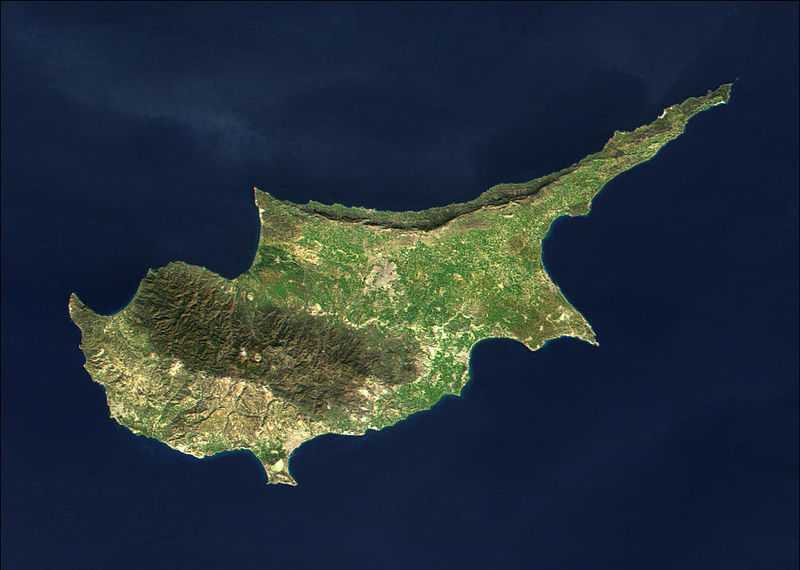
Category: EU Members

European Council decided to open accession negotiations with Turkey on 17 Dec. 2004

  • State Department Warns Americans: ‘Likelihood of Terror Attacks

    State Department Warns Americans: ‘Likelihood of Terror Attacks

    As millions of Americans prepare to travel for the U.S. Thanksgiving holiday on Thursday, the State Department warned that potential attackers could target private or government interests.

    “Current information suggests that (Islamic State), al-Qaeda, Boko Haram, and other terrorist groups continue to plan terrorist attacks in multiple regions,” the State Department said in a warning posted on its website.

    Although it did not mention the Nov. 13 Paris attacks claimed by Islamic State (ISIS) in which 130 died, the department noted that militants had carried out attacks in France, Nigeria, Denmark, Turkey, and Mali during the past year.

    “Authorities believe the likelihood of terror attacks will continue as members of (Islamic State) return from Syria and Iraq,” it said. “Additionally, there is a continuing threat from unaffiliated persons planning attacks inspired by major terrorist organizations but conducted on an individual basis.


    France and Belgium have launched a manhunt following the attacks in Paris, with a focus on Brussels barkeeper Salah Abdeslam, 26, who returned to the city from Paris hours after the attacks and is still at large.

    Abdeslam’s mobile phone was detected after the attacks in the 18th district in the north of Paris, near an abandoned car that he had rented, and then later in Chatillon in the south, a source close to the investigation said.

    Detectives were examining what appeared to be an explosive belt found in a litter bin in the town of Montrouge, south of the capital and not far from Chatillon.

    The source said it was too soon to say whether the belt had been in contact with Abdeslam, whose elder brother blew himself during the gun and suicide bomb attacks.

    One theory was that Abdeslam had intended to blow himself up in the 18th district but had abandoned the plan, although it was not clear why.

    “Maybe he had a technical problem with his explosive belt,” a police source said.

    Fearing an imminent threat of a Paris-style attack, Belgium extended a maximum security alert in Brussels for a week but said the metro system and schools could reopen on Wednesday.

    “We are still confronted with the threat we were facing yesterday,” Prime Minister Charles Michel said. Potential targets remained shopping areas and public transport.

    Belgium has been at the heart of investigations into the Paris attacks since French law enforcement bodies said two of the suicide bombers had lived there. Three people have been charged in Belgium with terrorist offences, including two who travelled back with Abdeslam from Brussels.

    SOLDIERS PATROL BRUSSELS

    As authorities tried to establish Abdeslam’s movements and whereabouts, a source said he travelled through Italy in August with a companion, but his presence caused no alarm because he was not a wanted man at the time.

    His companion was Ahmet Dahmani, a Belgian man of Moroccan origin who was arrested in Turkey last week on suspicion of involvement in the Paris attacks, the investigative source said.

    In Belgium, prosecutors said they had charged a fourth person with terrorist offences linked to the Paris attacks.

    They released all 15 others detained in police raids on Sunday. Two of five people detained on Monday were also released while the other three had their custody prolonged.

    Soldiers patrolled the streets of Brussels, the bustling European Union capital, which has been in lockdown since Saturday.

    On the Grand Place, a historic central square that usually draws crowds of tourists, an armoured military vehicle was parked under an illuminated Christmas tree.

    NATO, which raised its alert level after the Paris attacks, said its headquarters in the city were open, but some staff had been asked to work from home. EU institutions were also open with soldiers patrolling outside.

    Interior Minister Jan Jambon told RTL radio, however, that the capital was still operating. “Apart from the closed metro and schools, life goes on in Brussels,” he said.

    Workers were also setting up stalls for the city centre Christmas market, which is due to open on Friday, and organisers of the Davis Cup tennis final between Belgium and Britain in the city of Ghent, 55 km (35 miles) from the capital, said it would go ahead this weekend.


    AIRCRAFT CARRIER

    French jets from the Charles de Gaulle aircraft carrier struck Islamic State targets in Iraq and Syria on Monday, while Britain offered France the use of an air base in Cyprus to hit the militants behind the Paris attacks.

    French President Francois Hollande met British Prime Minister David Cameron in Paris as part of efforts to rally support for the fight against Islamic State. Hollande is also due to visit Washington and Moscow this week. The French president and U.S. President Barack Obama will hold a joint news conference on Tuesday morning, the White House said.

    Cameron offered air-to-air refuelling services and said he was convinced Britain should carry out air strikes alongside France and would be recommending that Britain’s parliament vote through such measures.

    French jets taking off from the country’s flagship in the eastern Mediterranean destroyed targets in Ramadi and Mosul in Iraq on Monday in support of Iraqi forces on the ground, the French armed forces said in a statement.

    In the evening, a raid was carried out on Islamic State’s Syrian stronghold of Raqqa, where the French armed forces said planes destroyed several facilities including a command centre.


  • CYPRUS: Paying the price for the questions we never asked

    CYPRUS: Paying the price for the questions we never asked

    Greek coup leader Colonel George Papadopoulos, centre, makes a toast with his feared security chief Dimitris Ioannides

    What troubles the Turkish Cypriots is not the territorial integrity of Cyprus but their physical safety, and that’s why they insist on guarantees

    By George Koumoullis

    IT IS VERY likely that our disregard for Turkish Cypriot psychology could be the root of the Cyprus problem.  It’s a disregard that derives from our education which, at least in the past, exhaustively cultivated the paralysis of knowledge and judgement. While it obsequiously praised the fascist dictatorships of Metaxas, Papadopoulos and Ioannides, it also promoted prejudice and hostility towards the Turkish Cypriots.

    Before we started the struggle for enosis, the Turkish Cypriots frequently expressed their fear, if not revulsion, for the process. The slogan ‘taksim (partition) or death’ reverberated at all the rallies of the Turkish Cypriots.

    Did we ever care to find out why they had been taken over by a passion for partition? Did we ever care to explore in depth the reasons for their fear of ENOSIS? Did we ever care to re-assure our compatriots that the ethnic cleansing which took place in Crete when it was united with Greece (incidentally, this was the main source of their fears) would not have been repeated in Cyprus, if and when ENOSIS took place? The answer to these questions is a resounding ‘no’, and this arrogance and disdain pushed the Turkish Cypriots into the arms of Turkey.

    The decision for the armed struggle of 1955 was taken secretly from the Turkish Cypriots, who made up almost 20 per cent of the population. Yet the Turkish Cypriot intelligentsia may have been able to persuade us that enosis was a maximalist aim because Turkey would on no account have consented to the union of Cyprus with Greece. They may have even warned us, prophetically, that the pursuit of this aim – which was finally implemented on July 15, 1974 – would lead to tragedy.

    On the thorny issue of the guarantees we seem set on committing the same mistake we made with our brilliant idea for an armed struggle in 1955. The president of the Republic, the president of the House and the party leaders have presented impeccable studies to explain why a modern state does not need guarantor powers. If these studies were presented to a university review committee consisting of professors and experts of political science, all the academics – even Turkish ones – would award full marks.

    But this impressive mark would have meant nothing to the Turkish Cypriots because the study did not take into account their psychology. What troubles the Turkish Cypriots is not the territorial integrity of Cyprus but their physical integrity. All those who are aware of the events that took place between 1963 and ’74 fully understand their fear.

    As the renowned Irish statesman Edmund Burke said, “no passion so effectually robs the mind of all its powers of acting and reasoning as fear”. Therefore we should not expect an automatic convergence of views on the issue of guarantees. As justified as we are in not wanting to live under the sword of Damocles wielded by Turkey, the Turkish Cypriots are as justified in seeking the safeguarding of their security with some form of guarantees.

    The tragic events of the 1963-’74 period left indelible marks on the memories of many Turkish Cypriots – some of them, in order to save their skins, were forced to abandon their houses which our ‘fighters’, combining business with pleasure, plundered.  Some other villages,  Mathiatis for example, had their houses plundered and then set on fire. Other Turkish Cypriots had relatives or friends who were murdered (I will not go into this now) and know that the killers roam free in the south.

    We therefore need to show understanding for the psychology of those who suffered, just as they need to show understanding of our fears after what we suffered in the Turkish invasion.

    Consequently, there is a sticking point. How do we escape from this labyrinth? Bearing in mind the Turkish Cypriots do not trust the EU or the UN to guarantee their security (this was made clear by the negotiator Ozdil Nami) one solution would be to accept guarantees for a period of time (for instance 20 to 30 years) after which they would be phased out.

    The expectation is that the peaceful co-existence of the two federal states would, in the meantime, render the Turkish guarantee non-applicable and therefore redundant. In addition to this, there is the possibility that by then Turkey would be a full member of the EU and, by definition, fully respect human rights, in which case trust between the two communities would be strengthened to such a degree that the treaty of guarantee would become a dead letter.

    Dead letters feature in the constitutions of many countries. For instance, Britons are not at all worried that their queen formally has super powers concentrated in her hands. According to the letter of the British constitution, the monarch has the power to dissolve parliament and the political parties, sack the prime minister and establish a dictatorship. But in practice, the queen, without exception, acts according to the wishes of the prime minister, which is why the British never worry about their human rights.


    George Koumoullis is an economist and social scientist


  • President Anastasiades meets Patriarch of Jerusalem Theophilos III

    President Anastasiades meets Patriarch of Jerusalem Theophilos III

    Cyprus makes every effort to contribute to peace and security in the Middle East region with the strengthening of the country`s relations both with Israel and the Arab states, said President Nicos Anastasiades, during his visit in the Jerusalem Patriarchate and his meeting with Patriarch of Jerusalem Theophilos III today Sunday.

    The Patriarch who welcomed the President and his spouse Andri, said that the President`s presence in the Patriarchate demonstrated their common historical and cultural heritage and their Greek Orthodox Christian faith and tradition

    He added that the Patriarchate tirelessly continued its mission for the preservation of the existing multinational, multi-religious and inter-communal political status quo of the Holy City of Jerusalem

    He also pointed out that “the historic course of the island of Cyprus, which is experiencing hardship, is interwoven with the course of the Middle East in general and the Holy Land in particular ”

    He added that the visit of President Anastasiades in Israel took place at a time when neighboring countries suffer from displacement of people from their ancestral homes, persecution of Christians and inhuman mutual slaughtering and fratricide. Patriarch Theophilos III assured that the Patriarchate was working for the peaceful coexistence of the people in the region and wished all the best to the people of Cyprus.

    On his part President Anastasiades assured that he did every effort to maintain excellent relations between both Cyprus and Israel and between Cyprus and the Palestinians and other Arab states

    He expressed concern for the current situation in the region and especially the action of extremists in Iraq, Syria, Yemen, Libya.

    “We live, in general, in a region which, unfortunately, is tormented by instability and the efforts we are making for the further strengthening of relations with the state of Israel and the Arab states are, to the degree we can also contribute, so that peace and security prevail “he said.

    He added that the city of Jerusalem, where tradition desires peaceful coexistence, is perhaps the example for a way of broader governance of countries, so that there will be mutual respect both with regard to the faith and the rights. He also wished in his next visit to Jerusalem to be able to talk about a region of peace and prosperity for all.

    Referring to the Cyprus Problem the President said that there`s now a prospect, a hope and cautious optimism, that the resumption of dialogue would finally lead to the desired peace, reunification of the country and the liberation from the occupation forces, as well as the creation of a modern EU member-state that will guarantee the rights of all Cypriots without exception, Greek Cypriots and Turkish Cypriots.

    The Patriarch honored president Anastasiades by awarding him the Highest Decoration of the Holy Grave, and they exchanged presents.

    Cyprus President Nicos Anastasiades arrived Sunday morning in Israel for an official visit.

    The President will be welcomed on Monday by the President of Israel Reuven Rivlin and later he will have talks with the Prime Minister Benjamin Netanyahu.

    The Ministers of Foreign Affairs Ioannis Kasoulides and Energy Yiorgos Lakkotrypis as well as the Government Spokesman Nicos Christodoulides who will accompany the President during his talks tomorrow, are expected to arrive in Israel later this afternoon.

    CNA

  • CYPRUS: The price of forging history

    CYPRUS: The price of forging history

    Makarios proved untrustworthy and erratic, periodically expressing support for Enosis despite having declared it unfeasible

    By George Koumoullis

    THE FORGERIES of Cyprus’ history are increasing cumulatively, like the galaxies. One forgery gives rise to another worse one and these in their turn to even worse ones. The historian who studies the history of Cyprus over the last decades must record a chain of colossal forgeries.

    I have neither the space nor the conceit to undertake such a Herculean task, so I will focus on the uproar created by the recent comment made at the University of Cyprus by the US ambassador John Koenig who said the Cyprus issue, in the main, was not an issue of invasion and occupation.

    This view that the Cyprus issue has deeper roots, and that the invasion and occupation were just part of problem, is shared by several respected Greek Cypriot writers and journalists, living and dead. If they were given a chance to speak, they would explain that the Cyprus problem came into being in the 1960s and that its root cause was not the Turkish invasion but the undermining of the independent state by us, who remained fixated on Enosis.

    They would claim that our politicians are incapable – either calculatingly or through shallowness – of separating causes from symptoms. The Greek invasion of July 1974 (which we hypocritically and misleadingly refer to as a coup – another forgery of history) and the Turkish invasion in the same month, despite being consequences and not causes of the Cyprus issue, undeniably have added another tragic text to the narrative of our problem.

    True love for a country does not involve trying to distort the history of Cyprus ‘in our favour’. Unfortunately, the version propagated by the political parties, which maintains that the Cyprus problem exists exclusively because of the Turkish invasion and occupation, is nothing more than another distortion of history.

    The Cyprus problem would not have existed if we had honoured our signature of the London-Zurich agreements which, rightly or wrongly, we had accepted. If we want to look at the gist of the matter, we bear the biggest responsibility for our national problem. Before the ink of our signature on the London-Zurich agreement had dried, the parades for Enosis began.

    On 15 January 1961, the anniversary of the Enosis referendum, a mass rally for Enosis was held in Nicosia and almost the entire political leadership attended. In July 1967, our deputies unanimously approved a resolution supporting union with the ‘mother country’, thus breaking their oath to respect the Constitution, which clearly excluded union with any other country. For this outrageous act, a book should be written entitled, ‘The perjurers of the 20th century’, even though a cynic might suggest that ‘The lunatics of the 20th century’ would be more appropriate.

    After November 1967, Makarios understood – at long last – that Enosis was not feasible and in the following year the Clerides-Denktash negotiations began with the aim of reaching a new agreement based on independence. Unfortunately, even Makarios proved untrustworthy and erratic, periodically expressing support for Enosis (e.g. his speech at a memorial service in Yialousa in 1968) despite having declared it unfeasible.

    And what could anyone say about the Akritas plan? Instead of the leader of the newly created state being a messenger of freedom, generosity, democracy and harmonious relations with our Turkish Cypriot compatriots, he turned himself into a shady schemer plotting the dissolution of the Cyprus Republic.

    Despite the adverse conditions, in 1973 Clerides revealed that the Turkish Cypriots had agreed to a model of strengthened local self-government. We were, back then, very close to a solution and relatively grounded compared to 1960. Unfortunately there was another collapse because Makarios objected to the article in the agreement that ruled out union of Cyprus with another country. He refused to give up the objective of Enosis and thus an opportunity that would have averted the events of July 1974 was lost.

    We do not have the guts to carry out some self-criticism and admit that we committed a crime against ourselves and future generations. On the contrary, the official line of the political parties is that in the 1960s we were immaculate and untarnished compared to the Turkish Cypriots who were ‘untrustworthy’ and ‘insurgents’.

    The painful reality is that in the 1960s we behaved irresponsibly, recklessly and opportunistically. Alas the bill we were called to pay for this dangerous living between 1960 and 1974 was excessively high. We gave the opportunity to the Turks to invade, seize, dishonour, pillage and vandalise, while one in three Greek Cypriots became refugees in their own country.

    And to cover up the root cause of the Cyprus issue, the parties point to imaginary hallucinations and obsession in the statements of Koenig, Downer, Eide, De Soto and I don’t know who else among the diplomats and UN mediators that have dealt with Cyprus.

    George Koumoullis is an economist and social scientist


  • Greek Cypriot Socialist Party EDEK rejects bi-zonal, bi-communal federation MAY 11TH, 2015

    Greek Cypriot Socialist Party EDEK rejects bi-zonal, bi-communal federation MAY 11TH, 2015

    Just as the peace negotiations are about to begin (15.05.2015) bad news coming out of South Cyprus. This rejection of the Federal Solution (BBF) which has been on the table for the past 35 years is an indication of further Greek Cypriot resistance to the peace process. The support of the second central party AKEL is also expected.

    Hardliner new EDEK leader Marinos Sizopoulos

     Social EDEK’s central committee has decided the party cannot accept bi-zonal bi-communal federation, either as the name or the content of a solution in Cyprus, saying that “federation cannot co-exist with bi-zonality or even more with bi-communality.”

    The committee decision will be tabled before a party congress to be held on June 14. Members of the congress may approve, reject or amend the decision.
    In its decision on Sunday, the Committee outlined the reasons for which the party did not accept this form of solution, noting that “it is racist, it promotes ethnic and communal partition, it is undemocratic because it equates the minority with the majority, it deprives citizens of their right to be elected at their place of residence.”

    Moreover, “it introduces restrictions to the establishment and the purchase of property, it makes Cypriot citizens second-class EU citizens, it legalises and reinforces illegal settling and the distortion of the demographic character, it establishes a state under guarantee, it is defined by a complex decision-making process and by complicated international representation, which leads to deadlock and intractable problems and provides for the presence of foreign troops.”
    EDEK maintains that the proposed bi-zonality provides for borders and that bi-communality includes guaranteed majorities of people and property. It provides for political and human rights restrictions, elements which do are not consistent with a federation but with a confederation.

    At the same time, the central committee said the party would struggle for the continuation of the Republic of Cyprus, noting that the state that will come out of a solution must be really democratic, must safeguard political and human rights for all its citizens all over the island, exclude foreign troops and illegal settlers and ensure that all refugees have the right to return to their ancestral homes.

    Furthermore it noted that it must make sure that third counties are not entitled to exercise guarantees over the Republic of Cyprus in any way, and called on all Greek Cypriot parties and that Turkish Cypriot leadership to express clearly their positions on these principles for a Cyprus settlement.
    EDEK Central Committee said that cooperation and co-existence with Turkish Cypriots, with no racist or other limitations, must be developed.

    Opposition forces have been gathering momentum since the Turkish Cypriots elected a new leader last month, and since obstacles to the resumption of talks have been removed.

    UN Special Envoy bringing leaders of both sides together at dinner in Nicosia (10.05.2015)


  • CYPRUS: US Secretary of State expresses hope for real progress in Cyprus in 2015

    CYPRUS: US Secretary of State expresses hope for real progress in Cyprus in 2015

    U.S. Secretary of State John Kerry holds a news conference with Turkey’s Foreign Minister Mevlut Cavusoglu

    U.S. Secretary of State John Kerry said on Tuesday that the division of Cyprus was begging for an international solution and progress in peace talks was possible this year.

    Speaking before a meeting with Turkish Foreign Minister Mevlut Cavusoglu at the State Department, Kerry said the dispute over Cyprus had gone on for too long.

    He added that the problem “just goes on for far too long and it is begging for international efforts to try to help bring about a resolution, a lasting settlement”.

    The United States and Turkey both support the UN lead negotiations to reunify the island as a bi-zonal bi-communal federation, Kerry noted.

    Kerry said that he has discussed the issue at length with Cavusloglu`s predecessor, Turkey’s  Prime Minister Ahmet Davutoglu.

    “We believe that the parties can make real and lasting progress in the year 2015. And that will be very positive for the region and obviously a terrific boost and opportunity for a better life for all Cypriots” the US Secretary of State said.

    Cavusoglu said Cyprus was included in the agenda of his talks with Kerry, along with a series of other international issues.

    He noted that his side aims at reaching a lasting solution in Cyprus this year and referred to comments made by UN SG Special Adviser on Cyprus, Espen Barth Eide on the possible resumption of settlement talks.

    The Turkish foreign minister said finally that the role of the US is very important in reaching a lasting and fair solution in Cyprus.

    Government spokesman Nicos Christodoulides said everything would be judged at the negotiating table.

    “We will see the real intentions there. We will see if (Turkey’s) public statements correspond to reality,” he told reporters.

    The Greek Cypriot side has already stated its intention to engage in a substantive and honest dialogue, Christodoulides said, and it was now awaiting the other side to reciprocate.

    The spokesman said those countries interested in helping to resolve the issue were welcome.

    “We are expecting for example, what I have told you: to see public statements about a desire for a solution of the Cyprus problem as soon as possible, through proposals submitted at the negotiating table,” he said.

    President Nicos Anastasiades had suspended his participation in the talks following a Navigational Telex or NAVTEX, issued by Turkey in October last year, as Turkish seismic research vessel Barbaros entered the Republic’s exclusive economic zone.

    Repeated calls for the withdrawal of Barbaros went unheeded by Ankara, which extended the NAVTEX in January until April 6, 2015.

    Earlier this month, Eide met with the leaders in Cyprus and said that the resumption of talks was possible, after the elections in the Turkish Cypriot community.